REVIEW · BUDAPEST
Budapest Historical Sightseeing – Free Walking Tour
Book on Viator →Operated by Perfect European Tours - Budapest FREE Walking Tours. · Bookable on Viator
Budapest isn’t a museum city. It’s a street-level story, and this Pest-side walking tour is a smart way to read that story fast. I especially like how it connects the Communist past to what you see today, and how the guide work feels practical, not just lecturing. One thing to plan for: it’s a long, mostly outdoor walk, so if cold rain and cobblestones bother you, you’ll need the right gear.
The route is built for first-time orientation: you start at Kálvin tér, pass key landmarks, and end near Lánchíd (the Chain Bridge). Along the way, you’ll get a feel for Budapest’s layout, the Danube’s role, and why certain spots matter—politically, architecturally, and emotionally.
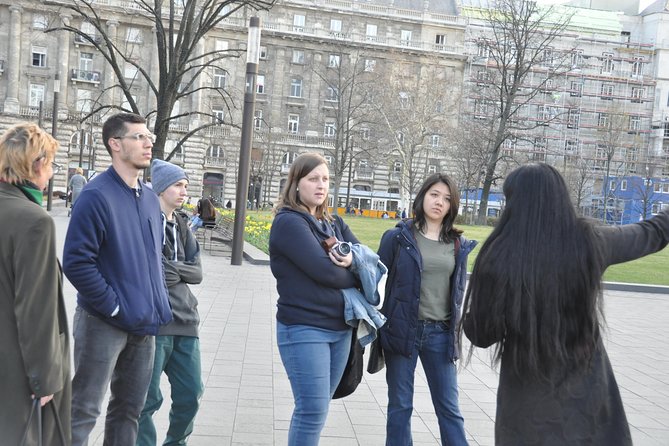
Because it’s a small-group tour (max 50) with English-speaking guides, you can ask questions. Still, the experience is outdoors and there’s no hearing induction loop, so if you rely on audio support, bring along a plan to compensate.
In This Review
- Key things that make this tour worth your time
- Free-tip pricing that feels like a bargain
- Meeting at Kálvin tér, then walking to the Chain Bridge
- National Museum gardens: turul legend and the 1948 uprising
- From Kalvin Square to Unger’s House: architecture with context
- Astoria and the Jewish Quarter: community, ghetto, and today
- St. Stephen’s Basilica exterior and Liberty Square’s memorial
- Stock Exchange, Reagan and the Parliament facade across the square
- Fisherman’s Bastion and the Danube memorials: big views, big feelings
- What guides do best here (and what to watch)
- Practical tips: shoes, water, toilets, and no-luggage reality
- Who should book this Budapest history walk
- FAQ
- Is the Budapest Historical Sightseeing walking tour really free?
- How long is the tour?
- Where do I meet the guide?
- What language is the tour offered in?
- What’s included, and what’s not included?
- Are there admission tickets during the tour?
- Is the tour suitable for people with mobility limits?
- Where does the tour end?
- What if the weather is poor?
Key things that make this tour worth your time
- Tip-based value that still feels organized: you pay a small booking amount, but the real cost is your tip, and the guide keeps the pace moving.
- Clear orientation for first-timers: major Pest sights, Danube viewpoints, and where to go next are part of the walk.
- Real landmarks, not just photos from a bus: Parliament exterior views, Liberty Square, St. Stephen’s Basilica, and the Shoes on the Danube memorial.
- Communist-era context without staying stuck in the past: you’re guided toward what changed and what stayed.
- Jewish Quarter history in a practical route: community life, WWII-era ghetto context, then today’s creative and commercial district.
- A guide makes or breaks a free-style tour: many guides earn strong praise (like Peter and Victoria), but you should be ready to speak up early if you can’t follow.
Free-tip pricing that feels like a bargain
This tour is marketed as free walking, but you’ll see a small per-person charge when booking (listed at $3.63). In practice, that fits the model: the tour is a guide-led walk funded mainly by tips, not by a big ticket price. That’s why the experience is such good value for budget travelers, especially if you’re coming for context and orientation rather than indoor admissions.
What you get for that cost is an in-person guide plus a route designed around major Budapest “read it on the street” moments. You’ll also get a mobile ticket, and the tour is offered in English. The trade-off is what isn’t included: there’s no coffee or food, and several big sites are viewed from the outside (so you won’t automatically be going inside).
If you want maximum savings, this tour helps you plan the rest of your trip. Instead of wandering randomly, you get a sense of what’s worth paying to enter—like St. Stephen’s Basilica—versus what’s best enjoyed from the pavement.
Value check for your expectations: this isn’t a museum admissions day. It’s a guided walk for meaning, direction, and seeing Budapest’s layers.
You can also read our reviews of more walking tours in Budapest



Meeting at Kálvin tér, then walking to the Chain Bridge
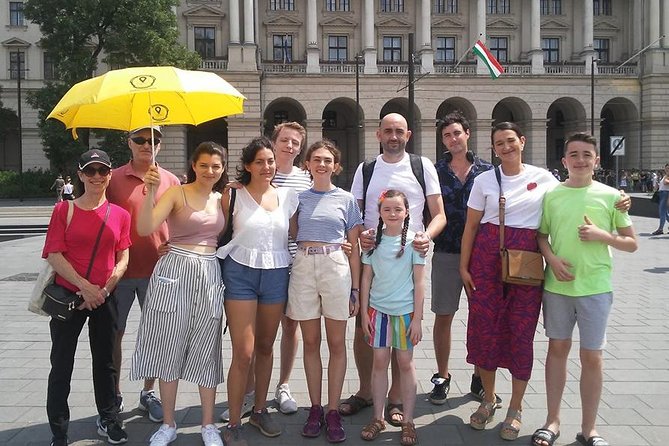
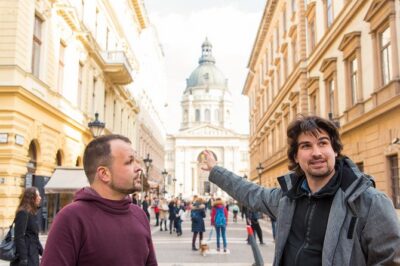
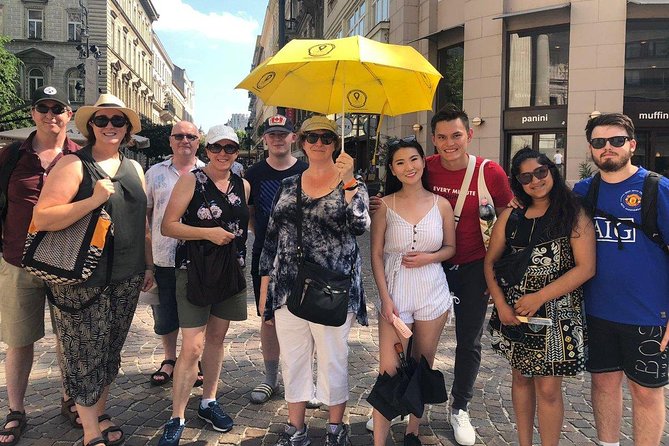
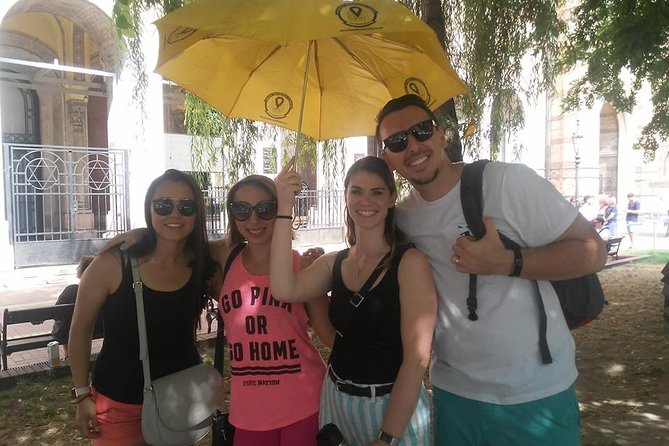
The tour starts at OTP Bank Budapest, Kálvin tér 12–13 (Kálvin ter). Guides are dressed in yellow, which makes them easy to spot when you arrive. You’ll want to show up a few minutes early so you can get oriented before the group sets off.
One of the practical wins here: the tour ends at Id. Antall József rkp. 1 near Lánchíd (the Chain Bridge). From there, you can walk back toward the center quickly or connect to transit without needing to retrace your exact steps.
The route is structured to keep you on a manageable arc of sightseeing—mostly in Pest, with Danube-area viewpoints that connect what you see in one district to what’s happening across the river. That matters because Budapest’s beauty is partly geography. The Danube isn’t background. It’s a guide.
One drawback to note: it’s not a quick “see the highlights and leave” walk. The pace assumes you can handle a steady couple of hours outdoors. The tour is described as not recommended for people who can’t walk about 3 miles.
National Museum gardens: turul legend and the 1948 uprising
Your first stop is the gardens at the Hungarian National Museum. From outside, you’ll see the statue of the mythical turul bird, a detail that helps you connect Hungarian identity myths to real political events. You’ll also hear about the museum’s collections and its founder, which gives you a framework for why the museum exists and what it tries to preserve.
Then the guide brings in a specific historical thread: the 1948 uprising. Even if the date doesn’t mean much when you arrive, the value is that it’s tied to what you’re seeing right there in the museum area.
A final layer at this stop is the “neighborhood story” angle—mentions of the VIII district, once known for grand palaces, and the secrets tied to how the city has changed.
Why this stop works: it’s a strong “set the lens” moment. You’re not just told facts; you’re given a way to interpret what you’ll see later—especially when Communist-era landmarks come into view.
Possible drawback: since it’s the start of the walk, people sometimes underestimate how much standing and listening they’ll do. If you’re sensitive to cold or fatigue, consider wearing layers right from the meeting point.
From Kalvin Square to Unger’s House: architecture with context
Next you meet at Kalvin Square (Kalvin tér), located at 12 Kalvin ter. The square is named after French Protestant Reformer John Calvin, and it’s also practical: there are places to sit and shelter from the elements. That helps if the weather turns rough, because you get a short reset before moving again.
From there, the walk continues past Unger’s House, a courtyard stop connected to Miklós Ybl. What makes this brief moment worth your attention is the building’s style mix: Byzantine, Gothic, Moorish, Renaissance, and Romantic elements. That kind of architectural blend tells you Budapest wasn’t always a single style city—it was a place where influences layered on top of each other.
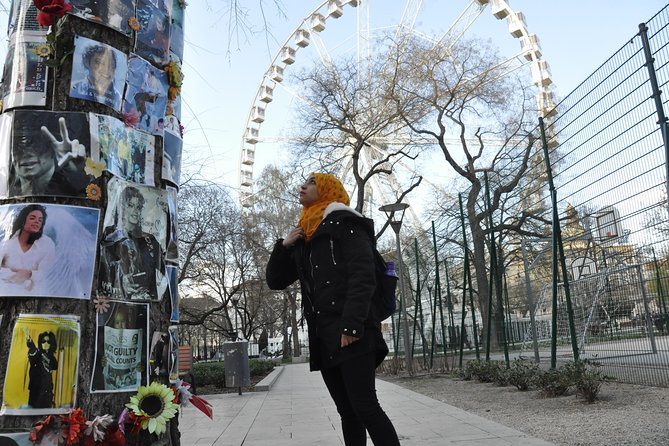
Then comes Elizabeth Square, where you’ll learn about the square’s history and get pointed toward local bars and nightlife. You’ll also see the Budapest Eye, which is a modern landmark but still rooted in the story of how public spaces in the city reinvent themselves.
Why these stops matter: they keep the tour from becoming a single-note “government and war” timeline. You’re balancing heavy history with the way Budapest entertains itself now.
Astoria and the Jewish Quarter: community, ghetto, and today

At Danubius Hotel Astoria, you’ll pass a grand building in French Empire style. It’s the kind of exterior you might notice from a distance, but this stop gives you a reason to look closer. The guide ties it to its cosmopolitan pull—international stars and cinematic productions, including the Josephine Baker story.
Then the route travels through the Jewish Quarter. You’ll learn the district’s arc: from a home to a vibrant Jewish community, to a WWII ghetto period, and then to more recent times where artists and students helped shape what it is today. You’ll also notice how the streets now mix independent shops, designers, and bars.
What you’re really learning here: Budapest’s districts aren’t “frozen.” Even when painful history is part of the story, the city doesn’t stop moving. Seeing the Jewish Quarter through a guide’s explanation helps you understand why modern nightlife and creative streets coexist with memorial memory.
One consideration: this part of the walk is emotionally heavy for some people, especially when the WWII context is explained. If you’re traveling with younger kids, it’s still described as suitable, but you’ll want to judge how they handle serious topics.
You can also read our reviews of more historical tours in Budapest





St. Stephen’s Basilica exterior and Liberty Square’s memorial
You’ll stand outside St. Stephen’s Basilica (Szent Istvan Bazilika) and learn why it’s named after Hungary’s first king. The note here is important: admission isn’t included, so you’re viewing from outside during this tour block.
Then you head to Szabadság tér (Liberty Square), where you spend time—about 15 minutes—seeing the Communist memorial. This is where the “Communist past to modern culture” promise turns into something visible and specific, not just background talk.
The tour’s timing works well here: you’ve already been briefed on symbols (like turul) and architecture (Unger’s House). When Liberty Square comes into view, the guide can explain what the memorial represents and why it sits where it does in the city’s political landscape.
Why this is a smart pairing: St. Stephen’s Basilica represents the national story; Liberty Square represents the political story. Put together, you start to see how Budapest uses places to tell competing narratives over time.
Stock Exchange, Reagan and the Parliament facade across the square
Next is Stock Exchange Palace, described as the largest privately owned historic landmark in Budapest, with a massive area figure listed at 50,000 m². Admission isn’t included, so again you’re focused on what you can see from the street. Still, the stop gives you a sense of how much power and ambition were built into the city’s commercial architecture.
Then comes a fun, slightly oddball but memorable moment: the Ronald Reagan statue. The guide explains why Reagan appears to be walking away from the parliament looking happy, and you’ll also hear about the Bush statue positioned near it. These are not random photo stops; they connect Budapest’s post-Communist symbolic story to Western political imagery placed right by one of Hungary’s most iconic buildings.
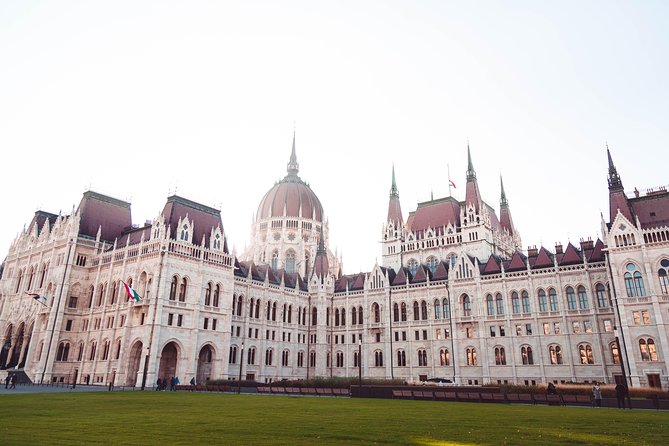
Finally, you reach the Hungarian Parliament Building. You’ll stand outside and take in the electric/neo-gothic style, plus the Danube-facing views. The tour also mentions other nearby important buildings around the square, including the chocolate museum, the former ministry of Justice, and an agricultural museum.
Value tip for your planning: if you want interior access, you’ll need to treat that as separate planning. This tour gives you the why and the “where to stand for the view,” not the entry ticket.
Fisherman’s Bastion and the Danube memorials: big views, big feelings
As the route continues, you reach Fisherman’s Bastion from the Pest side of the river. You’ll learn the area’s history and see the Fisherman’s Bastion views from across. You’ll also spot St. Matthias Church in the distance, with its colored tiled roof, and you’ll see the Hungarian National Palace from afar on the Pest side.
Then you get broader Danube context: St. Margit Island and Gellért Hill show up in the view lines, with some history attached so it doesn’t feel like just a scenic overlook.
Next comes Széchenyi Lánchíd (Chain Bridge). You’ll see the bridge and learn its history, including reconstruction. A bridge is infrastructure, but in Budapest it’s also a symbolic connector. The tour treats it that way.
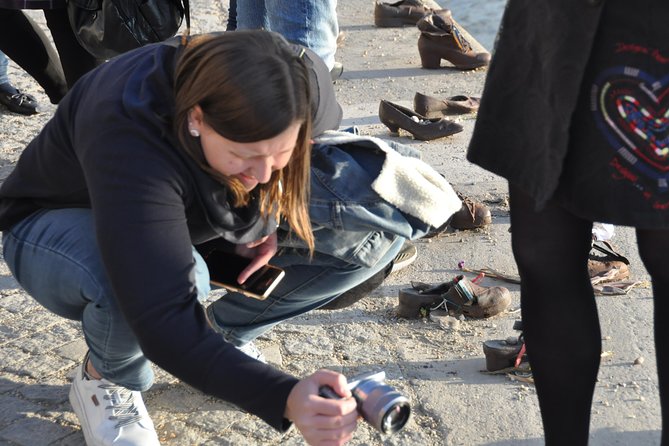
And then—one of the most haunting stops on the walk—the Shoes on the Danube Bank memorial. You’ll see the monument described as 60 pairs of shoes dedicated to Holocaust victims who were lined up and shot on the banks. It’s simple. That’s the point. No drama needed.
Why the memorial stop matters within this specific tour: the walk already moved through symbols, politics, and architecture. That makes this moment land harder, because it shows the cost behind the history the city talks about.
If you hate heavy moments: you can still enjoy this tour for orientation, but be ready that this stop is emotionally intense.
What guides do best here (and what to watch)
The strongest praise across the guide experience is about delivery: people highlight guides who explain clearly, keep the group moving at a good pace, and add humor without losing focus. Names that come up include Peter, Victoria, Elizabeth, Sabi, and George, with repeated praise for staying engaging and answering questions.
I also like that the tour’s format seems to support practical travel life, not just sightseeing theory. Some guides are described as sharing guidance on customs and rules, and pointing out what to do next—plus food and drink ideas for reasonable prices. That kind of advice can save you time and decision fatigue later.
Still, a free-style walking tour has one risk: your experience depends on how the guide handles the group. A couple of notes from the data are useful:
- Some groups report difficulty hearing when it’s busy and the group is larger.
- There’s no hearing induction loop, so if you need audio assistance, plan ahead.
- One negative report described a very unpleasant guide attitude. The provider response also points out that talking over the guide isn’t acceptable and that groups can’t treat the guide like background audio.
How to protect yourself: arrive early, stand where you can hear, and ask questions without talking over the guide. If you truly can’t follow, tell the guide right away so you can adjust your position.
Practical tips: shoes, water, toilets, and no-luggage reality
This tour is a walking tour. That sounds obvious, but Budapest makes it real: cobbles and stone streets can turn a short distance into a tiring one.
Here’s what you should do before you go:
- Bring comfortable shoes for cobblestones. This is consistently flagged as a must.
- Bring water (recommended) and consider sunscreen.
- Pack for cold and wind. The tour notes it can be extremely cold, and the outdoors time matters.
- Consider an umbrella or warm jacket depending on the weather.
Food and drink are not served. There’s a short break—about 5 minutes—to buy drinks and use the toilet. Toilet costs aren’t included. The data lists public toilet costs ranging from 100huf to 500huf.
Also, the guides aren’t able to carry guest luggage or equipment. If you’re arriving with big bags, plan to stash them at your accommodation first.
My quick take: if you treat this as a guided walking seminar—pack like you’re going outside for a long spell—you’ll enjoy it much more than someone who shows up in light layers and hopes for the best.
Who should book this Budapest history walk
This tour is a strong pick if you:
- Want a first-time orientation across Pest with Danube connections.
- Travel on a budget and don’t need paid museum entry included.
- Enjoy historical context that connects Communist-era landmarks to modern city life.
- Like guides who share practical direction (food, transport, and what to do next).
It’s also described as best for adults and children over 12, though younger kids can come.
You might skip or choose a different format if:
- You can’t walk about 3 miles comfortably.
- You need lots of indoor stops or ticketed entrances during the tour day.
- Your audio/hearing needs require equipment support (there’s no induction loop).
Should you book it? My call: Yes, if you’re the kind of person who likes to understand what you’re seeing and get your bearings fast. The tip-based model makes the value excellent, especially when you’re pairing it with separate paid entries later for the places you want to go inside.
FAQ
Is the Budapest Historical Sightseeing walking tour really free?
It’s presented as a free walking tour and is tip-based, but the booking price listed is $3.63 per person. Admission fees are not included for every stop.
How long is the tour?
The duration is approximately 2 hours 30 minutes.
Where do I meet the guide?
You meet at OTP Bank Budapest, Kálvin tér 12–13, 1085 Hungary. Guides are dressed in yellow.
What language is the tour offered in?
The tour is offered in English.
What’s included, and what’s not included?
Included: an in-person guide. Not included: coffee/tea (and no food is served), the cost of public toilets, tips, and admission tickets for certain sights.
Are there admission tickets during the tour?
Some stops are outside or have free entry noted, while others are not included (for example St. Stephen’s Basilica and the Hungarian Parliament Building are described as admission not included; Stock Exchange Palace is also admission not included).
Is the tour suitable for people with mobility limits?
The tour notes it is not recommended for travelers who are unable to walk about 3 miles.
Where does the tour end?
The tour ends near Lánchíd (the Chain Bridge) at Id. Antall József rkp. 1, 1052 Hungary.
What if the weather is poor?
The experience requires good weather. If it’s canceled due to poor weather, you’ll be offered a different date or a full refund.
—
If you want, tell me what month you’re going and whether you prefer more sights-by-foot or fewer stops, and I’ll help you pair this walk with the best next-ticket plan for Budapest.