REVIEW · BUDAPEST
Budapest City Landmarks Walking Tour in 2 Hours
Book on Viator →Operated by Triptobudapest.hu - Free Budapest Walking Tours · Bookable on Viator
Budapest packs a lot into two hours. This walking tour links Pest landmarks and the Danube memorial into a fast, readable first-day route with an English guide and a mobile ticket.
I like that it’s designed to leave you oriented for the rest of your stay, so you can return later at your own pace.
A heads-up: it’s a steady pace with many quick stops, so if you love lingering for photos, you’ll need a little patience.
I love the way the guide blends history, architecture, and everyday Hungarian life—including basic language and food guidance—right alongside the famous sights. I also love the emotional weight of the Shoes on the Danube Bank stop, because it’s not just a photo moment; it’s framed as WWII memory and the story of the Hungarian Jewish community.
One possible drawback: you don’t enter every major building. For example, you’ll see Szent István Basilica, but you won’t go inside, so plan separate time if you want interior views.
In This Review
- Key things that make this walk worth it
- A 2-hour Budapest sampler from the Ferris Wheel to Parliament
- Meeting at Elisabeth Square: the “20 meters from Budapest Eye” detail matters
- Stop-by-stop: what you’ll actually see and why it counts
- Erzsébet ter to the Basilica zone: big-picture context in quick layers
- St. Stephen’s Square and the “food without traps” lesson
- Jozsef Nador Ter: porcelain and ceramic craft you can recognize later
- Vörösmarty Square and Váci utca: people-watching plus the metro fact
- Danube Embankment (Dunakorzo): UNESCO views plus the tram-line storyline
- Little Princess Statue: a playful moment with a ritual
- Vigadó Square: royal ceremony history and famous composers
- Széchenyi Lánchíd: Chain Bridge as the story of Pest and Buda
- Gresham Palace: Art Nouveau details without needing an architecture degree
- Hungarian Academy of Sciences: Hungarian words and the Nobel-per-capita brag
- Shoes on the Danube Bank: remembrance, WWII, and a harder kind of silence
- Hungarian Parliament Building: neo-Gothic architecture and a modern finish
- Price and value: why $3.63 makes sense for a landmark walk
- What the best guides seem to do well (and how it affects your day)
- Practical tips so the walk feels easy, not rushed
- Who this tour is best for (and who should do something else)
- Should you book the Budapest City Landmarks Walking Tour?
- FAQ
- How long is the Budapest City Landmarks Walking Tour?
- Where do I meet the guide?
- Where does the tour end?
- Is the tour offered in English?
- Does the tour include entry into Szent István Basilica?
- Are there any included admissions during the walk?
- How do guides get paid?
- What if the weather is bad?
- Can I get a full refund if I cancel?
- How big is the group?
Key things that make this walk worth it

- A first-day overview you can reuse: you’ll get a mental map of Pest landmarks and Danube highlights for later wandering
- English delivery and clear group handling: tours are capped at 30 people, so it stays manageable
- Story stops, not just viewpoints: the route includes public art, food tips, and WWII commemoration
- Design + decor details: you’ll get pointed commentary on Art Nouveau at Gresham Palace and porcelain/crafts at Jozsef Nador Ter
- Light on tickets, heavy on context: the tour is mostly free to view from the street, with no required paid admissions
- Easy to extend: after the walk, you’re set up to return to the places you care about most
A 2-hour Budapest sampler from the Ferris Wheel to Parliament
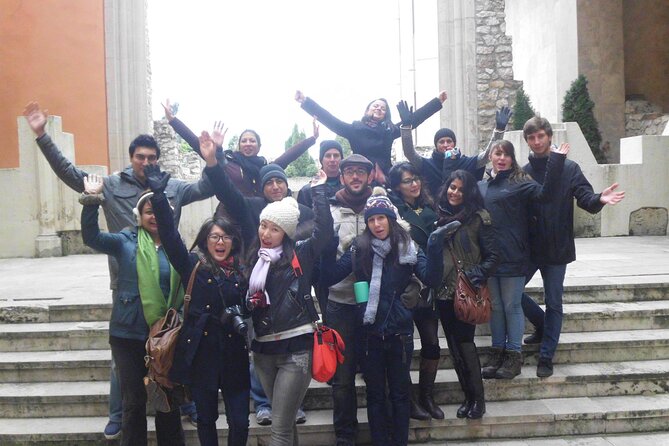
This tour works because it gives you a city overview without dragging you into a half-day schedule. It’s about two hours walking, and then you get the rest of the day back to explore on your own.
You start near Budapest’s big ferris wheel on Elisabeth Square, then you move through a chain of recognizable stops: the Basilica area, lively squares, the Danube embankment, and finally Hungary’s Parliament. By the time you finish, you’re not just seeing famous spots—you understand how they connect to the city’s story and layout.
And because it’s priced very low for a guided walk, it’s a smart “start here” option if you want value more than souvenirs.
You can also read our reviews of more walking tours in Budapest



Meeting at Elisabeth Square: the “20 meters from Budapest Eye” detail matters
Your meeting point is at Erzsébet tér by the Budapest Eye. The guide meets you about 20 meters from the ferris wheel area on Elisabeth Square, holding a small blue flag.
This matters more than you’d think. In a city full of tour groups, a specific landmark + distance is what prevents wasted minutes. If you like smooth mornings, this is a good sign the organizers know what can go wrong.
Once you’re matched up, the guide sets the tone fast: history, architecture, public art, society, food, and basic Hungarian language—woven into a walking plan you can follow without confusion.
Stop-by-stop: what you’ll actually see and why it counts
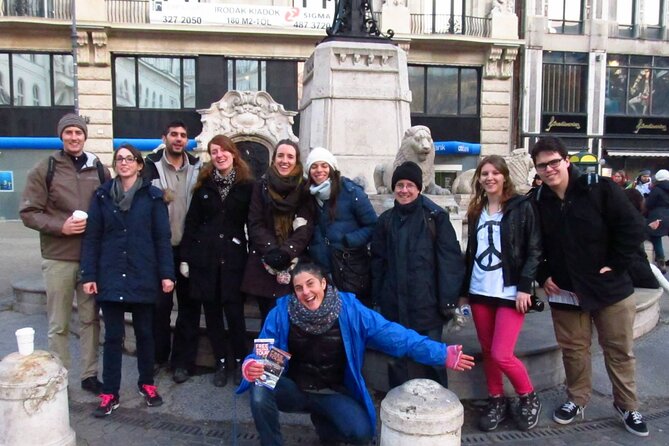
Here’s the route in plain English, with what each stop is really doing for your understanding of Budapest.
Erzsébet ter to the Basilica zone: big-picture context in quick layers
You begin at Erzsébet ter and get an overview of the city. The guide uses the map and points out both iconic landmarks and side streets you might miss on your own.
This first segment is where you decide what kind of Budapest you want to chase later. Maybe you’ll focus on food, maybe architecture, maybe history—and the guide gives you enough context to choose.
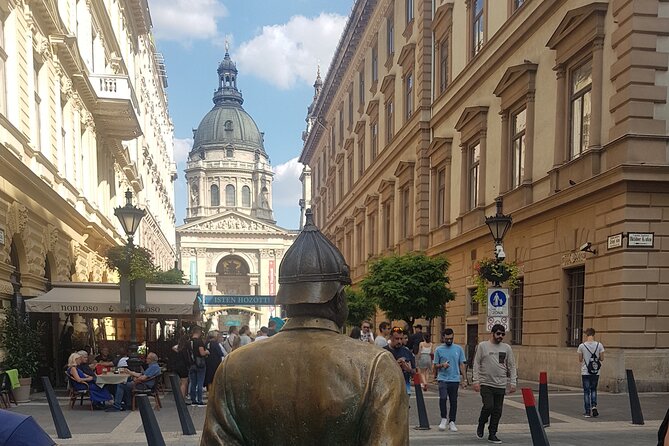
Then you roll into the Szent István Basilica area. You’ll learn about the basilica’s scale—seating around 8,500 people—and how its architecture reflects changing periods of splendor. The key practical thing: this tour does not enter the Basilica, so treat it as an exterior/area orientation.
St. Stephen’s Square and the “food without traps” lesson
St. Stephen’s Square is one of those places where Budapest’s everyday personality shows up. You’ll notice public art featuring fat policemen with shiny bellies, which is exactly the kind of detail that makes a city feel lived-in.
More importantly, the guide uses this stop for culinary advice: Hungarian cooking history, what to eat in Budapest, and how to avoid tourist traps. That’s the kind of info that saves you money and prevents “safe but disappointing” meals.
Even if you’re not a foodie, this is where Budapest stops being a postcard city and starts being a real place you can navigate.
You can also read our reviews of more city tours in Budapest






Jozsef Nador Ter: porcelain and ceramic craft you can recognize later
At Jozsef Nador Ter, you’ll get a cultural stop that doesn’t rely on a single building. The guide highlights Hungarian Habsburg connections and points you toward two famous craft names: Herendi hand-painted porcelains and Zsolnay glazed ceramic masterpieces.
If you like design, this is a worthwhile pause. It also helps you interpret what you see later, because you’ll know these materials and styles aren’t random—they’re part of Hungary’s craft identity.
The stop is short, but it’s focused. You’ll leave this section with names you can actually remember.
Vörösmarty Square and Váci utca: people-watching plus the metro fact
Vörösmarty Square sits at the end of Váci utca, Budapest’s famous pedestrian street. You’ll get a chance to do classic people-watching while the guide ties the area to local culture and big-city rhythms.
One standout detail here: the guide points out the second oldest underground in the world and mentions a terminal nearby. It’s the kind of fact that turns “oh, cool subway” into “okay, I get why the city developed the way it did.”
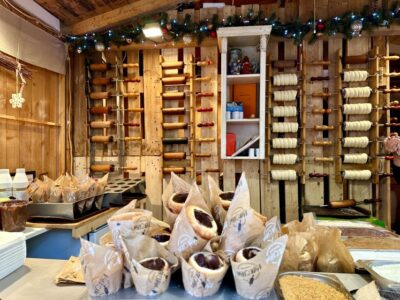
You’ll also hear about Christmas markets and traditions—useful if you’re visiting in season. And yes, Gerbaud café often comes up in this zone, so you’ll understand why it’s such a name in Budapest.
Danube Embankment (Dunakorzo): UNESCO views plus the tram-line storyline
The route then leans hard into the Danube. At Korzó–Danube Embankment, you’ll learn about the first non-Communist statue in Budapest, get commentary on the city’s most panoramic tramline in Central Europe, and see the main riverside buildings.
This stop is all about the view direction. You’ll look toward Castle Hill with Matthias Church, Fisherman’s Bastion, and Buda Castle—and you’ll also get the perspective line toward Gellért Hill and the Citadel. Many of these landmarks are UNESCO listed, but the point on this walk is the sightline: seeing how Budapest layers Buda and Pest in one frame.
A practical tip: if you care about photos, this section is one of your best windows. The route gives you quick context so you can decide where to stop again later without guesswork.
Little Princess Statue: a playful moment with a ritual
You’ll make a very brief stop for the Little Princess Statue and the local ritual of making a wish by touching its shiny knees.
It’s short. But it’s also the kind of silly tradition that makes a walking tour memorable. It’s a good reset before the heavier historical sections that come next.
Vigadó Square: royal ceremony history and famous composers
Next is Vigadó Square, linked to Franz Joseph’s and Sissy’s coronation banquette in the 19th century. The guide also connects the area to major Central European musicians like Franz Liszt, Debussy, and Brahms.
This is where Budapest shows its softer side—music, ceremony, and culture, not only monuments. Even if you don’t know the names deeply, you’ll leave with enough context to recognize why the city is known for performance traditions.
Széchenyi Lánchíd: Chain Bridge as the story of Pest and Buda
At Széchenyi Lánchíd (Chain Bridge), you get a short lesson on the history of Pest and Buda told through the bridge—described here as the first permanent bridge built in the city.
Even if you don’t cross the bridge itself, you’ll understand it as a connector, not just a pretty structure. That’s the value of a guide: you learn what to look for and why it mattered.
Gresham Palace: Art Nouveau details without needing an architecture degree
At Gresham Palace, the guide points you to the secessionist (Art Nouveau-era) style that emerged in Budapest’s golden age around the turn of the 20th century.
You’ll learn about the building’s history and major ornaments. The stop is quick, but it helps you spot what to notice later if you return to the area—curves, decorative patterns, and the overall “turn-of-the-century” look.
Hungarian Academy of Sciences: Hungarian words and the Nobel-per-capita brag
The Hungarian Academy of Sciences stop adds two practical layers. First, you’ll pick up Hungarian words and phrases designed to impress friends later. Second, you’ll hear why Hungary is described here as having the largest Noble–Prize awards per capita.
It’s a quick stop, but it gives you something portable: language basics and a sense of what kind of scientific/academic legacy Hungary likes to highlight.
Shoes on the Danube Bank: remembrance, WWII, and a harder kind of silence
Then comes the emotional pivot: Shoes on the Danube Bank. The memorial consists of 60 pairs of shoes placed to commemorate the 60th anniversary of the Holocaust.
This stop is framed around WWII history, deportations, and the recent history of the Hungarian Jewish people. You’re even asked to close your eyes and imagine individuals who died there—from synagogue-goers to assimilated Jewish people, across generations and social roles.
If you’re the kind of person who wants to understand a city beyond its sights, this is one of the most important stops on the route. It also works well because the guide sets context before you stand in front of the memorial.
Hungarian Parliament Building: neo-Gothic architecture and a modern finish
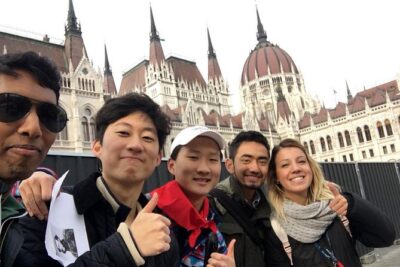
Finally, you reach Hungary’s Parliament Building. You’ll learn about recent history, elections, and the neo-Gothic architecture described as harmoniously beautiful.
This is the end of the walk, and the guide also provides recommendations for restaurants, nightlife, or what to do on your next days. In other words: you’re not sent off empty-handed. You finish with a direction for how to spend the time you freed up by doing the overview first.
Price and value: why $3.63 makes sense for a landmark walk
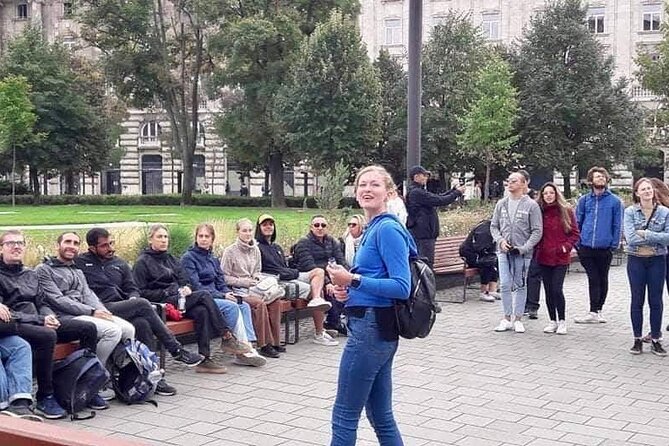
At about $3.63 per person, this tour is priced like a bargain—especially because it covers a long stretch of landmarks across multiple districts. The real value is the combination of route planning and interpretation: you’re getting context at nearly every stop, not just a sequence of photos.
One detail to understand: there’s a booking fee. The booking fee is directed toward administration and does not contribute to the guide’s earnings. The guide’s income depends on your donations at the end of the tour, and the amount is at your choice.
So think of the low ticket price as covering the platform and planning, while your guide’s storytelling is supported through your end-of-tour donation. If you want a high-quality walking tour experience, this is one of the best ways to make sure your guide is rewarded for the work.
What the best guides seem to do well (and how it affects your day)
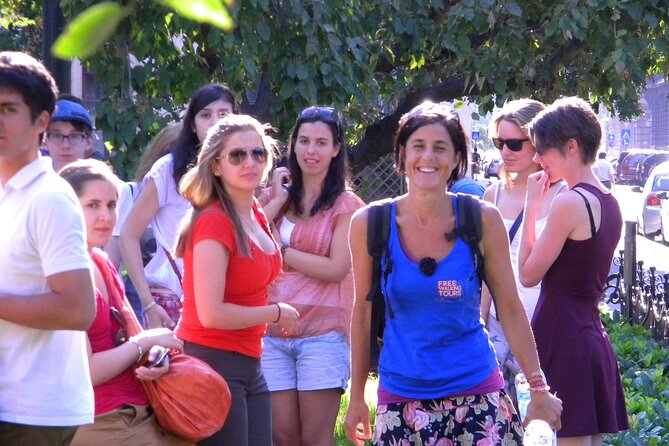
Across the tour experience, guides are repeatedly praised for being friendly, funny, and easy to hear. Some guides are specifically mentioned for being engaging and for using their voice clearly—one even uses a speaker so everyone can follow.
That matters because this route covers open-air areas and busy streets. If you can’t hear, you lose the plot. If you can hear, you start connecting landmarks in a meaningful way instead of walking through a list.
You’ll also notice a pattern: guides encourage questions and add practical recommendations. You’ll leave with more than facts—you’ll leave with a sense of where it’s worth spending your own time later.
Practical tips so the walk feels easy, not rushed
A few small moves can make this tour feel much smoother:
Bring water. One review notes that it helps on a day like this. The walk is short-ish, but you’ll still be outside moving between squares.
Wear comfortable shoes. It’s a walking tour with many “short stop” moments, including stairs/sidewalk time around major landmarks and busy pedestrian streets.
If you care about the Basilica interior or want a longer look at any single stop, plan to return after the tour. The walk gives you the orientation, not a full deep-dive entry schedule—like how the Szent István Basilica is shown without entering.
When you reach the end at the Parliament area, use the guide’s recommendations. You’ve just spent time learning the city’s story; spending your next hours well is where the tour pays off.
Who this tour is best for (and who should do something else)
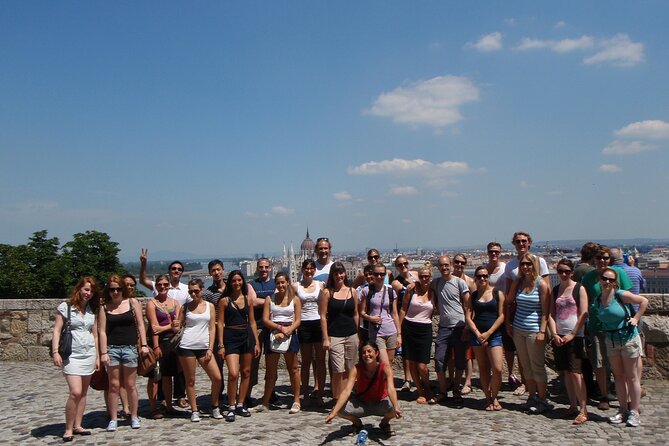
This is ideal if you:
- are seeing Budapest for the first time and want to get oriented fast
- like learning how places connect—rather than only taking photos
- want a short guided plan before you free up your afternoon
- want Hungarian language and food guidance alongside the big sights
You might choose a different option if you:
- hate walking with a “time box” feel
- want lots of interior museum/basilica time during the same session
- prefer fewer stops and longer stays at each one
But if you want a strong start, this tour is a smart use of your first hours.
Should you book the Budapest City Landmarks Walking Tour?
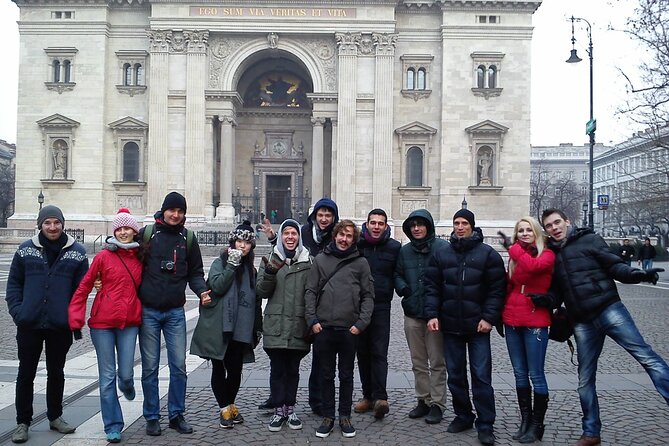
Yes, book it if you’re trying to make your first day in Budapest feel organized and meaningful. The low price makes it easy to justify, and the route covers the kinds of landmarks that shape how you understand the city: Danube views, the Parliament finish, and the Holocaust remembrance at Shoes on the Danube Bank.
Just go in knowing what it is: a fast, guided overview with quick stops. If you treat it like a way to learn the layout and then choose what to revisit, you’ll get excellent value.
FAQ
How long is the Budapest City Landmarks Walking Tour?
The tour lasts about 2 hours (approximately).
Where do I meet the guide?
You meet at the Ferris Wheel of Budapest on Erzsébet tér, about 20 meters from Budapest Eye, with the guide holding a small blue flag.
Where does the tour end?
The tour ends at the Hungarian Parliament Building on Kossuth Lajos tér 1-3.
Is the tour offered in English?
Yes, the tour is offered in English.
Does the tour include entry into Szent István Basilica?
No. The tour does not enter the Basilica.
Are there any included admissions during the walk?
The stops listed have admission tickets free.
How do guides get paid?
Tips aren’t included. Guides depend on your donations at the end of the tour, and the amount is up to you.
What if the weather is bad?
This experience requires good weather. If canceled due to poor weather, you’ll be offered a different date or a full refund.
Can I get a full refund if I cancel?
Free cancellation is available. You must cancel at least 24 hours in advance for a full refund.
How big is the group?
The tour has a maximum of 30 travelers.