REVIEW · BUDAPEST
Budapest: City Sightseeing Hop-On Hop-Off Bus Tour & Extras
Book on GetYourGuide →Operated by City Sightseeing Europe · Bookable on GetYourGuide
Budapest’s sights come with zero effort. This hop-on hop-off bus plus a guided walking tour lets you stitch together Pest and Buda at your speed, with clear stops for the big icons.
I especially love how practical it is: you can ride the 90-minute loop, get your bearings, then jump off only where you actually want time. I also like the mix of formats—bus commentary for the big sweep, then a walking tour that focuses on the areas the bus can’t cover as well.
One thing to keep in mind: the bus routes run from 9am to 5pm from Stop 1, so you’ll want to plan your must-sees earlier in the day (and note a couple of stops are temporarily closed).
In This Review
- Key things to know before you ride
- Price and value: what you’re really buying at $41
- How the Red Line actually works (stops, timing, and direction)
- The Pest-to-Buda route: where each stop fits your day
- Stop cluster: St Stephen’s Basilica to Opera Street (Pest grand boulevard feel)
- Stop cluster: Jewish Quarter and Dohány Street (history you can’t fake)
- Stop cluster: Heroes’ Square to riverfront transitions (great for a paced walk)
- Stop cluster: Castle Garden, Funicular, and Buda viewpoints (where timing and walking choice matter)
- Stop cluster: WestEnd and the loop’s “final big anchor”
- The guided walking tour: what it adds beyond bus audio
- Audio guide in 15 languages: how to use it without getting bored
- The Parliament, Basilica, and Dohány Street moments that really matter
- Discount booklet and optional Danube boat cruise: check what’s included
- Comfort, crowding, and small frustrations you should plan for
- Who this fits best (and who should skip it)
- Should you book this Budapest hop-on hop-off bus tour?
- FAQ
- Is the bus tour available for 1, 2, or 3 days?
- What hours do the Red Line buses run?
- How long is a full bus loop?
- Where does the guided walking tour start, and how long is it?
- Is the walking tour offered in languages other than English?
- What stops are included along the Red Route?
- Is the Danube boat cruise included?
- Are tickets refundable?
Key things to know before you ride
- Two ways to learn the city: bus audio in 15 languages plus an English-only guided walk
- You choose your pace with a 24, 48, or 72-hour pass and 20 stop locations
- Big-ticket sights are on the route: Hungarian Parliament, St Stephen’s Basilica, Chain Bridge, and Dohány Street
- The walking tour adds the missing pieces like the Shoes on the Danube Bank and Danube Promenade
- Timing matters because the Red Line runs 9am–5pm with frequent departures
- A couple of stop markers may be closed (Astoria appears as temporarily closed)
Price and value: what you’re really buying at $41
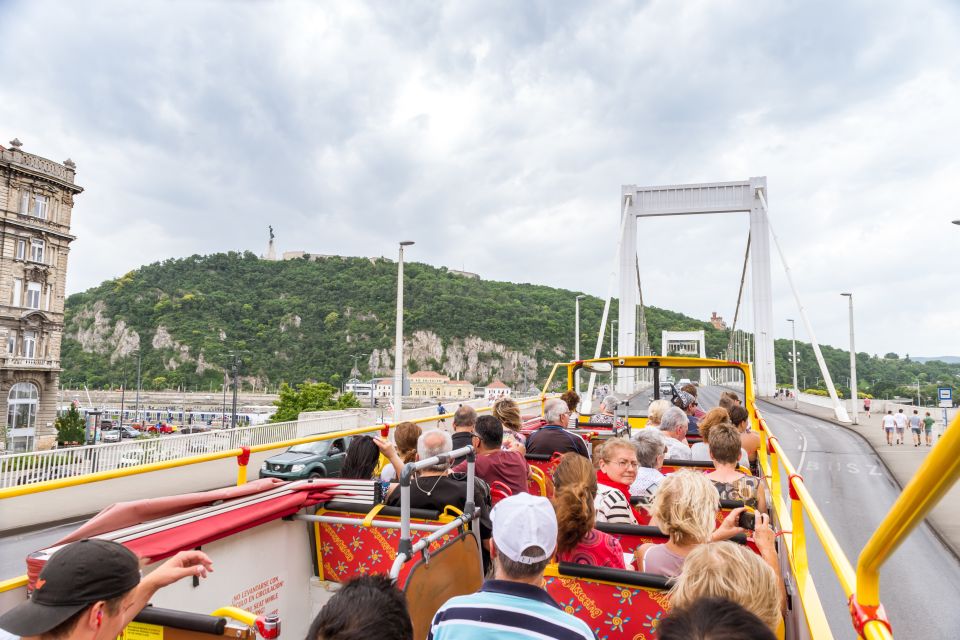
At around $41 per person, this ticket is built for one goal: make Budapest easy to navigate without spending your day researching bus numbers and walking detours. You’re paying for convenience, frequency, and the fact that stops land near major sights across both sides of the river.
If you’re on a short visit, the smarter move is usually to treat the first day as a “get oriented” ride. Then use extra days to hop off more deliberately—museums, viewpoints, neighborhoods. The 48- and 72-hour options often feel like better value because you can effectively use the bus as transportation, not just as a one-time sightseeing loop.
You’ll still pay for attraction tickets on your own (the pass doesn’t include entry), and food isn’t included. But the ticket does include a discount booklet, and that can shave costs if you’re planning paid sights anyway.
You can also read our reviews of more city tours in Budapest



How the Red Line actually works (stops, timing, and direction)
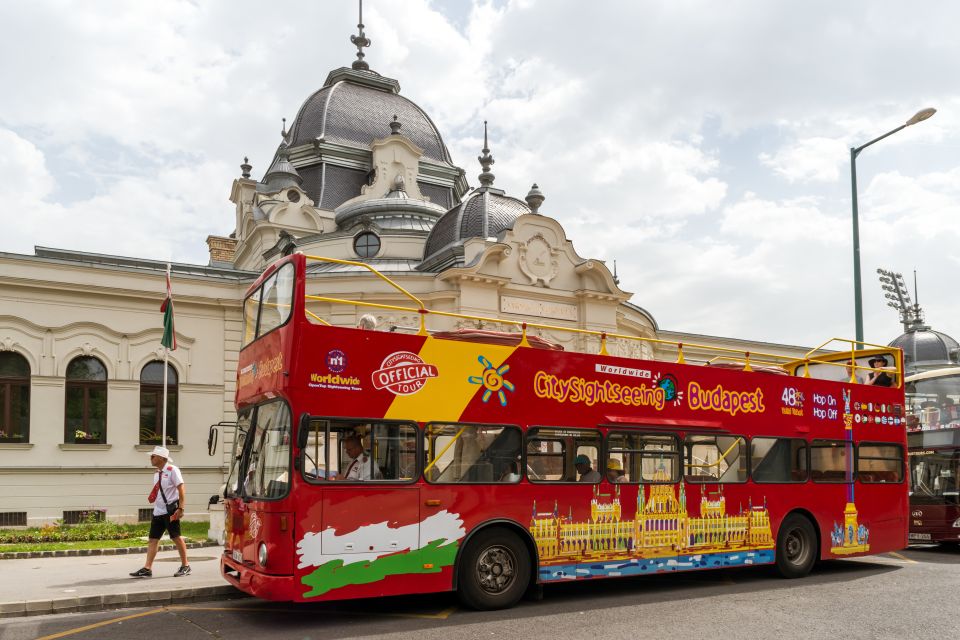
The Red Line is designed for a simple rhythm. From Stop 1 (St Stephen’s Basilica), the first departure is 9am and the last departure is 5pm, with buses running about every 10 to 20 minutes. A full circuit is about 90 minutes, so you can do one loop to map out your second loop.
What that means for you:
- If you want the best coverage, plan on at least one full ride for context.
- If you want fewer backtracks, use the first pass as a scouting lap, then return only to what grabbed you.
- Because the route is one-directional, it’s worth planning which stops you’ll “pull forward” into your day rather than bouncing randomly.
Also note the practical stuff: the bus journey includes an audio guide and stops close to major sights, so you can travel between highlights without long city walks.
The Pest-to-Buda route: where each stop fits your day

This Red Line hits a classic Budapest pattern: start in Pest around the grand core, travel toward the Danube and Jewish Quarter, then climb into Buda territory for viewpoints and castle-area vibes.
Below is how I’d think about the stops, so you don’t end up hopping off “because it’s a stop” instead of because it matches your goals.
Stop cluster: St Stephen’s Basilica to Opera Street (Pest grand boulevard feel)
- Stop 1: St Stephen’s Basilica
This is a strong starting point and a logical place to orient yourself. If you’re the type who likes to begin with a focal point, start here and let the rest of the route make sense as you go.
- Stop 2: Chain Bridge (Pest)
This is your major postcard crossing. Even if you don’t plan to spend a long time there, it’s a great place to pause for photos and to feel the river connection between the two halves of the city.
- Stop 6: Andrassy Avenue and Stop 7: Hungarian State Opera House
This is where Budapest shows off its grand, city-center elegance. It’s ideal if you want architecture and a chance to walk a bit without climbing hills.
- Stop 8: Liszt Ferenc Square
A useful “pause point” in the same general zone if you’d rather snack, browse, or reposition for nearby sights.
Stop cluster: Jewish Quarter and Dohány Street (history you can’t fake)
- Stop 4: Dohany Street Synagogue
This is one of the route’s biggest reasons to ride. Dohány Street is where you can connect the architectural landmark with the Jewish Museum and Synagogue area on your own time.
- Stop 3: Jozsef Attila Street and Stop 10: Keleti Railway Station
These are helpful for transit and neighborhood transitions. Keleti is especially practical if you’re staying near a rail hub or want a broader sense of city geography.
- Stop 11: New York Palace and Stop 13: Parisi Passage Cafe
If you’re the “quick look” type, these stops can work well as brief photo-and-walk moments rather than long museum-style blocks.
- Astoria (temporarily closed) at Stop 5 (and Stop 12)
This one matters. If you planned to use Astoria as a meeting point or transfer-style stop, you’ll need a backup—use the nearby stops to reposition instead.





Stop cluster: Heroes’ Square to riverfront transitions (great for a paced walk)
- Stop 9: Heroes’ Square
A natural place to take a breath. It’s big, ceremonial, and it sets you up for a wider view of Pest.
- Stop 14: Gellert Square
This is your stepping stone toward Buda’s elevated viewpoint energy. It’s also a strong “start climbing” cue without you having to figure it out alone.
Stop cluster: Castle Garden, Funicular, and Buda viewpoints (where timing and walking choice matter)
- Stop 15: Castle Garden
This stop positions you for the Castle area. If you like to wander, you can easily spend more time here than you planned.
- Stop 16: Funicular
The funicular is a classic option, but it’s not the only way up and around. One useful tip you might see: the castle hill area is large, and the funicular may not be the fastest way to cover everything you want. If you’re trying to maximize walking efficiency, you may want to compare how you’ll move across the hill zone once you’re there.
- Stop 18: Margaret Bridge (Buda) and Stop 17: Batthyany Square
These help you cross and reposition with less hassle. Use them if you’re trying to shorten the walk between viewpoint time and river/park time.
Stop cluster: WestEnd and the loop’s “final big anchor”
- Stop 19: WestEnd Shopping Centre
This is a practical stop if you need a break, a restroom, or a coffee stop between sightseeing blocks.
- Stop 20: Parliament
Ending at the Hungarian Parliament area is smart because it’s one of the city’s signature sights. Even if you don’t tour inside, the exterior and the surrounding streets give you plenty to work with.
The guided walking tour: what it adds beyond bus audio
The bus is excellent for city coverage, but it can’t do what a good walk does: slow down the details and bring you through the areas where the city feels most human.
The walking tour starts every day at 11am from Szent Istvan ter 1, 1051, Hungary. It runs about 1 hour, focusing on spots the bus doesn’t cover as directly:
- St Stephen Basilica
- Parliament
- Shoes on the Danube Bank
- Váci Fashion Street
- Danube Promenade
Two reasons this is worth your time:
- You get context while you’re standing where the story happened.
- You avoid turning your day into a scavenger hunt.
Also, narration is English only on this walking component, so if English is your comfort language, you’ll be able to follow every stop without straining.
Audio guide in 15 languages: how to use it without getting bored
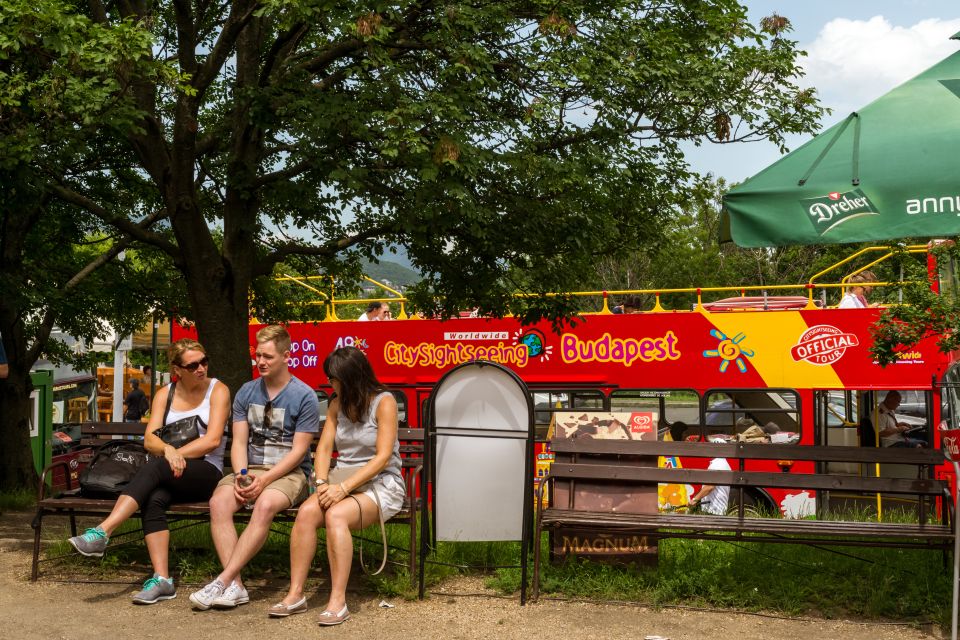
The bus includes an audio guide in a lot of languages—Spanish, Turkish, Chinese, English, Finnish, French, German, Greek, Hebrew, Hungarian, Italian, Japanese, Arabic, Polish, Portuguese, and Russian. That’s the kind of coverage that keeps the trip informative for mixed groups.
A practical way to get the most value:
- Use the first full loop for listening and spotting what you want to revisit.
- On your second loop, keep one ear on the guide, but don’t overdo it—Budapest is also about noticing details at the windows and along the river.
One real-world note: audio quality depends on the bus setup and street noise. If you want clarity, keeping your volume moderate helps, and don’t hesitate to pause listening while you’re looking out—photos beat secondhand descriptions.
The Parliament, Basilica, and Dohány Street moments that really matter
Some sights deserve more than a drive-by. This route gives you a chance to linger without planning a whole day around logistics.
- Hungarian Parliament Building (Stop 20)
The Gothic Revival façade is the kind of building that looks better the longer you look. Even if you’re not going inside, positioning yourself for exterior views is a worthwhile payoff.
- St Stephen’s Basilica (Stop 1, plus the walking tour coverage)
It’s a strong anchor sight. If you want the city to start with a sense of grandeur, start at the Basilica and let it color your first impressions of Budapest.
- Dohány Street Synagogue (Stop 4)
This is the emotional and educational centerpiece. You’ll get the architecture right on the doorstep, and you can pair it with museum time on your own schedule.
For these kinds of stops, I’d plan either:
- a longer hop-off time, or
- a second visit loop on a different part of the day for different lighting.
Discount booklet and optional Danube boat cruise: check what’s included
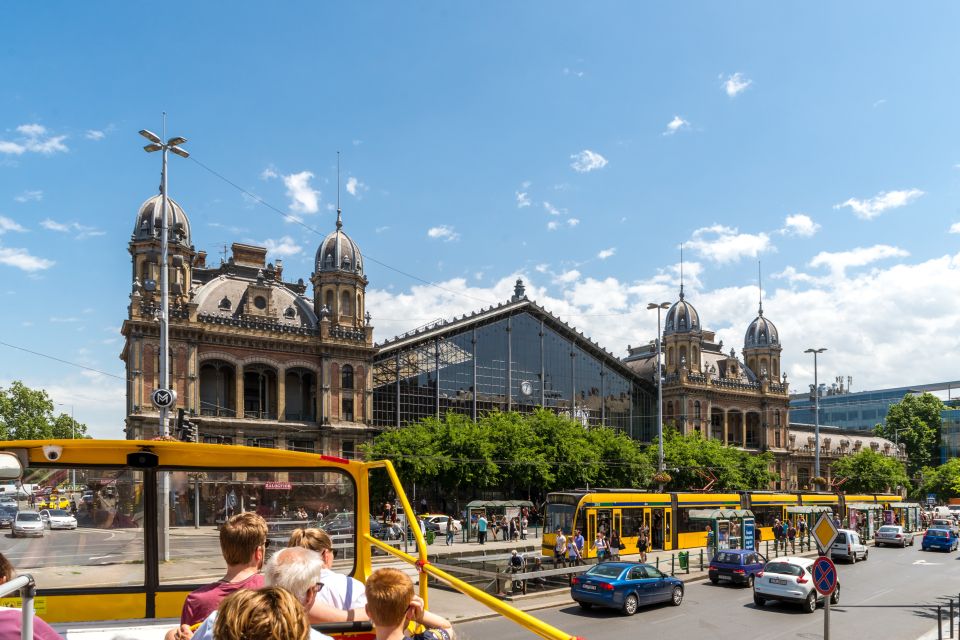
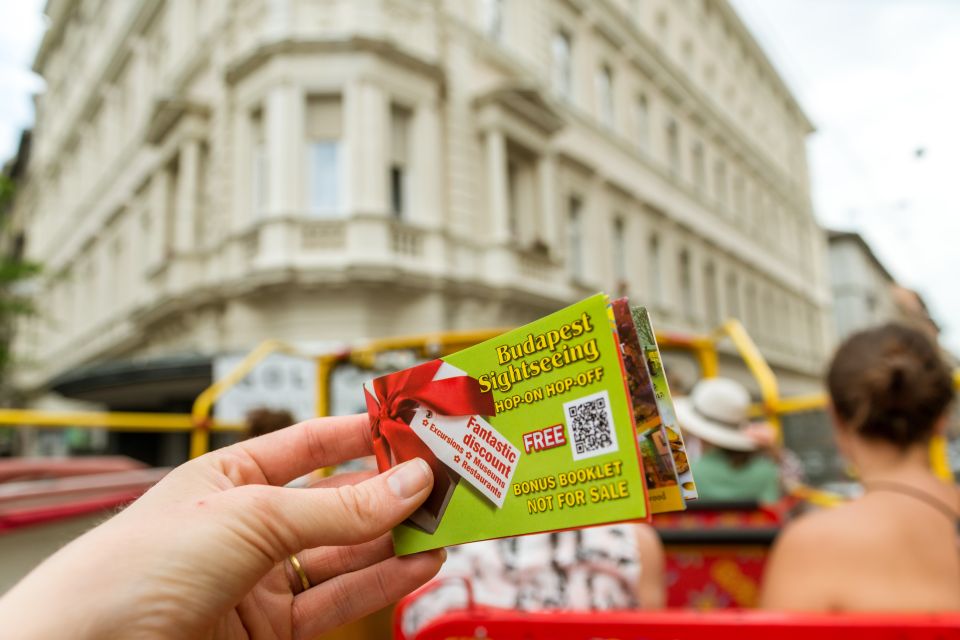
Your ticket includes a discount booklet, which can be a real money-saver if you plan to enter paid attractions during your trip.
Then there’s the Danube boat angle. The details depend on your booking date:
- From Wednesday, 10th December, the boat tour is no longer included in the ticket.
- If you have a ticket, you can buy a boat ticket at a reduced rate: HUF 3500 instead of HUF 5000 by showing your bus ticket at the departure point.
- Bookings made before that date are honored and include the boat tour.
One smart way to think about it: if your schedule lines up, the cruise can be a nice change of pace because Budapest looks different from the water—especially the hill side views. If it’s not included in your date, don’t assume it’s essential, just decide based on your time and how much you want river views.
Comfort, crowding, and small frustrations you should plan for
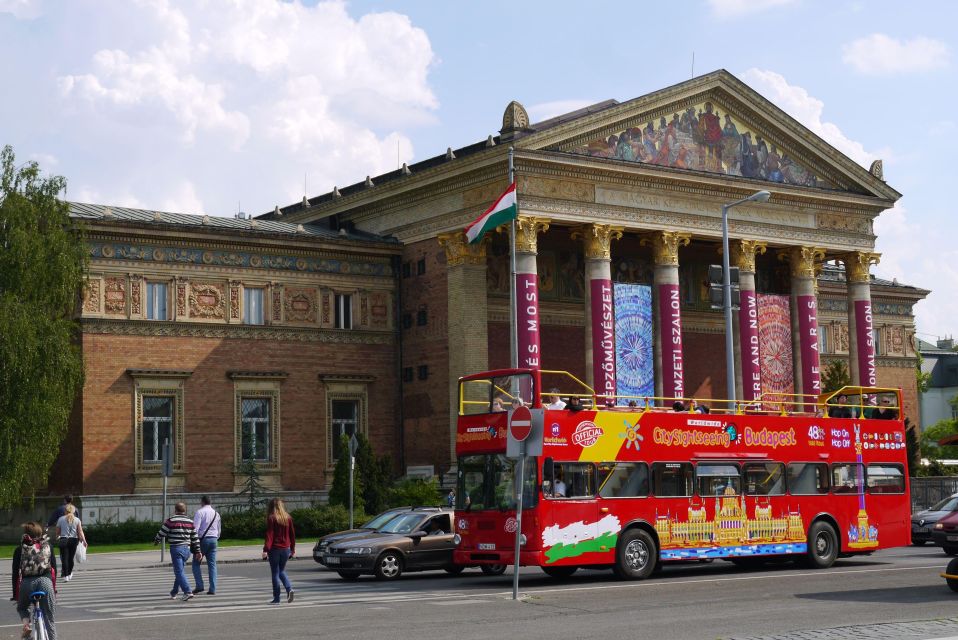
Most of the experience will feel easy: buses are frequent, and the stop list is built for major sights. Still, a few realities are worth knowing.
- Roof coverage and weather: depending on the bus style, visibility can vary. In bright sun or bad weather, you’ll want to think about where you sit so you can actually enjoy the view.
- Crowd safety: if a bus feels full at a stop, sometimes you’ll need to wait for the next arrival. That’s normal in a busy city, and it’s one reason having multiple-day passes can help you ride more calmly.
- Some people find certain areas require extra planning once you’re off the bus (especially around big hill zones).
On the bright side, the bus experience is designed to reduce stress. You get a clear structure: ride, choose your stops, repeat.
Who this fits best (and who should skip it)
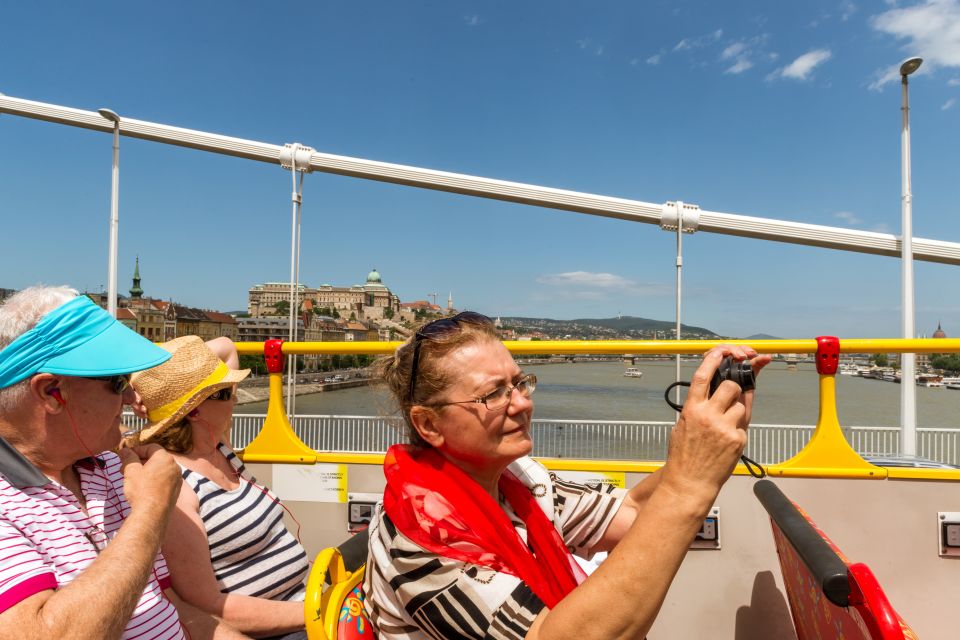
This is a strong fit if:
- you want a simple way to cover major Pest and Buda highlights without a lot of route planning
- you like the “decide on the fly” style of sightseeing
- you’d benefit from a walking tour that adds the Danube and riverfront pieces
It might be less ideal if:
- you only want one short, highly curated sightseeing block (because the best value usually comes from using the pass more than once)
- you’re planning to focus only on museums that are far off the route (you might need other transport beyond what this hop-on approach covers)
Should you book this Budapest hop-on hop-off bus tour?
Book it if you want a practical first pass at Budapest and a clean way to manage time on both sides of the Danube. The mix of bus audio + the 11am walking tour gives you two learning modes in one ticket, and the 20-stop layout keeps your decisions simple.
Consider booking smarter (not just buying) by doing this:
- Use your first ride to mark 3–5 places you actually care about.
- Plan your deeper time around Parliament, St Stephen’s Basilica, and Dohány Street.
- If you care about the Danube cruise, double-check whether your specific booking date includes it or if you’ll be buying the discounted ticket.
If you’re trying to see Budapest without turning the trip into logistics, this is one of the easiest ways to make it happen.
FAQ
Is the bus tour available for 1, 2, or 3 days?
Yes. You can choose a 24, 48, or 72-hour pass for the hop-on hop-off bus tour.
What hours do the Red Line buses run?
The Red Line’s first departure from Stop 1 is 9am, and the last departure from Stop 1 is 5pm. Buses run about every 10 to 20 minutes.
How long is a full bus loop?
A full loop takes about 90 minutes.
Where does the guided walking tour start, and how long is it?
The walking tour starts daily at 11am from Szent Istvan ter 1, 1051, Hungary and lasts about 1 hour.
Is the walking tour offered in languages other than English?
The walking tour is narrated in English only.
What stops are included along the Red Route?
There are 20 stops listed on the Red Route, including major sights like St Stephen’s Basilica, Chain Bridge, Dohany Street Synagogue, Gellert Square, Castle Garden, and the Parliament area.
Is the Danube boat cruise included?
The boat tour is no longer included from Wednesday, 10th December. If that applies to your travel date, you can buy a boat ticket at a discounted rate by showing your bus ticket.
Are tickets refundable?
The activity offers free cancellation up to 24 hours in advance for a full refund.