REVIEW · BUDAPEST
Budapest Old Jewish Quarter History Private Walking Tour
Book on GetYourGuide →Operated by ROSOTRAVEL Hungary · Bookable on GetYourGuide
A walk in Budapest with real weight and real detail. This private tour puts you in the Old Jewish Quarter with a 5-star licensed guide, covering Jewish life from Roman times and the Black Death to the Holocaust and today’s connections. I especially like how you see the Dohány Street Synagogue area and walk toward the Ghetto Memorial Wall, not just name-drop famous buildings. One thing to plan for: synagogue entries are not included, due to restricted access, so you’ll likely view most sites from outside or at the permitted spots.
The group stays private and small, and guide quality is a big part of the appeal. Reviews specifically praise guides such as Ange and Natalia, and also mention Bela as an expert, available guide. If you’re the type who wants to sit inside multiple synagogues, you’ll need to budget extra for that beyond this tour.
In This Review
- Key highlights worth your time
- Why Budapest’s Old Jewish Quarter makes sense in two hours
- Meeting at Sissi Statue: the easiest start point in town
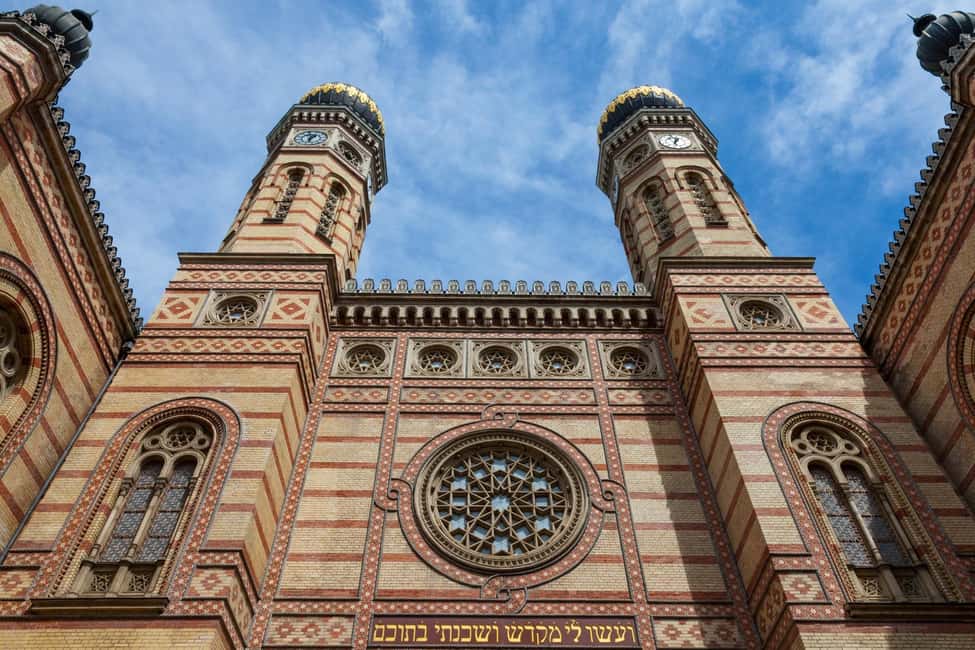
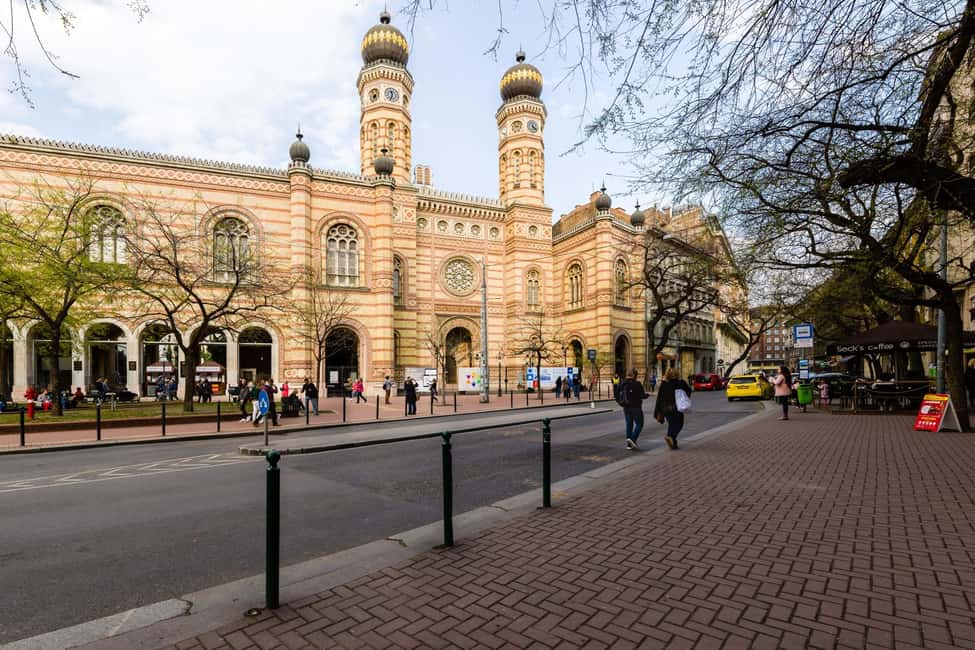
- Dohány Street Synagogue: the landmark that frames the story
- The Jewish Triangle: Rumbach, Kazinczy, and why architecture matters
- Rumbach Street Synagogue
- Kazinczy Street Synagogue
- Synagogue Astoria Central Residence
- The Ghetto Memorial Wall: remembering the Holocaust on the original streets
- Klauzál tér and Klauzál Market Hall: ending with real neighborhood life
- Price and what it’s actually buying you
- What kind of traveler benefits most?
- Tips to get more out of the tour
- Should you book this Budapest Old Jewish Quarter tour?
- FAQ
- FAQ
- Where does the tour start and end?
- How long is the walking tour?
- Is this tour private?
- What languages are available for the guide?
- Are synagogue entrances included?
- Is the Ghetto Memorial Wall included, and does it cost extra?
- What should I wear or bring for the walk?
- Is food included?
Key highlights worth your time
- Dohány Street Synagogue and Budapest’s Jewish Triangle: you’ll connect the sites that define the area.
- Rumbach and Kazinczy synagogues on the same walk: architecture and Jewish community history in close range.
- The last remaining section of the Ghetto Memorial Wall: Holocaust memory right where history unfolded.
- Klauzál tér and Klauzál Market Hall: you finish with everyday neighborhood energy, not museum-only vibes.
- A guide who adapts to your interests: private format makes it easier to ask questions and change pace.
Why Budapest’s Old Jewish Quarter makes sense in two hours
Budapest can feel like a greatest-hits city, especially if you only have a day or two. This tour works because it’s focused. You get a chronological story of Jewish life in Budapest—Roman times through major shocks like the Black Death—then the dark turn of the Holocaust, and finally how the community’s legacy connects to the present.
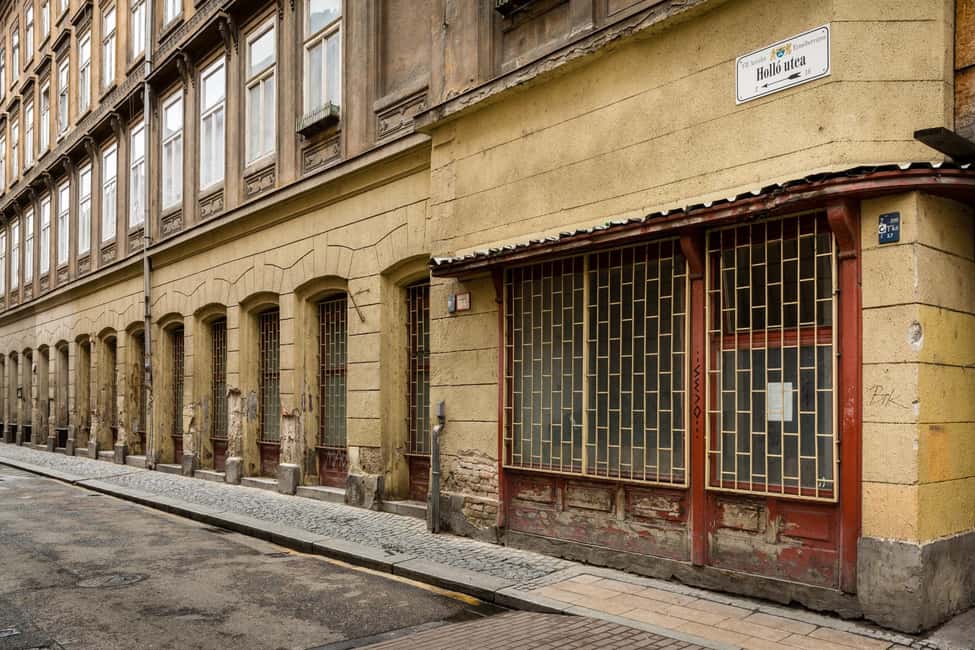
The best part is that the streets do the teaching. You’re not just looking at plaques. You’re walking between landmarks that shaped real daily life. And because the tour is private, the guide can explain what matters most to you, whether that’s Theodor Herzl and his role as a spiritual founder of Israel or the way Budapest’s Jewish identity evolved over centuries.
You can also read our reviews of more walking tours in Budapest


Meeting at Sissi Statue: the easiest start point in town

You’ll meet your guide next to the Sissi Statue at Madách Imre tér 7, 1075 Hungary. It’s a very “you can’t miss it” kind of meeting spot, which matters on a short tour where you don’t want to burn time hunting for your group.
The tour is a moderate 2.5–3.5 km walk with some uneven surfaces or steps. That doesn’t mean it’s a tough hike—it just means you’ll want comfortable shoes. Dress for weather, rain or shine.
If you’re staying close by, there’s an added convenience: hotel or accommodation pickup is available within 1.5 km of the meeting point, and the itinerary adjusts accordingly. If you’re farther out, just plan on reaching the meeting spot on your own.
Dohány Street Synagogue: the landmark that frames the story
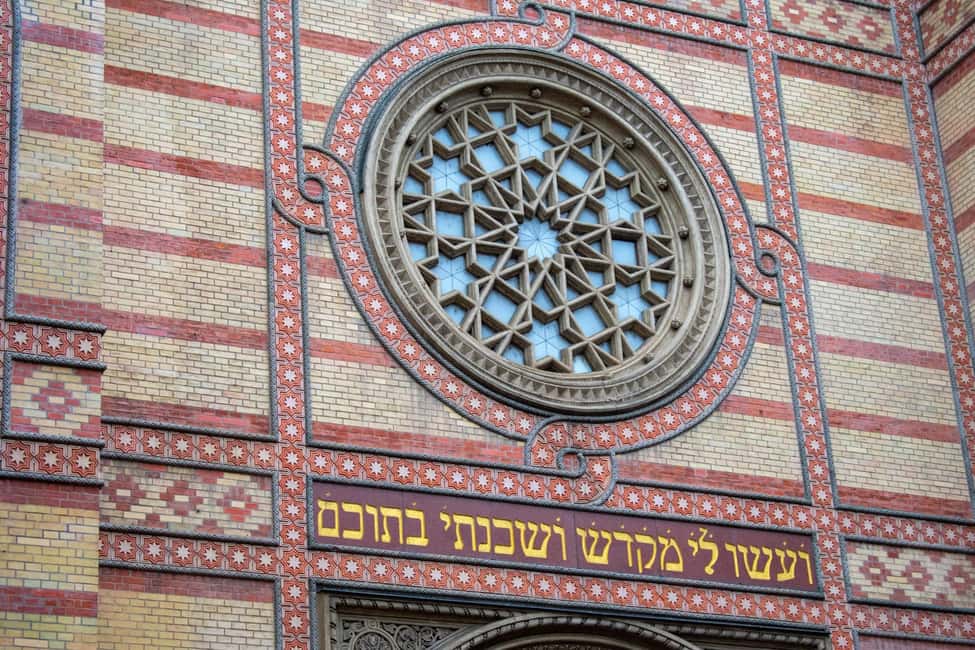
You start seeing why Dohány Street Synagogue is such a magnet for visitors. Even if you’re viewing it from the outside, the size and presence tell you this wasn’t just a church-like building. This was a major statement of community life, faith, and identity.
Your guide uses the building as a reference point for the broader timeline—Jewish presence and civic life in Budapest across centuries, and then the rupture brought by World War II. This is where the tour’s tone becomes clear: it’s educational, but never cold or distant.
Practical note: synagogue entry is not included here. So if you’re hoping for interior access, set expectations now. You can still learn a lot from the outside, especially when your guide is fluent in your language and can point out details you might otherwise miss.
The Jewish Triangle: Rumbach, Kazinczy, and why architecture matters
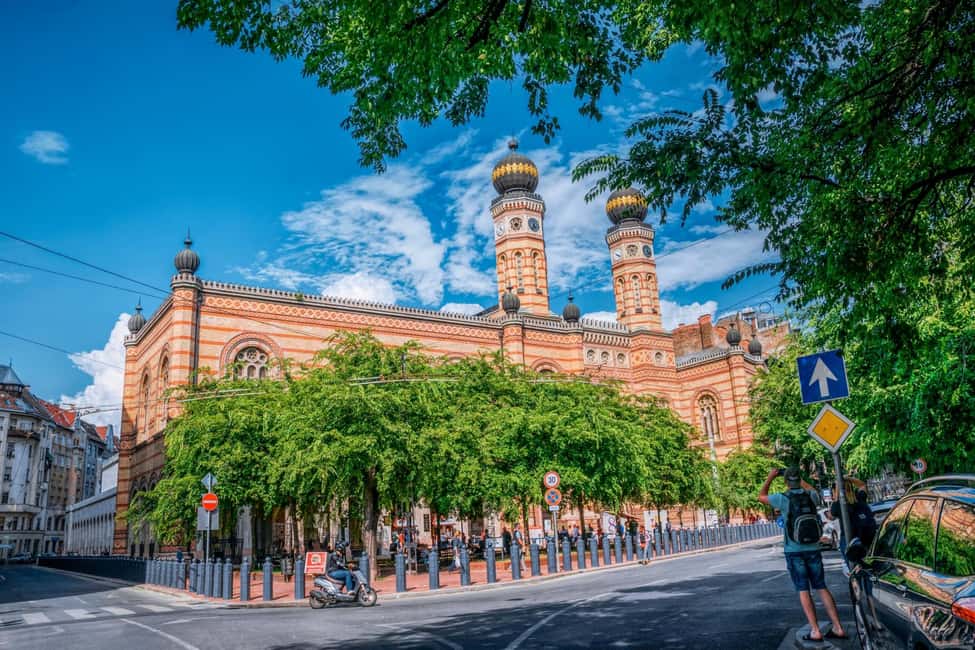
A big value of this walk is that it strings together multiple synagogues in Budapest’s Jewish Triangle—specifically Dohány, Rumbach, and Kazinczy—so the area starts to feel like one connected world.
Rumbach Street Synagogue
Rumbach is highlighted for its delicate Moorish architecture. That matters because it shows how Jewish communities in Budapest expressed themselves through style, craftsmanship, and place. Architecture isn’t just decoration; it’s a cultural signal.
On a private tour, you can ask quick questions here—like what influences shaped the design—and your guide can tailor the explanation to your interest level. That’s one of the reasons the private format is worth considering, even when the tour is only two hours.
You can also read our reviews of more private tours in Budapest





Kazinczy Street Synagogue
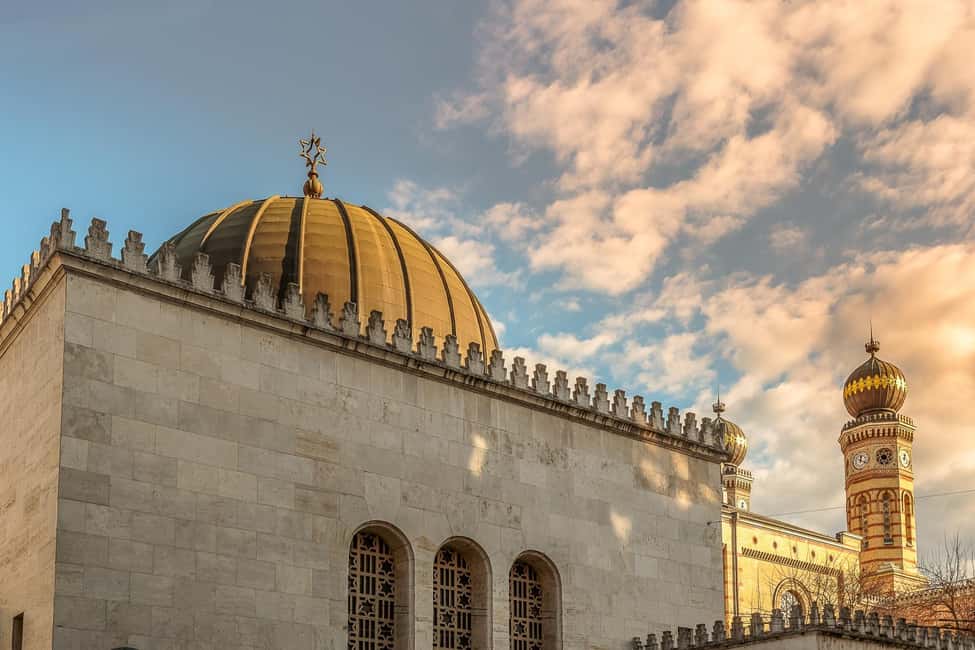
Kazinczy gets framed as part of living Jewish culture, not only an artifact of the past. You’ll likely notice how the surrounding street life contrasts with the heaviness of topics later on. That contrast is useful. It keeps the story human.
Synagogue Astoria Central Residence
This one is mentioned too, and it fits the tour’s broader theme: layered history. As you move through the neighborhood, the guide connects older Jewish presence to buildings that have their own stories, even when you’re not stepping inside.
The Ghetto Memorial Wall: remembering the Holocaust on the original streets
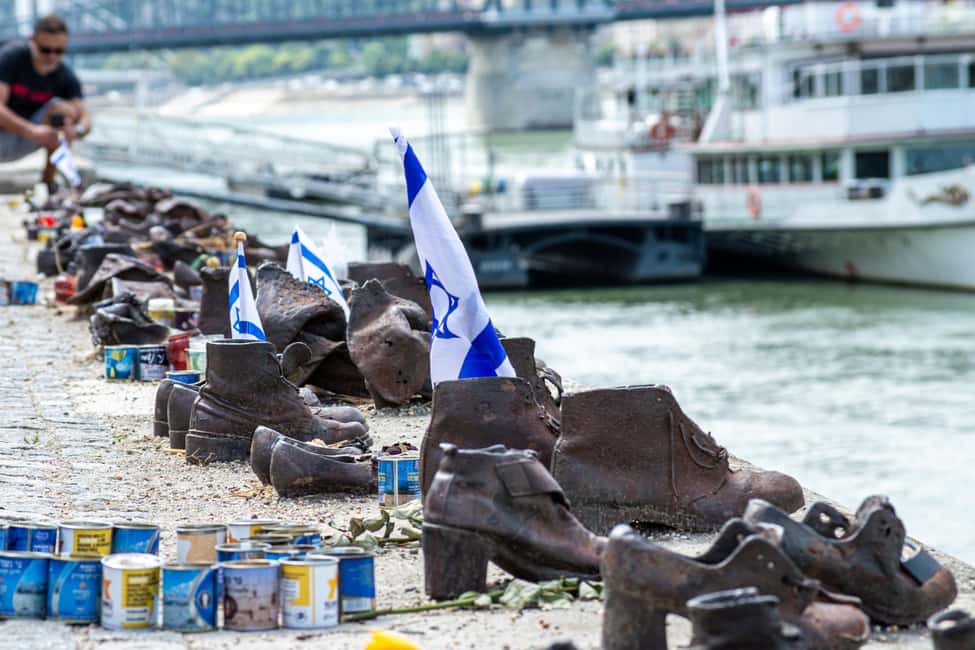
This is the moment where the tour shifts from architecture and chronology to memory you can feel. You’ll visit the Ghetto Memorial Wall, described as the last remaining section. That phrase isn’t just marketing language—it signals that you’re looking at a piece of something that time and destruction didn’t fully erase.
Entry is optional, and the cost is 2 euro per person if you decide to go inside. If you’re wondering whether it’s worth it, I think it is—at least for most visitors—because it grounds the Holocaust story in place. You don’t need to be an expert to understand what the guide is connecting: this wasn’t abstract suffering. It happened here, along these streets.
Also: since this tour is only two hours, the guide pacing matters. You want enough time to absorb it, but not so much that your mind gets overloaded. The private setup helps the guide find that balance.
Klauzál tér and Klauzál Market Hall: ending with real neighborhood life
After the memorial wall, you don’t get tossed into a lecture bubble. Your final stretch goes to Klauzál tér and the Klauzál Market Hall.
This part is smart. It shows the neighborhood as it functions now—daily life, conversations, the smell of food, and that sense that history and present time coexist. The guide also uses this stop to give you recommendations on the best things to do in Budapest, which can save you time later.
A practical way to use this segment: go a little slower here. Grab a quick look around, notice the street rhythm, and let the earlier history settle. It makes the ending feel like closure rather than whiplash.
Price and what it’s actually buying you
The tour price is $150 per person for a private 2-hour walking tour. That’s not a budget price, but it’s not random either.
Here’s what you’re paying for:
- A 5-star licensed guide fluent in your chosen language
- A carefully organized walk focused on Jewish history across multiple key sites
- The private format (small group, keeping it personal)
- Built-in guidance on what to do next in Budapest
Then there are the extras to factor in:
- Synagogue entry is not included, due to restricted access
- Ghetto Memorial Wall entry is optional and costs 2 euro per person
- Food and drinks are not included
So the value depends on your style. If you want a guided, story-driven walk where the guide helps connect dates, events, and places, the price can feel fair. If you’re mainly after interior access to multiple synagogues, you may end up paying additional entry fees outside the tour.
What kind of traveler benefits most?
This tour fits best if you:
- Want a structured overview of Jewish Budapest without feeling lost
- Appreciate context, names, and timelines tied to actual buildings
- Prefer a private guide who can answer follow-up questions
- Are willing to walk a bit (2.5–3.5 km) and handle uneven sections
It may be less ideal if you:
- Only care about interiors and want synagogue entry as the main goal
- Have very limited mobility and can’t manage steps or uneven pavement (the provider says they’re happy to accommodate disabilities whenever possible, but this is still a walking route)
- Want a food-centered experience, since food and drinks aren’t included
Tips to get more out of the tour
You’ll get the most from this experience if you come in with two mindsets: listen closely and ask specific questions.
Practical tips:
- Wear comfortable shoes. It’s a short tour, but the ground may not be perfectly smooth.
- Bring a light layer. The weather in Budapest can shift fast, and the tour runs rain or shine.
- If the Holocaust section is especially important to you, consider taking the optional Ghetto Memorial Wall entry if the timing works for your group.
- Use Klauzál Market Hall as a reset moment. It helps the history land better and gives you ideas for what to eat later (even though you’ll have to buy food yourself).
And one more small note: check your email the day before the tour. The operator may send important information that can help you plan your arrival timing and meet-up details.
Should you book this Budapest Old Jewish Quarter tour?
If you want a guided, human-scale walk through Budapest’s Jewish landmarks—complete with the heavier parts of history handled respectfully—I think this is a strong choice. You’re not just sightseeing; you’re connecting places to the story, and you finish with neighborhood life at Klauzál tér and Klauzál Market Hall.
The biggest reason to book is the private 5-star licensed guide experience and the focused route through the Jewish Triangle plus the Ghetto Memorial Wall. The biggest reason to be careful is that synagogue entry isn’t included, so you should treat this as a guided street-level history tour, not an all-access synagogue visit.
FAQ
FAQ
Where does the tour start and end?
The tour starts next to the Sissi Statue at Madách Imre tér 7, 1075 Hungary. It ends back at the meeting point.
How long is the walking tour?
It lasts about 2 hours.
Is this tour private?
Yes. It’s described as a private group, with small group sizes of 1–25 guests per guide.
What languages are available for the guide?
The live guide is available in English, German, French, Italian, and Spanish.
Are synagogue entrances included?
No. Entry to the synagogues is not included due to restricted access.
Is the Ghetto Memorial Wall included, and does it cost extra?
You’ll visit the Ghetto Memorial Wall, but entry is optional. The entrance fee costs 2 euro per person.
What should I wear or bring for the walk?
Wear comfortable shoes. The tour is moderate with some uneven surfaces or steps, and it runs rain or shine.
Is food included?
No. Food and drinks are not included.