REVIEW · BUDAPEST
Budapest: Big Bus Hop-On Hop-Off Tour & Danube River Cruise
Book on GetYourGuide →Operated by Big Bus Budapest · Bookable on GetYourGuide
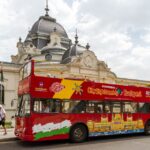
Budapest clicks into place fast. This hop-on hop-off bus pairs sightseeing and a Danube cruise so you can sample a lot without overplanning. I like the 27 well-placed stops that make it easy to shape your day, and I also like that the ticket includes a 1-hour Danube River Cruise plus an optional 1-hour guided walking tour in Pest.
One thing to keep in mind: the experience depends on comfort details. The ride is designed for easy sightseeing, but the audio timing can be imperfect, and boarding can be challenging if you rely on step-free access, even though it’s listed as wheelchair accessible.
In This Review
- Quick hit list before you ride
- Why this bus-and-boat combo works for first-timers
- Getting on at József Attila u. 24 and getting your bearings
- The “how to use the hop-on” mindset
- Pest-side landmarks: Basilica, Opera, Synagogue, and the Deák Ferenc hub
- St. Stephen’s Basilica and the “first big postcard”
- Chain Bridge and the connection moment
- Gresham Palace and Deák Ferenc tér
- Dohány Street Synagogue: a stop with meaning
- Hungarian State Opera House: elegance in motion
- Heroes’ Square and the Museum area
- Thermal breaks and café stops: Szechenyi Bath, New York Palace Café, and Astoria
- Széchenyi Thermal Bath: the classic pause
- Budapest Zoo and Botanical Garden: a green reset
- Budapest-Keleti and the transit texture
- New York Palace Café and Astoria: classic city corners
- Váci Street and Elizabeth Bridge: shopping energy and bridge views
- Gellért Baths and Buda Castle: the viewpoints that make the bus worth it
- Gellért Baths: dramatic setting, optional rest
- Buda Castle: the hilltop anchor
- Margaret Bridge and Margaret Island: a pause in the middle
- Hungarian Parliament Building: the headline from land
- The Danube cruise: seeing Parliament and Chain Bridge from the water
- What you’ll get from the cruise
- A practical sound check
- Plan for the dock walk
- The 1-hour Pest walking tour at 1:00 PM: what it adds
- What the guide route covers
- Audio commentary in 16 languages: useful, but don’t trust it blindly
- My advice for smooth listening
- Price and value: when a $40 ticket makes sense
- Who should book this and who might want another plan
- Should you book Big Bus Budapest?
- FAQ
- How long is the Danube River cruise?
- When can I take the Danube cruise?
- Is the Danube cruise included with the hop-on hop-off ticket?
- How long is the guided walking tour?
- What time does the walking tour start and where does it begin?
- What language is the walking tour in?
- What languages are available for the bus audio commentary?
- Is hotel pickup included?
- Is this activity wheelchair accessible?
Quick hit list before you ride

- Two routes and numbered stops: you can build your day around where you want to spend time, then jump back on.
- Included Danube cruise (1 hour): you get landmark views from the water, including the Parliament area and Chain Bridge views.
- Optional 1-hour Pest walk at 1:00 PM: a guided taste of historic city streets the buses don’t cover as well.
- Audio commentary in 16 languages: Spanish through Korean, synced to the ride so you don’t need to read as you go.
- Air-conditioned in summer, heated in winter: comfort matters on a full city loop.
- Frequent convenience, but busy times can fill buses: plan to queue calmly at peak arrival moments.
Why this bus-and-boat combo works for first-timers
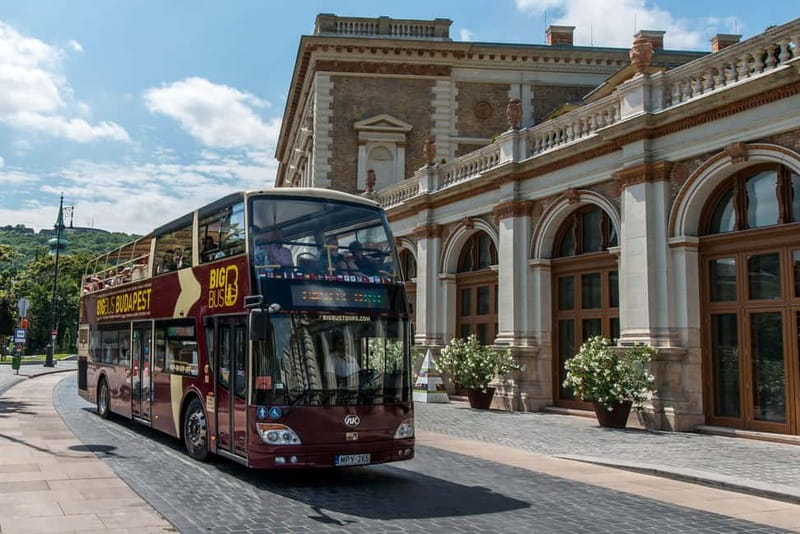
Budapest is a split city. You’ve got grand riverside drama and hilltop views on the Buda side, then lively streets and architecture in Pest. This tour is built for that reality: it gets you oriented with an open-top bus, then hands you the best “wow” angle via the Danube cruise.
I also like that the ticket isn’t just a bus ticket with a brochure. You’re getting three formats in one: ride + cruise + walking tour. That mix is a big deal when your time is limited and you want to decide later where to go deeper.
The pace is also flexible without being chaotic. You can hop off at major landmarks like St. Stephen’s Basilica, Hungarian Parliament Building, and Buda Castle, then return when you’re ready.
You can also read our reviews of more boat tours in Budapest



Getting on at József Attila u. 24 and getting your bearings
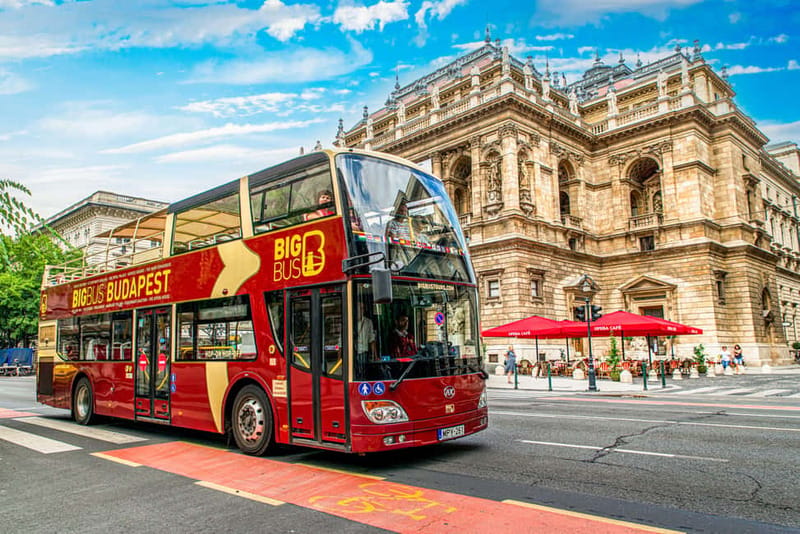
The meeting point is József Attila u. 24. Present your booking confirmation to a Big Bus Tours staff member at the office there, or on-board the bus, and you’re set.
From a practical standpoint, the hop-on hop-off system is what makes the tour useful. Buses follow routes with 27 convenient stops, and each stop is positioned so you can realistically walk to sights right away. You’re not stuck with one linear “get off at stop 14” schedule.
Comfort helps too. The buses are air-conditioned during summer and heated during winter, which makes the experience feel more like transport you’d choose, not just a long sightseeing chore.
The “how to use the hop-on” mindset
Instead of trying to see everything from the top deck, I’d use the bus as your moving map:
- Ride the loop once early to learn the geography.
- Mark 3–5 stops for hands-on exploring later.
- Use the bus to reconnect between the Pest street energy and the Buda Castle viewpoints.
Budapest rewards that approach because neighborhoods feel different depending on the side of the river.
Pest-side landmarks: Basilica, Opera, Synagogue, and the Deák Ferenc hub
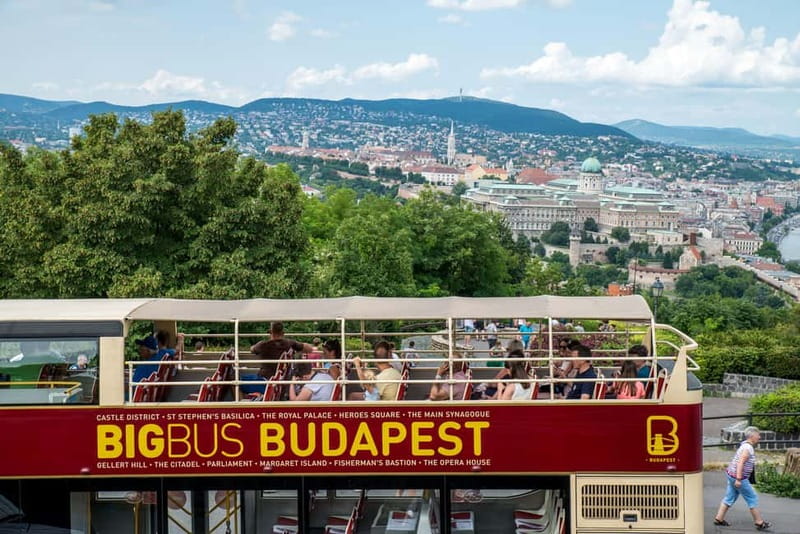
Your bus experience starts at József Attila u. 24, and then you roll toward Pest’s top sights. The route includes the areas that most visitors want first: the big church, the historic synagogue district, and the city’s main transport-and-shopping node.
Here’s what stands out as the bus moves through Pest:
St. Stephen’s Basilica and the “first big postcard”
St. Stephen’s Basilica is one of those places where the outside alone earns your attention. Even if you don’t go inside, seeing it from street level makes it easier to understand why it’s the city’s religious centerpiece. This is a great early stop because it sets your mental baseline for Budapest’s scale.





Chain Bridge and the connection moment
Chain Bridge is passed and also listed as a major stop point on the route. It’s the visual hinge between Pest and Buda, and it’s the bridge you’ll keep seeing again in photos for a reason. If you want a quick orientation break, step off here and take a few minutes to look at both directions of the river.
Gresham Palace and Deák Ferenc tér
You’ll pass Gresham Palace and stop around Deák Ferenc tér, which is a central city square area. I like using this zone to reposition yourself because it connects you to lots of transit and walking options. Even if you don’t plan a long visit, it’s useful to know you can “reset” here.
Dohány Street Synagogue: a stop with meaning
The bus includes Dohány Street Synagogue. If your sightseeing list includes Jewish heritage in Europe, this is one of the key stops in Budapest. It’s also a place where it’s worth slowing down and not just treating it as a photo moment.
Hungarian State Opera House: elegance in motion
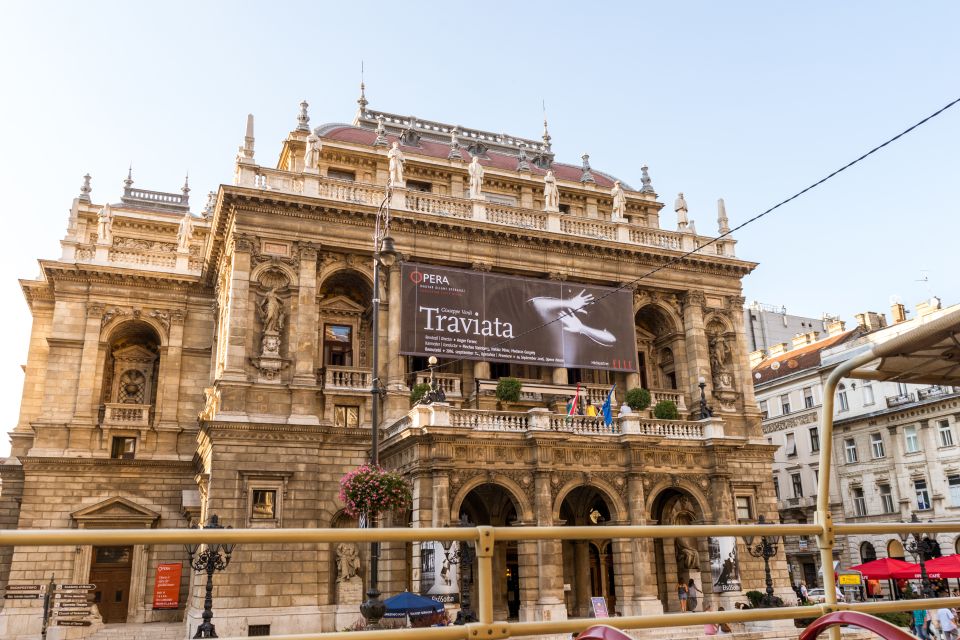
The Hungarian State Opera House stop gives you a taste of the city’s grand architecture style. If you see it while the building is lit or the street is active, the whole area feels more alive than it does from a distance. For me, it’s one of those “oh, this is why people fall for Budapest” stops.
Heroes’ Square and the Museum area
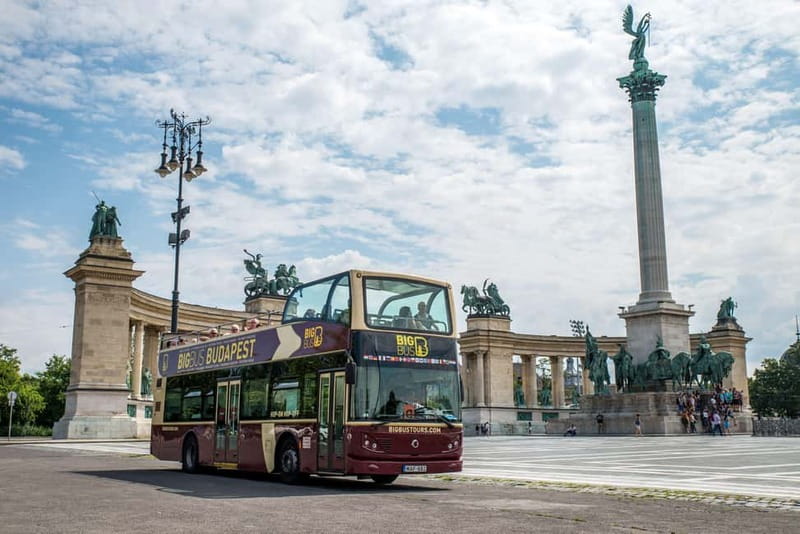
Heroes’ Square is on the route, as is the Museum of Fine Arts. This whole zone reads like Budapest’s national-stage moment: statues, symmetry, and wide-open space. If you like civic architecture and formal urban design, this is where you’ll feel it.
Thermal breaks and café stops: Szechenyi Bath, New York Palace Café, and Astoria
Some stops on this route are about comfort, not just sights. These are the places where you can turn sightseeing into an actual plan for your day.
Széchenyi Thermal Bath: the classic pause
The bus stops at Széchenyi Thermal Bath. Even if you don’t enter, the stop works well for understanding where the spa district sits. If you do go in, plan it as a time block, not a quick detour.
Budapest Zoo and Botanical Garden: a green reset
You’ll also pass Budapest Zoo and Botanical Garden. It’s not always top-of-mind for first-time visitors, but it’s a good reminder that Budapest has plenty of “take a breath” space. If you’re traveling with kids (or you just want a slower pace for a half day), this stop can help you stitch together a calmer plan.
Budapest-Keleti and the transit texture
Budapest-Keleti appears on the route. It’s mostly a “you’re near a major rail hub” moment, useful if you’re connecting trains or you want to explore the surrounding area. It’s also a reality check stop: Budapest isn’t only palaces and bridges.
New York Palace Café and Astoria: classic city corners
You’ll see New York Palace Café and Astoria. These stops are handy because cafés are where you build a real Budapest day. I’d treat these as either refresh points between sights or a chance to watch street life go by while you refuel.
Váci Street and Elizabeth Bridge: shopping energy and bridge views
Váci Street is included, and so is Elizabeth Bridge. Váci tends to be a strong “street-level Budapest” moment, where the city feels practical and visitor-friendly at the same time. Elizabeth Bridge also gives you a new river-spanning angle, especially when you’re transitioning back toward Buda.
Gellért Baths and Buda Castle: the viewpoints that make the bus worth it
Eventually you’ll cross into the Buda side via the route’s stop points, and that’s where the scenery typically turns from “interesting” to “can’t believe this is real.”
Gellért Baths: dramatic setting, optional rest
The route includes Gellért Baths. Even if you don’t go in, the baths are a good “this city uses thermal culture well” marker, and the location helps you understand why the waterfront and hills feel connected rather than separate.
Buda Castle: the hilltop anchor
Buda Castle is one of the key landmark stops on the bus. This is where the whole city’s altitude comes into focus, and it’s often the point where you start planning a longer stay nearby. If you’re short on time, you can still get value from this stop by stepping off for a viewpoint moment before moving on.
Margaret Bridge and Margaret Island: a pause in the middle
Next are Margaret Bridge and Margaret Island. Margaret Island is a classic Budapest reset: it’s not about one building; it’s about changing pace. If your schedule feels packed, these stops help you build space into the day without breaking the route.
Hungarian Parliament Building: the headline from land
Hungarian Parliament Building is one of the big focal stops. If you love architecture, this is the stop you’ll come back to in photos and in your memories. It also sets you up to understand why the Danube cruise is included—because the river view changes everything.
The Danube cruise: seeing Parliament and Chain Bridge from the water
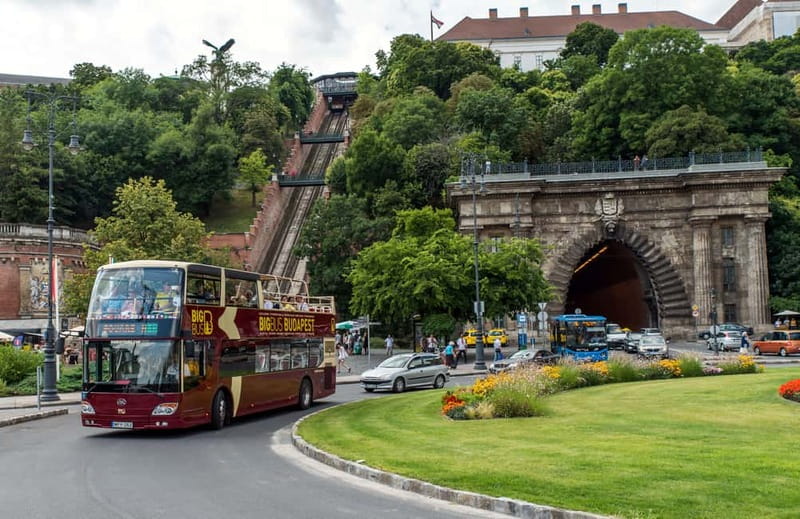
The included 1-hour Danube River Cruise is valid for the duration of your hop-on hop-off ticket. The big timing rule is that cruise access works only between 11:00am and 5:00pm.
Before boarding, you’ll need to redeem your tickets with a Big Bus Tours staff member. This is one of those steps that can quietly affect your day, so I’d give yourself a buffer, especially if you’re trying to combine the cruise with a walking tour earlier.
What you’ll get from the cruise
The water route is designed to show Budapest’s top landmarks from angles the bus can’t replicate. From the river you’ll see views tied to:
- Hungarian Parliament Building
- Chain Bridge
- National Theatre and Royal Palace (as part of the cruise views)
A practical sound check
On the boat, the commentary experience can vary based on where you’re seated. If you find yourself in an area where it’s hard to hear, don’t panic—just watch the landmarks closely and use the bus stops as your reference points when you’re back on land.
Plan for the dock walk
One more logistics thing: the cruise dock may require a bit of walking from the bus area. If you’re hopping between stops, give yourself extra time to locate the boarding point calmly.
The 1-hour Pest walking tour at 1:00 PM: what it adds
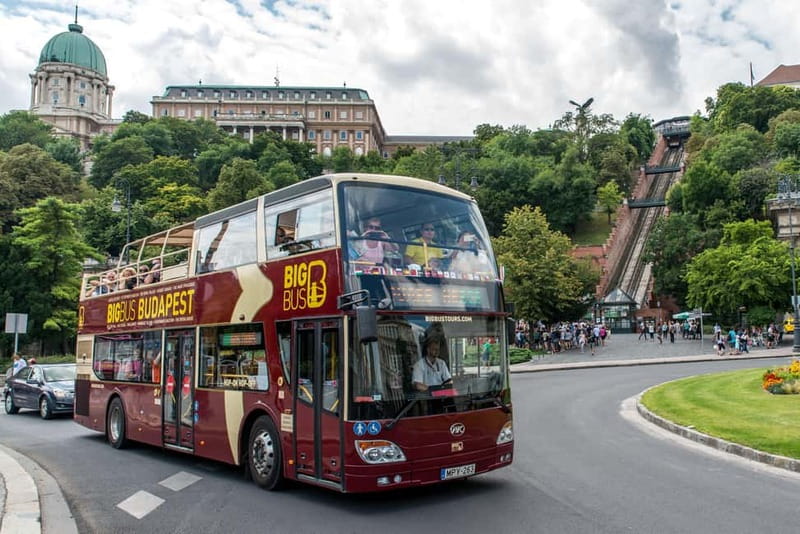
This isn’t a “tour bus reaches a corner and we call it walking.” It’s a guided walk focused on Pest’s streets and spots you can miss if you only do the bus.
The guided tour:
- Starts at 1:00 PM
- Begins at Stop #1: Basilica (Red Route)
- Ends at Stop #2, by Chain Bridge
- Is English only
- Starts after you redeem your ticket with a Big Bus staff member
The best part of the walking tour is that it fills gaps. The bus is great for coverage, but it can’t replicate the feeling of standing on real streets in the Pest historic core.
What the guide route covers
During the walk, you’ll get a fresh perspective on places the bus doesn’t cover as closely, including:
- Shoes on the Danube Bank memorial sculpture
- Parliament
- Váci Fashion Street and Promenade
Even if you’ve already seen a lot from the bus, this is where you get the “why this place matters” layer and the street context that turns landmarks into neighborhoods.
Audio commentary in 16 languages: useful, but don’t trust it blindly
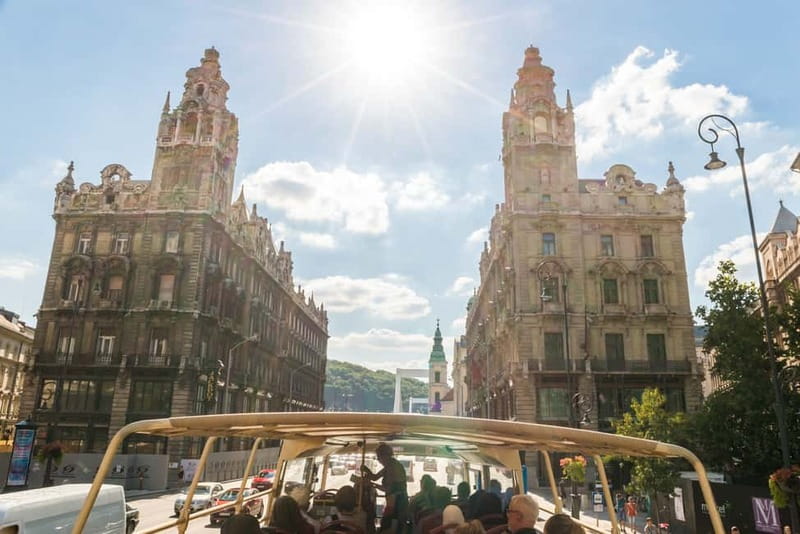
The bus includes digital audio commentary in 16 languages, with options including Spanish, Turkish, Dutch, English, French, German, Greek, Hebrew, Hungarian, Italian, Arabic, Polish, Portuguese, Russian, Swedish, and Korean.
That’s great for independent sightseeing because you can understand what you’re seeing without needing to stop and read. The key is to pair the audio with the on-bus stop numbering.
My advice for smooth listening
Audio is only helpful if you’re paying attention at the right moment. Keep an eye on stop numbers and the windows around you so you know when a new landmark is actually arriving. If the audio seems to run ahead or lag behind your view, use the stop list to stay oriented.
Price and value: when a $40 ticket makes sense
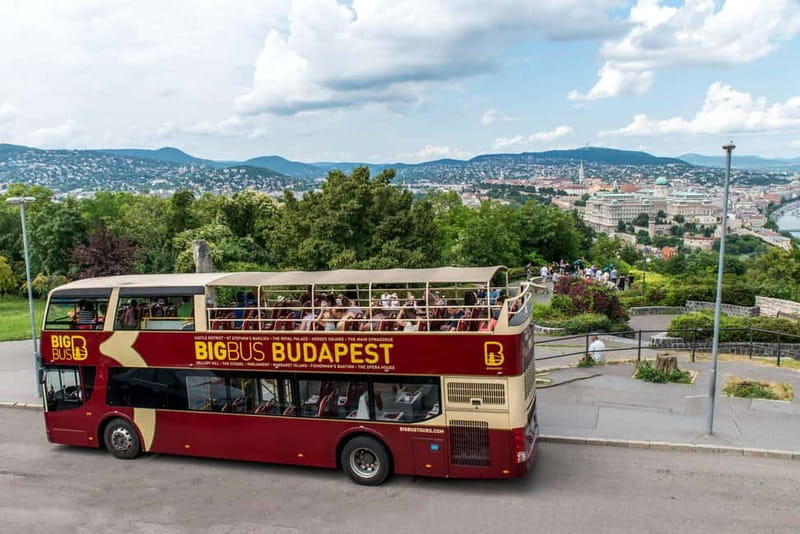
At around $40 per person, the value here comes from the bundle. A lot of Budapest “hop-on” options are just transport plus optional extras. This ticket combines:
- Hop-on hop-off bus access for 1, 2, or 3 days (choose the option you need)
- A 1-hour Danube cruise
- A 1-hour guided walking tour
The result is that you’re not paying separately to stitch together bus + boat + a guided context walk. If you’re visiting for a short time, that bundling can save you planning stress and money compared with piecing it together on the fly.
Also, the bus being climate-controlled helps your day feel more efficient. Waiting indoors with audio is still waiting, but it’s easier when you’re not baked in summer sun or chilled in winter.
Who should book this and who might want another plan
This is a solid choice for:
- First-time visitors who need an orientation loop fast
- Travelers who want flexibility with hop-on stops and a few guaranteed “big views”
- People who like getting a guided layer once (the walking tour) rather than booking many separate paid tours
- Anyone who values comfort, since the buses are climate-controlled
I’d be a little cautious if:
- You need fully step-free boarding support. The service is listed as wheelchair accessible, but boarding steps can still be an issue, so it’s smart to ask staff about the best way to board and disembark.
- You plan to rely on audio as your only source of information. Use stop numbers as your anchor, because the audio timing and clarity can vary.
Should you book Big Bus Budapest?
If you’re doing Budapest for 1 to 3 days and want to spend your time seeing instead of researching, I think this is a worthwhile booking. The included Danube cruise is the kind of value that’s hard to match with ticket-by-ticket planning, and the walking tour gives you a human-guided layer on the Pest side.
Book it if you want a structured overview with flexibility. Skip it only if you know you’ll want deep, specialized tours in each neighborhood and you don’t need a first-pass city overview.
FAQ
How long is the Danube River cruise?
The Danube River Cruise included with the ticket is 1 hour.
When can I take the Danube cruise?
Cruises are only available between 11:00am and 5:00pm.
Is the Danube cruise included with the hop-on hop-off ticket?
Yes. The cruise is included, and it’s valid for the duration of your hop-on hop-off ticket.
How long is the guided walking tour?
The guided walking tour is 1 hour.
What time does the walking tour start and where does it begin?
It starts at 1:00 PM from Stop #1: Basilica (Red Route) and ends at Stop #2 by the Chain Bridge.
What language is the walking tour in?
The walking tour is in English only.
What languages are available for the bus audio commentary?
The audio commentary is provided in 16 languages, including Spanish, Turkish, Dutch, English, French, German, Greek, Hebrew, Hungarian, Italian, Arabic, Polish, Portuguese, Russian, Swedish, and Korean.
Is hotel pickup included?
No. Hotel pickup and drop-off are not included.
Is this activity wheelchair accessible?
The activity is listed as wheelchair accessible, though you should be prepared for boarding challenges and ask staff for the best option when you arrive.