REVIEW · BUDAPEST
Budapest: 3-Hour Walking Tour of Pest with a Historian
Book on GetYourGuide →Operated by Budapest Explorers · Bookable on GetYourGuide
Pest is where Budapest tells its story. This 3-hour walking tour with a historian keeps the focus on Downtown Pest, mixing major landmarks with the kind of context that makes the streets feel readable. You get sights that anchor the city, plus stories about Hungary’s past and present that you can ask questions about as you go. And yes, you also get St. Stephen’s Basilica with an entry ticket already included.
I especially like the way the tour balances big names with everyday understanding. Heroes’ Square and the surrounding central sights help you connect the “official” narrative to what people lived through, from older empires to the 20th century and the Communist era, without turning it into a lecture you dread.
One practical drawback: it’s a walking tour with cobblestones and city surfaces, so good shoes matter. If you’re expecting a slow, mostly-stops-and-starts experience, this one may feel a bit brisk for the time on your feet.
In This Review
- Key highlights worth marking
- Where the tour starts: Erzsébet tér and Pest’s city-center energy
- St. Stephen’s Basilica: seeing Budapest’s largest church inside
- Heroes’ Square: the 1000-year timeline you can actually remember
- Andrássy Avenue and the Opera streetfront: UNESCO grand boulevard energy
- Zrínyi Street cobblestones and the feel of daily Pest
- Gresham Palace and the Academy of Sciences: architecture as a clue
- The Danube Promenade: a natural spine for context
- Millennium Underground: riding the oldest underground line on the continent
- About your historian guide: questions, and the past-to-present connection
- Pace and group size: why max 10 matters on a 3-hour tour
- Price and value: is $57 fair for this much structure?
- Who should book this Pest tour (and who might skip it)
- Should you book the Budapest 3-Hour Walking Tour of Pest with a Historian?
- FAQ
- FAQ
- How long is the Budapest Pest walking tour with a historian?
- What’s included in the price?
- Is the tour in English?
- How big is the group?
- Where do I meet the tour guide?
- What key sights will we see?
- Is the tour refundable if my plans change?
Key highlights worth marking
- St. Stephen’s Basilica ticket included so you’re not juggling entry lines or extra planning
- Heroes’ Square and 1000 years of Hungarian history explained around influential historical figures
- Millennium Underground ride on the oldest underground line on the continent
- Andrássy Avenue UNESCO walk with the classic Budapest “grand boulevard” feel
- Small group (max 10) that supports real Q&A and course correction
- Subway ticket(s) included paired with a route that uses public transit smartly
Where the tour starts: Erzsébet tér and Pest’s city-center energy
You’ll meet in front of the Kempinski Hotel Corvinus Budapest, right on Erzsébet square, facing the Ferris wheel. That’s a handy spot because it sits right in the thick of central Budapest, where you can already feel the “young side” of the city compared with Buda.
If you’re taking the subway, aim for Deák Ferenc tér via M1, M2, or M3. From there, it’s a straightforward link to the central core, which matters because this tour is only 3 hours. You want minimal transit time eating into your sightseeing time.
What I like about starting here is that it sets a clear tone: this is not a “jump from museum to museum” day. It’s built for walking through real streets, picking up the clues the city uses to explain itself—names, monuments, architecture, and the way the neighborhoods feel as you move.
You can also read our reviews of more walking tours in Budapest



St. Stephen’s Basilica: seeing Budapest’s largest church inside
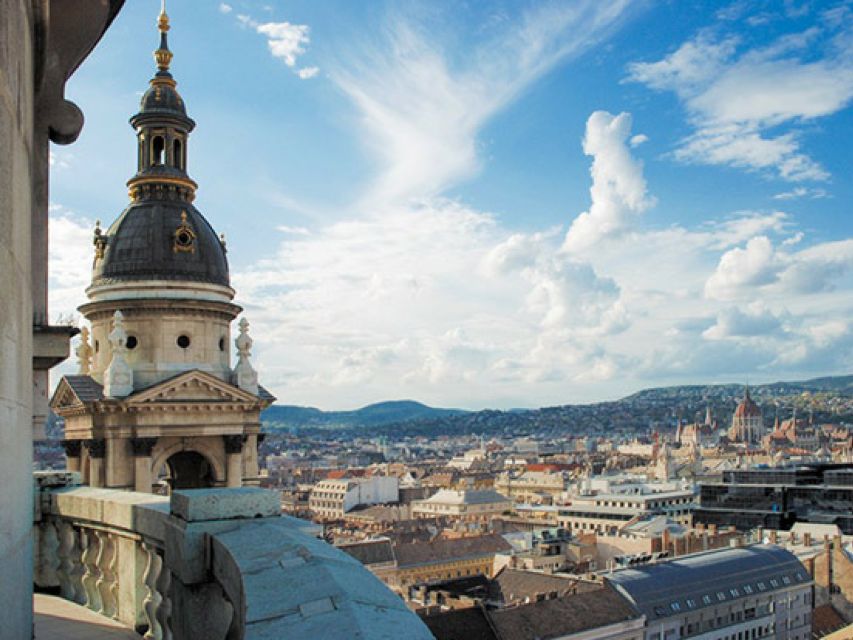
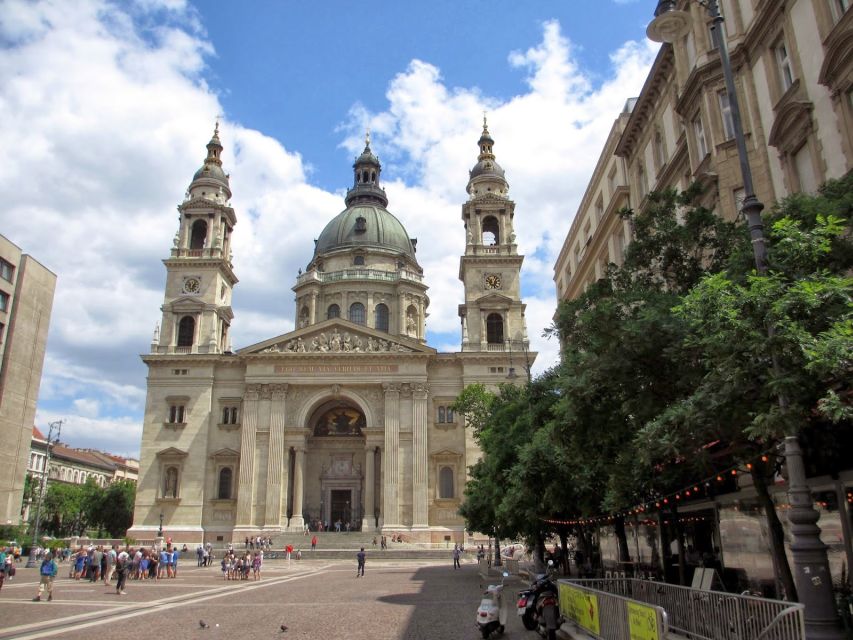
A standout stop is St. Stephen’s Basilica, presented as the big anchor of the tour. You’re going inside the church, and the entrance ticket is included, which is a real value add for a short outing like this.
The tour frames the basilica more like a landmark you can interpret than a photo-op. Your historian guide uses it as a starting point for bigger questions: how Hungarian identity shaped public spaces, how religion and state history overlap in the city’s center, and why visitors keep ending up in the same central streets for a reason.
Practical note: since you’re walking and then stepping into a major church, I’d plan for a mix of bright exterior light and dimmer interior space. Bring a phone-friendly plan for photos if you care, and keep your patience for the usual indoor rules.
Heroes’ Square: the 1000-year timeline you can actually remember
Another big moment is Heroes’ Square. The tour uses it to help you grasp 1000 years of Hungarian history, specifically through the lens of major historical persons. This is one of those places where a guide changes everything—because without explanation, it’s easy to admire the grandeur and still miss the point.
What you get here is the kind of mental sorting that makes later parts of the city easier to read. Once you understand who the monuments are signaling and why they matter in Hungarian memory, the rest of Pest stops feeling random. Streets, buildings, and even the shift between older and more modern layers start to connect.
I also appreciate how the tour keeps the story from becoming purely “past-only.” The guide is set up to talk about Hungary today, so Heroes’ Square can serve as a bridge: what the symbols meant then, and what the symbols mean in the present.
Andrássy Avenue and the Opera streetfront: UNESCO grand boulevard energy
The tour includes a walk down Andrássy Avenue, flagged as a UNESCO world heritage site. This isn’t just scenic walking. It’s a change of pace and scale from the surrounding city streets: you get the sense of a planned, ceremonial “main line” through Pest’s center.
As you move along, the tour ties the avenue to the buildings that frame Budapest’s self-image, including the Hungarian State Opera. Even if you don’t go inside the Opera, you still learn how to look at it—why it belongs in this storyline and how these grand cultural buildings fit into the broader narrative about the city and the country.
This part is also where I’d expect you to slow down a little. You’ll see the kind of architecture you want to stop for, especially if you like street-level history. The UNESCO mention matters here because it signals that the avenue isn’t just pretty; it’s part of the city’s recognized historical fabric.
Zrínyi Street cobblestones and the feel of daily Pest
One of the nicest “small texture” moments is Zrínyi street, known here for its cobblestones. That detail might sound minor, but it actually does something useful: it changes your walking rhythm and reminds you this is a lived city, not a staged set.
The tour doesn’t treat Pest like a theme park. It focuses on the idea that Pest and Buda have different mentalities, and the guide helps you understand what that means in practice. So instead of only talking about rulers and wars, you’re also hearing how people experience the city now—what it’s like to live there today, and how the past keeps showing up in everyday life.
If you like history that connects to human behavior—how cities shape attitudes—this street stop is exactly the kind of switch that makes the tour memorable.
You can also read our reviews of more tours and experiences in Budapest






Gresham Palace and the Academy of Sciences: architecture as a clue
You’ll also pass notable central buildings, including the Gresham Palace for its Art Nouveau splendor and the historic Academy of Sciences. These stops work best when you let your guide set the viewing angle.
Rather than listing facts, the historian uses buildings as evidence: who invested in which kind of identity, what kinds of public life the city wanted to project, and how changing eras left their stamp on the street scene.
If you enjoy learning how to “read” architecture—what styles can suggest about time and values—these are solid stops. They also break up the pace between bigger monuments, so you’re not always marching from one massive site to another.
The Danube Promenade: a natural spine for context
The tour includes the Danube Promenade, which is valuable because it anchors Pest in the geography that shaped the city’s growth and movement. Even with limited time, standing near the river gives you a reference point: it’s easier to understand why certain areas matter when you can feel where the river sits in the city’s logic.
In a walking tour, context beats trivia. The prom is a spot where you can let the historian’s larger narrative click into place, because the city’s layout becomes easier to visualize as you move.
Millennium Underground: riding the oldest underground line on the continent
A highlight you’ll feel immediately is the Millennium Underground ride—the oldest one on the continent, as the tour describes it. Instead of just seeing a station and moving on, the experience is built around the actual ride, which is the best kind of “transport history.”
This is one of the smartest inclusions for a first-time visitor because it does two things at once:
- You learn something real about Budapest’s transit story.
- You save time while traveling through central areas without turning your day into a map-chasing exercise.
Expect the guide to tie the ride back to the broader sweep of Hungarian history and the city’s evolution. It’s an effective way to keep the tour from becoming only outdoor sight-reading.
About your historian guide: questions, and the past-to-present connection
This tour is designed around discussion. The guide is described as not afraid to answer questions and to talk about whatever topic you bring up about Budapest and Hungary, from historical turning points to what daily life looks like.
That approach shows up in how different guides are remembered. For example, I’d expect a similar storytelling style if you get guides like Judit, Barbara, Monica, Andrea, Raymond, Greg, Gergely Molnár, or Noemi—all named in the tour’s feedback—because the consistent theme is pacing and engagement. The good kind of history talk: energetic, human, and structured so it doesn’t overwhelm.
One detail I think you should actually care about: some guides use their own experience growing up in Hungary to add color. That personal angle helps the historical timeline stop feeling like names on a wall and start feeling like choices real people made.
Also, be ready for the “big span” of topics. The tour’s history coverage includes the Austro-Hungarian Empire, WWII, and the Communist era, then comes back to the present day. If you want an organized mental framework for 20th-century Hungary (not just random facts), this format is well suited.
Pace and group size: why max 10 matters on a 3-hour tour
This is a small group limited to 10 participants, and that matters more than it might sound. On a tour this time-constrained, a small group makes it easier to:
- ask follow-up questions without being rushed,
- adjust the pace when you want to linger,
- keep the route moving while still covering key sights.
The tour also includes subway ticket(s). That reduces friction because you’re not stopping to figure out transit purchases mid-day.
For comfort, plan on walking, but expect the guide to manage timing so you’re not stuck waiting around forever at every stop. The tour’s strong rating for pacing is exactly what you want when you only have a half-day.
Price and value: is $57 fair for this much structure?
At $57 per person for 3 hours, the value comes from what’s included, not just the headline price.
You’re getting:
- a historian guide
- entrance ticket to St. Stephen’s Basilica
- subway ticket(s)
- the walking tour itself
For a short visit, this is a practical way to spend money. You pay once and the tour handles the parts that usually cause small headaches: entry planning, transit tickets, and making sure you hit a meaningful set of sites without wandering.
The other value point is group size. With a max of 10, you’re more likely to actually talk to the guide and get answers that fit your questions, not just listen passively.
If you’re the type of traveler who enjoys history when it’s explained with context and humor, the price feels aligned with what you’re buying: time, guidance, and access.
Who should book this Pest tour (and who might skip it)
This tour is a strong fit if you:
- want a first look at Pest in a tight time window,
- like history that connects past to present,
- enjoy asking questions as you walk,
- want built-in transit support plus a major church entry.
You might skip it if you:
- hate walking and prefer slower, vehicle-based sightseeing,
- want only one or two deep stops and don’t care about building a bigger Pest overview,
- are hoping for a tour that is mostly indoors.
If you’re visiting for the first time, this is also a great “get your bearings fast” style option, because it ties landmarks together into a single story.
Should you book the Budapest 3-Hour Walking Tour of Pest with a Historian?
If your goal is to understand Pest quickly and correctly, I’d book it. The mix of St. Stephen’s Basilica, Heroes’ Square, Andrássy Avenue, the Hungarian State Opera area, and the Millennium Underground ride creates a compact, high-impact route. More importantly, the historian guide approach—question-friendly and structured—helps you leave with a clearer sense of Hungary’s timeline and how it still shows up in the city.
Do it if you like practical context while you walk. Pass if you want a casual stroll with zero structure.
FAQ
FAQ
How long is the Budapest Pest walking tour with a historian?
The tour lasts 3 hours.
What’s included in the price?
The tour includes a historian guide, entrance ticket to St. Stephen’s Basilica, subway ticket(s), and the walking tour.
Is the tour in English?
Yes, the live tour guide is English.
How big is the group?
The group is small, limited to 10 participants.
Where do I meet the tour guide?
Meet in front of the Kempinski Hotel Corvinus Budapest, facing the Ferris wheel on Erzsébet square (Erzsébet tér 7, 1051).
What key sights will we see?
You’ll visit major Pest highlights including St. Stephen’s Basilica, Heroes’ Square, Andrássy Avenue, the Hungarian State Opera, and you’ll ride the Millennium Underground, plus stops such as the Danube Promenade, Gresham Palace, the Academy of Sciences, and Zrínyi street.
Is the tour refundable if my plans change?
Yes, it offers free cancellation up to 24 hours in advance for a full refund.