REVIEW · BUDAPEST
BloodThirsty Hungary: Walking tour & Dark Historical Stories
Book on GetYourGuide →Operated by Legendary Tours Budapest · Bookable on GetYourGuide
Spooky history, perfect views, and a performer in costume. This 110-minute walk through Budapest’s Castle District turns the landmarks you already want to photograph into stops for chilling, true stories. Expect professional actors in period outfits and a route planned for great nighttime photos.
I especially love the balance: the facts are treated seriously, but the delivery stays lively. I also like the way the walk strings together scenes across Castle Hill, so you don’t just see buildings, you understand why they matter.
One consideration: this is a real walking tour in a hilly area, and Budapest evenings can get cold fast. If you’re not into lots of steps and cobblestones, wear good shoes and dress warm.
In This Review
- Key highlights before you lace up
- Why this Castle District walk feels like theatre
- Meeting at St. Stephen and getting oriented fast
- The route, stop by stop: from Matthias Church to the Royal Riding Hall
- Statue of St. Stephen I (start point)
- Fisherman’s Bastion (quick pass)
- Matthias Church (main photo stop + sightseeing)
- Equestrian Statue of András Hadik (photo stop)
- Ősforrás (Zsolnay-díszkút) and scenic viewpoints
- Sándor Palace (pass by)
- Budapest Castle Hill Funicular (photo stop)
- Buda Castle (pass by)
- Fountain of King Matthias (photo stop)
- Main Guardhouse (pass by)
- Royal Riding Hall, Budapest (photo stop)
- Finish at Dózsa György tér 4
- The stories: dark historical figures, true and told with humour
- Photo opportunities that actually work at night
- Price and value: why $21 can make sense
- Who should book this and who might skip it
- If you like dark history with theatre, this is a strong yes
- FAQ
- How long is the BloodThirsty Hungary walking tour?
- How much does the tour cost?
- What language is the live guide?
- Where do I meet the guide?
- What landmarks are included along the walk?
- Where does the tour end?
- Is the tour mostly walking?
- Do I need to check in with the guide?
- Is there free cancellation?
Key highlights before you lace up
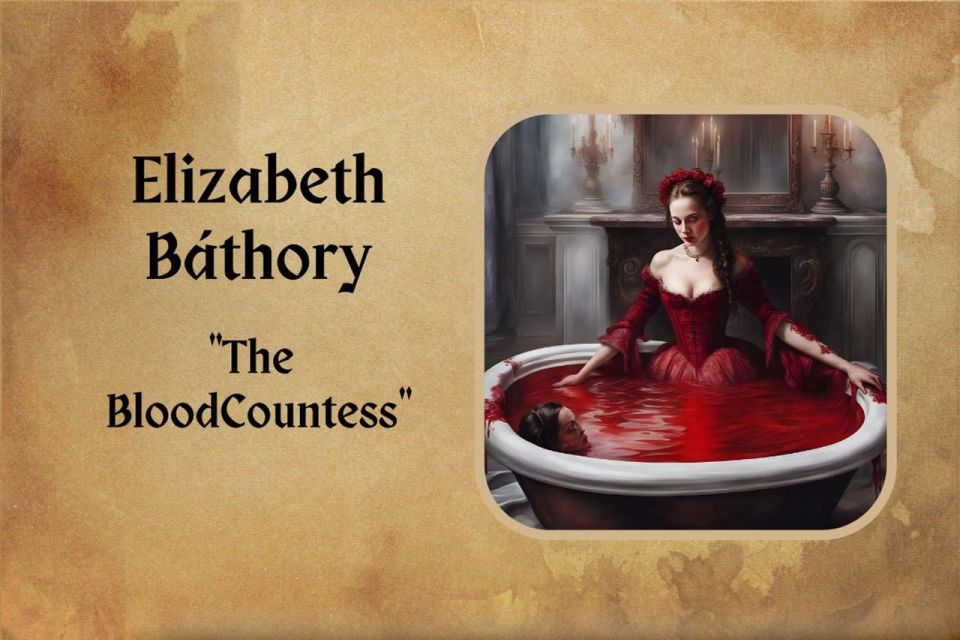
- Costumed actor guides bring dark Hungarian stories to life with theatrical energy
- Photo-friendly timing and angles across Matthias Church, Fisherman’s Bastion, and Buda Castle area
- True, well-researched storytelling that stays engaging for the full 110 minutes
- Castle District landmarks in one loop, with several planned photo stops
- Helpful end-of-tour navigation, so you’re not left guessing how to get home
Why this Castle District walk feels like theatre
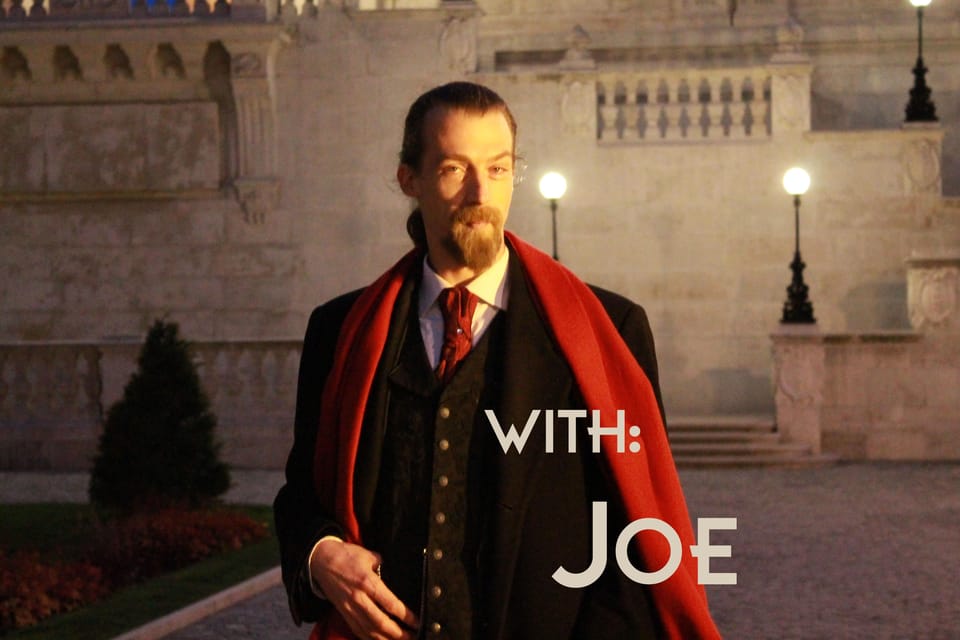
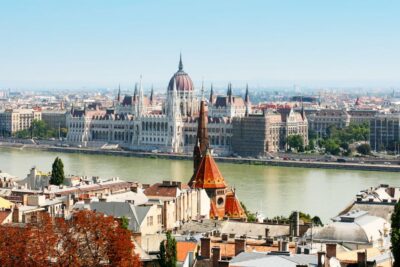
Budapest’s Castle District is already cinematic at night. What makes this tour different is how the storytelling works with the scenery instead of interrupting it. You pause at key points like Matthias Church and the Fisherman’s Bastion area, then get a scene from Hungary’s darker past that fits the location.
The actor-style format matters here. When the guide shows up dressed for the part, your brain shifts from sightseeing to listening. That’s why the time feels short even though the route is busy and includes several photo stops. If you enjoy history, but you also want entertainment, this is a strong match.
You can also read our reviews of more walking tours in Budapest

Meeting at St. Stephen and getting oriented fast
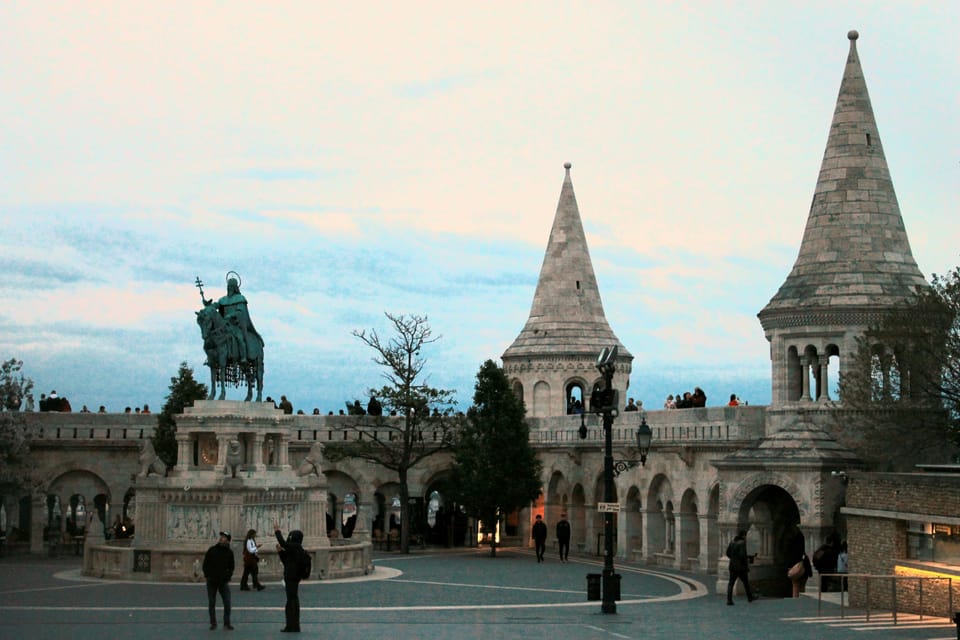
You start at the Statue of St. Stephen I, specifically at the Horsemen Statue area near Matthias Church. The guide is in a periodic outfit standing next to the statue, on the right side of Matthias Church, and you should check in with them before the start time.
This small check-in step is important because the group needs to assemble before moving into the narrower streets and viewpoints. Once you’re with the guide, you’ll get a clear sense of direction through Castle Hill so you can focus on the stories and photos instead of map-scrolling.
You’ll also want to plan your night clothing like a strategist. Multiple stops are outdoors and the walk continues through evening air. Even if you’re visiting outside winter, you might still feel cool once the sun goes down on the hill.
The route, stop by stop: from Matthias Church to the Royal Riding Hall
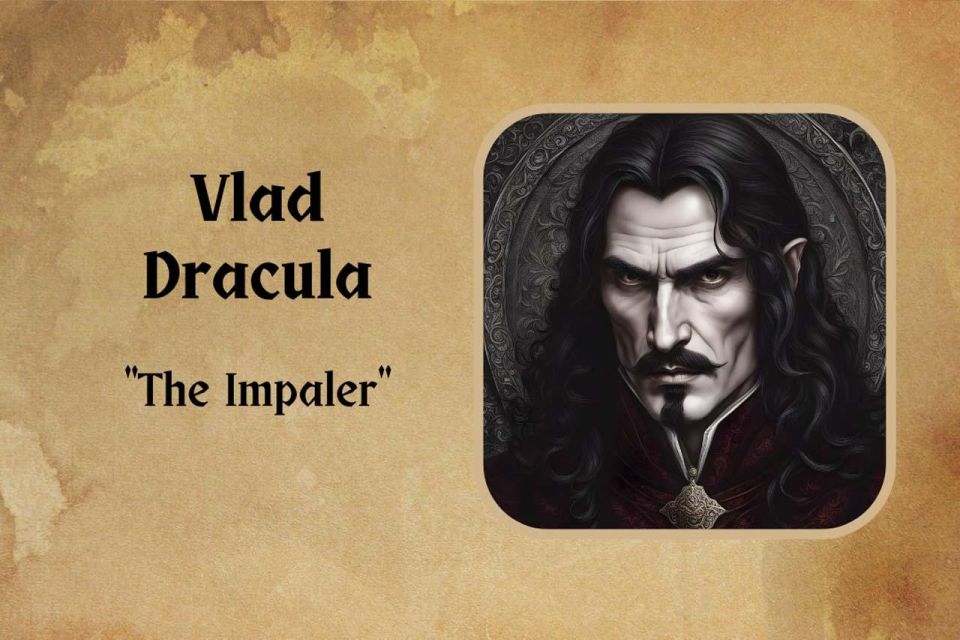
The walk runs about 110 minutes, moving mostly on foot with a few “pass by” stretches. Below is what to expect in order, plus what each stop is good for.
Statue of St. Stephen I (start point)
You begin at St. Stephen I, which sets the tone right away: Hungarian history tied to power, legitimacy, and the people who shaped the country. It’s also a practical start location near Matthias Church, so it’s easier to orient yourself at the beginning of the evening.
Fisherman’s Bastion (quick pass)
You’ll pass the Fisherman’s Bastion area, and the route is close enough that you still get a sense of the views without spending a long time there. It’s a good “transition” moment—enough to let your eyes catch up—then the tour moves on to deeper Castle Hill details.
You can also read our reviews of more historical tours in Budapest


Matthias Church (main photo stop + sightseeing)
Matthias Church is one of the biggest anchors on the walk. You get a longer photo stop here (about 10 minutes), so it’s a real chance to frame the church façade and the surrounding illuminated streets.
What I like about this stop is that it’s both beautiful and useful. You’re taking photos, but you’re also learning how the area connected to major figures and events that came later. If you care about details, arrive ready to look up as well as ahead.
Equestrian Statue of András Hadik (photo stop)
Next up is the Equestrian Statue of András Hadik, again a planned photo stop with time for sightseeing (around 10 minutes). This is the kind of spot where a performer’s story makes the statue feel less like a random monument and more like a chapter title.
This stop also helps you keep a steady pace. It’s not just walking between big sights; it’s short pauses that keep the tour from feeling like a long commute.
Ősforrás (Zsolnay-díszkút) and scenic viewpoints
You’ll make another photo stop at Ősforrás (Zsolnay-díszkút), with scenic views on the way (about 10 minutes). Fountain stops sound simple, but on Castle Hill they often sit at vantage points where the street bends and the lighting catches nicely.
If you’re photographing at night, this kind of stop is gold. You get a calmer moment for pictures without the crowd pressure that can happen at the biggest squares.
Sándor Palace (pass by)
You’ll pass Sándor Palace without a long stop. That’s not a negative—it’s a “you’re here” landmark moment that keeps the route flowing. It helps connect the tour’s story timeline to modern-looking palace architecture.
If you’re the kind of person who likes to linger, just remember that the tour’s structure prioritizes storytelling beats and scheduled photo time.
Budapest Castle Hill Funicular (photo stop)
You’ll pause for scenic views near the Budapest Castle Hill Funicular (about 10 minutes). This is one of the best segments for layered photos—street lighting, stair paths, and the geometry of the hill all show up in a single frame.
Also, the funicular area is a helpful mental break. After steps and cobblestones, a platform-style photo stop feels like a reset before the next chunk of the walk.
Buda Castle (pass by)
You’ll pass Buda Castle. Even without a long stop, it’s a strong visual statement and a clear sign that you’re in the right part of town for serious historical weight.
Think of this as a scene change: you’re moving from one story setting to another, and the castle presence helps stitch it all together.
Fountain of King Matthias (photo stop)
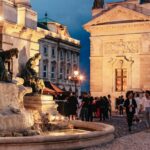
Next is the Fountain of King Matthias, another photo stop with around 10 minutes to spend (photo + sightseeing). This is a perfect match for the tour theme because the King Matthias area is tied to legends, political power, and court life.
This stop tends to work well for both types of visitors: the ones who want photos, and the ones who want context. The actor guide can make the fountain feel like a living reference point rather than a background detail.
Main Guardhouse (pass by)
You’ll pass the Main Guardhouse. It’s a short segment, but it fits the mood of the tour: control points, defense, and authority. The performer’s stories often connect well here because guardhouse themes naturally align with conflict and enforcement.
Royal Riding Hall, Budapest (photo stop)
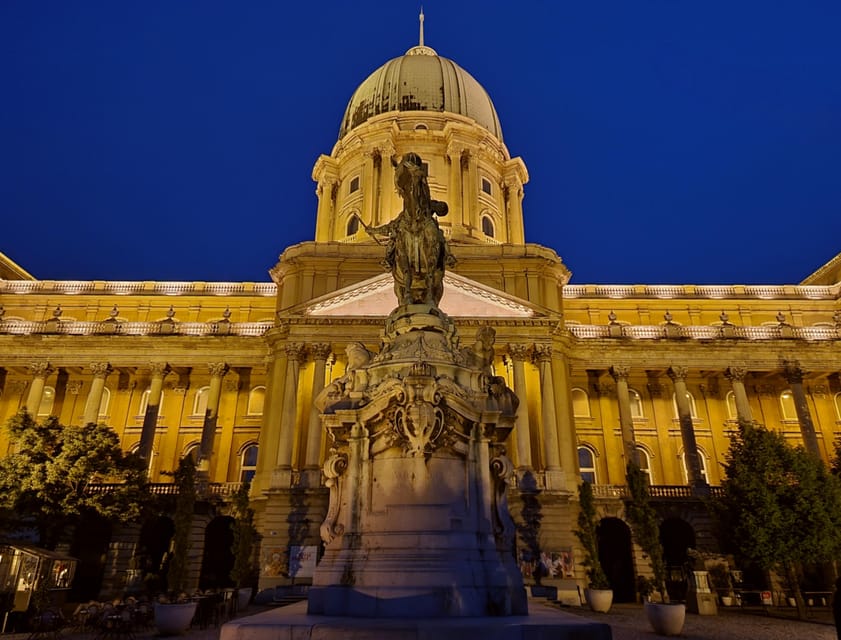
You end with a photo stop at the Royal Riding Hall, Budapest (about 10 minutes). This area gives you a sense of grandeur, and it’s a good final location for pictures since the building character is strong even in low light.
When a tour ends in a visually interesting place, it changes how you remember the night. Instead of feeling like you rushed to the finish, you end with a satisfying last view.
Finish at Dózsa György tér 4
The tour finishes at Budapest, Dózsa György tér 4. One reason I think this ending works is that you’re sent into a recognizable transit zone rather than being left in the middle of nowhere. If you’re unsure where to go next, plan to ask your actor guide for directions to your transport stop.
The stories: dark historical figures, true and told with humour
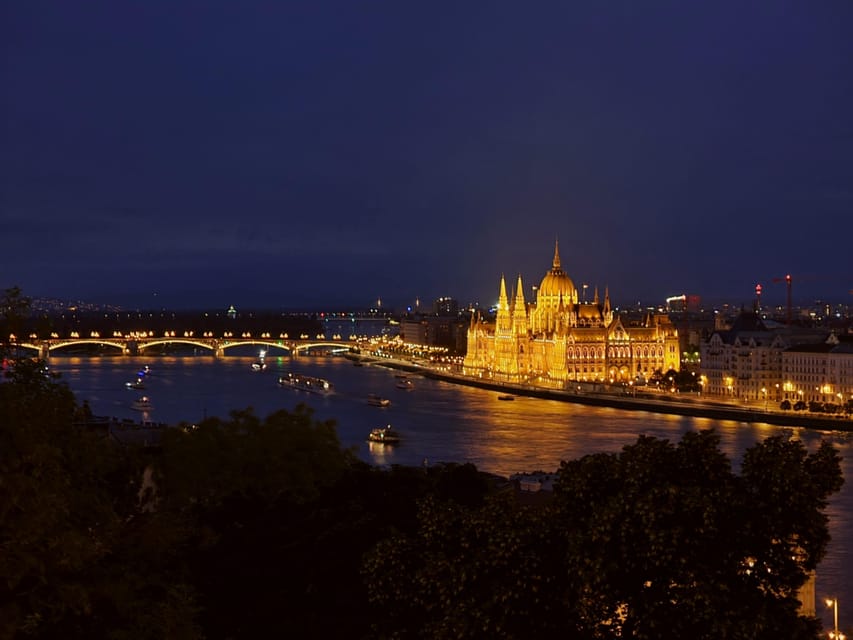
The whole concept is built around Hungary’s “bloodthirsty” figures—people who left marks through violence, power struggles, and hard choices. The key is that the stories are framed as legendary but true, with the actor guide connecting the historical events to the locations you’re seeing.
What surprised me in a good way is how humour can sit next to grim material. You don’t get a gore-heavy shock ride. Instead, the performer uses timing and character voice to make the past feel more understandable, including when the subject turns violent or frightening.
Guides such as Oscar and Joe (names you may hear for this tour) are repeatedly singled out for their energy and showmanship. If your guide is in that style, you’ll notice the throughline: each story connects to the next so the evening doesn’t feel like a list of spooky anecdotes.
Also, the acting helps you stay present. In a city like Budapest, it’s easy to tune out when you’re walking and looking at sights back-to-back. Here, the performer keeps pulling your attention back to people, dates, and cause-and-effect.
Photo opportunities that actually work at night
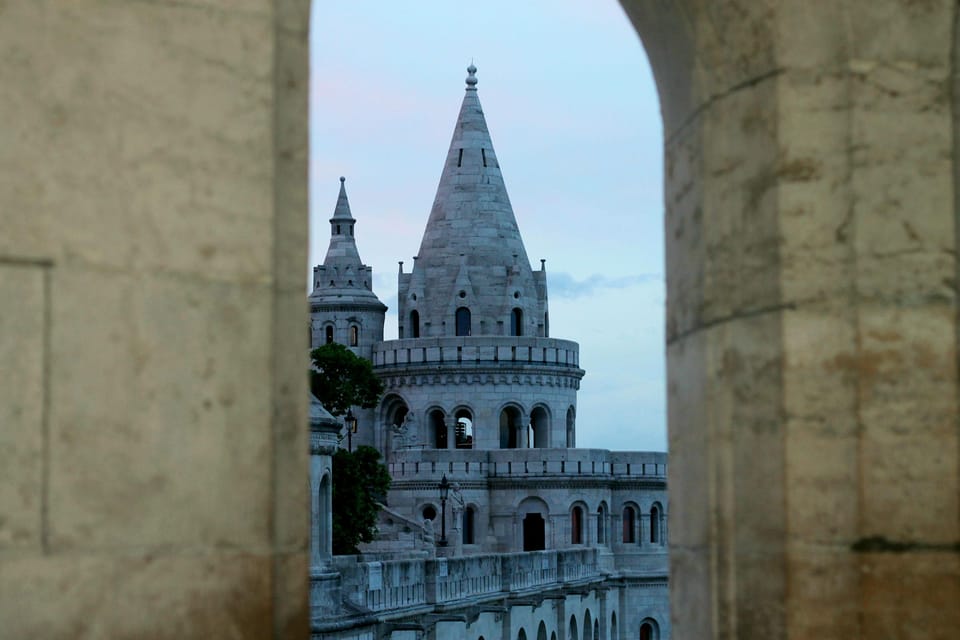
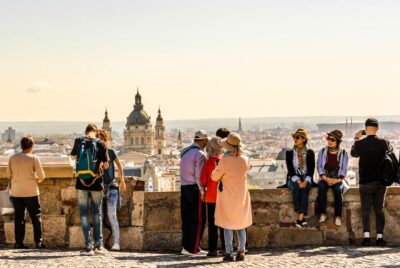
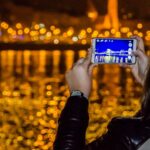
If you care about Instagram photos, you’ll like this route for practical reasons, not just because it’s pretty. The tour deliberately includes multiple photo stops with time to reposition, not just quick snapshots.
Here’s where the camera tends to catch you off guard in the best way:
- Matthias Church for façade shots and glowing walls
- Fisherman’s Bastion area for scenic glimpses on the way
- Zsolnay fountain for street-level night lighting
- Funicular viewpoints for layered hill-and-street composition
- King Matthias fountain for a dramatic central subject
A tip that will save your battery: put your phone on a steadier setting before the stop. Night light turns every shaky hand into a blurry photo, even if the view is great. Bring a small lens cloth too, since Castle Hill streets can look clean while still getting smudgy.
Price and value: why $21 can make sense
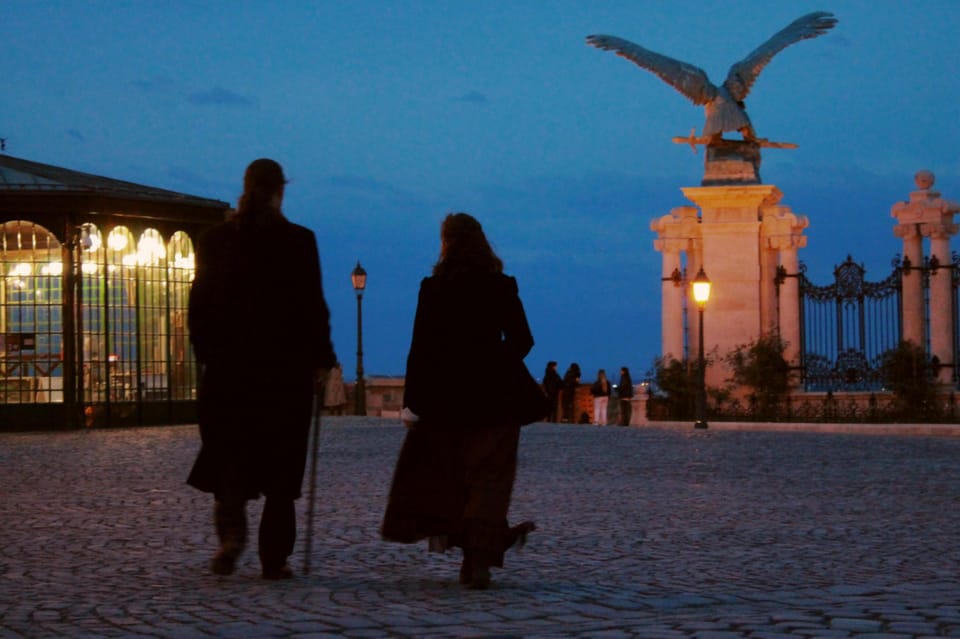
At $21 per person for about 110 minutes, this tour costs less than a lot of “name-only” entertainment in major capitals. What you’re paying for is not just walking around; you’re paying for a live actor who’s performing researched stories and managing the flow of the group.
You also get value from the structure:
- several scheduled stops (not random roaming)
- photo time built in
- a guide who can shape the experience so you remember it later
It’s a bargain if you want an evening plan that feels different from a standard self-guided stroll. If you already know Budapest deeply and you mainly want quiet sightseeing, you might not feel the same payoff. But for a first or second night in the city, it’s a very efficient use of time.
Who should book this and who might skip it
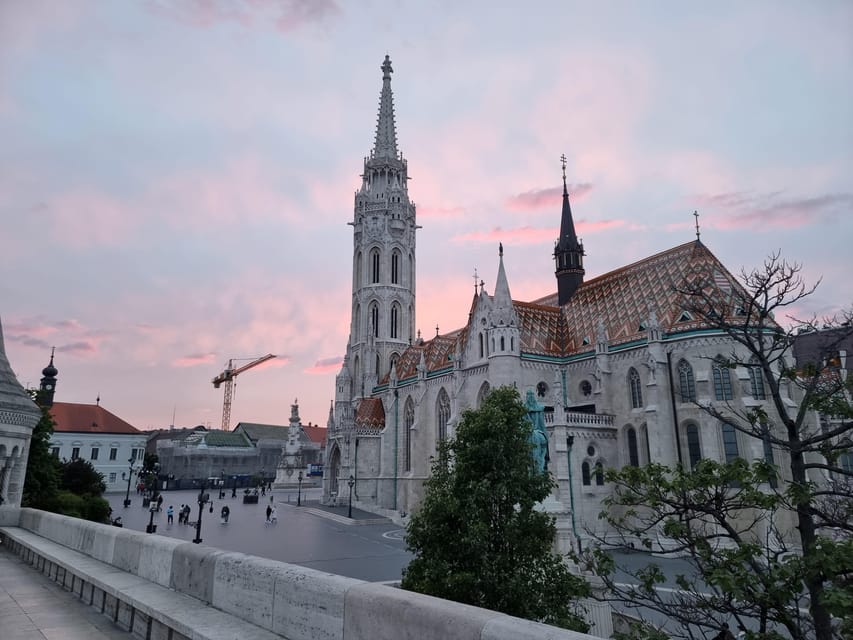
This tour is a great fit if you:
- love history but find normal tours too factual and slow
- want a night experience with atmosphere
- care about photo stops and views without spending hours planning them
- enjoy a story-led format, where the guide is part storyteller and part performer
It may not be for you if:
- you hate cold weather walks, especially on hills
- you prefer museums or indoor attractions only
- you want to move at your own pace with no scheduled photo stops
One more practical note: bring layers. Even if the stories are fun, your comfort depends on the weather. Guides often do what they can to keep people comfortable, but physics still wins.
If you like dark history with theatre, this is a strong yes
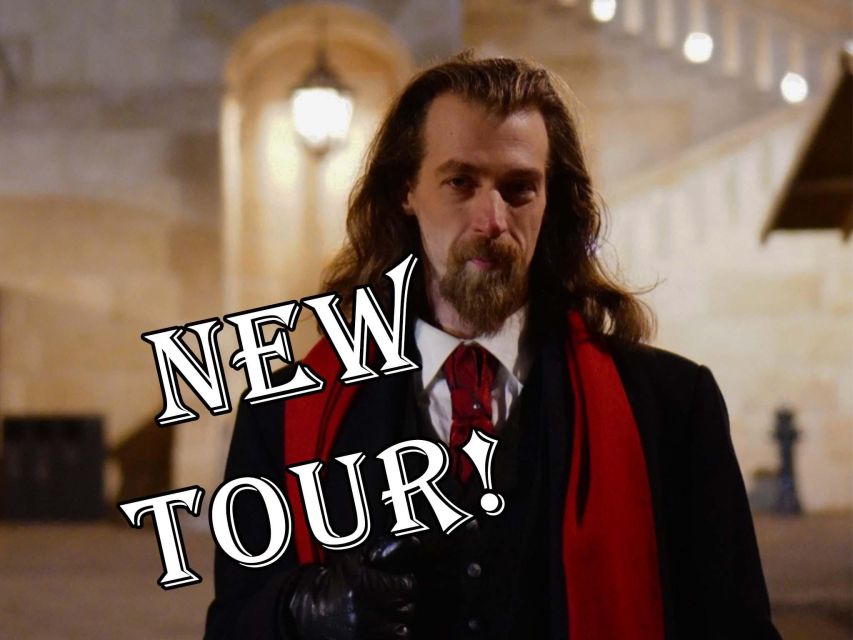
I’d book BloodThirsty Hungary if you want an evening in Budapest that’s part sightseeing, part performance, and part memorable storytelling. You’ll get Castle District landmarks and multiple chances to photograph them, all tied together by a live actor guide.
If you’re on the fence, make the decision like this: do you want a guided story plan for your night, or do you just want open-ended wandering? If you’re choosing the first option, this tour looks like a smart use of time and money.
FAQ
How long is the BloodThirsty Hungary walking tour?
It lasts 110 minutes.
How much does the tour cost?
The price is $21 per person.
What language is the live guide?
The tour is offered with a live guide in English.
Where do I meet the guide?
Meet at the Statue of St. Stephen I, where the guide stands next to the Horsemen Statue of Saint Stephen on the right side of Matthias Church.
What landmarks are included along the walk?
You’ll see or pass places including Fisherman’s Bastion, Matthias Church, the Equestrian Statue of András Hadik, Ősforrás (Zsolnay-díszkút), Sándor Palace, the Castle Hill Funicular, Buda Castle, the Fountain of King Matthias, the Main Guardhouse, and the Royal Riding Hall.
Where does the tour end?
It finishes at Budapest, Dózsa György tér 4, 1174 Hungary.
Is the tour mostly walking?
Yes. It’s a walking tour with multiple on-foot segments and several stops.
Do I need to check in with the guide?
Yes. You must check in with the guide before the starting time.
Is there free cancellation?
Yes. You can cancel up to 24 hours in advance for a full refund.