REVIEW · BUDAPEST
Budapest Historic Downtown Bicycle Tour in small groups
Book on Viator →Operated by BIKE & RELAX - Bike Tours and Bike Rental · Bookable on Viator
Budapest looks different when you pedal instead of squinting down a sidewalk. This small-group bike tour is built for fast orientation, with guided stops that focus on big exterior sights and street-level context. You’ll cover a lot of ground in about 3.5 hours, with a guide talking through what you’re seeing as you roll from the Jewish Quarter toward the Danube.
I especially like the small group size and the steady, practical pacing that keeps the ride feeling manageable. I also like that you get bicycles, helmets (optional), bottled water, and free luggage storage—so you’re not juggling bags or gear while you’re sightseeing.
One thing to weigh: it’s not recommended for beginners, and Budapest traffic can feel intense at times even when the route is designed to work for cyclists. Also, you’ll see many famous buildings from the outside only.
In This Review
- Key highlights worth your attention
- Price and what you really get for $41.13
- Start point at Madách Imre út: bikes, helmets, water, and your pack
- Pedaling into the Jewish Quarter: Rumbach Street Synagogue and Liszt Academy
- House of Terror area pass: Berlin Wall details without entering
- Heroes’ Square and a fast history lesson in stone
- City Park area: ice rink in winter, boating in summer, and lots of exterior design
- Andrassy Avenue and UNESCO-adjacent landmarks: Opera, St. Stephen, and Szabadság tér
- Parliament, the Danube bank, and the Shoes memorial pass
- Rudas Baths and Gellért Baths viewpoints: old Turkish baths along the river
- Liberty Bridge and the Central Market finish area
- Bikes, safety, and the traffic reality you should plan for
- Who should book this bike tour (and who should skip it)
- Book or not? My straightforward recommendation
- FAQ
- How long is the Budapest Historic Downtown Bicycle Tour?
- How much does the tour cost?
- What’s included in the tour price?
- Are entrance fees included for the sights?
- Is this tour suitable for beginners?
- Where does the tour start and end?
Key highlights worth your attention
- Tight group ride that keeps the experience personal without feeling slow
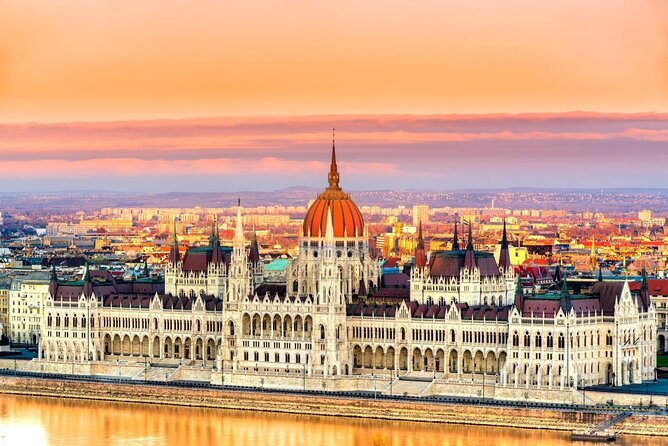
- Exterior-first sightseeing at major landmarks like Heroes’ Square and Parliament
- Danube bank moments including the Shoes memorial (pedestrian access can depend on traffic)
- Jewish Quarter + Andrassy Avenue context through architecture and city design
- City Park architecture stops that mix older replicas and modern design
- Most sights skip entry, so the value is in views and guide commentary
Price and what you really get for $41.13
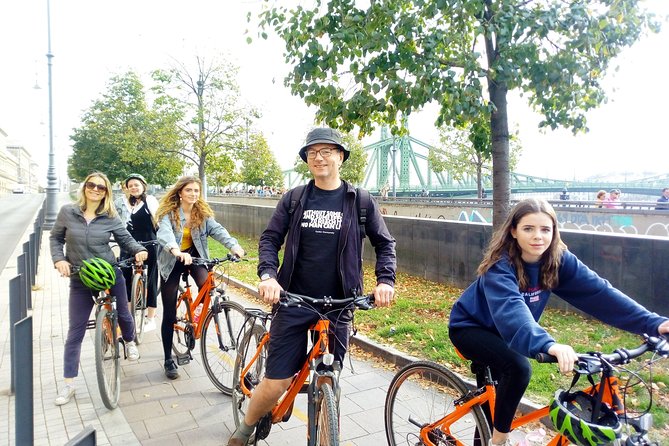
At $41.13 per person for about 3 hours 30 minutes, you’re paying for two things: transportation plus a guided route that hits multiple neighborhoods without you planning it. This is one of those deals where the math mostly checks out because Budapest’s downtown sights are spread out, and a bike lets you connect them quickly.
The value is strongest if you want:
- a first pass at central Budapest (so your next days make more sense)
- clear historical context without sitting through timed museum entries
- a route that doesn’t rely on heat, long walks, or awkward transit transfers
The main trade-off is that you do not enter buildings on this tour. If your travel style is all about stepping inside churches, synagogues, or museums, you’ll likely want to pair this with separate tickets later.
You can also read our reviews of more historical tours in Budapest


Start point at Madách Imre út: bikes, helmets, water, and your pack
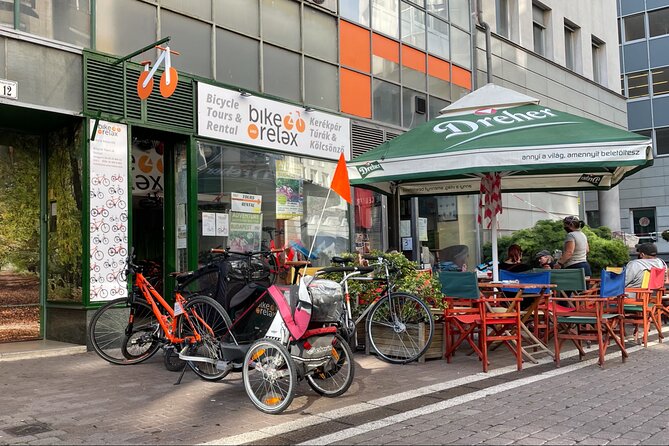
Your tour starts back at Bike & Relax, Madách Imre út 12, 1075. You’ll be given a bicycle and a helmet. The helmet is provided even though it’s listed as not obligatory, which is a nice detail if you don’t travel with your own gear.
Two practical perks make a difference on a city bike tour:
- free luggage storage during the ride
- bottled water included
That combo helps you keep hands free for photos and doesn’t turn every stop into a bag shuffle. It also makes the tour easier if you’re arriving in the morning with a tote, daypack, or camera bag.
Plan to arrive ready to ride. This experience is near public transportation, but the ride itself still starts on time, and the tour doesn’t sound built for long waiting breaks.
Pedaling into the Jewish Quarter: Rumbach Street Synagogue and Liszt Academy
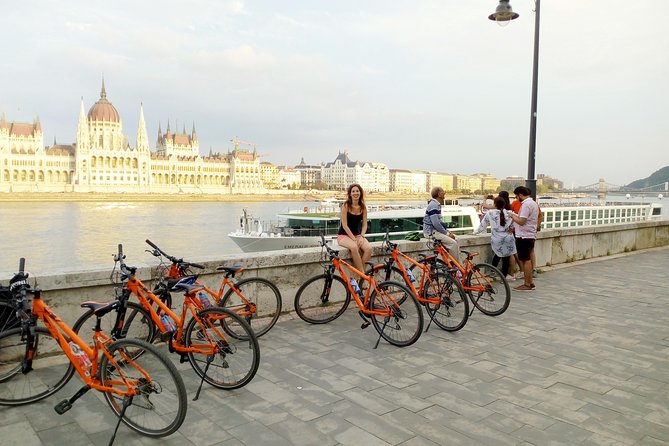
After you set off, the route begins with a look at Rumbach Street Synagogue. You don’t go inside, but the payoff is the street-art and the synagogue’s art deco presence. In Budapest, it’s often the small streets that explain the bigger story. This stop is one of those quick “you’re in the right neighborhood” moments.
Next comes the Liszt Academy. Even without an interior visit, you get a useful contrast: the Jewish district edge paired with a formal music institution. The tour’s framing here is helpful if you want to understand why Budapest feels like it has layers—historic communities, plus major cultural centers built around performance.
If you’re sensitive to traffic or you’re still getting comfortable on two wheels, this is also where you’ll notice whether you truly feel confident. The tour isn’t billed as a beginner-friendly cruise, and the early minutes help you figure that out fast.
House of Terror area pass: Berlin Wall details without entering
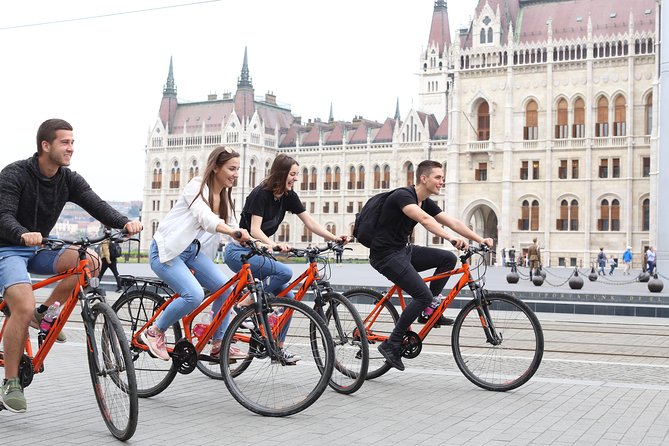
As the ride continues, you head along one of the most famous central connectors between the city center and Heroes’ Square. This is also described as passing Nagymező Street, often called the Broadway of Budapest, plus Liszt Square and the Ring Roads. You also pass the area linked with the House of Terror.
You will stop at the House of Terror Museum viewpoint, but you won’t enter. Still, the tour mentions a specific detail you’ll see in front: a part of the Berlin Wall placed at the site. That matters because it turns a quick exterior stop into a concrete history marker, not just a photo opportunity.
One consideration here is mood. If you’re traveling with kids or you want a lighter tone, this stop is more serious than the typical sightseeing photos. The upside is that the guide commentary gives it context without forcing you into a full museum visit.
Heroes’ Square and a fast history lesson in stone
You’ll spend time at Heroes’ Square, designed for the 1000-year anniversary of Hungary in 1896. This stop is a real center-of-the-city viewpoint, and the tour uses it well as a history snapshot—from King Stephen’s era through revolutionary figures like Kossuth.
What makes Heroes’ Square valuable on a bike tour is that it gives you a big-picture map of Central European history in one place. You don’t need to read a guidebook before you arrive. The guide’s talk turns the space into a timeline you can reference later.
You also get a break in walking distance while still moving. Even though the stop is about sight time, it tends to feel like a calm pause because everyone gathers and looks up together.






City Park area: ice rink in winter, boating in summer, and lots of exterior design
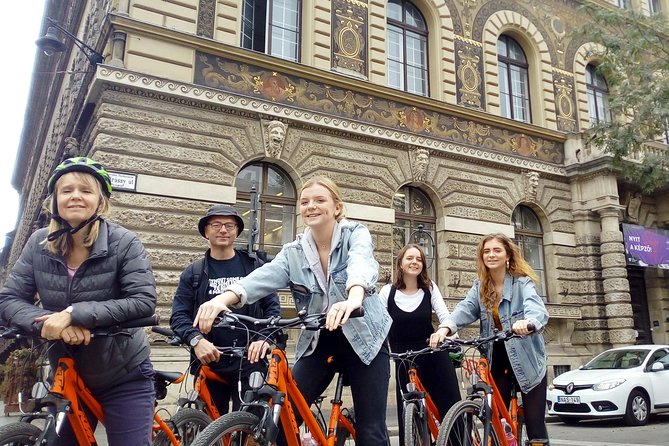
From Heroes’ Square, you roll into City Park (Városliget), about a one-square-kilometer park heart. The tour notes that the park’s character changes with seasons: in winter, there’s a famous ice rink in the area, and in summer, there’s an artificial lake that invites boating.
Even during renovations, the park stays popular. That’s a practical point. You’re not counting on everything being perfectly photo-ready, and you still get the core experience: green space, architecture interruptions, and an easy sense of where the park sits relative to downtown.
The route then stacks several exterior stops in a row, which is a smart way to use limited time:
- Vajdahunyad Castle: described as a fake castle, with a specific reason the guide explains on-site. You’ll also spot a statue of Anonymous, which adds another layer to the story.
- House of Music Hungary: a modern-architecture concert hall you’ll admire from outside.
- Museum of Ethnography: another contemporary design at the edge of the park, noted for its unique shape and spectacular views.
Because none of these stops are based on entry tickets, you can keep moving without wasting time in lines. The drawback is exactly that: you’re relying on exterior views and the guide’s interpretation. If you want museum interiors, you’ll need separate plans later.
Andrassy Avenue and UNESCO-adjacent landmarks: Opera, St. Stephen, and Szabadság tér
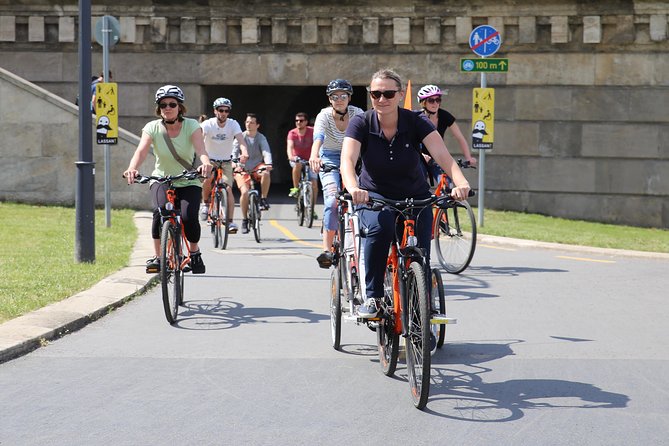
Back toward central sights, the tour focuses on the grand architectural corridor of Andrassy Avenue and its UNESCO context. You won’t enter the building, but you’ll learn why the area is famous—late 19th-century architecture and the historic M1 subway that runs under it.
The tour includes a stop for the Hungarian State Opera, built by Michael Ybl. The guide explanation is part of the value here. Even from outside, the building reads like a statement. If you’re the type who likes streets that tell stories, you’ll likely enjoy how the architecture is connected to Budapest’s identity as a cultural capital.
Next you stop by St. Stephen’s Basilica (Szent Istvan Bazilika). You do not go inside, but the tour points out a specific visual highlight: St. Stephen’s right hand under glass. It’s the kind of detail that makes an exterior stop feel worth the time.
Then comes Szabadság tér, framed in the tour as both a city-business feel—sometimes compared to Wall Street—and a place marked by painful events. The stop mentions controversial memorials, and a reminder to think about the Holocaust and World War II in Budapest.
This segment does two jobs at once: it gives you the postcard architecture and it keeps the historical context present. If you’re trying to understand Budapest as more than scenery, this is one of the tour’s strongest choices.
Parliament, the Danube bank, and the Shoes memorial pass
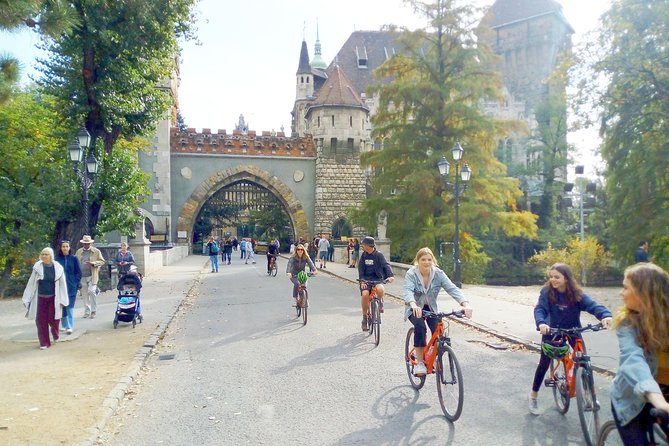
The ride highlights the Hungarian Parliament Building on the river bank. You won’t enter, but the exterior stop is still a big one. The tour description says the building has been beautifully renovated and calls it a must-see, plus it emphasizes the panorama: Danube views and the Buda-side when you turn around.
From there, you pass the Shoes on the Danube Bank memorial. This stop is quick, and access can depend on traffic, so you may not always get the cleanest approach for photos. Still, it’s a powerful reminder that the river isn’t only about views—it’s also part of Budapest’s modern history.
Then there’s a pass by the Chain Bridge, described as the oldest bridge across the river. Even without stopping, it works as a visual transition between the Parliament area and the next set of river-adjacent sights.
Rudas Baths and Gellért Baths viewpoints: old Turkish baths along the river
On the Buda side of the river, the tour route passes Rudas Baths, noted as one of Budapest’s oldest Turkish baths. The description even suggests a practical thing: if you want to actually bathe there, check opening schedules because there are men-and-women days for the hammam.
You also mention a last stop on the Buda-side linked with Gellert Baths. The tour doesn’t frame this as an entry stop, so think of it as another architecture-and-atmosphere moment, where you can connect the river view to what Budapest is famous for: thermal bathing culture.
If you’ve never been to a Turkish-style bath, the best value here is mental prep. You’ll know where the bath buildings are when you plan a follow-up visit later.
Liberty Bridge and the Central Market finish area
You finish the Buda-side segment by crossing or passing Liberty Bridge (Szabadság hid). The tour highlights it as a student-and-youth meeting area with great views. That’s the kind of small local detail that makes a bridge stop feel less generic.
Near the end, the route includes a pass by the Central Market, and the tour strongly suggests you plan to return later to taste Hungarian food and enjoy the atmosphere. The market is also a helpful pointer for a future half-day plan. If you want to end your trip with actual bites instead of just more sightseeing, this is where you’ll want to steer yourself next.
The route also passes the National Museum. The tour doesn’t include entry here, but it flags the museum as a destination if you’re deeply interested in the region and the people who lived there over time.
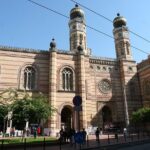
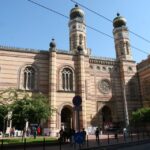
Finally, you see the Great / Central Synagogue (Nagy Zsinagoga) from outside at the border of the Jewish Quarter. It’s described in moorish style, and you do not enter. It’s a strong closing note because it connects earlier Jewish Quarter sights to one of the most recognizable buildings in the area.
Bikes, safety, and the traffic reality you should plan for
This tour is rated as easy-to-enjoy for many riders, but it’s not designed for true novices. One of the clearest practical themes is that the route can overlap with car traffic lanes and the ride can feel a bit harrowing if you’re not used to biking in city conditions. The good news is that the guide is there to keep everyone together, with a pace that works for the group, and stopping so nobody gets stranded behind.
Also note these practical constraints from the tour details:
- Not recommended for beginners
- Not recommended for people with visual impairment
- Weight limit 110 kg
- Children must be accompanied by an adult
On timing and energy, the tour is a half-day push. You’re not walking all day, but you are moving. I’d treat it like a light active day: wear layers, expect some wind, and plan to use the day’s cycling time as part of your sightseeing strategy.
Who should book this bike tour (and who should skip it)
You’ll love this tour if:
- you want a high-impact overview of central Budapest in one go
- you enjoy guided stories and architecture cues more than museum interiors
- you want to get your bearings fast, then come back later for deeper visits
You might skip it if:
- you want to enter major sites like the opera, basilica, synagogues, or the House of Terror museum
- you’re not comfortable biking in a city with traffic
- you need a more relaxed, slower walking pace
If you’re new to Budapest, this tour is the kind of first-day or second-day move that helps your remaining time click. You’ll know where neighborhoods are, where bridges connect, and which landmarks you want to revisit.
If you’re considering an upgrade to e-bikes, some past departures included riders getting upgraded, and at least one review specifically mentioned wooden-framed e-bikes. If e-bikes are available for your date, they can make hills and wind feel less stressful—especially on days when you’d rather not arrive sweaty.
Book or not? My straightforward recommendation
Book it if you’re confident enough to ride in city conditions and you want a guided loop that hits Budapest’s headline landmarks without ticketing chaos. For $41.13, you’re buying route planning, bike transport, and history context, with lots of stops that are built for quick viewing and photo-friendly angles.
Skip or plan differently if your priority is interior access. This tour is about what you can see from the street: the outside of icons, the feel of neighborhoods, and a guide’s explanations that help you interpret what you’re looking at.
And if the weather is looking questionable, remember the tour requires good conditions—so watch the forecast and be ready to switch dates if needed.
FAQ
How long is the Budapest Historic Downtown Bicycle Tour?
It runs for about 3 hours 30 minutes (approx.).
How much does the tour cost?
The price is $41.13 per person.
What’s included in the tour price?
You get a bicycle, a live guide, helmet (not obligatory), free luggage storage, and bottled water.
Are entrance fees included for the sights?
No. The tour does not include entry tickets, so you’ll generally view buildings and museums from outside.
Is this tour suitable for beginners?
It’s not recommended for beginners. City traffic and the cycling pace can be challenging if you’re not used to riding.
Where does the tour start and end?
It starts and ends at Budapest, Madách Imre út 12, 1075 Hungary, and you’ll return back to the meeting point.