REVIEW · BUDAPEST
Life Under Communism” with optional visit to the House of Terror
Book on Viator →Operated by Fungarian · Bookable on Viator
Communism left fingerprints all over Budapest. This 3-hour walking tour connects the Soviet era and the 1956 uprising to the squares, bridges, and memorials you can still see today. Choose the optional House of Terror add-on if you want the story to go darker inside a museum.
I especially like the on-foot storyline: you move stop to stop and each location explains the next, from Liberty Square’s Soviet memorial to the Parliament area during the 1956 revolution. And in the best versions of this tour, guides such as Miklós and Balázs keep things personal, answer questions directly, and pace the walk around the group.
One drawback to plan for: this experience has optional visits. If you pick the basic city route only, you won’t automatically enter the House of Terror or go to Memento Park, and the day can feel lighter than you expected.
In This Review
- Key details at a glance
- What You’re Really Seeing in Budapest’s Communist-Era Walk
- Liberty Square Soviet Memorial: Start at the Siege of Budapest
- Szabadság tér’s Big Open Space: Habsburg Layout Meets Later Power
- Kossuth Square and the Parliament Frontline in 1956
- Március 15. Square and Petőfi Statue: Where Daily Life Brings History Back
- Corvin köz: The 1956 Resistance Stories That Feel Close-Up
- Bambi Presszó Coffee Stop: A Tiny Pause With Big Value
- Crossing to Gellért Hill: Liberty Statue Views From St Gellért Square
- Optional Add-On: Memento Park’s Saved Statues After 1989
- Optional Add-On: House of Terror Museum and the T-54 Tank
- Price and Timing: Is $280.33 per Group Good Value?
- How to Get the Most Out of the Tour With Any Guide
- Should You Book This Budapest Communist-Era Walk?
- FAQ
- How long is the walking tour?
- How many people are in each group?
- Where does the tour start?
- Is the tour offered in English?
- What options are available for the extra visits?
- How long is the Memento Park option?
- How long is the House of Terror option?
- Does the price include museum tickets?
- Is pickup available?
- What fitness level do I need for the walking?
- Are there tickets or verification needed on the day?
- Can kids join?
- Can I bring a service animal?
Key details at a glance
- Liberty Square to Kossuth Square: Soviet Siege of Budapest memorials, then the 1956 firefight area outside Parliament
- Szabadság tér contrasts: a big, open Habsburg-era space used to reset your bearings between heavier stops
- Corvin köz resistance center: stories of 1956 street fighting with Molotov cocktails and weapons taken from soldiers
- Bambi Presszó coffee stop: a practical pause that helps the whole tour feel more human
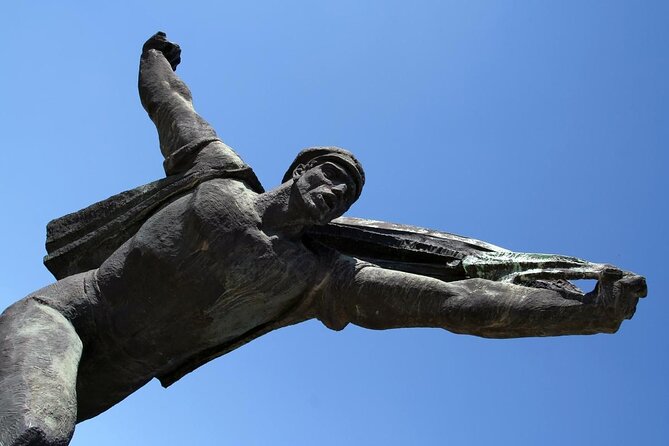
- Memento Park (optional): statues saved in 1993 instead of destroyed after communism collapsed
- House of Terror (optional): a renovated museum on Andrássy Avenue with a T-54 tank on display
What You’re Really Seeing in Budapest’s Communist-Era Walk
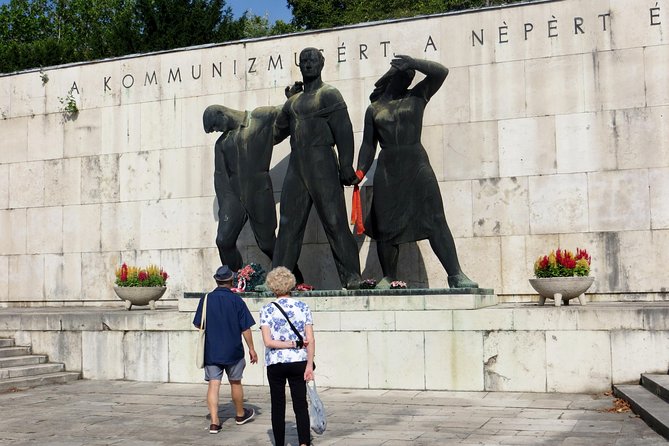
This tour is built around a simple idea: you don’t need a time machine to understand communism in Hungary. You just need your eyes. Budapest still shows the Soviet era in public space—monuments, square names, and the way certain areas were designed for power and visibility.
The route is a walking circuit that ties major events to specific places. Expect a steady rhythm of history with frequent “why this matters” explanations, not just dates. If you go for an optional add-on, the story shifts from outdoor memorials to curated, heavy indoor atmosphere.
You should also know the tone: it’s not propaganda, but it is direct. The tour covers the Soviet army presence, the 1956 revolution, and what life looked like under communist rule. Guides have a habit of shaping the day around questions, which helps a lot if you like your history with context rather than a lecture.
You can also read our reviews of more tours and experiences in Budapest.



Liberty Square Soviet Memorial: Start at the Siege of Budapest
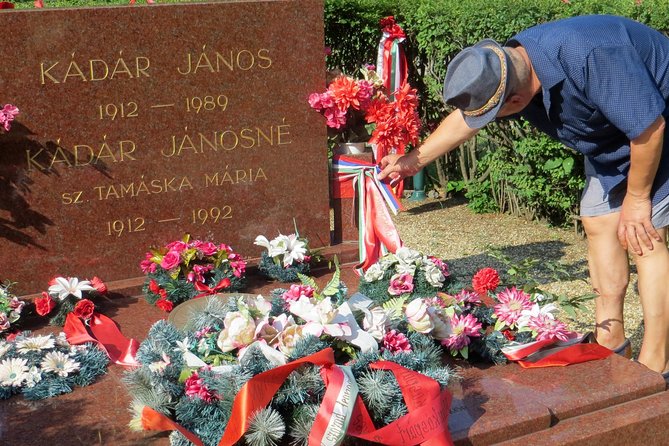
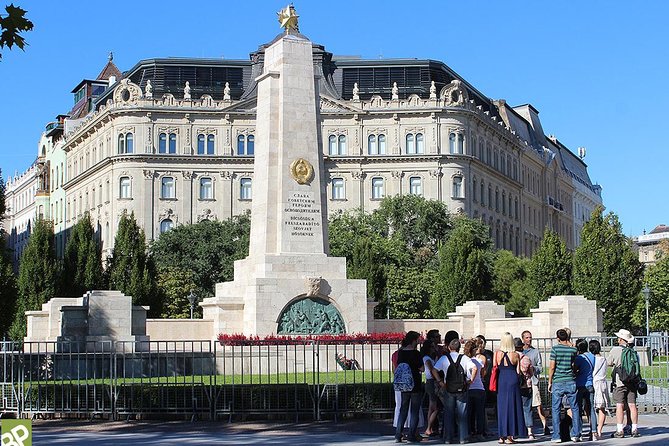
The experience begins in Liberty Square (Szabadság tér) with a look at the grand Soviet army memorial linked to the Siege of Budapest. This was the 50-day encirclement of Hungary’s capital near the end of World War II.
This first stop works because it sets the tone fast. You’re not just learning about communism as an idea—you’re looking at a physical statement made in stone and scale. Even before you reach the 1956 story, you can feel how public monuments were used to frame who “owned” history.
Take a minute here to slow down. I like this kind of start because it helps you notice details later, like how different squares feel “official,” how some areas pull you toward politics, and how others are designed for crowd movement.
Szabadság tér’s Big Open Space: Habsburg Layout Meets Later Power
Next comes Szabadság tér, one of Budapest’s most stately central squares. It’s huge for a reason: it owes its extensive dimensions to the Habsburg era, when the Bastille-like Újépület stood here.
This stop is a reset button. After a heavy memorial, the open greenery and spacious layout give you room to catch your breath and reorient. It’s also a reminder that layers of European history overlap in Budapest: empire first, then later ideological use of space.
If you’re paying attention, you’ll also notice how the square’s scale changes the way people gather. That matters for understanding public protests later, especially around Parliament-area events.
Kossuth Square and the Parliament Frontline in 1956
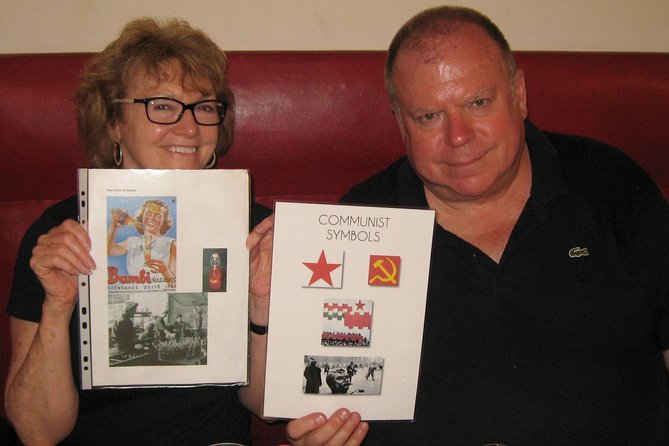
At Kossuth Square, you see the Hungarian Parliament building—renamed in 1927 in honor of Lajos Kossuth. Facing the Parliament are institutions like the Museum of Ethnography and the Ministry of Agriculture, which helps you understand that politics sits inside a broader civic map, not a single isolated landmark.
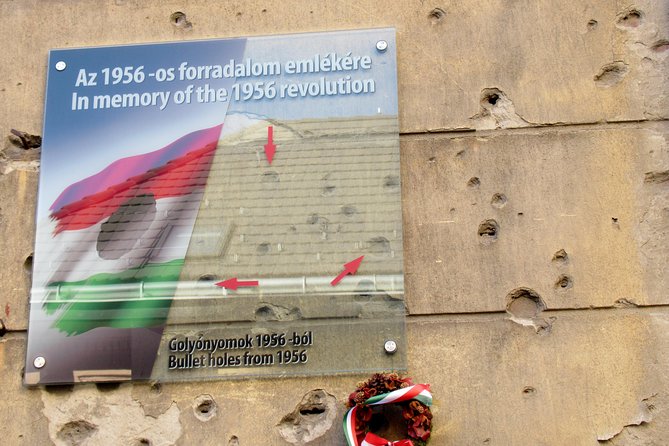
This stop turns crucial because of 1956. During the revolution, a firefight began in front of Parliament. The hard part, and why this story lands emotionally, is that the number of demonstrators who died is still not known with certainty.
Here’s what makes this portion valuable: you’re not just hearing that protests happened. You’re being guided to picture the people in the crowd—mixed civilians, including women, children, and the elderly. That detail shifts the story from abstract “uprising vs. government” into something human and immediate.
Plan to stand for a bit and really look at the space in front of Parliament. Even if you don’t know the full chronology yet, you’ll understand why the location mattered so much.
Március 15. Square and Petőfi Statue: Where Daily Life Brings History Back
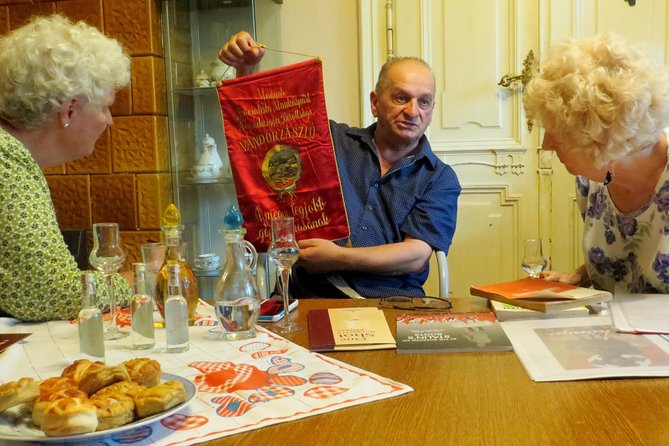
From Parliament, the tour moves toward Petőfi Statue and Március 15. Square, located near the foot of Erzsébet Bridge and in front of the oldest church of Budapest. There’s a practical twist here: thanks to a 2011 renovation, this area is now a popular social scene, not just a sightseeing stop.
I like this contrast. Budapest can feel like two cities at once—history on the outside, real life on the inside. This is a strong example of how a politically important place can become normal again once the immediate crisis fades.
Use this stop to let your brain catch up. If you’ve been absorbing intense history, this is where you can refocus on how people actually move through these places today.



Corvin köz: The 1956 Resistance Stories That Feel Close-Up
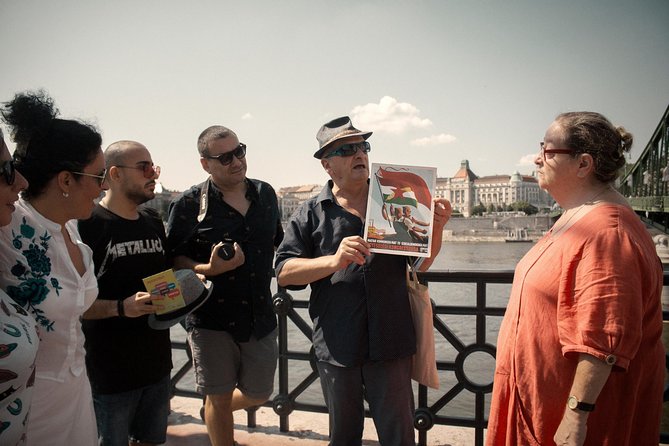
The tour then heads to Corvin köz, described as a major resistance center during the 1956 uprising. This is where local youngsters fought the invading Russians using Molotov cocktails and guns they stole from soldiers to fight Soviet tanks.
The reason I think this stop is a highlight is because it brings history back to street-level. Instead of thinking only about governments and speeches, you’re asked to imagine improvisation and urgency. You’re also guided to the reminders of the battles and the aftermath, so the story doesn’t cut off at the moment of fighting.
If you like history with atmosphere, this is your best bet. Corvin köz is the kind of place where the “what happened” becomes tangible because the setting is still unmistakably urban.
Bambi Presszó Coffee Stop: A Tiny Pause With Big Value
During the walk, you’ll have a chance to sip coffee at Bambi Presszó, described as a last stronghold of communist culture. Even if you don’t care about cafés, this stop does something important: it makes the tour easier to stick with.
History tours can start to feel like a blur. A café break gives you a chance to reset your focus, ask a quick question, and process what you just learned before moving on to Gellért Hill and the final views.
Also, if your guide is the kind who answers questions well, this is often the moment when you’ll get clearer explanations. It’s a practical way to turn “I saw something” into “I understand what I saw.”
Crossing to Gellért Hill: Liberty Statue Views From St Gellért Square
After Corvin köz, you cross one of Budapest’s most beautiful bridges and arrive near the base of Gellért Hill. The next stop is St Gellért Square, an impressive square in Buda named after Bishop St Gellért, known as the Martyr for Hungarian Christendom.
This square is all about viewpoint. You get an excellent look at the nearby Liberty statue, erected in 1947 to commemorate the Soviet liberation of Hungary. That detail is important, because it forces you to hold two ideas at once: one person’s liberation can be another person’s control.
In other words, this is where the tour stops being only about the past and becomes about how narratives get built into public space. If you’re a photo person, this is a strong moment for it—just don’t rush. Look first, then shoot.
Optional Add-On: Memento Park’s Saved Statues After 1989
If you choose the Memento Park option, you’ll add about 1 hour and the admission ticket is included. The idea behind Memento Park is very specific: after communism collapsed in Hungary in 1989, Budapest was left with many public artworks that celebrated the communist era.
Instead of destroying the statues, the city decided to save them. The concept took shape in 1993, four years after the fall. That one decision explains the park’s entire tone: it’s not built to worship the past, but it also refuses to pretend the past never existed.
This option pairs well with the rest of the walk because you’ve just seen outdoor symbols in central Budapest. Memento Park is like the “storage room” for those symbols—except it’s outdoors, organized, and designed for reflection. You’ll likely leave with a clearer sense of how regimes attempt to control memory.
Optional Add-On: House of Terror Museum and the T-54 Tank
If you pick the House of Terror Museum, you’ll add about 1 hour with admission included. This museum is tied to the darker side of twentieth-century oppression, and the building itself signals that seriousness.
The building has been fully renovated inside and out, with a reconstruction plan by architects János Sándor and Kálmán Újszászy. The exterior becomes a kind of monument: a black structure with blade walls and a granite footpath frames the museum and contrasts sharply with the surrounding Andrássy Avenue buildings.
Inside, one of the notable displays is a T-54 tank. That’s not just a prop; it helps visitors connect political control to military power in a way that a wall of photos can’t always do.
This add-on is best if you want the tour to stop being only about outdoor cues and to become a full, guided confrontation with the mechanisms of terror.
Price and Timing: Is $280.33 per Group Good Value?
At $280.33 per group (up to 5 people), you’re paying for a private experience with a local guide, informative handouts, and entrance tickets for the optional visits.
Here’s the value logic I use: walking tours can be cheap, but they’re often generic. This one is designed for depth through structure. You get stops that match major historical moments, plus optional museum time if you choose it. If you care about the 1956 revolution and Soviet influence, the route makes sense because you see the locations instead of reading about them later.
Timing is also part of value. The tour is listed at about 3 hours. In practice, the day can expand if you ask lots of questions or if you choose the museum add-on. If you’re on a tight schedule, I’d plan buffer time after the tour so you’re not rushing out of St Gellért Square or the museum.
Pickup is offered, but hotel pickup and drop-off aren’t included. So if you’re relying on a pickup, clarify the exact meeting arrangement before you arrive.
How to Get the Most Out of the Tour With Any Guide
A good guide can make this kind of tour feel like a conversation with the city. The strong versions of this experience tend to include:
- Straight answers to questions about Soviet rule and 1956
- Time management that still leaves room for a rest stop and practical pauses
- Adaptation when you ask for more focus in a museum or want the route adjusted to your interests
Guides like Miklós and Balázs are noted for being polite and attentive, and for connecting history to everyday travel life in Budapest—useful if you want to keep exploring afterward without feeling lost.
If you go with the House of Terror or Memento Park option, spend your energy wisely. Ask at the start what the museum time will cover so you don’t end up surprised by the pacing once you’re inside.
Should You Book This Budapest Communist-Era Walk?
Book it if you want Budapest history that you can literally walk through. This works best for you if you care about the Soviet era, the 1956 revolution, and how monuments and squares still shape what people feel in public space.
Skip or rethink if you’re extremely time-crunched. A lot of what makes this tour land comes from slowing down at memorial sites and letting the guide explain context. Also, be strict about your choices: if you want the House of Terror or Memento Park, pick that option clearly so your day matches what you came for.
If you’re curious, this tour is one of the most direct ways to understand why Budapest feels like a city where history is always visible—even when the world has moved on.
FAQ
How long is the walking tour?
The tour lasts about 3 hours.
How many people are in each group?
It’s a private tour/activity, with only your group participating. The price is per group for up to 5 people.
Where does the tour start?
It starts in Liberty Square.
Is the tour offered in English?
Yes, it’s offered in English.
What options are available for the extra visits?
You can add either Memento Park or the House of Terror Museum. These are optional add-ons.
How long is the Memento Park option?
Memento Park adds about 1 hour, and admission is included.
How long is the House of Terror option?
The House of Terror option adds about 1 hour, and admission is included.
Does the price include museum tickets?
Entrance tickets are included for the visit options (Memento Park and/or House of Terror) that you choose.
Is pickup available?
Pickup is offered, but hotel pickup and drop-off are not included.
What fitness level do I need for the walking?
You should have a moderate physical fitness level.
Are there tickets or verification needed on the day?
You’ll receive a mobile ticket, and confirmation is received at booking.
Can kids join?
Children must be accompanied by an adult.
Can I bring a service animal?
Service animals are allowed.