REVIEW · BUDAPEST
Budapest: Historic Downtown ride on E-Bicycles Buda & Pest
Book on Viator →Operated by BIKE & RELAX - Bike Tours and Bike Rental · Bookable on Viator
Budapest is best seen at speed. This 3.5-hour e-bike tour helps you cover both Buda and Pest while checking off major landmarks without feeling like you’re sprinting on foot. You get the equipment rental sorted, plus bottled water, and a guide to connect the dots between street-level sights and the big moments that shaped the city.
What I like most is the way the route uses electric assist to make hills feel manageable, especially on the climb toward Castle Hill. The small group size (up to 10) also keeps it easier to stay together and ask questions. One drawback: this is not ideal if you’re a true cycling beginner or if you hate riding in city traffic areas.
In This Review
- Key things that make this Budapest e-bike tour worth your time
- Why an e-bike makes Budapest feel simpler
- Meeting at Bike & Relax: start in the Jewish Quarter area
- Andrássy Avenue to Heroes’ Square: the city’s grand boulevard mood
- City Park stops: Vajdahunyad Castle and Széchenyi Baths area
- Down to downtown: Liszt Academy and St. Stephen’s Basilica
- Liberty Square and Parliament: civic power and 20th-century weight
- The Danube walk-on moment: Shoes on the Danube Bank
- Chain Bridge to Castle Hill: where the e-bike earns its keep
- Returning via Liberty Bridge and the market area
- Who’s most likely to love this ride (and who should rethink it)
- Price and value: what $65.33 really buys you
- The human factor: guides make or break the ride
- Practical tips so you don’t feel rushed
- Should you book this Budapest Historic Downtown e-bike ride?
- FAQ
- How much does the Budapest Historic Downtown e-bike tour cost?
- How long is the tour?
- Is helmet use included?
- Are entrance tickets or guided visits included for the buildings?
- What are the age and height requirements?
- Can I cancel for a refund if the weather is poor?
Key things that make this Budapest e-bike tour worth your time
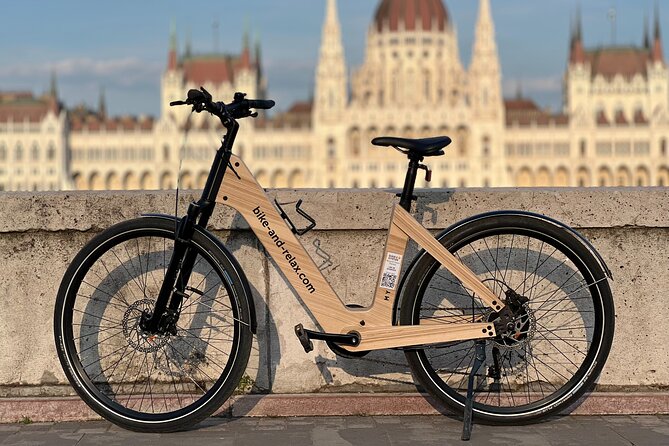
- Electric assist for Castle Hill means you can focus on views instead of grinding uphill
- Small group size helps the guide keep everyone together
- Two-city-side route gives you Pest landmarks and Buda panorama in one go
- No entrance stress: you’ll see the exteriors and skip building lines
- Top “first-time Budapest” landmarks with a mix of culture, architecture, and memorials
- Free luggage storage so you’re not juggling bags while riding
Why an e-bike makes Budapest feel simpler
Budapest looks spread out until you ride it. On a normal walk, you’d spend a lot of time repeating the same kind of effort: a long straight road here, a steep section there, then a stop to catch your breath. With an e-bike, you still get the “I’m out in the city” feeling, but the hard work is reduced enough that you can actually see more in the same time window.
This tour also hits a smart mix of sights. You’re not just doing postcard viewpoints. You pass landmark architecture on Andrássy Avenue, major civic buildings downtown, and then you move into the river-and-castle zone for those classic skyline angles. And because there are breaks built into the ride, it doesn’t feel like you’re glued to your handlebars the entire time.
You can also read our reviews of more historical tours in Budapest


Meeting at Bike & Relax: start in the Jewish Quarter area
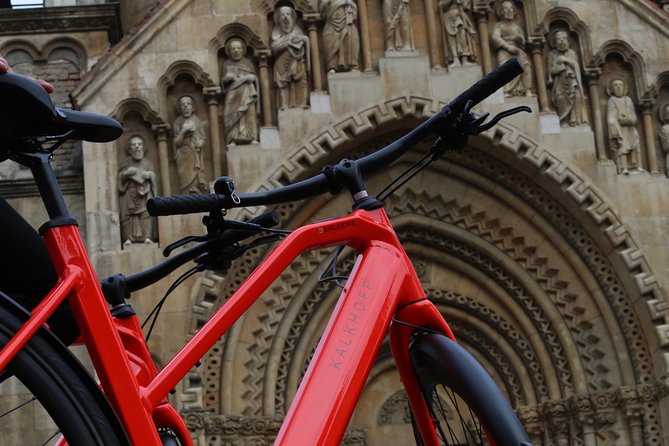
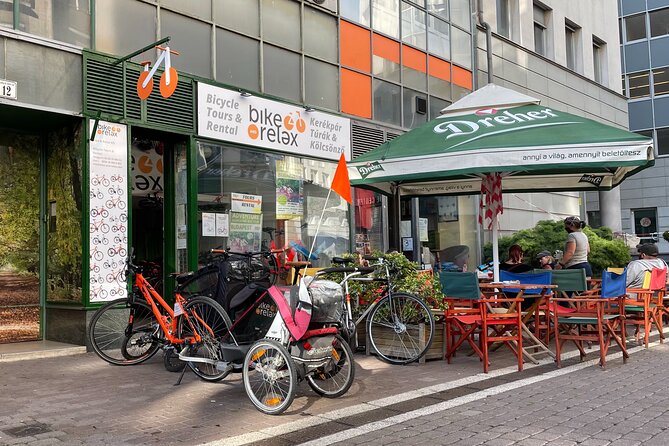
You meet at Bike & Relax Budapest, on Madách Imre út 12 (in the 7th district area). The meeting point is described as the back part of Madách Square, with the connection toward Gozsdu Court—so you’re starting in a lively neighborhood rather than some empty edge of town.
This matters for two reasons. First, you warm up mentally in an area packed with history, not just a random street corner. Second, you’re set up close to the “grid” of central Budapest. That makes the first ride segments feel logical instead of wandering.
You’ll get your bike rental and the basics for riding before you roll out. The tour also includes bottled water, so you don’t have to plan for hydration before the first stops.
Andrássy Avenue to Heroes’ Square: the city’s grand boulevard mood
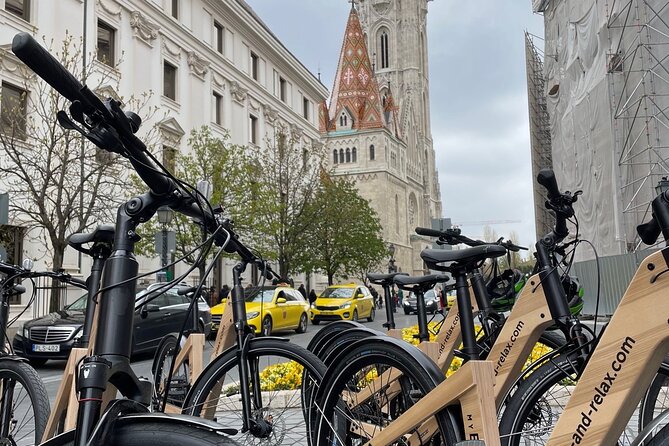
Right away, you ride along Andrássy Avenue, and the guide’s job is to keep it from becoming “just a long straight street.” This is where Budapest shows its ceremonial side.
On this stretch you pass major landmarks including the Opera area and the House of Terror, then head toward Heroes’ Square. That square is a big historical stage: kings, revolutionaries, and monumental architecture. Even if you don’t go inside anything, the scale lands fast. You also get time to take it in—about half an hour—so you’re not just doing a drive-by.
One practical note: the tour can be a bit fast-paced. If you want a slow, photo-heavy first stop at every sight, manage expectations. The pacing works best if you’re okay with “see it, understand it, keep moving.”
City Park stops: Vajdahunyad Castle and Széchenyi Baths area
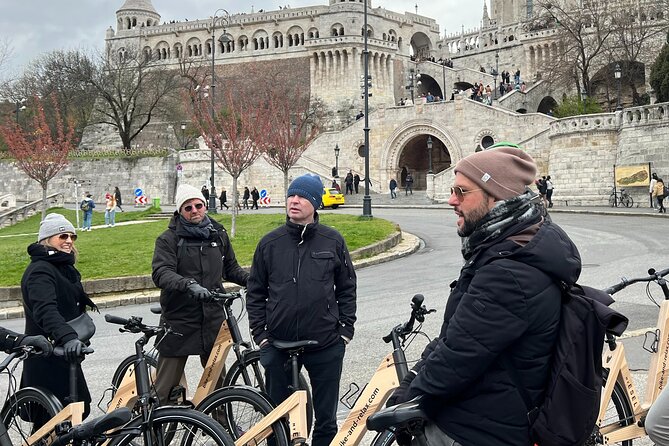
Next comes Vajdahunyad Castle, set in City Park. It’s described as a castle that’s more “fake castle” than fortress, which actually makes it more interesting. This is one of those places where architecture is the story: the building plays with styles and tells you something about how Budapest likes to present its identity.
From there you head to the area around Széchenyi Baths and its pools. You’re not there to swim, but you get an impressive look at the complex and a chance to hear about Hungary’s hot springs and what makes this kind of thermal culture so central to the region. If you’re visiting in shoulder season or cooler months, having a thermal-bath stop during a bike tour gives the day a cozy contrast.
The main drawback of these stops is timing. The time allocated is short, so you’re mainly viewing from outside and listening rather than lingering for museum-level detail.
Down to downtown: Liszt Academy and St. Stephen’s Basilica
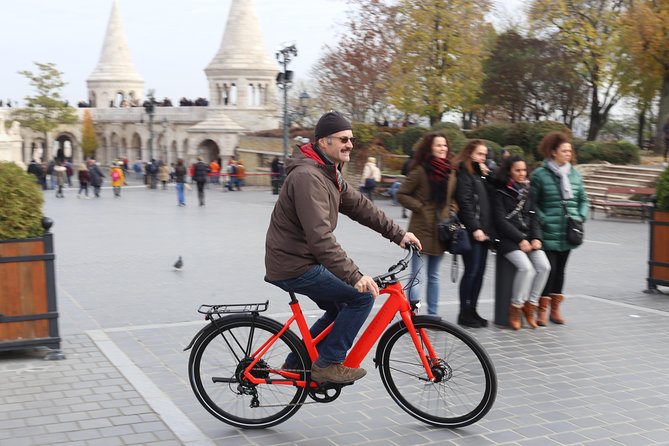
After City Park, you’re back on Andrássy Avenue, then it turns toward the Music Academy area and the Jewish Quarter. One of the most photogenic points here is Liszt Academy, known for its Art Deco style and the Ferenc Liszt connection.
Then you roll into the downtown center for St. Stephen’s Basilica (Szent István Bazilika). This is Budapest’s biggest-church type of moment, and it’s also a good stop for understanding local religion and sacred tradition. The tour highlights the basilica’s “Holy Right,” so you’re not just seeing a building; you’re getting the context that makes it matter to Hungarians.
What I find useful about these downtown segments: they’re compact. You get a hit of culture and architecture close together, without having to backtrack or figure out transit while carrying a bike.





Liberty Square and Parliament: civic power and 20th-century weight
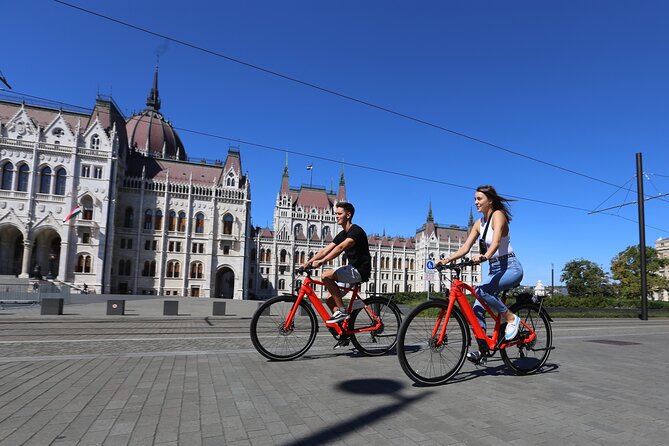
From Szabadság tér (Liberty Square), you move into the financial district zone, with monuments and a strong connection to turbulent Hungarian events, including World War II references. The tour doesn’t linger for museum visits, but it sets the stage for what you’re seeing.
Then comes the big one: the Hungarian Parliament Building. You get time to see the Gothic-style exterior and the idea that it reached “state of the arts” in the late 19th century, plus the 1956 uprising context. If your visit to Budapest is short, this is one of the best places to learn the political story behind the architecture—because the building itself is the headline.
The Danube walk-on moment: Shoes on the Danube Bank
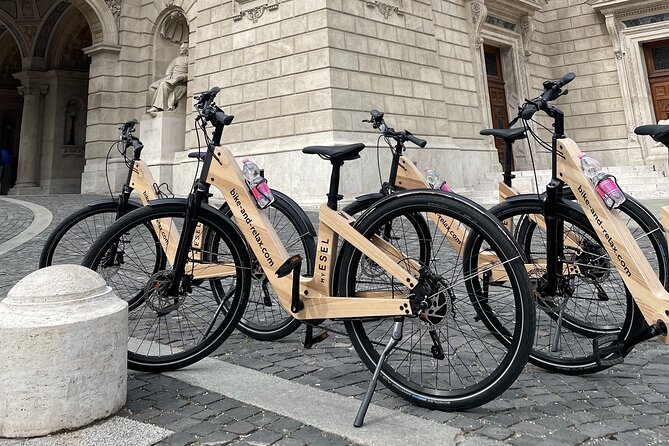
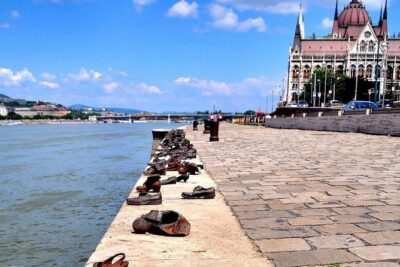
After the Parliament area, you reach the Danube riverbank for views. Then you hit Shoes on the Danube Bank, a memorial remembering victims of the Nazi regime in Hungary.
Here’s the practical caution I’d give you: accessibility can vary. The tour notes that the shoes might not be directly accessible depending on traffic. So if you arrive and can’t get close, don’t panic—still take a minute from where you can see the memorial. The meaning is in what the marker represents, even if you’re not standing on the exact spot.
This stop is emotionally heavier than the castle-and-basilica segment. It’s also one of the reasons this tour feels more worthwhile than a pure “sightseeing loop.”
Chain Bridge to Castle Hill: where the e-bike earns its keep
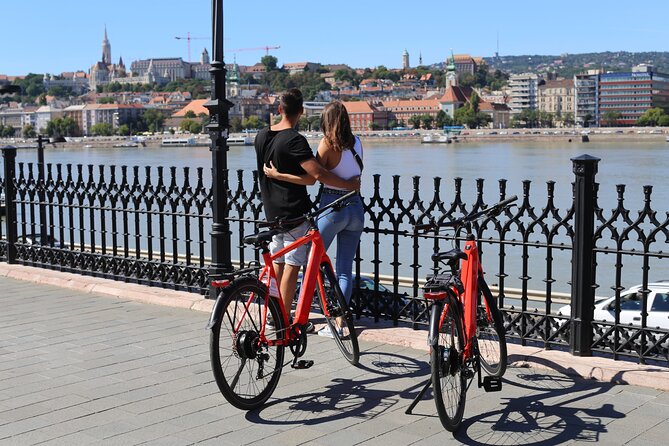
Crossing the Széchenyi Chain Bridge is a classic move, and it’s especially satisfying on an e-bike because you can focus on balance and on watching the river instead of working every pedal stroke.
Once you reach the Castle Hill climb, the electric assist really becomes the point. The route is described as effortless climbing, and that matches what you’ll likely feel in practice: you can put in effort where you want, without turning the steep parts into a workout that ruins the rest of your day.
At Castle Hill you see Matthias Church and Fisherman’s Bastion. This is the “Budapest postcard” zone, but on a bike tour you experience it differently than from a bus stop. You come up with momentum, then the views open in layers as you position yourself for angles. The tour gives you enough time (around 35 minutes in that Castle Hill area) to actually enjoy the place rather than simply pointing at it.
You’ll also pass Castle (Royal) Gardens and the exterior area connected to Turkish Rudas Baths. You’re not stopping for a swim, but it adds another layer: Budapest isn’t just about churches and statues. It’s also about thermal culture and daily life shaped by water.
Returning via Liberty Bridge and the market area
To get back to Pest, the route turns toward Liberty Bridge, crossing back over the river. This isn’t only a transit moment. It’s another chance to take in the skyline angles in reverse.
You also pass the Central Market Hall area near the river. The important part: it’s still operating. Even if you don’t stop inside on the tour, seeing it from the bike gives you a “map in your head” for a future visit.
Next you pass a historical building used as an overview point for Hungarian history and regional context. The tour doesn’t include an entrance, but it nudges you to come back later if you want a deeper dive on that specific theme.
Finally, you finish near the entrance to the Great / Central Synagogue (Nagy Zsinagóga) in the Jewish Quarter. The tour notes it includes an interesting Jewish Museum and Holocaust-related reminders, but again, there’s no interior visit. Still, seeing the building up close matters. It turns the Jewish Quarter from “a neighborhood you ride through” into “a place you respect with your eyes and attention.”
Who’s most likely to love this ride (and who should rethink it)
This works best if you:
- want a high-coverage overview that connects multiple neighborhoods
- can ride a bicycle safely in traffic conditions
- like history explained through landmarks you can see immediately
- are visiting Budapest for the first time and want your bearings fast
It’s less ideal if you:
- are a beginner on bikes (the tour explicitly says it’s not recommended for bicycle beginners)
- are under the minimum comfort specs like height or age (minimum age is 13; minimum height is around 160 cm; and under 155 cm isn’t recommended)
- weigh over the limit noted by the operator (more than 110 kg isn’t recommended)
- hate riding in busy city areas, even if much of the route is organized around bike lanes
Price and value: what $65.33 really buys you
$65.33 for about 3 hours 30 minutes can sound like a lot until you price it against the time and effort you’d spend getting between far-apart sights. You’re not just paying for a bike. You’re paying for:
- equipment rental (so you’re not dealing with bike logistics)
- a guide who strings together meaningful context as you ride
- bottled water and free luggage storage
- a route that includes both sides of the river without making you plan transit
A walking-only version would take much longer to cover all those zones, and you’d likely cut corners on either Buda viewpoints or downtown monuments. The e-bike is the equalizer. It lets you choose comfort without turning the day into a sit-down tour.
If you’re the type who wants to return later to interiors (baths, museums, churches), this tour is a strong front-loaded buy. It helps you decide what’s worth your entry ticket time.
The human factor: guides make or break the ride
One thing that shows up repeatedly is how much the guide’s communication matters. Names that have been associated with excellent experiences include Karoly, Oliver, Susie, Dori, Balint, and Keru. The common thread: clear English, control of the group, and history tied to what you’re actually passing.
You’ll also appreciate the practical rhythm some guides aim for, like keeping the ride together, stopping when someone falls behind, and offering small comfort moments such as taking shelter from bad weather (when needed). That’s the difference between “a bike you rented” and “a day you can actually enjoy.”
Practical tips so you don’t feel rushed
A few things will help you get the best version of the tour:
- Wear cycling shoes and clothes you can move in
- If you’re worried about riding confidence, practice a short warm-up before you start (the tour recommends this in spirit through its overall guidance)
- Expect some city-traffic segments and plan to stay calm and predictable on the bike
- Bring your photo attention, but accept that there isn’t time for every stop to be a photo shoot
Also, if you think you’ll want more photo time at a specific point, say so right then. The tour is designed with stops, but the moment you’re standing still matters.
Should you book this Budapest Historic Downtown e-bike ride?
Book it if you want one ride that threads together Pest landmarks, Andrássy Avenue grandeur, Parliament, the Danube memorial, Chain Bridge, and Castle Hill views—without turning the day into a stamina test. The e-bike does real work here, especially for the climb and the range of sights you can cover in one morning or afternoon.
Skip it (or choose a gentler option) if you’re uncomfortable riding in traffic, you want slow museum-style pacing, or you’re hoping for guided entry into buildings. This is about seeing the city in motion and understanding it from the street and viewpoints, not about spending hours inside.
If your goal is to get oriented fast and make your future Budapest plans smarter, this is a solid pick. It’s good value for what you get, and the route is set up to show you both the grand and the sobering parts of the city in one connected story.
FAQ
How much does the Budapest Historic Downtown e-bike tour cost?
The price is $65.33 per person.
How long is the tour?
It runs about 3 hours 30 minutes.
Is helmet use included?
Yes. Helmets are included, and they are not obligatory.
Are entrance tickets or guided visits included for the buildings?
No entrances and no inside visits are included for the buildings listed along the route.
What are the age and height requirements?
Minimum age is 13 years. The tour also notes a minimum height of about 160 cm, and it says it’s not recommended for travelers under 155 cm.
Can I cancel for a refund if the weather is poor?
Yes. You can cancel up to 24 hours in advance for a full refund. It also says the activity requires good weather, and if it’s canceled due to poor weather, you’ll be offered a different date or a full refund.