REVIEW · BUDAPEST
Private Jewish Heritage Tour of Budapest with Local Expert
Book on Viator →Operated by Friendly Local Guides · Bookable on Viator
Budapest has one of Europe’s most important Jewish stories, and this private tour keeps it human-scale. I love how the route connects synagogues, ghetto sites, and memorials into a clear, walkable storyline, not a random checklist. You also get a real food moment, with Flódni at Frőhlich Patisserie, which makes the experience feel less like a lecture and more like a day out.
Two things I like a lot: the guide-led context around the WWII setting (especially the 1944 ghetto area) and the fact that you’re not stuck waiting around. My best impression came from guides like Miklos, who’s been described as on time, clear, and willing to spend the time needed so you don’t feel rushed.
One drawback to consider: this tour is private and moving, so you’ll want moderate walking stamina and comfy shoes. Also, in rare cases a guide can get sick and the tour may be canceled or refunded, so if your schedule is tight, plan a little buffer.
In This Review
- Key things to know before you go
- What a 2.5-hour private walk covers in Budapest’s Jewish Quarter
- Herzl Square to Frőhlich Patisserie: your first taste of the story
- Dohány Street Synagogue: why this stop is the main event
- Rumbach Street Synagogue: Moorish style and a calmer pace
- Carl Lutz Memorial: turning names into meaning
- Kazinczy Street Synagogue and the Art Nouveau Orthodox vibe
- Erzsébetváros and the “city within a city” feeling
- Dob Street and Frőhlich again: treats plus the practical sweet spot
- Kazinczy Street’s market-to-wine-cellar vibe
- Castle Garden: the oldest traditional Jewish baths for a quick photo stop
- District VII streets: how the route helps you picture the former ghetto
- Price and value: is $220 per person fair for a private tour?
- Private vs group: why the pacing feels calmer
- What to do before and after the tour
- A balanced reality check: on-time is the whole game
- Practical tips for your shoes, timing, and questions
- Should you book this Budapest Jewish heritage tour?
- FAQ
- How long is the Private Jewish Heritage Tour of Budapest?
- Is this tour private?
- Is pickup available?
- What’s included in the price?
- Are entrance tickets included for synagogues?
- Can I cancel for a full refund?
Key things to know before you go
- Private pacing for questions: You get your own local expert, so you can ask what you actually want to know.
- Synagogue triangle focus: You’ll visit several key sites around Dohány Street, Rumbach Street, and Kazinczy Street.
- WWII 1944 context on foot: The WWII ghetto area shows up in the walking route, not as a vague mention.
- A real Budapest food stop: You’ll try Flódni at Frőhlich Patisserie during the tour window.
- Memorial stop with meaning: The Carl Lutz Memorial ties Jewish survival stories to a specific person.
- Eco-friendly walking route: Much of the experience happens on foot, keeping the day simple and low-fuss.
What a 2.5-hour private walk covers in Budapest’s Jewish Quarter
This is a 2 hours 30 minutes private walking tour focused on Budapest’s Jewish landmarks. It’s designed for you to cover a lot of ground without turning it into a sprint, which matters in a district where streets can feel like mazes if you’re on your own.
You start near Herzl Square and move through the Jewish Quarter area and adjacent streets that connect to the city’s older Jewish community life. Along the way, your guide stitches the locations together with stories about religion, community, and the shock of WWII.
You’ll also have some built-in “break in the brain” moments, including coffee/tea and a food stop. That helps when you’re learning heavy material, because your body needs a reset, too.
You can also read our reviews of more private tours in Budapest


Herzl Square to Frőhlich Patisserie: your first taste of the story
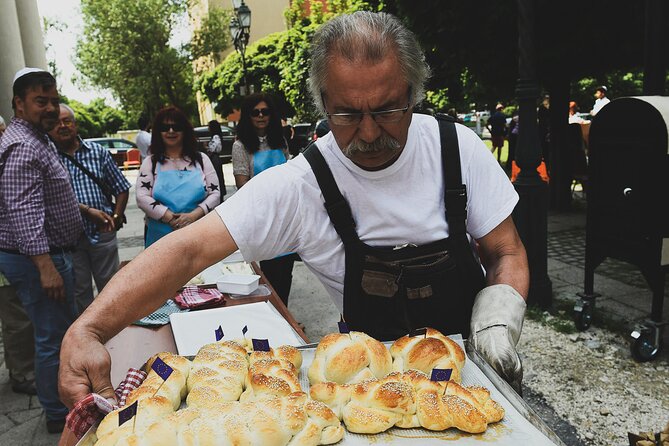
The early part of the tour frames everything. You begin in the Jewish Quarter area around Herzl Square and the Great Synagogue area, where the community’s modern identity meets the city’s older streets.
From there, expect a guided walk through the district and major landmarks associated with the city’s World War II ghetto of 1944. The value here is that you’re seeing the places in the order that makes sense, so the history doesn’t feel like separate chapters you have to memorize.
Then comes the part I really appreciate: the stop at Frőhlich Patisserie for Flódni. Flódni is described as the iconic modern Jewish delicacy, and having it during the tour is a smart pacing tool. It gives your day a flavor anchor, so the Jewish story you’re learning has something tangible attached to it.
Practical note: Frőhlich is also positioned for other Jewish treats nearby, so if you’re hungry later you may want to plan a little extra time in the neighborhood. Your tour includes the planned Flódni stop, but it’s still a good idea to check what’s included versus what you may want to add.
Dohány Street Synagogue: why this stop is the main event
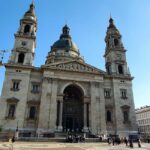
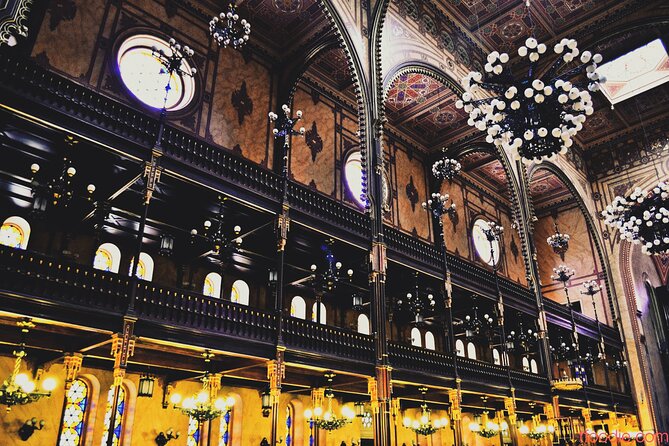
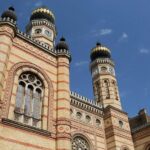
Dohány Street Synagogue is the tour’s headline stop. This is the largest synagogue in Europe and the second largest in the world, and even if you’ve seen big houses of worship elsewhere, the scale and setting here tend to leave an impression.
This stop is about being in the right spot at the right moment. You’re not just walking past a building. Your guide brings the surrounding area into the story, which helps you understand how these synagogues weren’t only religious centers, but also community anchors.
Time-wise, this is kept short enough that you won’t feel like the day is hostage to one location. But it’s long enough to get the context you’ll need to look beyond architecture and notice symbols, design choices, and what the community wanted these spaces to represent.
Rumbach Street Synagogue: Moorish style and a calmer pace
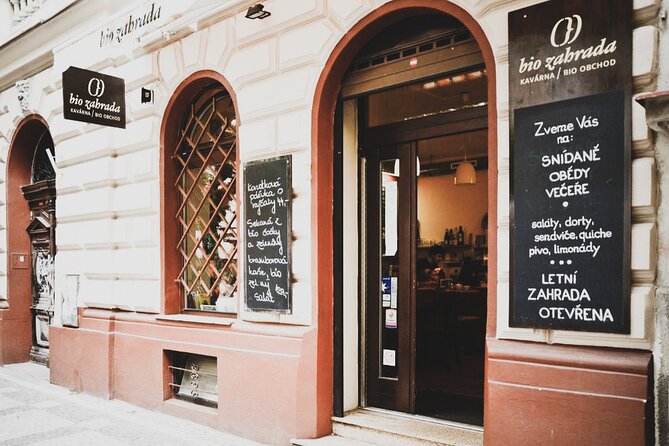
Next up is the Rumbach Street Synagogue, including the Moorish Rumbach Sebestyén utca Synagogue area. The key detail here is the look inside: you get a chance to see how the interior decoration can catch the light in a graceful way.
Why I like this stop: it gives your brain a change of pace after the more central Dohány Street area. It’s still part of the same larger “synagogue triangle” idea, but the vibe shifts from grand public scale to a more atmospheric feel.
If your interest includes design and how style expresses identity, this is one of the places where your guide’s pointing can make a big difference. You don’t have to be an architecture fan to enjoy it, but you will likely notice more than you would alone.
Carl Lutz Memorial: turning names into meaning
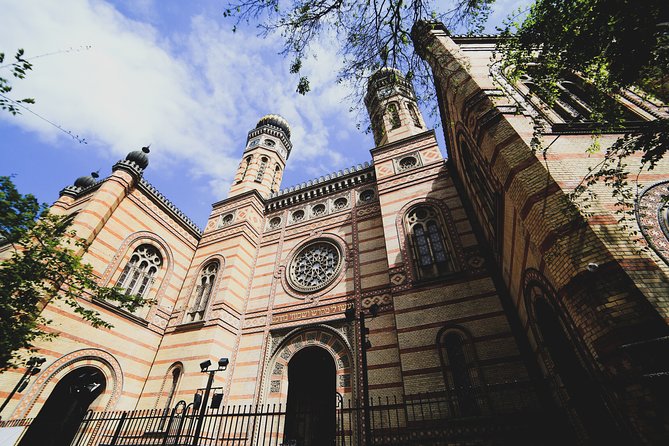
Then the tour shifts from buildings to a person and a moral story: the Carl Lutz Memorial. Carl Lutz is often called the Hungarian Schindler, and this stop is meant to connect the broader WWII narrative to a specific figure.
This part matters because it keeps the day from becoming only about tragedy and scale. It adds the idea that individuals acted, saved lives, and left an imprint that still shows up in the modern city.
The time here is about 20 minutes, which is a good length for a memorial stop. Long enough to absorb the message, not so long that you’re standing there numb.
If you tend to get emotional on history tours, this pacing can help. The itinerary doesn’t keep you pinned under one heavy subject for hours straight.
You can also read our reviews of more historical tours in Budapest



Kazinczy Street Synagogue and the Art Nouveau Orthodox vibe
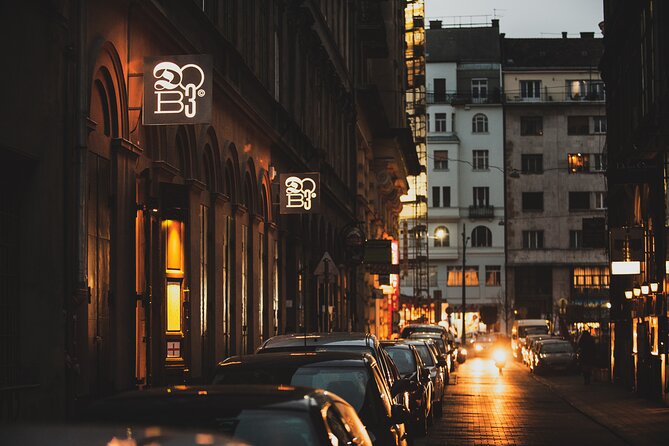
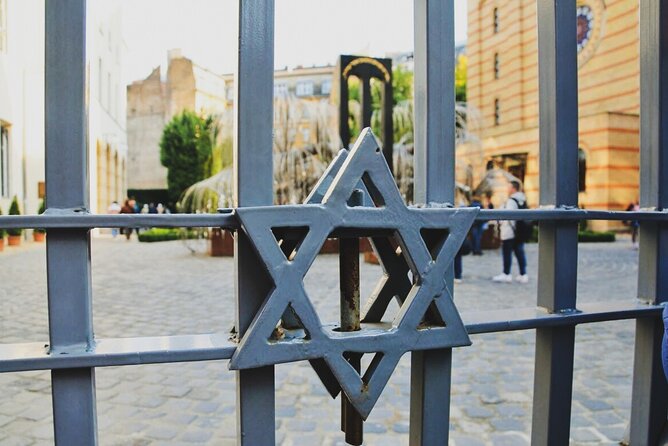
The Kazinczy Street Synagogue stop is both religious and stylistic. It’s described as one of the largest functioning Orthodox synagogues in Europe, built in an Art Nouveau style.
That combination is useful for you if you like contrasts. You’re seeing an Orthodox community space, but with a design language that’s unmistakably from a particular era of Budapest.
This is also a moment where your guide can share modern neighborhood context. The tour includes local tips about beer ruins and nightlife, plus hints about street art and other secrets in the area. Even if you’re not a nightlife person, these tips help you understand how the district lives today, not just how it looked in the past.
Erzsébetváros and the “city within a city” feeling
The tour spends time in Erzsébetváros, often described as the former heart of Jewish life—a historic area sometimes referred to as a city within a city. That phrasing works because the district historically carried its own social rhythm: community institutions, markets, shops, and places of worship.
You’ll hear about monuments of Jewish history, culture, and religion, and you’ll connect the idea of Jewish Quarter to something more specific: the former ghetto area in the heart of old Budapest.
This section is about orientation. It’s when the district starts to click visually, and you begin to recognize how the stops you just visited fit into one continuous neighborhood story.
Dob Street and Frőhlich again: treats plus the practical sweet spot
At Dob Street, the tour returns to the food-focused side of the Jewish Quarter. You’ll check out Frőhlich Confectioner’s and get a delicious treat: Flódni plus mention of other Jewish delicacies like a Chanukkai donut and Purim Haman’s ears.
What to expect from this moment: it’s not just eating, it’s learning how Jewish food traditions show up in Budapest’s modern day-to-day life. The guide’s explanation helps you place the treat in a cultural frame rather than treating it like a random dessert.
A practical tip: go easy if you’re sensitive to sweets or heavy pastries. It’s a walking tour with multiple stops, so a sugar rush can hit at the wrong time if you’re not pacing yourself.
Kazinczy Street’s market-to-wine-cellar vibe
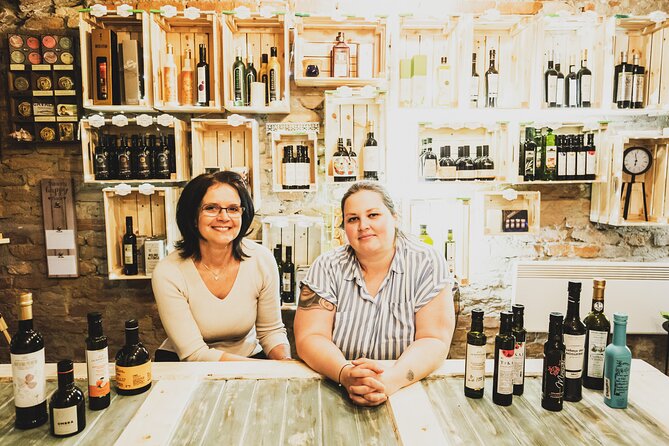
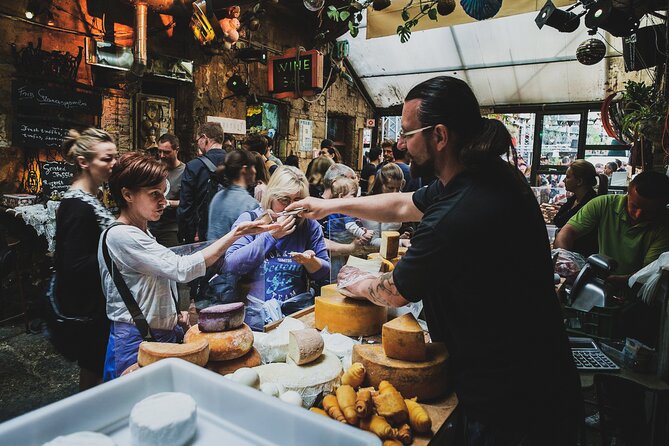
Later you return to Kazinczy Street, specifically the central area called Kazinczy. The idea here is historical layering: there used to be a buzzing Jewish market surrounded by shops, restaurants, law firms, and community activity.
Now, the area is described as resembling a wine cellar with kosher wine of high quality. That’s a clue about how neighborhoods survive: shops change, purposes shift, but some “signals” remain.
If you’re the type who likes to photograph street scenes, this is a good area for that. The guide can point out what to notice so you’re photographing meaning, not just buildings.
Castle Garden: the oldest traditional Jewish baths for a quick photo stop
At Castle Garden, you’ll have a chance to take a picture with the oldest traditional Jewish baths used for ritual purposes.
This is a short stop, about 10 minutes, and that’s exactly right. You get the visual anchor, then you move on while your attention is still sharp. If you linger too long at a bathhouse without context, it can feel like just another old building. With the right framing, it becomes a concrete example of how ritual and daily life were intertwined.
If you’re traveling with kids or anyone who wants a lighter moment, this can be a good breather in the middle of the day.
District VII streets: how the route helps you picture the former ghetto
In the final stretch, you’ll stroll through District VII / the Jewish Quarter, including streets in the former ghetto area. This is where the tour becomes more like a guided walk through a map you can actually feel.
You’ll see synagogues, monuments, kosher restaurants, and kosher shops, and you’ll listen to local stories that tie the present-day streets to what came before. That’s the real magic of this kind of route: your brain stops seeing it as only sightseeing and starts seeing it as a lived neighborhood.
If you’re short on time in Budapest, I’d treat this as a strong “first orientation” tour. It helps you know where to return later for a longer look, because you already understand the geography and the story flow.
Price and value: is $220 per person fair for a private tour?
At $220 per person, this isn’t a budget group tour. But it’s a private, 2.5-hour experience with multiple major stops, a local expert guide, and included extras like a notebook and souvenir pen, plus coffee and/or tea and visual handouts.
That matters because you’re paying for time with someone who can connect the dots. In a neighborhood full of historic sites, the guide’s job is to help you see what you otherwise might miss or misunderstand.
There’s also pickup offered, which can reduce day friction if you’re staying centrally. And the tour is positioned as an eco-friendly, sustainable option, mainly because so much is handled on foot.
The one caution on value: the tour says entrance tickets aren’t included, while the planned stops are marked as admission ticket free. In practice, what you’ll actually pay depends on the real site rules for the day. If you’re visiting with high expectations for indoor access everywhere, ask your provider before you go what is definitely included.
Private vs group: why the pacing feels calmer
This is truly private: only your group participates. That tends to change everything.
You can move at your pace. If a question pops up, you can spend an extra minute without being punished by a fixed group schedule. Guides like Miklos have been described as taking time and being clear, and that kind of pacing is a big reason people enjoy this format when they have limited time.
You also get a better chance to tailor the emphasis. If you’re more interested in WWII context, you can ask about the 1944 ghetto pieces. If you want community and religious architecture, you can steer your questions toward Dohány Street, Rumbach, and Kazinczy.
What to do before and after the tour
Before you go, set one goal. For example: understand the synagogue triangle, or make sense of the WWII 1944 area markers. If you go in with a goal, your guide’s commentary will land faster.
After the tour, you’ll have a head full of neighborhood context and some practical direction. Your guide includes local tips about beer ruins and nightlife in the area, so if you want to extend the evening, you have a short list of what’s worth checking out.
If you’re not into nightlife, that’s fine. The tour still helps you decide where to walk on your own later, including areas around Kazinczy and the market streets vibe.
A balanced reality check: on-time is the whole game
One downside that showed up in the available feedback: there was a reported instance where a guide did not show, despite multiple attempts to contact. In that case, the operator reportedly canceled and refunded the tour because the guide got sick.
You can’t eliminate risk in travel. But you can manage it: keep your booking info handy, and if you’re relying on this tour for a specific day window, consider building in buffer time for alternatives.
If your schedule is tight, this is the kind of tour where I’d rather go with a plan that allows you to pivot if plans change.
Practical tips for your shoes, timing, and questions
The tour includes coffee/tea and a dessert stop, but it doesn’t turn into a long lunch. Bring water if you know you run warm, and wear shoes that handle cobblestones and uneven sidewalks.
Your fitness level should be moderate. That usually means comfortable walking in a dense city district, with stops that add up over 2.5 hours.
Questions you can ask that fit the tour themes:
- How did the Jewish Quarter shape everyday life in Budapest?
- What details should I notice at the synagogue triangle stops?
- What’s the best way to understand the 1944 ghetto area when I’m walking there?
And if you have food preferences, mention them early. The tour specifies Flódni and other delicacy options around the Frőhlich stops, so you’ll want clarity on what you’ll actually receive.
Should you book this Budapest Jewish heritage tour?
Book it if you want a private, guided route through major Jewish landmarks in Budapest without spending your whole day figuring things out. It’s especially worth it if you like structure: synagogues, memorial meaning, WWII 1944 context, and then a dessert stop that gives the day a human touch.
Don’t book it if you need a fully indoor, long-duration museum-style experience with lots of guaranteed ticketed entry. The focus here is walking and context, and the plan notes entrance tickets aren’t included.
If you do book, I’d choose a time that matches your energy level and keep a little buffer in case of last-minute changes. Guides like Miklos show how good this tour can be when you get great interpretation and calm pacing.
FAQ
How long is the Private Jewish Heritage Tour of Budapest?
It runs about 2 hours 30 minutes.
Is this tour private?
Yes. Only your group participates.
Is pickup available?
Pickup is offered.
What’s included in the price?
All fees and taxes are included, along with a notebook and souvenir pen, visual handouts, and coffee and/or tea.
Are entrance tickets included for synagogues?
Entrance tickets are listed as not included. Some stops are marked as admission ticket free, so it’s worth confirming what you’ll need to pay for each site on your specific tour.
Can I cancel for a full refund?
Yes. You can cancel up to 24 hours in advance for a full refund.