REVIEW · BUDAPEST
Downtown Pest Walking Tour
Book on GetYourGuide →Operated by insightcities.com · Bookable on GetYourGuide
Budapest’s power and tragedy in one 3-hour walk. This Downtown Pest tour is a smart way to understand how Pest grew into Hungary’s political, financial, and religious heavyweight in the late 1800s, with stops that mix big civic buildings and human stories. I like how the route is built around major landmarks, and I especially like how the guide slows down for both the Holocaust Monument and the beauty of Freedom Square.
The main consideration is pace. At about 3 hours and $123 per person, it’s a concentrated walk—great for orientation, but not for people who want lingering inside every building or who prefer a slower, museum-style tempo.
In This Review
- Key highlights worth your attention
- Entering the story at Kossuth Square and Hungary’s Parliament
- Quick tip
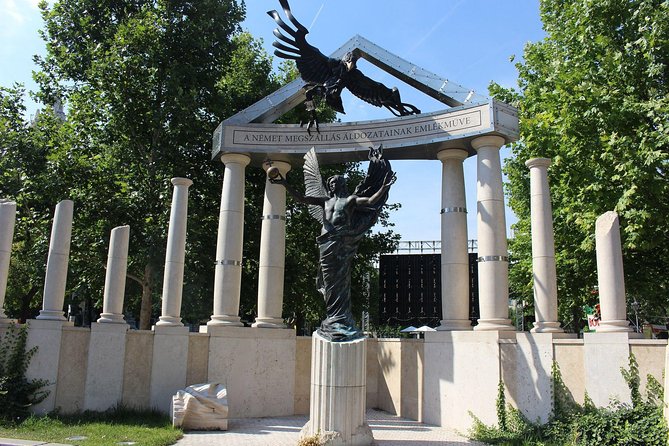
- Holocaust Memorial by the Danube: where memory is placed on purpose
- Freedom Square and the Stock Exchange Palace: Budapest’s financial confidence
- Why this stop feels different
- Cardinal Mindszenty’s statue: faith under political pressure
- St. Stephen’s Basilica area: Art Nouveau details on the way
- A small reality check
- Jewish Budapest landmarks: synagogue scale and bourgeois influence
- Andrassy Boulevard: an esplanade designed for nobility
- Practical tip
- Opera House pause and the grand finish at Heroes Square
- The guide experience: historian-led pacing that actually helps
- Price and value: $123 for 3 hours of major Pest landmarks
- Who this walking tour suits best
- Should you book this Downtown Pest Walking Tour?
- FAQ
- Where does the tour meet?
- How long is the Downtown Pest Walking Tour?
- Is the tour guided in English?
- What are the main sights included?
- Do you visit Art Nouveau buildings on the route?
- Is there a historian guide?
- Can I book private or small groups?
- What’s the price?
Key highlights worth your attention
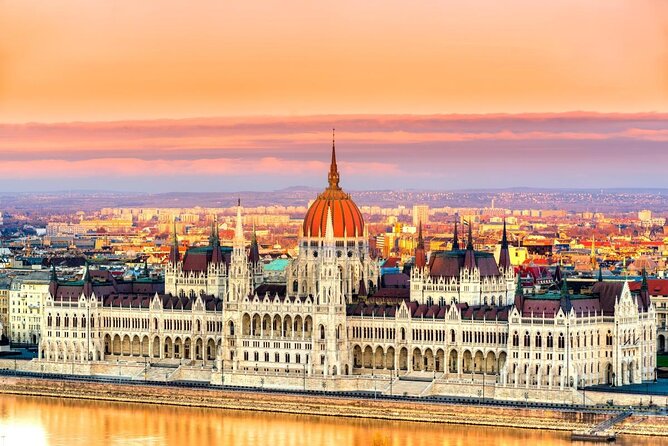
- Kossuth Square at Hungary’s Parliament (inaugurated in 1896): massive on the outside, and packed with art references inside
- Holocaust Memorial right by the Danube: a stark stop that’s placed where the tragedy happened
- Freedom Square and the Stock Exchange Palace: the financial side of Budapest’s 19th-century rise
- Art Nouveau architecture stops: you’ll connect the city’s famous style to what was happening politically and socially
- Andrássy Boulevard’s noble design: a grand esplanade you walk along—and even under—before the finale
Entering the story at Kossuth Square and Hungary’s Parliament
The tour starts at Kossuth Lajos tér, with a focus on the Hungarian Parliament and why it mattered. If you know Budapest only from photos, this is one of those moments where your brain recalibrates. The Parliament is described as the largest and most costly structure Hungary had built at the time—at its 1896 inauguration—and that ambition shows immediately.
What I like about this stop is the framing. Instead of treating the building like a pretty postcard, the historian guide connects it to the newborn Hungarian nation’s self-confidence. The exterior is massive and imposing, but the tour also points you toward what makes it dazzling within: the building houses works of art that represent nearly every famous Hungarian painter and sculptor of the period. That detail helps you look beyond “wow factor” and see a whole cultural project wrapped into one structure.
You can also read our reviews of more walking tours in Budapest

Quick tip
Wear comfortable shoes and be ready for standing and looking up. Parliament’s scale is the kind that makes you want photos, and that eats time if you’re not organized.
Holocaust Memorial by the Danube: where memory is placed on purpose
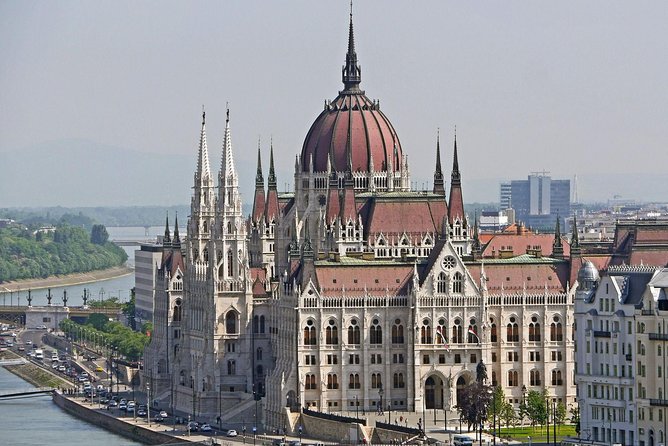
Right behind Parliament, on the banks of the Danube, you’ll come to the Holocaust Monument. This isn’t a generic memorial stop; it’s positioned to highlight where thousands of Jewish citizens of Budapest were tragically killed in the last months of World War II.
The value here is the location and the connection. When a memorial is placed where events occurred, it stops history from feeling abstract. You’ll leave with a clearer sense of why that riverfront matters—not just as scenery, but as a real stage for real lives.
A possible drawback: if you’re emotionally sensitive or you’ve been in an information-heavy day already, this can hit hard. It’s not morbid for shock value—it’s purposeful. Just know the stop has weight.
Freedom Square and the Stock Exchange Palace: Budapest’s financial confidence
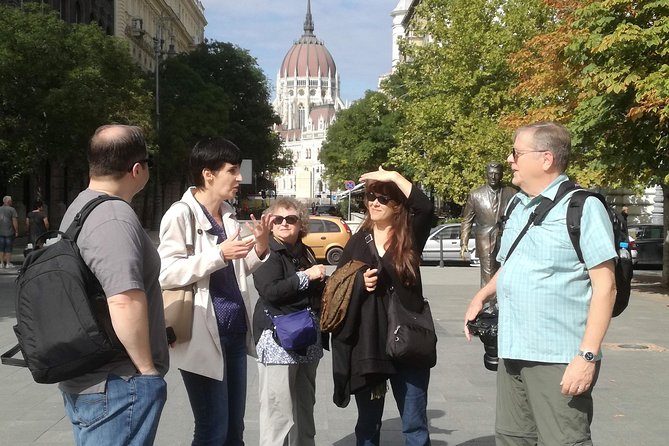
Next comes Freedom Square—originally built as the financial center of the city, and widely considered one of Budapest’s most beautiful squares. The square is where the tour’s big theme becomes visible: Pest’s power wasn’t only political. It was commercial, too.
The centerpiece is the Stock Exchange Palace, a massive building that signals how seriously Budapest took finance once the city’s fortunes started rising. Around it, you’ll see opulent buildings that still house banks. The tour helps you read what you’re seeing: the grandeur wasn’t just decoration. It was also branding for a city that wanted to look stable, modern, and in control.
Why this stop feels different
A lot of city tours do the “pretty square” version. This one leans into why it looks the way it does—how the financial district shaped the urban mood. You end up with a better mental map of Pest, not just a list of attractions.






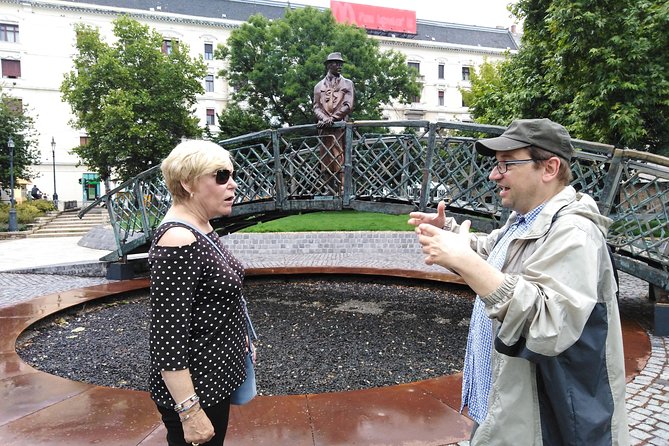
Cardinal Mindszenty’s statue: faith under political pressure
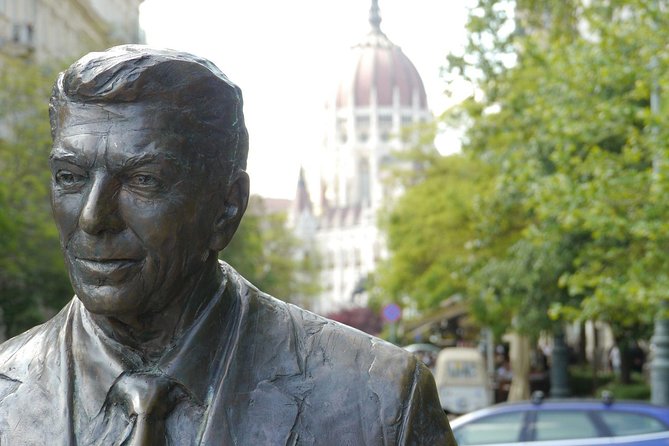
After Freedom Square, you’ll see the statue of Cardinal Mindszenty, head of the Catholic church in Hungary. The story is dramatic: he lived hidden for 15 years in the U.S. embassy, while on the run from communist authorities.
This stop works well in a walking-tour format because it’s not trapped in a museum. You’re outside, seeing civic space around a figure who symbolizes the clash between public power and personal conscience. Even if you don’t know much Hungarian 20th-century history, the guide’s storytelling is designed to make the timeline stick.
St. Stephen’s Basilica area: Art Nouveau details on the way
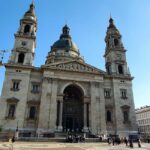
As you make your way toward St. Stephen’s Basilica, the tour starts feeding you the kind of visual cues that make Budapest famous: Art Nouveau buildings. The point isn’t just to say “Budapest is pretty.” It’s to help you recognize how architectural style reflects the era’s energy and identity.
Art Nouveau is best appreciated slowly—by noticing ironwork, the way facades are decorated, and the overall flow of shapes. Since you’re on foot, you get enough time to look without turning the day into a slow crawl. You’ll pass several beautiful buildings, then keep moving.
A small reality check
Because this is a 3-hour route, the guide will balance looking with explanation. If you want to stare at every detail for 20 minutes straight, you might wish you had a longer day. But for most first-timers, this pacing is a good trade.
Jewish Budapest landmarks: synagogue scale and bourgeois influence
A bit farther along, you’ll reach the second-largest synagogue in the world. The tour connects it to the vital role Budapest’s Jewish population played in the city’s development. It also highlights the wealthy bourgeois influence—important because it explains why certain parts of the city grew the way they did, including the energy behind trade, culture, and urban expansion.
This is another moment where context matters. The synagogue isn’t only an architectural object. It’s tied to community history and to how residents helped shape Pest’s momentum.
If you’re trying to learn Budapest beyond the obvious monuments, this stop is a strong reminder: the city was built by many communities, not one.
Andrassy Boulevard: an esplanade designed for nobility
Then you move to one of the most famous stretches of the city: Andrássy Boulevard. The tour frames it as an esplanade designed for Hungarian nobility. That word—nobility—changes how you look at it. You can start seeing the boulevard as social theater, not just a street.
You’ll walk along the boulevard and, as part of the route, move under it as well. That underpass portion is especially helpful for keeping the tour efficient without sacrificing the sense of place.
What I like here is the way the guide ties the grandeur to who the space was meant for. You get a clear “before and after” feeling: the city’s elite had a public stage, and later generations inherit the same structures and then use them differently.
Practical tip
Andrássy Boulevard is a good place to plan your photos. You’ll likely want a few wide shots, and you’ll also want to look upward to catch architectural lines.
Opera House pause and the grand finish at Heroes Square
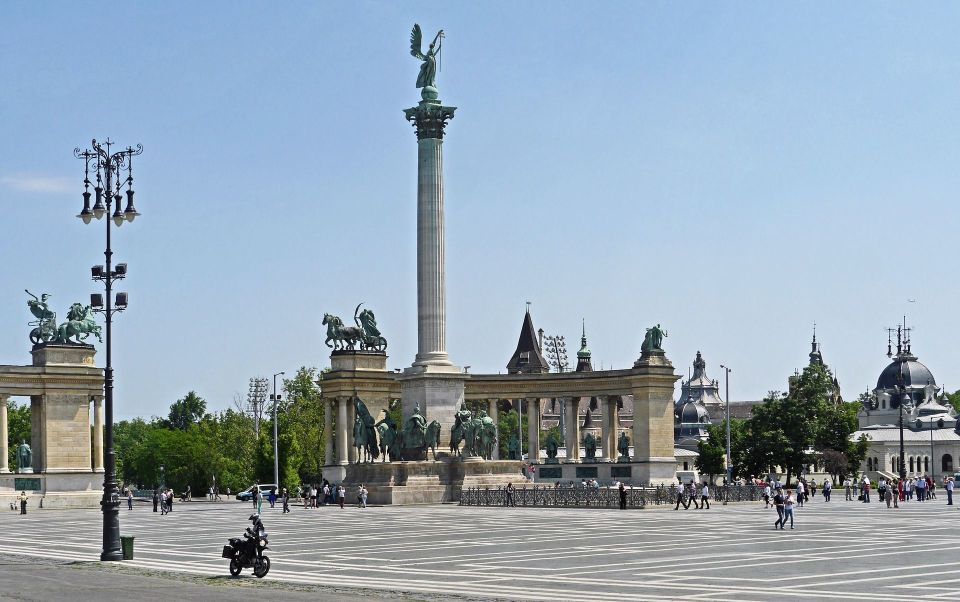
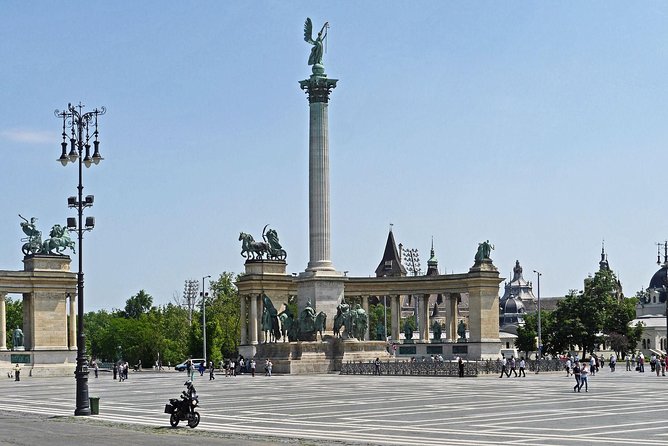
Near the end, there’s a short stop at the Opera House. It’s a brief moment, but it adds another layer to the tour’s theme: Pest’s rise wasn’t only about government and banks. It was also about culture and prestige.
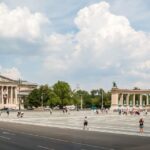
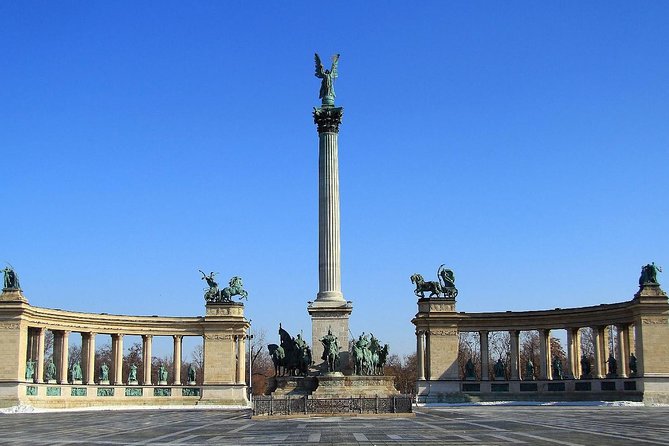
Finally, the walk ends at Heroes Square. The big detail here is the celebration: in 1896, Hungarians marked the 1,000-year anniversary of the founding of their kingdom. That date turns the square into more than a pretty backdrop. It becomes a symbol of nationhood—constructed to impress, to unify, and to tell a story about where the country came from and where it was going.
If you’re building a first-day itinerary, this ending works because it’s a “big picture” finale. You finish with a scene that helps everything you saw earlier click into place.
The guide experience: historian-led pacing that actually helps
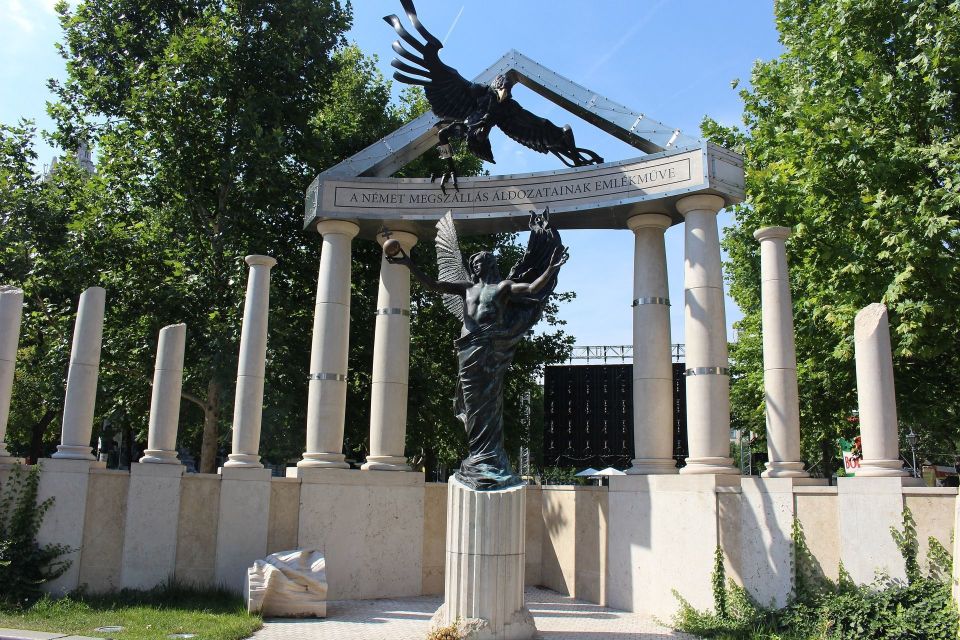
This is a historian-guided walking tour, and that matters because the tour is more than a route of stops. It’s a route of explanations.
The strong guides reported include András and Zsofia. In the feedback, the praises are consistent: patient pacing, strong English, and storytelling that answers questions without making people feel rushed. One guide quality that really comes through is being objective about history—not skipping the hard parts, but keeping the tone clear and understandable.
The “3 hours flew by” feeling makes sense. With a good guide, you don’t waste time waiting for someone to catch up. You spend that time learning how to see the city.
Price and value: $123 for 3 hours of major Pest landmarks
At $123 per person for a 3-hour guided walk, you’re paying for three things: a dedicated historian, a tight route, and access to multiple top-tier landmarks without you having to plan each turn.
Is it cheap? No. But for value, I think the math looks reasonable if your priorities are:
- You want a Pest orientation that links buildings to history
- You want to cover major highlights in one afternoon without research fatigue
- You care about the “why,” not only the “what”
If your ideal Budapest day is long stays, museum time, and endless photos, you may feel the clock. But if you want a guided framework for understanding Pest’s big transformation in the late 1800s, the price-to-time ratio makes sense.
Who this walking tour suits best
This tour is a great fit if you:
- Like your sightseeing explained with historical context
- Want to see both civic power (Parliament, financial district) and cultural markers (Art Nouveau, Opera House)
- Prefer a manageable 3-hour commitment that still covers a lot of ground
- Enjoy question-friendly guides who take time with details
It’s less ideal if you:
- Need lots of sit-down breaks or long interior visits (the route is still a walk)
- Want to move at a slow pace with minimal talking
- Are sensitive to heavier WWII-era content, since the Danube Holocaust stop is part of the route
Should you book this Downtown Pest Walking Tour?
I’d book it if you want a smart, guided way to understand Pest’s rise—political, financial, religious—through buildings you’ll recognize instantly. The lineup hits key landmarks: Parliament, the Holocaust Monument, Freedom Square and the Stock Exchange Palace, Art Nouveau streets, Andrássy Boulevard, and the finale at Heroes Square.
I’d skip it only if you’re mainly after long museum time or you strongly dislike a structured 3-hour walking pace. For most first-timers, it’s an efficient route that teaches you how to read Budapest instead of just photographing it.
FAQ
Where does the tour meet?
The meeting point is at Szamos Cafe, Budapest Kossuth Lajos tér 10.
How long is the Downtown Pest Walking Tour?
It lasts 3 hours.
Is the tour guided in English?
Yes. The tour is available in English with a live guide.
What are the main sights included?
You’ll see landmarks including the Hungarian Parliament, the Holocaust Monument, Freedom Square, the Stock Exchange Palace, St. Stephen’s Basilica area, a major synagogue, Andrássy Boulevard, the Opera House, and end at Heroes Square.
Do you visit Art Nouveau buildings on the route?
Yes. The walk includes passing Art Nouveau buildings for which Budapest is famous.
Is there a historian guide?
Yes. The experience includes a historian guide.
Can I book private or small groups?
Yes. It lists private or small groups available.
What’s the price?
The price is $123 per person.