REVIEW · BUDAPEST
Budapest: Guided Walking Tour of Pest
Book on GetYourGuide →Operated by Cityrama Budapest Travel Agency · Bookable on GetYourGuide
Budapest’s Pest side is best seen on foot. This guided walk is built for getting your bearings fast while you pass the big-ticket sights and some quieter streets. You’ll cover St. Stephen’s Basilica and Liberty Square, plus classic river views from the Danube Bank.
I love that the focus stays on architecture you can actually see up close: 19th-century buildings, plus Art Nouveau details like the House of Hungarian Art Nouveau. I also like the way the route mixes the famous with the practical, including time to pause for photos and the chance to step away from tour-bus crowds.
One consideration: this is a walking-and-seeing tour with no included entrance fees, so if you want to go inside places like the Parliament area, you’ll need extra plans and tickets on your own.
In This Review
- Key highlights worth planning around
- Pest streets: why this beats another bus loop
- Meet at Molnár’s Kürtőskalács and start with an easy win
- St. Stephen’s Basilica: Budapest’s biggest cathedral, explained
- Chain Bridge and the Danube Bank: the river walk that changes everything
- House of Hungarian Art Nouveau: where style turns into a stop worth pausing for
- Hungarian Parliament and Liberty Square: big landmarks with street-level context
- The street market stop: a smart way to taste Budapest’s everyday side
- What a live guide actually changes (Monica, Lena, Lina, and the humor factor)
- Pacing and what to bring for a 2-hour Pest walk
- Price and value: $16 for major Pest landmarks
- Should you book the Budapest: Guided Walking Tour of Pest?
- FAQ
- How long is the Pest walking tour?
- Where is the meeting point?
- Is the tour in English?
- Is it canceled if it rains?
- What is included in the price?
- Are hotel pickup and drop-off included?
- Are entrance fees included?
- Can I cancel and get a full refund?
- Can I reserve now and pay later?
Key highlights worth planning around

- St. Stephen’s Basilica up close, with a guide explaining what you’re looking at
- Chain Bridge and the Danube Bank for classic river-and-city views on foot
- The Hungarian Parliament building (described as the world’s third largest) as a main photo stop
- Liberty Square + a street market for atmosphere beyond the monuments
- Hidden alleyways and side streets, so the walk feels less like a checklist
Pest streets: why this beats another bus loop
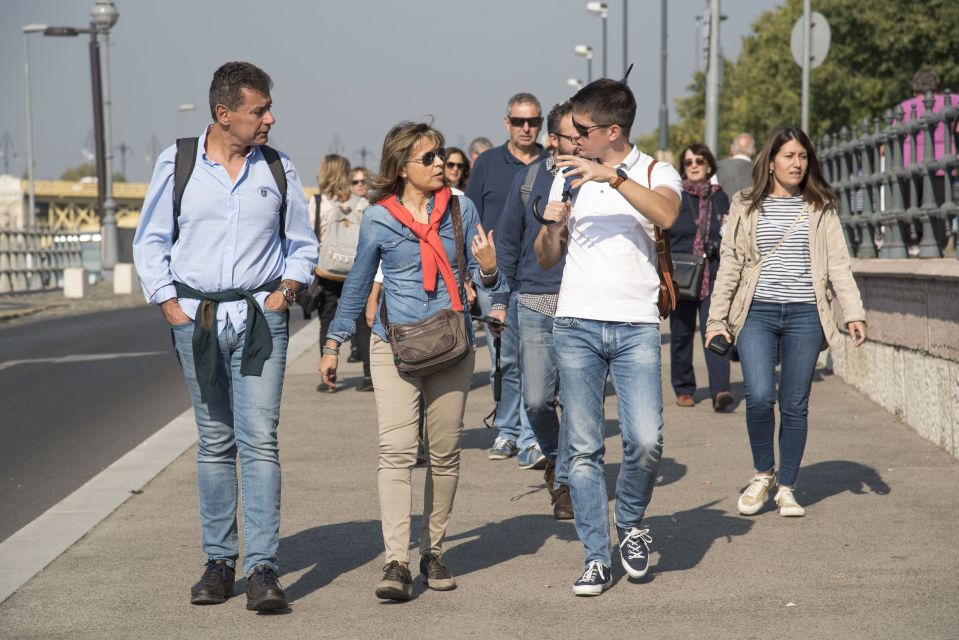
Pest has a way of rewarding slow walking. Big monuments sit beside everyday life, and the only way to feel that contrast is to move at human speed. This tour keeps you outside, on sidewalks, watching how the city’s layers connect: old and new, ceremonial and casual.
The format is also a nice antidote to bus-tour churn. You’re not stuck behind a window and a crowd. Instead, you’re guided through the center in a way that helps you understand where things are relative to each other, so Budapest starts to make sense quickly.
For me, the value is in the mix. You get the landmarks people travel for, but you also get enough street-level wandering to feel like you’re actually in Budapest, not just looking at it.
You can also read our reviews of more walking tours in Budapest



Meet at Molnár’s Kürtőskalács and start with an easy win
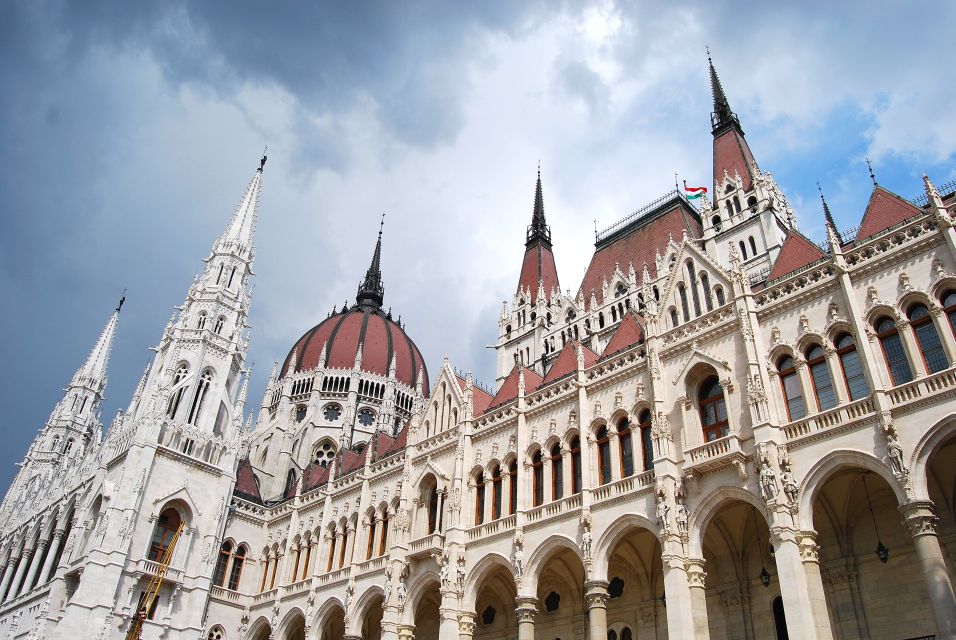
The meeting point is Molnár’s Kürtőskalács, which is a very workable start because it’s a lively, easy-to-find spot. Before you even hit the first monument, you’re already near the pedestrian flow of the city center.
Since the tour is only 2 hours, the start matters. You don’t want a long “getting organized” stretch that eats into sightseeing time. This one gets you moving and gives your guide space to connect the dots between stops—where things are, what they symbolize, and why they sit where they do.
Also, it’s rain or shine. That’s good news in a city where weather can shift fast. It means you should plan on wearing real walking shoes and bringing a light rain layer rather than hoping for perfect conditions.
St. Stephen’s Basilica: Budapest’s biggest cathedral, explained
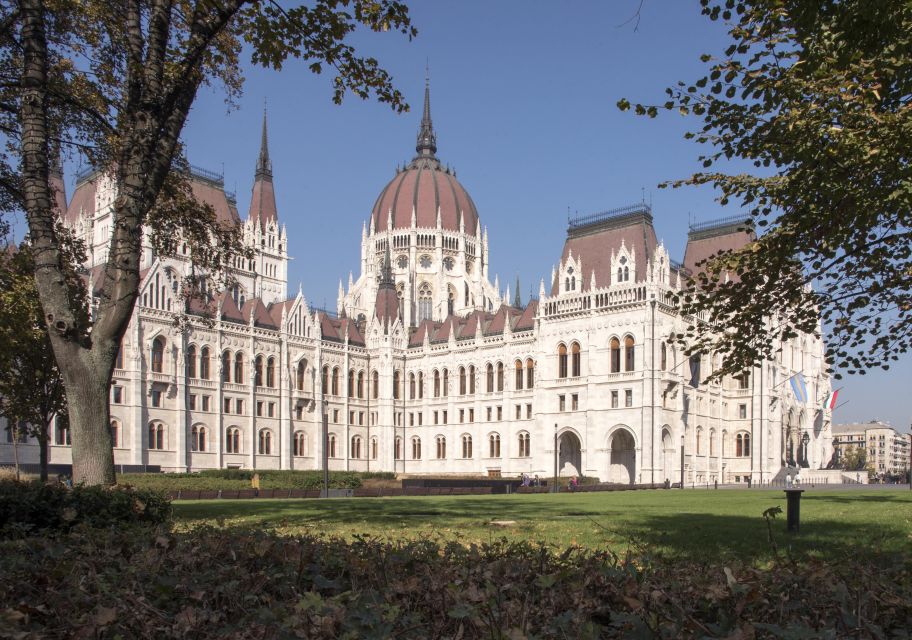
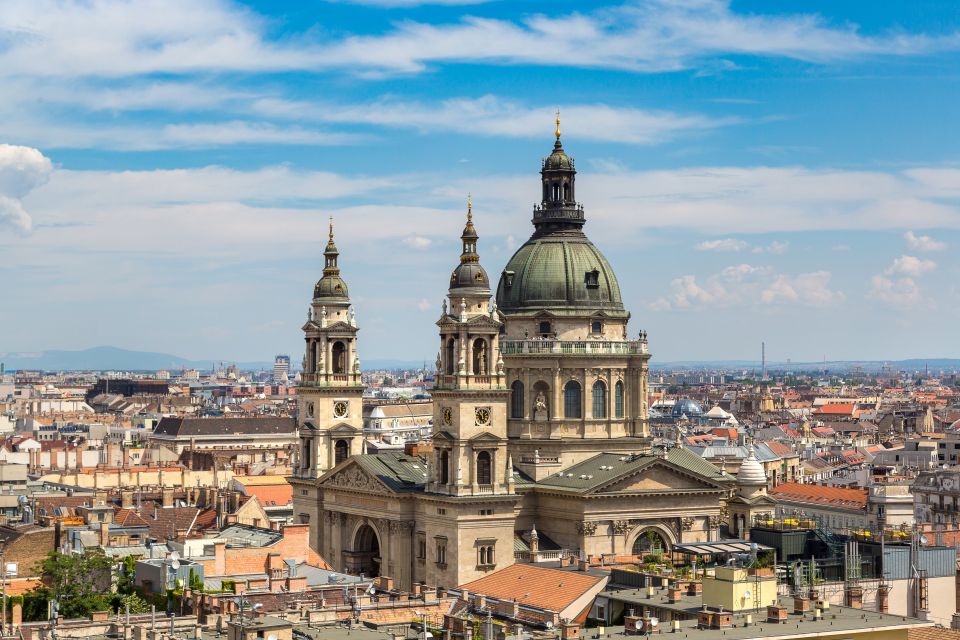
One of your earliest anchors is St. Stephen’s Basilica, described on the tour as Budapest’s largest cathedral. It’s the kind of building that can look stunning even if you don’t know the story—but it’s even better once someone points out what you’re seeing and why it matters.
As you approach, pay attention to how the church sits in the civic landscape. Cathedral spaces often feel separate from the street, but in Budapest, the surrounding architecture helps it feel more connected than isolated. A guide makes that connection clear: not just dates and facts, but how the building fits into how people imagined the city.
This is also the kind of stop where it helps to take a few photos from multiple angles. Even without going inside (entrance fees aren’t included), you can still capture impressive views of the façade and nearby streets. Your guide can help you pick directions that reduce the “everyone is standing in the same spot” problem.
Chain Bridge and the Danube Bank: the river walk that changes everything
Next comes Chain Bridge, Budapest’s oldest suspension bridge. It’s one of those spots where you immediately understand why Budapest is famous. The river view isn’t a background. It’s part of the composition.
Walking past the Danube Bank gives you a better sense of scale than you get from a single viewpoint. The bridge connects major parts of the city, and the walk helps you notice how the skyline shifts as you move. You’ll also pass classic riverfront architecture and the kind of architectural details that reward a slow pace.
Here’s a practical tip: if you’re taking photos, time your shots so you’re not rushing from one angle to the next. The tour includes time at stops for pictures, which is great. Use that time to capture both the wide view (bridge + river + buildings) and a tighter shot (a detail, a street perspective, or an architectural element along the bank).
If you’ve only ever seen the bridge on postcards, this is where it stops feeling like a picture and starts feeling like a place.
House of Hungarian Art Nouveau: where style turns into a stop worth pausing for
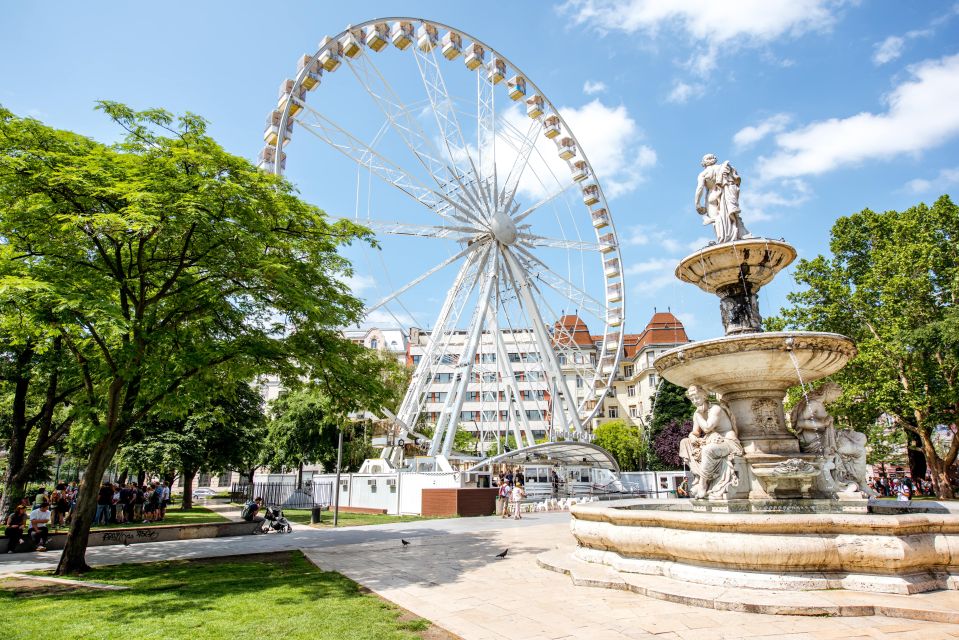
Not every stop on a walking tour feels equally compelling. This one does a smart thing by adding the House of Hungarian Art Nouveau into the route.
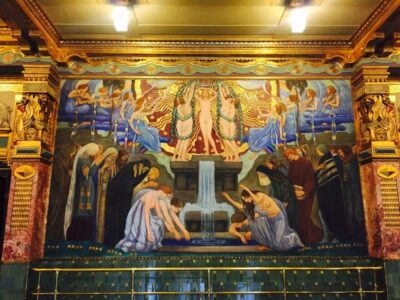
Art Nouveau can be easy to miss if you’re just walking past. A guide’s job here is to make you look up and slow down. Instead of treating it like a quick photo, you learn what makes the style recognizable and how it reflects the city’s ambitions in the late 19th and early 20th centuries.
Even if you’re not an architecture nerd, you’ll probably feel the difference. The building gives the street a slightly different rhythm: more ornament, more intention, and more “designed” energy than the more straightforward historic facades around it.
This kind of stop is also a nice break from the mega-monuments. After big cathedral and bridge moments, it’s refreshing to experience a smaller building that still has personality.
You can also read our reviews of more guided tours in Budapest





Hungarian Parliament and Liberty Square: big landmarks with street-level context
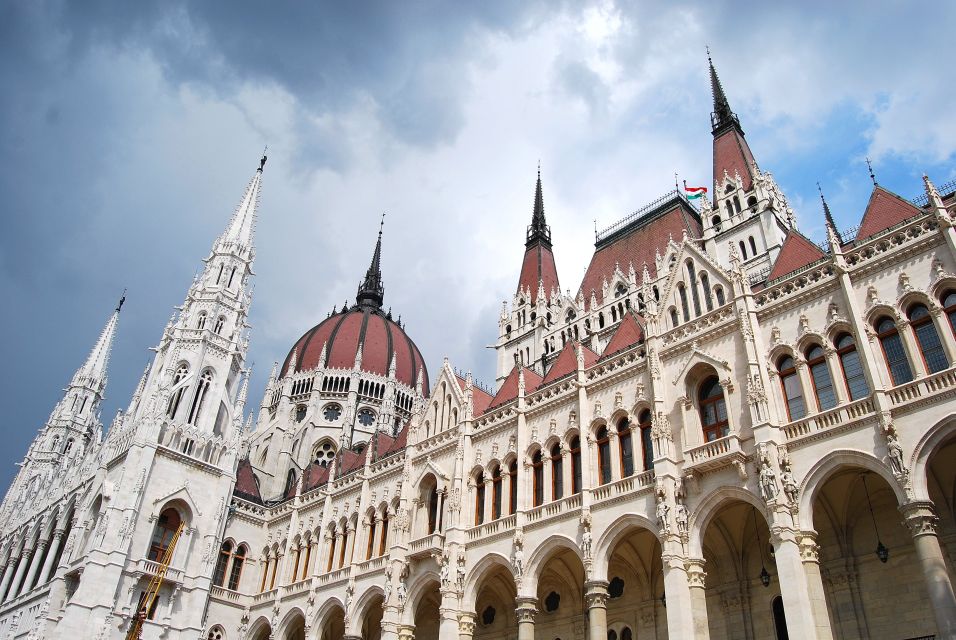
The Hungarian Parliament building is another major anchor on the walk, described as the world’s third largest Parliament building. It’s hard to overstate how commanding it is, and your guide’s job is to help you understand why it’s so visually powerful and how it functions in the city.
One thing I think you should expect: this is primarily a viewing and walking tour. An experience like this can make you feel grounded—where the building is positioned, what surrounds it, and how the area connects to nearby civic spaces. But entrances aren’t included, so if you were hoping for a full interior visit, plan separate arrangements.
After that, you’ll move to Liberty Square, a classic central gathering space. This stop is about more than photos. Squares are where a city’s public life shows up: people meeting, walking through, and the rhythm of daily movement. A guide helps you notice what the space is doing and how it fits into the broader story of Pest.
Liberty Square is also a good place to pause and reset your bearings. After several stops, you’ll start to understand the geometry of the city center: what’s near, what’s farther, and what direction leads where.
The street market stop: a smart way to taste Budapest’s everyday side
One of the best surprises in a city monument tour is when food and daily life sneak in. Here, you get time to explore a street market as part of the experience.
Markets are where you see what locals treat as normal. And even if you don’t buy anything, you’ll get a stronger sense of what kinds of goods are common, what the atmosphere feels like, and how the city’s center works outside official landmarks.
This is also a practical moment for pacing. You’ve been looking up at architecture for a while. A market stop gets your eyes back to street level—faces, stalls, signage, and movement. It helps the entire tour feel less like a scripted parade and more like a real walk through a working city.
What a live guide actually changes (Monica, Lena, Lina, and the humor factor)

A walking tour rises or falls on the guide. In this case, the strongest theme is how much personality and care the guides bring to the group.
You may meet guides like Monica, Lena, or Lina. People consistently describe them as friendly and strongly engaged, with a mix of serious historical context and a bit of humor. That blend matters. If the guide is too dry, you tune out. If they’re only jokes, you miss the point. Here, the balance seems to land well.
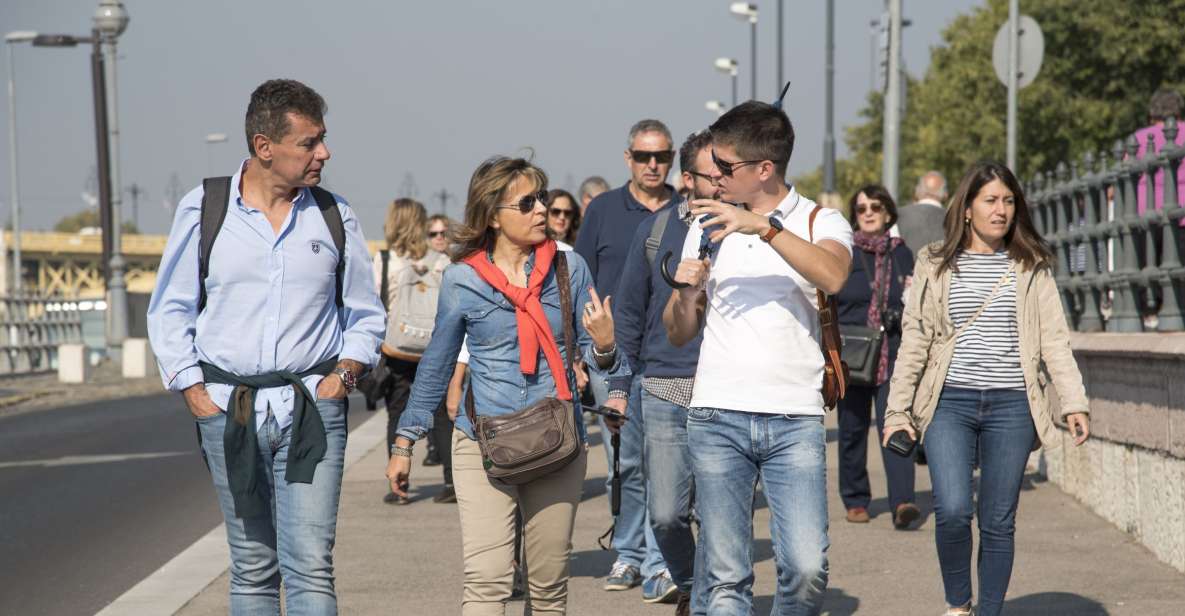
Another detail I like: guides pay attention to keeping the group together. In a busy, central district, it’s easy for people to drift. The guides are clearly watching the group so everyone stays on track.
You also get practical recommendations along the way. One person noted the guide offered suggestions for other sights and places to eat. That’s the real value of a live guide: you leave with more than facts. You leave with ideas that fit your day.
Pacing and what to bring for a 2-hour Pest walk
A 2-hour walking tour is just enough time to connect landmarks without exhausting you. That’s the sweet spot for central Budapest, where the distances between major sights are walkable but still real.
Bring comfortable shoes. Even if the weather is fine, Pest’s center involves lots of foot traffic and curb transitions. If it rains, the “rain or shine” policy means you should plan for wet pavement and slick sidewalks.
Also, bring your phone camera plan. The tour includes time for photos at stops, but if you wait until the last second, you’ll feel rushed. If you’re the type who wants to shoot from multiple angles, use the built-in stop time strategically.
Finally, go in with the right mindset. This isn’t a “sit and lecture” tour. It’s a walking experience that uses the city as the classroom. If you enjoy learning while moving, you’ll likely have a great time.
Price and value: $16 for major Pest landmarks
At $16 per person for a 2-hour guided walk, this is the kind of price that makes sense for a first-time visitor. The big factor is cost-to-content. You’re seeing a tight cluster of major sights on one route: St. Stephen’s Basilica, Chain Bridge, the Danube Bank, the Hungarian Parliament area, Liberty Square, and more.
Entrance fees aren’t included, so you shouldn’t assume you’re paying to go inside every stop. But that’s normal for a walking tour, and it’s actually part of the value equation. You’re not paying for extra tickets to have an enjoyable experience. You’re paying for interpretation, route planning, and the “see it in the right order” advantage.
It’s also good value if you want to avoid wasting time sorting logistics yourself. In central Pest, it’s easy to wander in circles if you’re not sure how the pieces connect. A guide gives you a structure that saves time and reduces decision fatigue.
Should you book the Budapest: Guided Walking Tour of Pest?
Book it if you want a high-impact, low-stress way to learn Pest’s center in a short amount of time. It’s especially smart if you like city walking, want architecture explanations as you go, and appreciate a guide who keeps things lively.
Skip it only if your main goal is going inside major sights. Since entrance fees aren’t included, interior access (and the extra time it takes) won’t be part of this experience in a guaranteed way. Also, if you dislike tours that focus on passing landmarks rather than lingering right up against every building, you might find the pacing a bit “quick-view” compared to what you hoped for.
If you’re flexible and you want to get your bearings early, this tour is an easy yes.
FAQ
How long is the Pest walking tour?
It lasts 2 hours.
Where is the meeting point?
Meet at Molnár’s Kürtőskalács.
Is the tour in English?
Yes, the live guide offers the tour in English.
Is it canceled if it rains?
No. The tour takes place rain or shine.
What is included in the price?
The tour includes a professional tour guide.
Are hotel pickup and drop-off included?
No, hotel pickup and drop-off are not included.
Are entrance fees included?
No, entrance fees are not included.
Can I cancel and get a full refund?
Yes. You can cancel up to 24 hours in advance for a full refund.
Can I reserve now and pay later?
Yes. You can reserve now & pay later.