REVIEW · BUDAPEST
Private Art Nouveau Budapest Tour
Book on GetYourGuide →Operated by CurioCity Budapest · Bookable on GetYourGuide
Budapest hides Art Nouveau in plain sight. This private 4-hour tour strings together the city’s most sophisticated Secessionist-era buildings, with a guide who explains how Budapest’s version of Art Nouveau took shape so fast it felt like a construction craze.
I love the way the route connects the whole story, from Secessionist roots to a true Hungarian national style. I also love the practical touch of a coffee-and-cake stop in an Art Nouveau setting, so the tour feels less like a checklist and more like a real outing.
One thing to consider: the route can vary depending on where you meet the guide, and while most tours go smoothly, there’s at least one documented case of a guide not showing up. I’d plan to confirm your day-of contact and meeting details.
In This Review
- Key highlights at a glance
- Why Budapest’s Art Nouveau feels different from anywhere else
- Starting at the Museum of Applied Arts: Lechner’s Hungarian Gaudí
- The tram hop and Váci Street: seeing the style in everyday Budapest
- Gresham Palace: luxury with a time-travel feeling
- Liberty Square and the House of Hungarian Art Nouveau café stop
- The Hungarian State Treasury rooftop: the part you can’t see from the street
- How the 4 hours usually feel, and where it can run long
- Price and value: $377 per group up to 25
- Guide quality matters: the storytelling can make the style click
- What to bring and how to get the most out of the day
- Should you book this Private Art Nouveau Budapest Tour?
- FAQ
- Where do I meet the guide?
- How long is the Art Nouveau Budapest tour?
- Is this a private tour and what is the group size?
- What languages are available for the guide?
- What’s included in the tour price?
- Does the tour include a coffee stop?
- What is the cancellation and payment option?
Key highlights at a glance
- Hungarian Art Nouveau made clear through the Secessionist branches and the Lechner look
- Art-historian style storytelling (you may get guides like Suzy, Peter Horvath, or Joel)
- Hotel pick-up plus a short tram hop to connect key areas without wasting time
- Iconic stops including Gresham Palace and Liberty Square
- A Treasury rooftop viewpoint close-up that you’d miss if you only wander street-level
- A café break with coffee or soft drink and cake in Art Nouveau surroundings
Why Budapest’s Art Nouveau feels different from anywhere else
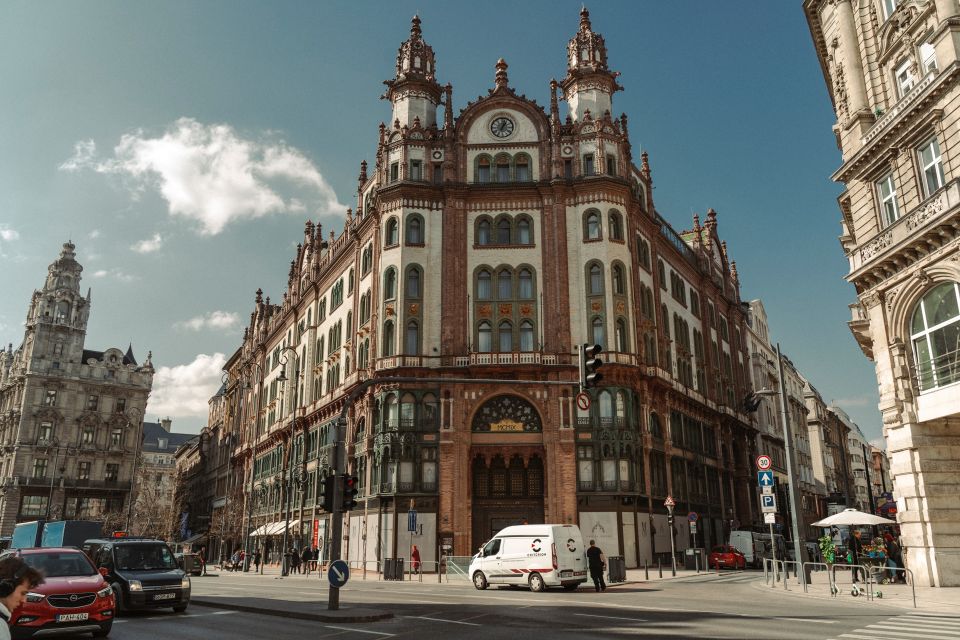
Budapest’s Art Nouveau isn’t just decoration. It’s a style with an attitude. You’ll see rounded stained-glass windows, wavy building facades, uneven surfaces, and colorful roof tiles. But the bigger story is how quickly it arrived and multiplied.
Around the end of the 1900s, different branches of the Secessionist Movement fed into each other across Europe. Viennese Secession and Jugendstil influences show up alongside French and Belgian Art Nouveau. Then Budapest adds its own twist. You’ll get a clear sense of how a “National Style” formed here, not by copying one country’s look, but by turning the style into something distinctly Hungarian.
That context matters. If you only look at facades, Art Nouveau can feel like patterns on walls. With the explanation you get on this tour, the same details become clues: why certain shapes repeat, why the materials look the way they do, and why buildings seem to curve and breathe. It turns sightseeing into reading.
You can also read our reviews of more private tours in Budapest


Starting at the Museum of Applied Arts: Lechner’s Hungarian Gaudí
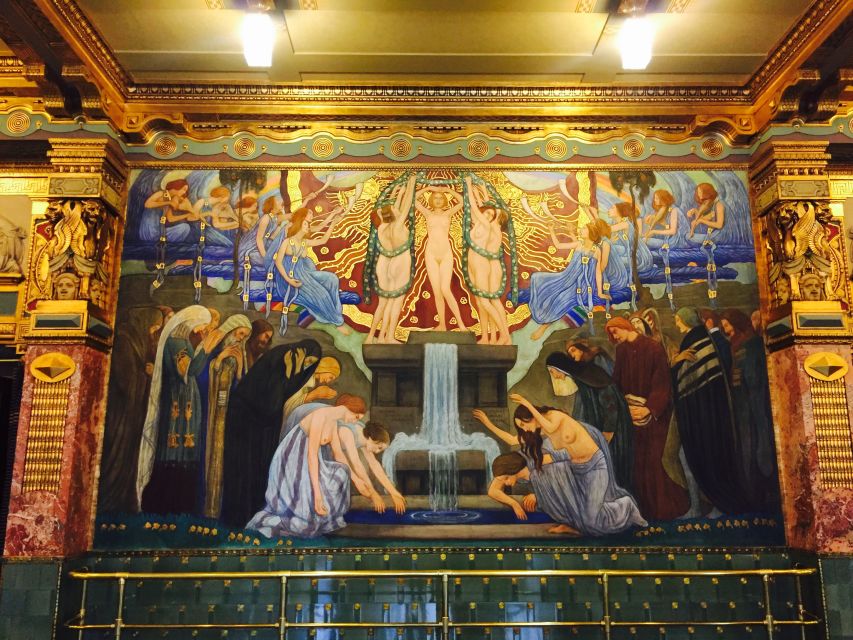
The best start (and often the default) is the Museum of Applied Arts, tied to Ödön Lechner. He’s frequently described as the Hungarian Gaudí, and this building gives you the strongest version of that comparison in real life. Even if you’ve seen photos, you’ll likely notice the textures and surface play more than you expected.
You’ll also start with momentum. The tour begins with a hotel pick-up, so you’re not scrambling for trams or trying to orient yourself. Then you walk through the opening section at a natural pace, so you can actually absorb the design language instead of just snapping pictures and moving on.
What to watch for early:
- How the shapes guide your eye toward windows, doorways, and rooflines
- How the building’s roughness and color work together (not just on one facade, but in the overall composition)
- Any stained-glass details and their relationship to the rest of the facade
Practical tip: Art Nouveau tours involve some walking on uneven city surfaces. Comfortable shoes are non-negotiable.
The tram hop and Váci Street: seeing the style in everyday Budapest
After the initial walk, you’ll take a short tram ride back toward the city center. That part is more than convenience. It gives you a fast “before and after” effect: you see how the architecture reads up close, then how it fits into real city movement.
Around Váci Street, the tour includes modern constructions of the style. This is useful because it shows you something many guides skip: Art Nouveau didn’t only live in the past. Its visual language continued to appear in later design, and you can compare what feels faithful to the older look versus what feels more like a reinterpretation.
If you’re the type who likes to spot motifs, this section gives you a mini game:
- Identify curved elements and repeated line patterns
- Notice how roof tiles and window shapes echo each other
- Compare what looks original from what looks inspired
It’s also a nice reset. Even a short tram ride breaks the walking rhythm so you can stay sharp for the next big stops.
Gresham Palace: luxury with a time-travel feeling
Next up is Gresham Palace. You’ll pop into the building to experience its atmosphere of the past and present. This is one of those stops where the details work on two levels at once.
First, you’re looking at Art Nouveau design cues and the overall statement the building makes on the street. Second, you’re stepping into a place that feels like it was built for a different kind of day-to-day life. That contrast is exactly why guided tours pay off. Without someone framing what to look for, you might enjoy the building but miss why it matters.
What makes this stop worth your time on a short 4-hour tour:
- It’s a structured break from the outside-looking-around mode
- It helps you connect the architectural style with how people experienced the space
- It keeps the route from turning into a series of photo stops
And since the tour includes both walking and transport, this is a good moment to slow down and take in the interior vibe without rushing.
Liberty Square and the House of Hungarian Art Nouveau café stop
When the tour reaches Liberty Square, you’ll get a coffee break at the House of Hungarian Art Nouveau. This is not just a quick caffeine stop. The building includes a private collection from the time, so the setting supports the theme of the tour.
You’ll enjoy coffee or a soft drink plus cake. That combination matters because you’re not just “stopping” while the guide talks. You’re resting while the architecture and objects around you reinforce the story.
Here’s how to make the café break work for you:
- Sit for a few minutes before your camera comes out, and look at how the room’s design ties back to the facade outside
- Use the break to ask quick questions about what you’ve seen so far
- Take note of any stained-glass or decorative elements you spot during the stop
This is also where the tour’s pacing gets kinder. After major landmarks, you get a comfortable reset. For many people, this is the point where the tour stops feeling like sightseeing and starts feeling like a guided evening out.






The Hungarian State Treasury rooftop: the part you can’t see from the street
The final architectural payoff is the Hungarian State Treasury and its rooftop. The key detail is that the rooftop is invisible from street level. If you tour on your own, you can walk right past and never realize the best view is there.
With this tour, you get close enough to register what makes it unforgettable. It’s the sort of stop that turns a “finished” feeling into a “wait, that’s the best part” moment.
Why this matters:
- It rewards your time investment with a payoff you likely won’t get from casual wandering
- It proves the point of guided tours: you’re not just seeing famous buildings, you’re reaching the angles and perspectives that are hard to find alone
- It helps you remember the style through its strongest visual impact
If you’re choosing what to prioritize in Budapest architecture, this is one of the strongest justifications for booking rather than trying to plan everything from scratch.
How the 4 hours usually feel, and where it can run long
This experience is listed as a 4-hour tour, and that’s a realistic target for a private group with hotel pick-up, walking, a tram ride, and multiple stops. You should still expect the day to feel full. Even short city walks add up fast when you’re also looking at details.
There’s also the question of time inside buildings. You might find the tour lingers longer if the guide finds extra spots worth showing or if you’re able to enter places that take a little extra time. One example from past experiences: a tour that began at 10:00 ended up running about 5.5 hours after an additional stop and more interior viewing.
That’s not guaranteed, but it’s a good mindset to have: the tour is designed to be flexible enough to include meaningful time in and around key architecture.
Price and value: $377 per group up to 25
At $377 per group (up to 25 people), this doesn’t price like a per-person ticket. It’s priced like you’re reserving a private specialist for a half-day.
So the value depends on your group size:
- If you’re a larger group near the top end, the cost per person can be low enough that it feels like a bargain for a guided architecture day.
- If you’re a couple, the cost per person jumps, so you’ll want the guide to be the main reason you book. In other words: you’re paying for interpretation, access, and a smooth route with transport and a café stop.
Where the value comes from in practice:
- Hotel pick-up reduces friction and saves your energy
- A focused route means you’re not spending your 4 hours hunting down the best facades
- The coffee-and-cake stop inside a relevant setting adds comfort without extra planning
If you enjoy architecture and want someone to explain what you’re seeing, this kind of price makes sense. If you just want a quick walk past famous exteriors, you might decide self-guided is cheaper.
Guide quality matters: the storytelling can make the style click
The tour is guided by live specialists in Spanish, English, French, Italian, and Portuguese. Based on prior experiences, the biggest win is not only the facts, but how the guide turns buildings into stories you can remember.
You might get an art-focused guide like Suzy, with a passion for both Art Nouveau history and Budapest history. Or you might be paired with someone like Peter Horvath, described in past feedback as bringing stories, anecdotes, and real passion to the walk. And in other instances, guides such as Joel have been praised for bringing architecture and history to life in places that are hard to reach on your own.
What should you do with that information? Ask yourself what kind of guide you want:
- If you like clear explanations and design reasoning, this tour format fits well.
- If you’re purely photo-driven and don’t want narration, you may feel more satisfied with a short self-guided route.
Either way, a private group means you can ask questions in real time. That’s a big deal when you’re trying to learn how to “read” Art Nouveau instead of just viewing it.
What to bring and how to get the most out of the day
You only need one item that’s explicitly required: comfortable shoes. Beyond that, think about the reality of a 4-hour architecture walk. You’ll be moving between stops and looking up and down constantly.
If the weather is changeable, it helps when your guide adjusts the plan. In past experiences, guides have been noted for adapting to conditions so the visit stays enjoyable rather than grumpy and rushed.
A simple strategy for your photos:
- Start with your eyes first, then use your phone or camera after you’ve understood what you’re looking at.
- When you reach the Treasury rooftop area, give yourself one slow minute. That rooftop is the kind of feature you’ll appreciate more by looking than by shooting.
Should you book this Private Art Nouveau Budapest Tour?
Book it if:
- You want Budapest’s Art Nouveau explained with context, not just photographed
- You like a route that balances outside views with a close-up highlight (that Treasury rooftop angle)
- You appreciate a café break in a theme-matching setting, not an afterthought stop
- You’re traveling with a group where splitting the cost makes sense, or you really want the convenience of a private guide and hotel pick-up
Skip it (or consider self-guided) if:
- You don’t care about architectural reasoning and just want to wander
- You’re on a tight schedule where a full 4-hour block sounds stressful
- You prefer to choose your own stops inside at your own pace
One last practical note: because there’s at least one documented case of a guide not showing up, take two minutes to confirm your meeting details ahead of time and keep your contact info handy. Most experiences likely go smoothly, but good planning is always worth it.
If you want Budapest’s Secession-era architecture to make sense fast, this tour is a strong way to do it—walk, tram, coffee, and that rooftop payoff that feels like a secret you’re finally allowed to see.
FAQ
Where do I meet the guide?
You meet at your hotel. The tour also includes hotel pick-up.
How long is the Art Nouveau Budapest tour?
It lasts 4 hours.
Is this a private tour and what is the group size?
It’s a private group. The price is for a group up to 25.
What languages are available for the guide?
The live tour guide is available in Spanish, English, French, Italian, and Portuguese.
What’s included in the tour price?
You’ll get hotel pick-up, a guide, and a coffee or a soft drink (plus cake at the café stop).
Does the tour include a coffee stop?
Yes. A café stop is included at the House of Hungarian Art Nouveau with coffee or a soft drink and cake.
What is the cancellation and payment option?
There’s free cancellation up to 24 hours in advance for a full refund, and you can reserve now and pay later.