REVIEW · BUDAPEST
Budapest Highlights Bike Tour with a local guide
Book on GetYourGuide →Operated by Budapest Bike Breeze · Bookable on GetYourGuide
Bike is the fastest way to meet Budapest. This 3.5-hour highlights ride strings together the city’s big landmarks with a local English-speaking guide and plenty of stops for photos and context.
I really like how the pace stays comfortable while you still cover a wide slice of the capital, and I like the way your guide turns famous places into understandable stories about Hungary.
One thing to consider: it’s built around photo-stop sightseeing, so you should expect to look and learn more than to linger inside buildings.
In This Review
- Key takeaways before you pedal
- The simple appeal: why this bike loop works so well
- Starting at Rumbach Sebestyén u. 10: smooth start, courtyard pickup
- Elizabeth Square to Andrássy Avenue: the grand boulevard approach
- Heroes’ Square and Városliget: monuments plus park air
- Széchenyi Thermal Bath and Vajdahunyad Castle: icons in one sweep
- House of Music Hungary and the Ethnographic Museum: culture, not just postcards
- House of Terror: the history stop you don’t want to rush
- St. Stephen’s Basilica to Szabadság Square: religious grandeur and city perspective
- Hungarian Parliament and the Chain Bridge: the “main event” stretch
- Castle-bazaar and Elizabeth Bridge: the Buda-side payoff
- Timing and ride feel: what 3.5 hours really means in practice
- Guides make the difference: what you’ll learn, stop by stop
- Is it good value at $34 per person?
- Who should book, and who should skip
- FAQ
- FAQ
- Where do I meet the tour?
- How long is the Budapest bike highlights tour?
- Is the tour in English?
- Will the tour run in bad weather?
- What’s the minimum age?
- Do I have to bring my own bike?
- Can I get an e-bike?
- Can I cancel if my plans change?
- Should you book Budapest Bike Breeze Highlights?
Key takeaways before you pedal
- 15 scenic stops that help you stitch together Budapest in half a day
- Main landmarks across both sides of the river, including Parliament and the Chain Bridge area
- History told as stories, not a lecture, with themes ranging from founding times to 20th-century occupations
- Quality bike + helmet included, with an easy ride that suits a broad range of cyclists
- Optional e-bikes if you want extra help on the route
- Orientation value: you’ll leave with a clearer sense of where things are and what to do next
The simple appeal: why this bike loop works so well
Budapest can feel like two cities that share one river: grand boulevards and thermal baths on the Pest side, plus the hills and castle views on the Buda side. Doing it by bike is a smart way to avoid the slow parts of sightseeing—waiting, walking long distances between highlights, and trying to guess which way to go next.
This tour is designed to get you oriented quickly. In a few short hours, you’ll see the sights people come for, but you’ll also get the guide’s framing—why these places matter, how the city developed, and how locals think about the past. The ride is paced for sightseeing, not for racing. Even better, bikes and helmets are provided, so you’re not hunting down rentals or worrying about gear quality before you even start.
You can also read our reviews of more cycling tours in Budapest

Starting at Rumbach Sebestyén u. 10: smooth start, courtyard pickup
You’ll meet at Rumbach Sebestyén u. 10 (1075). Your first practical win is that the meeting-point instructions are straightforward: ring the bell no. 105 at the main gate, and the group meets in the courtyard. That matters because a bike tour lives or dies on timing. When the pickup is clear, your first minutes feel calm instead of chaotic.
From there, the tour moves into the center of the story fast—photo stops begin almost right away, so you start learning while the city is still fresh in your eyes.
Elizabeth Square to Andrássy Avenue: the grand boulevard approach
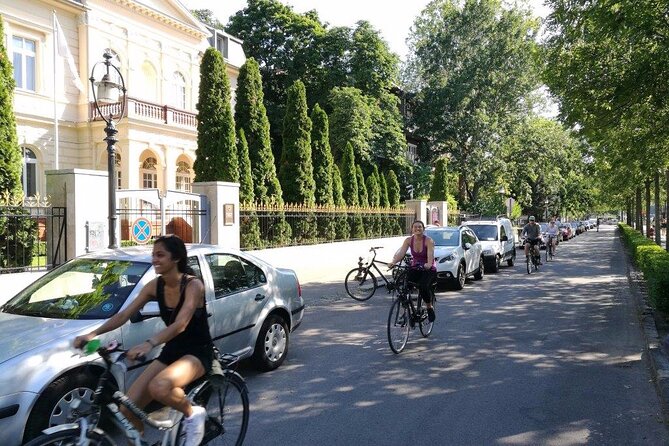
The ride kicks off with a photo stop at Elizabeth Square. This is the kind of stop that helps you understand Budapest’s layout. You’ll get that first visual map of where you are, then your guide pulls you onto one of the city’s most recognizable arteries.
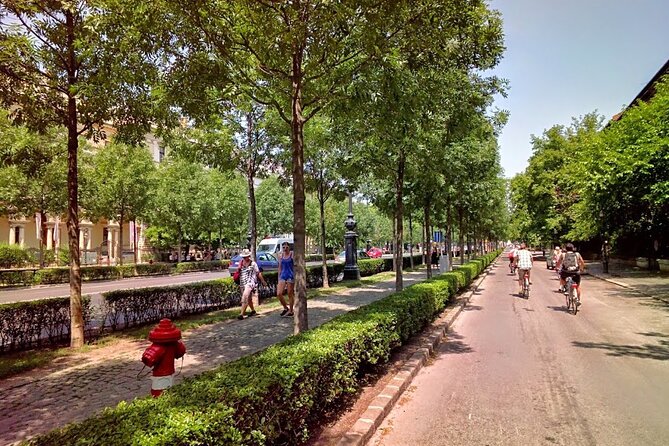
Next comes Andrássy Avenue, with another photo stop and bike-time sightseeing. This stretch is famous, and it’s also useful: it gives you a “main street” feel for Budapest’s elegance. You’ll also see the Hungarian State Opera House from the outside during a short stop. Even if you never plan to attend a performance, the building’s presence anchors the neighborhood’s identity. The guide’s explanations help you connect architecture with the way the city wanted to present itself.
If you love history as a reason to travel, this is where the tour starts delivering. You’re not just collecting snapshots—you’re learning how these major public spaces link to national pride and big historical moments.
Heroes’ Square and Városliget: monuments plus park air
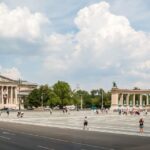
At Heroes’ Square, you get another photo stop with time to look around and understand what you’re seeing. Guides on this route tend to focus on the long timeline behind Hungary’s story. One of the themes you’ll hear is the founding of Hungary more than 1100 years ago, plus the sense of celebration tied to the year 1896.
Then the tour swings toward Városliget, the city park area. You’ll stop for a photo and a breather from the street intensity. Park time on a bike tour is more than comfort—it’s what lets you process what you just learned. You’re cycling past monuments, then suddenly you’re in a greener mood. That rhythm keeps the afternoon from feeling like a checklist.
Széchenyi Thermal Bath and Vajdahunyad Castle: icons in one sweep
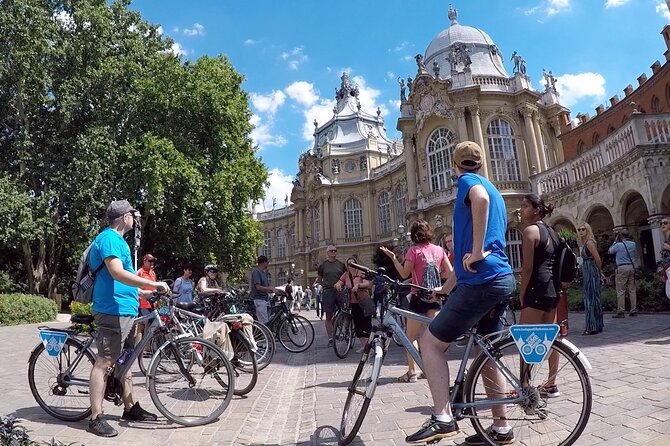
Next up: Széchenyi Thermal Bath. The tour includes a photo stop, so don’t plan on a long soaking session here. But seeing the bath complex from the outside is still worth it. It signals Budapest’s other identity—wellness and public leisure—rather than only grandeur and politics.
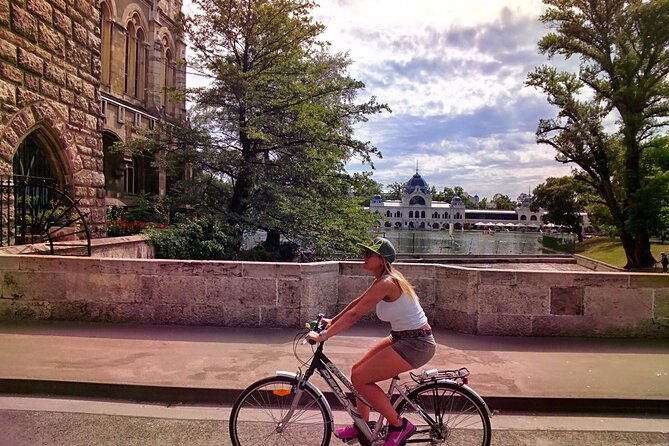
You’ll then reach Vajdahunyad Castle for a photo stop. This is the kind of spot that looks great from multiple angles, and it gives your ride a fairy-tale feeling without requiring detours. The best part is how your guide uses places like this to keep history tangible. You see the monument, then you hear the story behind what it represents.
You can also read our reviews of more guided tours in Budapest





House of Music Hungary and the Ethnographic Museum: culture, not just postcards
The tour keeps moving with quick photo stops at House of Music Hungary and the Ethnographic Museum. These are different kinds of cultural stops. They’re useful if you’re trying to understand Budapest beyond the most famous skyline shots.
Even short stops can pay off here. You’re learning how to recognize the city’s cultural “beats,” which helps if you want to plan more targeted time later—concerts, museums, or simply neighborhoods to explore on your own.
House of Terror: the history stop you don’t want to rush
The House of Terror is one of the stops that gives this tour weight. It’s listed as a short stop, but the subject matter is heavy: you’ll hear stories that cover Hungary’s experiences under outside rule and political regimes—Ottoman domination themes, then the National Socialists and later the Communists of the USSR, depending on how your guide structures the route.
If you’re sensitive to intense history, treat this stop with the seriousness it deserves. Even a quick view can feel jarring if you weren’t expecting it. The upside is that the tour doesn’t skip difficult chapters, so your Budapest picture becomes more complete.
St. Stephen’s Basilica to Szabadság Square: religious grandeur and city perspective
From there, the tour heads to St. Stephen’s Basilica for a photo stop. This is one of those visual anchors you’ll remember even if you only glance at it for a moment. Your guide’s narration helps you understand why basilicas like this are more than architecture—they’re symbols.
Then you move to Szabadság Square for another photo stop. At this point, you’re starting to feel the sweep of the city in a more connected way. You’re learning how different power centers, memorials, and institutions sit next to each other across Budapest.
Hungarian Parliament and the Chain Bridge: the “main event” stretch
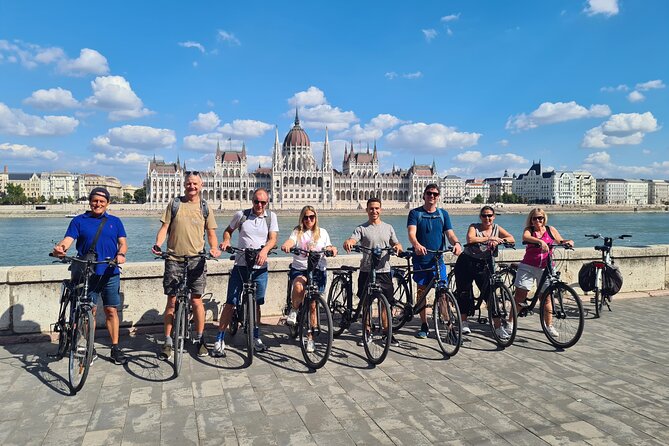
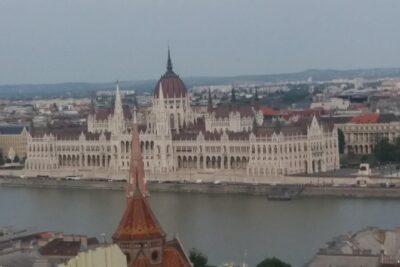
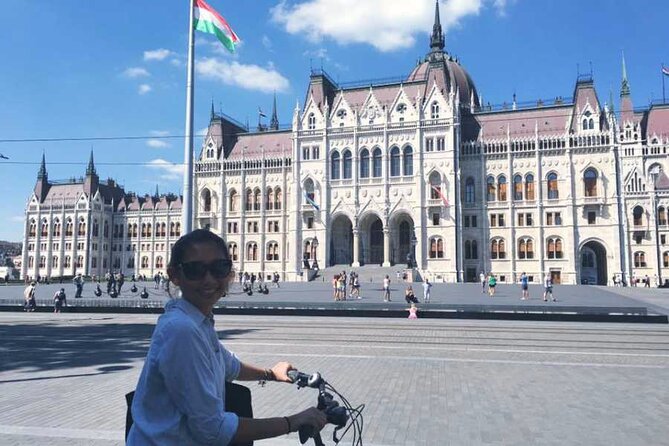
One of the best parts of the route is hitting the Hungarian Parliament Building and then the Chain Bridge. These stops aren’t random. They’re the city’s dramatic punctuation marks: Parliament gives you the governmental center, and the Chain Bridge gives you the physical connection—how Budapest joins together.
Expect a photo stop and time to take in the view. This is also a good spot to understand the river’s role in the city’s life. You’ll get ready for the crossing, then roll right into it: Chain Bridge is the point where the tour naturally shifts from “Pest highlights” to “Buda-side views ahead.”
Castle-bazaar and Elizabeth Bridge: the Buda-side payoff
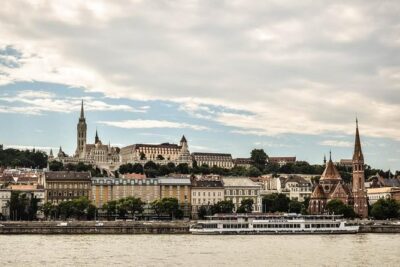
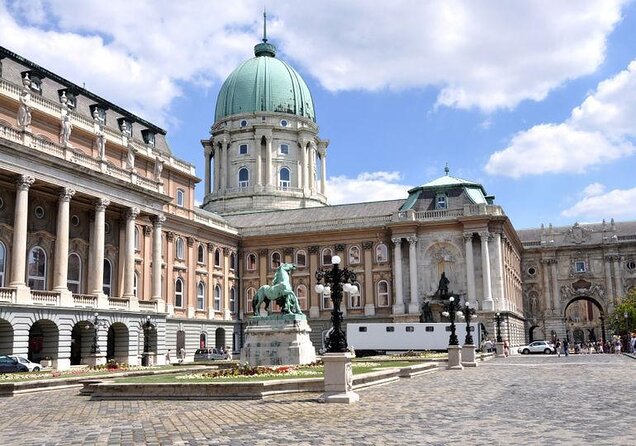
After crossing, you’ll reach the Castle-bazaar area for a photo stop. This is where the tour starts satisfying your desire for old-city character. Even if you’ve only got a little time, seeing the castle district from the bike route gives you a strong sense of why people come for these neighborhoods.
Finally, you’ll stop at Elizabeth Bridge and head back toward the start point. Bridge time is great on a bike tour because it’s both scenery and orientation. You’ll start noticing sightlines: which towers you’ll see later, where the hills sit relative to the flatlands, and how the river frames everything.
Timing and ride feel: what 3.5 hours really means in practice
The tour is advertised as 3.5 hours, rain or shine. In one recent experience, a group reported riding around 15 km over about 4 hours with lots of stops. That’s a helpful reality check. Bike tours with frequent photo pauses tend to run a bit longer than the “clean” duration on paper.
So here’s the rule I’d follow: plan something lighter after the tour. You’ll likely spend the rest of the day walking less and deciding more—where to go next, which museum you’d like to target, and which views are worth a return trip.
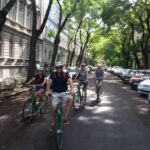
Good news: the ride is described as comfortable. Bikes are provided, helmets are included, and the route is set up for a sightseeing pace. If you’re a confident bike rider, you’ll feel in control rather than rushed.
Guides make the difference: what you’ll learn, stop by stop
This tour is built around storytelling. That’s not fluff; it changes how you see the city.
On this route, you may hear guides named Danny, Daniel, Balázs, or Ivana—and the consistent theme is that they connect each stop to Hungary’s larger story. One review highlighted how the guide tied together the founding of Hungary and the 1896 millennium moment, while also covering later periods of occupation and political control. Another stressed how the guide answered questions and kept the route well structured.
What does that mean for you? It means you’ll leave knowing more than where things are. You’ll understand why these landmarks sit where they do, why the city celebrates some moments, and why certain places carry heavy memory.
Is it good value at $34 per person?
At $34, you’re paying for three big things: a local English-speaking professional guide, a quality bike and helmet, and a route that hits a long list of major sights in one half-day.
If you tried to recreate this solo, you’d spend time figuring out transit or rentals, mapping the route, and paying entry fees or transport separately. Even without comparing to other tours, the key value here is the time compression: you’re stacking many iconic photo-worthy stops into one organized ride, with the guide helping you interpret what you’re seeing.
It’s also a good “first Budapest move.” If you do this early in your trip, it becomes your master key for planning the rest of your days.
Who should book, and who should skip
This bike tour is a great match if you:
- want to see major Budapest sites fast without long walks
- like history stories that explain the city’s past in human terms
- can ride a bike confidently for a sightseeing route
It may not be the right fit if:
- you can’t ride a bike (minimum requirement is that you ride)
- you’re traveling with children under 12
- you’re expecting a lot of indoor time (this is mainly photo-stop sightseeing)
FAQ
FAQ
Where do I meet the tour?
You meet at Budapest, Rumbach Sebestyén u. 10, 1075, in the courtyard. Ring the bell no. 105 at the main gate.
How long is the Budapest bike highlights tour?
The duration is 3.5 hours.
Is the tour in English?
Yes. The tour guide speaks English.
Will the tour run in bad weather?
Yes. The tour takes place rain or shine.
What’s the minimum age?
The minimum age is 12 years.
Do I have to bring my own bike?
No. A quality bike and helmet are included.
Can I get an e-bike?
Yes. E-bikes can be booked as an extra.
Can I cancel if my plans change?
You can cancel up to 24 hours in advance for a full refund.
Should you book Budapest Bike Breeze Highlights?
If you want the quickest path to understanding Budapest’s layout and major landmarks, I’d book it. The biggest strengths are the efficient route, the comfortable pace, and the fact that your guide ties stops together with clear history stories—from early Hungarian milestones to darker 20th-century chapters.
If you’re the type who hates cycling between stops or only wants indoor museum time, you might feel constrained by the photo-stop style. But for most people who like big sights, good explanations, and a smart half-day plan, this is a strong yes.