REVIEW · BUDAPEST
Budapest Hammer & Sickle Communist Times Tour
Book on Viator →Operated by Absolute Tours · Bookable on Viator
Cold War history, made personal and walkable.
This Budapest Hammer & Sickle Communist Times Tour strings together 1956 Revolution landmarks and everyday-life details under the Iron Curtain, starting with an indoor exhibition that turns big politics into real objects and stories. I especially like the human scale—how passports, black markets, and family routines get explained through tangible examples—and the way the guide keeps the context clear, including the WWII lead-in and the Holocaust memorial. One thing to consider: this tour has no audio/headsets, so if you’re hard of hearing in a busy outdoor moment, you’ll need to stay close to your guide.
I also like the pacing for a first trip to Pest. You’re out long enough to connect the dots between places like Szabadság tér and the Parliament area, but the tour also gives time in the Retro Museum and memorial exhibitions, where the stories land. The group is small (up to 10), and that matters when you want answers instead of rushing past panels.
Guides can vary, but many groups praise the experience when the guide blends history with personal family memories. Names that have come up include Anna, Celeste, Greg, Andrea, Rebeca, Tomas, Bogata, Balint Alkonri, Lazlo, and George. Just be aware it runs in all weather, and it’s not recommended for kids under 14.
In This Review
- Key highlights worth your attention
- Budapest’s Cold War timeline in 2 hours 30 minutes
- From Deák Ferenc tér: what the start feels like
- St. Stephen’s Basilica and what communism did to religion
- Szabadság tér: Soviet Memorial and the mechanics of occupation
- Parliament area: where 1956’s first days take shape
- Imre Nagy’s statue and the Oct. 23 remembrance lens
- In memoriam 1956. October 25: archive footage + recollections
- Retro Interactive Museum: passports, black markets, banana lines
- WWII memory through the Shoes on the Danube Bank
- Price and value: what $79.65 buys in downtown Budapest
- Who this tour suits (and who should pick something else)
- Practical tips for a smoother 3:00 pm start
- Should you book the Budapest Hammer & Sickle Communist Times Tour?
- FAQ
- How long is the Budapest Hammer & Sickle Communist Times Tour?
- What time does the tour start?
- Is the tour offered in English?
- Where do I meet the guide?
- Where does the tour end?
- What’s included in the price?
- What is not included?
- Is there audio equipment or headphones available?
- Is free cancellation available?
Key highlights worth your attention
- A small-group, English-speaking walk (max 10) that keeps you close to the story instead of far from it
- Retro Interactive Museum entry focused on daily life under communism, with props you can actually look at
- 1956 Revolution sites tied to speeches, protests, marches, and the Soviet response
- Memorial stops with real context, including archive footage and recollections from October 25, 1956
- A WWII thread through Budapest, including the Shoes on the Danube Bank Holocaust memorial
Budapest’s Cold War timeline in 2 hours 30 minutes
Budapest has layers, and this tour gives you a clean timeline you can carry into the rest of your trip. You’ll move across the city while your guide places Hungary in the wider story: the lead-in from the 19th century and the impact of World War I and II, then the 1956 Revolution against the communist government and Soviet control, and finally the “prelude to freedom” as the Iron Curtain starts to loosen.
The big value here is that it’s not just dates and statues. You’re repeatedly brought back to what those events meant in lived terms—how people got around, what families worried about, and what life became when one political system squeezed every part of daily routine. That shift—from political history to human history—is why the tour tends to get strong marks.
Duration is about 2 hours 30 minutes, starting at 3:00 pm. Plan for a steady walking rhythm plus a couple indoor moments where the guide explains artifacts and situations.
You can also read our reviews of more tours and experiences in Budapest.



From Deák Ferenc tér: what the start feels like
You meet at Lutheran Church of Ferenc Deák Square (Deák Ferenc tér 4, 1052). The tour ends near Szabadság tér 1 and concludes close to Liberty Square in the city center.
A common theme in what makes this tour click is the way it starts before you ever hit the main outdoor memorials. Your guide begins by setting context and then using an indoor exhibition space with objects, photos, and period materials. You’ll hear how everyday survival worked under big-state pressure—think black market coping, travel limitations, and the strange everyday language of scarcity.
You also get coffee or tea or a soft drink included. That small break helps, especially if you’re doing this after a morning of sightseeing and need a reset before the emotional memorial stops.
Two practical notes:
- There’s no audio equipment or headphones, so choose a spot where you can clearly hear your guide during outdoor segments.
- Dress for all weather conditions. Budapest can change moods fast.
St. Stephen’s Basilica and what communism did to religion
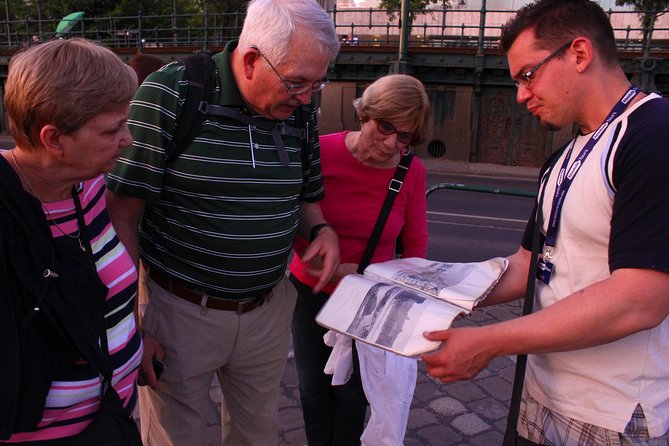
Your first landmark stop is Szent Istvan Bazilika. It’s a short visit (about 15 minutes) focused on one specific angle: how communist rule affected church life and the operations of different churches.
Even if you already know the general idea of state control, this stop helps you see it in local, practical terms. Instead of treating religion as just background color, you get a reminder that daily belief and daily governance were often in tension. You’ll also want to note that admission isn’t included for this stop, so your guide’s focus there will be time-boxed.
Szabadság tér: Soviet Memorial and the mechanics of occupation
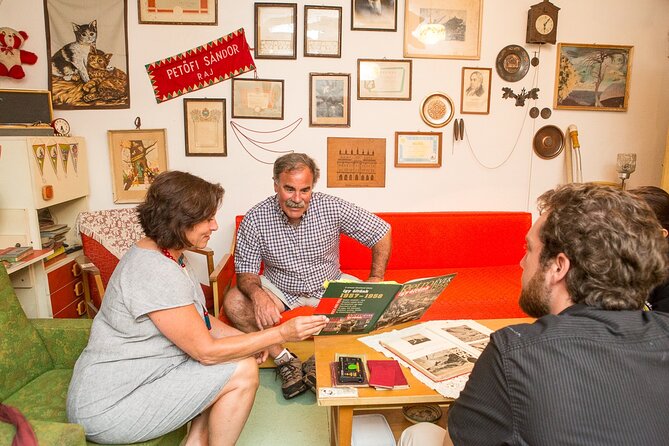
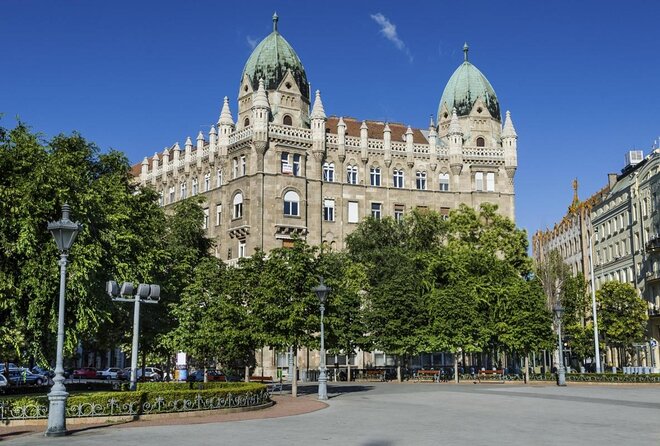
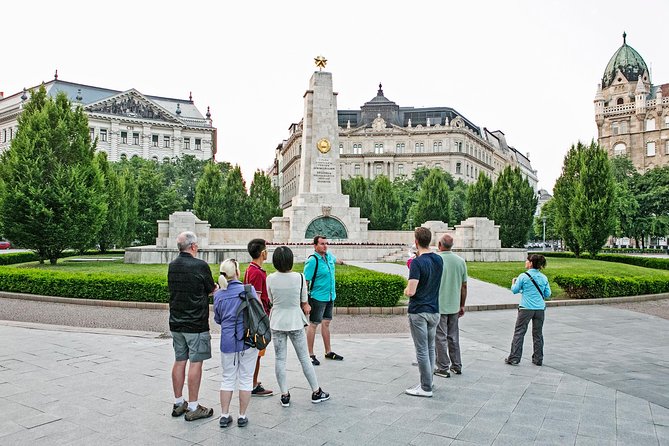
Next comes Szabadság tér for another 15-minute stop at the Soviet Memorial. This is where the story connects WWII’s end to what followed: the beginning of occupation and how the communist party seized power.
This stop is especially useful if you’ve ever wondered how control shifted so quickly. Your guide is set up to explain the transition in plain language, with the local political moves mapped onto what you can actually see around Liberty Square and the downtown axis.
Admission here is listed as free, so you won’t spend extra time figuring out tickets. Use the time to ask your guide how they connect the WWII lead-in to what happened during 1956.
Parliament area: where 1956’s first days take shape
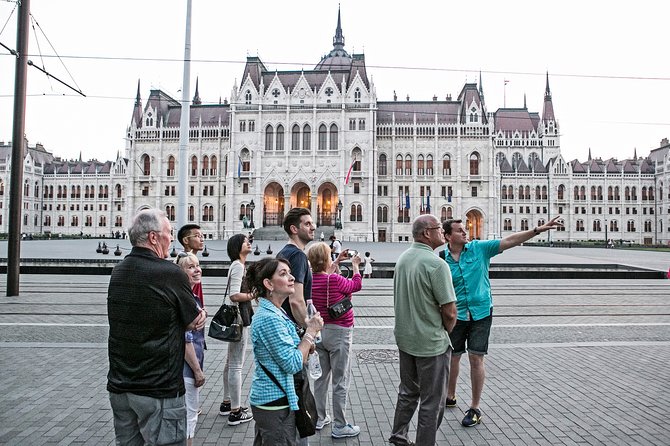
The tour then moves to the Hungarian Parliament Building area, with about 20 minutes in the square in front. This is one of the key “outdoor geography” stops: your guide ties the square’s role to the first days of the 1956 Revolution and how party leadership handled events.
It’s also a place where you’ll hear about Imre Nagy, a central figure in the revolution. He’s remembered as a communist who broke with Soviet expectations—then later faced execution for treason after the crackdown. The tour doesn’t treat him like a cartoon hero; it gives you the political logic of why his choices mattered.
Admission for the Parliament building itself is listed as not included. So think of this stop as a historical “frame,” not a guided tour inside the building.



Imre Nagy’s statue and the Oct. 23 remembrance lens
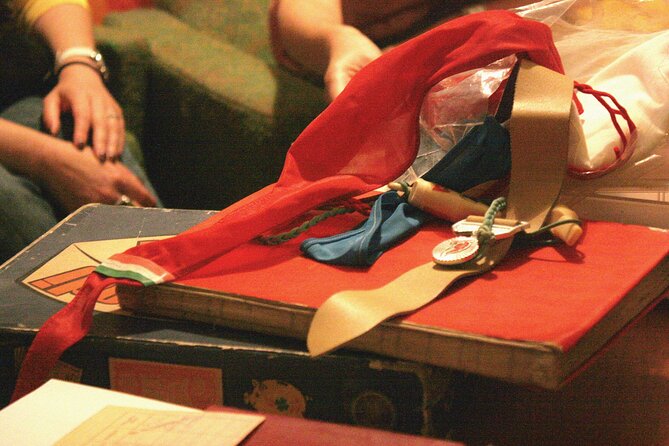
You’ll also visit the Monument to Imre Nagy / Remembrance Day (Oct. 23), another 15-minute stop. This one anchors the revolution to memory and ritual—how Hungary marks the uprising each year and why his name stayed at the center of the story.
This matters because 1956 isn’t only about what happened in the streets. It’s also about how the country re-learns its own history later, when the political balance shifts. The tour connects that re-framing to the idea of a “change of regime” rather than a single dramatic day.
Admission here is free. If you’re the type who likes to read the surrounding plaques and notice symbols, give yourself a few extra seconds here—this is a moment for absorbing, not racing.
In memoriam 1956. October 25: archive footage + recollections
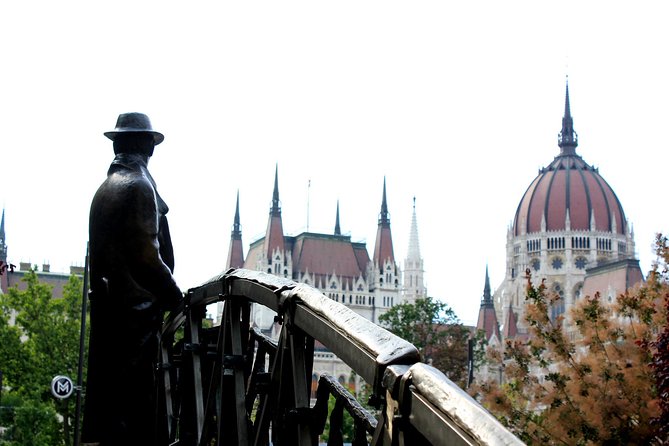
One of the most emotionally direct stops is In memoriam 1956. October 25. Memorial and Exhibition. It’s a 15-minute visit, and it’s free.
Your guide sets up the date clearly: on October 25, 1956—on the second day of the revolution—military authorities and Soviet tanks fired into the gathering crowd. The exhibition presentation uses archive footage and recollections, so you get both the recorded record and the human side of how people remember the event.
This is where the tour’s “history with objects” approach really pays off. You’re not only hearing facts; you’re seeing how witnesses and records shaped what later generations understand about the crackdown.
Retro Interactive Museum: passports, black markets, banana lines
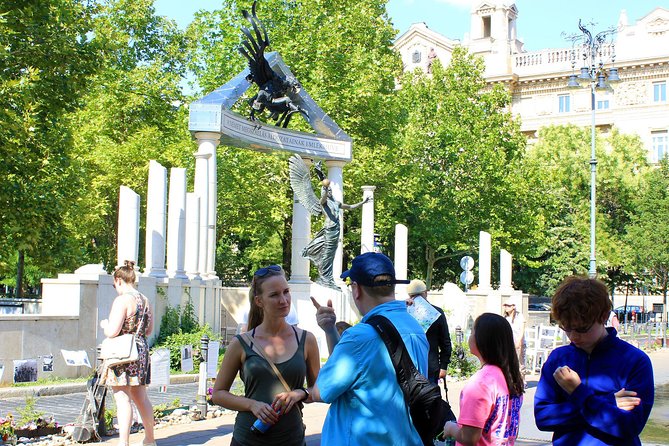
The tour includes entry to the Budapest Retro Interactive Museum, and this is often the point where the story stops being abstract. Instead of treating the Iron Curtain like a theme, the museum turns it into daily routines you can picture.
Expect explanations and examples around:
- How children were brought up
- How families lived
- Travel difficulties—how getting from A to B could be a whole project
- The time it took to get a passport
- Black markets and everyday workarounds
- Even oddly specific details like banana lines
A few guide-led details from prior groups line up with what this museum tends to emphasize: mock living-room setups with everyday items, board games, scrapbooks, and the kind of small joys that existed beside restriction. One strong theme in the tour praise is that guides make these objects feel like they belong to real people, not a display case.
Tip: because there’s no headset system, lean in during the museum walk-through. Ask questions while you’re inside—your guide’s stories tend to connect directly to what you’re seeing in front of you.
WWII memory through the Shoes on the Danube Bank
Hungary’s 20th-century story is heavy, and this tour doesn’t skip the WWII thread. One included highlight is the Shoes on the Danube Bank Holocaust memorial, visited while covering WWII.
This stop changes the tone of the walk. It’s not about communism anymore; it’s about the Holocaust and the way Budapest holds that memory in public space. The value for you is that the tour’s overall timeline doesn’t treat history like separate boxes. It shows how different regimes and policies shape the same city across decades.
If you’re sensitive to memorials, pace yourself here. You don’t need to force your emotions into a schedule.
Price and value: what $79.65 buys in downtown Budapest
At $79.65 per person, this is not a “throwaway” walking tour. The value comes from three things you actually get, not just a generic guide with a clipboard:
- A small group (max 10), which makes it easier to hear and ask questions
- Included museum entry to the Budapest Retro Interactive Museum
- Multiple paid-and-free landmark stops built around 1956, Soviet occupation, and WWII memory
Also included: coffee or tea or soft drink. That’s not a headline item, but it helps justify a late-afternoon start.
If you’re comparing this to free communist-history walking options, the difference is the museum component and the tighter, curated arc through the city’s most meaningful spaces. One caution: there are a few moments that are indoor or exhibition-based, so if you want only outdoors, you might feel the time distribution more than others.
Who this tour suits (and who should pick something else)
This is a good match if you:
- Want a first-time Budapest introduction that goes beyond architecture
- Care about the 1956 Revolution and how it’s remembered in public space
- Like when history includes everyday life—passports, black markets, family routines
It may be less ideal if you:
- Prefer a mostly outdoor, street-corner-only tour
- Need audio/headphones support, since there’s no audio equipment available
- Travel with kids under 14 (it’s not recommended)
Practical tips for a smoother 3:00 pm start
Here’s how to make this tour work for you.
- Wear comfortable walking shoes. You’ll be moving between downtown stops, including memorial areas.
- Bring a light layer. The tour goes in all weather, and downtown wind by the river can be sharp.
- Stay close to your guide. Without headsets, your listening depends on where you stand.
- Ask early and often. The museum and memorial stops are where your questions become most useful, because the guide can point directly at what you’re seeing.
If you like a guided experience that helps you connect Budapest’s layout to its political past, this tour gives you that framework fast.
Should you book the Budapest Hammer & Sickle Communist Times Tour?
Book it if you want a compact, focused route through Hungary’s modern turning points, with the emotional weight handled through memorials and the everyday texture handled through the Retro Interactive Museum. The small group size and consistent guide praise—especially when guides connect history to personal family stories—makes it a smart way to spend an afternoon.
Skip or consider an alternative if your priority is long outdoor sightseeing only, or if you rely on audio devices to follow spoken content. In that case, you might feel constrained by the no-headphones setup.
If this is your first time in Budapest and you want the city’s 20th-century story explained with real-world examples, this tour is a strong “yes.”
FAQ
How long is the Budapest Hammer & Sickle Communist Times Tour?
It runs for about 2 hours 30 minutes.
What time does the tour start?
The start time is 3:00 pm.
Is the tour offered in English?
Yes, the tour is offered in English.
Where do I meet the guide?
You meet at the Lutheran Church of Ferenc Deák Square, Deák Ferenc tér 4, 1052 Hungary.
Where does the tour end?
The tour concludes near Liberty Square in the heart of downtown, around Szabadság tér 1, 1054 Hungary.
What’s included in the price?
The price includes an English-speaking guide and coffee or tea or a soft drink, plus entry to the Budapest Retro Interactive Museum.
What is not included?
Pick-up and drop-off are not included. Also, admission tickets are not included for Szent Istvan Bazilika and the Hungarian Parliament Building.
Is there audio equipment or headphones available?
No. There is no audio equipment or headphones available on this tour.
Is free cancellation available?
Yes. You can cancel for a full refund up to 24 hours in advance of the experience’s start time.