REVIEW · BUDAPEST
Budapest: Guided Downtown Electric Bike Tour
Book on GetYourGuide →Operated by Bike Tour Kft · Bookable on GetYourGuide
Want Budapest without the walking grind? A guided e-bike tour lets you cover major sights fast, with smooth car-free lanes and big stories from the guide, especially along Andrássy Avenue and up to Castle Hill. I love that the electric assist keeps the ride comfortable even on the steep parts, and I also like the smart pacing that gives you real photo time at landmarks. One catch: you won’t go inside most stops, so think of it as sightseeing from the bike, not museum days.
You start in the Jewish Quarter at Bike & Relax, roll through both sides of the city, and get views that are hard to beat from street level and river overlooks. The tour is limited to 10 people, and the guide’s style can vary by language and group (I’ve seen guides like Ollie, Thomas, Katy, Karolo, and Balint mentioned), but the format stays the same. Also, watch your clothing: the bikes can have open chains that may brush your clothes, so wear practical pants or tuck things in.
In This Review
- Key things I’d pencil in before you book
- Starting at Bike & Relax in the Jewish Quarter
- Andrássy Avenue to Heroes’ Square: the “Paris of the East” style, on wheels
- City Park and Vajdahunyad Castle: views plus thermal-bath spectacle
- St. Stephen’s Basilica and Liberty Square: sacred buildings and heavy context
- Parliament, Chain Bridge, and the Danube: big views with a real-world constraint
- Castle Hill on an e-bike: why the assist changes everything
- Rudas Bath, Gellért Baths, and Liberty Bridge: thermal-bath landmarks without the ticket day
- Central Market Hall and the National Museum area: the food-and-culture pivot
- Riding logistics and comfort tips (so your day stays fun)
- Price and value: what $63 buys you in real Budapest terms
- Should you book this downtown Budapest e-bike tour?
- FAQ
- How long is the Budapest guided downtown electric bike tour?
- Where does the tour start?
- Are you able to enter the landmarks on the route?
- What languages are the live tour guides?
- Do I still have to pedal on an e-bike?
- What should I bring, and is a helmet required?
Key things I’d pencil in before you book
- Castle Hill feels manageable: the e-bike does the heavy lifting on the climbs while you still pedal.
- You get both Pest and Buda viewpoints: Danube river crossings and hilltop panoramas aren’t left to chance.
- Photo stops at the big names: you’ll hit Heroes’ Square, Parliament area views, Matthias Church views, and more without entry tickets.
- Small-group comfort: capped at 10 participants, so you’re not packed in like a scooter parade.
- Traffic-aware route choice: you’ll use bike lanes and smaller streets more often than you’d find on your own.
- Practical, repeatable bearings: the tour helps you map where to go later on foot.
Starting at Bike & Relax in the Jewish Quarter
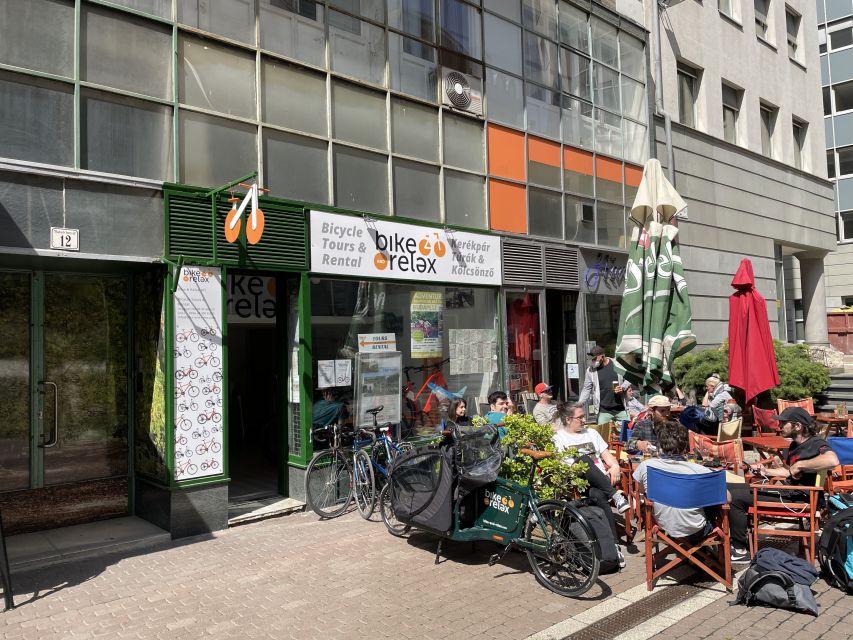
The tour begins at Bike & Relax in the center of the Jewish district, right by the connection between Madach Ter Square and Gozsdu udvar court. Look for Cafe Hivatal beside the shop; it’s also close to Deák Ferenc tér, with metro lines M1, M2, M3 and trams 47, 48, and 49. If you’re coming in from the airport, Airport bus 100E drops you near the same area.
This matters because you’re not spending your trip hunt-and-pecking for a meeting place while you’re already thinking about where to park your day. It also means you start near neighborhoods with lots of cafés for later, so your tour time doesn’t feel isolated.
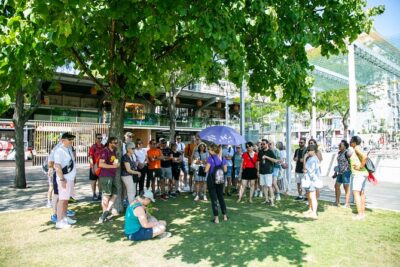
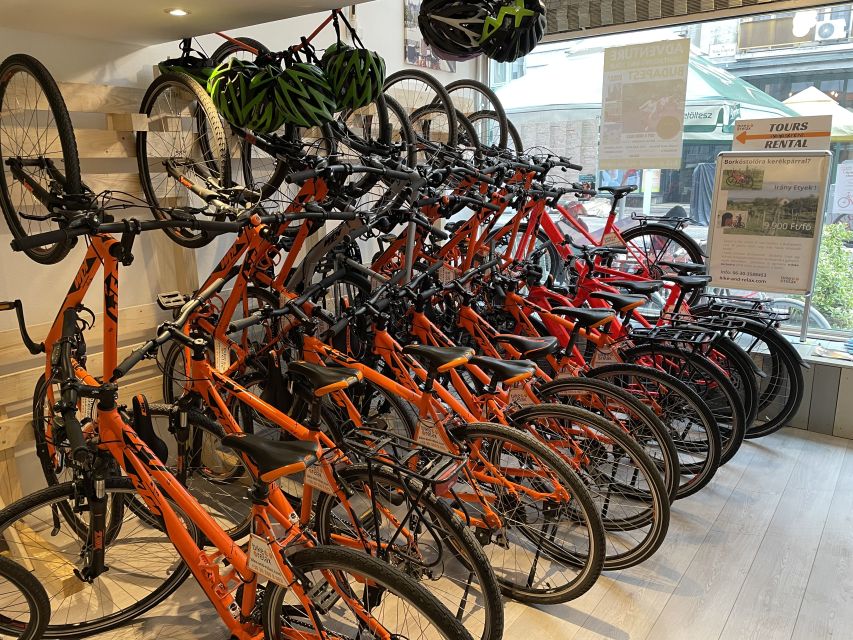
You’ll get an e-bike rental and a tour guide, and helmets are available though optional. That’s a good setup if you’re comfortable riding, because helmets don’t slow things down or add friction, but you can still use one if you prefer. The group is small (up to 10), which usually makes it easier to stop, regroup, and ask questions without the guide rushing ahead.
One practical note: luggage or large bags aren’t allowed. Wear comfortable shoes and clothes for sitting on a bike saddle and moving through city streets. If you’re wearing anything loose, it’s worth dressing so fabric won’t snag near the bike’s open chain area.
You can also read our reviews of more cycling tours in Budapest



Andrássy Avenue to Heroes’ Square: the “Paris of the East” style, on wheels
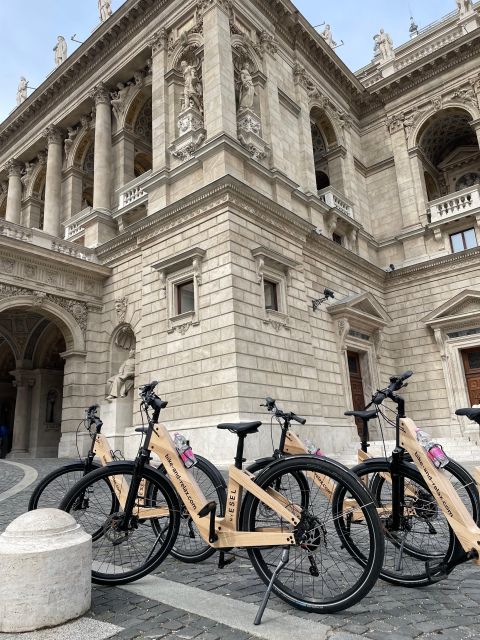
Your first big showcase is Andrássy Avenue, starting from the long stretch down toward Heroes’ Square. This is the part of Budapest that feels most like a grand boulevard, with major landmark buildings along the way—think the Hungarian State Opera House early on, then the vibe builds as you roll forward. You’re not just moving through scenery; the guide ties the architecture and the city’s political swings together as you go.
I especially like this segment because it sets the tone: you’re getting the “big Budapest” moments first while you still have fresh energy for the rest of the day. Plus, starting with a straight, iconic corridor means you can quickly orient yourself—after this, the rest of the city starts to make sense in map terms.
Then you reach Heroes’ Square, where you get a photo stop and explanations that help the square click beyond the obvious monuments. From there, you roll into City Park, but the key benefit is that the guide’s stories give you context before you hit the more complex neighborhoods and memorial sites later.
City Park and Vajdahunyad Castle: views plus thermal-bath spectacle
From Heroes’ Square, the ride continues into City Park (Városliget), where you’ll see the Széchenyi Thermal Bath and the famous fake castle look of Vajdahunyad Castle. The idea here is simple: you get those park-and-palace visuals without having to commit to a full day entry-ticket plan.
A smart thing about cycling here is that City Park can feel huge on foot. On an e-bike, you glide between key points, so you actually see more of the area rather than just walking from one entrance to the next.
You’ll also pass the Liszt Ferenc Academy of Music, which is one of those buildings that’s easy to overlook if you’re not looking for it. Having a guide point it out turns a quick pass-by into a small moment of recognition. Expect this section to feel like a break from the dense downtown streets—more open space, more scenic sightlines, and a good chance to reset your sense of direction.
St. Stephen’s Basilica and Liberty Square: sacred buildings and heavy context
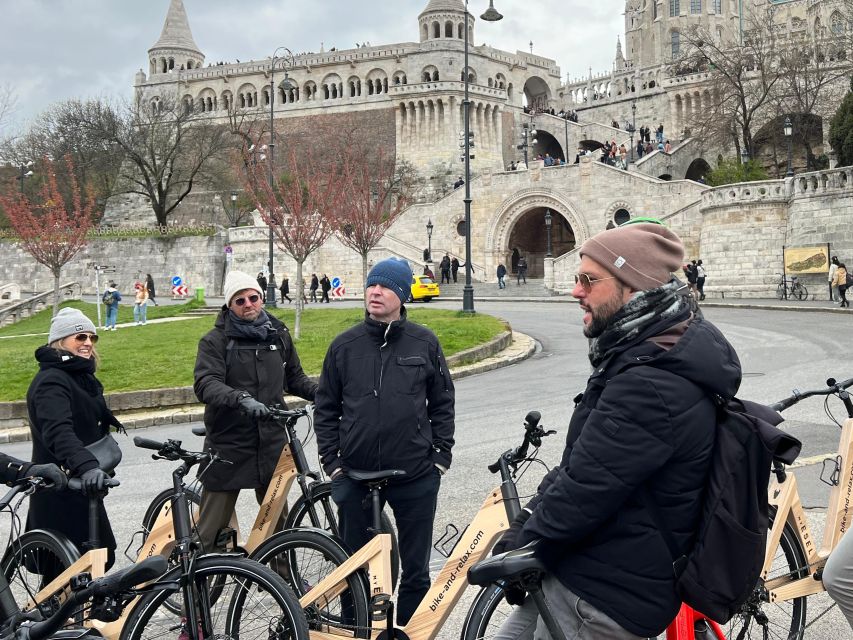
Next comes a run through downtown highlights. You’ll see and learn about St. Stephen’s Basilica, described here as the largest church in Budapest, with a photo stop that helps you spot it from the right angle before you ever get close enough to feel overwhelmed by scale.
Then you roll into the financial district area around Liberty Square, which the guide discusses with a darker edge. You’ll hear about a bloody history and a disputed Holocaust memorial, so this isn’t a stop where you just take a quick picture and move on. It’s also why having a human guide matters: you get the why behind what you see, not just a list of names.
The tension in this part of the day is pacing. You’ll be riding, stopping for photos, and moving on, so you don’t get long reflection time the way you would if you were planning a museum-focused day. If you want slow contemplation, pair this tour with a separate return visit to the specific square or church on your own.
Parliament, Chain Bridge, and the Danube: big views with a real-world constraint
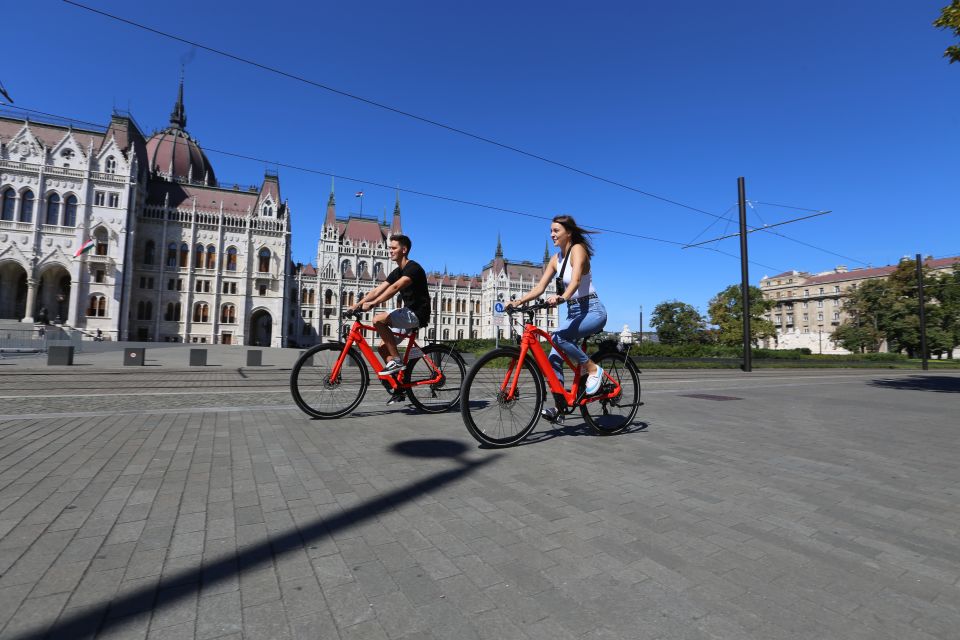
From Liberty Square, it’s not far to the Hungarian Parliament Building. You’ll get a photo stop and views from the street, without entering. That’s still valuable because Parliament is one of the best “instant Budapest” landmarks, and the city framing from nearby streets helps you judge how to come back later if you want the best vantage point.
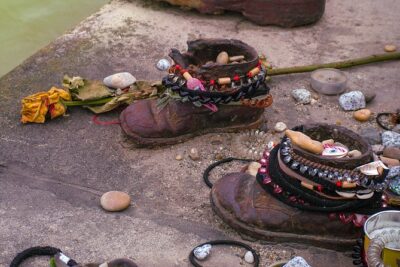
Then you head toward the Danube River for one of the highlights: a breathtaking view from the Buda side. Along the way, you pass the Monument of the Shoes on the river bank, though direct access can’t always be granted. This is a small detail that matters, because it can decide whether you get to stand right at the memorial or just see it from nearby.
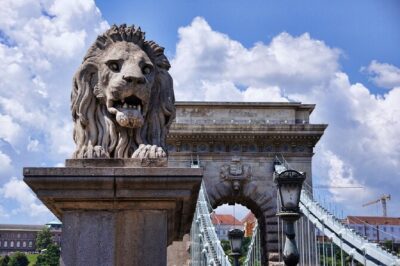
The Chain Bridge is a major transition here. It’s newly renovated and closed for private cars, which is a big win for a bike tour day. You’re able to cross as part of the route, and that matters because you’ll get a smoother ride and a better look than trying to coordinate multiple street-level detours on your own.
After the river crossing, you’re set up for the climb: Castle Hill is next, and the e-bike assist makes the difference between a fun challenge and a full day of leg-burning.
You can also read our reviews of more guided tours in Budapest






Castle Hill on an e-bike: why the assist changes everything
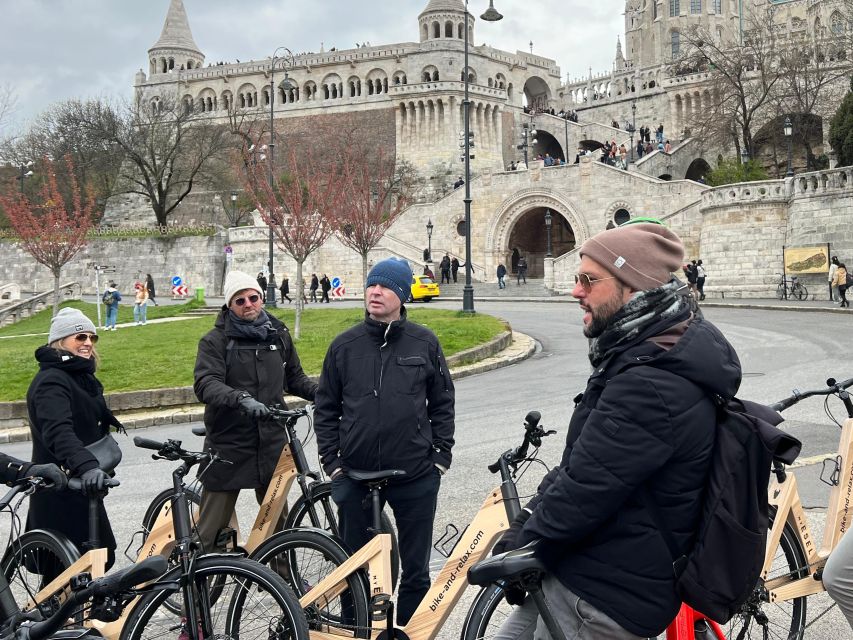
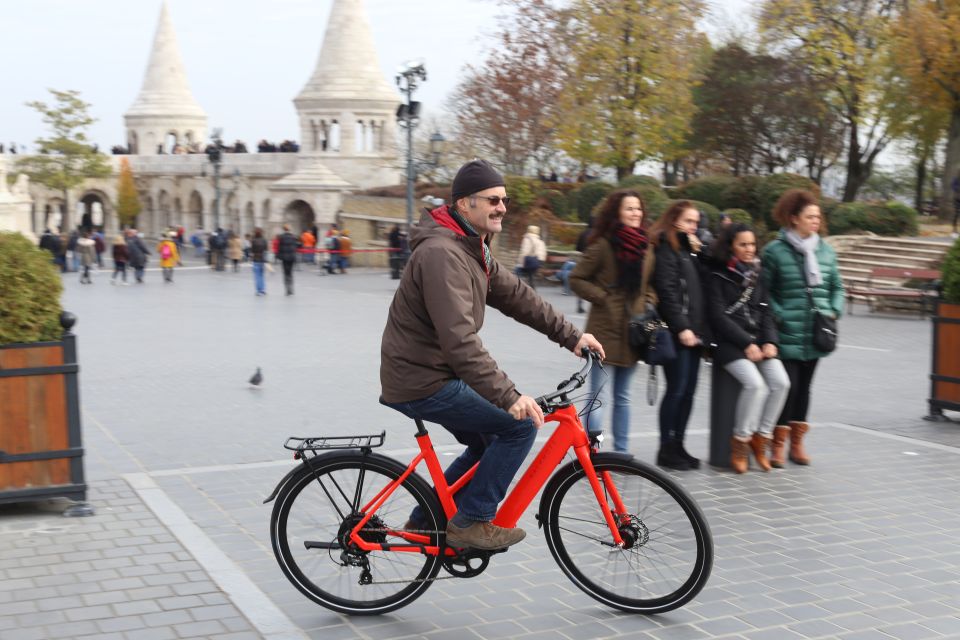
This is where the tour earns its name. After crossing into Buda, you begin the climb to Castle Hill, and the electric support shows its strength right away. You still pedal, but the assist takes the bite out of the steepest stretches, so you can keep moving with the group and still arrive ready to enjoy the views.
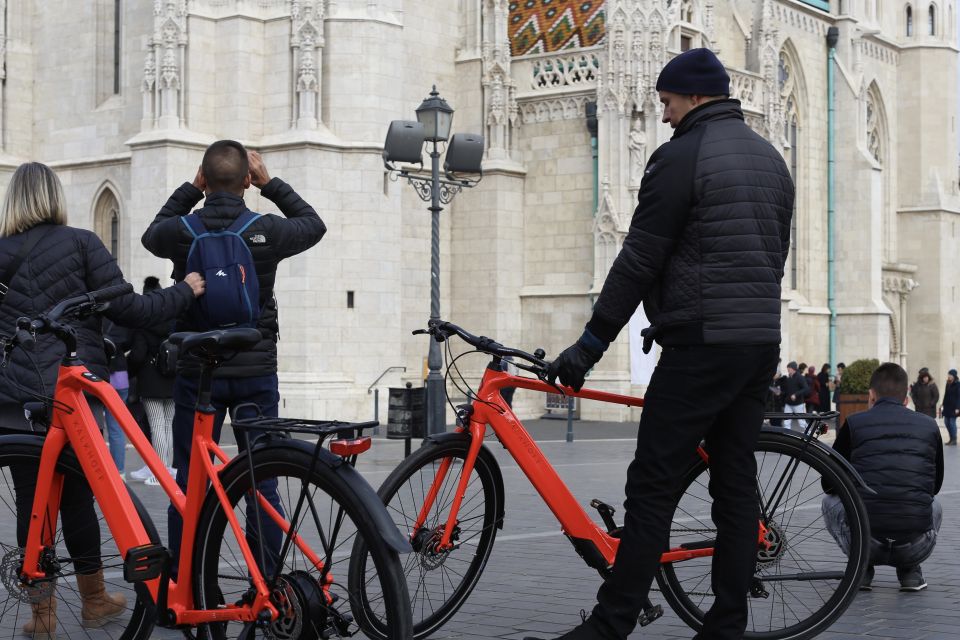
Once you’re up, you’ll see and admire Matthias Church and Fisherman’s Bastion with photo stops. These are classic viewpoints for a reason, and cycling into the area helps you reach the angles that many people only see later from distant spots.
If you’re the kind of person who wants to save your legs for later walking, an e-bike is the right move here. If you prefer steady effort, you’ll still get a workout, just with the volume turned down. Either way, the hill segment becomes the day’s turning point: the city suddenly feels layered and panoramic instead of flat.
Rudas Bath, Gellért Baths, and Liberty Bridge: thermal-bath landmarks without the ticket day
After Castle Hill, you head back toward the Danube Bank and pass the historical Rudas Bath. Then the route reaches Gellért Hill, where you’ll see Gellért Thermal Bath. This section works well because you get the iconic bath architecture and setting, but you’re not spending your time inside a pool ticket maze.
You’ll cross via Liberty Bridge, described as the most popular bridge in Budapest. It’s another big “connect the city” moment. From the saddle, bridges are more than crossings—they’re moving viewpoints that break up the tour so you’re not staring at only one kind of street for hours.
This is also a good time to soak up the way Budapest looks different from different directions. On e-bike, your perspective changes every few minutes, which makes the day feel fuller than a single neighborhood loop.
Central Market Hall and the National Museum area: the food-and-culture pivot
Now you get a final cluster of central stops that give you a different Budapest flavor: markets and museums. You’ll visit the Central Market Hall for a photo stop, then pass by the Hungarian National Museum.
These stops are about orientation. Even if you don’t go inside, you’ll walk away knowing where they are and how they fit into the broader city layout. That can be the difference between spending your remaining days efficiently or wandering around on map frustration.
The day ends with the Dohány Street Synagogue, again as a photo stop rather than a visit. It’s a strong final landmark because it signals the Jewish district identity right at the end—so your tour comes full circle to where you started.
Riding logistics and comfort tips (so your day stays fun)
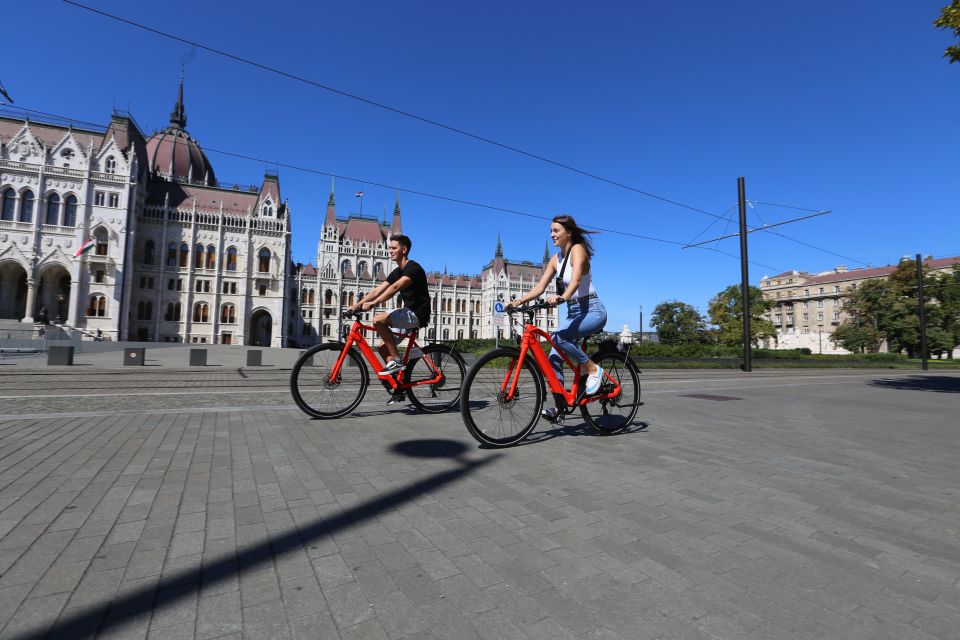
E-bike tours are only as good as the ride comfort, and this one has a few practical quirks to plan for.
First: the bikes are e-bikes with electric support, meaning you still pedal. That’s good news if you want a bit of movement, not a free ride. In practice, it helps keep you flexible through traffic, and it prevents the day from feeling like pure sightseeing from one spot.
Second: the bikes may have open chains that can touch clothes. Wear comfortable clothes that you don’t mind getting a little warm or slightly scuffed. If you’re wearing long, loose items, consider tucking or using bands so fabric doesn’t catch.
Third: the ride includes multiple photo stops. The best way to enjoy these is to plan your camera moments quickly so you don’t hold up the group. Ask the guide to take photos when you need them and keep moving afterward.
From the way the tour is described, it’s also designed to work in varying weather, and I’d still bring a light rain layer. One rider noted they received rain ponchos and water when weather shifted, which is exactly what you want for a 3.5-hour city outing.
On the comfort side, most riders highlight that the bikes are easy to handle and comfortable. One small caution: a seat can feel firm for some people, so if you’re sensitive to saddle time, consider padded bike shorts.
Price and value: what $63 buys you in real Budapest terms
At $63 per person for about 3.5 hours, this is priced like a tour that targets efficiency. You’re paying for three things at once: the e-bike rental, a live guide, and the ability to cover big sights without getting stuck negotiating crossings or losing time to wrong turns.
This doesn’t replace a museum day. You won’t enter the landmarks on the route, so if your priority is paid attractions inside buildings, you’ll still want other plans. But as a guided orientation tour that stacks iconic sights into one afternoon, the value is strong.
The small group cap (10 participants) also affects value. You get the guide’s attention and enough time at stops to enjoy photos and explanations. If you’ve ever been on a huge group tour where you spend half your time waiting, this is built to feel different.
Finally, the route includes both sides of the Danube and the Castle Hill climb. That combination costs time on foot and makes public transit connections harder to stitch into one clean half-day. The e-bike makes that practical.
Should you book this downtown Budapest e-bike tour?
Book it if you want a fast, guided circuit that hits Andrássy Avenue, Heroes’ Square, the Danube bridges, Castle Hill viewpoints, and the major central landmarks, without planning multiple days. It’s especially useful at the start of your trip because it gives you a map-like understanding of where everything is. It also suits a wide range of fitness levels thanks to the electric assist, as long as you can ride a bike.
Pass on it if you need interior visits, long museum time, or step-free routing. The tour isn’t suitable for kids under 13, pregnant women, people with mobility impairments, anyone who can’t ride a bike, and it has height and weight limits (under 5 ft 1 in / 155 cm and under 5 ft 2 in / 160 cm are listed, plus over 243 lbs / 110 kg). It also isn’t a match for people who hate being outside in city streets, even at a relaxed pace.
If you’re in the sweet spot—curious, comfortable with bike riding, and looking for a guided overview—this one is a smart use of half a day.
FAQ
How long is the Budapest guided downtown electric bike tour?
It runs for about 3.5 hours, but timing can vary depending on day conditions.
Where does the tour start?
Meet at Bike & Relax in the Jewish district, near the connection between Madach Ter Square and Gozsdu udvar court, beside Cafe Hivatal.
Are you able to enter the landmarks on the route?
No. The landmarks mentioned are photo stops, not entry visits.
What languages are the live tour guides?
The live guide offers German, French, and English.
Do I still have to pedal on an e-bike?
Yes. The bikes provide electric support, but you still need to pedal like a regular bicycle.
What should I bring, and is a helmet required?
Bring comfortable shoes and comfortable clothes. Helmets are available but are not obligatory.