REVIEW · BUDAPEST
Budapest: Classical Music Concert in St. Michael’s Church
Book on GetYourGuide →Operated by DKN Zenei Ügynökség Kft. · Bookable on GetYourGuide
A baroque church makes classical music feel personal. In Budapest, this concert pairs St. Michael’s Church with a real-world orchestra setup, so the sound lands cleanly in a historic room.
What I like most is the excellent acoustics and the warm, atmospheric setting that suits both familiar classics and longer sacred pieces. You get a tight 70-minute concert format instead of a half-day commitment, which is ideal when you’re packing in Budapest sightseeing.
The best part for planning is the way the experience is adjustable: you choose from three seating categories and pre-book your tickets, so you’re not guessing once you arrive. The main drawback to keep in mind is comfort—wooden pews can feel hard after a while, even with added seat-warmers in colder seasons.
In This Review
- Key Things to Know Before You Go
- St. Michael’s Church: the room where the sound behaves
- The concert program: Vivaldi, Mozart, and organ favorites in one sitting
- 1) Vivaldi Four Seasons and related classics
- 2) Mozart’s Requiem (a heavy-hitter finale section)
- 3) Organ concert selections and sacred vocal-style pieces
- Seating and comfort: choosing the right category saves your evening
- If you prioritize comfort
- If you prioritize value
- If you want the best listening view
- Music in 70 minutes: perfect timing for Budapest nights
- Tickets, what’s included, and what to plan for
- Who this concert is best for (and who may not love it)
- Value check: is $53 worth 70 minutes in a church?
- Should you book this Budapest classical music concert in St. Michael’s Church?
Key Things to Know Before You Go
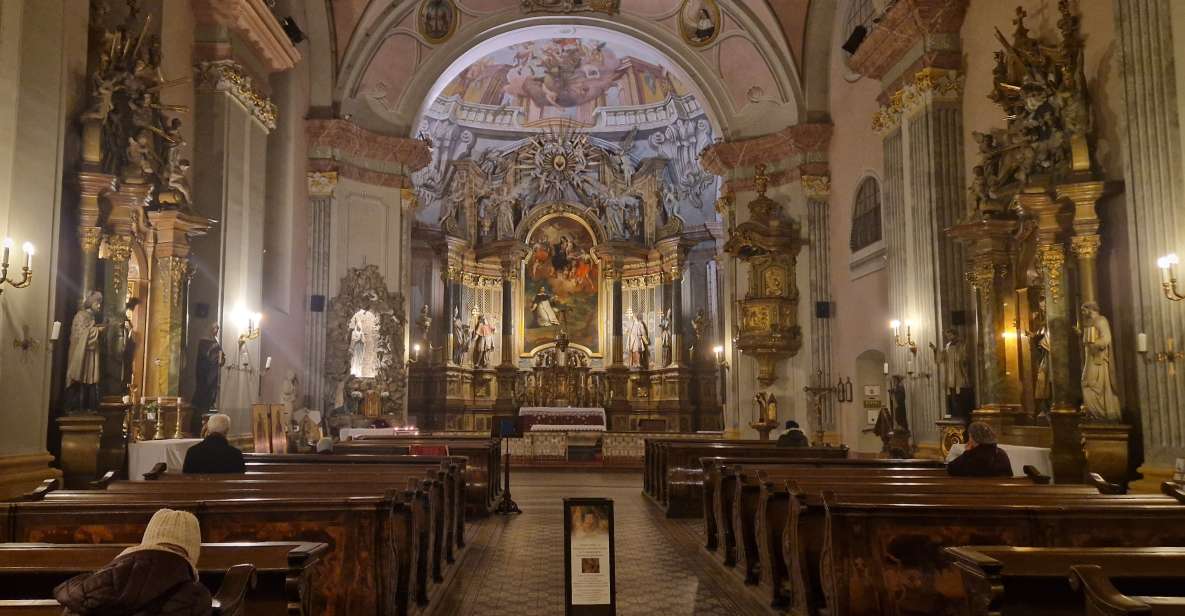
- St. Michael’s Church acoustics: a classic Budapest venue where string sound carries well
- Three seating categories: pick based on comfort vs. value
- A big program in 70 minutes: Vivaldi Four Seasons plus Mozart Requiem and organ selections
- Danube String Orchestra: a focused ensemble for an intimate church performance
- Comfort tips matter: pews are older wood; heated pads may be available seasonally
- Arrive early for better positioning: some seating choices are more comfortable than others
St. Michael’s Church: the room where the sound behaves
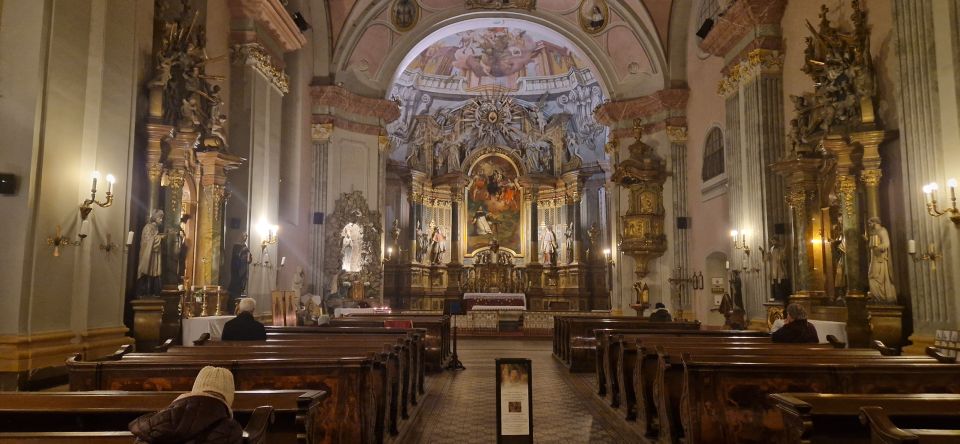
St. Michael’s Church sits right in the Inner-City area, and that location matters. Budapest evenings often come down to walking distance and timing, and this is a straightforward concert stop you can plug into a day of museums, river views, and dinner plans.
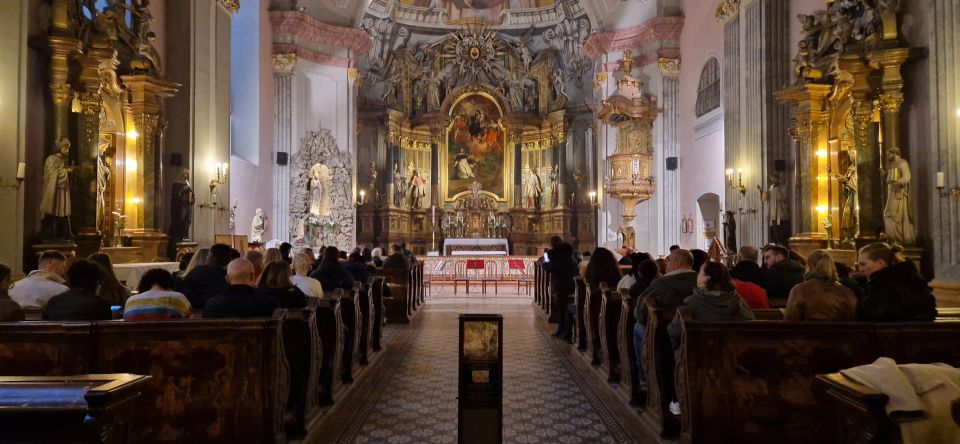
Inside, you’re in a baroque interior with much of the original design intact. That’s not just an aesthetic detail. A historic church like this tends to give you that satisfying “concert hall” effect without feeling distant or sterile. Even when the music gets dramatic, the sound doesn’t turn muddy; it stays readable—especially for strings.
And because it’s a church, you feel the change in pace the moment you sit down. You’ll hear people settle, footsteps soften, and the space “holds” the music. The venue vibe is repeatedly called out as lovely, and it’s easy to see why: ornate surroundings make the performance feel more like an evening event than a quick ticketed show.
One practical thing: the church can run warm in some seasons. If you’re going in hotter months, plan for less-than-ideal airflow and consider bringing something small you can use to cope.
You can also read our reviews of more tours and experiences in Budapest



The concert program: Vivaldi, Mozart, and organ favorites in one sitting
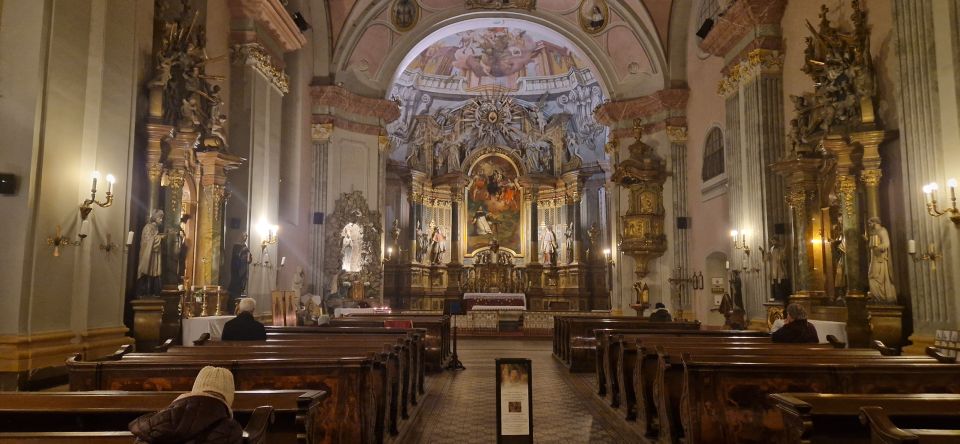
This is billed as an evening of classical highlights, and the programming reflects that: you get familiar names, plus sacred and dramatic works that fit the church setting.
You can expect three main blocks:
1) Vivaldi Four Seasons and related classics
The concert opens with an assortment that includes major hits and recognizable textures:
- J. Pachelbel: Canon
- Antonio Vivaldi: Gloria
- Tommaso Albinoni: Adagio
- Franz Schubert: Ave Maria
- Wolfgang Amadeus Mozart: Church Sonate in D major, Ave Verum, Alleluja
- Camille Saint-Saëns: The Swan
- And then Vivaldi again: The Four Seasons (Spring, Summer, Autumn, Winter)
If you like Vivaldi, this part is your anchor. The Four Seasons are the most immediately “atmospheric” pieces on the program, and they tend to land well in a church because they’re melodic and expressive. The surrounding works (Pachelbel, Mozart, Schubert, Saint-Saëns) help connect the style threads—baroque clarity, classical symmetry, and romantic lyricism—without turning the evening into a lecture.
2) Mozart’s Requiem (a heavy-hitter finale section)
Then the program shifts into Mozart’s Requiem in D minor (K. 626), including movements like:
- Introitus and Kyrie
- Dies Irae sections (with orchestral-sounding segments like Tuba Mirum and Rex Tremendae)
- Offertorium, Sanctus, Benedictus
- Agnus Dei and Lux Aeterna (Communio)
This is the “church fits” moment. Requiem music naturally matches the setting: solemn dynamics, strong choral writing, and tension-release patterns that feel appropriate in stone and high ceilings. Even though you’re hearing it performed by a string ensemble rather than a full choir-and-orchestra setup, the structure still works. If you’ve never heard the Requiem before, you’ll likely recognize the emotional arc.
3) Organ concert selections and sacred vocal-style pieces
The third block includes keyboard-organ and choral-mood selections, such as:
- J.S. Bach: Toccata, Air
- Handel: excerpts like Messiah (Rejoice) and Xerxes (Largo)
- Vivaldi: Four Seasons (Largo from Winter)
- Gounod: Ave Maria
- Widor: Toccata from Organ Symphony No. 5
- Liszt: Ave Maris Stella
- Franck: Panis Angelicus
- Massenet: Thais Meditation
- Schubert: Ave Maria
- Mozart: Alleluja from Exultant, Jubilate
This part is a nice reset after Requiem intensity. It keeps the evening moving, gives you more recognizable melodies, and adds variety in tone. If you’re the type who likes at least one “standout” moment, you should find several here.
A small heads-up: some people wish there was more spoken context before pieces. So if you want names and short explanations in the moment, don’t rely on it. You’ll enjoy it either way for the music, but a little prep on your phone before you go can make the listening feel even richer.





Seating and comfort: choosing the right category saves your evening

Budapest church pews have a personality, and it’s not always gentle. The good news is that this concert setup includes three seating categories, so you’re not stuck with one option no matter what your priorities are.
Here’s how to think about it:
If you prioritize comfort
Pick the category that’s designed for better viewing while minimizing discomfort. Even with seat-warmers/heated pads in colder months (many visitors mention these), wooden pews can still feel stiff after a while.
If you know you sit for long periods easily, you’ll probably be fine. If you don’t, treat this as a comfort-first event. People have specifically commented that the pews are hard and that seating can affect the experience.
If you prioritize value
Go for the lower-cost seats, but come with a plan. Bring a small layer that helps you stay warm and consider a compact seat cushion if allowed. The venue is historic, so you’re not getting modern seating. What you are getting is a close, intimate sound with minimal fuss.
If you want the best listening view
Arrive a bit early. A few reviews suggest coming early for better placement. In a church, that can mean the difference between fully hearing at your best angle vs. straining slightly.
One more practical point: some seating positions may have more distractions, like people shifting, standing, or raising phones to record. The best way to protect your own view and attention is to choose seats that keep your line of sight clear.
Music in 70 minutes: perfect timing for Budapest nights
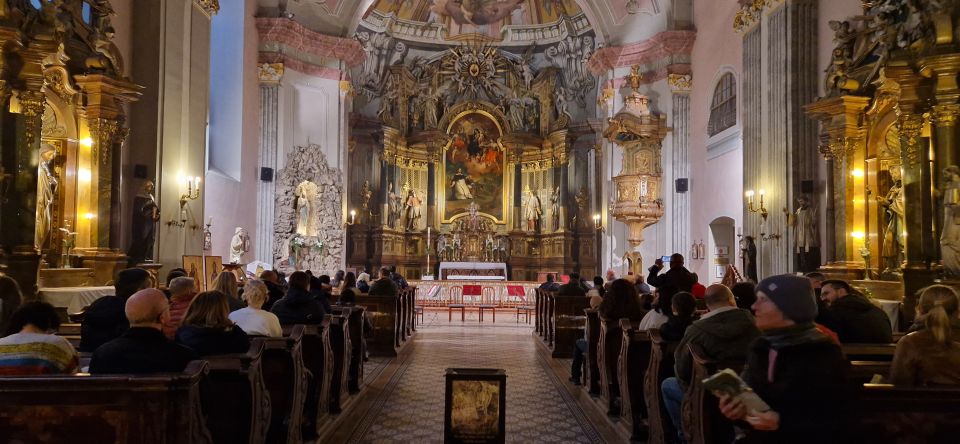
A tight 70-minute duration is a real advantage in Budapest. After a long day—thermal baths, walks around the Jewish Quarter, castle views, dinner—your legs and brain might not want a 2.5-hour commitment.
This concert respects that. The program is packed, but the pacing stays manageable. You get multiple composers and a full emotional arc without feeling like the night swallowed you whole.
That length also helps if you’re doing an evening itinerary. You can attend this and still have time for a stroll along the river afterward, or a planned stop near central streets.
Tickets, what’s included, and what to plan for
You’re buying concert tickets for the show in St. Michael’s Church, and that’s it—no food, no drinks included. Plan on eating before or after based on your schedule and appetite.
Because it’s pre-booked, you’ll spend less time figuring out entry procedures and more time focusing on the moment. And if your plans shift, the experience notes free cancellation up to 24 hours in advance for a full refund. There’s also a reserve now, pay later option, which is handy when you’re juggling train times or changing dinner reservations.
Wheelchair accessibility is listed for the experience, which matters for inclusive planning. If you’re mobility-limited, still double-check seating category details when you book, because older church layouts can vary from spot to spot.
Who this concert is best for (and who may not love it)
This concert works especially well if you fit one of these profiles:
- You want a classical night that feels authentic and not overly formal. The setting does a lot of the heavy lifting.
- You like recognizable composers—Vivaldi, Mozart, and Bach appear in the program, so it’s easy to follow.
- You’re short on time but still want a real cultural activity, not just a performance backgrounded over dinner.
- You appreciate string-focused arrangements. Even without a massive orchestra, the ensemble can keep the texture crisp.
It may be less ideal if:
- You’re extremely sensitive to hard seating for long stretches. The pew comfort issue is real.
- You want lots of spoken introductions for each piece. The program delivers the music; it may not slow down for commentary.
- You dislike any chance of phone distractions. The church environment makes it easy for people to try filming; if that bothers you, plan your seat and arrival time accordingly.
Value check: is $53 worth 70 minutes in a church?
At $53 per person for 70 minutes, this is a straightforward value proposition. You’re paying for:
- A real venue (not a generic hall)
- A full concert program with major classical names
- Pre-booked ticket convenience
- Multiple seating categories so you can choose where your money goes
The honest tradeoff is comfort. If you buy the cheapest seats and you’re not comfortable on hard wood, the value doesn’t feel as good. But if you pick the right category and show up prepared, you’re getting a compact, high-impact cultural night that’s hard to replicate with a “walk-by” activity.
Also remember: you’re not paying extra for dinner. So consider this the cultural centerpiece of your evening, not an add-on.
The experience provider is listed as DKN Zenei Ügynökség Kft., and the performance is presented by the Danube String Orchestra. The ensemble quality is consistently praised in the feedback, with particular praise for the lead musician (Gabora Gyula is named in one account).
Should you book this Budapest classical music concert in St. Michael’s Church?
Book it if you want a classic Budapest evening with strong sound, big-name composers, and a venue that makes the music feel personal. If you’re the kind of person who loves hearing Vivaldi’s Four Seasons live, or you want Mozart’s Requiem mood in a church setting, this is a very sensible choice.
Skip or rethink if comfort is your top priority and you know you struggle with hard seating. If that’s you, choose the best seating category you can afford and plan to arrive early.
If you want one practical rule: treat this as a “sit and listen” night. That mindset will make the 70 minutes feel exactly right.