REVIEW · BUDAPEST
Self Guided Tour In Budapest With 100 Captivating Audio Stories
Book on Viator →Operated by Trales Audio Guides · Bookable on Viator
Budapest sounds better with 100 doorstep stories. This self-guided audio walk in the city keeps things light and flexible, with location-based storytelling you can start from your phone browser. I like that it is no-download and works with the same simple setup across the city.
You bring your own smartphone, headphones, and internet, so if your battery or data signal gets shaky, the experience gets less smooth. Still, with a map in the web app and bite-size stops, you can tailor your day from about 1 hour to a full 8 hours without feeling stuck in a rigid group schedule.
Key points before you go
- Start in your browser: no app download, no fiddly setup beyond your link and audio access
- 100 audio stops across Budapest: you pick and choose, then start and stop as you like
- Short stories at major landmarks: many are around 10 minutes, with some longer moments
- Designed for on-the-go sightseeing: you move between sights instead of waiting in lines for narration
- Most content is outdoors-friendly: great for viewpoints over the Danube and castle hills
- Plan for internet: offline access is not included, and you need a working connection
In This Review
- How This Budapest Audio Tour Works (No Tour Group Needed)
- Price and What You’re Actually Paying For
- Getting Set Up in Minutes: Link, Map, and Headphones
- Buda Castle and Castle District: Where the Stories Feel Like Part of the Scenery
- Parliament, the Bridges, and the Danube: The Best Stretch for Big-View Audio
- Heroes’ Square and City-Wide Landmarks That Work Even Without Tickets
- Great Market Hall and Andrássy Avenue: When Food and Architecture Become the Lesson
- Libraries, Universities, and Museums: Culture Stops That Don’t Require a Full Day
- Synagogue Grandeur and St. Stephen’s Basilica: Planning Notes That Save Time
- Gellért Hill, Citadella, and the Cave: Views Plus Legend
- Railway Architecture: Nyugati and Keleti Station Stories You’ll Feel in Your Bones
- Squares, Statues, and Everyday City Edges: Liberty, Deák Ferenc, and More
- How to Plan Your Own 1 to 8 Hours (Without Overdoing It)
- Who This Self-Guided Audio Tour Is Best For
- Quick Value Check: Does $3.62 Deliver?
- Should You Book This 100-Story Audio Tour?
- FAQ
- How long is the Budapest self-guided audio experience?
- Is the audio guide available in English?
- Do I need to download an app?
- Do I need a smartphone and headphones?
- Does the tour work offline?
- Where does the tour start and end?
- Is this experience private?
How This Budapest Audio Tour Works (No Tour Group Needed)

This is a self-guided way to explore Budapest using your phone plus your own headphones. The audio content is location-based, meaning it is meant to be used while you are standing in the right area (rather than sitting at home studying maps). You get a web app with a map, and you activate your guide with a one-step link.
You also control the pacing. Want a quick hit at a single spot? Do that. Want to linger at Heroes’ Square or the Danube? You can. The overall duration is listed as 1 to 8 hours, which is a polite way of saying you can build your own day length based on how many stories you choose to listen to.
The tone is practical: it is meant to help you notice what you are looking at. Think battles and royalty at Buda Castle, bridge-era details on the Chain Bridge, and memorial stories along the riverfront. You are not just reading plaques. You are getting audio soundscapes and storytelling cues that help you connect the dots while you walk.
Price and What You’re Actually Paying For
At $3.62 per person, this is priced like a budget-friendly entry ticket to structure your wandering. And that is the real value here: it turns a day of walking into a guided-feeling loop without paying for a full in-person guide.
You are not paying for transport, a tour vehicle, or a guide’s time. You are paying for:
- a browser-based audio guide from Trales Audio Guides
- a map to help you find stops
- audio stories tied to specific Budapest landmarks
So the value depends on your style. If you love independent exploration but want context, it makes sense. If you hate relying on your phone mid-walk, you may feel you are paying for something you can already get from signage and your own reading.
You can also read our reviews of more guided tours in Budapest



Getting Set Up in Minutes: Link, Map, and Headphones
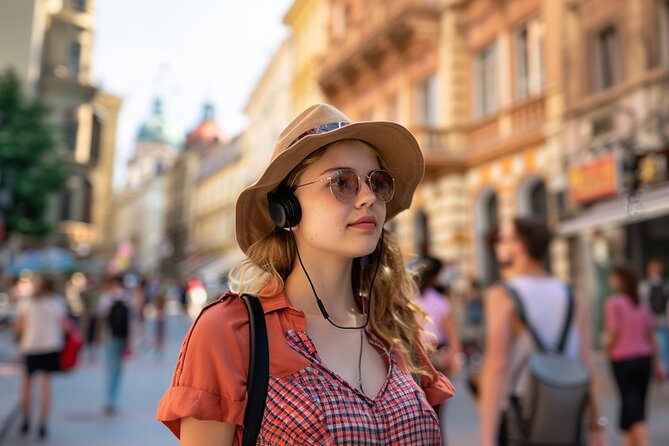
You will want to do two things before you step out: charge your phone and bring your headphones. This is not an offline audio setup, so it also helps to confirm you will have internet access where you’ll be walking.
Once you have the activation link, you access the guide through your browser. No app install. No special tech skills. If you’ve used a web-based audio tool before, this will feel familiar right away.
Then use the map to plan your first target. You can start anywhere in the network, but the experience is built around famous walking routes and landmark clusters, so it is easiest if you pick a neighborhood flow and stick to it for an hour or two.
Buda Castle and Castle District: Where the Stories Feel Like Part of the Scenery
A Buda Castle stop is the kind of thing you can see in photos, but the place only clicks when you understand the layers. The audio story here focuses on Budapest’s fortress-and-royalty vibe, with tales that connect the site to battles and power. It is outside-focused, and the time estimate is about 20 minutes for this kind of stop, so you get enough room for the setting to make sense.
As you wander around the castle area, your advantage with audio is timing. Even if you just want viewpoints, the story cues help you know what to look for: why the area mattered, how the fortifications related to the city, and how to read the landmark you’re standing in front of.
If you plan to combine this with other nearby stops (like Gellért Hill for a second viewpoint layer), you will likely feel like you are watching Budapest from two different levels: the high fortress world up top and the Danube story below.
Parliament, the Bridges, and the Danube: The Best Stretch for Big-View Audio
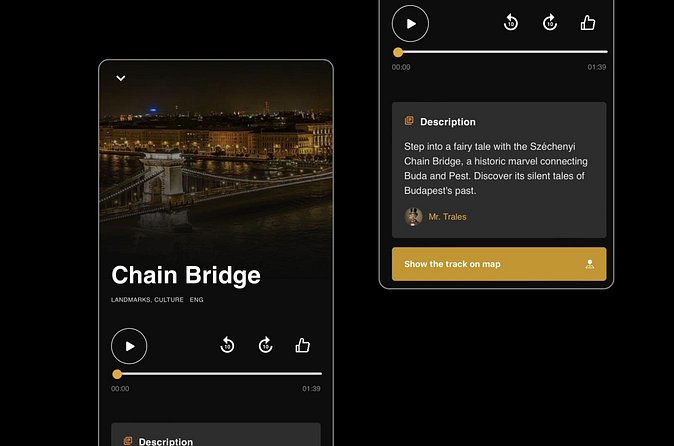
Budapest’s grand moments are built around the Danube, and this audio tour keeps feeding you those moments as you move. The route includes stops tied to the Hungarian Parliament Building and the bridge crossings that frame it.
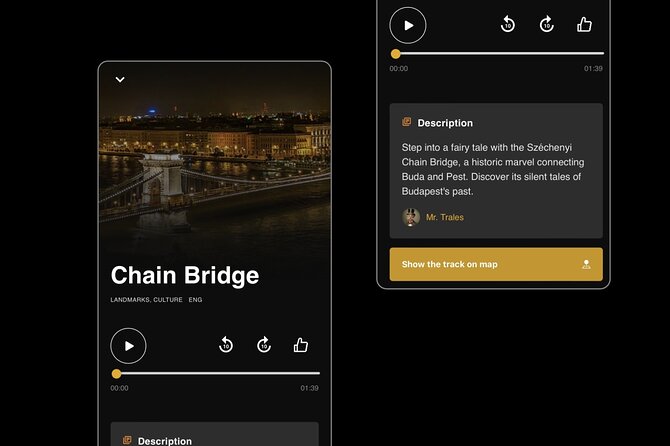
The Chain Bridge story is aimed at the details people often miss, including the Lion statues and the bridge’s historic role connecting Buda and Pest. The audio time at these bridge stops is usually short (around 10 minutes), but that works here. Bridges can be photographed fast. Audio helps you slow down for what the bridge represents.
Then comes the riverfront side of the experience, including Danube Promenade time and the Shoes on the Danube Bank memorial. That memorial is exactly the sort of stop where audio is helpful because the emotional weight needs context, not just a nameplate. You do not need to stay long, but you do want the story told clearly while you stand there.
If you like routes that feel cinematic, this is where it happens. You can hop from one iconic view to the next without worrying about ticket lines or waiting for a group.
Heroes’ Square and City-Wide Landmarks That Work Even Without Tickets
Heroes’ Square is one of those places where the photo looks complete, but the audio gives it meaning. The story centers on the Millennium Monument and the idea of commemorating major anniversaries tied to Hungarian history. It also points out the square’s framing buildings, which helps you understand the layout instead of just photographing the center.
Nearby, you also get stops like Margaret Island, a change of pace from big monuments to a place where nature and city planning overlap. The guide gives you time for that (about 20 minutes for Margaret Island), which is great because it is easy to get distracted by pathways, views, and the island’s slower rhythm.
City Park is also included, and you can use it as a breathing space in the middle of a day of landmarks. Even if you only listen for a short story, it helps you shift from monuments to walking, trees, and space.
You can also read our reviews of more tours and experiences in Budapest






Great Market Hall and Andrássy Avenue: When Food and Architecture Become the Lesson

Some stops feel built for short narration, and the Great / Central Market Hall fits that. The story frames it as a hub for culture and cuisine and links it to planning in the city. Even if you do not plan a full shopping stop, you can listen while you browse and get a better sense of why this market matters beyond just being a place to eat.
Andrássy Avenue is the opposite flavor: elegant, formal, and made for architecture-focused attention. The audio guide’s angle is Neo-Renaissance grandeur, and the time estimate is around 10 minutes, which keeps it from turning into a slog. You can listen while you walk and then just enjoy the streetscape as it unfolds.
If you want Budapest that feels more like walking a postcard with explanations, these are the places to prioritize.
Libraries, Universities, and Museums: Culture Stops That Don’t Require a Full Day

One hidden strength of this audio tour is that it includes brainy places in a way that still feels like sightseeing. You get stops tied to major institutions like:
- National Széchényi Library
- Semmelweis Museum of Medical History
- Corvinus University
- Metropolitan Ervin Szabó Library
- Hungarian Academy of Sciences
- National Archives of Hungary
The audio descriptions for these stops focus on what each place represents—knowledge, research, cultural memory, and historic collections. Even if you do not have time for full museum-style visits, these stories can help you appreciate why the buildings and institutions matter in the city’s identity.
Semmelweis is especially interesting because the story frames medical history in a way that makes the setting feel connected to real breakthroughs. You may find it easier to care about the museum area when you already understand the theme the audio is emphasizing.
Synagogue Grandeur and St. Stephen’s Basilica: Planning Notes That Save Time
Europe’s largest synagogue, the Dohány Street Synagogue (Nagy Zsinagóga), is included, and you get an audio stop centered on its scale and history. This is one of those locations where audio can help you notice what you might otherwise miss: the way architecture signals meaning, and why the building matters in the city’s story.
For St. Stephen’s Basilica (Szent István Bazilika), the practical tip is simple: pre-planning helps. The idea is that booking ahead can save you standing at a ticket office. If you’re aiming to go inside and want to avoid wasting time, treat the basilica like the one big ticket moment in your day and plan around it.
If you do not get inside, the audio still gives you a way to read the space and understand what you are seeing from the outside.
Gellért Hill, Citadella, and the Cave: Views Plus Legend
Gellért Hill is where Budapest’s dramatic angles start to feel personal. The audio focuses on history and folklore, and the time estimates for this zone are short (often around 10 minutes). That short format works because the best payoff is usually the view. You stand there, listen, and look.
You also have related stops like Citadella, framed as a fortress position overlooking the city. Again, short narration makes sense. You do not need an hour-long lecture while you’re trying to catch the skyline.
There’s also a Gellért Hill Cave story. That is the kind of stop that changes the mood from open-air viewpoints to underground legend. Even if you only get a partial sense of the cave area in your schedule, the audio can help you appreciate it as a different side of Budapest rather than just a detour.
Railway Architecture: Nyugati and Keleti Station Stories You’ll Feel in Your Bones
Budapest’s train stations are not just transport hubs. This audio tour includes architectural stops like Nyugati Railway Station’s Royal Waiting Room and Budapest-Keleti Station. The guide treats them like surprises: elegant design and a place to learn the story behind the scale.
Nyugati’s Royal Waiting Room is described in the guide as designed by creators associated with the Eiffel Tower, which makes it a great candidate if you enjoy architecture trivia paired with what you can see in person. Keleti is framed as a “railway history” story, which is the kind of context that makes old buildings feel alive.
These are the stops that work well on a day when weather changes. You can pause, listen, and keep your energy for the next outdoor view.
Squares, Statues, and Everyday City Edges: Liberty, Deák Ferenc, and More
Squares are where Budapest’s daily life shows itself, and this tour uses them well. You’ll see stops like:
- Vörösmarty Square
- Kossuth Lajos Square
- Deák Ferenc Square
- Batthyány Square
- Liberty Statue and Liberty Bridge
The stories at these places focus on identity and what changed over time. You might feel the difference between them quickly. Some are clearly ceremonial. Others feel like the city’s nervous system, the junction where you turn and walk onward.
One statue stop that’s easy to underestimate is the Liberty Statue. The audio centers on the story behind the monumental bronze figure. Those kinds of stories help you stop treating statues as just photo props.
For bridges, you also get Elisabeth Bridge (Erzsébet Bridge) and Liberty Bridge, with stories tied to tragedy, rebirth, and art nouveau myth. The good news: these stops are short, so you can absorb the meaning without turning your afternoon into a long museum crawl.
How to Plan Your Own 1 to 8 Hours (Without Overdoing It)
This guide is built for flexible listening, and the duration range tells you the method: you can do a focused loop or a full-day sweep. Many stories are around 10 minutes, with a few longer ones like Buda Castle and Margaret Island closer to 20.
A simple planning approach:
- If you want about 1 to 2 hours: pick 4 to 6 major stops (castle view, one bridge, Heroes’ Square, one Danube memorial moment)
- If you want half a day: add 6 to 10 stops including one indoor-feeling institution like the synagogue or one library stop
- If you want a full 6 to 8 hours: include stations and squares plus at least one longer scenery block (Gellért Hill and Margaret Island are good anchors)
Also, save one “maybe” slot for whichever direction your feet naturally take you. The tour style encourages you to choose stories along the way rather than grinding through a checklist.
Who This Self-Guided Audio Tour Is Best For
This works especially well if you:
- like independent travel but want context you can hear while walking
- enjoy landmark hopping without joining a group schedule
- want a low-cost way to make your day feel guided
- can handle using your phone and headphones outdoors
It is also a good match for a private group experience. Even though it is self-guided, it’s listed as private, meaning it’s only your group using your access.
You may want to skip or reconsider if you:
- need offline access (it is not included)
- rely on audio assist due to hearing impairment (it is not recommended for travelers with hearing impairment)
Quick Value Check: Does $3.62 Deliver?
At this price, you are buying structure, not extras. You get a map, web access, and audio storytelling across many points of interest. In a city like Budapest, where walking between neighborhoods is part of the fun, that structure can help you feel more grounded than simply roaming.
The best part is that the cost is low enough to justify using it even if you only listen to a handful of stories. You do not have to commit to all 100. You can cherry-pick the landmarks that match your mood and still feel like you got your money’s worth.
Should You Book This 100-Story Audio Tour?
Book it if you want Budapest with a guide-like feeling, but on your own schedule. It’s an especially smart choice for first-time visitors who want the big sights—Buda Castle, Heroes’ Square, Parliament-area bridge views, and the Danube memorials—without turning your day into a line-queue project.
Skip it if you hate depending on phone battery and internet, because the audio access requires internet and there is no offline mode. If you can handle that, you will likely enjoy how quickly the city starts to make sense through audio cues tied to where you are standing.
FAQ
How long is the Budapest self-guided audio experience?
The experience is listed as 1 to 8 hours, depending on how many audio stories you choose to listen to.
Is the audio guide available in English?
Yes, it is offered in English.
Do I need to download an app?
No. You activate and access the audio guide through a link and a browser-based web app.
Do I need a smartphone and headphones?
Yes. You need a smartphone and your own headphones. Offline access is not included.
Does the tour work offline?
No. Offline access is not included, so you’ll need internet access while using it.
Where does the tour start and end?
It starts in Budapest, Hungary and ends back at the meeting point.
Is this experience private?
Yes. It is listed as private, so only your group will participate.