REVIEW · BUDAPEST
Budapest Audio Guide Cruise with Day, Sunset and Night Options
Book on Viator →Operated by Silverline Cruises Kft. · Bookable on Viator
Danube night views come fast. This Budapest Audio Guide Cruise is a simple, budget-friendly way to see the big landmarks from the water, with a self-guided commentary on your phone. You can choose a departure for day, sunset, or night, and you’re able to move between inside and outside areas as the conditions change.
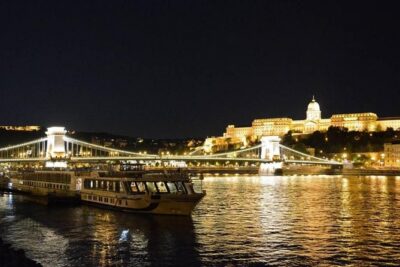
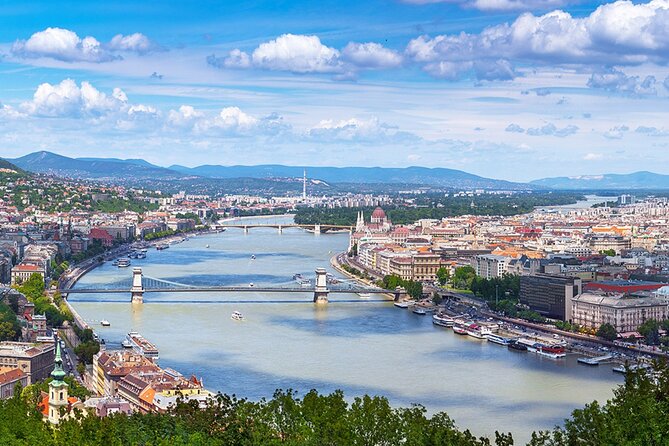
I especially like the “see it all in an hour” feel. You’ll pass the Chain Bridge and Hungarian Parliament lighting up along the Danube, then keep cruising past other photo magnets like the Castle District hilltop and Gellért Hill views.
My main heads-up: the boat can get very crowded, and the best views depend on getting positioned early—otherwise you may end up inside or with a restricted angle from the upper deck.
In This Review
- Key things to know before you go
- Booking value: what $14.40 buys you on the Danube
- First stop rhythm: from Jane Haining dock to Danube cruising
- Castle District at night: the hilltop skyline moment
- Margaret Bridge and Chain Bridge: two stone classics in a row
- Hungarian Parliament from the water: the big, bright highlight
- Gellért Hill and Elizabeth Bridge area: big views, quick passes
- Liberty Bridge, plus a pass near tech and learning institutions
- Petőfi Bridge and the New National Theatre: modern landmarks in the mix
- Balna (the Whale) and Batthyány Square: where the city gets playful
- Getting the best seat: the crowd reality (and how to beat it)
- Inside vs outside: comfort tips for day, sunset, and night
- Audio guide on your phone: how to make sure you actually get it
- Who this Danube audio cruise suits best
- Quick FAQ for planning
- FAQ
- How long is the Budapest Danube audio guide cruise?
- What language is the audio available in?
- Where do I meet for the cruise?
- Do I need my own earphones?
- Can I choose between day, sunset, and night departures?
- Is food or drink available onboard?
- Is there a limit on how many people go?
- What’s the cancellation window?
- Should you book this Budapest Audio Guide Cruise?
Key things to know before you go
- App-based audio, no loudspeakers: bring earphones and a charged phone, or you’ll miss the commentary
- Hour-long route: built for quick orientation and great night photos without a half-day commitment
- Inside/outside flexibility: you can shelter in the lower deck when it gets windy or cold
- Upper-deck viewing is limited: sides, railings, and crowded seating can block lines of sight
- Go early for the best angle: seats on the outside upper deck fill fast
- Big sights close together: Parliament, Chain Bridge, Castle District, Gellért Hill, and bridges in one pass
Booking value: what $14.40 buys you on the Danube
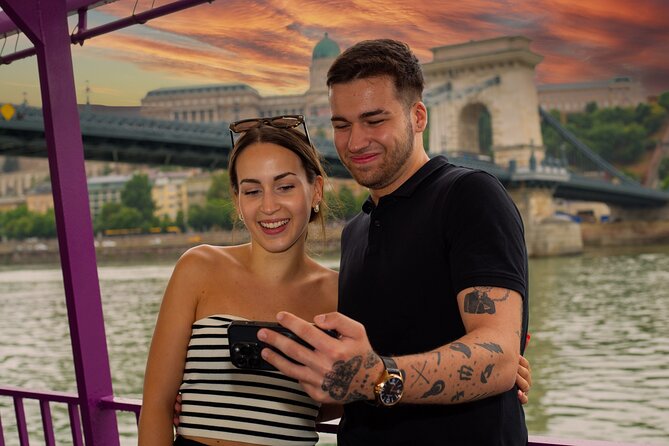
At about $14.40 per person for roughly one hour, this cruise is priced for people who want the classic Budapest “from the water” look without spending big. That matters, because a Danube cruise is mostly about timing and views—not deep, long narration or a guided walking program.
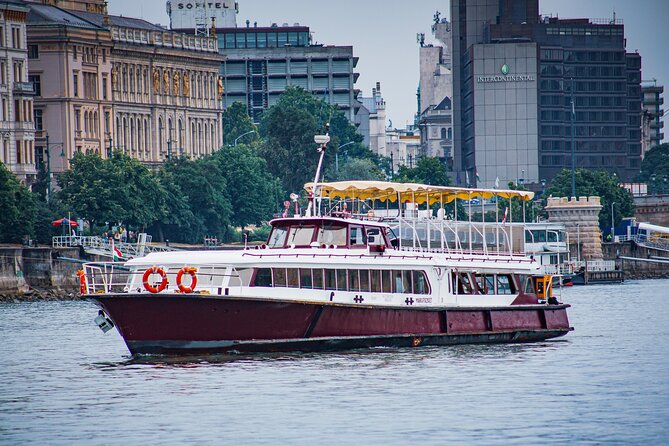
You should think of this as a moving photo platform with an audio guide you control. The commentary isn’t piped through the boat loudspeakers. Instead, you get a free downloadable app on your mobile device, and it’s meant for your own earphones. If you’re the type who likes to pause your phone, rewind a stop, or move around for angles, this format can work really well.
One more value note: the route is packed with landmarks on both banks. You’re not waiting hours between “big moments.” In one ride, you’ll cover bridges and skyline highlights that usually take multiple metro stops and a good chunk of walking.
You can also read our reviews of more boat tours in Budapest


First stop rhythm: from Jane Haining dock to Danube cruising
The experience starts at Budapest, Jane Haining rkp. 11 (1052) and loops back to the same meeting point. The dock is near public transportation, which is handy because you won’t have to add a long commute to your day.
When you board, your best move is to act like it’s a photo session. People tend to cluster around the upper deck openings, so arriving with time to find a position really pays off. A common theme with this kind of cruise is simple: the “views depend on seats” reality hits fast once you get in the line and the boat fills.
Also, the tour is designed for mobile audio, so set yourself up before you even leave the dock. Download or open the audio app while you have decent signal (if you need it), then double-check that the sound is working through your earphones. If your device dies mid-cruise, you’ll still see the sights—but you’ll lose the running explanation.
Castle District at night: the hilltop skyline moment
One of the highlights is the Castle District area on the Buda side. From the Danube, the top-of-the-hill setting hits differently than from street level. You see the scale of the area and how it dominates the skyline.
If you’re doing a sunset or night departure, this is the kind of stop where the timing does the heavy lifting. As the sky darkens, building lights start to pop, and the whole district looks more dramatic—less like an urban neighborhood and more like a glowing stage set.
The drawback to consider: upper-deck viewing can be tight. The boat’s shape and railings can limit angles, and crowding makes it harder to stand up and reframe your shots. If Castle District is your top priority, plan to be near the best viewing spots before you reach this section.
Margaret Bridge and Chain Bridge: two stone classics in a row
After the Castle District area, the cruise moves along past Margaret Bridge and then Chain Bridge—two of Budapest’s best-known bridge moments.
Margaret Bridge is the second permanent stone bridge of the city, built later than the Chain Bridge. From the water, bridges aren’t just crossings; they’re compositional lines that slice the Danube and frame the skyline. Even if you’ve seen these bridges from photos, you’ll notice how they connect to the banks—how the surrounding roads and buildings line up.
Then comes Chain Bridge, the first permanent stone bridge connecting Buda and Pest. This is usually the “everyone looks up” moment. Night versions tend to look especially good because the river doubles down on reflections, and the bridge’s structure reads cleanly against the lit buildings.
Here’s the practical tip: if you want photos with minimal obstruction, avoid getting squeezed behind other people’s heads. On crowded departures, the solution is often simple—move a bit earlier in the cruise, not when you’re already at the bridge.
Hungarian Parliament from the water: the big, bright highlight
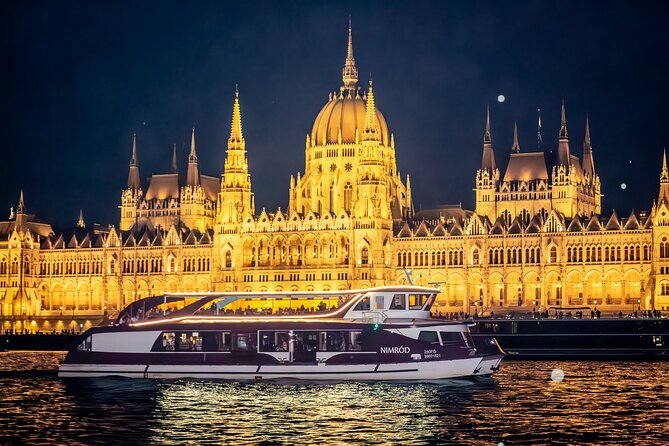
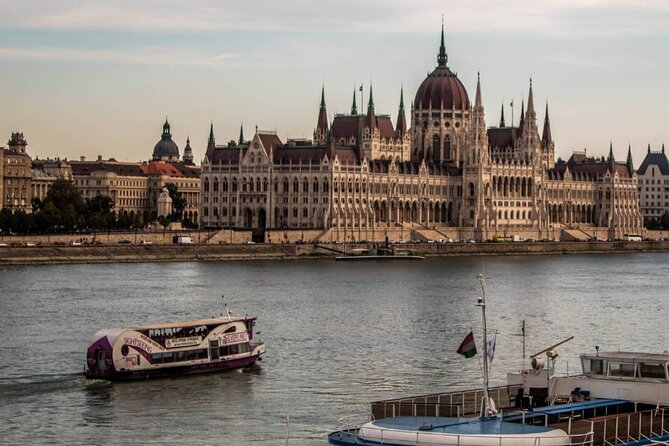
Few landmarks in Budapest are more iconic than the House of Parliament. Cruising by at night turns it into a centerpiece rather than a monument you admire from a distance.
The advantage of a river cruise is that you get a steadier vantage point than a roadside viewpoint. You’re moving slowly enough to take in details, but not so slowly that you feel trapped. You also get a perspective that shows how the building sits right along the river edge.
One consideration: if you choose a night or sunset slot, plan for the “hold tight and enjoy” style of viewing. People often want the perfect shot at the same time, so crowding can spike around the Parliament section. If your goal is photos, go early and keep your gear ready so you’re not fumbling during the peak lighting.
You can also read our reviews of more guided tours in Budapest




Gellért Hill and Elizabeth Bridge area: big views, quick passes
Emerging near the Elizabeth Bridge area, you’ll approach Gellért Hill, one of the most visited viewpoints in the capital. The Danube perspective helps here because you can see how the hill rises relative to the river and bridges.
Gellért Hill is also connected visually with the area around Hotel Gellért—the famous thermal-bath complex is nearby. Even if you don’t go inside (this cruise isn’t a ticket to baths), the river view gives you a strong sense of why that stretch is so popular.
For readers: don’t expect long stops or time to explore. The cruise is a moving viewpoint. Your job is to watch, listen to the audio commentary, and be ready to photograph when the boat lines up with the hillside.
Liberty Bridge, plus a pass near tech and learning institutions
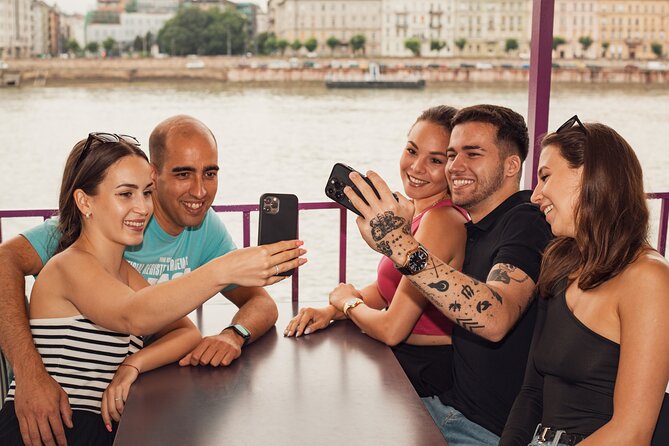
After Gellért Hill, the itinerary continues past Liberty Bridge. The bridge was originally called Fővám Square Bridge, and the name change tells a story of how places evolve over time. Even without getting historical details, the visual is useful: you’ll see how that bridge links the banks while you continue downstream.
There’s also a section featuring the Budapest University of Technology and Economics, described as Hungary’s most significant university of technology and noted for its long-running engineering training at university level. From the boat, you won’t study the campus buildings closely like you would on foot, but it adds context to the skyline so you understand what you’re looking at.
Practical takeaway: when the audio kicks in for spots like this, it can help you identify buildings that otherwise blend into the city texture. The real value is turning “a lot of buildings” into “specific places.”
Petőfi Bridge and the New National Theatre: modern landmarks in the mix
Next up is Petőfi Bridge, originally built in 1933, destroyed during WWII, and then rebuilt in 1952. It’s a reminder that Budapest’s riverfront has layers: new structures can rise from old breaks, and bridges reflect the city’s rebuilding story.
Then you’ll pass the new National Theatre, which has been operating in its permanent, purpose-built home since March 15, 2002. This is the kind of stop where you can combine two skills: look at the architecture from the river, and listen to how the city’s cultural venues fit into the broader skyline.
This is also a good moment to stop worrying about perfect photos. If you’re sitting inside or you’re boxed in on the upper deck, you can still get a solid “wow” view by shooting wider angles, letting the building and river form a single frame.
Balna (the Whale) and Batthyány Square: where the city gets playful
A fun highlight is Balna, often nicknamed the Whale because of its shape. It’s a modern shopping, cultural, and entertainment center on the east bank. From the water, modern architecture can look more sculptural than it does on the street, especially when you’re moving past it at a steady pace.
You’ll then reach Batthyány Square, with Szent Anna-templom (Church of Saint Anne) nearby. The church is a Roman Catholic baroque building constructed by the Jesuits between 1740 and 1761. There’s also mention of a market hall in the area, which helps explain why this square feels like both a landmark and a day-to-day neighborhood point.
Why this part matters: many Danube cruises focus only on the “famous postcard stuff.” This one keeps adding variety, so the scenery doesn’t turn into one long sequence of Parliament-and-bridge photos.
Getting the best seat: the crowd reality (and how to beat it)
This is the area where you want to be honest with yourself. Many people choose night cruises for the view, and that means the most desirable spots fill first.
A few patterns show up:
- The upper deck is where you’ll usually want to be for openness, but it can be hard to reach quickly once the boat is full.
- The lower deck is the fallback if the weather turns or you can’t snag an outside spot.
- Window and edge angles matter. Some views are narrower than you’d expect, due to the boat setup and the way people stand around.
So, here’s your game plan:
- Arrive early enough that you’re not joining a last-minute scramble.
- If you care most about outside viewing, aim for a position near the areas with the best sightlines before the boat departs.
- If you’re more focused on comfort, don’t fight the crowd—move to the lower deck and enjoy the ride that way.
And remember: the audio is on your phone. If you’re inside and your signal or app performance changes, keep your earphones plugged in and your volume up.
Inside vs outside: comfort tips for day, sunset, and night
The cruise lets you choose to stay inside or outside. In practice, this means you’re flexible based on wind and temperature.
For day departures, you’ll likely enjoy more time outside because you’ll have better natural light and calmer conditions. For sunset, the timing is the attraction—switching from warm light to city lights. For night cruises, the views are spectacular, but the cold and wind can make the upper deck less fun than it sounds.
One smart approach is to treat the boat like a balcony you can rotate through:
- Start outside when the skyline is still readable.
- Move inside when it gets uncomfortable.
- Come back outside briefly when you approach a major bridge or Parliament lighting moment.
This way, you don’t spend the whole hour freezing or craning your neck in a tight spot.
Audio guide on your phone: how to make sure you actually get it
The tour’s audio is provided through a free downloadable mobile app, and it’s not broadcast through loudspeakers. You’re expected to use your own earphones.
That single design choice affects your experience more than most people expect. Here’s what you can do:
- Bring earphones you know work with your phone.
- Arrive with your device charged or ready to charge (not guaranteed onboard power is mentioned, so protect your battery).
- Before boarding, confirm the app audio starts when you press play.
If your app doesn’t load or your phone struggles with sound, you’ll still have the visuals—but you’ll lose the “why this building matters” layer that turns the cruise from scenic to educational.
Who this Danube audio cruise suits best
This cruise is a good match if you want:
- A budget-friendly night view of Budapest
- An easy way to connect landmarks on both banks without walking
- Self-guided audio you can pause or control
- The classic bridge-and-Parliament skyline sequence in about an hour
It may not be the best fit if you want:
- A calm, uncrowded boat experience
- Guaranteed space to move freely on the upper deck
- A fully guided talk with audio through loudspeakers
If you’re the type who thinks photos first and logistics second, go earlier, plan on crowds, and aim your expectations at what a one-hour river pass can realistically deliver.
Quick FAQ for planning
FAQ
How long is the Budapest Danube audio guide cruise?
It runs for about 1 hour.
What language is the audio available in?
The tour is offered in English.
Where do I meet for the cruise?
The start point is Budapest, Jane Haining rkp. 11, 1052 Hungary, and it ends back at the same meeting point.
Do I need my own earphones?
Yes. The audio guide is delivered through a mobile app, not through loudspeakers, so you should bring your own earphones.
Can I choose between day, sunset, and night departures?
Yes. The experience is offered with day, sunset, and night options.
Is food or drink available onboard?
Yes. You’re asked not to bring your own food and drinks, because catering services are offered onboard.
Is there a limit on how many people go?
Yes. There’s a maximum of 500 travelers for this activity.
What’s the cancellation window?
You can cancel for a full refund up to 24 hours before the experience’s start time.
Should you book this Budapest Audio Guide Cruise?
I’d book it if you want a cost-effective, high-impact Budapest night viewpoint and you’re comfortable with a phone-based audio experience. It’s hard to beat the value of seeing major sights like Parliament and Chain Bridge in one hour, and the inside/outside option helps you stay sane when the weather shifts.
I’d hesitate if you’re very sensitive to crowding or you’re hoping for guaranteed top-deck comfort and open photo angles. In that case, you should plan for arriving early and accept that your view may be shaped by how full the boat gets.
If you like your sightseeing simple—ride, watch, listen through your earphones, and grab photos when the lights hit—this Danube cruise is a solid bet with smart planning.