REVIEW · BUDAPEST
Historical and Cultural Walking Tour in Budapest
Book on Viator →Operated by György Rashad Salamon · Bookable on Viator
History in Budapest clicks on a walk. This private 4-hour route strings together iconic Buda and Pest landmarks with a guide who shares the stories behind daily life, politics, and culture. You also get flexibility to shape the route around your interests, which is a big deal when you only have half a day.
I love the small-group size (capped at 10), because questions don’t get lost and you can actually hear what’s going on. I also like that hotel pickup is included, so starting near Deák Ferenc tér (or right from your place) keeps you from wasting precious morning time.
The only real catch is the pace: you’ll cover a lot, with stops ranging from about 15 minutes up to 1 hour. If you want long museum-style hangs at every site, this format may feel a bit tight.
In This Review
- Key reasons this Budapest tour is worth your morning
- Why this half-day history walk works better than hopping around
- Deák Ferenc tér logistics, pickup, and the walking rhythm
- Heroes’ Square: the national stage where Hungary introduces itself
- City Park and Vajdahunyad Castle: Hungarian architecture in a park setting
- The Széchenyi baths culture stop that people usually skip
- Andrássy Avenue and the Hungarian State Opera House: elegance with a story
- St. Stephen’s Basilica: the Holy Right Hand and a deeper Budapest
- Liberty Square to the Parliament: political chapters in stone
- Buda Castle and the Chain Bridge: medieval power in the same frame as sweeping views
- Price and what $277.64 per group really buys you
- Who this Budapest walk fits best (and who might prefer something else)
- FAQ
- How long is the Historical and Cultural Walking Tour in Budapest?
- Where is the meeting point and where does the tour end?
- Is hotel pickup included?
- What does the price include?
- Are food and drinks included?
- Is cancellation free if my plans change?
- Should you book this Budapest history walk?
Key reasons this Budapest tour is worth your morning
- Deák Ferenc tér starting point keeps the route easy to understand and return to
- Hotel pickup included, so you lose less time getting your bearings
- Heroes’ Square to City Park turns big national symbols into a real story you can walk through
- Széchenyi bath culture stop gives context to one of Budapest’s most famous traditions
- Andrássy Avenue + Hungarian State Opera House pairs architecture with the human stories behind it
- Buda Castle and Chain Bridge land the tour with sweeping views and medieval power in the background
Why this half-day history walk works better than hopping around
Budapest can be confusing fast. The city’s grand views and landmark-heavy streets are impressive, but if you’re moving on your own, it’s easy to miss the connective tissue: how neighborhoods formed, why certain buildings matter, and how everyday life (especially in a thermal-water capital) shaped the culture.
This tour is built to help you connect the dots. In one morning stretch you go from national symbolism at Heroes’ Square to the classic park-and-castle world of City Park, then down Andrássy Avenue, through the spiritual heart of St. Stephen’s Basilica, and finally into Buda’s medieval layer at Buda Castle. The guide’s job is to translate what you’re seeing into context—so the places stop being just postcard scenes and start feeling like a lived-in city with a long memory.
Another practical win: the tour is private. That matters because you can ask for course corrections—more time where you’re curious, less time where you’re not. With a half day, that flexibility often turns a “check the boxes” morning into something that actually feels like you got to know Budapest.
You can also read our reviews of more walking tours in Budapest


Deák Ferenc tér logistics, pickup, and the walking rhythm
The tour meets at Budapest, Deák Ferenc tér, Hungary, and it ends back at that same meeting point. Start time is 9:00 am, so you’re tackling the major sights before the city fully heats up (and before the crowds make everything feel slower).
Pickup is offered, which is a smart way to start in Budapest. If you’re staying somewhere that takes time to reach the main routes, you’ll appreciate not having to solve transit plus directions on day one. The tour also uses a mobile ticket, which usually means less fumbling with paperwork.
Physically, you should plan for a moderate walking level. There are multiple stops, and you’re not treating this like a relaxed stroll with lots of lingering. Stop durations are listed throughout the route (for example, Heroes’ Square is about 20 minutes; Buda Castle is about 1 hour). So think of this as a guided “greatest hits with context” walk—fast enough to cover major sights, slow enough to still ask questions.
Small group size helps the rhythm. With a cap of 10 people, the guide can keep everyone moving without turning the tour into a bottleneck.
Heroes’ Square: the national stage where Hungary introduces itself
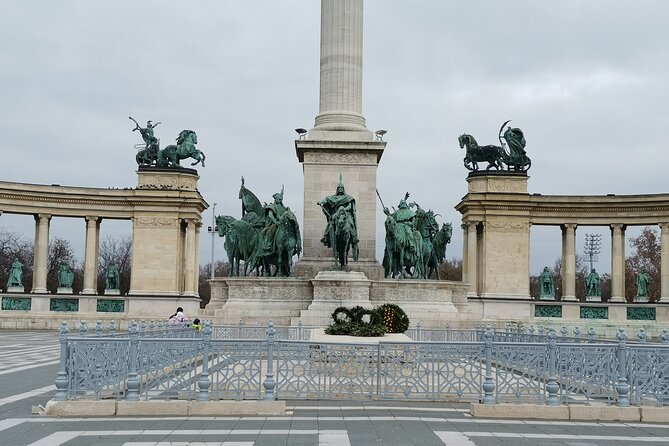
You begin at Heroes’ Square, one of Budapest’s most iconic plazas. It’s not just a pretty square—this is where the city puts its biggest historical figures in stone, so it’s an ideal first stop if you want to understand the “why” behind Budapest’s identity.
What I like about starting here is how instantly it frames the rest of the walk. After Heroes’ Square, everything else—architecture, churches, political buildings, even the way the city is laid out—starts to feel like part of the same long conversation. You get a chance to connect Hungary’s roots to what you’ll see later, rather than treating those later landmarks as isolated stops.
The scheduled time here is about 20 minutes, and it’s enough to let you see the monuments, absorb the symbolism, and move on without feeling stuck.
City Park and Vajdahunyad Castle: Hungarian architecture in a park setting
After Heroes’ Square, you head to City Park, described as one of the first public parks designed for relaxation. That detail matters because it helps explain why Budapest’s green spaces feel tied to culture, not just scenery.
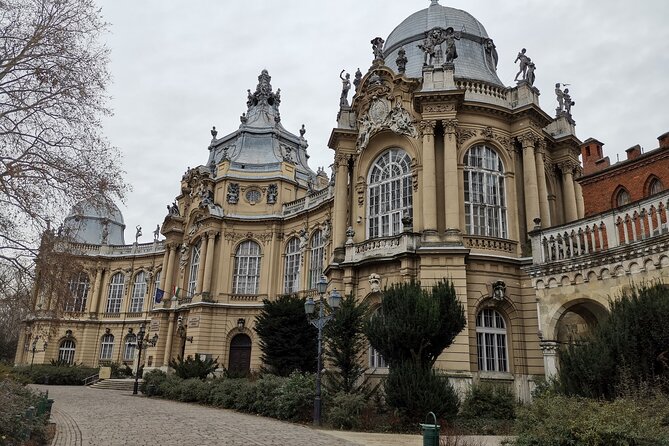
Inside the park, you’ll spend about 45 minutes around Vajdahunyad Castle. The castle is known for embodying about 1000 years of Hungarian architecture, which means you’re essentially getting an architectural history lesson in a walkable form. The tour includes time to look inside as well, which is a big advantage if you want more than just a view from the outside.
City Park can be a very easy place to wander on your own—so having a guide saves you from spending that time guessing what’s worth your attention. You get a direction and a reason.
The Széchenyi baths culture stop that people usually skip
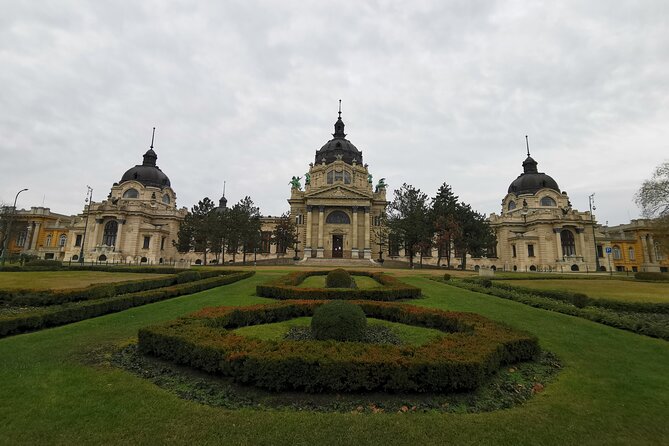
During the City Park stretch, there’s also a stop for the famous Széchenyi bath area. This isn’t presented as a ticket-and-splash moment; it’s used to talk about the culture of bath in Hungary, a country known for thermal water.
Even if you don’t plan to soak that day, this small stop helps you understand Budapest’s thermal identity. It also gives you a different lens for the city: Budapest isn’t only architecture and politics. It’s also everyday habits—how people relax, recover, and meet.
You can also read our reviews of more historical tours in Budapest





Andrássy Avenue and the Hungarian State Opera House: elegance with a story
Then you move along Andrássy Avenue, Budapest’s version of a grand boulevard—lined with Neo-renaissance mansions and townhouses. This is where the city feels posh in the best way, with high-end shops and lots of fashionable restaurant and coffeehouse energy along the route.
The tour slot here is about 30 minutes, which is perfect for walking it like a “street museum.” Without a guide, you might see beautiful façades and keep moving. With a guide, you start noticing patterns—how this avenue fits into Budapest’s prestige, and why it became the kind of address people cared about.
At around 25 minutes, you’ll visit the Hungarian State Opera House (Magyar Állami Operaház). This is presented as the beautiful centerpiece of Andrássy Avenue, and the guide focuses on the building’s story. Opera houses are great landmarks to learn from because they’re architecture plus culture in one place: you’re looking at a public symbol of arts, power, and civic pride.
Practical tip for you: wear comfortable shoes here. Andrássy Avenue is a straight-line walk, but you’ll want to stop naturally and keep your eyes up without slowing the group too much.
St. Stephen’s Basilica: the Holy Right Hand and a deeper Budapest
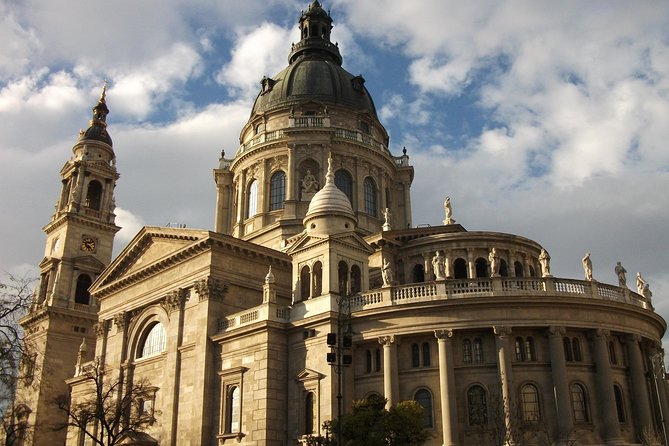
Next up is St. Stephen’s Basilica (Szent Istvan Bazilika). The tour highlights that this is the largest church in Budapest dedicated to Hungary’s first king. More importantly, it houses an essential relic of Hungarian history: the Holy Right Hand, described as the mummified hand of St. Stephen.
That relic detail is exactly why this stop feels different from a typical church visit. You’re not only looking at religious art and grand interiors—you’re encountering a physical link to identity and statehood, and the guide’s explanations help it click.
This segment is shorter, about 15 minutes, so you’re not meant to do a full, slow “every panel, every caption” visit. Instead, you get the key context fast: why the church matters, why that relic is referenced again and again in Hungarian storytelling, and how this fits into what you saw earlier at Heroes’ Square.
Liberty Square to the Parliament: political chapters in stone
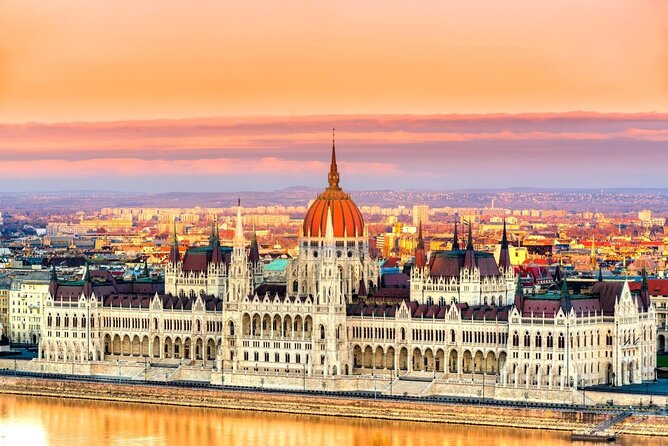
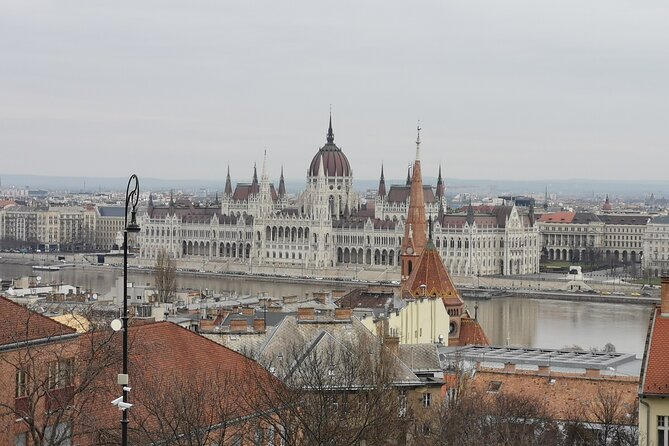
After the basilica, you cross Liberty Square and reach the Hungarian Parliament. The tour frames the building as one of the most beautiful in the world, but the real focus is what it represents across political periods—dictatorship, communism, and democracy.
This is one of the most effective stretches of the day because you’re learning how a single monumental location can hold multiple eras of meaning. Buildings become political bookmarks. When you understand that, the architecture stops being just impressive and becomes a story you can read.
The time here is built into the flow after St. Stephen’s Basilica rather than being broken out as a long standalone stop. That’s okay—this route is designed to keep you moving so the day doesn’t turn into a marathon of viewpoints with no connections.
Buda Castle and the Chain Bridge: medieval power in the same frame as sweeping views
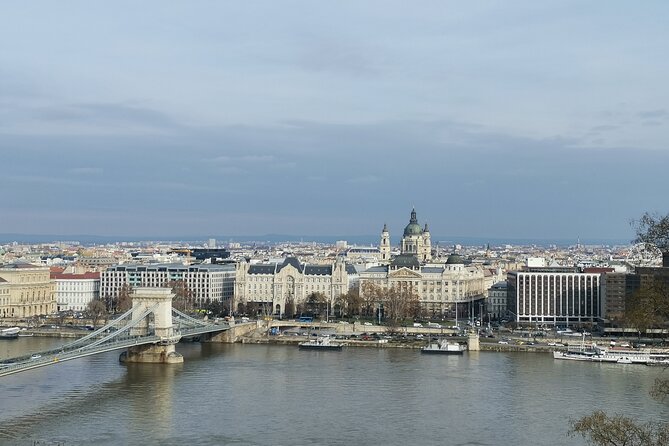
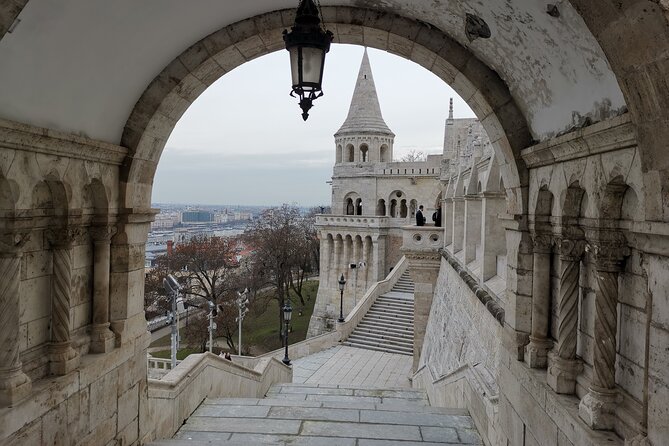
The final major stop is Buda Castle. You’ll spend about 1 hour here, and the tour describes it as the medieval residency place of Hungarian Kings from the 14th century. That kind of context changes how you look at the hilltop area. It’s not just scenery; it’s where rulers lived and where authority was physically anchored.
Then you cross the Chain Bridge (the famous one connecting the sides). If you’ve ever seen photos of Budapest, you’ve probably seen it. The guide’s framing helps you understand what the bridge represents in how the city connects—because it’s not only a crossing. It’s a statement.
This is a great ending for two reasons:
1) the day’s story arc moves from national symbolism and cultural sites into power and early state structure
2) you usually get the kind of perspective that makes the rest of Budapest look more coherent
If you want the best photos, stand where you can see both the river and the castle area, then let your guide finish the explanation before you sprint off. The best shots often come right after the key story lands.
Price and what $277.64 per group really buys you
The price is $277.64 per group, up to 15. The tour is approximately 4 hours, and it includes a professional guide and hotel pickup.
Here’s the value math that matters: if you fill closer to the group maximum, you’re effectively paying a lot less per person than if you’re a smaller group. With fewer people, the per-person cost goes up—but you still get the benefit of a private guide and a route shaped around real context instead of you trying to self-navigate.
Also, note what isn’t included: food and drinks, and transportation tickets. That can lower your overall “day cost” if you were planning to grab a quick meal anyway, but it’s smart to budget for lunch on your own.
One more value clue: the itinerary lists admission tickets as free at each stop. That doesn’t mean you’ll never spend anything related to sights, but it does suggest you’re not getting hit with surprise entry costs during the guided portion. For a half-day walk, that’s reassuring.
If you care about history but hate wasting time, this is the kind of tour that can pay off. You’re paying for interpretation, pacing, and route logic.
Who this Budapest walk fits best (and who might prefer something else)
This tour suits you if you want a guided sweep through both sides of Budapest—Buda and Pest—without the stress of planning every transit step. It’s also a good match if you like architecture and want context for what you’re seeing, not just names and dates.
It’s especially useful as an early visit. The tour helps you build mental landmarks fast, so later, when you return for museums or longer café time, Budapest feels more organized.
You might skip or consider a different format if:
- you’re the type who wants long, slow visits inside major sites
- you need frequent long breaks or you prefer minimal walking
- you’re already an expert on Hungarian political history and just want pure sightseeing time
But if you want your Budapest morning to feel like a guided story with stops that actually mean something, this one is a strong pick.
FAQ
How long is the Historical and Cultural Walking Tour in Budapest?
It runs for about 4 hours.
Where is the meeting point and where does the tour end?
It starts at Budapest, Deák Ferenc tér, Hungary, and ends back at the same meeting point.
Is hotel pickup included?
Yes. Hotel pickup is included, and pickup is offered.
What does the price include?
The price includes a professional guide and hotel pickup.
Are food and drinks included?
No. Food and drinks are not included.
Is cancellation free if my plans change?
Free cancellation is available. You can cancel up to 24 hours in advance for a full refund.
Should you book this Budapest history walk?
If you’re trying to make sense of Budapest fast, I’d book it. The route is smart: big national symbolism, a park-and-castle architectural lesson, Andrássy Avenue culture, St. Stephen’s Basilica with the Holy Right Hand relic, then Parliament and finally Buda Castle with the Chain Bridge connection.
Just go in with the right expectations: it’s a half-day walk with a set rhythm. If you like your sightseeing guided and your history explained in plain language, you’ll get your money’s worth.