REVIEW · BUDAPEST
Communism in Budapest: Private Tour with House of Terror Museum
Book on Viator →Operated by Travel Curious · Bookable on Viator
Budapest has a talent for turning politics into street scenes. This private walking tour strings together the key chapters of Hungarian history—from Soviet rule after the war to the rise and fall of Communism—and ties it to what you can still see today. I especially loved the way you start at Bem József Memorial Square and then keep moving through the city’s landmarks.
What I liked most is that it’s not just a lecture. You also get standout moments that feel oddly human, like spotting an unlikely Columbo statue while walking down Falk Miksa street, and then ending at the House of Terror with an expert guide. One possible drawback: it’s a fairly concentrated 3 hours, and the subject matter at the House of Terror is heavy, so it helps to be ready for an emotional stop even if you only spend about 30 minutes inside.
In This Review
- Key highlights to look for
- Why this tour works so well for Budapest politics
- Meeting at Bem József tér: the 1956 moment that sets the tone
- A walk through communist-era echoes in the central district
- Falk Miksa street and the Columbo statue: history with a wink
- Kossuth Lajos square: Parliament as a political backdrop
- House of Terror: the museum stop that finishes the story
- The guide makes the difference: Vera’s impact
- What’s included, what isn’t, and why it matters
- Logistics that help you enjoy it more
- Who this tour is for (and who should think twice)
- Should you book the Communism in Budapest private tour?
- FAQ
- How long is the tour?
- Where does the tour start and end?
- Is the House of Terror Museum ticket included?
- Is the Parliament Visitor Centre included?
- Do I need transportation or hotel pickup?
- What kind of fitness level is required?
Key highlights to look for
- Bem József Memorial Square (1956): A focused start at the site connected to student protests against Soviet rule.
- Falk Miksa street and the Columbo statue: An unexpected pop-culture landmark that breaks up the serious tone.
- Kossuth Lajos square and Parliament views: You see the Neo-Gothic Parliament backdrop that anchors modern Hungarian politics.
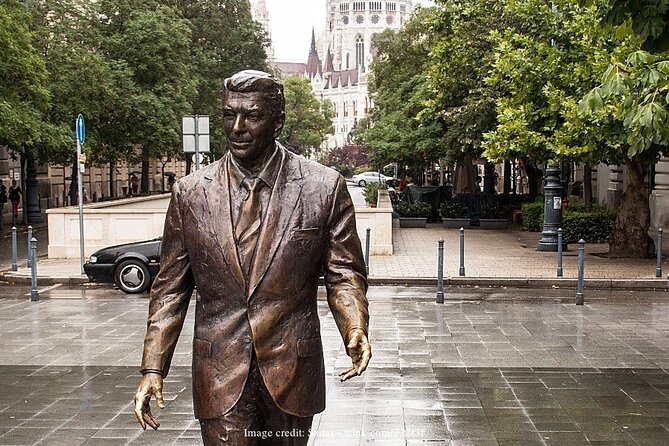
- Liberty Square and Ronald Reagan: You’ll pass a notable statue linked to Cold War history.
- House of Terror entry included: Your guide finishes at the museum and gives you tickets for your own pace afterward.
Why this tour works so well for Budapest politics
If you’ve ever looked at Budapest and thought it mostly looks like postcards, this tour quietly corrects that. The city is full of political memory—statues, street names, squares, and architecture—so the guide basically teaches you how to read what’s in front of you.
You get a clear storyline too: the route is built to connect the Nazi occupation period, the later rise of Communist power, and then the collapse of that system into Hungary’s move toward democracy. That flow matters, because it turns a scattered set of sights into one timeline you can actually follow.
And the best part is pacing. It’s long enough to connect the dots, but not so long that you feel buried. About 3 hours gives you time to photograph, ask questions, and still end at a museum stop while your brain is ready for it.
You can also read our reviews of more private tours in Budapest


Meeting at Bem József tér: the 1956 moment that sets the tone
The tour begins at Bem József tér 2 (1027). The first stop is Bem József Memorial Square, and it’s not chosen at random. This is a place tied to the 1956 revolution, when about 200,000 Hungarian students protested against Soviet rule.
Starting here does two useful things for you:
1) You anchor the story in a specific event, instead of hearing vague Cold War talk.
2) You set the emotional frame for the rest of the walk, because Budapest’s political history here isn’t abstract.
There’s no paid admission needed for this stop. You’ll have around 30 minutes, which is enough for the guide to explain what happened and then point out how that history shows up around you.
Practical tip: if you’re a photo person, this first stop is a great place to get comfortable with the light and direction. After that, you’ll keep moving between squares and streets, and it’s easier if you already know how you like to shoot.
A walk through communist-era echoes in the central district
After Bem József Memorial Square, you continue into the central district and spend about one hour exploring life under communist rule through what you see around you. The route includes retro bars and butcher shops, plus monuments and squares tied to the political past.
One especially memorable detail in this part is the mention of Ronald Reagan in Liberty Square. Even if you don’t know the context before the tour, your guide will help you connect why a U.S. president belongs in a Hungarian square—and how that reflects Cold War symbolism.
This is also where the “walking tour” part really earns its keep. You’re not just looking at one big building. You’re seeing how political messaging lives in everyday streets. A statue, a square name, a landmark—these are visual shortcuts to history, and the guide helps you read them like signs.
Possible drawback to keep in mind: because this is a walking-focused route with streets and squares, you’ll want comfortable shoes. The tour is only about 3 hours total, but you’ll still be on your feet for multiple sections.
Falk Miksa street and the Columbo statue: history with a wink
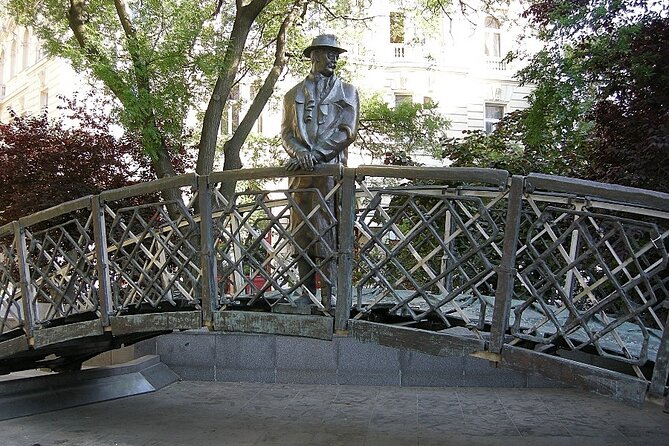
Then comes a detour that feels almost wrong in a tour about oppression and regimes—in the best way. As you wander down Falk Miksa street, you’ll spot an unlikely statue of Columbo, the fictional LAPD detective known for his scruffy appearance and dogged determination to get to the truth.
Why does this work here? Because it gives you a pause between heavy themes, while still fitting the bigger point: even in tense political periods, culture and popular ideas found their way into public space. It’s a reminder that history isn’t only buildings and decrees. It’s also what people laughed at, watched, and identified with.
And it helps your brain reset. You’ll likely feel the emotional weight more clearly once you reach the House of Terror. So having something oddly playful earlier in the route is a smart design choice.
If you’re traveling with someone who normally dislikes political history tours, this is the moment that can keep them engaged.
Kossuth Lajos square: Parliament as a political backdrop
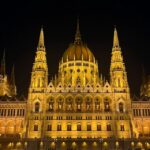
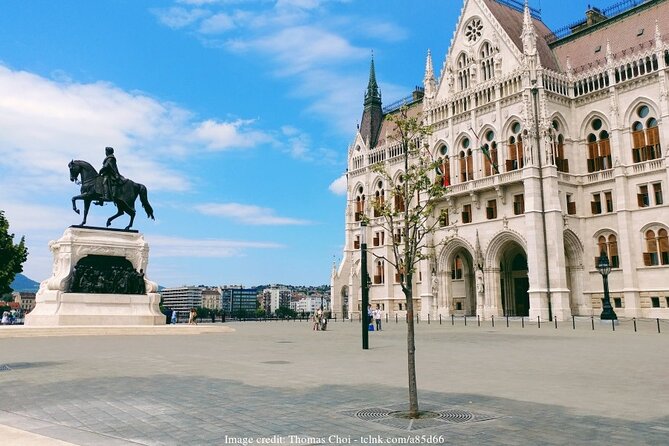
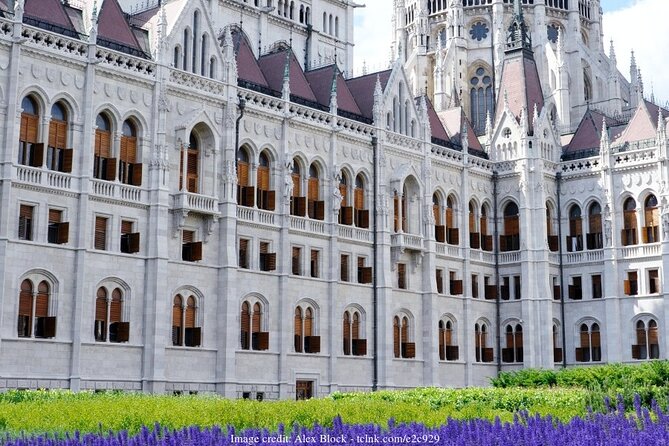
Next you reach Kossuth Lajos square, home to Hungary’s massive Neo-Gothic Parliament building. Even though this section is relatively short—about 15 minutes—the scale alone makes it feel important.
This part of the experience helps you understand what comes after the story of dictatorship: the physical center of national decision-making. Seeing Parliament from outside (and learning about the political backdrop that led into the modern era) makes the tour’s final museum visit land harder—because you can contrast what came before with what came after.
You also have a stop tied to the Parliament Visitor Centre. Admission for that specific visitor center is not included, so if you want to go inside, you’ll need to handle that separately.
My advice: treat this as a quick orientation and photo stop. If you only have time for what’s included, you’ll still get a strong sense of place here.
You can also read our reviews of more museum experiences in Budapest



House of Terror: the museum stop that finishes the story
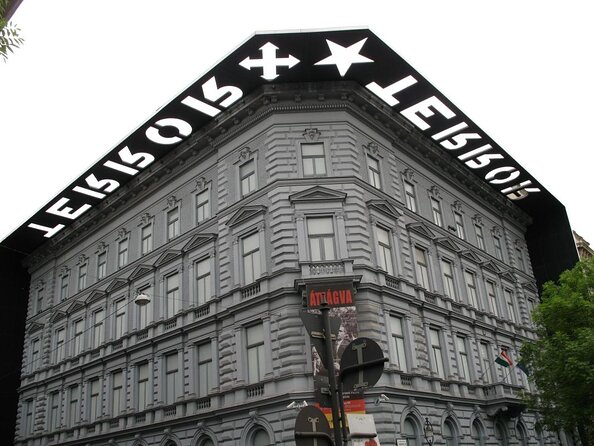
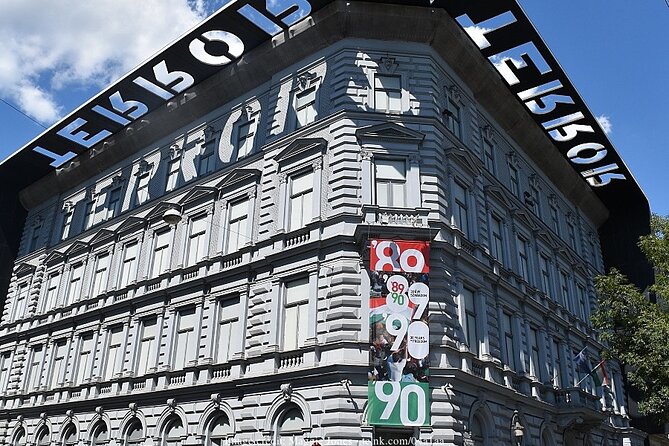
The tour ends at the House of Terror Museum at Andrássy út 60 (1062). Entrance tickets are included, and your guide will provide them so you can visit the museum at your own pace afterward.
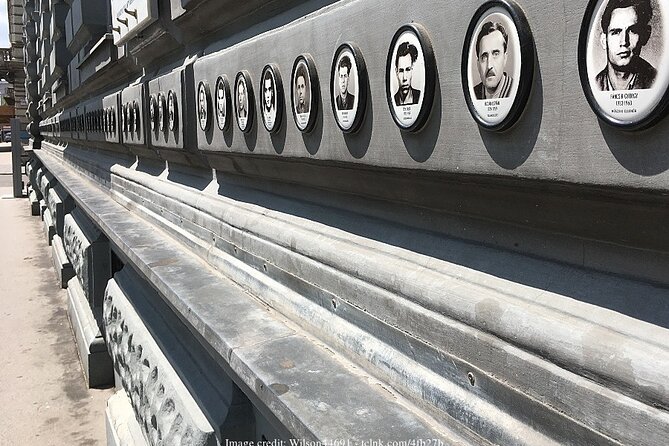
You’ll spend about 30 minutes on the guide-led portion tied to the House of Terror, and then you can stay longer if you want. The museum is a memorial to the horrors of the past—specifically those detained, tortured, and killed inside the building—and it contains exhibits connected to fascist and communist regimes in 20th-century Hungary.
This is the stop where you stop watching history happen and start seeing how it was experienced. The value of ending here is simple: the walking portion sets up context, then the museum gives you evidence, names, and tangible exhibits that make the timeline real.
A word of honesty: this is not a light museum. Even if the tour time is controlled, the subject matter is heavy. If you prefer upbeat sightseeing, you might not love this format. But if you want to understand how Hungary ended one system and moved toward democracy, this is the place that makes it click.
Practical tip for your visit inside: give yourself enough time to move slowly through the exhibits. Rushing reduces the impact and makes it harder to remember what you saw.
The guide makes the difference: Vera’s impact
One of the standout themes from customer feedback is the quality of the guide. In particular, Vera gets high marks for being knowledgeable and for giving interesting insights about Budapest and its history. That matters, because on a tour like this, good guiding is what turns facts into something you can connect.
I’d also pay attention to how the guide shapes your pace. This tour is private for your group, so Vera (or your guide) can answer your questions and adjust explanations to what you care about most—whether that’s the 1956 revolution start, the Cold War statues, or the museum’s role in telling Hungary’s story.
If you’re the type who likes asking follow-up questions, a private tour format is a real advantage here. You’re not stuck waiting for group timing.
What’s included, what isn’t, and why it matters
This tour is priced at $180 per person for a private group, with a duration of about 3 hours. It also includes entrance to the House of Terror, plus your guide.
Here’s what’s included that directly affects your day:
- A friendly, professional guide for your private group
- Entrance to the House of Terror Museum
- Time for photos at key spots
- Mobile ticket (handy for museum entry)
What’s not included:
- Food and drink (you’ll be on your own)
- Hotel pickup/drop-off
- Transportation during the tour
- Parliament Visitor Centre admission (not included)
Value perspective: $180 can feel steep if you compare it to generic walking tours. But you’re paying for (1) a guided political history route that connects multiple sites, and (2) museum entry being bundled. Also, private tours can be a better deal when you’re traveling with 2–4 people who don’t want to match someone else’s pace.
Logistics that help you enjoy it more
This is a walking tour, and it finishes at the House of Terror. The start is at Bem József tér 2, and you’ll be near public transportation, which helps if you’re coming from your hotel.
Because there’s no hotel pickup, plan to arrive on time at the meeting spot. If you’re the kind of person who likes to wander a bit beforehand, aim to be there a few minutes early so you don’t feel rushed.
Also, the tour is described as requiring moderate physical fitness. That usually means steady walking and time on your feet around squares. You don’t need to be an athlete, but you’ll feel it if you arrive with sore calves.
Finally, since the ending includes museum tickets and you visit afterward at your own leisure, check your timing. If you’re trying to cram dinner reservations right after, you might feel rushed in the museum.
Who this tour is for (and who should think twice)
This tour is a great fit if you:
- Want a political history route that ties directly to what you see in Budapest
- Enjoy guides who explain context, not just point at buildings
- Like serious museums but still want a walk that makes the story understandable
- Prefer a private group experience where you can ask questions
You might think twice if:
- You mainly want light, carefree sightseeing
- You get overwhelmed by museums about torture and political violence
- You’re short on time and need a more purely visual, quick stop tour
Should you book the Communism in Budapest private tour?
Yes—if you want your Budapest sightseeing to have meaning. Starting at Bem József Memorial Square gives you a real entry point into 1956, the walk through central landmarks connects the Cold War era to street-level reality, and the House of Terror is where the timeline becomes tangible.
The biggest reason I’d book it is the combination of context + place + museum in a tightly paced format. Add a strong guide like Vera, and you’ll likely come away understanding not just what happened, but why these sights matter.
If you’re on the fence, my practical advice is this: don’t treat it like a general walking tour. Treat it like a guided story with an ending that asks you to slow down. If that’s your style, you’ll get a lot out of the experience.
FAQ
How long is the tour?
It’s approximately 3 hours.
Where does the tour start and end?
It starts at Bem József tér 2, 1027 Hungary, and ends at the House of Terror Museum, Andrássy út 60, 1062 Hungary.
Is the House of Terror Museum ticket included?
Yes. Entrance to the House of Terror Museum is included, and your guide provides the tickets for you to use at your own pace after the guided portion.
Is the Parliament Visitor Centre included?
No. Admission for the Parliament Visitor Centre is not included.
Do I need transportation or hotel pickup?
No. There’s no hotel pickup/drop-off and no transportation provided during the tour. You should plan to get yourself to the meeting point and walk between stops.
What kind of fitness level is required?
The tour is listed as moderate physical fitness, so you should be comfortable with several stops and sustained walking around squares and streets.