REVIEW · BUDAPEST
Cinematic Virtual Reality City Tour in a Russian Jeep
Book on Viator →Operated by BUDTOURS · Bookable on Viator
Jeep rides plus VR beat most photo stops. This tour mixes a Russian-jeep style city drive with a headset that shows 2D cinematic scenes from Budapest’s past right where you’re standing. You get the city’s most famous sights in a smart order, without spending hours paging through guidebooks.
Two things I really like: first, the VR timing at landmark stops makes the visuals click fast (you’re not just looking at stones, you’re seeing what they used to mean). Second, the personal touch from the in-person English guide makes the trip feel built for your questions, not a factory schedule—plus the ride can come with a lively driver vibe like Zsombor, who’s noted for being attentive and funny. One consideration: you’ll likely pay extra for Matthias Church and only the upper level of Fisherman’s Bastion.
In This Review
- Key highlights you’ll care about
- Why this Budapest VR-Jeep tour makes sense
- Value check: what $3 really buys you (and what might cost extra)
- How the timing works across two hours
- Castle Garden, Buda Castle Quarter, and the Chain Bridge setup
- Fisherman’s Bastion: the best views, with one possible ticket
- Matthias Church and why interior stops matter even briefly
- Buda Castle: the UNESCO backdrop and the VR “big picture” moment
- Parliament and the Danube: a dramatic exterior without a ticket
- St Stephen’s Basilica: tall views and a “marker” church
- Andrássy Avenue: the UNESCO boulevard you can actually walk
- Opera House and its grand details (even from outside)
- House of Terror pass-by: a serious stop in a fast route
- Heroes’ Square: the Millennium Monument viewpoint
- New York Palace and Budapest café culture timing
- Blaha Lujza tér and Erzsébet-era VR surprises
- The jeep ride experience: what the vehicle adds
- Comfort, gear, and who this tour fits best
- Should you book it? (My straight answer)
- FAQ
- FAQ
- How long is the Cinematic Virtual Reality City Tour in Budapest?
- Is hotel pickup and drop-off included?
- What’s included with the VR experience?
- Do I need tickets for any stops?
- Is the tour private?
- Is a mobile ticket used?
- Is the tour suitable for most travelers?
- Are there any health restrictions?
- Is cancellation free?
Key highlights you’ll care about
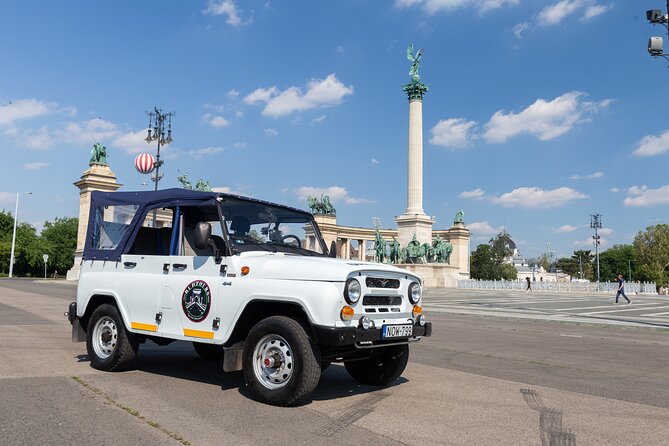
- VR headset at real landmarks: watch key moments from the past as you arrive at each site
- Private jeep with hotel pickup: easier logistics, less waiting around
- English, in-person guiding: you can ask questions and get on-the-spot context
- Stops built for views: Castle Hill lookouts, bridge perspectives, and major squares
- Little comforts included: bottled water, and hot tea in winter
Why this Budapest VR-Jeep tour makes sense
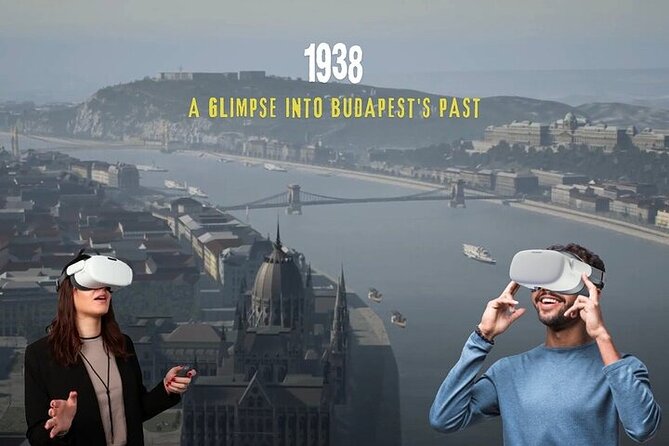
Budapest is one of those cities where the scenery is obvious, but the meaning can take effort. You’ll see the Chain Bridge, Castle Hill, Parliament, and all those grand avenues—but without context, it can turn into a checklist. This experience fixes that by pairing each stop with short cinematic VR moments.
The “win” here is location + story. You’re not watching something in a theater and then walking away into confusion. Instead, you put on the headset at the landmark itself, and the past overlays the present. Even if you’re not a museum person, this method helps you get what you’re looking at—fast.
The second big win is the format. A jeep ride through town keeps you moving. Instead of long standstills and slow wandering, you cover a lot of ground in about 2 hours, with the guide shaping the route around the key places you actually want.
You can also read our reviews of more city tours in Budapest

Value check: what $3 really buys you (and what might cost extra)
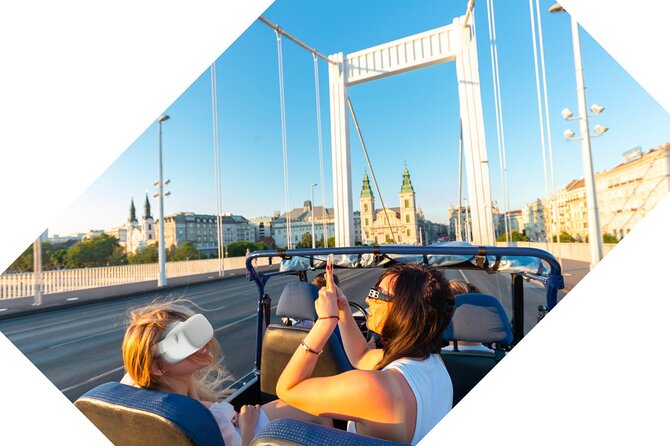
At $3, this is an unusually low-priced way to combine several things: private transportation, hotel pickup and drop-off, VR gear, and an in-person English guide. For the money, it’s basically paying for access to the VR experience and the guide attention that makes it understandable.
That said, not everything is included. You should plan for extra tickets where the tour notes admission is not covered:
- Matthias Church: admission not included
- Fisherman’s Bastion: the upper level requires admission (the rest is free)
So think of the base price as a deal on the VR-powered route and guiding time, not as a guarantee that every viewpoint ticket is covered.
How the timing works across two hours
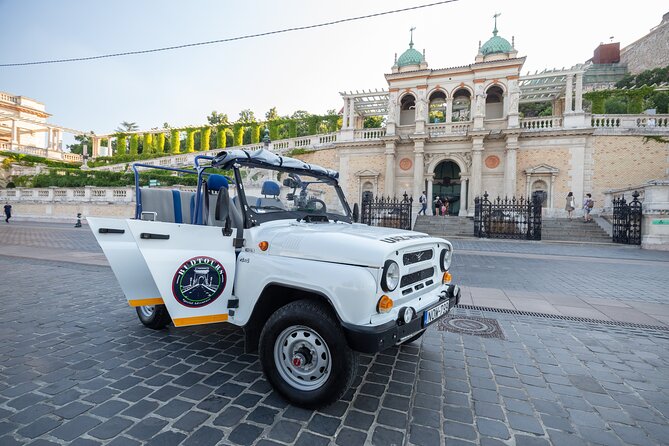
This tour is designed as a compact circuit. Stops tend to be short—often just a few minutes at the exterior highlights, then longer moments at the biggest photo/view locations. The VR component is what makes those minutes matter: the headset turns each stop into a “look plus learn” moment rather than a quick photo.
Also, because you get private pickup and drop-off, you’re not trying to match the pace of a large group. In practice, that means less waiting, and more time to settle in when you arrive at the first landmark.
One more timing note: if you’re booking in colder months, the included hot tea is a small comfort that actually helps you enjoy outdoor stops without rushing. In winter, that kind of practical detail can make or break the experience.
Castle Garden, Buda Castle Quarter, and the Chain Bridge setup
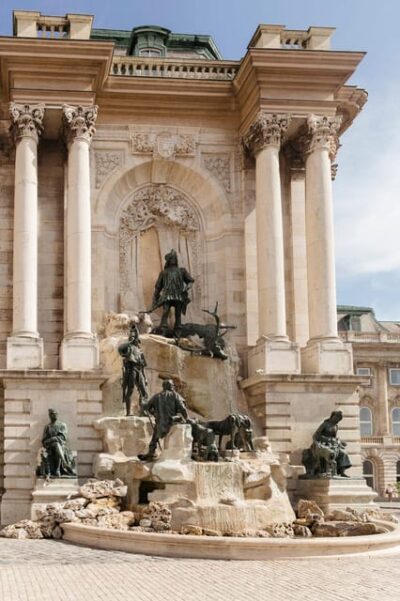
Your day starts in the Castle area, where the architecture sets the tone immediately. One of the first stops is Castle Garden Bazaar, in the Buda Castle complex. It’s a good opener because it’s visually striking right away, and it’s also tied to the broader Castle Hill setting. The tour doesn’t treat this as just an ornament—it’s part of the stage-setting for the VR “time travel” that follows.
Then you move toward the Széchenyi Chain Bridge. This bridge is Budapest’s headline in stone and steel form, linking Buda and Pest across the Danube. The VR here is especially effective because you’re standing at the exact point where you can imagine the bridge in its earlier era. It helps you see it as a major engineering moment, not just a place to grab a couple of photos.
If you want a tip that improves your experience: take a minute to look at how the bridge sits against the river and skyline before you put on the headset. You’ll be able to compare present-to-past details much better.
Fisherman’s Bastion: the best views, with one possible ticket
Next comes Fisherman’s Bastion. The main reason people come here is views—big, open, and made for looking over Budapest’s river bends and Castle Hill edges. The tour also points out something useful: it may look ancient, but it was built in the early 20th century to celebrate Hungary’s 1000th birthday.
The VR pairing works well because the site’s story is already half-visual. When you’re up there looking out, the “celebration-era” context feels easier to grasp. Just note the practical part: the tour indicates that only the upper level requires an admission fee. If you’d rather spend money on drinks or coffee instead, you can still enjoy a lot of the experience without going up into the fee area.






Matthias Church and why interior stops matter even briefly
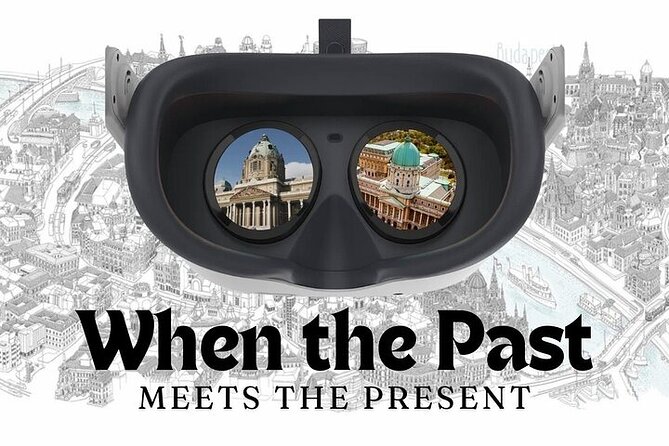
Matthias Church is where the tour adds a layer of “spotlight church” energy. The exterior is eye-catching, but the real personality is inside, and the tour specifically highlights the interior mix of styles. It’s described as having an unusual combination—oriental flair and romantic historicism on top of Neo-Gothic vibes.
This stop also comes with the clearest extra cost: admission is not included. If you’re the type who cares about church interiors, it’s worth budgeting for this one. If you’re more exterior-focused, you can still get value from the explanation and keep moving.
Buda Castle: the UNESCO backdrop and the VR “big picture” moment
After the key viewpoints, you spend time at Buda Castle, the historic palace complex on Castle Hill. The tour frames the quarter as a mix of medieval, baroque, and neoclassical styles—along with historic houses and churches tucked into the area. That mix matters because Budapest isn’t uniform. It’s layered.
This is where the VR component can feel like more than entertainment. It gives you a “big picture” sense of what a royal complex means in real life—courtyards, gates, and the idea of court life. Even if your VR scenes are short, they help you connect the present architecture to past function.
If you want the best photo results, aim to pause briefly before the VR to spot:
- where the main sight lines are from the square areas
- how you’ll position yourself for a “castle skyline” shot
Then, once you’ve watched the VR, go back to the same angle and see how your interpretation changes.
Parliament and the Danube: a dramatic exterior without a ticket
Next you head toward the Hungarian Parliament Building on Kossuth Square by the Danube. This is a major visual stop for good reason: neo-Gothic architecture, it’s Hungary’s largest building in construction terms mentioned by the tour notes, and it’s become a national symbol.
The tour includes VR context here too, but you’re not expected to go inside. That makes this part efficient. You still get a sense of what the building represents, and you get the Danube-side perspective without spending time queued for entry.
A practical approach: before you put on the headset, look at how the Parliament sits along the river. Then, after the VR moment, you’ll understand why the building is such a strong backdrop for political power and public life.
St Stephen’s Basilica: tall views and a “marker” church
St. Stephen’s Basilica is included as another major religious landmark. The tour notes it honors Hungary’s first king and is part of the Roman Catholic Archdiocese of Esztergom-Budapest. It also flags the practical “why it’s famous” details: it’s the third largest church in Hungary, the tallest in Budapest, and it’s recognized as a World Heritage Site.
Basilicas can sometimes feel like “another church,” but height and status change that. When a building is the tallest in a city, you notice it immediately once you’re near enough. Even if you only have a short stop, the guide context helps you see why it’s treated like a major civic landmark, not just a religious one.
Andrássy Avenue: the UNESCO boulevard you can actually walk
Then you get a stop along Andrássy Avenue, a UNESCO-listed boulevard known for Neo-Renaissance buildings. The tour makes the street feel practical, not academic: you’ll see the kinds of places you might want to revisit later—upscale boutiques, cozy cafés, and elegant restaurants—plus cultural stops like the State Opera House and museums.
Even if you don’t go in, this is one of those areas where your “Budapest map” sharpens. It helps you place the city’s grand urban planning and understand why the avenue is treated as a corridor of culture.
Opera House and its grand details (even from outside)
The Hungarian State Opera House is one of those buildings you recognize even before you know what you’re looking at. The tour notes the façade and symmetry, plus statues of composers. It also points out interior richness—marble sphinxes, frescoes, and gold accents—even though this experience doesn’t include entry.
That’s actually good for most people on a two-hour plan. You get the key architecture and story without losing time to ticket lines. Then, if you want to go inside later, you’ll know what to look for thanks to the guide’s framing.
House of Terror pass-by: a serious stop in a fast route
One thing this tour includes (at least as a pass-by) is the House of Terror at 60 Andrássy Avenue. This is a powerful museum and memorial tied to Hungary’s struggles under fascist and communist regimes, focused on imprisonment, interrogations, torture, and deaths within the building.
Because this is a VR-and-city-circuit tour, you should expect this to be treated with respect but also handled quickly. If you’re hoping for a full museum visit, you’ll need a separate time slot. But as a context moment, it’s a reminder that Budapest’s story isn’t only about bridges and palaces.
Heroes’ Square: the Millennium Monument viewpoint
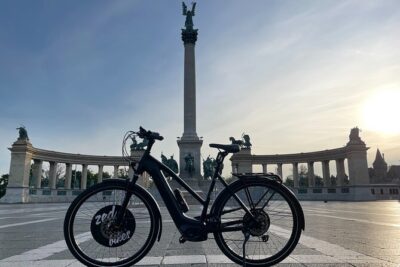
Next comes Heroes’ Square (Hősök tere), located at the end of Andrássy Avenue beside City Park. The centerpiece is the Millennium Monument, with statues of important Hungarian leaders and the Seven Chieftains of the Magyars.
This stop is ideal for short pauses because the monument design reads clearly even from a few minutes away. Put simply: it’s a strong “I’m really in Budapest” moment. The guide helps you connect what you’re seeing to the people and themes represented, and that makes it more meaningful than a quick glance.
New York Palace and Budapest café culture timing
The tour includes a stop connected to New York Palace, described as a top café place where you can grab coffee or tea. The notes say it’s been chosen as café of the year several times.
Just keep expectations realistic: the tour includes water and hot tea, but it doesn’t promise drinks at New York Palace. Still, if you’re craving a proper sit-down with pastries after all that outdoor time, this is a good spot to do it on your own.
Blaha Lujza tér and Erzsébet-era VR surprises
Then you reach Blaha Lujza Square, a busy hub named after actress Blaha Lujza. The tour points out a historical layer: the area was home to a National Theatre, and today it’s connected to modern shopping and public life.
What makes this part stand out is the VR flip. The headset turns the square into a scene from the days when the National Theatre stood there. It’s a great reminder of how cities change while still staying in the same footprint.
After that, you move toward Ferenciek Square, where you’ll see a blend of historic and elegant buildings, including Klotild Palace and the Paris Garden café area. The VR experience here is focused on seeing an older version of the square, so the moment works even if you’re not planning to go inside anywhere.
Finally, you get the old Erzsébet Bridge story. The tour frames it as a point of pride from 1903 to 1945, built between 1898 and 1903, holding world-record status in its category for 25 years and Danube record-holder for 70 years. That kind of concrete detail makes the VR scenes feel more grounded when you’re near the river.
The jeep ride experience: what the vehicle adds
The vehicle is part of the fun. The tour is described as a Russian jeep experience, and one ride memory shared is that the vehicle felt like a UAZ, bringing back childhood impressions for someone who had a grandpa connected to that kind of car.
Even if you don’t care about vehicle history, the jeep format changes how you experience the streets. You sit higher than you would in a standard car, and you often get better sight lines at street corners and viewpoints.
If your route passes by areas like Gellért Hill, it’s the kind of roadside view that can make the drive feel like a mini sightseeing bonus. That’s not guaranteed in the notes, but it’s exactly the kind of detour that can happen when a driver is paying attention.
Comfort, gear, and who this tour fits best
Here’s what the experience provides that actually matters:
- Hotel pickup and drop-off
- Private transportation (you’re not crammed into a bus)
- Virtual reality gear/headset
- Bottled water, plus hot tea in winter
- A friendly private guide and an in-person English guide
- Mobile ticket
- Service animals allowed
In terms of fit:
- It’s described as family-friendly and most people can participate.
- It’s private, so it works well if you want a quieter pace or you’re traveling with kids.
- It’s not recommended for travelers suffering from epilepsy, so if that’s relevant, skip this one for safety.
If you’re someone who likes doing “short stops with meaning” rather than long museum sessions, this is a strong match.
Should you book it? (My straight answer)
If your goal is to see the big Budapest highlights in a short window and you want help understanding what you’re looking at, I think this is a smart booking. The VR-at-landmarks concept is the core value. Without it, some of these stops can blur together. With it, you get a clear present-to-past link.
I’d book it especially if you:
- want a simple, guided route with pickup
- like architecture but want the story behind it
- enjoy short high-impact experiences instead of all-day walking
I’d hesitate if you:
- strongly want to spend time inside churches or museums right now (you’ll face extra tickets at Matthias Church, and the tour is built for exterior plus VR rather than long interior visits)
- have concerns about VR use (epilepsy not recommended)
FAQ
FAQ
How long is the Cinematic Virtual Reality City Tour in Budapest?
The duration is approximately 2 hours.
Is hotel pickup and drop-off included?
Yes. Hotel pickup and drop-off are included, along with private transportation.
What’s included with the VR experience?
You get virtual reality gear/headset and VR scenes used at the landmark stops, plus an informative and friendly private guide and an in-person English guide.
Do I need tickets for any stops?
Matthias Church admission is not included. Also, only the upper level of Fisherman’s Bastion requires an admission fee.
Is the tour private?
Yes. It’s a private tour/activity, and only your group participates.
Is a mobile ticket used?
Yes, a mobile ticket is part of the experience.
Is the tour suitable for most travelers?
Most travelers can participate. It’s also described as family-friendly.
Are there any health restrictions?
It’s not recommended for travelers suffering from epilepsy.
Is cancellation free?
Free cancellation is available, with a full refund if you cancel at least 24 hours in advance.