Analog photos make Budapest feel real. This 3.5-hour evening walk pairs big-name sights with hands-on analog camera time, plus short history notes so your photos have context, not just postcards. I liked how the route threads from central landmarks toward the Castle District without dragging.
Two things I really enjoyed: the clear, patient analog instruction (so you’re not just guessing) and the way the guide ties each stop to what you’re actually looking at in Budapest. Emese Tárnok’s communication stays smooth, and that matters when you’re juggling camera settings and street scenes at the same time.
One thing to consider: the sightseeing stops are intentionally brief, so if you want long museum-style time at one place, you’ll still need to budget extra time after the tour. The trip is built for movement and shooting, not lingering.
In This Review
- Key highlights to look forward to
- The real value of an analog photo tour at Budapest’s best hour
- Meeting point and end point: how the route sets you up
- Analog camera instruction: fun, not intimidating
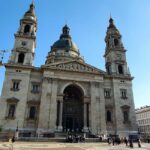
- Stop 1: St. Stephen’s Basilica (Szent István Bazilika) in a short, useful intro
- Stop 2: Széchenyi Lánchíd viewpoints and the Chain Bridge framing
- Stop 3: Hungarian Parliament and Kossuth Lajos Square context
- Stop 4: Margaret Bridge for a “you are moving” view
- Stop 5: Matthias Church for quick Gothic impact
- Stop 6: Fisherman’s Bastion to close with an early-medieval feel
- How much walking is involved, and who should enjoy it most
- Price and value: why this cost can make sense
- Weather and timing: the practical stuff that affects your results
- Should you book the Analog Photo Trip in Budapest?
- FAQ
- How long is the Analog Photo Trip?
- What language is the tour offered in?
- Where does the tour start and end?
- What sights are included in the route?
- Do I need an admission ticket for the stops?
- What camera experience do I need before booking?
- How big is the group?
- Is there a mobile ticket?
- Is the tour dependent on weather?
- What is the cancellation policy?
Key highlights to look forward to
- Analog camera coaching that actually helps you take real photos you’ll keep
- A tight, photo-focused route linking Basilica, Parliament, and the Castle District
- River views timed for the Golden Hour feel around Széchenyi Lánchíd and the bridges
- Historic context in short bursts, so you understand what you’re photographing
- A small group limit (max 12), which keeps questions possible
- Physical photos as souvenirs, not just phone images
The real value of an analog photo tour at Budapest’s best hour
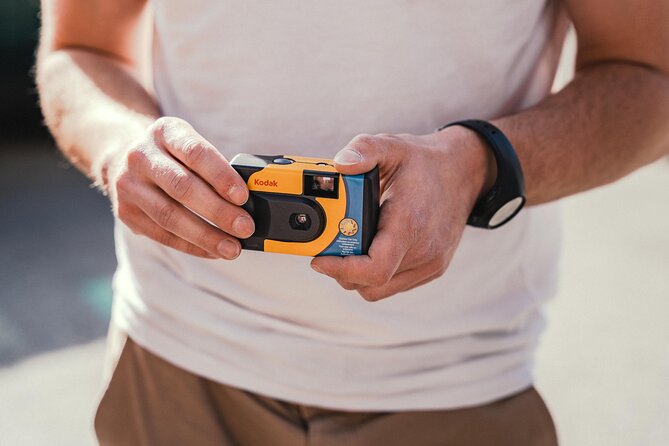
Budapest is a city of angles. The river bends, bridges frame views, and hills keep changing the background behind every shot. Starting in the late afternoon (the tour begins at 5:00 pm) is smart because the sky and light tend to look better for both architecture and people-watching. You’ll be moving through multiple viewpoints before the night crowds fully take over.
This isn’t a “stand and pose for group photos” kind of tour. The analog part changes your pace. You slow down a bit because you’re learning a camera, composing carefully, and thinking about the shot instead of snapping endlessly. That’s where the best results come from: you notice more.
Also, English is offered, and the group is capped at 12 travelers. That small size is a practical upgrade. You’re more likely to get direct help when something on the camera doesn’t make sense or when you’re trying to find the right spot for your framing.
You can also read our reviews of more tours and experiences in Budapest.

Meeting point and end point: how the route sets you up
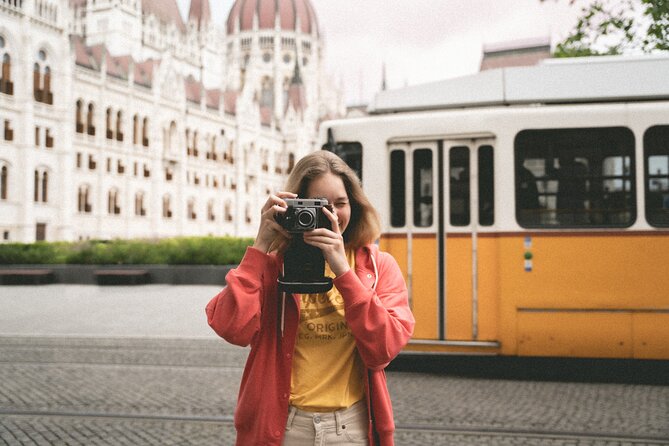
You meet at CBI CompareBudapest, Anker köz 2-4, 1061 Hungary. The tour ends at Fisherman’s Bastion, Budapest 1014. That finish matters because it puts you in the Castle District atmosphere right when you’d normally want to wander anyway.
You also get a mobile ticket, and the start location is described as being near public transportation. In plain terms: you’re not stuck planning a complicated transfer before you even begin shooting.
The tour lasts about 3 hours 30 minutes. That means you’ll have time to learn the camera basics, walk between viewpoints, and still take photos at key stops—without feeling like you spent half your day waiting.
Analog camera instruction: fun, not intimidating
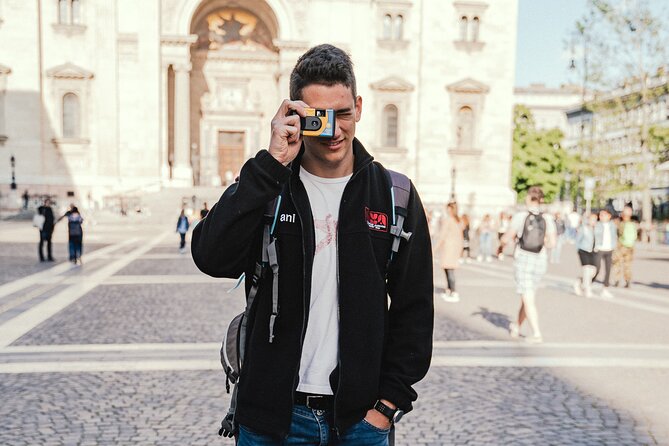
Before you start covering landmarks, you get brief instruction on the analog cameras. The goal is not to turn you into a film expert. It’s to get you comfortable enough to make photos during the walk.
I like this format because it removes the biggest worry people have with analog: fear of doing everything wrong. With a guide walking you through the basics, you can focus on composition and light. You’re learning while you’re actually in the right place to shoot.
Another practical benefit: you’re leaving with physical photos as souvenirs. That’s the point of analog for many people. You still get the city memories, but they come as prints you can hold—not just digital files on a phone that you’ll forget to sort later.
Stop 1: St. Stephen’s Basilica (Szent István Bazilika) in a short, useful intro
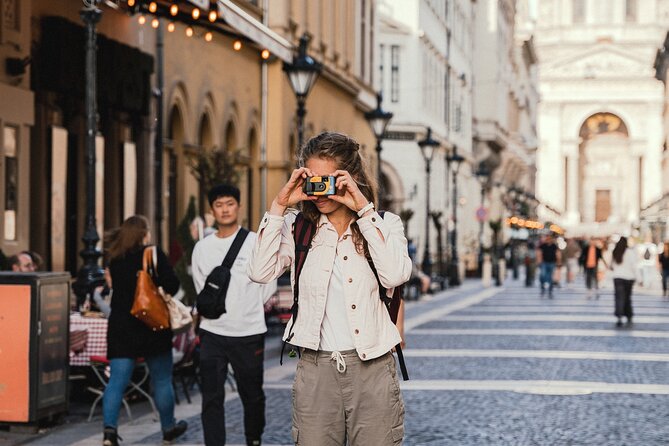
You begin at St. Stephen’s Basilica, and you’ll take about 15 minutes to look around and learn about the history of Hungary’s most important church. Admission here is free for the tour portion.
What makes this stop work for a photo tour is contrast. It’s a clear, iconic starting point that helps you establish scale and style. Even if you don’t go inside for a long time, you’ll still get the feeling of place: grand architecture, strong lines, and a church that anchors Budapest’s identity.
The history note is brief, but that’s good. In a short tour, you want context you can actually remember while you’re still standing there. You’ll be less likely to treat it like a random “pretty building” and more like a landmark with meaning.
Stop 2: Széchenyi Lánchíd viewpoints and the Chain Bridge framing
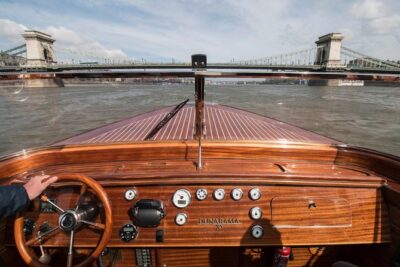
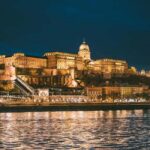
Next up is Széchenyi Lánchíd, with about 15 minutes set aside. The focus here is the view of the Chain Bridge with the Buda Castle in the background, and you’ll be positioned before heading onto Tram 2.
This is one of the most photogenic relationships in the city: bridge in the foreground, castle on the hill behind it. Even if you’re not a hardcore photographer, you’ll understand why people chase this angle. The river acts like a mirror, and the geometry helps you compose quickly.
One subtle advantage: having a guide on the timing means you get a calmer moment to shoot before you move into the tram and the next area. For analog cameras, “calm moment” is everything. You don’t want to fight for your framing while everyone passes behind you.

Stop 3: Hungarian Parliament and Kossuth Lajos Square context
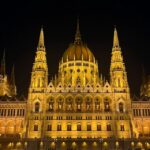
You’ll spend about 15 minutes around Kossuth Lajos Square and the Hungarian Parliament Building, with a focus on both the setting and the history of the place. Admission for the tour portion is free.
The Parliament is large and dramatic, and that can be a trap. If you only photograph the building, your images might feel flat—mostly walls and towers with no sense of scale. The way this stop is framed by the square helps you include the surrounding context so your photos look grounded.
I also like the historical angle here because it gives your shots a reason. When you understand what the square is for and why this site matters, you naturally compose differently.
Stop 4: Margaret Bridge for a “you are moving” view
Then you cross to Margaret Bridge, with another 15-minute photo stop. The description is simple but smart: from here, you get a unique view back toward where you came from and ahead to where you’re going.
This is a bridge stop, but it’s really a pacing tool. It breaks up the big architectural blocks and adds a “walk-through perspective” where the city feels like it’s unfolding. For analog shooting, that forward-and-back framing can be a huge help: it gives your camera a clear depth cue.
If you like photos that show motion and direction, this is the stop where you can lean into that style. The bridge acts like a visual corridor.
Stop 5: Matthias Church for quick Gothic impact
You’ll hit Matthias Church for about 5 minutes, with the goal of capturing its astonishing Gothic beauty. Admission for the tour portion is free.
Five minutes is short. That’s also why this stop is perfect for an analog walk. You’re not expected to overthink it. You aim for a strong visual detail—roofline, facade, contrast between stone and sky—and you move on.
If you love Gothic architecture, you’ll probably wish this part lasted longer. But as part of a moving photo circuit, it keeps the energy high and keeps you from burning your best light time.
Stop 6: Fisherman’s Bastion to close with an early-medieval feel
The tour ends at Fisherman’s Bastion. You’ll spend about 15 minutes there, looking around the Bastion, which is inspired by early medieval architectural style. Admission for the tour portion is free.
This is a great closing location for an analog trip because the area is visually layered. You can shoot wide views and also look for details—stairs, railings, arches, and the way the Castle District sits above the river.
It also works emotionally. By the time you arrive here, you’ve built a visual story across the city: church, bridges, Parliament, a bridge corridor view, then Gothic, then castle scenery. Finishing at Fisherman’s Bastion gives your photo set a satisfying “capstone” feel.
How much walking is involved, and who should enjoy it most
The itinerary is built around multiple short stops, plus transit time between them, which is why the total trip time is about 3 hours 30 minutes even though each stop is limited. You should expect a steady walking pace and some time spent relocating for the best camera angles.
This kind of tour is ideal if you:
- like structured wandering with a guide
- enjoy learning a skill during your trip
- want physical souvenirs (prints) instead of only phone photos
- don’t need long sittings at major sites
It may be less ideal if you:
- need lots of time inside churches or buildings
- strongly prefer digital photography only
- get frustrated when you’re moving every 10–20 minutes
Price and value: why this cost can make sense
The price is $142.97 per person for a roughly 3.5-hour guided analog photo experience in English.
On paper, you could spend money on a museum ticket or a long private tour instead. But the analog format changes the value equation. You’re paying for three things that are hard to replicate on your own:
- guided camera instruction (so you actually learn during the trip)
- a route planned around photo viewpoints (not random wandering)
- physical photo souvenirs, which is a tangible payoff
Also, the group size is capped at 12, which is not tiny, but it’s small enough that you’re not completely lost in a crowd. For analog photography, that support is worth money because mistakes cost frames.
If you’re the type who loves having something to bring home that isn’t just a screenshot, the price can feel very fair.
Weather and timing: the practical stuff that affects your results
This experience requires good weather. That’s not a small footnote—photography is weather-sensitive, especially when you want clear, dramatic views of bridges and buildings.
If the weather is poor, you’ll be offered a different date or a full refund. That flexibility helps. You don’t want to spend your limited vacation hours battling cold rain while trying to compose through film.
As for the start time at 5:00 pm, it’s designed for viewing and photography. Just keep in mind that in cooler months, light changes earlier, so you’ll want to be ready to shoot when the guide says it’s your moment.
Should you book the Analog Photo Trip in Budapest?
Book it if you want a Budapest highlight route plus a hands-on analog experience, guided in English by Emese Tárnok. I think it’s especially worth it if you care about leaving with printed photos and you like the idea of learning something small but real during your trip.
Skip it (or plan extra time) if you expect long stays at each landmark. This is a “photo circuit” style tour with brief stops, and the win is the combination of shooting, context, and moving to the next viewpoint at the right time.
If you’re flexible with weather and you’re game to slow down for analog photography, this tour is a fun way to see Budapest from the street—and bring home something you can physically keep.
FAQ
How long is the Analog Photo Trip?
It’s approximately 3 hours 30 minutes.
What language is the tour offered in?
The tour is offered in English.
Where does the tour start and end?
It starts at CBI CompareBudapest, Anker köz 2-4, 1061 Hungary and ends at Fisherman’s Bastion, Budapest 1014.
What sights are included in the route?
The tour includes St. Stephen’s Basilica, Széchenyi Lánchíd, the Hungarian Parliament Building area near Kossuth Lajos Square, Margaret Bridge, Matthias Church, and Fisherman’s Bastion.
Do I need an admission ticket for the stops?
For the tour stops listed, admission ticket cost is marked as free.
What camera experience do I need before booking?
You’ll get brief instruction about the analog cameras during the tour, so you do not need prior analog experience based on the tour format.
How big is the group?
The tour has a maximum of 12 travelers.
Is there a mobile ticket?
Yes, the tour includes a mobile ticket.
Is the tour dependent on weather?
Yes. The experience requires good weather, and if it’s canceled due to poor weather, you’ll be offered a different date or a full refund.
What is the cancellation policy?
Free cancellation is available up to 24 hours in advance of the experience start time for a full refund.