REVIEW · BUDAPEST
Budapest Walking Tour with Your Private Guide: 10+ Highlights
Book on Viator →Operated by Budapest with Lara · Bookable on Viator
Want a quick time machine in Budapest? This private 3-hour walk is built like a Pest-to-Buda timeline, and it’s the kind of route where Lara’s mini history lesson helps the sights click fast. I also like that you finish with a strong viewpoint payoff at Fisherman’s Bastion. One thing to consider: admission fees aren’t included, so if you want inside stops, budget a bit extra.
You’ll start on the Pest side and steadily work your way back in time as you cross to the Buda side, where the early rulers and the city’s core story begin. By the end, you’ll have more than photos—you’ll have a mental map and practical recommendations for what to see next.
The tour runs in English and is private, so it’s designed for your group only. You’ll meet at Elizabeth Square near Deák Ferenc tér (easy to reach by public transport), and the tour ends back at the meeting point.
In This Review
- Key highlights worth showing up for
- A Pest-to-Buda timeline walk that makes Budapest click
- Elizabeth Square (Deák Ferenc tér): the practical start that saves time
- St. Stephen’s Basilica: your first big “anchor” moment
- Hungarian Parliament Building and Kossuth Lajos Square: power made visible
- Széchenyi Lánchíd (Chain Bridge): the Danube crossing that frames the city
- Hungarian Academy of Sciences and the Little Princess Statue: small stops with story value
- Sándor Palace and Matthias Church: the royal-era focus on the Buda side
- Fisherman’s Bastion: ending with the best viewpoint payoff
- What you get beyond photos: Lara’s flexible, practical guiding style
- Price and value: is $162.56 per person a smart spend?
- Who this walk is best for
- Should you book this Budapest walking tour?
- FAQ
- What is the duration of the Budapest Walking Tour with a private guide?
- How much does the tour cost?
- Is the tour private?
- What language is the tour offered in?
- Where do I meet the guide, and where does the tour end?
- What are the main stops during the tour?
- What is included in the price?
- Are admission fees included?
- What is the cancellation policy?
Key highlights worth showing up for

- Pest-to-Buda “time travel” route that walks you through what came first
- Licensed guide for clear context as you move from site to site
- Lara’s flexible hosting style with anecdotes you might miss on your own
- Danube crossing views during the walk (with Széchenyi Lánchíd in the middle)
- Finish at Fisherman’s Bastion so you end with the best-looking payoff
A Pest-to-Buda timeline walk that makes Budapest click
Budapest can feel like a bunch of great stops stitched together—unless you get the story in the right order. This tour is structured so you start in Pest and gradually travel backward in time toward Buda. That matters because the city’s different eras show up fast in the architecture and even in the way squares and buildings relate to each other.
I like that it’s not trying to cram everything into one stop. You get a chain of “how it connects” moments, which is ideal if it’s your first day or you don’t want to plan every turn.
This is also a smart format for a private experience. Instead of racing through landmarks, you can ask questions and get direction for what to do after the walk. The guide’s job isn’t just describing sights—it’s helping you understand why those places matter.
You can also read our reviews of more walking tours in Budapest



Elizabeth Square (Deák Ferenc tér): the practical start that saves time
You’ll meet at Elizabeth Square at Deák Ferenc tér 2 (1052 Hungary), which is a very convenient hub. If you’re coming from elsewhere in the city, being near major public transport connections helps your day feel less stressful.
A good walking tour start matters because it sets the tone. Here, it also acts like a launchpad: once you learn the rhythm of this area, you’ll find it easier to navigate the rest of the day on your own.
Expect a smooth introduction before you start moving. You’ll get a quick background so the next landmarks aren’t just names—they’re events. That’s especially helpful with Hungarian history, where a few details can make the bigger picture feel much clearer.
St. Stephen’s Basilica: your first big “anchor” moment
The walk begins at St. Stephen’s Basilica (Szent Istvan Bazilika). Even from the outside, it works as an anchor point because it gives you a starting landmark you can later recognize in your own sightseeing.
The guide-led approach here is about context. You’re not just seeing a famous church façade—you’re getting enough explanation to understand why it’s a key reference point for the city’s identity. When you know what to look for, you also start noticing details you’d normally skip: design cues, symbolic meaning, and how the surrounding streets frame the building.
A drawback to keep in mind: admission fees are not included. If your priority is going inside, plan for that cost separately so you don’t feel rushed at the doors.
Hungarian Parliament Building and Kossuth Lajos Square: power made visible
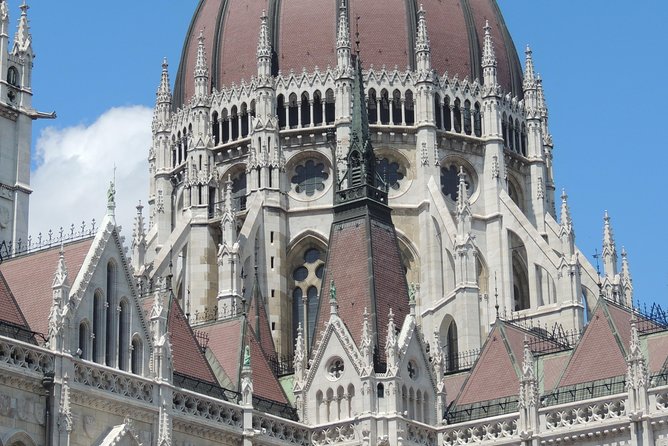
Next up is the Hungarian Parliament Building, followed by Kossuth Lajos Square. Together, they set the mood for Budapest’s political story. This part of the tour is where the “time travel” theme becomes more obvious, because the sights reflect later chapters of the city’s development.
You’ll get guidance on what makes the area important and how to read the spaces around it. Squares like Kossuth Lajos Square aren’t just open room for photos—they’re the kind of places that shape movement, views, and how people experience civic space.
If you’re hoping for inside access, remember the basic rule: admission isn’t included. Still, the exterior viewpoint is strong, and the guide’s interpretation is what turns a quick look into something more useful.
Széchenyi Lánchíd (Chain Bridge): the Danube crossing that frames the city
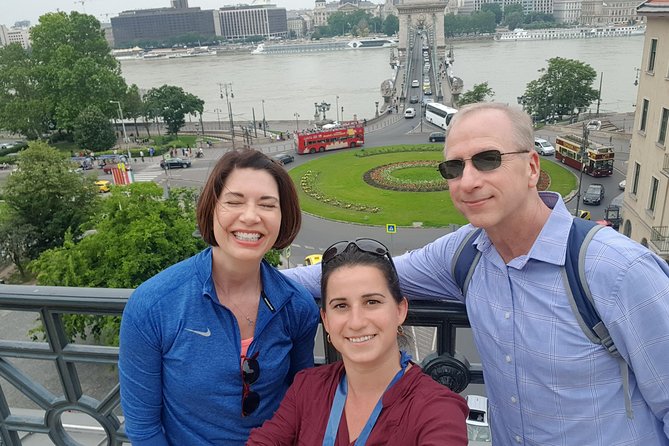
Then comes Szechenyi Lanchid, the famous Chain Bridge. This stop is one of the best “bridge moments” in Budapest because it visually connects your walking line with the Danube’s role in the city’s layout.
Even if you’re not thinking about architecture, a crossing like this helps you understand the geography. You’ll see how Pest and Buda relate in real time, and that makes the rest of the tour feel less like random wandering and more like an intentional route.
If you’re the type who likes photos, this is a good place to pause. The guide can also help you position for better views, depending on what you’re most interested in—river scenes, skyline angles, or the way buildings stack behind each other.
You can also read our reviews of more guided tours in Budapest






Hungarian Academy of Sciences and the Little Princess Statue: small stops with story value

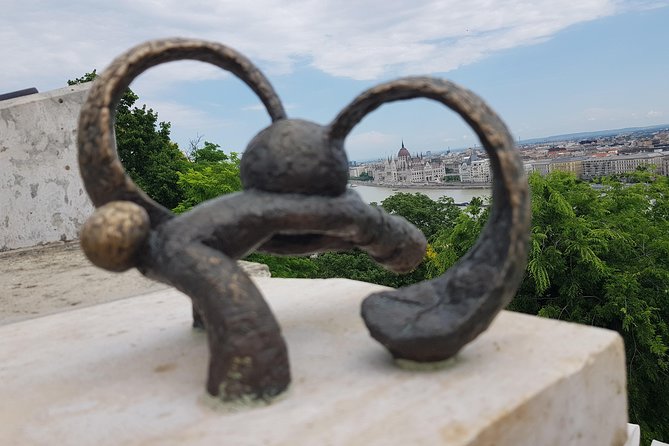
After the major civic landmarks, the tour shifts to details: the Hungarian Academy of Sciences and Little Princess Statue. This is where I appreciate the walking pace. It gives you time to notice things that often get skipped when people rush from one famous building to the next.
With a good guide, these aren’t “filler” stops. You learn how to connect what you’re seeing to the broader city narrative. That’s especially true for statues and institutional buildings, because their meaning often isn’t obvious from a first glance.
This is also where the guide’s anecdotal style helps. If you want the kind of city knowledge that makes your conversations better later, these are the moments you want to slow down for.
Sándor Palace and Matthias Church: the royal-era focus on the Buda side
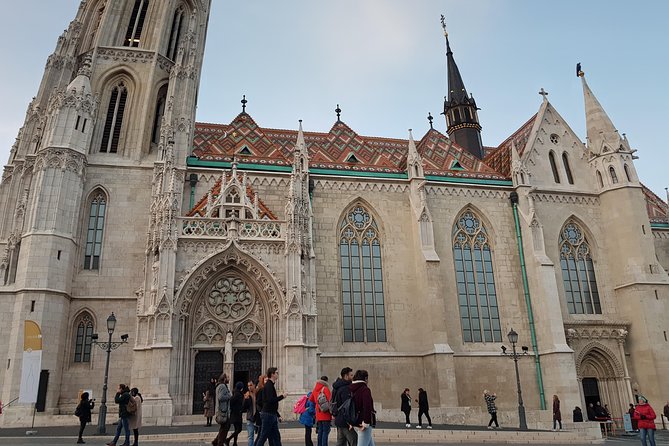
As the tour continues toward Buda, you’ll reach Sandor Palace and then Matthias Church. This portion turns the volume down a bit—less “big civic center,” more “what did the ruling world look like?”
These stops are valuable because they help you understand how Budapest’s eras changed the city’s center of gravity. You can feel the shift in the character of what you’re walking past, and that makes the “back in time” idea real instead of just a marketing line.
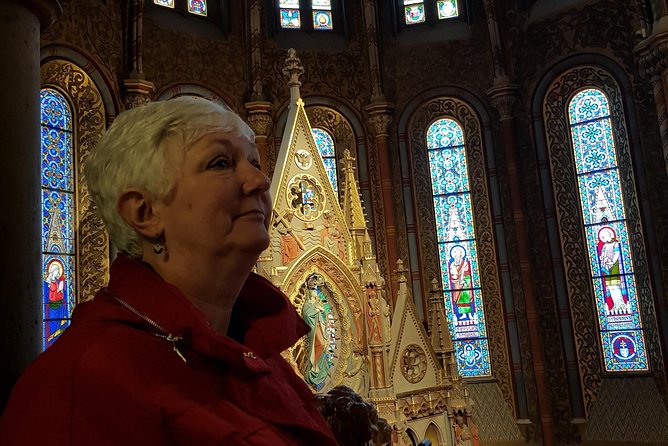
Matthias Church, in particular, is a strong payoff for people who love recognizable landmark silhouettes. You’ll get help noticing key features and understanding why this area became such an important stage for the city’s story.
Again, if you want to go inside any historic sites, keep the admission-not-included note in mind. Exterior learning is built in. Inside access depends on separate entry.
Fisherman’s Bastion: ending with the best viewpoint payoff
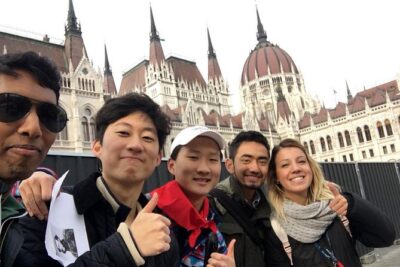
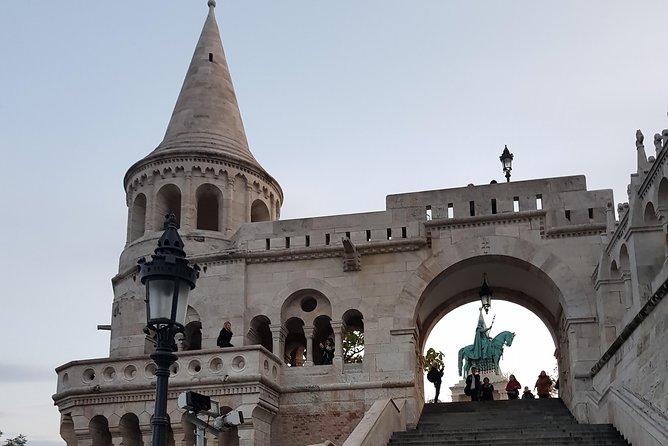
The tour finishes at Fisherman’s Bastion. It’s the kind of ending that makes the whole 3 hours feel worth it, because it gives you a dramatic “look back” moment. You’ve moved through the city’s story, and now you can take in what the city looks like from above and from the right angles.
This is also where you can decide what you want next. If you’re hungry for more, the guide’s recommendations help you choose the right follow-up stops based on your interests—views, history, or just places that feel good to wander.
Because the tour ends back at the meeting point area, you don’t have to worry about being stranded across town at the end. It’s a straightforward way to plan the rest of your day.
What you get beyond photos: Lara’s flexible, practical guiding style
The most praised part of this experience is the way Lara guides. The good news is that this isn’t just about explaining what you’re looking at—it’s about making the walk work for you.
First, you’ll start with a quick mini history lesson of Hungary. That’s not a lecture you’re forced to endure. It’s the kind of background that makes the next landmarks feel like chapters instead of separate postcards.
Second, you’ll get anecdotes about details you might miss. That’s often what turns “I saw it” into “I understood it.” If you love learning small bits that make big sites feel human, this tour fits.
Third, Lara’s flexibility shows up in practical ways. In particular, she can help you with real logistics like purchasing bus tickets after the tour, so you can get back to your hotel without extra hassle.
That last detail matters. A first-day walking tour is only as good as what it sets up afterward. If you leave with a plan, the cost starts to feel more justified.
Price and value: is $162.56 per person a smart spend?
At $162.56 per person for about 3 hours, the value comes from the structure: a licensed guide, a private group experience, and a route designed to give you context without you doing the planning work.
Here’s the deal: this price isn’t mainly about admissions. Admission fees are not included, so the real value is in what you learn and the connections you make as you walk.
Also, the tour is private. Private usually means you’re paying for attention and pacing that fits your group, not a packed herd. If you’re traveling with a small group, this can feel like a smart upgrade from a generic group walk.
One more element: mobile ticket and near public transportation help reduce friction. You’re not hunting for complicated logistics in the middle of a short visit.
Who this walk is best for
This tour is a good fit if you want:
- A fast orientation to Budapest with a clear historical order
- A guided walk you can ask questions during (private setup helps)
- A finish at a famous viewpoint that gives you closure on day one
It also works well for people who don’t want to build a complex self-guided route. If you like taking suggestions from someone local-style and then using that knowledge later, you’ll get more out of this than just checking off landmarks.
And if you’re traveling with service animals, service animals are allowed, so you don’t have to worry on that front.
Should you book this Budapest walking tour?
Yes, if you want a strong first-day framework and you like the idea of moving from Pest to Buda with 10+ highlight stops and clear explanations. The guide style—flexible, story-driven, and willing to help with practical stuff like transit tickets—makes this feel more like a helpful morning with a real host than a strict checklist.
Skip it or adjust expectations if you specifically want lots of paid inside access. Since admission fees aren’t included, you may need to plan separate entries if that’s your top priority.
If you book, go in with one goal: use the walk to learn how the city pieces connect. Then you’ll get much more than a set of photos—you’ll get a usable map for your remaining time in Budapest.
FAQ
What is the duration of the Budapest Walking Tour with a private guide?
The tour lasts about 3 hours.
How much does the tour cost?
The price is $162.56 per person.
Is the tour private?
Yes. It’s a private tour/activity, and only your group will participate.
What language is the tour offered in?
The tour is offered in English.
Where do I meet the guide, and where does the tour end?
You start at Elizabeth Square, Deák Ferenc tér 2, 1052 Hungary. The activity ends back at the meeting point.
What are the main stops during the tour?
The listed stops are: St. Stephen’s Basilica, Hungarian Parliament Building, Kossuth Lajos Square, Szechenyi Lanchid, Hungarian Academy of Sciences, Little Princess Statue, Sandor Palace, Matthias Church, and Fisherman’s Bastion.
What is included in the price?
A licensed tourist guide is included.
Are admission fees included?
No. Admission fees are not included.
What is the cancellation policy?
Free cancellation is available. You can cancel up to 24 hours in advance for a full refund. If you cancel less than 24 hours before the start time, the amount paid will not be refunded.