REVIEW · BUDAPEST
Budapest: Jewish Heritage Walking Tour with Historian Guide
Book on GetYourGuide →Operated by Kálmán Dániel - Walk with a Historian · Bookable on GetYourGuide
Budapest’s Jewish story lives on the streets. I like that this tour is guided by field expert historian Kálmán Dániel and runs as a small group limited to 10, so you get real context without feeling rushed. You’ll see two major synagogues up close and then move into the places that hold Holocaust memory through stories of survival and helpers.
One heads-up: the Kazinczy Street Synagogue is temporarily closed, so you’ll visit it outside only, and you won’t get an entry ticket there during restoration.
In This Review
- Key highlights to look for
- Meeting at Deák Square: Getting your bearings fast
- Rumbach Street Synagogue: A real stop, not just a photo
- Walking the Jewish Quarter: Streets with stories behind them
- Gozsdu Passage (Gozsdu Udvar): A quick pause with historical context
- Holocaust reminders: ghetto wall remnant, Carl Lutz Memorial, and Memory Wall
- Kazinczy Street Synagogue: What you gain even when it’s closed inside
- How the 2-hour format works with a group of 10
- Price and value: what $62 buys you in real terms
- Who this tour fits best (and who might want a different option)
- Should you book this Budapest Jewish Heritage walking tour?
- FAQ
- How long is the Budapest Jewish Heritage Walking Tour?
- Where does the tour meet?
- What’s included in the tour ticket?
- Is the Kazinczy Street Synagogue visit inside?
- Which synagogues are visited?
- Does the tour include Holocaust memorial sites?
- Is the tour in English?
- How big is the group?
Key highlights to look for
- Historian-led explanations that connect buildings to the people who used them
- Rumbach Street Synagogue entry plus guided stops around the Jewish Quarter
- Holocaust memory stops including the Carl Lutz Memorial and the Memory Wall
- Gozsdu Passage (Gozsdu Udvar) photo moments tied to neighborhood history
- Kazinczy Street Synagogue outside-only during temporary reconstruction
Meeting at Deák Square: Getting your bearings fast
You start at Deák Square, at the entrance of the Deák téri evangélikus templom (Lutheran Church). The location is easy to orient yourself with, especially if you’re using the M2 metro near Deák Ferenc tér. It’s a good way to begin because you’re stepping into the city’s Jewish story right from one of Budapest’s central intersections.
This tour also uses a very walkable rhythm: short picture moments, then guided walking through the neighborhood streets. That matters in Budapest, where you can pass impressive buildings without understanding what you’re looking at. Here, the guide helps you read the streets like clues.
Bring comfortable shoes. Two hours is short, but you’re on your feet, and you’ll want your camera ready for the synagogue exteriors and the memorial stops.
You can also read our reviews of more walking tours in Budapest


Rumbach Street Synagogue: A real stop, not just a photo
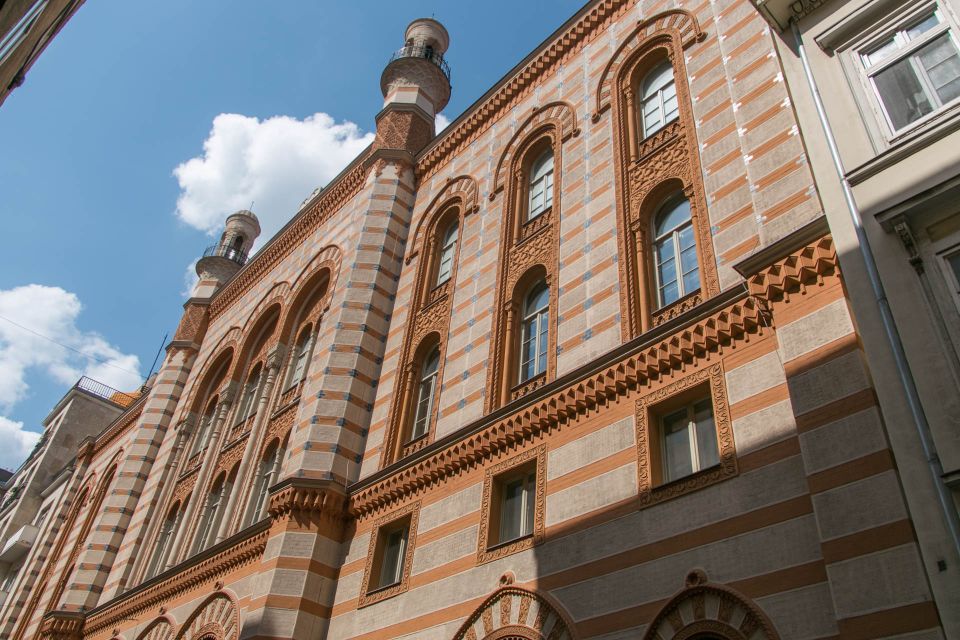
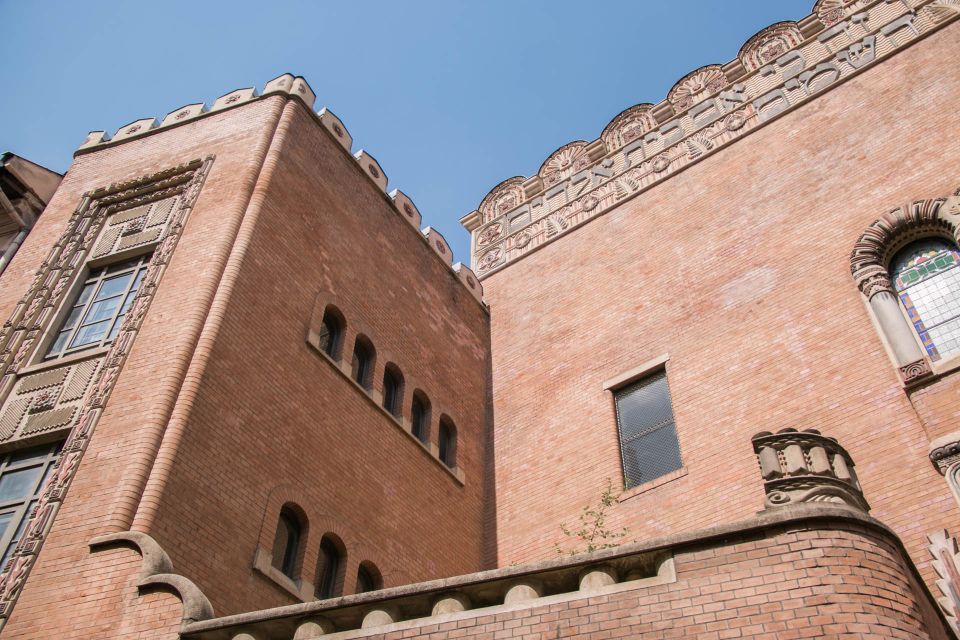
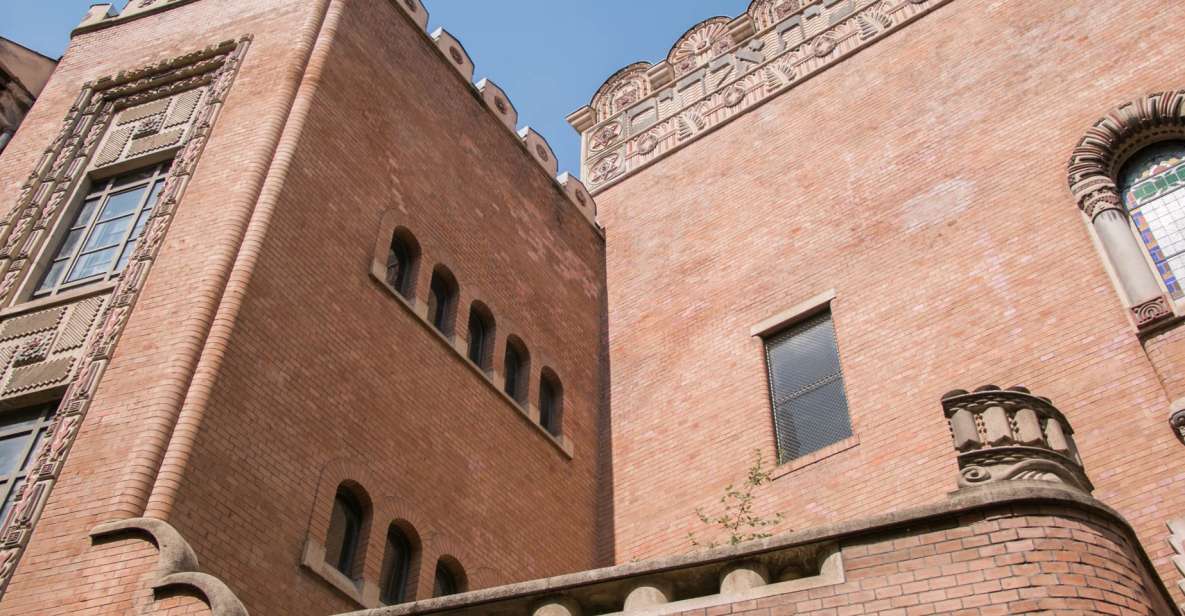
The first synagogue stop is the Rumbach Street Synagogue, with time for a photo and a guided look around the building. This isn’t only an exterior glance; you get entry as part of the experience, which helps the visit feel “complete” rather than symbolic. For me, the big value is that the guide can connect what you see in the architecture to what the synagogue meant in its era.
Rumbach Street Synagogue is treated as an art-historical and historical example, not just a religious landmark. That shift changes how you look at it. Instead of thinking only of worship spaces, you start noticing how a community expressed identity through design and permanence—especially in a city where borders, regimes, and demographics shifted dramatically over time.
Practical tip: since the tour is time-bound, pace yourself inside. If you want extra time for photos, ask the guide before the group moves on, so you don’t feel left behind.
Walking the Jewish Quarter: Streets with stories behind them
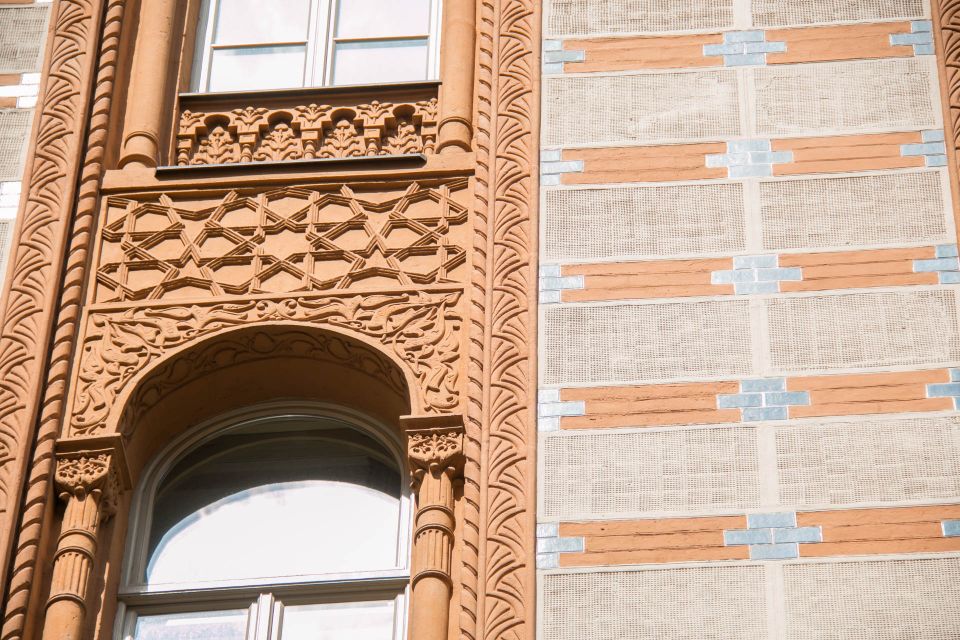
After Rumbach, you head into the Jewish District area for guided walking and explanation. This is where the tour earns its name: the city streets aren’t “background.” They’re part of the narrative.
I like that you’re taught to connect places with people—where they lived, who became famous, and what brought them to public attention. That kind of framing matters because the neighborhood can look like ordinary urban blocks unless someone points out what changed and what survived.
You’ll also hear about synagogues that were once in the district but no longer exist. In particular, the tour includes learning where two other synagogues stood before they were demolished by the 1930s. Even if you can’t see the buildings anymore, that information gives you a sense of loss and continuity at the same time.
If you’re the type who enjoys “why is this here?” questions, this is the section that will keep you alert. If you prefer only major landmarks, you may find yourself wanting more time at each stop. The guide helps by keeping the walking portion meaning-focused rather than just a moving slideshow.
Gozsdu Passage (Gozsdu Udvar): A quick pause with historical context
Next up is Gozsdu Passage, often known through its inner space as Gozsdu Udvar. You get a photo stop and guided sightseeing here, which makes sense: it’s a visually interesting spot, and it’s also useful for understanding how the district developed over time.
I find passages like this one helpful on a walking tour because they break the flow. You get a short reset, a chance to look around, and then the guide can tie the neighborhood’s layers together—old community space to later urban life.
Don’t treat it as “just a pretty courtyard.” The tour’s approach is to use places like Gozsdu to help you understand that Budapest’s Jewish district history isn’t only about the dramatic moments. It also includes everyday city life, commerce, and the changing use of space.
If it’s rainy, this stop can be a small shelter moment, which is nice in Hungary’s variable weather.
Holocaust reminders: ghetto wall remnant, Carl Lutz Memorial, and Memory Wall
This is the emotional core of the tour. You’ll visit Holocaust-related remnants and memorials, including a remnant of the ghetto wall, the Carl Lutz Memorial, and the Memory Wall.
The way the experience is described emphasizes stories of survival and of people who helped others survive. That’s important. Memorials can sometimes feel like fixed objects—heavy, but silent. Here, the guide gives you human-scale context, including the idea of “miracle-making people,” meaning helpers whose actions kept people alive when everything around them was designed to destroy.
You’ll also get guided direction on what you’re looking at, rather than standing in front of plaques without knowing what they mean. For me, the best memorial tours do two things: they honor what happened, and they explain why specific names, structures, or wall remnants matter. This one stays focused on both.
A practical note: plan for a slower pace here. Even if the tour time stays tight, the memorial portion deserves mental space. If you want to take photos, wait until you understand what part of the memorial you’re capturing, because symbolism often sits in small details.
You can also read our reviews of more guided tours in Budapest





Kazinczy Street Synagogue: What you gain even when it’s closed inside
Kazinczy Street Synagogue is included as a stop, but during temporary restoration you’ll see it outside only. Entry to this synagogue is not included, so you won’t be going in during this tour window.
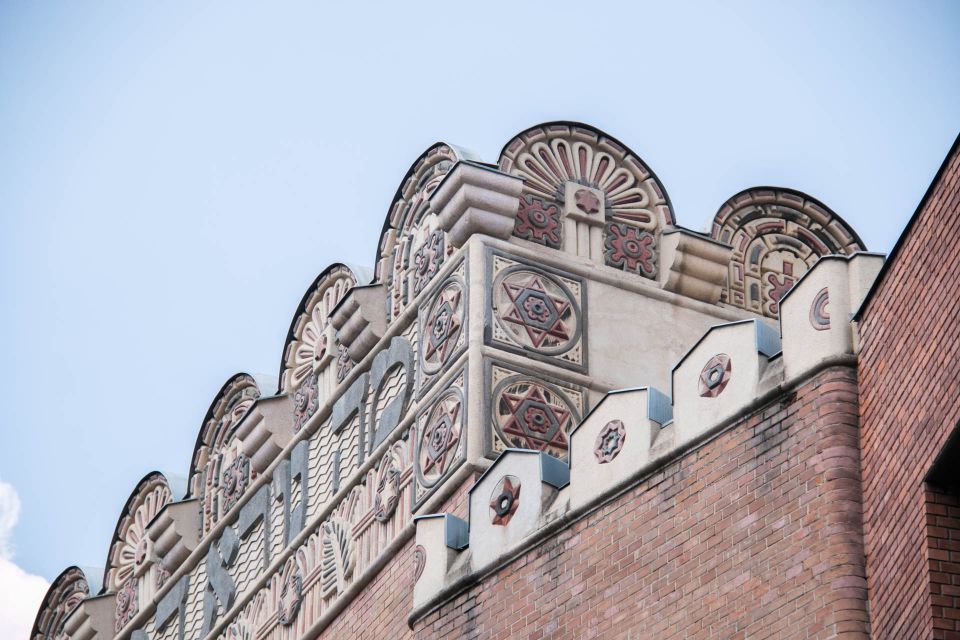
At first, that sounds like a compromise. But it can still be a meaningful learning moment. The guide frames the synagogue as another key historical and art-historical example in the district, and you’ll connect it to what happened to other synagogues over time. Even from the outside, the building’s presence is part of the story.
This is also a good example of why I like having a historian guide on a walking tour. If you were only passing by, you might assume a closed door means the site is “less valuable.” With the right context, the building still teaches you—about community life, about architecture, and about the long recovery process after major disruptions.
If being inside every synagogue is a must for you, factor in that temporary closure. The tour’s structure is honest about it, and you’ll still get meaningful stops elsewhere (including entry at Rumbach and the memorial entry).
How the 2-hour format works with a group of 10
Two hours goes by fast in a good way. It’s long enough to cover multiple sites: Rumbach Street Synagogue, the Jewish Quarter walking sections, Gozsdu Passage, and then the Holocaust memorial sequence plus Kazinczy outside-only. It’s also short enough that you’re unlikely to feel mentally wiped if you have other plans that day.
The small group size—limited to 10—helps the guide manage the pace and answer questions without turning the experience into a lecture you can’t participate in. I like tours where I can ask simple clarifying questions and actually get a direct response. This one aims for that kind of conversational flow.
Since it’s English-language, you can expect the guide to explain terms and historical connections clearly rather than using only quick on-the-go facts. Still, if you like deep background, remember this is a walk of limited duration, so you may want to do a bit of pre-reading about Budapest’s Jewish community and major 20th-century events.
Price and value: what $62 buys you in real terms
At $62 per person for about 2 hours, the best way to judge value is to look at what’s included that you’d otherwise have to arrange yourself. You get:
- A field expert historian guide
- Entry ticket to Rumbach Street Synagogue
- Entry ticket to the Ghetto Wall Memorial
- Guided visits connected to the memorial sites
- Visits to Kazinczy Street Synagogue outside only during restoration
That inclusion matters because synagogue interiors and memorial sites often require separate admission. If you’re visiting on your own, you’d also be figuring out which buildings are historically significant and how they connect to the wider neighborhood story. Here, you’re paying for interpretation plus access where it’s offered.
The only cost-logic drawback is the Kazinczy inside-entry part. Since it’s temporarily closed, you’re not getting that specific interior visit in this experience. If that particular synagogue is the main reason you’re booking, you may want to check whether it reopens on your travel dates—because this tour’s Kazinczy component is outside-only during restoration.
For most visitors, though, the trade-off makes sense: you still get major content, entry at Rumbach, and Holocaust memorial stops that carry the deepest weight of the story.
Who this tour fits best (and who might want a different option)
This is a great fit if you want more than sightseeing. You’ll enjoy it if you like understanding how Jewish heritage connects to Budapest’s streets and buildings, and you appreciate a guided historical lens.
It’s also ideal if you like structure: a clear starting point at Deák Square, a concentrated 2-hour route, and multiple focused stops rather than an open-ended wander.
Consider a different option if you’re only interested in going inside every synagogue. Because Kazinczy is temporarily closed, you won’t get an interior visit there during this tour. Also, if you prefer a purely upbeat, light tone for sightseeing, the memorial portion will feel heavy—on purpose.
Should you book this Budapest Jewish Heritage walking tour?
I’d book it if you want your Budapest day to be meaningful without feeling lost in details. The historian guide approach, the small group size, and the fact that you get entry at Rumbach Street Synagogue plus the ghetto wall memorial make the experience practical, not just symbolic. The walking format also helps you “see” the neighborhood as history, not just a backdrop.
I’d pause before booking only if Kazinczy Street Synagogue interior access is a top priority for your trip. Since it’s outside-only during restoration, you may need a backup plan or choose different timing.
If your goal is to understand why these buildings and memorials matter—and to walk away with connections you can actually use while exploring Budapest further—this is a strong choice.
FAQ
How long is the Budapest Jewish Heritage Walking Tour?
It lasts about 2 hours.
Where does the tour meet?
Meet at the entrance of the Lutheran Church at Deák Square (Deák téri evangélikus templom), not far from the M2 metro entrance at Deák Square.
What’s included in the tour ticket?
You get a field expert historian guide, entry to the Rumbach Street Synagogue, entry to the Ghetto Wall Memorial, and a visit to the Kazinczy Street Synagogue outside only (it is temporarily closed). Food and drinks are not included.
Is the Kazinczy Street Synagogue visit inside?
No. The Kazinczy Street Synagogue is temporarily closed due to restoration, so you’ll visit it outside only. The entry ticket is not included.
Which synagogues are visited?
You’ll visit the Rumbach Street Synagogue and the Kazinczy Street Synagogue (outside only during restoration).
Does the tour include Holocaust memorial sites?
Yes. You’ll see a remnant of the ghetto wall, the Carl Lutz Memorial, and the Memory Wall.
Is the tour in English?
Yes, the live tour guide speaks English.
How big is the group?
The group is limited to 10 participants.