REVIEW · BUDAPEST
A Journey through Jewish Budapest – Walking Tour
Book on Viator →Operated by Insight Cities · Bookable on Viator
A day like this makes Budapest feel personal fast. You’ll walk a tight loop of synagogues and memorial sites while a historian guide stitches the story of Jewish life and persecution across central Budapest. I like that the group stays small, so questions don’t get lost in the crowd. One heads-up: some major sites require covered shoulders and knees, and synagogue/museum admissions are not included.
What really makes this tour worth your time is the order of stops. You start at the grand Great Synagogue complex, then move through smaller Orthodox synagogues and ghetto-area landmarks, and you end at the river memorial that hits hard. It’s a guided walk that turns a map into a timeline, without wasting time on fluff.
In This Review
- Key points before you go
- Price and time: what you’re really paying for
- Meeting at Kamara Café: easy start, clear ending
- Stop 1: Dohány Street’s Great Synagogue complex (Nagy Zsinagóga)
- Stop 2: Kazinczy Street Synagogue, ghetto wall, and the mikve
- Stop 3: Rumbach Street Synagogue and the Status Quo Ante story
- Stop 4: Shoes on the Danube Bank memorial (free, and heavy)
- Why the historian guide makes a real difference
- Tickets, dress code, and what to bring
- Who should book this tour (and who might not)
- Should you book it
- FAQ
- How long is the Jewish Budapest walking tour?
- What does the $126.16 per person price include?
- Are synagogue and museum tickets included?
- Where does the tour start and end?
- What time does the tour run?
- Is pickup offered?
- How many people are in the group?
- Is there a dress code for the synagogues?
- What’s the cancellation policy?
- Is the tour difficult to do on foot?
Key points before you go
- Small-group feel: limited to six people, with a stated cap of eight, so you get real dialogue.
- Historian guide + scholar time: the Great Synagogue visit includes help from a Jewish Studies Scholar.
- Real ghetto-area landmarks: you’ll see the Ghetto Wall Memorial and walk past places tied to ritual life.
- The “why” matters: you’re not just looking at buildings; you’re learning how communities shifted over time.
- Memorial at the Danube: Shoes on the Danube Bank is free and ends the tour on an emotional note.
- Budget for tickets: Dohány, Kazinczy, and Rumbach synagogue entries (and Dohány complex admission) are separate.
Price and time: what you’re really paying for
At $126.16 per person for about 3 hours, you’re paying for a guided, structured walk led by a historian guide. The big value is not the distance. It’s the interpretation: you get context for Jewish institutions in the area, the way they relate to the Jewish Quarter, and what changed across centuries—especially around WWII and the Holocaust.
The part to plan for is cost of entry. Synagogue and museum admissions are not included, while the Danube memorial is free. That means your total trip cost depends on what’s open and which parts you choose to enter within the complexes. If you already know you’ll want to go inside the major sites, this tour still tends to work out well because you’re paying for guidance through places that can otherwise feel confusing or intimidating to explore solo.
Also, it’s typically booked around 49 days in advance, so don’t wait until the last week if you’re traveling in a busy season. Morning and afternoon departures exist, but the tour is limited in size.
You can also read our reviews of more walking tours in Budapest



Meeting at Kamara Café: easy start, clear ending
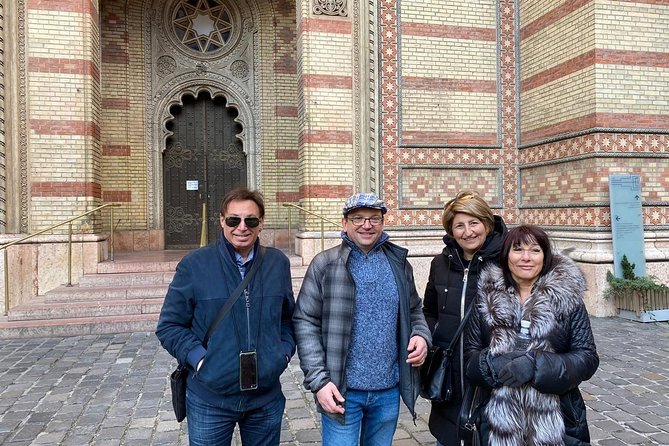
The tour starts at Kamara Café, Dohány u. 1b (opposite the Great Synagogue). Pickup is also offered at Kamara Café, Dohány u. 1a, so you’re not hunting down a random street corner.
The route ends at Shoes on the Danube Bank (Budapest 1054). This is great for logistics: you finish right where you’ll likely want to linger for views and photos, without having to reverse course.
The only timing detail I’d treat as flexible is the choice of morning or afternoon departure. The listed start time is 10:00 am for the tour version shown, but the key is that you do have options depending on your schedule.
Stop 1: Dohány Street’s Great Synagogue complex (Nagy Zsinagóga)
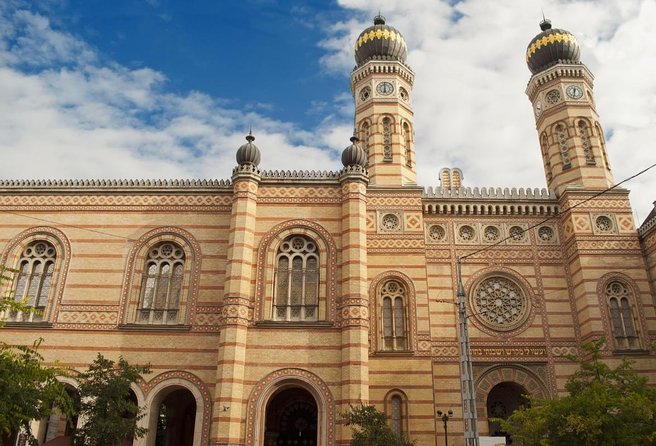
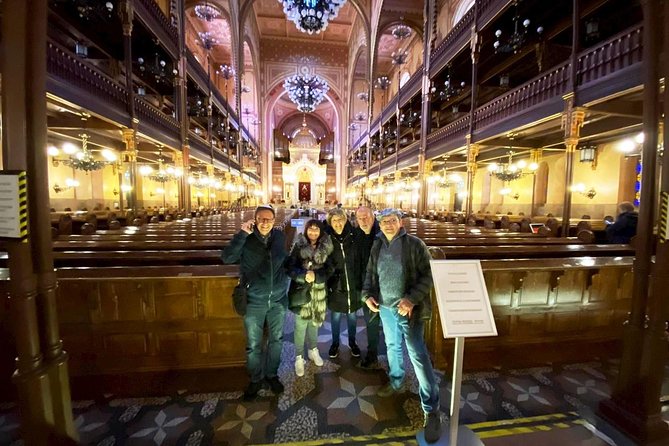
This is your anchor stop. You’ll explore the Dohány Street Synagogue, described as the largest temple in Europe, and you’ll get help from a Jewish Studies Scholar. That matters because the building style and the cultural story can feel bigger than the sidewalk. The guide helps you read it instead of just admiring it.
Expect an orientation to the complex before you go in deeper. Within the synagogue grounds, the tour includes time for the Temple of Heroes, the Jewish Museum, and a Memorial Park area. These elements shift the focus from architecture to memory: who the community lost, how history is displayed, and how the site functions today.
A practical heads-up: admission ticket is not included, so have a plan to purchase entry if you want the full value of this stop. You’ll also want covered shoulders and knees, since visitors are requested to dress modestly at both the Dohány and Kazinczy synagogues.
One reason I’m keen on this stop is that it sets the tone. You start with a major institution, then you’ll spend the next hour-plus learning how Jewish life also existed in smaller, more specialized settings.
Stop 2: Kazinczy Street Synagogue, ghetto wall, and the mikve
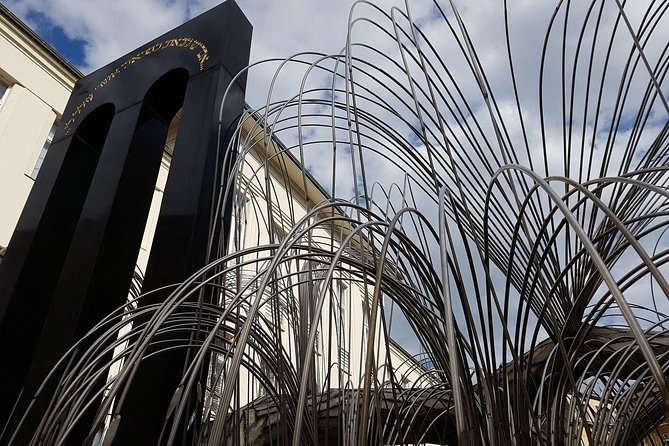
From the Great Synagogue area, you’ll walk toward the Kazinczy Street area and the former ghetto landscape. This stop is built for contrast: the architecture and ritual spaces feel different, and the story becomes more street-level.
You’ll pass the Ghetto Wall Memorial, erected in 2014. It’s a key visual reminder that the ghetto wasn’t a vague idea—it was a physically bounded area, with walls and neighborhoods behind them.
Then you’ll walk past a luxurious mikve, a Jewish ritual bath. Even though you’re not necessarily going inside, the tour point is clear: Jewish community life wasn’t only about synagogues. It was also about daily religious practice and how people maintained identity.
After that, you reach the Kazinczy Street Synagogue, an Art Nouveau Orthodox synagogue. The tour includes a synagogue interior visit when open to the public. With a historian guide, that “when open” detail is less stressful—you can still understand what you’re seeing even if access times vary.
Again, tickets aren’t included, and the shoulders-and-knees rule applies here too. If you’ve got a light scarf or a thin layer in your daypack, you’ll feel prepared rather than rushed.
Stop 3: Rumbach Street Synagogue and the Status Quo Ante story
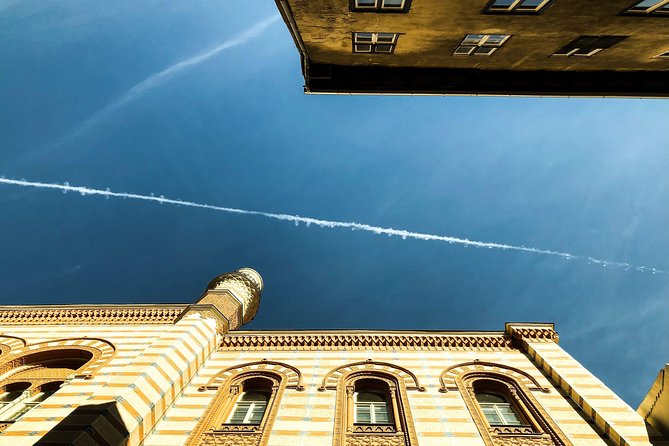
Next comes the Rumbach Street Synagogue. This stop is shorter, but it’s meaningful because it adds detail about how Judaism was organized in different streams.
You’ll learn about the Status Quo Ante stream while observing the synagogue itself. That phrase matters because it points to how communities handled differences and negotiations inside Jewish life. Without a guide, these distinctions can sound like trivia. With a guide, it becomes part of the bigger “how communities survived and organized themselves” story.
You’ll also visit the interior when open to the public. Since access can be hour-dependent, I treat this as a bonus rather than a guarantee. The benefit of having a structured tour is that even the exterior and courtyard context still land with purpose.
As with the other synagogue visits, the admission ticket isn’t included. Budget time to decide what you’ll pay for when you arrive, rather than assuming everything is covered.






Stop 4: Shoes on the Danube Bank memorial (free, and heavy)
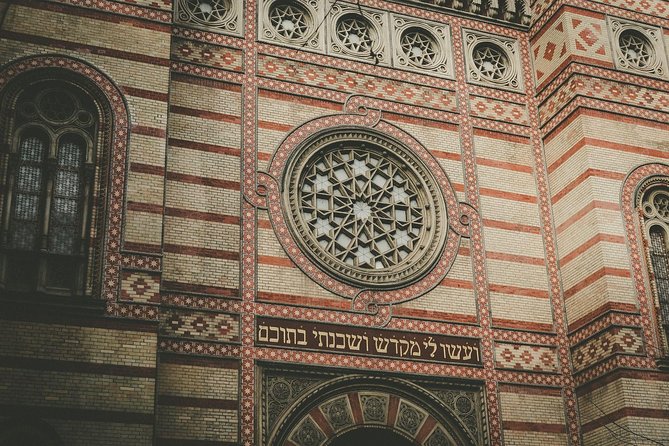
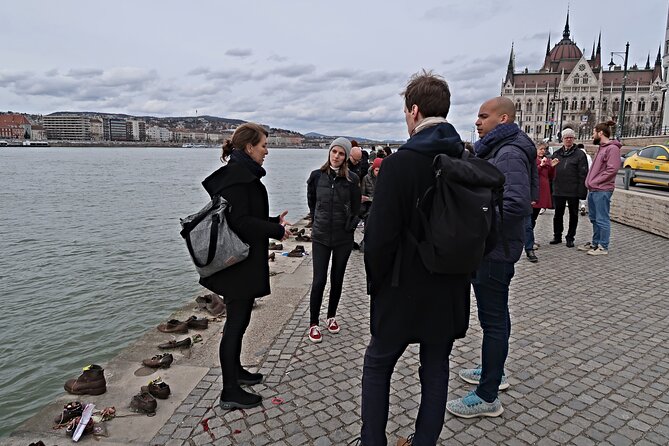
You end at Shoes on the Danube Bank, which is free. This is where the tone shifts from learning about institutions to confronting what happened during WWII.
The memorial represents Jews who were ordered to remove their shoes and were shot at the edge of the water, with their bodies carried away by the river. It’s built around the image of shoes left behind on the bank.
It’s not long—about 20 minutes—but it’s not quick in emotional impact. I suggest giving yourself a moment to just stand there and take it in before moving on. After you’ve spent hours with synagogues and community details, this stop turns those details into something far more personal.
If you’re prone to sensory overload, this ending may feel like a punch. It’s still a good closing point because it prevents the tour from turning into architecture-only sightseeing.
Why the historian guide makes a real difference
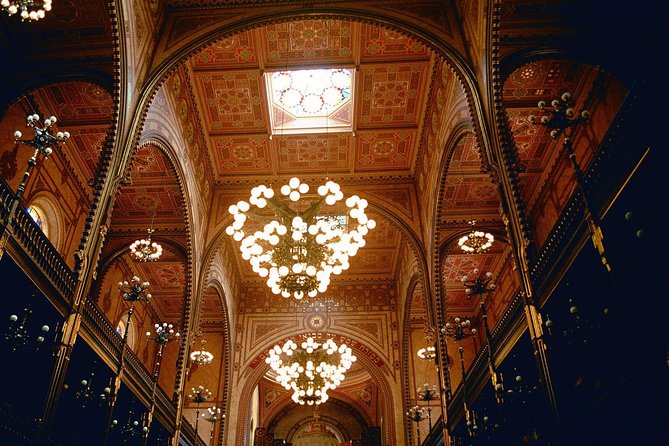
A walking tour can be either a set of facts or a set of impressions. This one aims for facts you can use.
With a historian guide, you get:
- a timeline that connects where you are to what happened over time
- clarity on how Jewish communities shaped Budapest neighborhoods
- an explanation of why these specific buildings matter, not just that they’re old
The guide also brings the human scale. Some guides associated with this experience include Orsolya, Agi, Endre, and Veronika. They’re noted for strong academic framing and story-telling that makes the places easier to remember. One guide even ties in local food recommendations—Orsolya’s mention of trying flodni cake is a nice reminder that culture is bigger than monuments.
You’ll also appreciate the pacing. You’re not rushing between stops, and each location has a job: start big at Dohány, zoom into ghetto-era landmarks at Kazinczy, add the stream-of-Judaism nuance at Rumbach, and finish at the river memorial.
Tickets, dress code, and what to bring
Here’s the practical part that can make or break your experience.
Not included in the price
- Admission tickets for Dohány Synagogue complex
- Admission tickets for Kazinczy Street Synagogue
- Admission tickets for Rumbach Street Synagogue
- Admission tickets for the Jewish Museum area within the Dohány complex
Free
- Shoes on the Danube Bank
Dress code
- At Dohány and Kazinczy, visitors are requested to have shoulders and knees covered.
What I’d bring:
- comfortable walking shoes (this is a walk with multiple stops)
- a light layer or scarf for shoulders
- a small bottle of water (food and drinks are not included)
- your patience at places that run on open-to-the-public timing for interiors
If you forget the dress code, you might still be able to watch from outside or wait, but it can interrupt the flow. Pack for this early in your day, not at the door.
Who should book this tour (and who might not)
This tour is a great fit if you:
- want a structured way to understand Jewish Budapest in a short time
- like walking tours with context, not just photos
- enjoy synagogue architecture, but also want the story behind it
- prefer a small group where you can ask questions
It might be less ideal if you:
- hate emotional WWII memorial stops (Shoes on the Danube Bank will land)
- expect everything to be included without paying additional entry fees
- are very short on clothing that meets modesty requests
It’s a solid choice for first-timers to Budapest, especially if you want to connect the Jewish Quarter story to the broader shape of the city.
Should you book it
Yes—book it if you want a guided route through major Jewish sites that turns buildings into history you can actually hold onto. The best reason is the combination of small-group size and historian-led interpretation, plus the scholar support at the Great Synagogue complex.
If you’re on the fence, do this quick check:
- Are you okay paying extra for synagogue/museum entry tickets?
- Can you dress for covered shoulders and knees?
- Do you have about 3 hours for a walk that ends with a powerful memorial?
If those are yes, you’ll leave with a clearer, more connected picture of Jewish life in Budapest—then a real sense of what was lost at the water’s edge.
FAQ
How long is the Jewish Budapest walking tour?
The tour is about 3 hours.
What does the $126.16 per person price include?
It includes a 3-hour guided walking tour with a historian guide. Food and drinks are not included.
Are synagogue and museum tickets included?
No. Tickets are not included for the Dohány Synagogue, Kazinczy Street Synagogue, Rumbach Street Synagogue, and the Dohány complex areas like the museum.
Where does the tour start and end?
It starts at Kamara Café in Budapest near the Great Synagogue and ends at Shoes on the Danube Bank.
What time does the tour run?
The listed start time is 10:00 am, and the tour offers either morning or afternoon departure.
Is pickup offered?
Yes. Pickup is offered at Kamara Café (opposite the Great Synagogue). You’ll receive your guide’s photo, phone, and bio after booking.
How many people are in the group?
It’s a small-group tour limited to six people, with a stated maximum of eight travelers.
Is there a dress code for the synagogues?
Yes. Visitors to the Dohány and Kazinczy synagogues are requested to have shoulders and knees covered.
What’s the cancellation policy?
You can cancel for a full refund up to 24 hours in advance of the experience’s start time. If you cancel less than 24 hours before, the amount you paid is not refunded.
Is the tour difficult to do on foot?
It’s a walking tour with multiple stops. The information says most travelers can participate, and it’s near public transportation.