REVIEW · BUDAPEST
Budapest: Jewish History Guided Walking Tour with Historian
Book on GetYourGuide →Operated by Budapest Explorers · Bookable on GetYourGuide
Jewish history turns corners in Budapest. I like the historian-led stories that connect today’s streets to what happened here, and I love stopping for Flódni with coffee or a soft drink instead of just looking at plaques. One catch: you’ll see the synagogues from the outside only, so this is not the tour if you want to sit inside and hear the service.
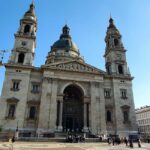
This walk is built around the 7th district’s Jewish Quarter, where a large, active community has lived for over 200 years. You’ll get the grand postcard moment at the Dohány Street Synagogue, then shift gears toward the darker WWII years, with memorial stops for people who saved lives.
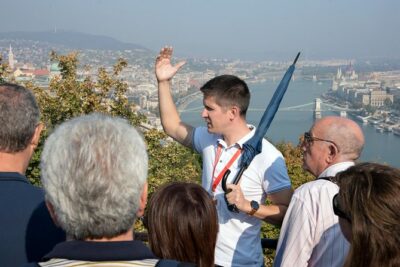
In a group limited to 10, it’s the kind of tour where you can actually ask questions and keep moving without feeling herded. Guides reported in past tours include Barbara, Andrea, András, Noémi, Zsolt, and Gábor, and the common thread is a lot of context: Hungary’s wider history, then how the Jewish community fit into it.
In This Review
- Key things that make this tour worth your time
- Starting at Kempinski Hotel Corvinus: find the group fast
- The 7th District Jewish Quarter: what you’re seeing beyond the storefronts
- Synagogue exteriors on purpose: big views without synagogue entry
- The former ghetto streets: where the walking gets heavier
- WWII memorials you can’t rush: Wallenberg and Carl Lutz
- Flódni and coffee: the one stop that makes history taste real
- Street art, Gozsdu Passage, and Elizabeth Town tips
- Pace and price: how to judge $63 for 2.5 hours
- Who should book this tour (and who might not)
- Should you book this Budapest Jewish History Walking Tour?
- FAQ
- FAQ
- How long is the tour?
- Does this tour include entry into the synagogues?
- What food and drink are included?
- What language is the guide?
- Is this a small group?
- Where do we meet the guide?
- How do I get to the meeting point by public transport?
- Are there stops in multiple parts of the Jewish Quarter?
- What’s the weather plan?
- Is cancellation free?
Key things that make this tour worth your time
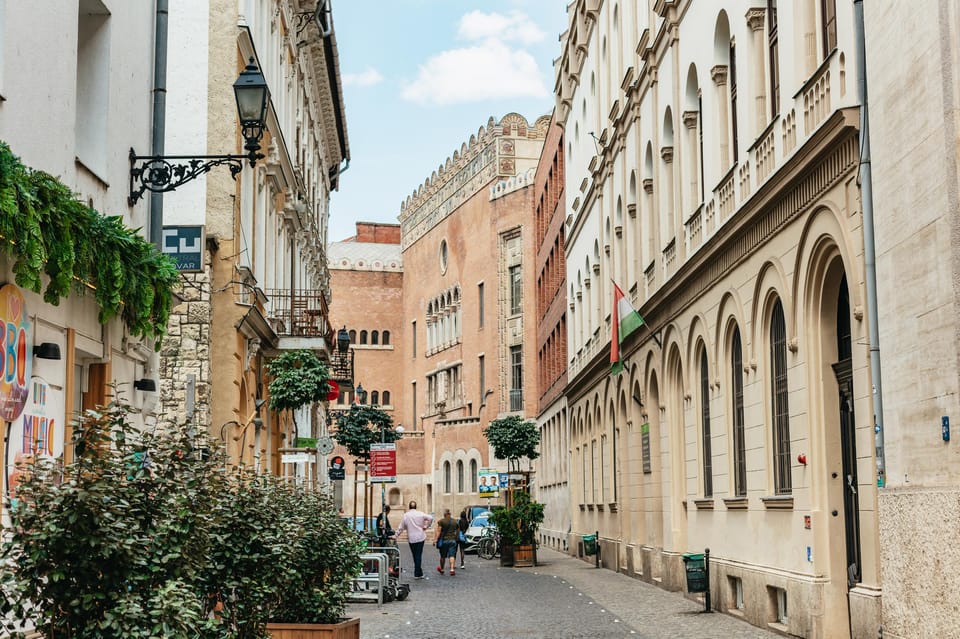
- Three famous synagogue exteriors on one route, including Dohány Street Synagogue and the Rumbach Street Synagogue (1872, Otto Wagner)
- Ghetto-area walking along former ghetto streets, with monuments and traces you can still recognize today
- WWII lifesavers memorials, including Raoul Wallenberg and Carl Lutz (Righteous Among the Nations)
- A real local break with Flódni plus coffee or a soft drink, in a neighborhood café
- Street art and Elizabeth Town tips, plus practical pointers on ruin pubs and nightlife areas
- Small-group pace (up to 10 people), which helps when the topic turns serious
Starting at Kempinski Hotel Corvinus: find the group fast
You’ll meet your guide in front of the Kempinski Hotel Corvinus Budapest, facing the Ferris wheel on Erzsébet Square. It’s a good meeting point because it’s a big visual landmark, not a vague street corner.
Getting there is straightforward by metro and tram. Use M1, M2, or M3, then get off at Deák Ferenc tér to reach the meeting area.
Why this matters: a tour like this moves fast. If you’re late or scrambling at the start, you lose time that would otherwise go to the most meaningful stops. I’d show up a few minutes early, take one look at the Ferris wheel, then just wait where you can spot your guide immediately.
You can also read our reviews of more walking tours in Budapest

The 7th District Jewish Quarter: what you’re seeing beyond the storefronts
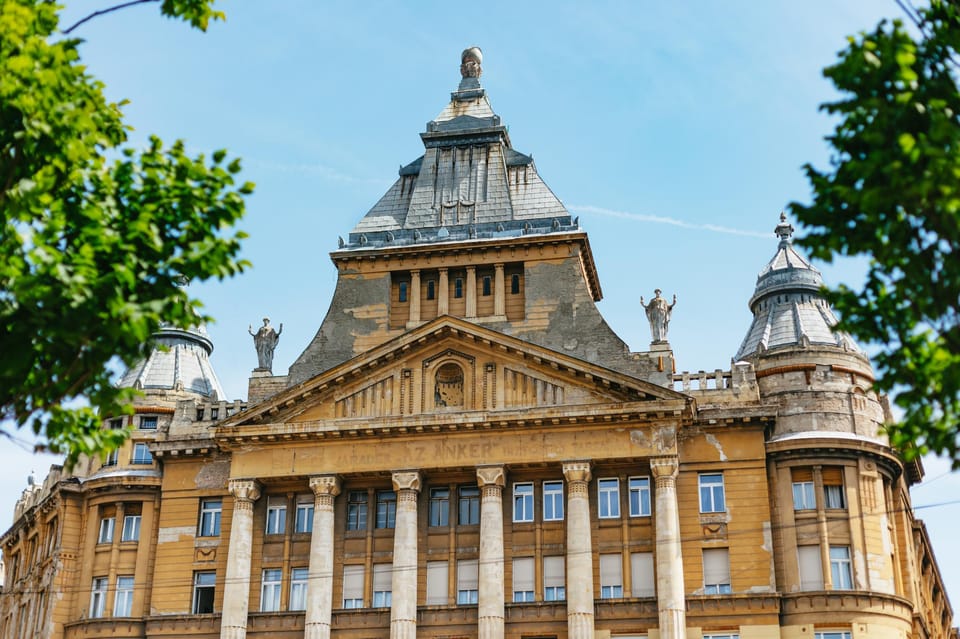
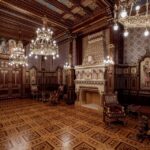
The center of the tour is Budapest’s 7th district, where Jewish culture has been part of the area for more than 200 years. You’ll walk through a neighborhood that still holds an active Jewish community, not a sealed-off museum district.
Along the route you’ll notice the mix that defines this part of the city: synagogues, monuments, kosher restaurants, and kosher shops. The point isn’t just that this is a historically Jewish area. It’s that the neighborhood has kept evolving, with daily life continuing alongside remembrance.
You’ll also hear stories tied to specific streets and places in the Jewish Quarter. The best tours do this “place-to-story” connection, and this one leans hard on it, so you understand why a location matters before you move on.
Synagogue exteriors on purpose: big views without synagogue entry
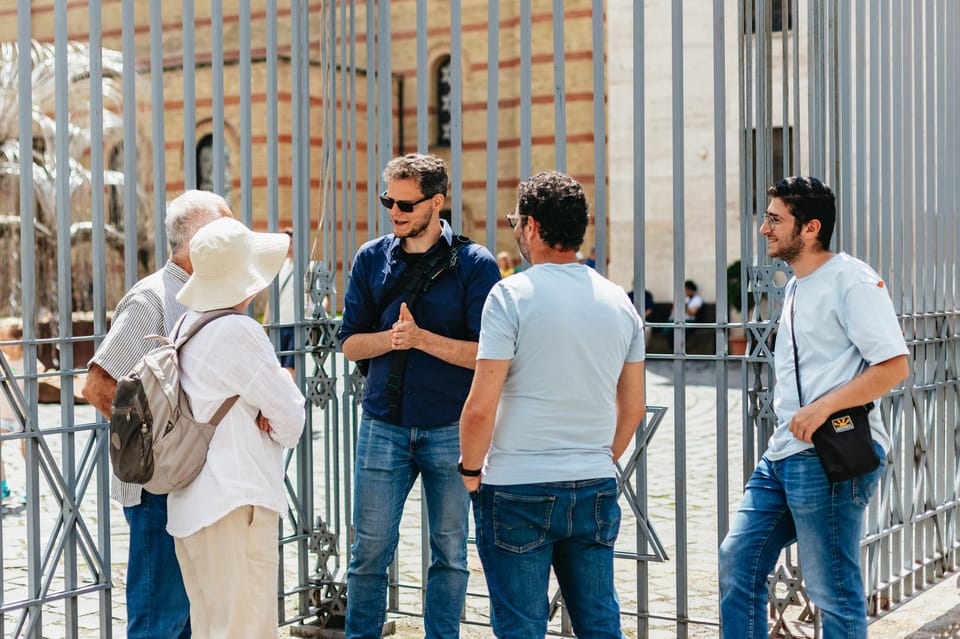
This is an outside-only synagogue tour. That’s not a downgrade; it’s a design choice that makes the route more efficient for a 2.5-hour experience.
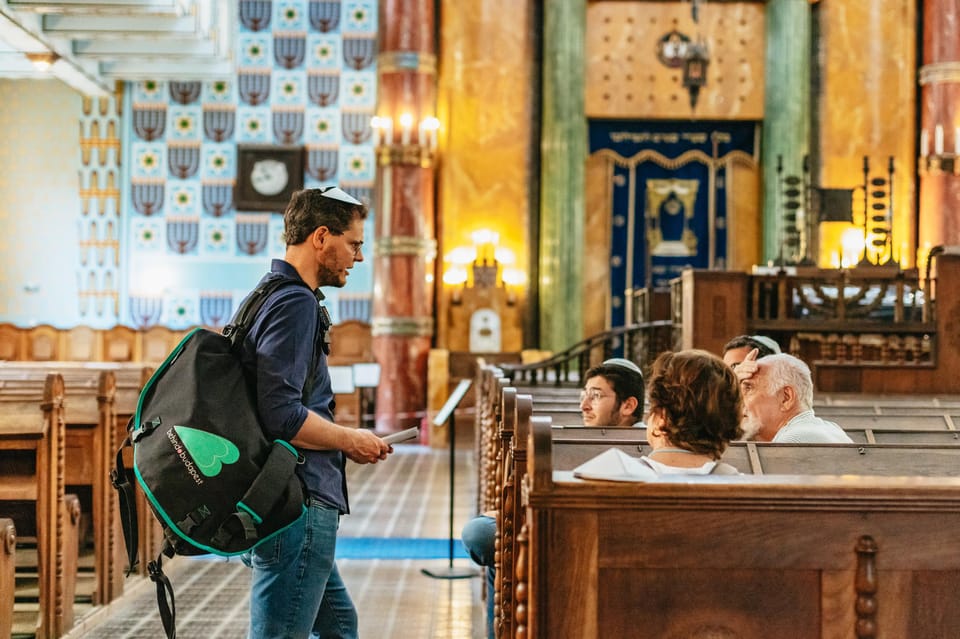
You’ll view the exteriors of three main synagogues:
- Kazinczy Street Orthodox Synagogue
- Neolog Rumbach Street Synagogue
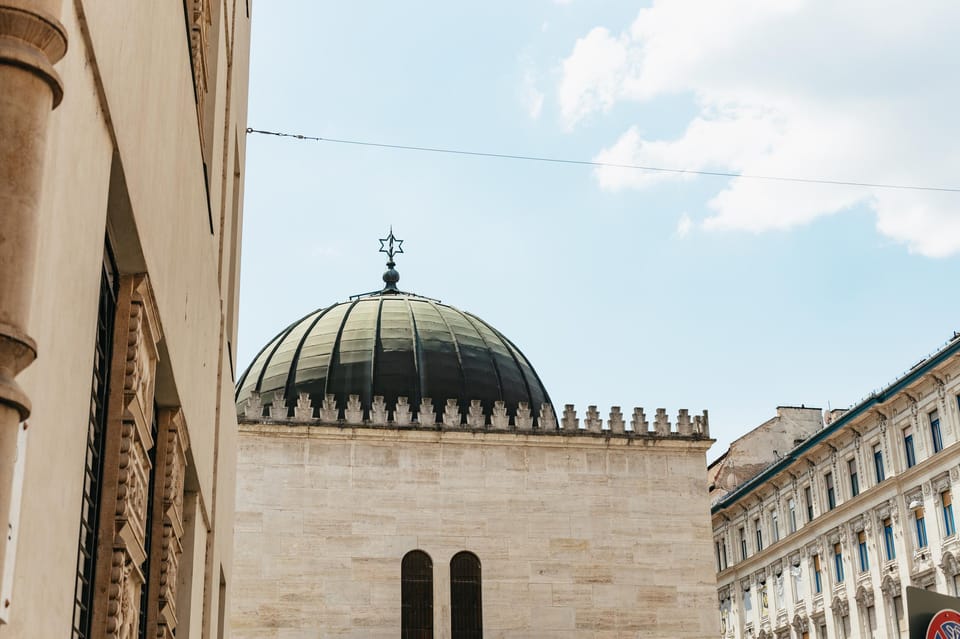
- Dohány Street Synagogue (the grand, widely recognized landmark here)
The Rumbach Street Synagogue is especially worth slowing down for. You’ll learn about it from the outside, including the detail that it was built in 1872 by Viennese architect Otto Wagner.
Photo tip: exterior synagogues can be tricky with street angles and traffic. If you care about photos, plan for a couple of minutes where you pause slightly to frame the buildings rather than trying to shoot while walking.
The drawback is simple: if you want to go inside any synagogue, this tour won’t do that for you. You’ll need a separate ticketed visit for interior access.
The former ghetto streets: where the walking gets heavier
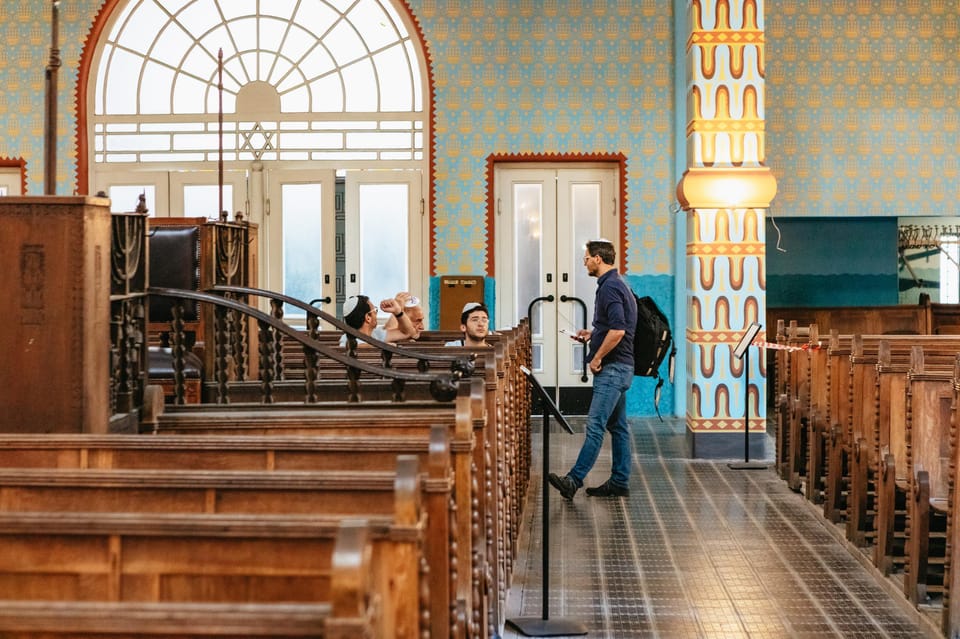
A big part of this tour follows streets tied to the former ghetto area. You’ll see the kinds of sights that make Budapest’s Jewish history feel physical: monuments, synagogues, and reminders built into the neighborhood itself.
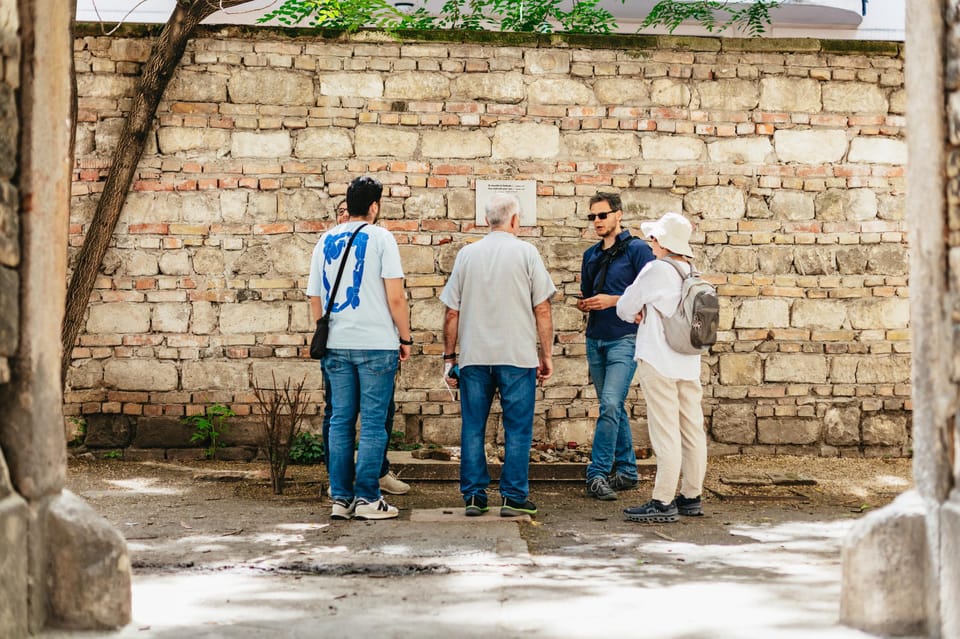
One detail I’d file in your brain before you go: the ghetto wall story is startling because it was present for such a short period. You’ll hear how the original ghetto wall existed for less than 2 months, which makes the whole system feel more like a brutal interruption than a slow, gradual change.
As you walk, you’ll get more than dates. The historian guide connects the neighborhood layout and the visible remnants to the lived experience behind them. That’s what turns an ordinary street walk into something you remember.
Practical note: this section can feel emotionally intense. If you’re someone who needs a mental break, it helps to take short breaths during transitions—then keep going. The tour structure gives you those moments, especially when you reach the memorial points and the café stop later.
WWII memorials you can’t rush: Wallenberg and Carl Lutz
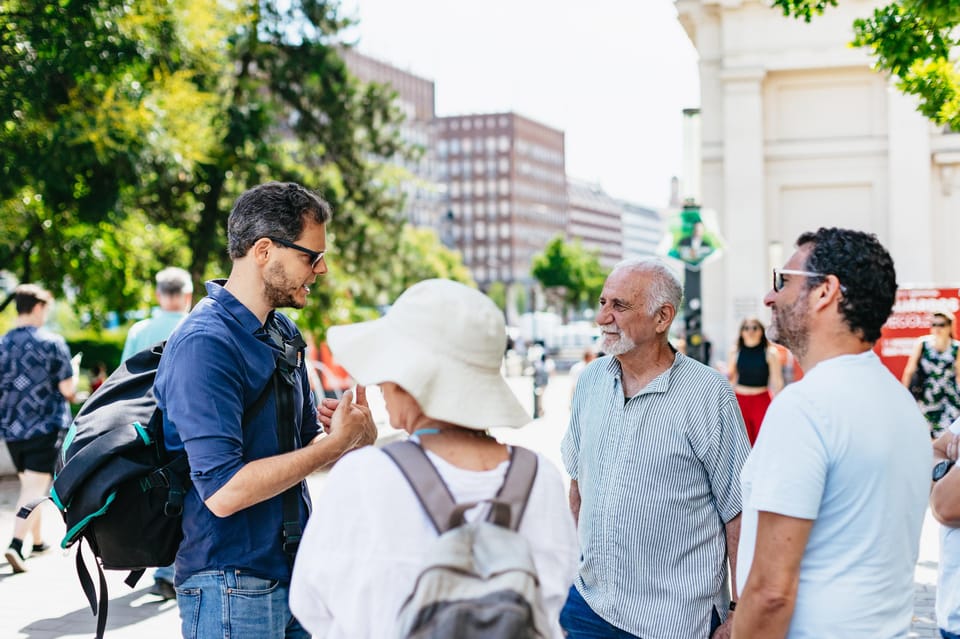
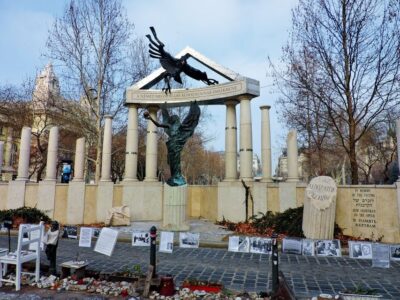
The tour’s most serious section focuses on WWII, especially the winter of 1944/45. You’ll learn about individuals who helped save tens of thousands of Jewish lives during that period.
You’ll visit memorials connected to Raoul Wallenberg and Carl Lutz. Both are recognized as Righteous Among the Nations, a title tied to their lifesaving actions.
Why this stop is valuable: it prevents the story from becoming just a background tragedy. Instead, it shows that specific people made impossible odds matter, and it ties those actions to locations you can stand in front of.
The tone can be sobering. If you appreciate history that doesn’t sanitize the truth, this part will feel especially important. If you prefer lighter sightseeing, you might find this section emotionally heavy—though it’s handled as part of a complete neighborhood story rather than a sudden shock.
You can also read our reviews of more guided tours in Budapest





Flódni and coffee: the one stop that makes history taste real
After you’ve walked through enough story and symbolism to last a lifetime, you get a short break. You’ll have coffee or a soft drink with Flódni, a local Jewish cake.
It’s only about 15 minutes, but the timing is smart. The tour uses that pause to let your brain reset, so the rest of the walking—street art, synagogue exteriors, and neighborhood tips—lands better rather than feeling like one long information blur.
What I like about this inclusion: it’s not a generic tourist snack. It’s tied to Jewish food culture, so it supports the theme of the day in a small, human way.
If you have a sensitive stomach or you’re picky about sweets, just keep in mind you’re getting dessert as part of the deal. It helps to go easy on breakfast before you meet.
Street art, Gozsdu Passage, and Elizabeth Town tips
Budapest has layers, and this tour uses that fact. After the memorial-heavy moments, you’ll shift toward the neighborhood’s lighter visual language—street art and city details you might otherwise miss.
You’ll walk by Gozsdu Passage, and you’ll get local pointers on the Rumbach Street Synagogue area from the outside. You’ll also hear about ruin pubs and nightlife as part of the local culture, not as a random party recommendation.
Then there’s the Elizabeth Town angle. You’ll learn street art and neighborhood secrets connected to the area. This is one of the reasons I recommend this tour even if you’ve seen Budapest’s classic sights already. It helps you understand how the city expresses itself now, right on top of history.
Pace and price: how to judge $63 for 2.5 hours
At $63 per person for about 2.5 hours, the value comes from three things working together: a historian guide, a small group, and an included café stop with Flódni and a drink.
Because it’s limited to 10 participants, the guide can keep momentum without turning the walk into a stop-start debate. And because the focus is outside synagogues plus memorials and street context, you’re not paying for ticket time that would eat up your walking hours.
Where people can feel a mismatch: if you’re hoping to spend long minutes inside synagogues, you may want more than this tour provides. But if your goal is to understand the Jewish Quarter’s story quickly and intelligently, this is a strong use of limited time.
Expect a lot of moving and a lot of story. Comfortable shoes matter more than you’d think for a “short” tour.
Who should book this tour (and who might not)
This tour is a great fit if you:
- want a guided way to understand Budapest’s Jewish Quarter in a single afternoon
- care about WWII history and the specific lifesaving stories tied to real people
- like walking tours that point out small details, not just major landmarks
- appreciate food stops that match the theme of the day (Flódni)
You might think twice if you:
- want synagogue interiors included (this is outside only)
- dislike emotionally serious content in the middle of sightseeing
- prefer a slower pace with lots of free time at each stop
For most people, the sweet spot is: first time in Budapest, a strong interest in history, and enough curiosity to enjoy both grand architecture and street-level human stories.
Should you book this Budapest Jewish History Walking Tour?
I’d book it if you want an organized, historian-guided walk through the Jewish Quarter that connects architecture, street traces, and WWII memorials into one coherent route. The included Flódni stop also turns it from a pure history lesson into something more memorable.
Skip it only if synagogue interiors are your top priority, or if you know you’re not up for WWII-focused memorial moments during your vacation.
FAQ
FAQ
How long is the tour?
The tour lasts about 2.5 hours, with sightseeing taking about 2.25 hours and a café stop for coffee and dessert for about 15 minutes.
Does this tour include entry into the synagogues?
No. The tour includes visits to the synagogues from the outside only, and synagogue entry is not included.
What food and drink are included?
You’ll have a local Jewish cake called Flódni along with coffee or a soft drink in a café during the tour.
What language is the guide?
The tour is offered with a live guide in English.
Is this a small group?
Yes. The group is limited to 10 participants.
Where do we meet the guide?
Meet your guide in front of the Kempinski Hotel Corvinus Budapest, facing the Ferris wheel on Erzsébet Square.
How do I get to the meeting point by public transport?
You can reach the hotel using the M1, M2, or M3 metro lines and several trams and buses. Get off at Deák Ferenc tér to reach the meeting point area.
Are there stops in multiple parts of the Jewish Quarter?
Yes. The walk focuses on the 7th district Jewish Quarter and includes streets tied to the former ghetto area, as well as multiple synagogue exteriors.
What’s the weather plan?
The tour starts in all weather conditions, so dress accordingly.
Is cancellation free?
You can cancel up to 24 hours in advance for a full refund.