REVIEW · BUDAPEST
Buda Castle’s Secrets with a Historian
Book on Viator →Operated by Budapest Explorers · Bookable on Viator
Stone tells stories on Castle Hill. This 2.5-hour tour strings together Budapest’s power, faith, and wars—from the Holy Trinity Column to the Royal Palace terrace—with an English-speaking historian guide. You get a true small-group feel (up to 10, sometimes up to 15) and a route that makes the Castle District easier to understand than wandering solo.
I especially love the mix of stops: you see famous sights and the side streets and architectural details you’d otherwise miss. I also like that Matthias Church entry is included, so you’re not juggling tickets while the guide is explaining what you’re looking at. Plus, a mobile ticket keeps things simple.
One consideration: this is a moderate walking experience on uneven terrain. If you’re sensitive to hills and cobblestones, plan for slower steps and comfortable shoes, because you’ll be on your feet for most of the 2.5 hours.
In This Review
- Key points worth knowing before you go
- Castle Hill with a historian: what this 2.5-hour walk really delivers
- Holy Trinity Column: getting your bearings on Budapest’s story
- Fisherman’s Bastion plus Matthias Church: viewpoints and a ticket you actually use
- WWII scars at the National Archives, then the President’s Palace streets
- Buda Hill Funicular: the view is the point
- Prince Eugene of Savoy statue to the Royal Palace terrace: Habsburg power in plain sight
- Fountain of King Matthias finale: why the locals still care
- Price and pacing: is $65.31 worth it?
- Who should consider this tour?
- Practical tips so you enjoy every stop
- Should you book Buda Castle’s Secrets with a Historian?
- FAQ
- FAQ
- How long is the tour?
- Where does the tour start and end?
- What language is the tour in?
- What is the price per person?
- How big is the group?
- Are tickets included for Matthias Church?
- Is admission included for Fisherman’s Bastion and Buda Castle?
- Is there any guidance on physical fitness and children?
- Are service animals allowed and what about cancellation?
Key points worth knowing before you go
- Historian-led context: You’re not just looking—you’re learning how each building fits Hungary’s bigger story.
- Matthias Church is the one ticket that’s included: You’ll go inside and connect the architecture to the myths and facts.
- WWII evidence on the route: The National Archives exterior includes marks from the past, including WWII bullet holes.
- Fisherman’s Bastion gets explained, not just photographed: You’ll hear its real story and purpose.
- Funicular for city-scale views: You’ll rise to an elevated top station viewpoint overlooking Parliament and the Pest side.
- Small-group pacing: With up to 10 people often mentioned (and a maximum of 15), it stays conversational and not rushed.
Castle Hill with a historian: what this 2.5-hour walk really delivers
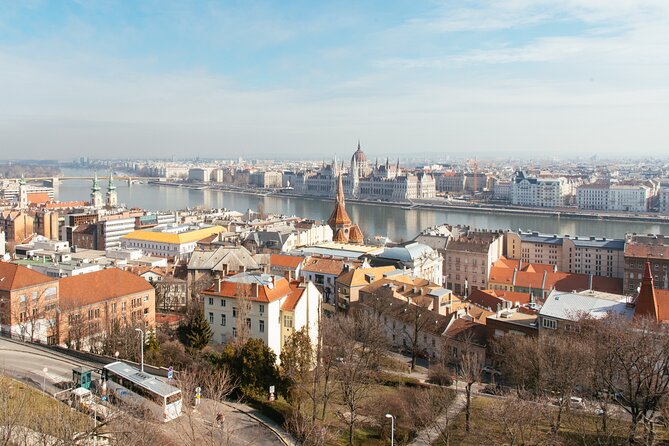
This is a smart choice for your first or second day in Budapest if you want the Castle District to make sense fast. Instead of treating the hill like a list of postcards, you’re guided through a sequence of landmarks that connect Hungarian history to what’s still standing today.
I like the structure. The tour starts with an outer monument that sets the tone, then moves toward the church and palaces where you can literally see how power and belief changed over centuries. And it ends where most people finally understand why locals care: at the Fountain of King Matthias, with the story behind why Matthias is still a favorite king.
You’ll also get a calm, small-group rhythm. In the past, guides such as Petra, Monika, and Judit are praised for staying interactive and answering questions without bulldozing the pace. That matters here because the Castle District is crowded, and a small group helps you keep your attention on the meaning—not just the motion.
You can also read our reviews of more tours and experiences in Budapest.



Holy Trinity Column: getting your bearings on Budapest’s story
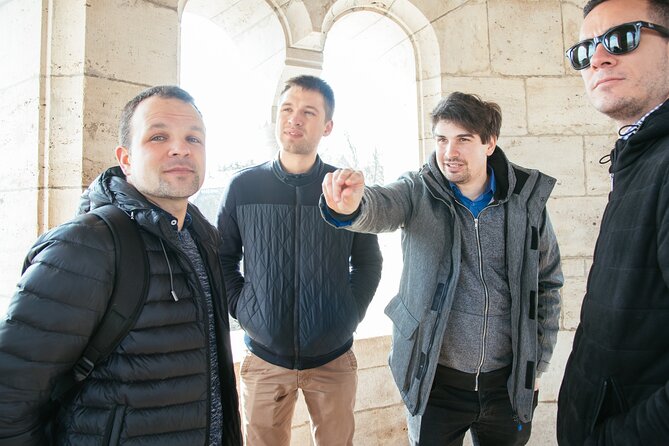
You begin at the Holy Trinity Statue on Szentháromság u. (1014). The first stop is the Holy Trinity Column, where you get the big picture: the history of Budapest and Hungary, told while you’re surrounded by impressive architecture.
This start point is practical. It helps you understand the Castle District before you hit the busiest viewpoints. When the guide explains what you’re seeing early on, later stops land with more impact—especially the churches and palaces, where the symbolism is part of the experience.
This is also one of the more “easy to absorb” segments: about 30 minutes, and no ticket pressure. It’s a good moment to get your bearings before the route turns into cobbled alleyways.
Fisherman’s Bastion plus Matthias Church: viewpoints and a ticket you actually use
Next you move to the Fisherman’s Bastion, an iconic terrace where everyone takes photos. The difference here is that the guide explains the story and the true function, so it’s not just a scenic detour.
A quick heads-up: the Fisherman’s Bastion admission isn’t included. If you know you’ll want to go up for the best angles, check what you’re buying ahead of time. Even if you just enjoy the architecture and views from key areas, it’s better to be prepared so you’re not doing last-minute math while the group is moving.
Then comes the real highlight for many people: Matthias Church. You’ll visit inside for about 30 minutes, and the entrance ticket is included. From the descriptions, this church is treated as one of Budapest’s most beautiful interiors, and the guide adds legends and stories that help you read the decoration instead of just looking at it.
One extra detail I love about this stop: it’s the kind of place where you can occasionally catch live music. Some groups have been lucky enough to hear an organist play a few tunes during the visit. You can’t count on it every day, but the setting makes it feel special when it happens.
WWII scars at the National Archives, then the President’s Palace streets
As you continue through the area, the tour passes the National Archives, described as a stunning building with visible marks from the past, including WWII bullet holes. Even though you’re not going inside (based on the info you have), seeing that exterior detail changes how you see the hill. It turns history into something physical, not abstract.
After that, you head toward the Sándor Palace, the Office of the Hungarian President. This part is more about atmosphere than access. You stroll along historic cobblestone streets and alleyways and slowly make your way through the Castle District fabric.
The Sándor Palace stop is about 20 minutes, and admission isn’t included. So don’t expect it to feel like a museum visit. Instead, use it as a chance to notice how the grand and the everyday sit side by side on Castle Hill.
Buda Hill Funicular: the view is the point
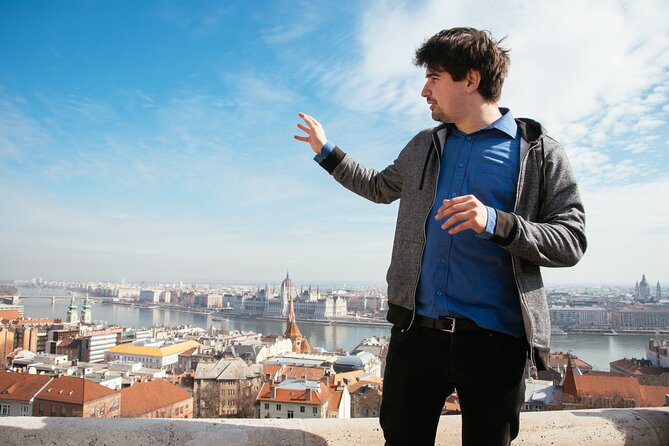
No Castle District tour feels complete without looking back over the city. Here, you get a structured way to do it: a ride on the Buda Hill Funicular and time at the top station.
This segment is only about 10 minutes, but it’s where the city-scale panorama really hits. You’ll get views toward Parliament and the Pest side from an elevated spot, which is much harder to replicate on foot in a short window.
Important practical note: funicular admission isn’t included. That’s normal for these tours, but it’s worth planning for so the group doesn’t get stuck while people sort out tickets.
If you’re traveling with anyone who gets tired quickly, this stop is a bonus. It breaks up the walking with a short ride and delivers the kind of view people remember later—even if you forget some architectural details.



Prince Eugene of Savoy statue to the Royal Palace terrace: Habsburg power in plain sight
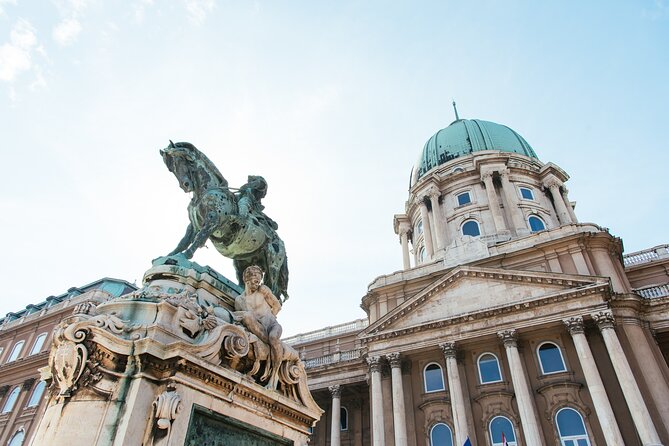
After the funicular, you stop at the Equestrian Statue of Prince Eugene of Savoy. You’ll learn about a decisive military campaign that influenced European history for centuries and also about the Habsburgs and their connection to Hungary.
This stop is short (about 10 minutes), but it’s the kind of explanation that makes earlier stops click. Once you understand who held power and how wars shaped borders and rule, the palaces and churches start feeling less random.
Then you reach the Royal Palace of Buda area for the big architecture moment. The tour includes time to marvel at the former seat of kings and emperors and—crucially—time for the panorama from the terrace. From that vantage point, you can see major landmarks like Margaret’s Island, Parliament, the Chain Bridge, St. Stephen’s Basilica, the Budapest Eye, and Elizabeth Bridge.
This is another part where admission isn’t included, so think of it as a terrace-and-views window rather than a full palace interior visit. Even so, this is where the tour earns its pace. In a short time, you get both the grandeur of the palace setting and the reward of seeing how Budapest lays out below.
Fountain of King Matthias finale: why the locals still care
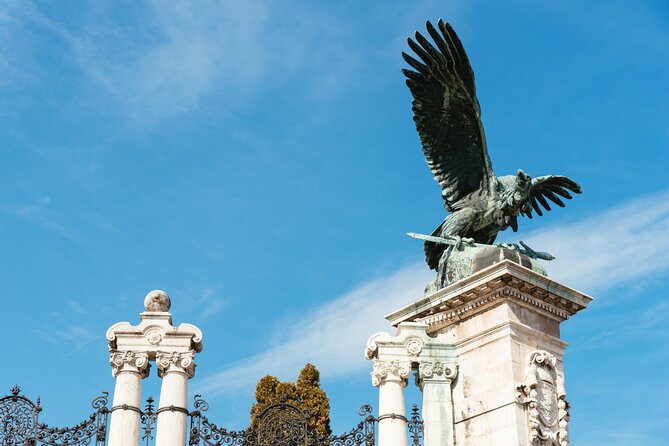
You end at the Fountain of King Matthias, finishing at about 10 minutes. It’s a fitting close because it brings you back to Hungarian identity and storytelling. You’ll hear legends and the reason King Matthias remains a favorite figure for many Hungarians.
This last stop also has emotional logic. After seeing monuments, churches, power centers, and wartime marks, you end with a ruler whose memory is still celebrated. You leave with a clearer sense of what history means to people today—not just what happened long ago.
If you’re heading to dinner afterward, staying near the finish point is convenient. The listed end location is Fountain of King Matthias, Szent György u. (1013 Hungary).
Price and pacing: is $65.31 worth it?
At $65.31 per person for about 2 hours 30 minutes, this tour is priced in the mid-range for Budapest, but the value makes sense if you care about context.
Here’s why it feels worth it:
- You get one paid entry included: Matthias Church. If you were planning that anyway, the tour offsets part of the cost.
- You’re paying for a historian guide who connects architecture to the story behind it. That’s the difference between seeing objects and understanding them.
- The route is tight. You cover multiple Castle District anchors—Holy Trinity Column, Fisherman’s Bastion, Matthias Church, National Archives exterior, Sándor Palace area, funicular viewpoints, the Prince Eugene statue, Royal Palace terrace, and the Matthias fountain—without wasting time figuring out the order.
Pacing is another part of value. Reviews praising guides like Monika and Judit often mention that the tour didn’t feel rushed and stayed interactive. That matters because the Castle District can feel chaotic on your own. A guide acts like a traffic controller for your attention.
Who should consider this tour?
This tour is a great fit if:
- You want history context without reading a wall of plaques.
- You prefer small-group walking over big bus tours.
- You’re visiting during crowds and want someone to help you focus.
It may be less ideal if:
- You expect every stop to be a ticketed indoor attraction (some are exterior or viewpoint-based).
- You have trouble with uneven cobblestones and moderate walking time.
Practical tips so you enjoy every stop
- Wear comfortable shoes. Castle Hill is cobbled and uneven, and you’ll be moving most of the time.
- Bring a layer. Churches and hill viewpoints can feel cooler than the lower city.
- If you want the best views, don’t over-plan photos. Let the guide lead you to the key angles first, then take your time after.
- Have a small plan for what you’ll do next. After the Matthias fountain, you’re well positioned to continue exploring the Castle District at your own pace.
Should you book Buda Castle’s Secrets with a Historian?
If your priority is understanding the Castle District—not just checking it off—this is one of the better ways to spend 2.5 hours in Budapest. The included Matthias Church visit plus the guide’s focus on real stories (from Habsburg connections to WWII scars) makes it feel like more than a sightseeing loop.
I’d book it early in your trip if you can, because the context helps everything you see later. And if you’re planning to hit Fisherman’s Bastion and the Royal Palace terrace anyway, the tour helps you do it in a logical order with an explanation that sticks.
FAQ
FAQ
How long is the tour?
The tour runs for about 2 hours 30 minutes.
Where does the tour start and end?
It starts at the Holy Trinity Statue on Szentháromság u., 1014 Hungary and usually finishes at the Fountain of King Matthias on Szent György u., 1013 Hungary.
What language is the tour in?
The tour is offered in English.
What is the price per person?
The price is listed as $65.31 per person.
How big is the group?
It’s a small-group experience with a maximum of 15 travelers, and it’s described as up to 10 people for an intimate feel.
Are tickets included for Matthias Church?
Yes. Entrance to Matthias Church is included.
Is admission included for Fisherman’s Bastion and Buda Castle?
No. Admission for Fisherman’s Bastion and Buda Castle is not included.
Is there any guidance on physical fitness and children?
The tour requires moderate physical fitness, and children must be accompanied by an adult.
Are service animals allowed and what about cancellation?
Service animals are allowed. You can cancel up to 24 hours in advance for a full refund.