REVIEW · BUDAPEST
Budapest: Guided City Tour by E-Bike
Book on GetYourGuide →Operated by Yellow Zebra Tours · Bookable on GetYourGuide
Budapest is more fun at bike speed. This guided e-bike ride strings together the city’s top landmarks in a smooth loop, so you spend less time navigating and more time looking. I especially liked the way the route links neighborhoods—grand boulevards give way to quieter side streets—and how your guide turns the scenery into a clear story of what shaped this city.
Two things I really liked: first, the Pedelec-style e-bikes make the hills feel manageable, including the climb up toward Buda Castle District. Second, the small group setup (limited to 8) keeps things relaxed, and guides such as Sam, Becca, Beka, Johny, and Igor show up with the kind of pacing and humor that make long stops feel worth it. One thing to consider: you must already know how to ride a bike, and the bikes aren’t described as step-through models—so taller riders will feel fine, but shorter riders may struggle with fit.
In This Review
- Key reasons to go
- Getting Oriented Fast on Budapest’s E-Bike Loop
- Starting at the Opera House and Taking Andrassy Avenue to Heroes’ Square
- Heroes’ Square and City Park: Big Sight Power Without Exhaustion
- St. Stephen’s Basilica, Liberty Square, and the Parliament Area
- Margaret Bridge to Margaret Island: A Scenic Break From the City Grind
- Batthyány Square Coffee Stop and the Setup for Buda Castle
- Up to Buda Castle District: Matthias Church, Fisherman’s Bastion, and Panoramas
- Down the Danube Promenade Back to the Opera House
- E-Bikes, Helmets, and the One Limitation You Should Plan Around
- Price and Value: Why $76 Can Be a Smart Spend
- Who This Tour Best Fits
- Should You Book This Budapest E-Bike Tour?
- FAQ
- How long is the Budapest guided city tour by e-bike?
- What’s included in the price?
- Are landmark entrances or museum tickets included?
- Where does the tour start?
- Is hotel pickup available?
- Do I need to know how to ride a bike?
- What height do I need to ride the e-bike?
- Does the tour run in bad weather?
- Is the tour group small?
- What’s the cancellation policy?
Key reasons to go
- Buda and Pest in one ride: Danube crossings plus both castle views and downtown sights
- A hill-friendly e-bike: pedal assist helps with the climb into Buda Castle District
- Story-driven stops: photo breaks plus explanations at major landmarks
- Cycle-path time savings: you’ll cover a lot without feeling constantly “on the clock”
- Coffee-and-cake break: included on the 4-hour option
- Small group energy: limited to 8 riders for smoother traffic flow and questions
Getting Oriented Fast on Budapest’s E-Bike Loop
Budapest is huge in character, and a walking day can feel like a slow-motion blur: stairs, long distances, and the river separating everything. This tour fixes that by giving you one organized line through the city—starting near the Hungarian State Opera House and ending back there—while you ride between views instead of waiting for them.
You don’t just “see” famous places. You get context as you move. One guide in particular (Sam) is repeatedly praised for matching the pace to the group and for keeping stops purposeful. Others, like Johny and Becca, are singled out for fun, clear explanations. That matters, because the best part of Budapest isn’t only the photos—it’s how the different eras and empires show up in the layout of streets and buildings.
The e-bike part is the real equalizer. If you’re a bit rusty on a bicycle, the motor support means you can focus on steering and enjoying the ride. You still pedal, but you’re not fighting every slope. Just remember the rule: you must know how to ride a bike, and the minimum height is 160 cm / 5 ft 3 in.
You can also read our reviews of more cycling tours in Budapest



Starting at the Opera House and Taking Andrassy Avenue to Heroes’ Square
You begin at the Yellow Zebra Segways & Bikes store, in a courtyard a few minutes walk from Astoria and the Great Synagogue. If the gate is closed, the instructions say to ring doorbell 6. From there, you roll out to one of the most iconic approaches in the city.
The early stretch is about getting your bearings. You’ll travel past the Opera House and up Andrassy Avenue, which is where Budapest looks at its most grand and “designed.” This is a good moment to get used to your e-bike controls: starting, stopping, and holding a steady pace in a group.
From here, the route heads toward Heroes’ Square and onward to City Park—and this is where your chosen time slot matters. The longer (4-hour) option is specifically called out as including Heroes’ Square and City Park time. In practice, you’ll use this portion to see Budapest’s big “statement” spaces rather than only the historic core.
Heroes’ Square and City Park: Big Sight Power Without Exhaustion
Even if you’ve seen pictures, Heroes’ Square hits differently in person. It’s an open, monumental setting—perfect for a quick pause where your guide can explain what you’re looking at. If you’re short on time in Budapest, this kind of stop is efficient: you get scale and symbolism fast.
Then you head into City Park, where you’ll pass sights such as Vajdahunyad Castle and Széchenyi Thermal Bath. City Park is one of those places where the city shows off its outdoor space, and it gives your ride a calmer rhythm compared to the busier downtown blocks.
One practical benefit here: your legs get a break. With the e-bike assistance, you’re not burning energy before you reach the climbs. You’ll still feel like you’re moving through real Budapest, not just bouncing from one tram stop to another.
St. Stephen’s Basilica, Liberty Square, and the Parliament Area
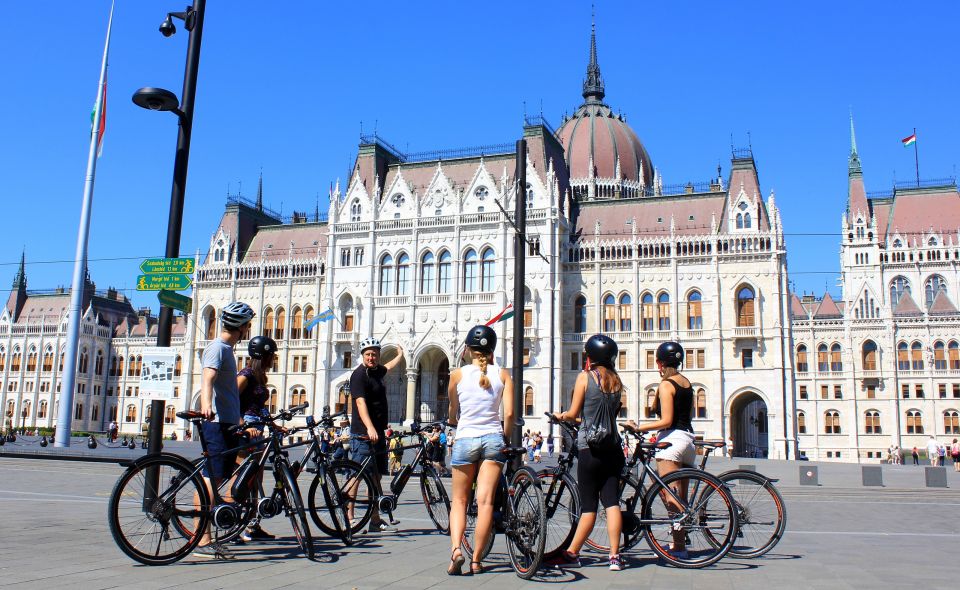
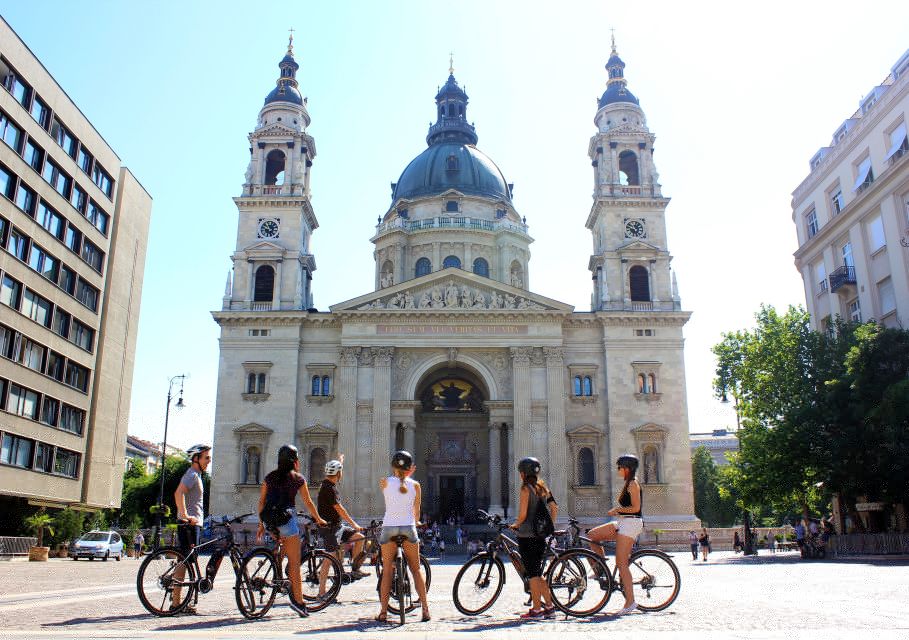
Next up is the heart of Pest’s visual identity. You’ll cycle past St. Stephen’s Basilica and toward Liberty Square, with the Parliament area nearby.
This is an important section because it’s where Budapest often feels “most European”: strong architecture lines, wide streets, and those long views where you can spot major landmarks from a distance. Your guide’s explanations here help turn a skyline into a map you can remember.
If you’re the type who likes to keep seeing the same sights from different angles, this stop works well. You’re riding, so you catch the buildings from the road and then again when you return later in the tour with the Danube crossing sequence.
Margaret Bridge to Margaret Island: A Scenic Break From the City Grind

After the downtown sights, you reach Margaret Bridge, and the route includes a detour to Margaret Island. That’s a nice contrast: rather than more stone and monuments, you get a park island with space to breathe.
This is also a smart strategy on a short trip. Budapest can feel like it’s all “go-go-go,” especially if you’re hopping between neighborhoods. Margaret Island gives you a reset—time to look, stretch, and take a break without losing the momentum of the tour.
In the notes from riders, the smoothness of Budapest’s cycle-path network is repeatedly praised. This stretch tends to be one of the places where the city’s bike infrastructure makes the whole experience feel easy rather than stressful.
You can also read our reviews of more guided tours in Budapest






Batthyány Square Coffee Stop and the Setup for Buda Castle
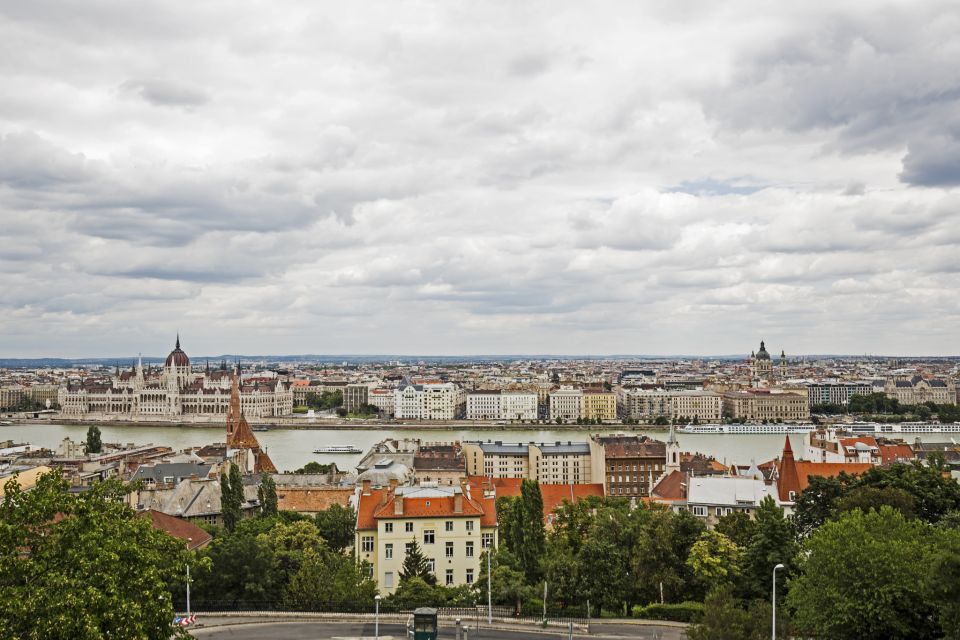
At Batthyány Square, the tour pauses for a break, with coffee and cake included on the 4-hour option. Even if you’re on the shorter format, the tour is structured around comfort stops rather than nonstop riding.
Why does this matter? Because the next phase is the steep, dramatic one: getting up to Buda Castle District. After coffee, you’re more likely to enjoy the climb instead of treating it like a chore. And since the e-bike helps on hills, the climb becomes scenic rather than tiring.
Your guide is also on hand to answer questions right when you’ll want them most—during the transition from flat riverside views to the uphill castle zone.
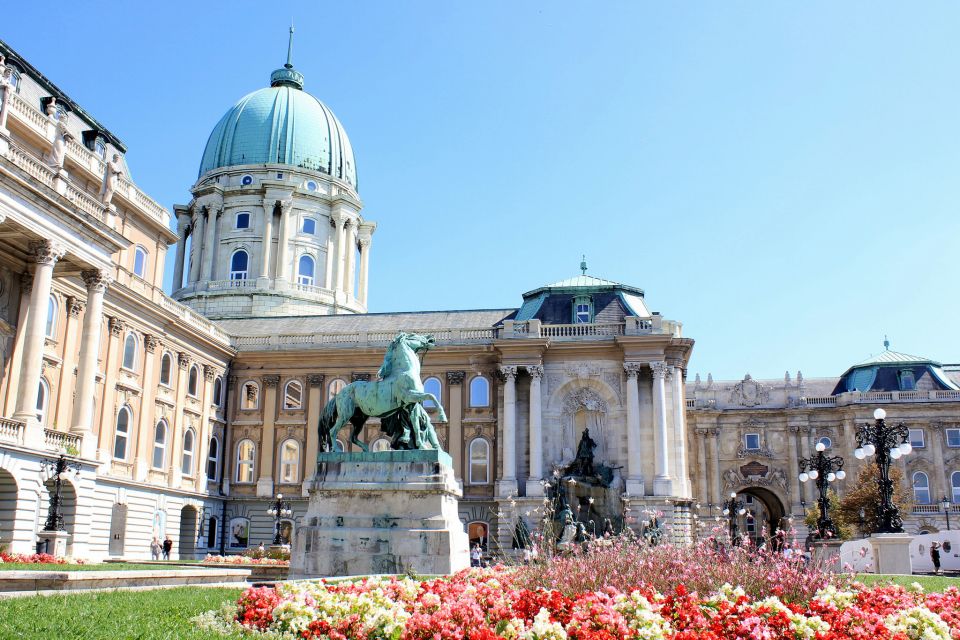
Up to Buda Castle District: Matthias Church, Fisherman’s Bastion, and Panoramas
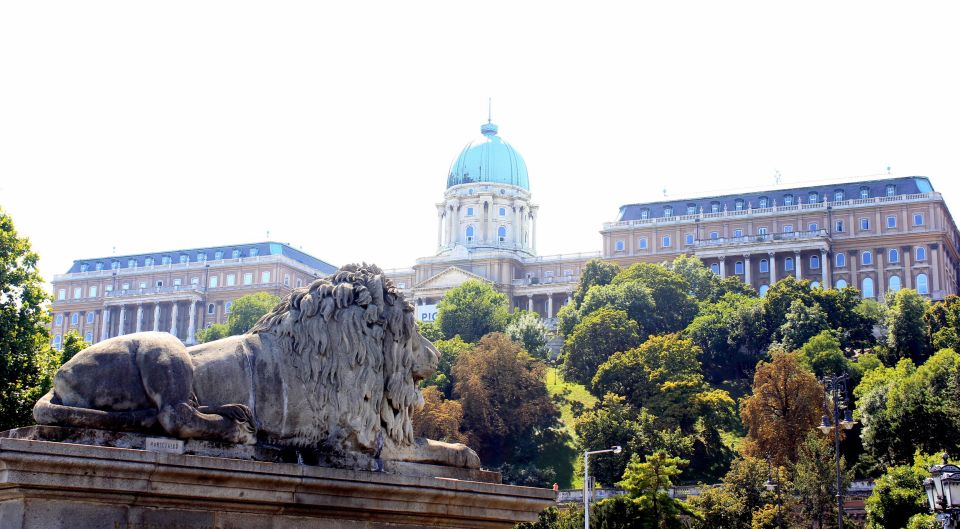
This is the main event. You’ll head up a winding hill to reach the Buda Castle District. The e-bike assistance is the difference between seeing the views with energy and arriving at the top feeling cooked.
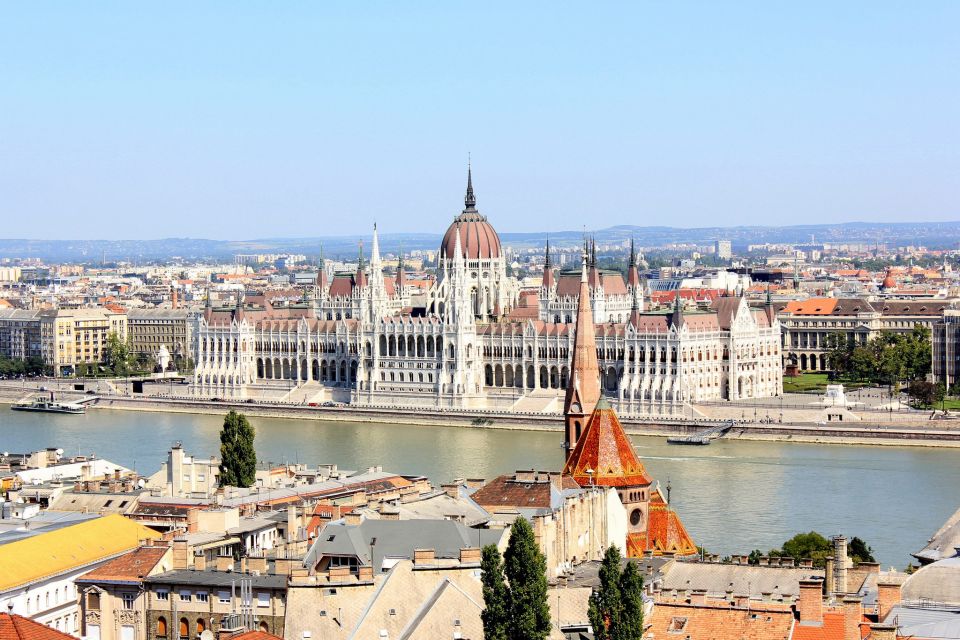
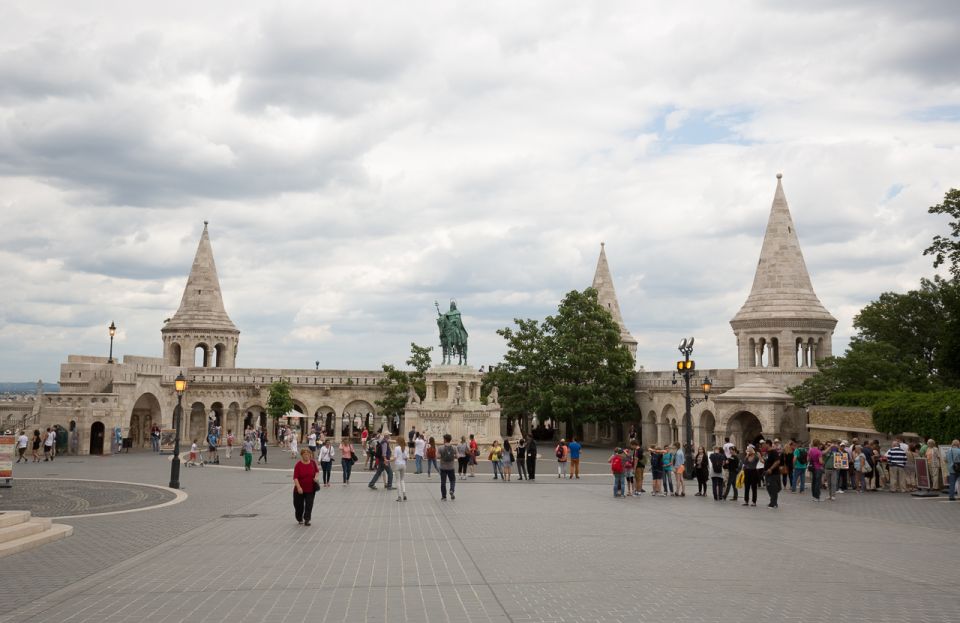
Once you’re there, you’re rewarded with panoramic views across the city. You’ll also see major landmarks in this area, including Matthias Church and Fisherman’s Bastion. One rider described the castle-district ride as surreal—big wheels, e-bike assist, and dramatic viewpoints all at once. That matches what you can expect visually: Budapest becomes layered and theatrical from here.
More than scenery, the guide’s job is to connect what you’re seeing to why it looks the way it does. People repeatedly credit guides like Beka, Beka’s storytelling, and others (Jose, Haffa/Affa, Arash) for making the stop feel like more than a photo opportunity.
Down the Danube Promenade Back to the Opera House
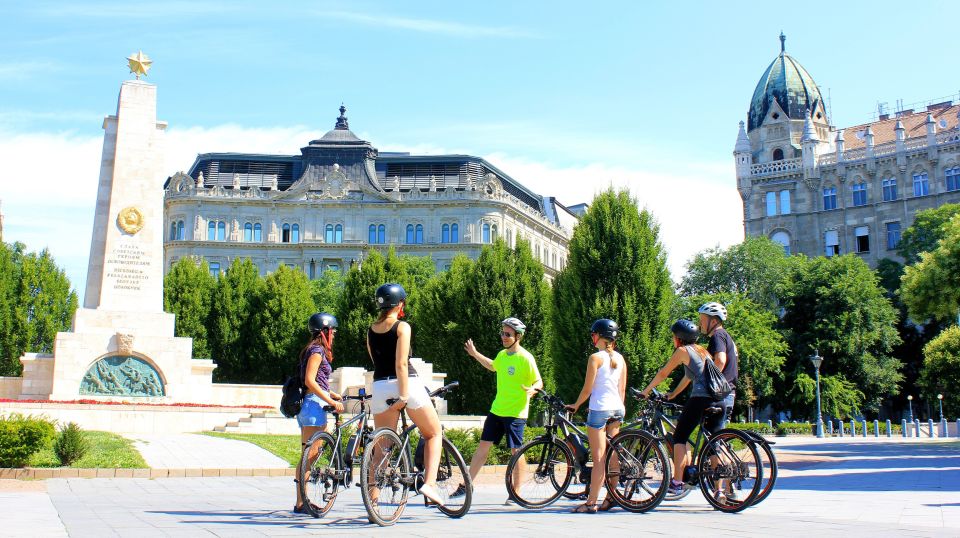
After Buda, you cross back and enter the Pest side of the city. Then you ride along the Danube Promenade, passing the Great Market Hall and moving through Pest downtown before the tour concludes back at the Opera House.
This segment is satisfying because it’s a “rolling gallery” moment. You’re not climbing. You’re gliding past the riverfront vibe—easy motion, lots to look at, and a sense of finishing strong.
If you’re thinking about logistics for the rest of your trip, this final stretch is also helpful. You end near a transit-friendly area where you can continue on foot or by public transport without a headache.
E-Bikes, Helmets, and the One Limitation You Should Plan Around
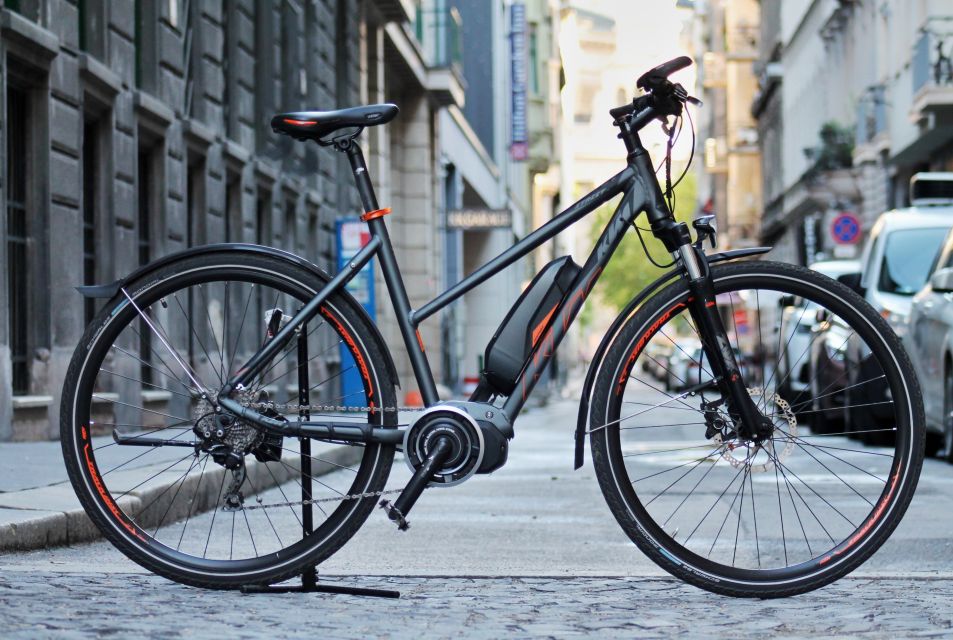
This tour uses high-end Pedelec bicycles with a small electric motor that makes pedaling easier. You get a helmet and the tour runs in all weather conditions, so dress for wind and rain even if the morning looks calm.
The most important “know before you go” points are simple:
- You must be at least 160 cm (5 ft 3 in).
- You must know how to ride a bike.
- You should wear comfortable shoes and comfortable clothes.
- Intoxication isn’t allowed.
The bike fit issue is worth taking seriously. One rider noted they needed a smaller frame at 157 cm and found the standard bikes too big; there were no step-through bikes available in that situation. If you’re close to the minimum height or have balance concerns, I’d take that warning seriously and consider whether a different style of bike or tour might suit you better.
On the plus side, multiple riders praised the bikes as almost brand new or in terrific condition. That’s not a minor detail—good brakes and stable handling make group riding feel safer and calmer.
Price and Value: Why $76 Can Be a Smart Spend
At $76 per person for 2.5 hours, this isn’t the cheapest way to move around Budapest. But it’s also not trying to be a budget “see the highlights, fast” deal.
Here’s what you’re paying for:
- A guide who keeps you moving and explains what you’re seeing at the right moments.
- E-bike rental with a motor-assisted setup (so hills and distances aren’t a constant battle).
- Route design that includes both banks of the city and multiple landmark areas in one outing.
- Photo stops built into the flow, plus a comfort break when the schedule allows.
If your itinerary is tight—say you want a first-day orientation that doesn’t feel like homework—this tour often earns its keep. You get a “map in your head” by the time you finish, which makes the rest of your Budapest days easier to plan.
Also, entrance fees and museum tickets aren’t included, so you’re not locked into spending extra money at every stop. The approach is more like: see the sights, understand them, then choose what to pay for later on your own.
Who This Tour Best Fits
This tour is a great match if you:
- Want to hit major Budapest highlights without spending two full days walking.
- Like guided storytelling but don’t want museum-level intensity.
- Prefer active sightseeing that still feels comfortable thanks to the e-bike assist.
- Appreciate safe, organized group logistics, especially if you’re new to biking in cities.
It may be less ideal if you:
- Don’t already feel comfortable riding a bicycle.
- Are very close to the height limit and worry about bike fit.
- Want lots of time inside museums (entrances aren’t included, and the tour is built around riding and stops).
Kids can work well too—one family included two teens and they reportedly enjoyed the experience. That suggests the ride can be a fun “shared activity” rather than only a sightseeing mission.
Should You Book This Budapest E-Bike Tour?
If you want a fast, fun way to understand Budapest across both sides of the river, I’d book it. The combination of e-bike convenience, a route that actually links landmarks, and guides like Sam, Becca, Beka, Johny, and Igor (praised for pacing and engaging explanations) makes it a strong first or second day plan.
Just be honest with yourself about bike comfort and height. If you’re near 160 cm or you’re unsure about fitting on a standard frame, you may want to ask the operator directly what bike sizes are available for your body type before committing.
If those boxes check out, this is one of the most efficient ways to get your bearings and start falling for Budapest quickly.
FAQ
How long is the Budapest guided city tour by e-bike?
The tour runs for 2.5 hours. There’s also mention of a 4-hour option.
What’s included in the price?
Included are an English-speaking guide, e-bike hire, a helmet, and photo stops. The tour also includes a coffee and cake break if the 4-hour option is selected.
Are landmark entrances or museum tickets included?
No. Entrance to landmarks and museums is not included.
Where does the tour start?
The meeting point is the Yellow Zebra Segways & Bikes store, a few minutes’ walk from Astoria and the Great Synagogue. The shop is in a courtyard; ring doorbell 6 if the gate is closed.
Is hotel pickup available?
No. There is no hotel pickup and drop-off.
Do I need to know how to ride a bike?
Yes. You must know how to ride a bike.
What height do I need to ride the e-bike?
You must be at least 160 cm (5 ft 3 in).
Does the tour run in bad weather?
Yes. The tour goes in all weather conditions, so dress appropriately.
Is the tour group small?
Yes. It’s a small group limited to 8 participants.
What’s the cancellation policy?
You can cancel up to 24 hours in advance for a full refund.