REVIEW · BUDAPEST
Budapest: Communist History Tour with House of Terror Option
Book on GetYourGuide →Operated by Tourist Angel · Bookable on GetYourGuide
Communism in Budapest feels close, not textbook. This small-group tour strings together key sites from the Hungarian Parliament to Liberty Square, then gives you a choice: the playful Budapest Retro Center or the harrowing House of Terror. I love how the walk stays focused on real places you can still stand in today, and I love the option to shift the tone from everyday life under Communism to the machinery of repression. The only catch: the House of Terror side is heavy, and the walking pace can feel a bit brisk if you’re not up for a steady stroll.
What makes it work is the guide. Many guides are praised for clarity and pacing, with time for photos and questions, and even extra time when the group needs it. Expect a 2-hour experience that includes your museum entry and lets you skip the ticket line, plus you’ll get your ticket from the guide (not a ticket office hunt).
In This Review
- Key Takeaways Before You Go
- A Two-Hour Timeline Through Communist Budapest
- The Walk Starts at Parliament and Builds Real Momentum
- Liberty Square to the Exile Story at Cardinal Mindszenty’s Windows
- Cold War Space Under Your Feet: Nuclear Bunker Ventilation
- 1956 and the Anti-Soviet Revolution: The Turning Point Stop
- Morning Add-On: Budapest Retro Center (The Lighter Side of the Same Era)
- Afternoon Add-On: House of Terror Museum Options (Self-Guided or Guided)
- Self-Guided at House of Terror: Good If You Like Control
- Guided at House of Terror: Best for Context and Emotional Clarity
- Who’s This Best For—and Who Should Think Twice?
- Price and Value: Why $58 Can Actually Be a Deal
- Practical Tips That Make It Smoother
- Final Verdict: Should You Book This Communist History Tour?
- FAQ
- How long is the tour?
- Is the tour in English?
- Does the price include museum entry?
- Can I choose between Budapest Retro Center and House of Terror?
- Is it a small group?
- Do I need to pick up tickets at the museum?
Key Takeaways Before You Go
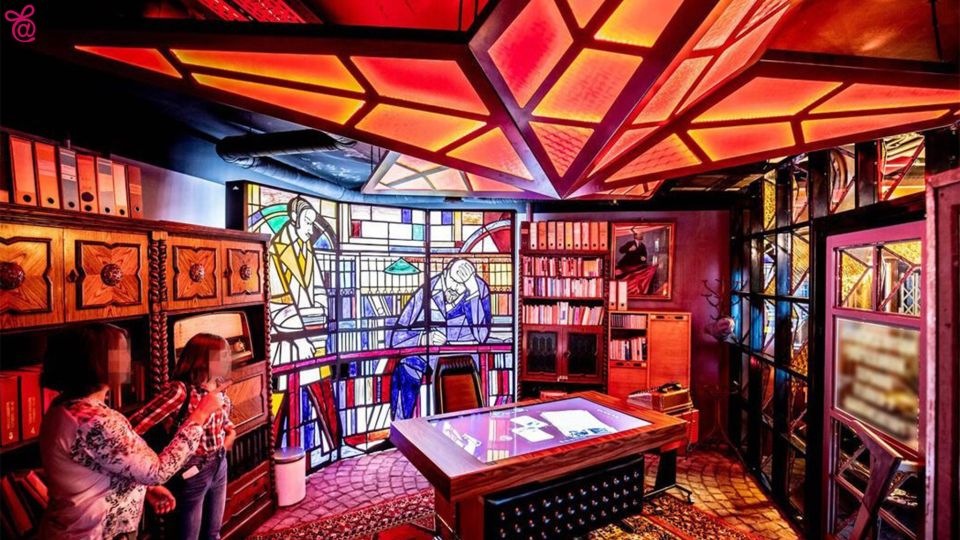
- Parliament to Liberty Square: You’ll connect monuments, political messaging, and Soviet presence in one tight storyline.
- Cold War “details you can see”: ventilation channels tied to a secret nuclear bunker show how paranoia shaped daily space.
- Retro Center is the palate cleanser: 1960–1980 homes, vehicles, and Soviet-Hungarian space-flight artifacts, with an interactive vibe.
- House of Terror options change the depth: self-guided with an added ticket or a guided route through prison, trials, and 1956.
- Small group means real questions: the cap of 10 helps guides keep things personal and responsive.
A Two-Hour Timeline Through Communist Budapest
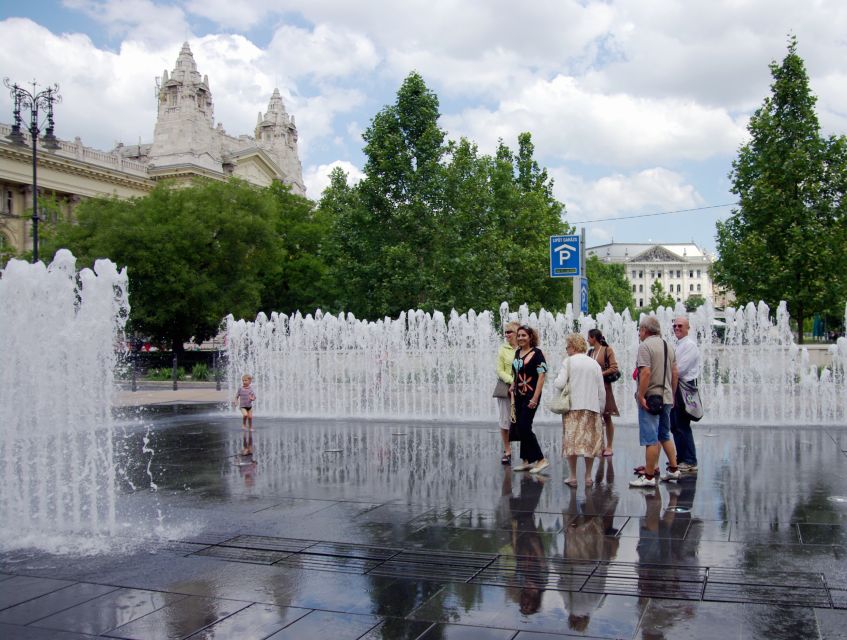
This tour gives you a compressed, high-impact sense of Hungary’s 45-year Communist period under Soviet military occupation. The core idea is simple: start with the official symbols and monuments you pass in central Budapest, then move toward the less visible systems—propaganda, secret police power, and the fear baked into the Cold War.
You’ll be with a professional English-speaking guide in a group capped at 10 people, which matters more than it sounds. In places like this, you don’t just want dates; you want the “why” behind what you’re seeing, and a smaller group helps the guide answer your questions without steamrolling the conversation.
The tour also gives you control over your emotional volume. Morning and afternoon share the first part of the walk, then you branch off to either a lighter, everyday-life look at Communism (Retro Center) or a harder, survivor-history route (House of Terror).
You can also read our reviews of more historical tours in Budapest



The Walk Starts at Parliament and Builds Real Momentum
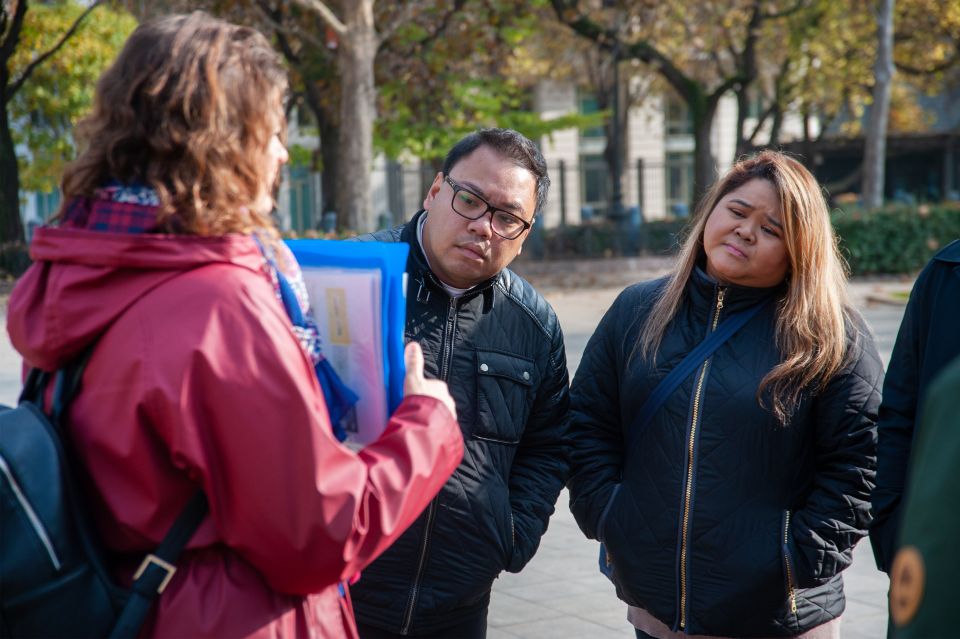
Most days, you’ll meet your guide and begin your history walk at the Hungarian Parliament area—an excellent choice because it’s the kind of place where power is meant to be seen. From there, the tour moves through dramatic monuments, including one honoring the victims of the red dictatorship.
This is where I think the tour does its best job with pacing. Instead of tossing you into the worst stories first, it takes you through visible symbols and asks you to read what those monuments are trying to say. Then you shift from monuments to locations that reveal how the regime operated beyond the stage lights.
You’ll continue toward Liberty Square, where you’ll see the Soviet Liberation Memorial, noted as the last Communist monument of the city staying in its original place. That line about “last” isn’t just trivia—it’s a reminder that politics changes what a city chooses to keep, remove, or reinterpret over time.
Liberty Square to the Exile Story at Cardinal Mindszenty’s Windows
As the walk continues, you’ll stop for the famous windows tied to Cardinal Mindszenty, Hungary’s anti-Communist Catholic Church leader, who spent years of exile there. It’s one of those sites that can look like architecture until your guide puts the human context back into the view.
What I like about this part is that it shows Communism wasn’t only about party meetings and ideology. It also touched churches, people of influence, and the public space where citizens could feel they were being watched—or protected, depending on who controlled the narrative.
And because it’s a walk across central Budapest, you’re not stuck indoors staring at labels. You’re translating the story into geography, which is how it tends to stick.
Cold War Space Under Your Feet: Nuclear Bunker Ventilation
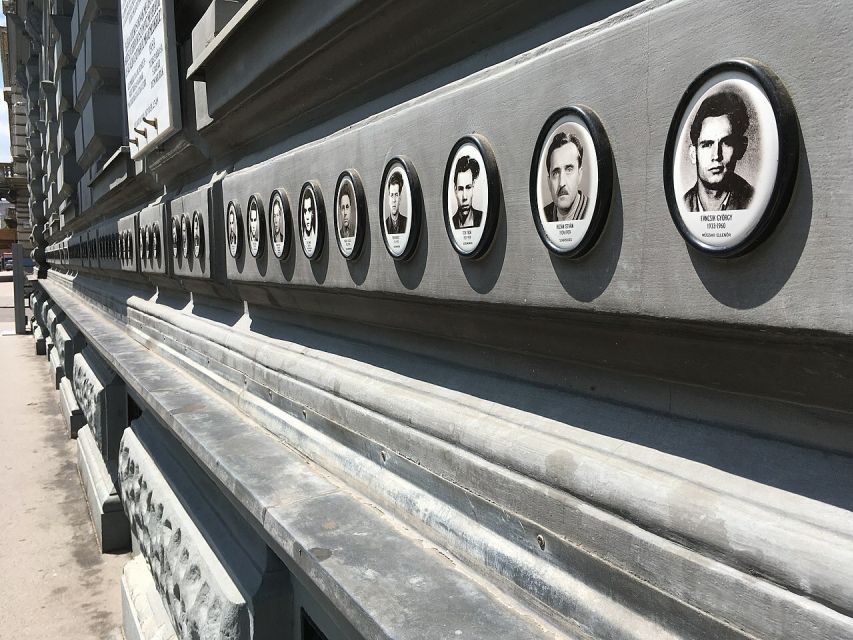
One of the most memorable stops is the tour’s mention of ventilation channels connected to a secret underground nuclear bunker built during the Cold War. Even if you don’t see a massive bunker entrance, you’ll understand how the regime plan for catastrophe in ways that shaped what was built above and below ground.
This is also a good moment to think about why tours like this feel different than reading online. A guide can point out the logic behind a structure—why it exists, what fear it responds to, and how that fear becomes physical.
It’s not just creepy architecture. It’s a concrete reminder that Communist-era control didn’t stop at policing people in the open. It prepared for control at a national and even apocalyptic level.
1956 and the Anti-Soviet Revolution: The Turning Point Stop
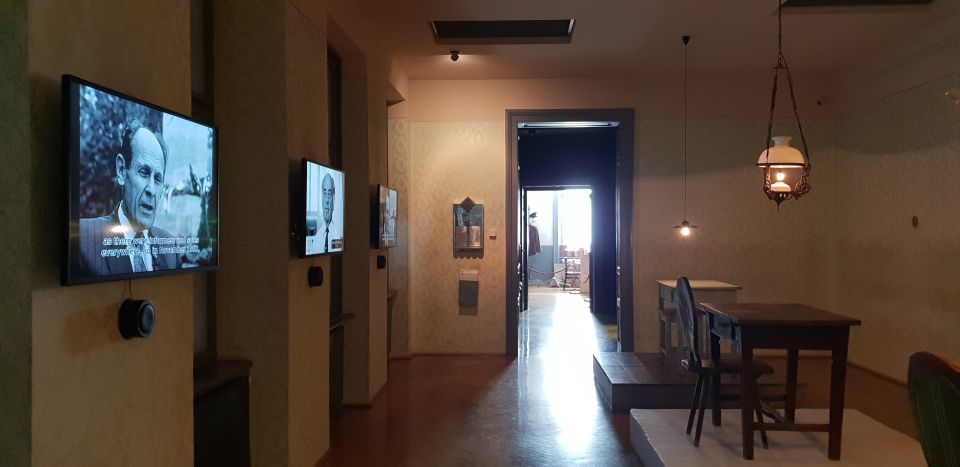
The walk brings you to sites connected to the Hungarian anti-Soviet revolution of 1956. This is the kind of event that can sound like a single year in a textbook, but on the ground it becomes a turning point with consequences.
Your guide will connect this to the broader Communist story—what changed, what didn’t, and why the revolution mattered even after it was suppressed. The guides are often praised for weaving in both facts and how those facts affected real people, including the sense of living with uncertainty and pressure.
If you want one reason to take the tour instead of doing a self-guided read: it’s the way the guide can sequence events so they make emotional and political sense rather than feeling like disconnected history chapters.






Morning Add-On: Budapest Retro Center (The Lighter Side of the Same Era)
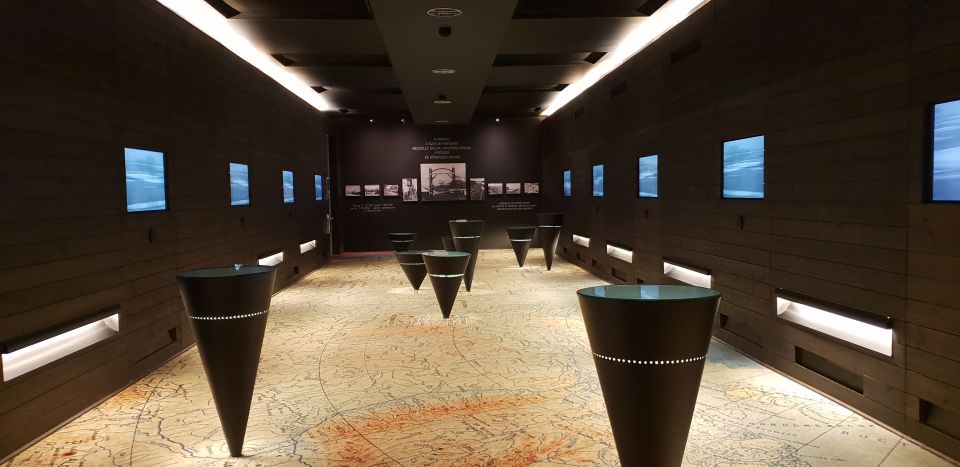
If you book the morning option, after the walk you’ll get a 1-hour guided visit at the Budapest Retro Center. This is a museum you go to when you want contrast, not comfort: it turns your perspective from oppression as a system to oppression as atmosphere—what daily life looked like when the state controlled culture, jobs, and consumer life.
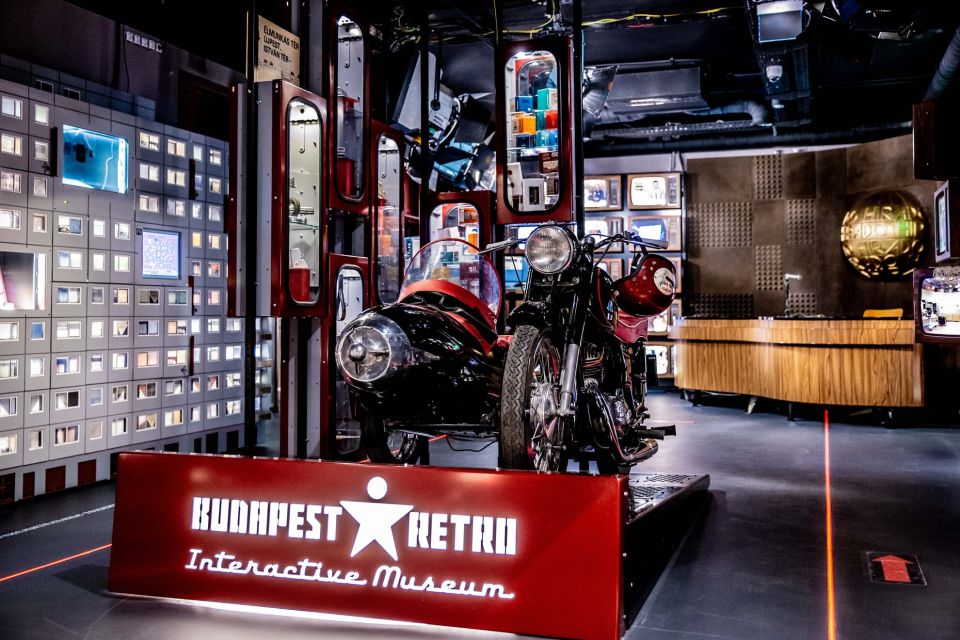
The Retro Center includes street views, typical vehicles, astronauts from the Soviet-Hungarian space flight, and real interior home designs, plus thousands of objects from the 1960–1980 period. The museum is arranged over three floors, and it’s described as fun and interactive.
There are also optional role-play touches. You can dress as a Communist comrade, or try being a TV news presenter of the time. I like moments like this because they help you notice design details and everyday habits you’d otherwise ignore—propaganda wasn’t only posters; it was product shapes, household setups, and mass media tone.
Afternoon Add-On: House of Terror Museum Options (Self-Guided or Guided)
If you choose the afternoon route, you’ll keep the same initial walking story and then add the House of Terror Museum in one of two ways:
- You can visit on your own with the additional ticket.
- Or you can take a guided House of Terror tour that follows the full arc of the period, from WWII and Nazi rule through Soviet Communist occupation.
In both versions, the focus is the former seat of the AVO State Protection Police—Hungary’s version of the Soviet KGB. The site is described as faithfully restored to commemorate the victims of the brutal dictatorship of the 1940s and 1950s.
Self-Guided at House of Terror: Good If You Like Control
Self-guided works if you want to set your own pace through interrogation and prison spaces, memorial areas, and documentary displays. You’ll already have the walking tour context, so you can spend more time lingering on whatever hits you hardest.
Just keep in mind: self-guided museum time can feel longer or shorter depending on how fast you read. If you’re the type who reads labels thoroughly, it can become a longer experience than the 2-hour “headline” suggests.
Guided at House of Terror: Best for Context and Emotional Clarity
The guided option is designed to do the storytelling work for you. You’ll follow your guide through the period, including how Hungary moved through WWII, Nazi rule, and then Soviet occupation. The tour covers life and economy in the 1950s, interrogation and torture cells, the office room of the dreaded director, and stories tied to mass deportations, labor camps, and political trials.
You’ll also cover the 1956 revolution and what happened afterward, ending with the end of Communism in 1989.
This is the option I’d pick if you want a guided thread tying everything together. Many guides are praised for explaining clearly and answering questions with real depth, including with personal perspective and careful pacing.
You should also know that museum operations can sometimes be impacted by renovations. On at least one tour date, a guide adapted when the museum was closed for renovations. So if your trip lines up with a closure window, you may find the guide reshapes the experience while keeping the focus on the same era.
Who’s This Best For—and Who Should Think Twice?
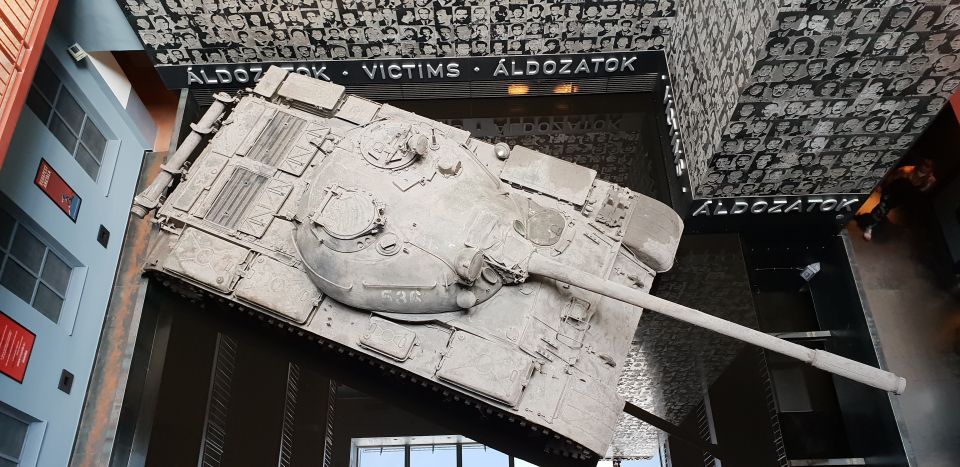
This tour is a strong fit if you:
- want a small-group history walk that actually leads somewhere
- like seeing how politics gets written into monuments and buildings
- care about understanding both Soviet-era control and Hungarian resistance, especially 1956
- want a choice between the Retro Center’s everyday-life lens and House of Terror’s repression-focused lens
It may be less ideal if you:
- are sensitive to intense themes, especially in the House of Terror portions
- struggle with sustained walking, since the experience is built around a central Budapest route
- prefer a purely light sightseeing day, because even the Retro Center option is still tied to a dark historical frame
Good news: many guides are noted as patient and flexible—one review highlighted a guide being mindful when guests used walking aids, and another mentioned the guide compensating when a guest fell behind due to illness. So if you need the pace adjusted, it’s worth saying something early to your guide.
Price and Value: Why $58 Can Actually Be a Deal
At about $58 per person for a 2-hour experience, the value comes from three things you don’t always get together:
- a live professional guide (not just a ticket)
- a structured walk across key historical sites (so you’re not guessing)
- your included museum entry, depending on option selected
Add-ons matter here. If you choose Retro Center, you’re basically getting a guided museum hour on top of the walk. If you choose House of Terror, the guided version includes a narrative walk through interrogation and trial-related spaces, which takes real expertise to make understandable without turning it into a blur.
And because the tour is limited to 10 people and includes English interpretation, you’re not paying for a giant group experience. It’s the kind of tour that stays focused.
Practical Tips That Make It Smoother
- Wear shoes you can handle for central Budapest walking. This is a route, not a sit-and-stare tour.
- Bring a small note habit: write down the names your guide mentions (like Mindszenty and the AVO reference) right away. It makes later museum moments easier to connect.
- Decide your tone in advance. If you want a lighter emotional landing, pick Retro Center. If you’re there to understand repression mechanics, choose House of Terror.
- Listen for the guide’s pacing cues. Several guides are praised for timing that leaves room for photos and questions, and those moments matter.
Final Verdict: Should You Book This Communist History Tour?
If you want Budapest that goes beyond the obvious postcard stops, this tour is a strong choice. The walking portion sets you up with clear political context at places you can actually see—Parliament, Liberty Square, the Mindszenty windows, and the Cold War bunker clue. Then the add-on lets you steer the emotional direction: Retro Center for the 1960–1980 everyday object-and-media lens, or House of Terror for the machinery of state violence and the road to 1989.
I’d book it if you like guided interpretation and want real context for 1956. I’d also book it if you appreciate options, because getting the same walk foundation with a different museum ending is a practical way to match the day to your mood.
Skip it only if you’re avoiding heavy themes or you need a very relaxed stroll. Otherwise, this is exactly the kind of Budapest experience that turns “history” from a word into places you’ll remember.
FAQ
How long is the tour?
The tour duration is 2 hours.
Is the tour in English?
Yes. The live tour guide offers English.
Does the price include museum entry?
Yes, entry ticket is included for the museum you choose: Budapest Retro Experience Center or House of Terror Museum, depending on your option.
Can I choose between Budapest Retro Center and House of Terror?
Yes. You can join a walking tour that continues either with a guided visit to Budapest Retro Center or with an option to visit House of Terror Museum (self-guided or guided).
Is it a small group?
Yes. It’s limited to 10 participants.
Do I need to pick up tickets at the museum?
No. You will receive your ticket from your tour guide, and you should not look for it in the ticket office.