REVIEW · BUDAPEST
Budapest: Castle District Walking Tour
Book on GetYourGuide →Operated by Triptobudapest.hu - Free Budapest Walking Tours · Bookable on GetYourGuide
Castle Hill grabs you fast, and it keeps your feet moving on purpose. I love the tight, guided route through the Castle District and the way the stops connect into a clear story, with real context from guides like Gary and Dora. I also like the practical Q&A style that turns confusion into answers, from Matthias Church details to what to look for on the terraces. One possible drawback: this is a hike with stairs and a short uphill push, so you’ll want solid shoes and a moderate fitness level.
You’ll meet at the Batthyány tér metro exit and walk a circuit that’s built for first-timers who don’t want to get lost in angles, steps, and viewpoints. The tour runs about 2 hours, capped at 30 people, so you get enough group energy without feeling swallowed by the crowd. If you’re after lots of free wandering on your own, you may feel the pace is a bit “on rails,” since the plan aims to hit key sights in time.
In This Review
- Key highlights worth planning for
- Starting at Batthyány tér: where the Castle District story begins
- The two-hour route through the Castle District’s main sights
- Buda Castle and Matthias Church: seeing the details that matter
- Fisherman’s Bastion terraces and the story behind the view
- WWII scars, Jewish landmarks, and Ottoman traces on Castle Hill
- Underground cave systems and defense stories that change how you walk
- Quirky public statues, huszár legends, and the humor that breaks tension
- Where power lives today: the mythical bird and government offices
- Price and value: what $2.27 buys you (and what you should plan for)
- Who this tour fits best (and who should rethink it)
- Should you book this Budapest Castle District walking tour?
- FAQ
- FAQ
- What’s the duration of the Budapest Castle District walking tour?
- Where do I meet the guide?
- What sights does the tour include?
- Is the tour suitable for wheelchair users?
- What should I bring for the tour?
- What language is the tour guide?
Key highlights worth planning for
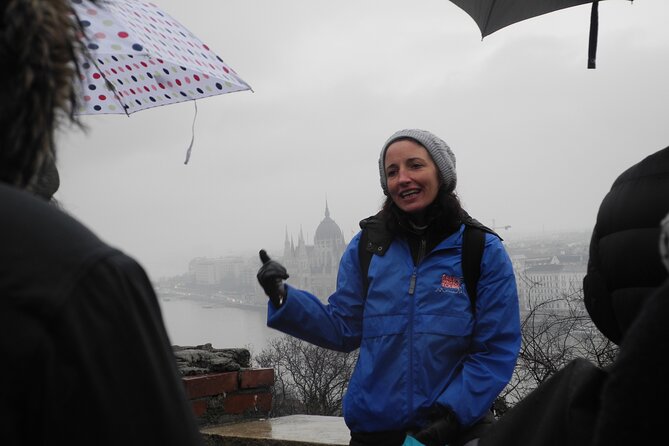
- Batthyány tér start, blue flag meeting point that’s easy to spot near St. Anna Church
- Royal Palace, Matthias Church, and Fisherman’s Bastion in one logical walking flow
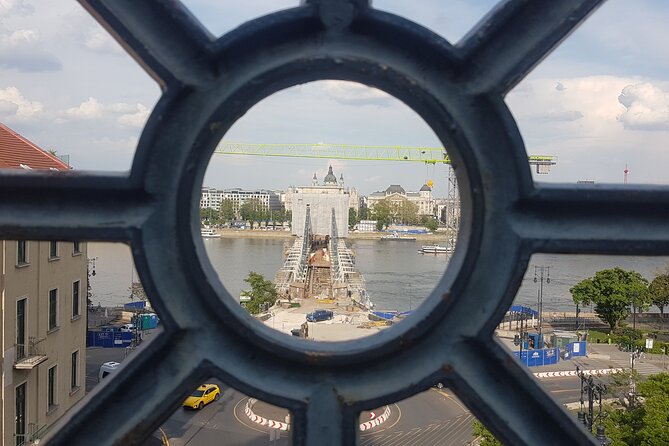
- Panorama time over the Danube toward Pest, with guidance on where to stand
- WWII, Ottoman, and Jewish corners of Castle Hill explained as you pass them
- Underground and defense stories, including the labyrinth-like cave system
- Funny statue moments and the huszár light cavalry tale to break up the serious history
Starting at Batthyány tér: where the Castle District story begins
This tour begins at Batthyány tér, right at the metro exit, about 15 meters from St. Anna Church. Look for a guide holding a royal blue flag—it’s an easy landmark when you’re arriving in a busy part of town. The big advantage here is simple: you don’t waste time figuring out your first uphill step. You start with a plan, not a guess.
Before you go, pack like you’re going for an urban hill walk. Bring comfortable shoes (non-negotiable here), water, and weather-appropriate layers. Even though it’s only about 2 hours, you do face stairs and an uphill stretch of roughly 10 minutes. The good news is that the pace includes rest breaks, and guides have a habit of keeping everyone together—I’ve seen it when guides like Andras paused so the group could catch up.
One more practical note: the tour ends back at the meeting point area. That matters. When Castle Hill drains your energy, you don’t want an ending that turns into a complicated return trip.
You can also read our reviews of more walking tours in Budapest



The two-hour route through the Castle District’s main sights

The format is straightforward: meet, walk, learn, stop for views, then wrap up where you started. Expect a smooth mix of architectural landmarks and side stops that help you “read” the hill instead of just sightseeing it.
You’ll cover major Castle District buildings such as the Royal Palace area, Matthias Church, Fisherman’s Bastion, and the tower of Maria Magdalena Church. Along the way, you also get quick hits of public art and mini monuments, plus lookout terraces where the guide tells you what angles to use for photos.
What I like about the pacing is that it’s designed for time-saving. Castle Hill can feel like a maze of stairways and viewpoints, so the guided flow helps you avoid the most common first-timer problem: rushing to one sight, then realizing you skipped three important ones you didn’t even notice. With only 2 hours on the clock, that matters.
The group size (up to 30 people) is also a sweet spot for this kind of walking tour. Large groups can turn history into background noise. Here, you should still be able to ask questions without shouting.
Buda Castle and Matthias Church: seeing the details that matter
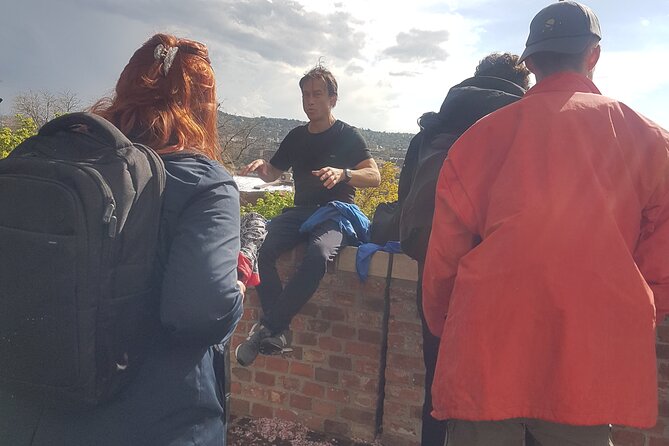
This tour treats Buda Castle and Matthias Church like more than postcard stops. The guide connects what you’re looking at to what the building has endured—wars, occupations, reconstructions, and shifting power over centuries.
One of the most useful things you’ll get is practical explanation of religious and architectural details. For example, the guide covers what’s going on with crosses that have different strip counts (one, two, or three). It’s the kind of small detail you’d normally miss, yet it changes the way you read the façade and symbolism once someone points it out.
You’ll also hear the history told in human terms rather than just dates on a timeline—how different communities lived in the district, and how daily life shaped the city’s layout. Guides like Boulash and Rita are especially good at keeping the story moving with humor and sharp anecdotes, so even the heavy parts don’t feel like a lecture.
If your goal is to leave Budapest understanding what you just saw—rather than collecting photos and moving on—this portion is where the tour earns its keep.
Fisherman’s Bastion terraces and the story behind the view
Fisherman’s Bastion is famous for a reason: the terrace viewpoints over the Danube toward Pest are hard to beat. What makes this stop better with a guide is that you’re not just standing in one spot and hoping for the best angle. The guide helps you use the space so you can see more than one perspective without backtracking.
You’ll also get a fun, surprising bit of context: the tour includes the connection between Walt Disney and Fisherman’s Bastion. Even if you don’t care about pop-culture trivia, it’s a good example of how the guide keeps history interesting—one foot in facts, one foot in stories.
On the hill, “free views” are a thing, but you need to know where to stand. The guide explains how to enjoy those Castle Hill viewpoints without feeling like you’re hunting randomly for access points.
If you’re the type who likes to learn what makes a place iconic, this stop will click. If you just want quick photos, you can still enjoy it—but you may miss the extra meaning baked into the architecture and the hill’s layout.
WWII scars, Jewish landmarks, and Ottoman traces on Castle Hill
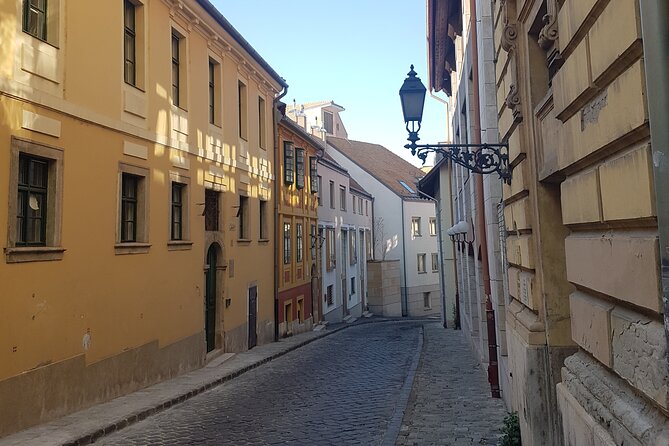
Castle District history isn’t polite. It carries damage, survival, and layers from multiple eras. This tour spends real time on that, including the massive destruction of World War II and where a Nazi stronghold was located.
You’ll also pass a Medieval Jewish Prayer House, and the guide frames it within the broader story of everyday life in the district—alongside discussion of the German, Jewish, and Hungarian populations that shaped the area over time. The point isn’t just to identify sites; it’s to understand how people lived in a place that kept changing.
Then comes the Ottoman trace: the tour points out the connection to Gül Baba, an Ottoman Turkish monk and soldier, tied to a Muslim pilgrimage site. This is one of those segments where Castle Hill stops being a single “era” destination and becomes a layered city in miniature.
Add in the tour’s mention of underground spaces—labyrinth-like passages and the role of the underground system in defense over the centuries—and you start to see the hill as more than scenery. It’s a defensive structure, a neighborhood, and a historical record all at once.






Underground cave systems and defense stories that change how you walk
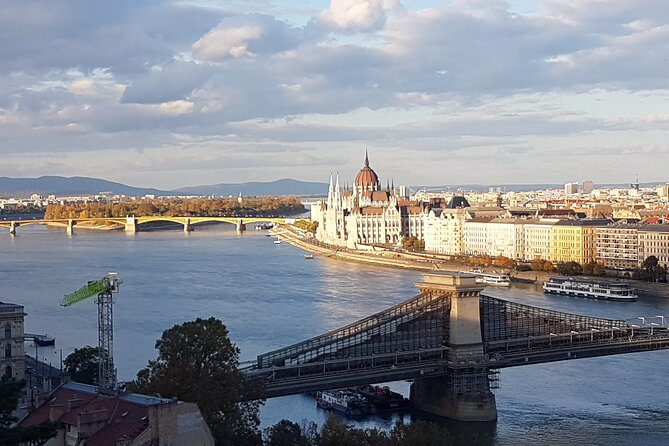
Most people look at Castle Hill from above. This tour encourages you to imagine what it was like from within—how the area functioned as a defense system over centuries.
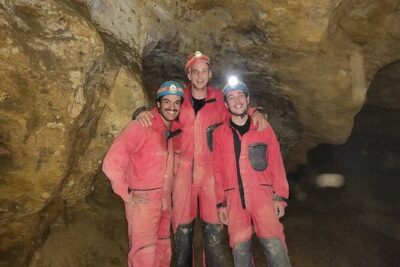
You’ll get explanation of an underground cave system and the labyrinth-like nature of the passages. Even if you don’t go underground yourself, the way the guide connects those ideas to buildings and terrain makes the “uphill walking” feel purposeful. You stop seeing the hill as just stairs and start seeing it as a strategy.
This section also works well as a tempo reset. When you’re tired from steps, a story can carry you—especially when the guide uses clear structure. Some guides, like Odea and Udit, are known for presenting Hungarian history in a structured way as you move, so the information lands without turning into a scramble.
By the time you leave, you’ll likely notice how the hill’s shapes and placement of landmarks make more sense than you expected.
Quirky public statues, huszár legends, and the humor that breaks tension
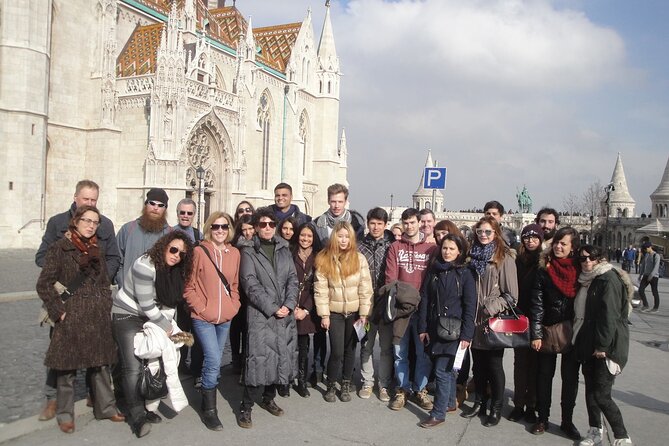
Castle District history has plenty of tragedy, but the tour doesn’t ignore the lighter side of human nature. You’ll see the “funniest public statues” around Budapest and get the stories behind them, including the tale of huszár light cavalry fighters—described with a playful side as womanizers.
That humor isn’t just for laughs. It helps the tour stick. When you remember the funny statue story, you’re more likely to recall the surrounding historical context too.
This is where guides shine. People have mentioned humor and audience engagement with names like Zsolt, Sofie, and Judith, and it makes sense: the route includes long uphill sections, so the best guides shift energy. The stories become rest breaks for your brain.
Where power lives today: the mythical bird and government offices
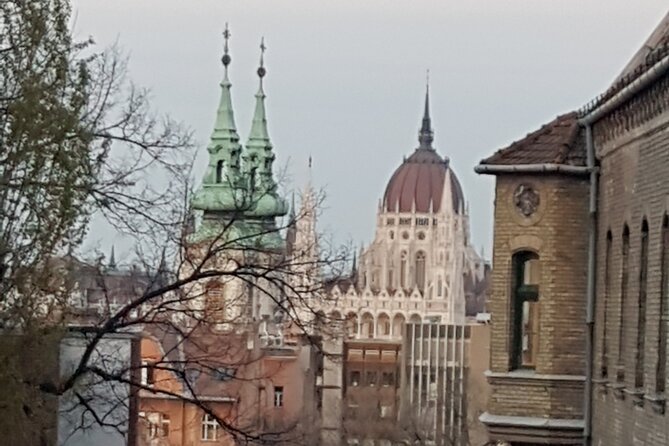
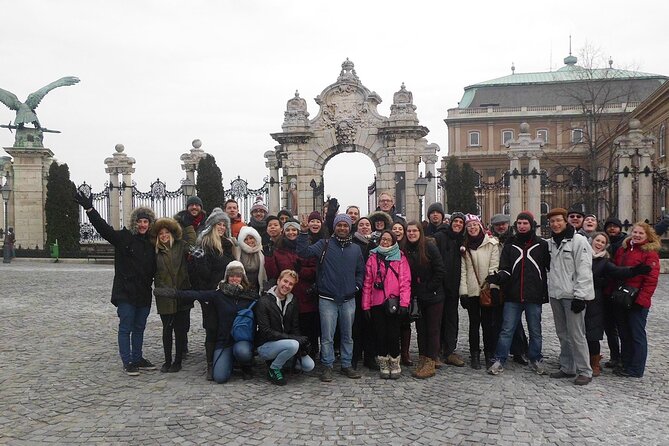
Even if you mainly came for old stone and views, the tour gives you a sense of the district’s current role in Hungary. You’ll learn about the mythical bird of the Hungarians and where you can find information about modern leadership offices.
In particular, you’ll be told where the president and prime ministers’ offices are located. That’s a helpful way to connect past and present without having to switch tours or read a guidebook for hours. It also makes the Royal Palace area feel less like museum scenery and more like a living political space.
This part is ideal if you like your travel stories to include “what’s here now,” not just what happened long ago.
Price and value: what $2.27 buys you (and what you should plan for)
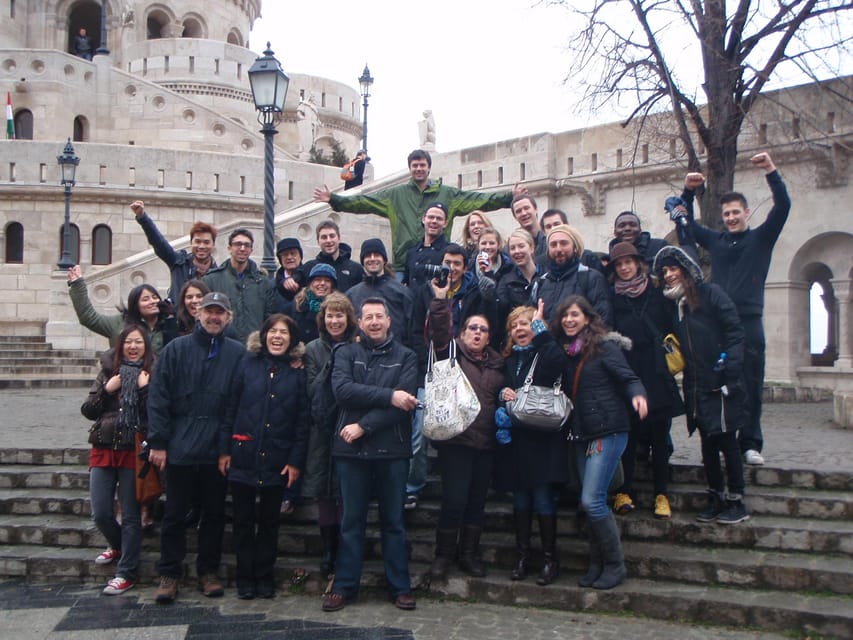
The listed price is about $2.27 per person, which is startlingly low for a guided 2-hour walk through major sights. The catch is the reality of what you’re actually paying: you’re also paying a small booking/admin fee used for administration and marketing through the booking platform.
The tour itself is led by a live English-speaking guide, and the experience includes a full route through multiple landmark buildings and terrace viewpoints. On top of that, you get explanations designed to prevent wasted time—especially on Castle Hill, where self-guided wandering can add extra hours fast.
So is it a bargain? For many people, yes. The value isn’t only the sights—it’s the way someone organizes them into a story so you leave with understanding, not just photos.
One thing to keep in mind: the guides rely on tips. A common tip mentioned is around €10 per person. If you do tip, you’re supporting the person doing the heavy lifting on stairs, crowds, and questions.
Who this tour fits best (and who should rethink it)
This is best for people who want a guided introduction to Castle Hill without spending the entire day sorting out routes. You’ll get the right mix of landmarks, viewpoints, and history that helps you plan your next Budapest steps.
It’s also not the right fit for everyone:
- It’s not suitable for wheelchair users.
- You should have moderate fitness, and plan for a short uphill walk plus stairs.
- It’s not suitable for people over 95 years.
- If you’re traveling with strollers, you should be cautious. The walk involves many stairs, and it can be hard to keep up if you need to carry or manage the stroller.
If you’re someone who enjoys walking at a steady pace, likes asking questions, and wants context as you go, this tour is a strong match.
Should you book this Budapest Castle District walking tour?
Book it if you want an efficient, story-driven walk that hits Buda Castle, Matthias Church, Fisherman’s Bastion, and the surrounding history in a way that actually makes the hill feel understandable. The English guidance, the focus on both major landmarks and smaller details, and the consistent emphasis on viewpoints make it a smart first stop for many people.
Skip it (or choose a gentler option) if stairs and uphill walking would drain you quickly. Castle Hill is still Castle Hill, even with rest breaks.
FAQ
FAQ
What’s the duration of the Budapest Castle District walking tour?
The tour runs for about 2 hours, with starting times based on availability.
Where do I meet the guide?
Meet at the Batthyány tér metro exit, about 15 meters from St. Anna Church. The guide will be holding a royal blue sign about 30 meters from the church.
What sights does the tour include?
You’ll visit major Castle District sites such as Buda Castle, Matthias Church, Fisherman’s Bastion, the tower of Maria Magdalena Church, and other important buildings and terraces.
Is the tour suitable for wheelchair users?
No. The tour is not suitable for wheelchair users.
What should I bring for the tour?
Wear comfortable shoes, bring water, and dress for the weather.
What language is the tour guide?
The tour is offered with a live guide in English.