REVIEW · BUDAPEST
Born Under The Red Star – The History of Communism in Hungary – Private Tour
Book on Viator →Operated by Budapest Urban Walks · Bookable on Viator
Hard topics, right in the open streets.
This private 3-hour tour is a focused way to understand Hungary’s communist era through key memorials and one of the city’s most intense museums, with a guide who keeps the facts moving. I especially like the personal pace of a private group and the way the itinerary layers big political ideas onto specific places like House of Terror. One thing to consider: each stop is brief, so if you want long museum time, you may feel a bit rushed.
In Budapest, it’s easy to walk past monuments and only half-register what they mean. This tour helps you connect the dots fast—Soviet WWII legacy, the communist regime, the 1956 uprising, and the ways the city still shows those events in public space. If you’re the kind of traveler who likes direct commentary (and can handle uncomfortable history), you’ll get a lot out of it.
In This Review
- Key takeaways before you go
- A 3-hour, pickup-and-private way to read Hungary’s 20th-century story
- Soviet Heroic Memorial: the WWII layer before the communist era
- House of Terror Museum: understanding the mechanics of fear
- St. Stephen’s Basilica: religious Hungary, after political upheaval
- Szabadság tér (Liberty Square): two memorials, one argument about memory
- 1956 Memorial: the uprising that still matters in Budapest
- Hungarian Parliament Building: big landmark energy, but outside viewing focus
- The Communist-themed bar stop: a retro drink with real conversation
- Price and logistics: when $108.14 makes sense
- Guides and what to expect from the storytelling
- Who should book this communism history tour (and who should skip)
- FAQ
- FAQ
- How long is the Born Under The Red Star private tour?
- Is hotel pickup included?
- Is this tour private or shared?
- Which language is the tour offered in?
- Are any of the site admissions included?
- What’s included besides the tour guide?
- Is the tour suitable for children?
- Is there any accessibility or fitness guidance?
- Should you book this tour?
Key takeaways before you go
- Private-group pacing keeps questions from getting lost, especially on heavy history.
- House of Terror + targeted walking stops turn abstract politics into specific locations you can actually find again later.
- Brief time at each site means quick hits, not slow museum wandering. Plan to keep your expectations tight.
- A retro soda stop adds a lighter moment, and it gives your guide a chance to talk about how people lived and remembered things.
- Pickup included makes it easier to start on time, even if you’re not staying centrally.
A 3-hour, pickup-and-private way to read Hungary’s 20th-century story
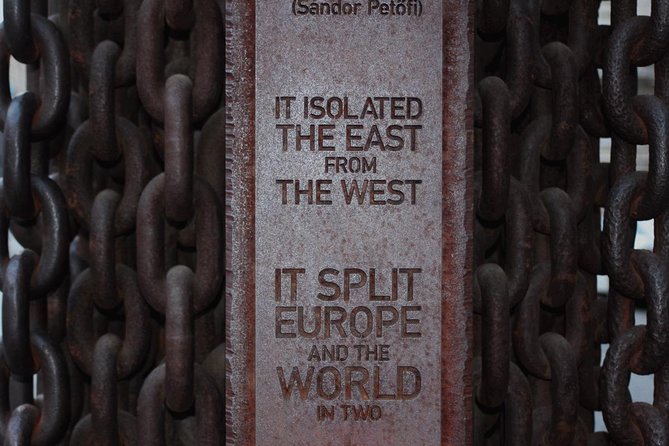
The format here is simple: you meet your guide at your address, then spend about three hours moving through Budapest’s most historically loaded places. It’s private, so it doesn’t feel like you’re stuck listening from the back of a group. You can ask the follow-ups that matter to you, whether you care more about the politics or the human side.
This is also not a long, slow museum day. Your stops are timed (often around 15 minutes each), which means you’ll get orientation and context rather than hours of deep artifact study. I like this for first-timers because it gives you a mental map. If you’re already well-read on Central European communism, you might still appreciate the “where to look next” recommendations your guide shares.
You can also read our reviews of more private tours in Budapest


Soviet Heroic Memorial: the WWII layer before the communist era
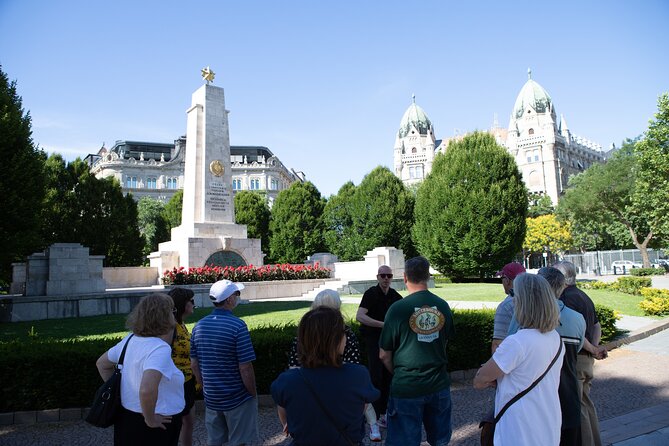
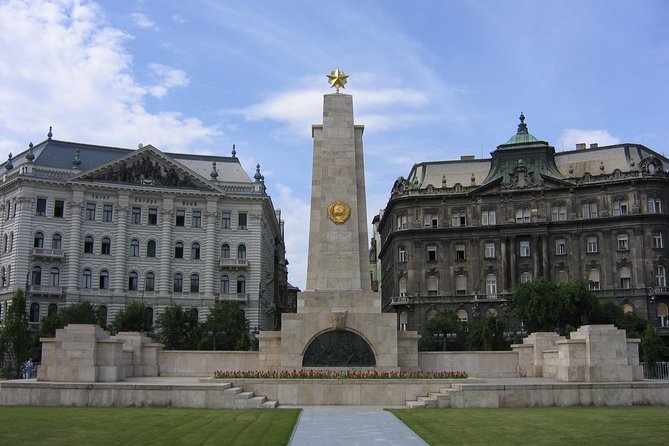
Your first stop is the Soviet Heroic Memorial, a white obelisk in a landscaped park setting that commemorates Russian military service in WWII. Even if you think you already know the basic WWII storyline, this is useful context. Hungary’s later communist period doesn’t start in a vacuum—it grows out of the post-war power shift.
What I’d watch for here is the “memory logic.” Memorials don’t just honor the past; they frame what the future is supposed to be. Your guide can help you notice how Soviet rule was presented as liberation in some narratives, and as occupation in others.
Time is short here (about 15 minutes), so you’re not meant to linger. Instead, you’re meant to get your bearings for the darker stops to come.
House of Terror Museum: understanding the mechanics of fear
The centerpiece of this tour is the House of Terror Museum at Andrássy út 60. This site connects the two ends of 20th-century dictatorship in Hungary—exhibits tied to fascist and communist regimes—plus a memorial focus on victims who were detained, interrogated, tortured, or killed in the building.
It’s heavy subject matter. Even with a guided overview, you’ll likely feel the weight of how systematic persecution can be. The upside of a guided visit is that you’re not just looking at displays; you’re learning how to interpret them. You’ll also have someone there to clarify names, timelines, and why certain parts of the story are remembered the way they are.
One practical note: the museum stop is also brief (around 15 minutes). That’s enough for a strong orientation, but it’s not enough to read everything carefully. If you feel pulled into a specific theme—prison conditions, interrogation methods, or specific historic cases—ask your guide what to revisit after the tour.
St. Stephen’s Basilica: religious Hungary, after political upheaval
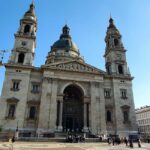
After the museum, you’ll make a stop at St. Stephen’s Basilica (Szent Istvan Bazilika), a Roman Catholic basilica named for Hungary’s first king, Stephen. The guide-led context here matters because religion and state power in Hungary have never been separate topics.
You’ll also see the reliquary element tied to Stephen’s right hand, which helps explain why this church has cultural weight beyond tourism. The tour timing is short (about 15 minutes), and admission isn’t included for this stop. So keep an eye on what parts you plan to enter. If you’re deciding between outside viewing and going in, choose based on your own interest level rather than what the general description might suggest.
Szabadság tér (Liberty Square): two memorials, one argument about memory
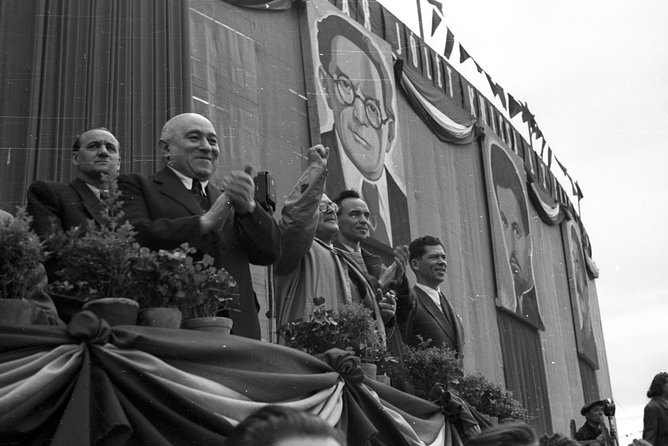
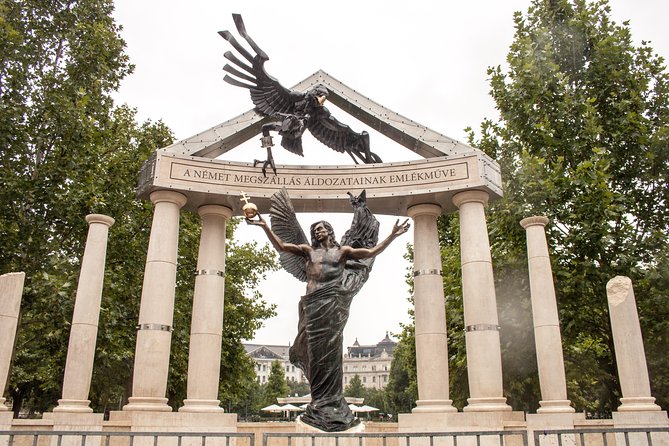
Next comes Szabadság tér (Liberty Square) in the Lipótváros neighborhood. The square is famous for two controversial memorials: one connected to Hungarian Jewish victims of the Holocaust, and another connected to Soviet soldiers that liberated Budapest from the Nazis in 1945.
This stop is valuable because it shows how one city can hold competing interpretations of the same era. You’ll also be able to pick out major landmarks on the square’s sides, including the United States Embassy in Hungary and the historicist-style headquarters of the Hungarian National Bank.
If you’re someone who likes to understand why people argue about monuments, this is a good moment. Your guide can explain the historical context and help you see why these memorials can feel political even when they’re meant to honor the past.
Time here is a bit longer than some stops (about 25 minutes), which helps you take it in instead of rushing straight through.
You can also read our reviews of more historical tours in Budapest





1956 Memorial: the uprising that still matters in Budapest
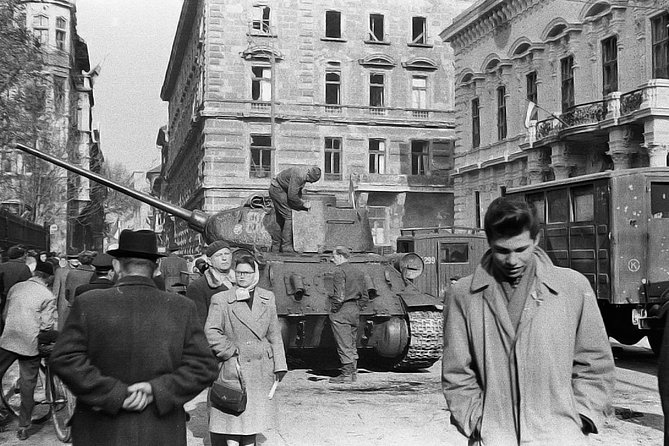
From WWII to communist rule, the tour then moves to the Memorial to the 1956 Hungarian Revolution and War of Independence. This memorial honors the heroes of the 1956 uprising against the communist regime.
This stop can be one of the most emotional moments of the tour, even if you’re not a history buff. The reason is simple: 1956 isn’t just a date. It’s a symbol of resistance, and Budapest still treats it as a living part of identity.
Again, time is limited (about 15 minutes), so I suggest using this stop to understand the big picture: what sparked the uprising, what it represented, and why it became a lasting reference point in Hungary’s story.
Hungarian Parliament Building: big landmark energy, but outside viewing focus
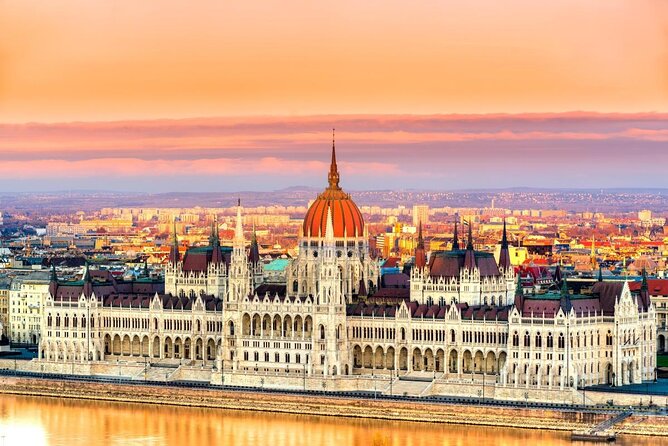
You’ll also see the Hungarian Parliament Building (Országház). It’s the seat of Hungary’s National Assembly and one of Budapest’s most recognizable landmarks.
In this tour, the Parliament stop is short (about 15 minutes) and admission isn’t included. That means you should treat it as a sight-and-context stop. You’ll get help placing the building in the story of modern Hungary—especially meaningful after you’ve just learned about regimes that tried to control everyday life.
If you want interior views, you’ll likely need to plan that separately. The time here is better used for understanding what the building represents now.
The Communist-themed bar stop: a retro drink with real conversation
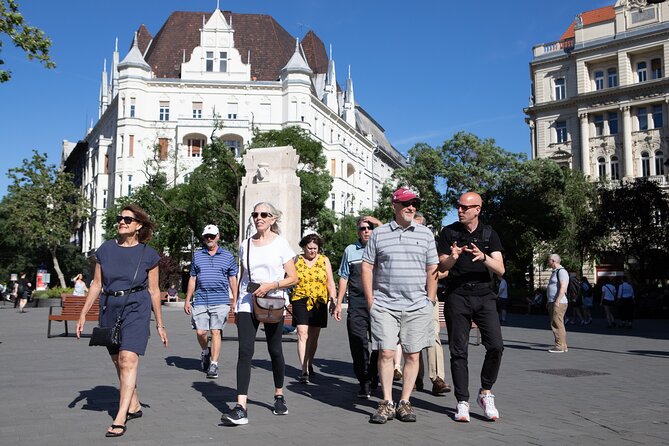
One included perk is a stop at a Communist-themed bar, where you get a retro soda. It sounds light, but it’s actually useful. Hard history topics can leave you mentally exhausted. A small break like this lets your guide shift from facts to interpretation—how people navigated daily life, how propaganda shaped everyday expectations, and why memory culture still matters.
The tour also includes coffee and/or tea, plus maps and further recommendations. I like this mix because it doesn’t just end with “here’s what happened.” It ends with practical next steps for your own exploration after the tour.
And yes, it’s okay if you’re the kind of person who doesn’t want to talk about politics in a bar. The key is how your guide uses the moment: as a pause, not as a distraction.
Price and logistics: when $108.14 makes sense
At about $108.14 per person for roughly 3 hours, this sits in the “value if it fits your style” category.
Here’s why it can be worth it:
- Pickup is included, which saves time and stress.
- It’s private, so you’re paying for a guide who can tailor the pace and answer your questions.
- You get a mix of walkable stops + one major museum (and time for context, not just selfies).
- You also get the retro soda and coffee/tea, plus maps.
The main value question is how you feel about brief stops. With timed site visits, you’re buying orientation and interpretation. If you want a slower, deeper museum experience at House of Terror or longer time inside major buildings, you might prefer to pair this with independent visits later.
Also, be aware that entry rules can be quirky. One past issue involved St. Stephen’s Basilica coverage not matching expectations, so the best move is simple: when you meet your guide, ask what’s covered for the basilica stop and whether you need any separate ticket choices (especially if you care about domes or specific areas). This tour doesn’t list any paid museum time for you upfront, but independent confirmation can save disappointment.
Guides and what to expect from the storytelling
A lot of this tour’s success depends on your guide’s tone. In the feedback for this experience, guides such as Julia, Brigit, Norbert, and Leslie came up with praise for making the subject matter feel real and understandable. When the history gets dark, it helps to have someone who can explain without rushing or sugarcoating.
If you’re considering this tour, think about what you want most:
- If you like clear explanations and direct links between sites and events, you’re in the right place.
- If you’re expecting a long, deeply detailed narrative session in one go, you may want to supplement with extra time on your own after the tour.
Who should book this communism history tour (and who should skip)
Book it if:
- You want a first-time anchor for Hungary’s communist-era story in Budapest.
- You like guided interpretation at memorial sites, not just standing and reading plaques.
- You prefer a private format where questions don’t get cut off.
Skip or rethink it if:
- You hate rushed museum time. The stops are short, by design.
- You’re looking for a lighter city tour. This is historical, and the House of Terror stop is intense.
- You want tickets and admissions handled with zero back-and-forth. Ask early what’s covered at each stop so there are no surprises.
FAQ
FAQ
How long is the Born Under The Red Star private tour?
It lasts about 3 hours.
Is hotel pickup included?
Yes. Your guide meets you at your requested address.
Is this tour private or shared?
It’s a private tour/activity, with only your group participating.
Which language is the tour offered in?
The tour is offered in English.
Are any of the site admissions included?
Some stops list admission as free, including the Soviet Heroic Memorial, House of Terror Museum, Szabadság tér, and the 1956 Memorial. St. Stephen’s Basilica and the Hungarian Parliament Building are marked as not included.
What’s included besides the tour guide?
You get a retro soda in a Communist-themed bar, plus maps and further recommendations, and coffee and/or tea.
Is the tour suitable for children?
Children must be accompanied by an adult.
Is there any accessibility or fitness guidance?
You should have a moderate physical fitness level, and the tour requires good weather. Service animals are allowed.
Should you book this tour?
If you want a fast, guided way to understand Hungary’s communist past through the places you’ll see anyway in Budapest, I think this is a smart buy—especially because it’s private and includes pickup, plus those small included extras like coffee/tea and the retro soda. The biggest tradeoff is time: you’ll get context and direction, not a long deep dive at each site.
My practical advice is to book it if you like your history grounded in real locations and you’re comfortable with tough subject matter. Then, once the tour ends, take your time returning to the stop(s) that grabbed you most—because that’s where the story really sticks.