
REVIEW · BUDAPEST
Original Budapest Walking Tour
Book on Viator →Operated by Original Budapest Tours · Bookable on Viator
Five iconic Budapest stops in one morning walk. This Original Budapest Walking Tour strings together major landmarks from Parliament to the Danube so you leave with a map in your head, not just photos. Hungarian Parliament Building and the Széchenyi Chain Bridge set the tone fast: big places, clear context, and plenty to look at along the way.
What I like most is the way the guides turn monuments into stories you can actually remember. In different departures, I saw guides named Istvan, Robert, and Janet described as engaging and well-paced, with facts plus fun check-in trivia. The second win is practical city navigation: once you walk this spine of sights, you understand how Buda and Pest connect and where you’re likely to head next on your own.
One thing to consider: the route timing can be tight, and some schedules may lean more toward Pest than the Castle District, especially if you’re hoping to rush into a separate Buda Castle visit right after. If your afternoon plans are strict, I’d build in a buffer.
In This Review
- Key things that make this tour worth your time
- Starting at St. Stephen’s Basilica: the 11:00 a.m. meeting point that makes sense
- Parliament to Chain Bridge: where Budapest’s political story begins
- Buda Castle District pacing: what you get in the time you have
- St. Stephen’s Basilica again? The best reason is symbolism
- Fisherman’s Bastion and Liberty Square: views plus civic landmarks
- Ferris Wheel of Budapest and Andrássy Avenue: a city built for walking—if you know where to look
- Shoes on the Danube Bank: the memorial that changes how you look at the river
- Margaret Island and Gellért Hill: green breaks and a hill with a legend
- Széchenyi Square finale: wrapping the walk with a recognizable anchor
- Price and value: why this costs so little, and how that affects your expectations
- Tips to make the walk feel easy (and not rushed)
- Should you book the Original Budapest Walking Tour?
- FAQ
- How long is the Original Budapest Walking Tour?
- What time does the tour start?
- Where does the tour meet?
- Does the tour end in the same place every time?
- How much does it cost?
- What languages is the tour offered in?
- Is a guide included?
- Are any entrance tickets included for stops?
- Is bottled water included?
- What happens if weather is poor?
- How flexible is cancellation?
Key things that make this tour worth your time
- Budget-friendly price with a real guide for a long stretch of walking
- Landmark-to-landmark flow that helps you “read” Budapest quickly
- Storytelling + trivia that keeps groups engaged without feeling like a lecture
- Free entry stops for the sights you pause at (no museum ticket required based on the itinerary)
- First-timer orientation for both sides of the river
- Danube memorial context that adds meaning beyond the photos
Starting at St. Stephen’s Basilica: the 11:00 a.m. meeting point that makes sense

Your tour kicks off at St. Stephen’s Basilica (Szent István tér 1, 1051). The start time is 11:00 a.m., and you’ll use a mobile ticket rather than digging through paper.
This is offered in English, and the tour size is capped at 100. In practice, smaller groups often make it easier to hear every detail and ask questions, so if you can pick a day with decent attendance, that’s a plus. Also, bottled water isn’t included—bring a small bottle so your pace stays comfortable.
One practical tip: wear shoes you trust. This is a walking tour built around classic, hilly, stone-in-the-road Budapest terrain. If rain shows up, plan to still keep moving; the experience requires good weather, and you might be offered a different date or a refund if it’s canceled for poor conditions.
You can also read our reviews of more walking tours in Budapest



Parliament to Chain Bridge: where Budapest’s political story begins
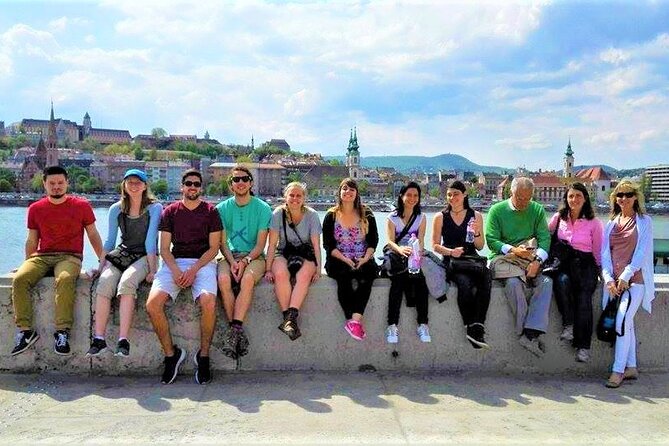
The first stop is the Hungarian Parliament Building. You’re there for a quick introduction—just enough time to orient yourself and understand why this is such a focal point in the city’s identity. The building isn’t just a photo stop; it’s the seat of the National Assembly of Hungary and a landmark that people organize their Budapest day around.
From there, you head to the Széchenyi Chain Bridge, the iconic crossing that helped connect Buda and Pest on foot. If you’ve never walked the riverfront here before, this is a great early “aha” moment. You learn the river’s logic right away: where the views open, how the skyline changes as you move, and why this bridge gets its own place in every first-timer itinerary.
No ticket is listed for these stops, so the focus stays on walking, looking, and listening.
Buda Castle District pacing: what you get in the time you have
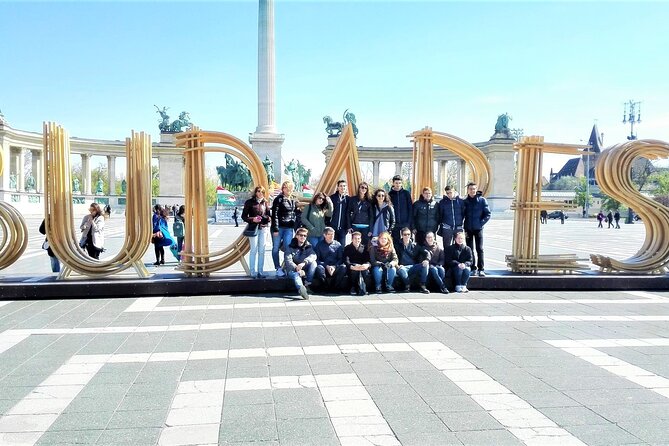
Next comes the Buda Castle area—Budapest’s historic palace complex. The site spans centuries: first completed in the 1200s, with the large Baroque palace taking shape in the 1700s. Even if you don’t go inside, the stop helps you understand what you’re looking at and why the Castle District feels like the city’s “top floor.”
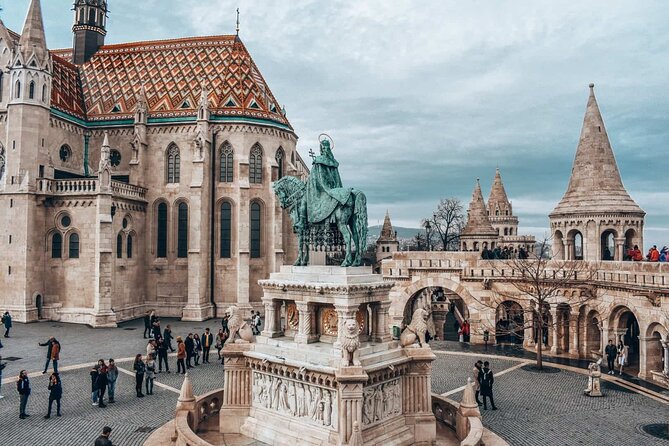
Then you visit Matthias Church in Holy Trinity Square, near Fisherman’s Bastion. This is a Roman Catholic church closely tied to the Buda Castle District’s story and tradition, including how it’s sometimes linked to coronations.
A key expectation-setting point: this tour doesn’t promise long, slow museum-style time in the Castle District. It’s built for an overview. That’s great if you want context and orientation on Day 1, but it means you shouldn’t treat the Castle stop as your only chance to spend time there.
If you’re planning to go back later, good. If you’re trying to finish the tour and immediately do everything inside the Castle area, I’d give yourself extra time.
St. Stephen’s Basilica again? The best reason is symbolism
Your itinerary also includes St. Stephen’s Basilica (Szent István Bazilika), which is also where the tour starts. That means you get a second layer: not just “here it is,” but why people care. It’s named for Stephen, the first King of Hungary, and the basilica is connected to the story of his right hand, housed in a reliquary.
Even if you’ve seen basilicas before, this one hits differently because it’s tied to Hungarian identity in a way you can feel from the square itself. This stop works well as an anchor point: you start here, you learn why it matters, and later your other stops start to connect back to that larger story.
Fisherman’s Bastion and Liberty Square: views plus civic landmarks
At Fisherman’s Bastion (Halászbástya), you’re near the heart of the Castle District and its best-known panoramas. The key idea is the lookout terraces and the dramatic perspective over the river and the other side of the city. If you’ve been chasing Budapest photos online, you’ll recognize this instantly.
Then the tour moves to Liberty Square (Szabadság tér) in the Lipótváros neighborhood. This isn’t a monument you crawl over. It’s a civic square—business and residential—framed by important buildings, including the United States Embassy and the historicist-style headquarters of the Hungarian National Bank. Some buildings on the square carry Art Nouveau touches, so it’s a nice reminder that Budapest isn’t just medieval stone and grand churches.
These pauses are short, but they matter because they teach you where the city’s identity shows up: government, memory, architecture, and public space.






Ferris Wheel of Budapest and Andrássy Avenue: a city built for walking—if you know where to look
The itinerary includes Ferris Wheel of Budapest, often called the Eye of Budapest. The big value here is the panoramic perspective it’s known for—views that can stretch from river scenes toward the Castle area and Pest’s church towers. Even if you don’t ride the wheel during your tour stop, this is a good time to locate it mentally and figure out how it fits into your sightseeing route.
From there, you reach Andrássy Avenue, dating to 1872 and recognized as a World Heritage Site in 2002. You’re walking a historic boulevard lined with Neo-renaissance mansions and townhouses. This stop helps you see Budapest’s more elegant, European-city side—less fortress energy, more grand city planning.
It’s also a useful contrast: after domes, bridges, and towers, this boulevard gives you a different kind of “how the city grew” understanding.
Shoes on the Danube Bank: the memorial that changes how you look at the river
The Shoes on the Danube Bank stop is one of the most emotionally weighted moments on the route. It’s a memorial erected on April 16, 2005, designed by film director Can Togay and sculptor Gyula Pauer. The memorial shows 60 pairs of iron shoes anchored to the ground.
The context is the Arrow Cross rule and those who lost their lives there. This is the kind of stop where the guide’s story matters. Without explanation, it’s easy to treat it like another riverfront photo spot. With the context, it becomes a sharp reminder of how history can be written into public space.
Even if this subject is heavy, I think it’s a valuable inclusion because it gives your Budapest photos meaning. You’ll notice how often you look back at the river after learning this.
Margaret Island and Gellért Hill: green breaks and a hill with a legend
The route also includes a Danube break on Margaret Island. The tour frames it as a tranquil in-city escape with pedestrian promenades, an Art Nouveau water tower, ruins of a 13th-century Dominican convent, a musical fountain, and even a small zoo. You also get the seasonal idea: summer brings pop-up bars and restaurants plus live music.
This is smart tour design. When your feet are tiring, a park island helps reset your rhythm. It also gives you a Budapest that isn’t only built from grand buildings.
Then the tour heads to Gellért Hill, which overlooks the Danube and rises to 235 meters. It’s named after Saint Gerard, who was thrown to death from the hill. That blend of view + story makes it more than a scenic pause, and it helps you understand why this area draws people even when they’re not “doing a tour.”
Széchenyi Square finale: wrapping the walk with a recognizable anchor
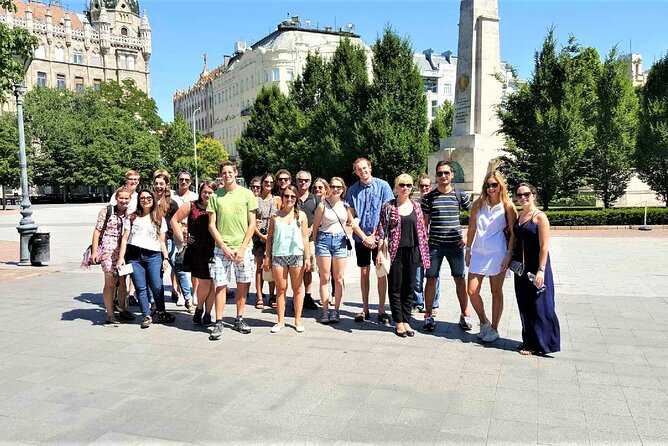
The last stop is Széchenyi Square, with a statue of Széchenyi that has been in place since 1880—far predating Roosevelt’s presence (as the itinerary description notes).
This finish works because it doesn’t dump you in an obscure side street. A square gives you an easy place to regroup, check your next transport, and decide what to see while the morning’s momentum is still in your legs and your brain.
Where the tour ends can vary, but your start point is fixed and your final neighborhood is meant to keep you close enough to continue exploring independently.
Price and value: why this costs so little, and how that affects your expectations
At $2.88 per person, this is an economical way to get an organized overview. What you’re really paying for isn’t entrance fees—most listed stops are admission ticket free—it’s the guide who stitches these places into a coherent narrative.
That low price also means it’s not a luxury, slow-time walking experience. You’ll cover ground, you’ll stop often, and you’ll learn quick takeaways. If you enjoy asking questions and you like facts that connect places to people, you’ll get a lot of mileage from it.
Group size can also shape your experience. The tour allows up to 100, but some departures may be smaller, which makes it easier to hear details and keep pace with the guide.
Also, bottled water isn’t included. It’s a minor thing, but it’s the kind of small cost that matters when you’re already stretching a tight travel budget.
Tips to make the walk feel easy (and not rushed)
Here’s how you’ll enjoy this tour more with zero stress:
- Arrive early so you’re not scrambling at the start. The tour begins at 11:00 a.m. at St. Stephen’s Basilica.
- Bring water even though it’s not included.
- Dress for weather. The experience requires good weather, and you can be offered a different date or a full refund if it’s canceled.
- Use the guide’s stories. This is where you’ll actually remember Budapest. If trivia is part of the day, lean into it—one guide-style note from past departures includes surprises for correct answers.
- Plan your afternoon with a buffer. If you’re aiming for a separate Buda Castle schedule right after this tour, give yourself time in case your day leans more heavily toward Pest.
If you’re someone who likes city navigation more than architecture deep-dives, this format will suit you well.
Should you book the Original Budapest Walking Tour?
Book it if:
- You want a fast, organized overview of major sights across Buda and Pest
- You’d rather learn from a guide’s stories than rely only on guidebook facts
- You’re on a budget and still want a real walking route that teaches you how to get around
Skip it (or be cautious) if:
- You have a tight timeline for multiple Buda Castle commitments right after
- You prefer long, inside-the-building visits, because this is built for quick stops and context
- You’re the type who needs perfect consistency in timing; the tour’s focus is an experience overview, not a minute-by-minute guarantee
If you want your first morning in Budapest to feel structured and meaningful, this is a strong value choice. The route hits the places that shape the city’s story—and with a good guide, the Danube memorial and Castle District stops can leave a lasting impression long after the photos fade.
FAQ
How long is the Original Budapest Walking Tour?
It runs for about 3 hours 30 minutes.
What time does the tour start?
The start time is 11:00 a.m.
Where does the tour meet?
The meeting point is St. Stephen’s Basilica, Szent István tér 1, 1051 Hungary.
Does the tour end in the same place every time?
The end point can vary, but it’s listed as a different end location than the start. The itinerary notes that end points vary.
How much does it cost?
The price is $2.88 per person.
What languages is the tour offered in?
The tour is offered in English.
Is a guide included?
Yes. A local tour guide is included.
Are any entrance tickets included for stops?
Based on the itinerary details, stops are listed as admission ticket free.
Is bottled water included?
No. bottled water is not included.
What happens if weather is poor?
The experience requires good weather. If it’s canceled due to poor weather, you’ll be offered a different date or a full refund.
How flexible is cancellation?
You can cancel up to 24 hours in advance for a full refund.