REVIEW · BUDAPEST
Jewish Quarter of Budapest Walking Tour
Book on GetYourGuide →Operated by Triptobudapest.hu - Free Budapest Walking Tours · Bookable on GetYourGuide
Street signs can’t tell these stories. This Jewish Quarter walking tour connects Hungary’s Jewish past to Budapest nightlife today, with guides using human stories and street-level details as you go. You’ll also get a clear view of the Jewish Triangle area without turning your day into a museum marathon.
Two things I really like about this tour: first, it’s guided history that doesn’t feel like homework, and it can land emotionally (many guides use a careful, respectful tone, and names like Judith, Ester, and Gary show up often in the best way). Second, you cover major synagogue sights as part of the route, then finish with time for a local pub experience, with ruin-bar stops such as Ruin bars and Bar Simplar mentioned by guides in the flow.
One drawback to consider: the tour is in English, and it specifically asks for an upper-intermediate level so you can follow the stories and participate smoothly—especially if you want to ask questions.
In This Review
- Key takeaways before you go
- From Budapest Eye to the Jewish Triangle: A story-led 1.5-hour walk
- Seeing the three synagogues without the entry-ticket headache
- Hungarian Jewish history and the Righteous Gentiles thread
- Budapest beyond the plaques: nightlife, urban art, and local rhythm
- End at a local pub or ruin bar, not a tourist trap
- Guides matter: Judith, Ester, Gary, Dora, and more
- Price and the tip-based model: what your money really does
- Should you book this Jewish Quarter tour?
- FAQ
- Is this tour really free?
- How long is the walking tour?
- Where do I meet the guide?
- Does the tour include entering the synagogues?
- What language is the tour in?
- Do I need advanced English to join?
- Is it wheelchair accessible?
- Can I pay later?
- How much should I donate at the end?
- Are large groups allowed?
Key takeaways before you go
- Jewish Triangle focus: You’ll see the three synagogues that form the Jewish Triangle area (without entering them).
- History + present-day streets: You connect the Jewish District with Budapest’s current culture, including nightlife and urban art context.
- Meeting is easy to spot: Start at the Budapest Eye meeting point next to the fountain, with a ROYAL BLUE flag.
- End at a local pub: The tour is designed to finish where locals unwind, including well-known ruin bars.
- Small-group feel: Groups of 8+ can’t book, so the experience is set up to stay discussion-friendly.
From Budapest Eye to the Jewish Triangle: A story-led 1.5-hour walk
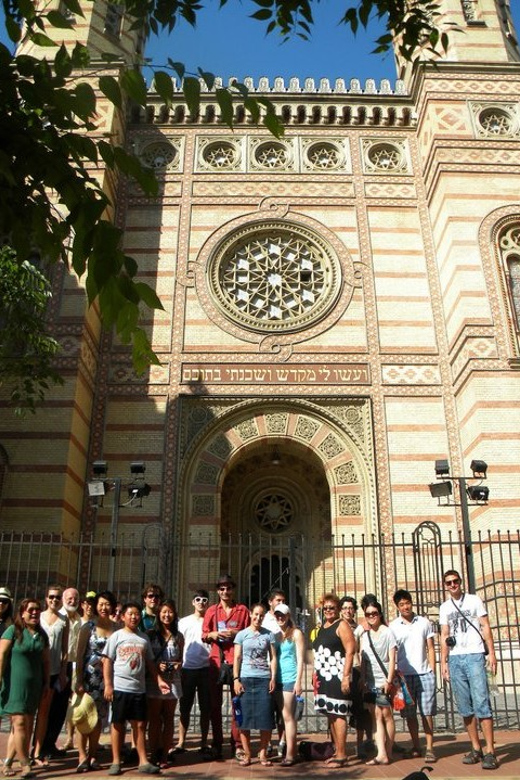
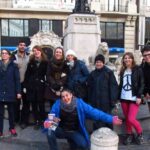
This is a 1.5-hour walking tour built around storytelling, not a checklist of plaques. You start at the Budapest Eye ferris wheel meeting point, next to the fountain, and the guide will be holding a ROYAL BLUE flag so you can find the group quickly.
The pace matters here. Guides are trained to keep the flow moving while still making room for questions, and several guides are described as fluent and able to explain tricky topics with care. That’s a big deal on this kind of theme, because Jewish history in Hungary includes both daily-life details and heavy events, and you don’t want a rushed lecture.
I also like that you’re not spending the entire time in one “mode.” You’re learning history, yes, but the tour also points you toward how Budapest carries that past alongside the city’s modern identity. The result feels like a real neighborhood walk rather than a sprint from one landmark to the next.
One practical note: the tour is wheelchair accessible, and the route is designed for an on-foot city experience. It still helps to plan comfortable shoes, because even short tours add up when you’re listening closely and stopping often.
You can also read our reviews of more walking tours in Budapest



Seeing the three synagogues without the entry-ticket headache
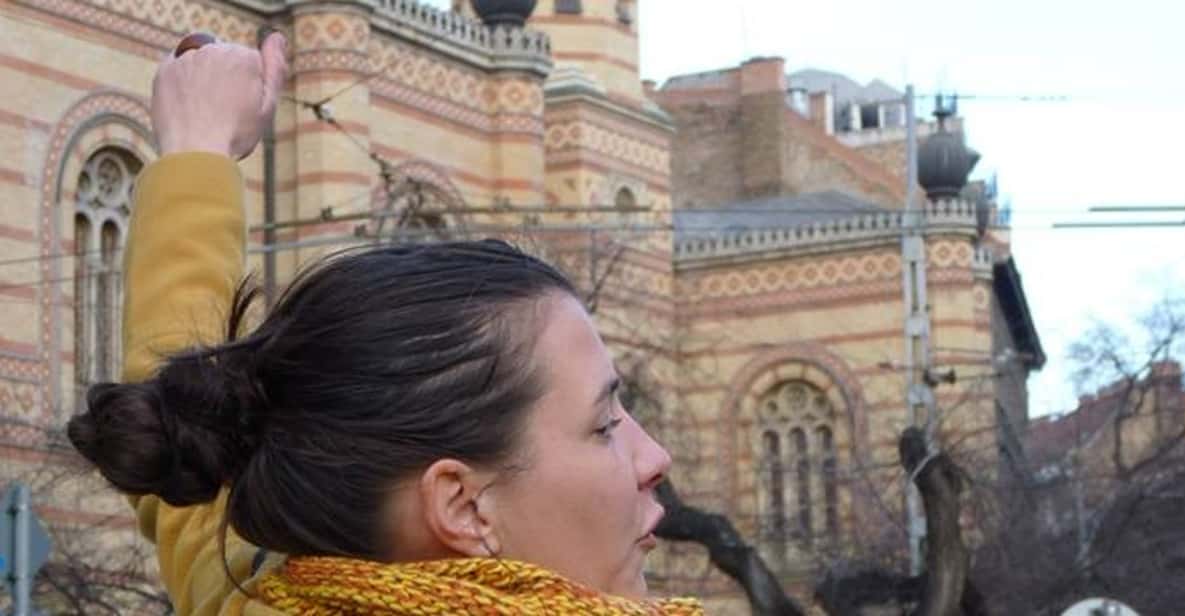
A core highlight is visiting the three synagogues that make up the Jewish Triangle. The important part: you don’t enter the synagogues during the tour, but you do get the context you’d usually want before you decide to visit on your own.
That approach can be a smart choice for your day. If you’re time-crunched, you still learn why these buildings matter and how they relate to the neighborhood’s story. And if you’re curious enough to return later, you’ll already know what you’re looking at—so your second visit feels more meaningful, not just scenic.
This also changes the experience from inside-the-building history to street-view architecture and symbols. You’re more likely to notice the “why” behind what you’re seeing—hidden references, lesser-known narratives, and details you’d miss if you only focused on big photo angles.
The downside is simple: if you were hoping for interior tours, you won’t get that here. But the tour is explicitly set up for viewing and interpretation, and many people prefer that. You can always choose synagogue entry separately if your interests go deeper.
Hungarian Jewish history and the Righteous Gentiles thread
The best walking tours do two things at once: they give you facts, and they give you people. This one leans hard into both. You’ll hear about the history of Hungarian Jews, and you’ll also learn about the Righteous Gentiles—stories of non-Jewish rescuers recognized for helping Jewish people during the Holocaust era.
That focus matters because it broadens the story beyond only one community. It adds the moral complexity of neighbors and everyday choices, which is often missing from a purely “sites and dates” approach. It can also make the tour feel more human, not just historical.
Multiple guides are described as compassionate and respectful, and some tours are noted as emotionally moving. If you’re sensitive to heavy topics, that’s something to be aware of—but it’s also often why this tour earns top marks. You’re not being kept at arm’s length.
You may also hear discussion that connects to how Jewish daily life worked before the war, and how it changed over time. One review-style detail that stands out is the wish for even more on pre-war Jewish everyday life, which tells you guides often do cover daily reality—not only disaster and aftermath.
And importantly, the tone isn’t just solemn. Several guides are praised for mixing seriousness with humor—like teasing the next stop in a friendly way—so the walk doesn’t become one long, heavy silence.
Budapest beyond the plaques: nightlife, urban art, and local rhythm
What surprises many people is how quickly this tour places the past into a living city. The tour isn’t only about what used to be here; it’s about how the neighborhood’s identity shows up now—in the streets, in the nightlife scene, and in the urban art vibe.
Even if you’re not a nightlife person, this context helps. You start to understand why Budapest’s Jewish Quarter became a cultural magnet in the present day, and why modern Budapest branding (especially around ruin bars) isn’t random. It’s part of how the city reuses space and keeps history visible.
Some guides are also praised for pointing out city details like small statues around Budapest and explaining the stories behind the ruin bar culture. You might not get the exact same side-tangents every time, because guides differ, but the overall method stays consistent: walk, look, listen, then connect it to the way Budapest functions today.
A good sign: guides repeatedly show up as patient with questions and able to keep the group comfortable. One recurring practical praise is that guides find shady spots and pause regularly, so you’re not stuck baking on corners while you wait for the next fact.
End at a local pub or ruin bar, not a tourist trap
This tour is designed to end with a real neighborhood moment. The official highlight is that you finish at a local pub and experience Budapest like a local, and in guide experiences you’ll see finish points tied to ruin bars—such as Ruin bars and Bar Simplar—so you can keep the evening going.
This part is practical, not just fun. After 90 minutes of history, you’ll want a breather where you can keep talking or at least decompress without hunting for a place at random. A ruin bar area works well for that because it’s both social and visually distinctive.
Just remember the timing reality: ruin bars can get busy later in the day, and one guide-note mentions finishing at a time when it’s easier to pop in without the worst crowd crush. If you’re doing this early, you can often enjoy the atmosphere more comfortably.
Also, you can treat it as a start point. Even if you don’t stay long, you’ll leave with an actual suggestion for where to go next—something guides are frequently credited with providing, from bar ideas to restaurant recommendations.






Guides matter: Judith, Ester, Gary, Dora, and more
In a tour like this, the guide isn’t a background detail. The guide is the difference between a respectful, memorable explanation and a cold recital. The strongest praise here centers on guides who are fluent, clear, and able to handle tough questions with respect.
Names that come up in the strongest feedback include Judith, Ester, Gary, Dora, Andy, Emmy, Edith, and others. Different guides bring different energy—some are funny and energetic, some are quietly intense, and some are very structured—but the common thread is that they hold attention and answer questions thoroughly.
You’ll also see a pattern in what people liked most: guides pause often, keep a steady pace, and explain history in a way that feels emotionally grounded. One standout detail is a guide’s ability to convey difficult issues with respect, which matters on this topic.
If you care about asking questions, this matters even more. This tour is described as open to questions, and some guides provide additional Budapest suggestions beyond the tour, which can help you plan the rest of your trip in a more local-minded way.
Price and the tip-based model: what your money really does
The headline price is low—about $2.27 per person—but here’s the key: it’s a booking fee, not the tour price in the usual sense. The fee covers administration and helps guarantee your spot. The guide depends on donations at the end, and that tip is what supports their work directly.
That model can feel odd if you’re used to fixed tour costs, but it also creates a simple incentive: you’re paying for a guide experience, and the quality is what determines the donation amount. Most guests tip around €10 per person, and some tip more.
So how do you judge value? For me, the value is the combination of: a guided walk through a meaningful neighborhood, context around the Jewish Triangle synagogues, and a finish at a local pub so you leave with a usable next step. If you’re the type who likes history explained through real streets and stories, an experience like this can be an efficient use of 1.5 hours.
Also check what’s included: your booking fee covers the tour administration, but you should plan to bring spending money for your own drinks/snacks at the pub stop. Synagogue entry isn’t included, so if you want inside access later, you’ll need to arrange that separately.
Should you book this Jewish Quarter tour?
Book it if you want a history-forward neighborhood walk that also helps you understand modern Budapest culture without turning everything into a museum. It’s a great match if you like asking questions, appreciate a respectful tone, and can handle a mix of heartbreaking and hopeful stories.
You might skip it (or pair it carefully with other plans) if your English level is still solid but not upper-intermediate, because the tour asks for that so you can follow smoothly. Also, if you specifically want to enter and tour synagogues inside, this route may feel like the wrong fit since it keeps to exterior visits and interpretation.
If you do book, go in with a small mindset shift: treat it as a guided walking conversation, not a film-with-commentary. Bring questions, listen for the symbols and lesser-known stories, and then cap it with a ruin-bar stop so your Budapest day ends where locals actually reset.
FAQ
Is this tour really free?
You’re booking with a small fee for the tour spot and administration, and the guide earns through donations at the end. The guide relies entirely on your donation, and you can choose the amount.
How long is the walking tour?
The duration is 1.5 hours.
Where do I meet the guide?
Meet at the Budapest Eye ferris wheel meeting point, next to the fountain. The guide will be holding a ROYAL BLUE flag.
Does the tour include entering the synagogues?
No. The tour does not enter the synagogues, though you can visit on your own.
What language is the tour in?
The live guide speaks English.
Do I need advanced English to join?
Yes. The tour notes that an upper intermediate English level is essential to enjoy it and follow the guide.
Is it wheelchair accessible?
Yes, the activity is wheelchair accessible.
Can I pay later?
Yes. You can reserve now and pay later, keeping your travel plans flexible.
How much should I donate at the end?
Most guests tip about €10 per person, and some tip more. The donation amount is at your choice.
Are large groups allowed?
No. Groups of 8 or more are not allowed to book this tour, whether they book as a group or separately.