REVIEW · BUDAPEST
Communist Budapest Walking Tour
Book on GetYourGuide →Operated by insightcities.com · Bookable on GetYourGuide
Budapest shows its communist scars on foot. This 3-hour tour turns the city into a readable political map, with historian-guided storytelling and 1956 revolution sites that make the decades of total control feel concrete, not abstract. I like the way it connects policy to real street corners, then to what you’d actually see in public.
The pace is relaxing and the explanations are tuned to the group, even if that means you might not get the extra-deep detail if you already know Hungary’s timeline well.
In This Review
- Key highlights worth your time
- Turning Budapest Streets Into a Political Timeline
- Bem József Square: Where 1956 First Caught Fire
- Kossuth Square and the Parliament Area During the 1956 Revolution
- Freedom Square: Cold War Symbols in Four Stone Statements
- 1970s Housing Estates: Grey Buildings With Real Hope
- Puskás Stadium and Socialist Realist Statues in Public Space
- Stalin’s Trolley Bus and May Day Route Atmosphere
- House of Terror: Repression, Memory, and the Berlin Wall Slab
- Getting the Most From a 3-Hour Walking Format
- Price, Value, and Who This Tour Suits Best
- Should You Book This Communist Budapest Tour?
- FAQ
- How long is the Communist Budapest Walking Tour?
- Where does the tour start?
- Is the tour in English?
- What’s included in the price?
- Are metro and tram tickets included?
- What sites will I see on the route?
- Can I book with flexible plans?
Key highlights worth your time
- Bem József Square kickoff point tied to the first large demonstration of 1956
- Kossuth Square + Parliament area focused on what the revolution left behind in monuments and space
- Freedom Square cold war symbolism with the U.S. embassy, Soviet army memorial, Reagan statue, and an atomic shelter entrance
- 1970s housing estates at the city edge showing how “grey” buildings meant real hope for young families
- Social Realist public art at Puskás Stadium and what heroic statues were meant to communicate
- House of Terror and a Berlin Wall slab on the same walk, so repression and memory sit side by side
Turning Budapest Streets Into a Political Timeline
You’ll get Budapest in layers: revolution, propaganda, everyday housing, Cold War showmanship, and then the blunt reminder of state terror. The format is straightforward—mostly walking, with short metro or trolley-bus rides—so you’re constantly moving between eras instead of sitting through lectures.
What I like most is that the guide team is serious about context. You’re not just getting a quick tour script. The tour is led by people like professors, doctoral students, historians, journalists, art critics, and published authors. On a day when the guide is especially good at reading the room, the whole thing clicks—people with less background get a clean entry point, and people with more context get the threads tied together.
One practical note: you’ll need to plan for metro and trolley/bus ticket costs, since public transport tickets aren’t included. That’s usually easy, but it’s good to have it sorted so the tour flow stays smooth.
You can also read our reviews of more walking tours in Budapest
Bem József Square: Where 1956 First Caught Fire
The tour starts at Bambi Eszpresszó (Frankel Leó út 2/4, 1027), which is a handy anchor point for getting moving fast. From there, Bem József Square sets the tone: this is where the first large demonstration of the 1956 uprising was held.
Why that matters is simple. When you stand somewhere connected to a spark, you stop treating 1956 like a page in a textbook. The square becomes a starting gun—one that eventually led to wider conflict and international pressure. A good guide will keep reminding you that the story isn’t only about big leaders. It’s about how quickly ordinary people can react when the political climate changes.
Along this opening stretch, you’ll also see a coffeehouse interior that has kept its original look from the 1960s. That kind of detail helps a lot. It gives you a tangible “then,” so the communist decades don’t feel like a blur of slogans.
Kossuth Square and the Parliament Area During the 1956 Revolution
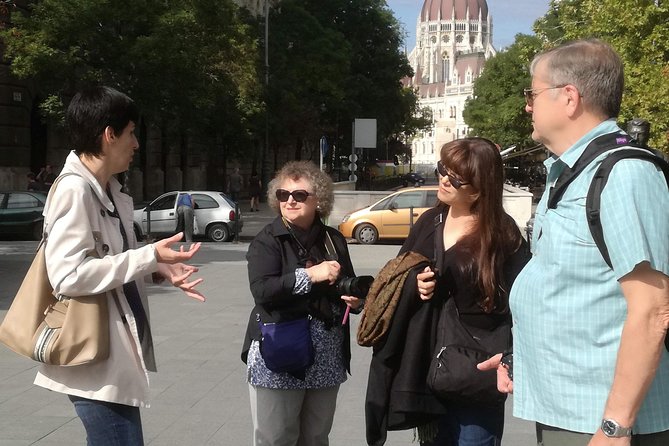
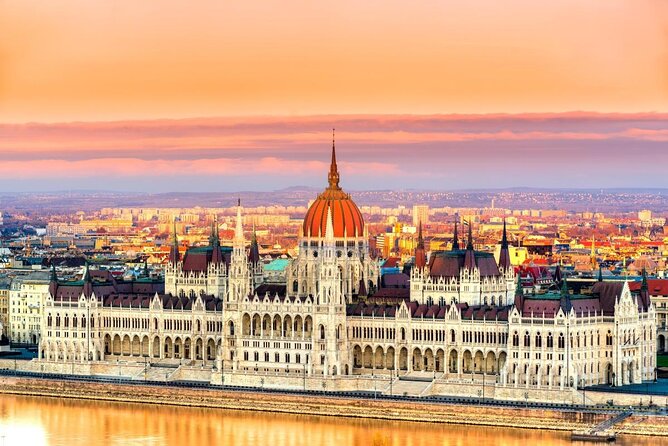
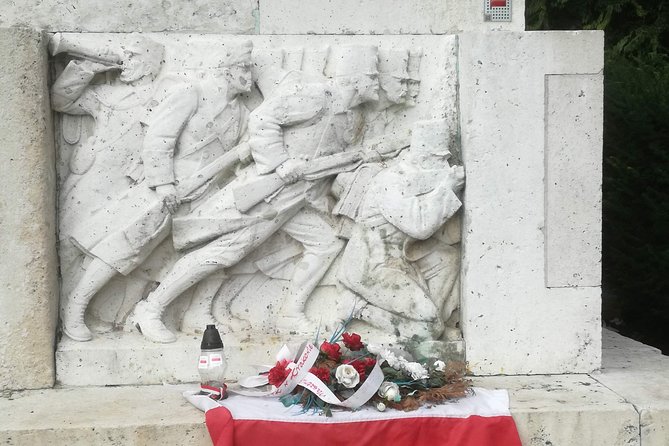
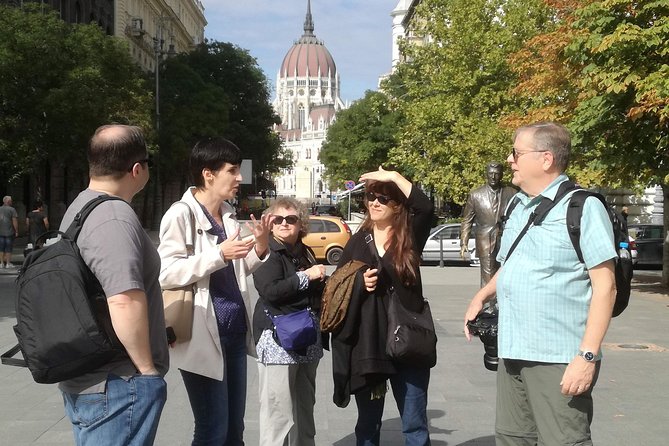
After Bem József Square, you’ll take the metro to Kossuth Square. This is the power-center geography of Budapest, so it’s ideal for explaining how political events physically shape the city. In front of Parliament, you’ll encounter monuments connected to the political and armed conflicts during the 1956 revolution.
The value here is how the guide frames monuments as arguments. Under communism—and especially around major upheavals—public space gets used like a megaphone. Statues, plaques, and symbolic placements aren’t neutral decoration. They’re instructions for how to remember, who to honor, and what to fear.
If you like history that you can point to, Kossuth Square delivers. The area also gives you a sense of scale: you start to understand how governments tried to stage authority in a place meant for civic identity.
Freedom Square: Cold War Symbols in Four Stone Statements
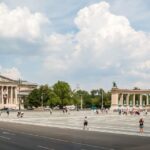
Next comes a short walk to Freedom Square, where Cold War tension is handled with serious symbolism. You’ll see four stone structures, each one tied to a different political voice: the U.S. embassy, a monument for the Soviet army, a statue of President Ronald Reagan, and the entrance to a secret atomic shelter.
This stop is one of the most striking parts of the tour because it shows the era’s messaging strategy. Communism in Hungary didn’t just control daily life; it also shaped which countries and leaders could be made visible or persuasive. Freedom Square feels like a stage set built to declare who mattered.
What I think you’ll enjoy is the contrast between modern visitors using the square and the original intent of the space. You get to reinterpret what you’re seeing without needing a guidebook diagram. A good guide ties each structure to the broader Cold War story, so you’re not just memorizing names—you’re learning why those specific choices were made.
1970s Housing Estates: Grey Buildings With Real Hope
The tour then uses the metro to reach one of the 1970s housing estates at the edge of the city center. Today, these apartment blocks can look drab and grey. But the point isn’t to “admire the concrete.” It’s to understand what it meant to families back then.
In that era, young Hungarian families were overjoyed to be awarded an apartment here. The elevators and conveniences were things many didn’t have in older buildings. So the housing estates become a lesson in trade-offs: the system could be restrictive, but it could still provide tangible improvements that people wanted.
This is where the tour earns its credibility. Too many political tours only focus on repression. This one also makes room for the everyday bargain—material progress mixed with political limits. That balance helps you understand why authoritarian systems can keep support, even while they restrict freedom.






Puskás Stadium and Socialist Realist Statues in Public Space
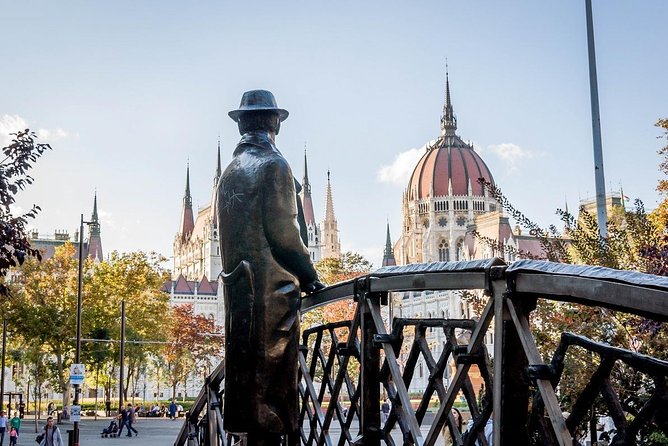
You’ll then stop by the former People’s Stadium, now Puskás Soccer Stadium. This is one of the few places where you can see typical Socialist Realist statues—heroic workers, soldiers, and intellectuals—positioned to point the way toward a bright future.
Art here is propaganda with legs. Socialist Realism wasn’t meant to be subtle. It was meant to teach. The figures aren’t random: they show which roles mattered, what courage looked like, and how the state wanted people to imagine their own future.
A good guide will connect this to how the communist system tried to shape not only behavior, but aspirations. When you see these statues on a sports-site scale, it’s easier to grasp how the message was designed for crowds, not small galleries.
Stalin’s Trolley Bus and May Day Route Atmosphere
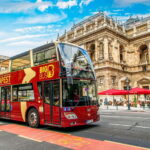
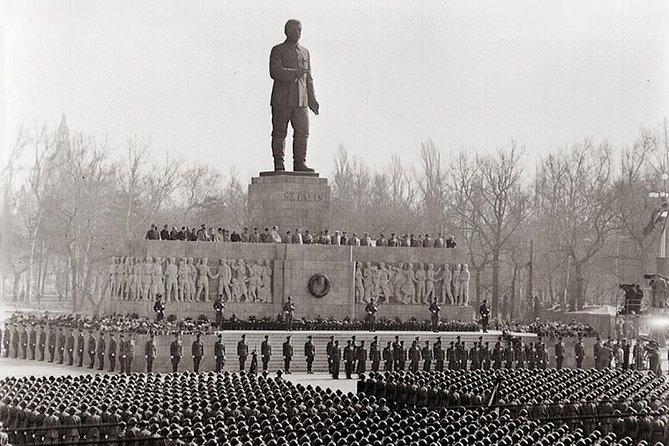
One of the smarter choices in the tour is using a Stalin-era trolley bus on a route around Dozsa György Street, a broad boulevard that was used for May Day parades. Transportation becomes part of the storytelling here.
Why that’s useful: you’re not only learning about a political ritual. You’re experiencing a bit of the parade logic—wide streets built for mass movement and visibility. With a strong guide, you’ll also get an old-vs-new visual contrast. The guide uses an iPad and older photos to show how the city looked during the Stalin period compared with today.
Even if you’re not a “photo person,” these comparisons help. They make time travel practical: you can look at a present-day streetscape and mentally overlay the older scene.
House of Terror: Repression, Memory, and the Berlin Wall Slab
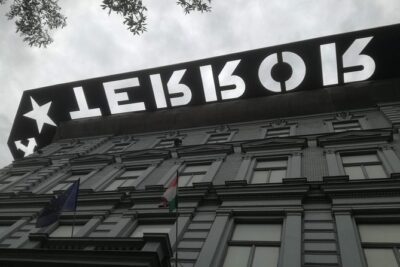
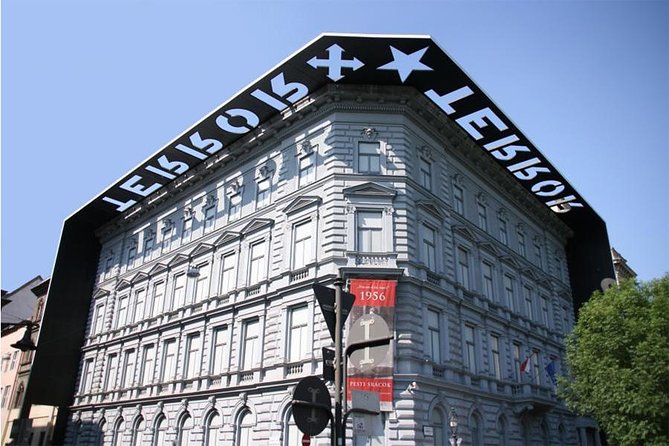
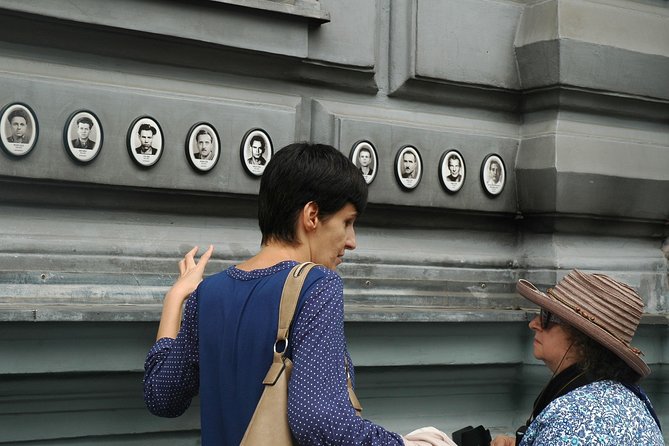
As the walk continues, you’ll reach the House of Terror, a museum housed in the former headquarters of the secret services. It commemorates the crimes of communism, especially during the Stalinist years.
This is where the tour gets heavy—on purpose. The building’s role as a secret service HQ ties the story to power structures, not just ideology. And right outside, there’s a slab of the Berlin Wall. It’s a blunt visual cue that Europe’s communist divide wasn’t a theory. It was a physical boundary with human consequences.
What makes this stop so effective on a short tour is that you’ve already seen how the state tried to inspire and organize public life: squares with symbols, housing estates with promises, statues with lessons. Then the House of Terror flips the page and forces you to confront what the control system could do at its harshest.
Getting the Most From a 3-Hour Walking Format
With a three-hour duration, you’re not chasing endless sights. You’re building understanding through pacing. Expect a mix of walking and public transport rides, plus enough standing time at key points to process what you’re seeing.
Here’s how I’d plan for it:
- Wear shoes you can trust for city walking. The route includes multiple stops with outdoor viewing.
- Budget for metro and tram/trolley tickets, since they aren’t included.
- If you like photos, keep your phone charged. The guide’s older-image comparisons are visual and helpful.
Also, consider your own background knowledge. If you’re new to Hungary’s post–World War II to 1989 story, this tour gives you a clear framework fast. If you already know the timeline inside out, you may find yourself wanting more detail about daily life under communism beyond what’s covered in a short route.
Price, Value, and Who This Tour Suits Best
At $123 per person for a 3-hour tour, you’re paying for more than a route. You’re paying for an expert-led conversation in a small-group or private format, and for the chance to connect multiple sites across decades without getting lost in the political maze on your own.
The value is strongest if you want:
- Context at each stop, not just names of places
- A route that links major events (like 1956) to city symbolism (monuments and Cold War markers)
- Interpretation of how propaganda and memory show up in public space
I’d especially recommend it if you’re the type who enjoys museums but also wants your learning anchored to streets and squares. This tour is built for that.
It’s also a good pick for people who like adaptive guides. One of the tour experiences is that the explanation adjusts to what the group already knows. On my side of the equation, that matters because communist-era history can be overwhelming if you get a one-size-fits-all lecture.
Should You Book This Communist Budapest Tour?
Book it if you want Budapest to make sense through a guided timeline—1956 uprisings, Cold War symbols, 1970s housing reality, Socialist Realism, and the House of Terror all in one smooth storyline. The historian-led format and the careful stop selection make it feel like more than just sightseeing.
Skip or pair it with extra reading if you’re already deeply familiar with Hungary’s communist period and you crave a longer, more granular breakdown of daily life and the collapse of the system. In that case, the three-hour overview can feel like a quick sketch rather than a full portrait.
FAQ
How long is the Communist Budapest Walking Tour?
It lasts 3 hours.
Where does the tour start?
The meeting point is Bambi Eszpresszó, Frankel Leó út 2/4, 1027 Budapest.
Is the tour in English?
Yes, the tour is offered in English.
What’s included in the price?
The tour includes a 3-hour walking tour and a historian guide.
Are metro and tram tickets included?
No. Tram and metro tickets are not included.
What sites will I see on the route?
You’ll visit Bem József Square, Kossuth Square, Freedom Square, 1970s housing estates at the city edge, the former People’s Stadium (now Puskás Soccer Stadium), Dozsa György Street via trolley bus, and the House of Terror.
Can I book with flexible plans?
Yes. You can reserve and pay later, and you can cancel up to 24 hours in advance for a full refund.