REVIEW · BUDAPEST
Downtown Pest Walking Tour
Book on Viator →Operated by Insight Cities · Bookable on Viator
Your Budapest day gets a strong start.
This Downtown Pest Walking Tour threads together the city’s Jewish, royal, and national stories in just about three hours, with a guide who keeps the pace workable and the stops meaningful.
What I like most is the focused, human-scale feel for the price, plus the way the route connects big landmarks to real context. You’ll also get that freedom to shape the walk, not just march in a line. One thing to consider: most of the visit is short-stop viewing, so if you want long, slow time inside buildings, you’ll likely need a second outing.
In This Review
- Key Highlights You’ll Feel During the Walk
- Three Hours in Pest: What You Get (and What You Don’t)
- Meeting Point at Szamos Café: Easy Start, Good Central Location
- Great / Central Synagogue (Nagy Zsinagóga): A Landmark With Living Weight
- Hungarian Parliament Building: Monumental on the Outside, Meaningful in Context
- The Neoclassical Church Built 1851–1905 and the Relic of King St Stephen
- Heroes’ Square: Statues That Actually Explain Hungarian Identity
- Andrássy Avenue: Budapest’s Answer to Champs-Élysées
- Ronald Reagan Statue: The Iron Curtain Story Comes Full Circle
- Guide Style: Small Group Size and Real Adaptability
- Price and Value: Is $125.10 Worth It?
- What to Wear and How to Prepare
- Who This Tour Suits Best
- Should You Book This Downtown Pest Walking Tour?
- FAQ
- What is the duration of the Downtown Pest Walking Tour?
- How much does the tour cost?
- Is the tour offered in English?
- How many people are in the group?
- Where do I meet the guide?
- What major stops are included?
- Is admission included for the stops?
- Is free cancellation available?
Key Highlights You’ll Feel During the Walk

- Undivided guide attention in a small group of up to 8 travelers
- Choose from two departure times, so you can fit the tour into your schedule
- Major sights with no separate admission ticket cost at each listed stop
- St. Stephen’s mummified right hand and other standout religious and national landmarks
- Andrássy Avenue treated as a story, not just a street
- A guide who’s willing to adapt, including the kind words about Eszther Talaber in past tours
Three Hours in Pest: What You Get (and What You Don’t)
This is a 3-hour guided walk aimed at helping you understand downtown Budapest quickly and accurately. At $125.10 per person, it’s not the cheapest way to cover ground, but it’s also not trying to be a full-day sightseeing marathon where you burn out before the good stuff.
You’re paying mainly for two things: a professional guide and the smart sequencing of stops that cluster well in the Pest center. The small group size (max 8) matters here, because you’re more likely to ask questions and actually get answers, instead of shouting over a crowd.
Here’s the trade-off: each stop is timed, so you’re not getting long interior visits at every site. That works if your goal is orientation and context; it’s less ideal if you want deep time in museums or long church worship-space moments.
You can also read our reviews of more walking tours in Budapest

Meeting Point at Szamos Café: Easy Start, Good Central Location
The tour begins at Szamos Cafe Budapest, Kossuth Lajos tér 10, 1055 Hungary. That’s a convenient way to start because you’re anchored near a recognizable downtown square, not some vague street corner.
It’s also marked as near public transportation, which is practical in a city where you don’t always want to connect via long walks. And if you’re thinking ahead: since you’ll spend the day moving between landmarks, you’ll want comfortable shoes from the first minute.
Your tour ends back in Budapest (the exact endpoint isn’t described beyond that), so plan for a normal finish near downtown. Bring water if you can, because food and drinks aren’t included unless specifically stated.
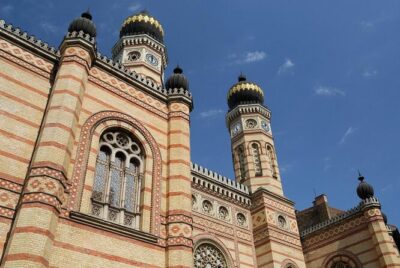
Great / Central Synagogue (Nagy Zsinagóga): A Landmark With Living Weight
The walk opens at the Great / Central Synagogue (Nagy Zsinagóga). This is an ornate stop with serious significance: it’s described as the second largest synagogue in the world, and it’s tied to the 19th-century vitality of Budapest’s Jewish community.
You’ll likely get a quick, high-impact look here—about 10 minutes—plus the kind of historical framing that turns the building from photo-op material into something you understand. The listing notes admission ticket is free, which is a great perk because it keeps this stop accessible even if you’re on a tighter travel budget.
A small consideration: synagogues and other religious sites often have rules about where you can go and how you should behave. Keep your pace respectful, and if there’s any security or visitor flow, don’t rush the guide—let the group move as one.
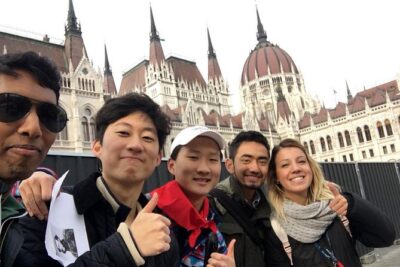
Hungarian Parliament Building: Monumental on the Outside, Meaningful in Context
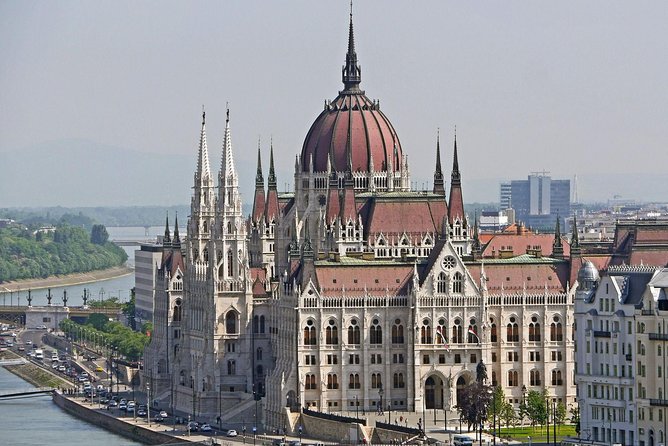
Next up is the Hungarian Parliament Building at Kossuth Square. This is framed as Budapest’s symbol of rise in the 19th century, and it’s tied to a specific point that helps you remember it: it was the most expensive structure ever built in Hungary at its inauguration.
Expect around 20 minutes at this stop, with admission ticket listed as free. That means you’re not paying to see the big-picture parts that most guide-led walks focus on—scale, design, and the political meaning behind the architecture.
If you like to understand a city through power and design, this is a good anchor stop. Parliament squares tend to be busy in real life, so keep your photo expectations realistic. You’ll get the moment, but you may not get a perfect crowd-free shot the whole time.
The Neoclassical Church Built 1851–1905 and the Relic of King St Stephen
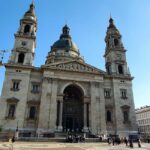
One of the strongest story-stops on the route is the neoclassical church built between 1851 and 1905. It’s described as holding 8,500 people, and the standout detail is its most revered Catholic relic: the mummified right hand of King St Stephen, the church’s patron.
This stop is a “stop and remember” kind of visit. It’s not just architecture you look at; it’s a specific object with heavy cultural and religious meaning, tied to Hungary’s national origin story. Even if you don’t consider yourself deeply religious, this is the kind of detail that helps you decode how Budapest sees itself.
The listing again notes admission ticket free, so you’re not paying extra to experience what’s likely the tour’s most emotionally loaded highlight. That said, churches can bring people in waves, so give yourself mental room for short waits if the space is busy.






Heroes’ Square: Statues That Actually Explain Hungarian Identity
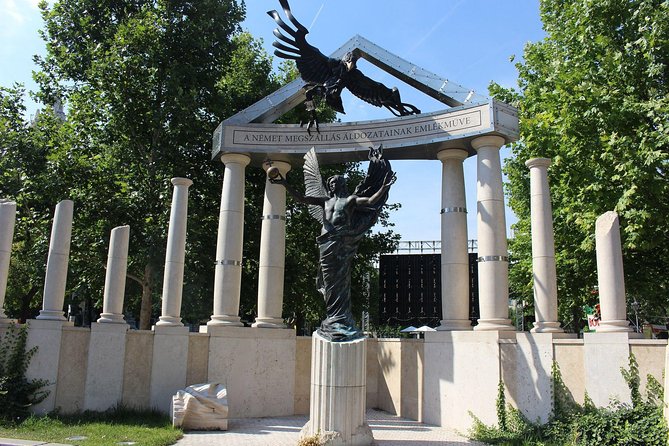
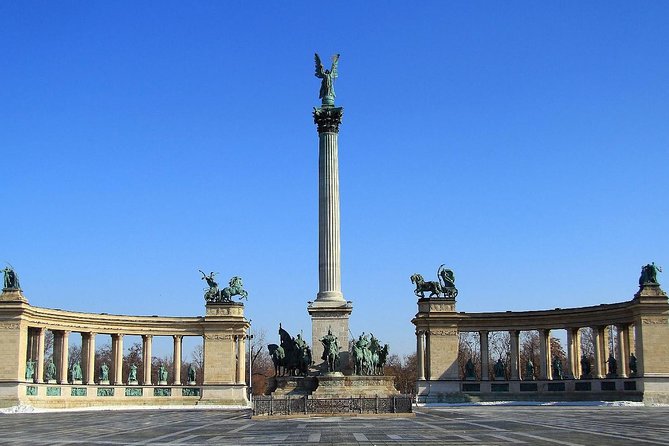
Then you move to Heroes’ Square, a place that’s famous enough that you’ve probably seen it from the outside. What makes this stop useful is the guide framing: the complex features the Seven chieftains of the Magyars, along with other important Hungarian national leaders.
You’ll have about 20 minutes here, and the admission ticket is listed as free. That’s ideal for getting the basic “who is who” and “why it matters” without turning it into a long history lecture.
This is also where the tour starts to feel less like ticking off landmarks and more like learning the logic behind the city’s public art. Heroes’ Square can feel like a big outdoor museum—great if you like symbols. If you’re expecting a quiet, slow stroll, know it’s a public square and can be active.
Andrássy Avenue: Budapest’s Answer to Champs-Élysées
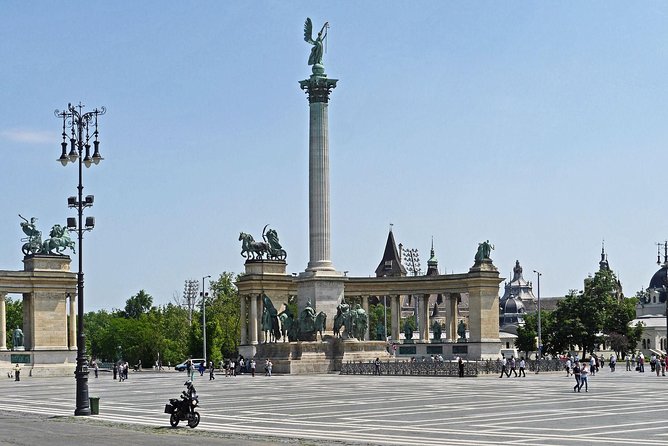
The route spends about 30 minutes on Andrássy Avenue, described as Budapest’s 19th-century answer to Paris’s Champs-Élysées. This is where the city’s self-confidence shows up in planning and presentation—like Budapest wanted to look modern, elegant, and internationally aware as it grew wealthier and more sophisticated.
Expect a walk-and-look segment rather than an admission-heavy one, since the stop notes admission ticket free. The value here is interpretation: you’ll see the avenue as a statement of style and aspiration, not just as a wide boulevard for getting from A to B.
A practical note: an avenue like this can be busy with traffic and pedestrians. Wear shoes that handle longer walking, and if you’re sensitive to noise, plan to pause your attention and take breaks when the group stops.
Ronald Reagan Statue: The Iron Curtain Story Comes Full Circle
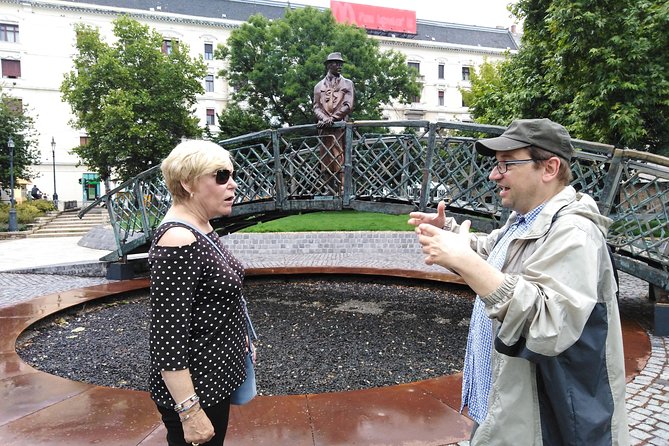
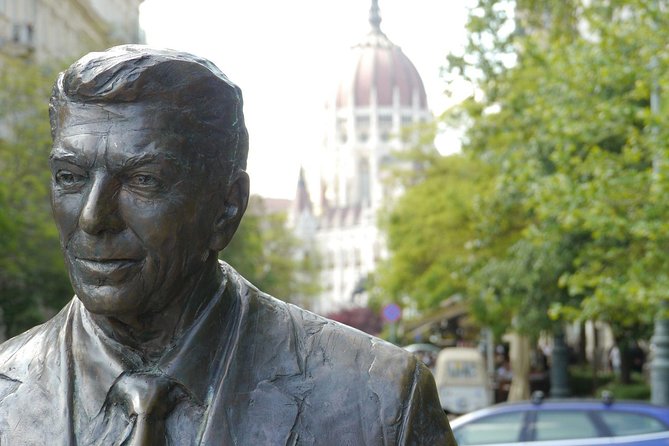
Last, you’ll hit the Ronald Reagan Statue, with about 10 minutes devoted to it. The context here is specific and unexpected: it’s about Hungary’s sense of obligation to Reagan for his efforts in bringing down the Iron Curtain, and it’s connected to the creation of the memorial.
This is the kind of stop that can make the whole tour feel smarter. Budapest isn’t only looking inward; it remembers how outside leadership influenced its path. It also helps you connect the modern political story to the national stories you’re hearing at Parliament and Heroes’ Square.
You’ll likely get enough time to understand why the memorial exists and how it fits into the broader Budapest narrative. Since this is a short stop, don’t expect a long discussion—use the guide while you have it.
Guide Style: Small Group Size and Real Adaptability
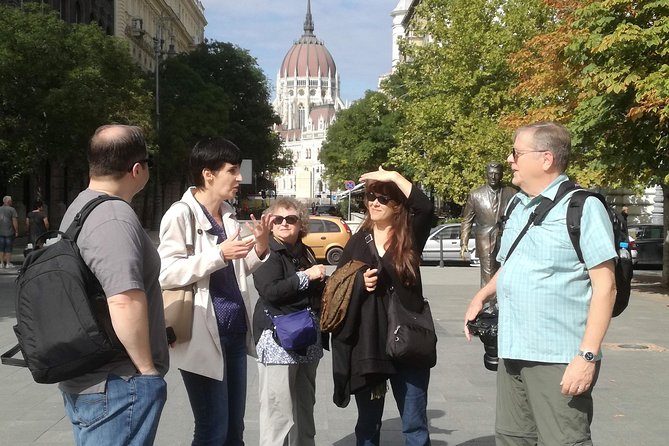
One of the most praised aspects of this tour is the guide quality, and it shows in how the experience is described. A standout example from past participants is Eszther Talaber, praised for thorough city knowledge and also for being friendly and caring. That combination matters: you want facts, yes, but you also want a guide who reads the group.
Another review theme you should care about: the guide is described as willing to take you toward what you want to learn. That’s rare in short sightseeing tours. If you like architecture, ask about design details. If you care about politics, ask what connects Parliament to national identity. With a group capped at 8, you’re more likely to get real answers.
This tour also highlights set pacing and the ability to choose from two departure times. That’s more than convenience—it helps you match the walk to your energy level. If you’re not a morning person, the later time option can keep your day enjoyable rather than stressful.
Price and Value: Is $125.10 Worth It?
Let’s talk money in plain terms. At $125.10 per person for a 3-hour walk, you’re paying for a guided experience, not a self-guided route.
Here’s the value case that makes sense:
- You get a professional guide for the full duration.
- The group size is small (max 8), so the guide-to-traveler ratio is better than large bus tours.
- Each listed stop is marked with free admission ticket, which helps prevent hidden costs from stacking up.
- The sights are high-signal: synagogue, Parliament, a major relic church, Heroes’ Square, Andrássy Avenue, and a Reagan memorial.
The drawback side of the budget equation: you’re not getting an all-day program, and you’re not getting food included. If you’re hungry, you’ll need to plan a meal before or after. If you’re trying to stretch your budget, you may prefer a self-guided route through downtown—though you’ll miss the connecting story that makes these landmarks click.
For me, the decision comes down to one question: do you want the city explained as you go? If yes, this price can feel fair.
What to Wear and How to Prepare
You’re walking around central Budapest and visiting religious sites. That means:
- Wear comfortable shoes. You’re out for about three hours.
- Dress with a bit of respect for church spaces.
- Bring a charged phone for the mobile ticket.
- If weather looks rough, carry a light layer or umbrella.
Since the tour doesn’t include food, plan a snack strategy. Even a quick coffee stop before you meet can save your energy for the afternoon.
Who This Tour Suits Best
This is a strong fit if you want:
- A quick way to understand downtown Pest without getting lost
- A guide-led explanation that ties each stop to a bigger story
- A manageable pace with time for questions
- A mix of Jewish heritage, national identity, architecture, and political symbolism
It may be less ideal if:
- You want long interior time at each landmark
- You prefer spending most of your day in museums with deep reading
- You’re traveling with needs that require a lot more flexibility than a timed walking format
If you like walking tours that feel like a conversation with a local, you’ll probably enjoy this one.
Should You Book This Downtown Pest Walking Tour?
If you want a small-group, guided walk that connects Budapest’s biggest icons to clear meaning, I’d book it. The strongest reason is the combination of scale and focus: major landmarks, short times, and a guide who can keep you on track without flattening the story.
I’d hesitate only if you’re the type who needs lots of solo wandering and deep time inside buildings. For most people trying to get their bearings and understand what you’re seeing, this hits a sweet spot—especially with the guide energy highlighted in past experiences and the small cap of 8 travelers.
FAQ
What is the duration of the Downtown Pest Walking Tour?
The tour lasts about 3 hours.
How much does the tour cost?
The price is $125.10 per person.
Is the tour offered in English?
Yes, it is offered in English.
How many people are in the group?
The tour has a maximum of 8 travelers.
Where do I meet the guide?
You meet at Szamos Cafe Budapest, Kossuth Lajos tér 10, 1055 Hungary.
What major stops are included?
The tour includes stops at the Great/Central Synagogue, the Hungarian Parliament Building, a neoclassical church built between 1851 and 1905 with the mummified right hand of King St Stephen, Heroes’ Square, Andrássy Avenue, and a Ronald Reagan statue.
Is admission included for the stops?
The stops listed are shown as admission ticket free.
Is free cancellation available?
Yes. You can cancel for a full refund up to 24 hours in advance.
If you want, tell me your travel month and your must-see priorities (architecture, history, food, or photos), and I’ll suggest the best departure time and what to pair this tour with afterward.