REVIEW · BUDAPEST
Communist Budapest Private Walking Tour
Book on Viator →Operated by Insight Cities · Bookable on Viator
Budapest reads like a Cold War map. This private historian-led walk ties key buildings from 1949–1989 to real political events, and I love how it hits both the 1956 uprising sites and the everyday feel of socialist life. One consideration: several big stops are viewed from outside, so plan on using the tour for context, not for maximum museum time.
The best part is that you’re not stuck with a script. If your guide is András or Kata, you’ll get clear, story-driven explanations and a route that can bend toward what you care about. You choose a morning or afternoon start, and you’ll travel together in a small group while your guide handles the practical stuff like finding the right metro or tram options.
In This Review
- Key Things to Know Before You Go
- Why Communist-Era Budapest Feels Different on Foot
- Private Historian Guides: The Difference You’ll Actually Feel
- Price and Group Size: Is $393 Per Group Good Value?
- Getting Around: Pickup, Subway/Tram Moves, and a Mobile Ticket
- Stop 1: Parliament and the 1956 Revolution in Public Stone
- Stop 2: House of Terror Outside—Your Best Cold War Finish Line
- Stop 3: Puskas Soccer Stadium and Socialist-Realist Propaganda
- Stop 4: Ronald Reagan’s Statue and Hungary’s Complicated Gratitude
- Stop 5: Bem József Square—1956 Starts Here
- The Parts Between Stops That Make the Story Click
- What You’ll Learn About Goulash Communism (Without Making It a Slog)
- Timing and Pace: About 3 Hours, with Room for Questions
- Who Should Book This Tour (And Who Might Prefer Something Else)
- Should You Book This Communist Budapest Private Walking Tour?
- FAQ
- How long is the Communist Budapest private walking tour?
- What language is the tour offered in?
- Is pickup included?
- Where does the tour end?
- Are tickets to the House of Terror Museum included?
- Do I need tram or metro tickets?
Key Things to Know Before You Go
- Private, historian guide, not a generic stroll focused on the communist era from 1949 to 1989
- 1956 is the spine of the tour, starting around Bem József Square and echoing through the wider city
- Cold War layers in one route, including talk near the US Embassy area and Soviet-era monuments
- Propaganda is everywhere, from socialist statues to parade-ready streets and public symbolism
- House of Terror is your optional next stop, with the tour ending right outside that landmark
- You get help with transit, even if you need to buy tram/metro tickets
Why Communist-Era Budapest Feels Different on Foot
Budapest has plenty of beautiful buildings, but this walk changes how you read the city. Instead of seeing architecture as just pretty stone, you start seeing it as political theater: where power stood, how it signaled itself, and how people responded.
What makes this experience especially good value is that it connects major events with daily life. You’ll hear about privations under Hungary’s version of communism, often described as goulash communism, and you’ll also spot the visual language the regime used—statues, streets for ritual parades, and public spaces built for mass messaging.
You can also read our reviews of more walking tours in Budapest
Private Historian Guides: The Difference You’ll Actually Feel
A private tour works best when the guide can explain more than facts—they can connect the dots. Here, the guides are local historians and enthusiastic hosts, so you’re not just collecting dates. You’re learning how the communist system worked in real time, and why certain places mattered beyond their postcard value.
In particular, the tone you want is the one guests highlight: clear explanations, big-picture perspective, and a sense of humor that makes heavy material easier to hold. And if you’re the type who asks lots of questions, the private format lets you steer without slowing down the whole group.
Price and Group Size: Is $393 Per Group Good Value?
This tour is priced per group (up to 10 in the price structure), with a small maximum headcount for the activity (up to 8 noted for the experience). That means you should think of this as a pay-for-the-guide package rather than a ticket you’d buy to blend into a crowd.
At around $393 per group for about 3 hours, the value depends on how many people share the cost. If you’re traveling as a couple or small family, you’ll feel the premium more. If you’re a small group of friends—especially if you can keep it to the smaller end of the headcount limit—you’re basically paying for a private historian at a price that’s still competitive for a first-rate walking tour in a major European capital.
What’s included matters here: you get the 3-hour guided walk with the historian guide, plus a mobile ticket. That’s useful because it smooths the first part of the experience: you spend less time figuring out logistics and more time absorbing the story.
Getting Around: Pickup, Subway/Tram Moves, and a Mobile Ticket
Budapest is a city you can walk through—but with communist-era sites spread across key squares and districts, the tour uses public transport intelligently. The plan typically includes metro or tram travel between areas that aren’t next door, plus short walking links where it makes sense.
Pickup is offered: the guide can meet you at your central hotel or flat, then lead your group by metro, tram, or foot when sites are close. If you skip pickup or don’t send your address, you’ll meet your guide 15 minutes before the start time at the default meeting point near Frankel Leó út 2-4.
One practical note: tram and metro tickets aren’t included, but your guide assists if you don’t already have a pass. So bring whatever you need for local transit—then let the guide point you to the right options.
Stop 1: Parliament and the 1956 Revolution in Public Stone
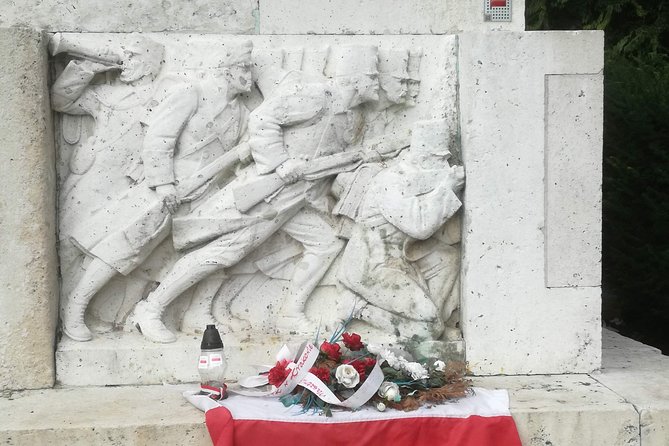
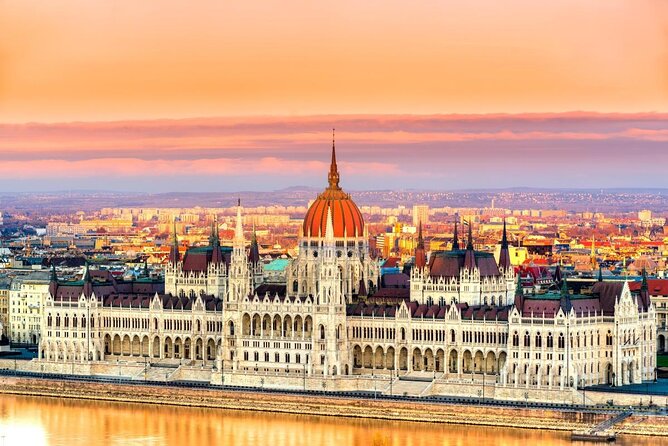
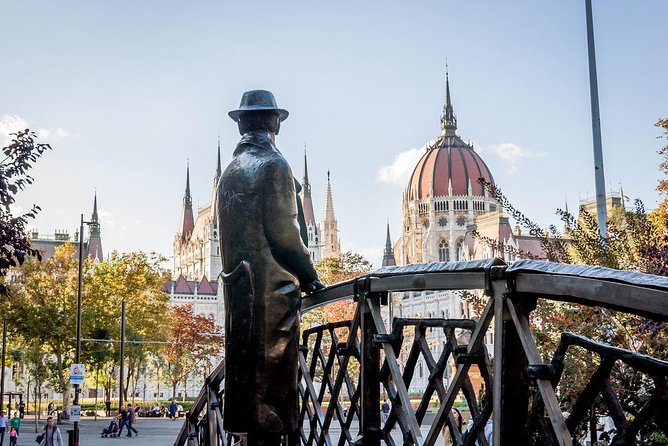
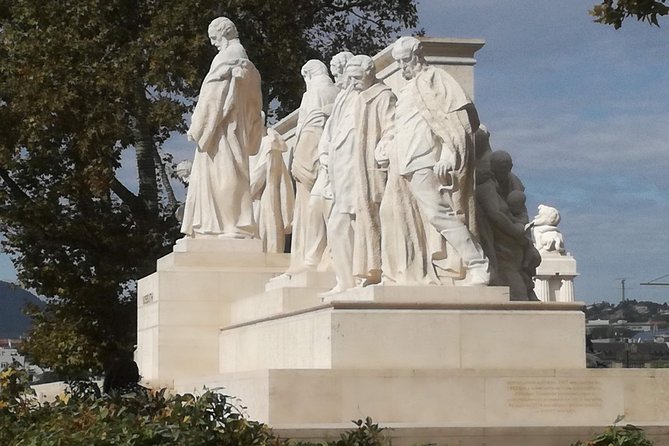
The tour starts in the Kossuth Square area in front of the Hungarian Parliament Building. This is more than a grand start point—it’s where you get introduced to how 1956 is remembered in Budapest’s official geography.
From there, the walk focuses on monuments tied to the revolution before continuing toward Liberty Square. This is a clever move because it widens your lens from Hungarian events to the Cold War atmosphere that shaped Hungary’s fate after 1949.
Expect discussion around the US Embassy area and nearby Cold War symbolism. You’ll also see a monument to the Soviet Army, and the tour brings in the Ronald Reagan angle early—plus mention of an atomic shelter. Even if you don’t know anything about the period, the guide should help you understand why these elements are placed where they are and what they were meant to communicate.
This part of the tour is designed to get your bearings fast: power centers, revolutionary memory, and the international chessboard all show up close together.
You can also read our reviews of more private tours in Budapest



Stop 2: House of Terror Outside—Your Best Cold War Finish Line
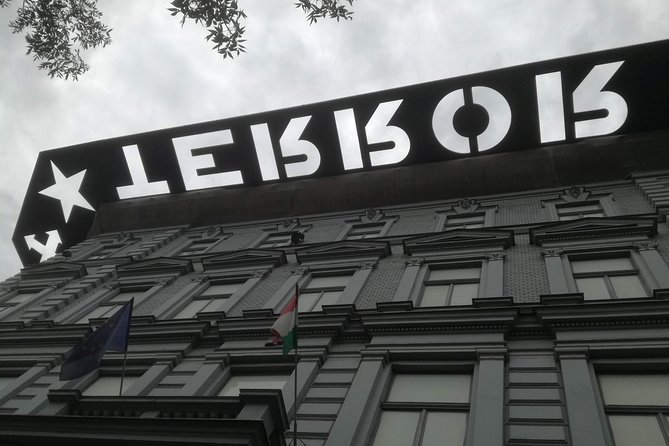
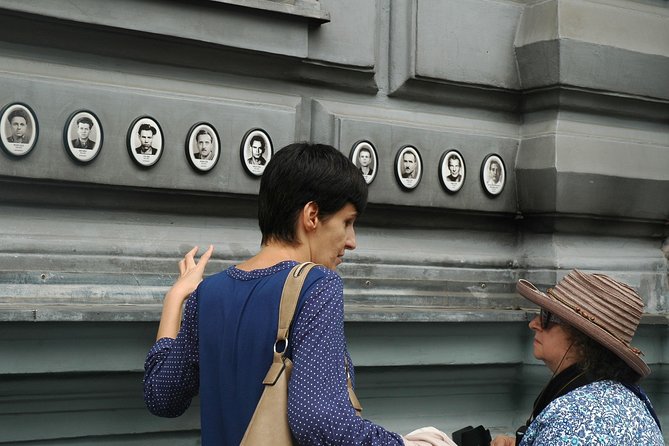
You end this segment outside the House of Terror Museum, housed in the former headquarters of Hungary’s communist secret services. That matters because this isn’t abstract history. It’s a location tied to fear, surveillance, and political control—three words that explain why the era felt so tight.
There’s also a slab of the Berlin Wall in front. It’s a sharp visual reminder that Hungary’s communist era wasn’t isolated—it was part of a wider system.
The museum itself isn’t included in the tour, so you won’t be spending time inside during the walking portion. Still, this is a great endpoint if you want to go in later. You’ll already have the context, so the exhibits should land harder and make more sense.
If you prefer a tour that includes major museum entrance time, you may feel this is more of a “context walk” than a full day of exhibits. But as a starting point before visiting, it’s exactly where you want to be.
Stop 3: Puskas Soccer Stadium and Socialist-Realist Propaganda
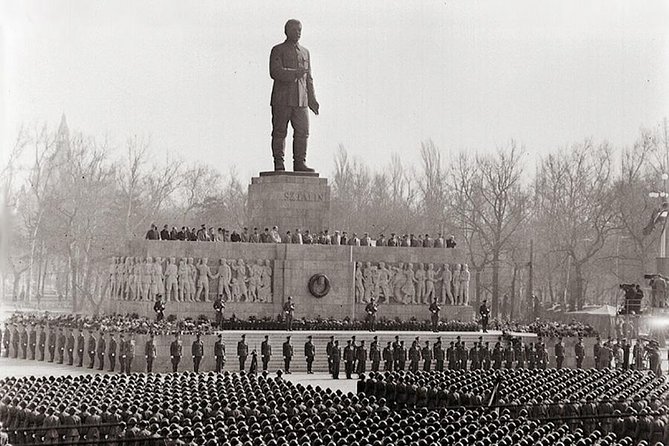
Next comes the former People’s Stadium, now Puskás Ferenc (Puskás Soccer) Stadium. The key detail isn’t sports—it’s what’s still visible.
The tour notes socialist realist statues that remain standing. That’s the point: propaganda didn’t only live in speeches or newspapers. It lived in buildings, too—especially in public places where large groups gathered for civic pride, mass events, and state-approved enthusiasm.
This stop also helps you see how regime messaging traveled through culture. If you’ve only thought of communism as politics, this is where you notice it as a visual and architectural style.
Stop 4: Ronald Reagan’s Statue and Hungary’s Complicated Gratitude
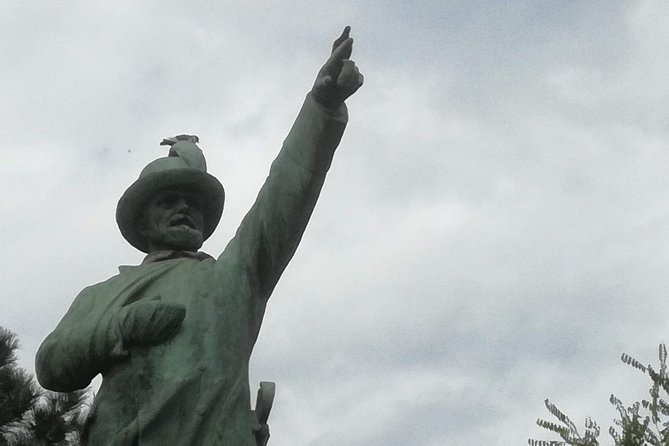
You’ll also spend time at the Ronald Reagan statue. This stop is more interesting than it sounds because it ties a major figure of the Western anti–Iron Curtain push to Hungarian interpretations of what helped change the system.
You’ll hear about Hungary’s sense of obligation to the US president for efforts connected to bringing down the Iron Curtain. That’s a reminder that the end of communism didn’t happen in a vacuum—local people, regional pressure, and international politics all mixed together.
If you’re sensitive to oversimplified history, this stop can be a good correction. It nudges you toward nuance: symbols are often about multiple stories at once.
Stop 5: Bem József Square—1956 Starts Here
Bem József Square (Bem Square) is one of the most important stops on the walk because it’s tied to the 1956 Hungarian Revolution. The tour focuses on the square as the place where the first big demonstration of the uprising began.
That gives the whole morning or afternoon tour a strong emotional arc. You’re not just looking at communist-era symbols in hindsight—you’re tracing the moment the system was challenged.
There’s also a coffeehouse on the square that retains its original interior from the 1960s. That small detail is exactly the kind of thing that makes a tour feel real rather than lecture-like. If you have time and budget, you might want to pause here and treat it as a living time capsule—an old interior that still lets you feel what “everyday life” looked like while political conditions were changing around it.
The Parts Between Stops That Make the Story Click
The headline sites are the anchors, but the route also aims to show you the in-between details that explain what life under communism actually felt like.
You’ll hear about privations—how shortages and constraints affected daily choices. You’ll also pick up the visual rhythm of communist public life: socialist-era statues, streets used for May Day parades, and the presence of secret service power made visible through location.
And yes, you should expect at least some look at a 1970s housing estate. That’s a useful counterweight to squares and monuments. Monuments explain what regimes wanted you to admire. Housing estates explain what regimes built for people—and what those buildings suggest about planning, comfort, and social priorities.
When the guide ties these elements together, you start seeing the communist era as an ecosystem, not a single event.
What You’ll Learn About Goulash Communism (Without Making It a Slog)
If you’re worried that a political walking tour will be nonstop heavy facts, this one is built to keep moving. The focus is on how the system shaped behavior and daily routines, not just who won what battle.
The phrase goulash communism matters because it hints at the mix: a rigid political structure alongside a more practical, improvised approach to living. That contrast is what makes Hungary’s story feel human.
You’ll also connect the Cold War to real street-level experiences. When you pass sites tied to secret service activity and Cold War symbolism, it stops being trivia and becomes a way to understand why ordinary life could feel constrained.
Timing and Pace: About 3 Hours, with Room for Questions
The duration is about 3 hours. That’s a sweet spot for Budapest walking tours: long enough to cover multiple meaningful areas, short enough that you don’t feel like your day is consumed by one theme.
Because it’s private, the pace should be adjustable. If you want more explanation at Parliament or more time framing the secret service context outside the House of Terror, you’re more likely to get it here than on a fixed-group bus tour.
Also choose your departure time based on your style. Morning tends to feel brisk and clear for first-time orientation. Afternoon can be better if you want a slower start and a later museum add-on at the House of Terror.
Who Should Book This Tour (And Who Might Prefer Something Else)
This tour is a strong fit if you:
- Want a focused, story-based look at communist Budapest between 1949 and 1989
- Like learning from a local historian who can explain symbolism and street layout
- Are curious about the 1956 revolution and how it’s remembered across the city
- Enjoy political history when it’s tied to daily life and visible places
It might not be the best match if you:
- Want an itinerary packed with museum entry tickets
- Prefer a lighter, purely aesthetic sightseeing focus
- Don’t want to spend time looking at several major landmarks from outside
Should You Book This Communist Budapest Private Walking Tour?
I think it’s worth booking if you’re the kind of traveler who likes to understand what you’re looking at. The tour offers a smart mix: big squares and political monuments, plus the quieter signs of everyday socialist life like parade-ready streets and housing estates. Ending outside the House of Terror works well if you plan to go in afterward, because you’ll already know why that building matters.
If you’re traveling as a small group and can share the cost, it’s also a good deal. You’ll get a private historian-style experience without needing to spend a full day.
If you only have a little time in Budapest and you want maximum famous-building photo time, consider a more general overview tour. But if you want meaning on your walk, this one has real staying power.
FAQ
How long is the Communist Budapest private walking tour?
It runs for about 3 hours.
What language is the tour offered in?
The tour is offered in English.
Is pickup included?
Pickup is offered from your central hotel or flat. If you do not want pickup (or don’t provide an address), you meet your guide 15 minutes before the start time at the default meeting point.
Where does the tour end?
The tour concludes outside the House of Terror Museum on Andrássy út 60, 1062 Hungary.
Are tickets to the House of Terror Museum included?
No. The tour ends outside the House of Terror, and the museum exhibit is not included.
Do I need tram or metro tickets?
Tram and metro tickets are not included, but your guide will assist you with purchasing them if you don’t already have a transport pass.