REVIEW · BUDAPEST
Budapest Orientation Walking Tour
Book on Viator →Operated by Tourist Angel · Bookable on Viator
Budapest has a habit of feeling huge on day one, then suddenly making sense. This 3-hour walking orientation is a smart way to get your bearings fast, while seeing the heavy hitters on both sides of the Danube. I like that you get a real guide who ties the monuments to Hungarian life, not just a list of stops. I also like the pacing: you walk most of the time, then use quick public transport to reach Buda Castle without wasting the whole day on stairs and detours.
The one drawback to plan for: not everything is paid for. Public transport costs about 4 EUR per person, and several major sights are mainly exterior views. Also, the Basilica visit timing can be affected by services on Sunday mornings, so it helps to check what day you’re going.
In This Review
- Key things you’ll notice right away
- Why a 3-hour Budapest orientation tour is a smart first-day move
- Szent István tér and St. Stephen’s Basilica: the start that sets the tone
- From the square to the Parliament: big architecture and quick photo planning
- Getting to Buda Castle the smart way: walk + public transport
- Fishermen’s Bastion and the Matthias Church area: why the views feel different
- Tickets, price, and the real value of having a guide for orientation
- Where this route fits in your day (and how to stay comfortable)
- Who should book this Budapest orientation tour
- Should you book it?
- FAQ
- How long is the Budapest Orientation Walking Tour?
- Where does the tour start?
- What language is the tour offered in?
- Is this tour private?
- Do I need tickets for public transportation?
- Is St. Stephen’s Basilica entry included?
- Can I visit Matthias Church during or after the tour?
- What does the tour do about weather?
Key things you’ll notice right away
- You get a true orientation, not just photo stops, with the guide connecting buildings to culture and everyday history.
- Private by your group size, so you’re not stuck listening through crowds if the schedule lines up well.
- Both Buda and Pest in one go, with Parliament and castle-area viewpoints that change your mental map of the city.
- Most walking, with a practical transport shortcut to the Castle of Buda (no long slog required).
- Tickets are mostly straightforward, with St. Stephen’s Basilica entrance included as an option, while Matthias Church interior costs extra.
- Multiple tour times make it easier to fit into a busy trip window.
Why a 3-hour Budapest orientation tour is a smart first-day move
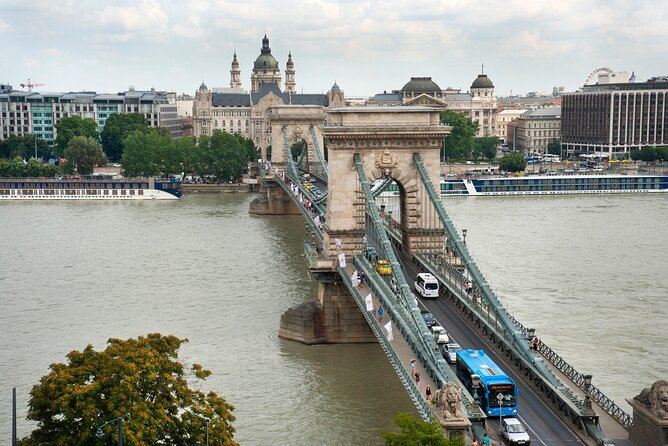
If this is your first time in Budapest, you’re going to see two different cities. Pest feels wide and ceremonial; Buda feels layered and hilly, with viewpoints that make you understand why people keep coming back. In just about three hours, this tour gives you that mental switch.
What makes it work is the mix of sights and context. You’re not just walking from monument to monument. Your guide points out what you’re actually looking at and why it matters, so later, when you come back on your own, you’ll know where you are and what you’re seeing.
It also helps that the format is flexible. The tour runs in all weather conditions, so you can still do it even if Budapest decides to rain like it has a personal vendetta. And because it’s offered in English with a professional guide, you can ask quick questions on the move instead of trying to guess from a map.
Finally, the vibe can be surprisingly personal. Some guides in this rotation have a background of growing up in the city, like Dalia, and that kind of local perspective tends to make the tour feel less like a script and more like a guided stroll with answers.
You can also read our reviews of more walking tours in Budapest
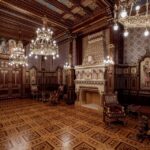

Szent István tér and St. Stephen’s Basilica: the start that sets the tone
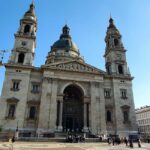
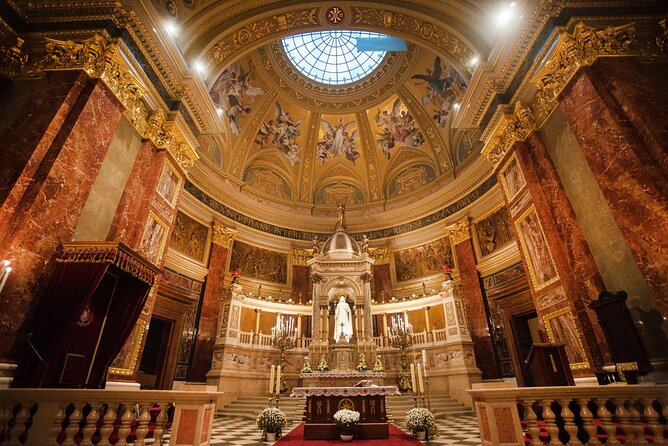
You meet at Szent István tér 4 (1051), then immediately step into Budapest’s grand religious centerpiece: St. Stephen’s Basilica (Szent Istvan Bazilika). This is the place where the city announces itself. Inside or out, it’s monumental, and it’s the kind of building that makes you slow down.
The stop is about 30 minutes, with an emphasis on the basilica’s statues, frescoes, and a detail people remember long after: the mummified right hand of Saint Stephen the First. It’s one of those things that feels almost unbelievable until you see how prominently it’s described and displayed.
A practical note you should know: the basilica is open every day except Sunday morning religious services. If you’re traveling on a Sunday morning, expect that your guide might adjust how and when you can get the most out of the visit. The entrance fee to the Basilica is listed as optional and included, which usually means you can decide on the spot whether you want to go in.
From there, the tour moves to St. Stephen’s Square right in front of the basilica. That short 10-minute stop matters because it orients you to the public space and the streets you’ll be walking later. It’s the kind of setup that turns a big building into a starting point instead of a random landmark.
From the square to the Parliament: big architecture and quick photo planning
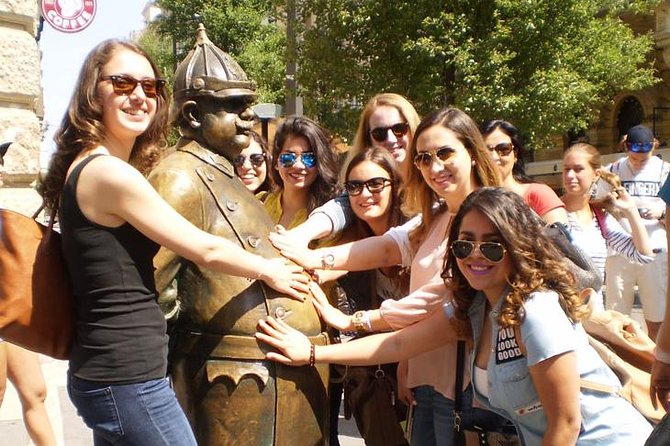
Next up, you head to the Hungarian Parliament Building. This is where your view of the city starts to shift from “pretty” to “politics, power, and identity.” The building itself dates to the late 19th century, and the scale is hard to miss.
You spend about 15 minutes here, and it’s mainly a walk-around look with some excellent photo angles. Since entry is not included, you’re using this portion as orientation and viewpoint practice. You’ll see enough to understand where the best exterior angles are, which makes a later revisit much easier if you decide to go inside.
Here’s how I’d use this moment if I were planning my own day afterward:
- Decide where you want to stand for your photos (your guide can point out good spots).
- Note the direction the building sits in relation to the Danube so your later self-guided walk feels logical.
- Don’t treat it like a “ticketed attraction.” Treat it like a landmark anchor.
This is also one of the spots where a great guide really shows up. Some guides in this rotation are known for adding extra context as they walk, like Naomi and Joel, which tends to make the Parliament stop feel like part of a story instead of a quick drive-by.
Getting to Buda Castle the smart way: walk + public transport
Then comes the castle area, and this is where efficiency matters. Instead of grinding up the hill the whole way, the tour uses public transport to get you to the Castle of Buda area and back. You should plan on paying about 4 EUR per person for those tickets, since they’re not included.
This is genuinely worth factoring in. If you’re already a bit tired, the transport step can be the difference between enjoying the views and arriving at the terrace with your legs plotting a mutiny.
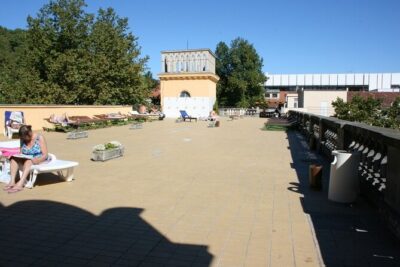
Once you’re up in the castle zone, the tour focuses on something practical: the panoramic terrace of the Royal Palace. This stop is about 50 minutes, which is longer than most “castle tours” give you. That extra time matters because you need it. Views from here aren’t a one-second thing. You’ll want to look down at the river, track how Pest sits across the water, and orient yourself to where the Parliament and major bridges fit in the bigger picture.
If you love photography, this is your payoff window. If you don’t care about photos, it still works as a mental reset: the city becomes readable.
Fishermen’s Bastion and the Matthias Church area: why the views feel different
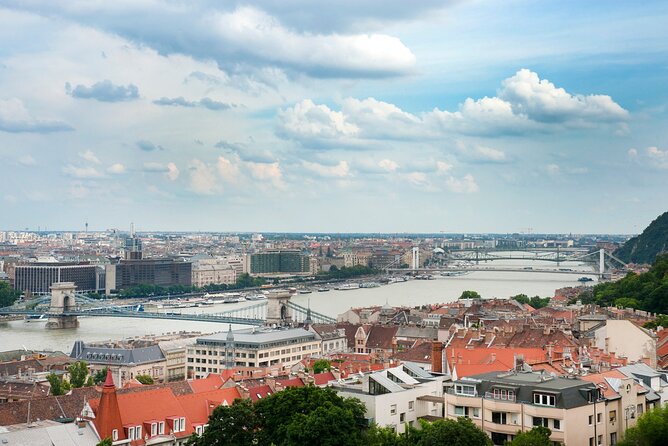
After the terrace, the tour continues through a string of smaller stops that add texture. You don’t just jump between the biggest ticket names; you get the in-between points that make Budapest feel like a living place.
First you’ll see the Fountain of King Matthias, about 10 minutes. It’s a quick, pretty stop, but it also helps break up the pace between the wide-open viewpoint time and the next medieval-looking surroundings.
Then comes Sandor Palace, the presidential palace area. It’s about 15 minutes, and the note here is that entry isn’t included. You’re there mainly for the exterior and the atmosphere, including the guards in historical uniforms. Even if you’re not a guard-watch person, it’s a memorable slice of ceremony.
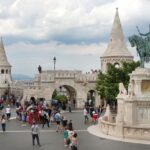
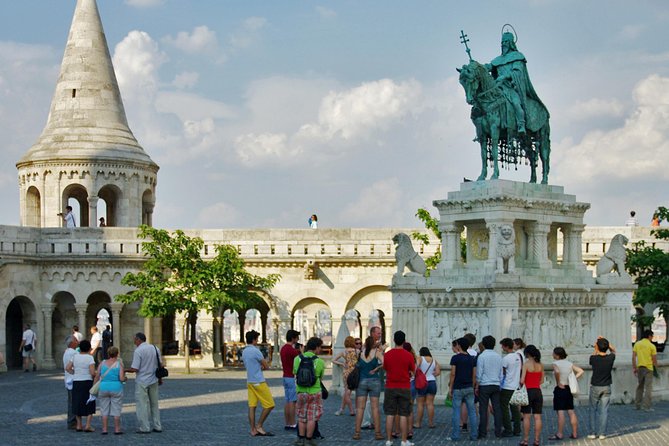
Next you’ll reach Fisherman’s Bastion for about 15 minutes. This is one of the best places to see the river and the Danube panorama with the Hungarian Parliament building in view. The key thing is timing and framing. From here, you understand the “why” behind Budapest’s famous skyline photos: the city is arranged like a stage, and these terraces are the seats.
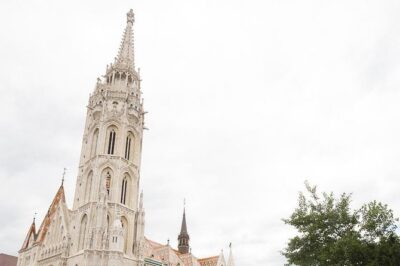
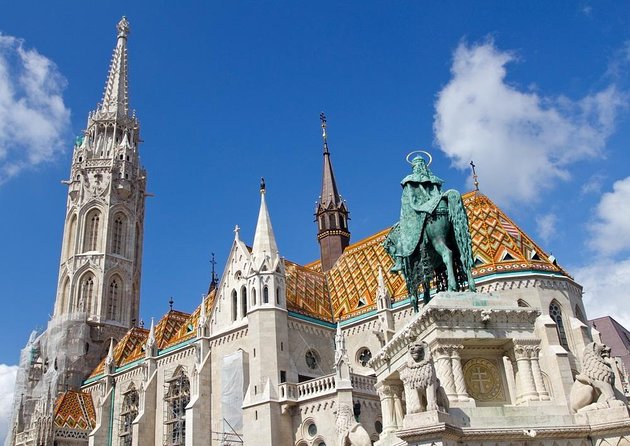
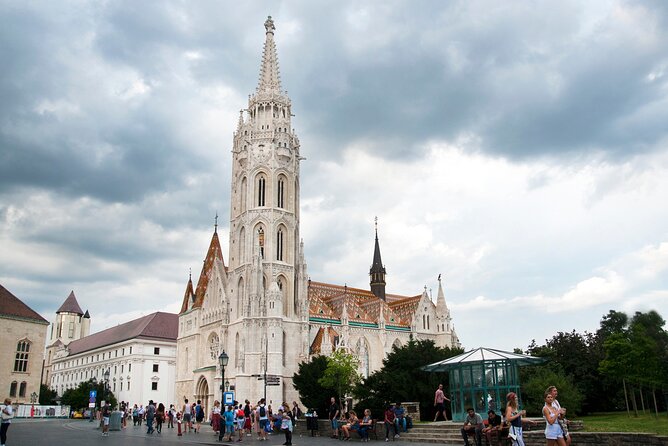
Finally, your tour ends at the Matthias Church area. You spend about 15 minutes there. The church is Gothic style and built in the Middle Ages, and it’s a strong closer because it feels like Budapest’s old-world craftsmanship in one concentrated stop.
One important catch: Matthias Church interior is not included. A visit inside is possible after the tour, but it requires an entrance ticket that costs 5 EUR per person, paid separately.





Tickets, price, and the real value of having a guide for orientation
At $42.01 per person for about 3 hours, this tour is priced like a practical city-guide service. You’re not paying only for access to a single building. You’re paying for:
- a guided route that keeps you from wasting time,
- context at each stop so the sights connect,
- and a pace that works for a short visit.
The value gets clearer when you look at costs and inclusions. St. Stephen’s Basilica entrance is listed as optional and included, so if you want to go inside, you’re covered there. But you should budget extra for:
- Public transport tickets: around 4 EUR per person (used to reach the Buda Castle area and return).
- Matthias Church interior: about 5 EUR per person if you add it after the tour.
- Parliament Building entry: not included, and the stop is mainly for exterior orientation and photos.
So I’d frame the cost this way: the guide fee helps you see a lot in a short window, and you only pay extra if you choose to add interior access.
The guide quality is a big part of that value. In the feedback for this experience, names like Dominik, Bea, Joel, Dalia, Kaitlin, and Naomi come up often, and the common theme is that the best guides in this rotation bring more than facts. They make the city feel personal. Dalia, for example, is known for explaining Hungarian history with lived-in context like growing up around Cold War-era realities, which helps you understand why certain buildings and symbols matter.
Where this route fits in your day (and how to stay comfortable)
This tour is mostly on foot. That means you should dress for walking in uneven stone streets and be ready for short climbs, especially around the castle area.
It also means your timing matters:
- If you’re doing this early in your trip, you’ll get more out of everything later because the city map in your head will be more accurate.
- If you’re doing it on a tight schedule day, the multiple tour times help, but still leave room afterward for a slower return visit to Matthias Church interior if you want it.
Because the tour runs in all weather conditions, bring the basics. Even if it rains, the route still runs. So think about a light rain layer and shoes you can trust on slick surfaces.
And keep an eye on Sunday mornings if you’re traveling then. The basilica is open every day except Sunday morning religious service. If you’re set on the interior, that detail can affect what you see during your stop.
Who should book this Budapest orientation tour
This tour makes the most sense if you:
- want a strong first-day orientation without spending the whole day researching,
- like seeing a mix of grand landmarks and smaller ceremonial details,
- and want a guide to explain the “why” behind what you’re seeing.
It’s also a good match if you prefer flexibility. Having a guide who can adjust your route to meet a time constraint is useful when your schedule has tight edges. One example from the experience feedback is that Dalia was able to alter the planned route when an earlier flight was needed, so you’re not just locked into a rigid checklist.
If you’re a solo traveler who enjoys small group dynamics, the fact that it’s private by your group also helps. If you’re a group, it can be easier to get everyone oriented quickly instead of splitting up.
If, on the other hand, you’re only interested in ticketed entries and don’t care about exterior orientation, you might decide to skip this and focus on attractions where you pay for full access. This tour is built to teach the city through what you can see and understand, not to maximize indoor time.
Should you book it?
Yes, if you want a fast, friendly way to learn Budapest while you’re still figuring out how Buda and Pest relate to each other. The best part is the payoff: by the time you reach the Royal Palace terrace, you’ll actually understand what those skyline photos are showing you. And by the end at Matthias Church, you’ll have enough context to enjoy the city instead of just following signs.
Book it especially if:
- it’s your first time in Budapest,
- you want a guide-led route that hits both sides of the river,
- and you’re happy paying small extra amounts if you choose to enter places like Matthias Church interior.
FAQ
How long is the Budapest Orientation Walking Tour?
It runs for about 3 hours.
Where does the tour start?
You start at Szent István tér 4, 1051 Hungary.
What language is the tour offered in?
The tour is offered in English.
Is this tour private?
Yes. It’s a private tour/activity, with only your group participating.
Do I need tickets for public transportation?
Yes. You’ll use public transport to reach the Castle of Buda and return, and the cost is listed as 4 EUR per person. Those tickets are not included.
Is St. Stephen’s Basilica entry included?
The entrance fee to St. Stephen’s Basilica is listed as optional and included, meaning it depends on whether you choose to go inside during the stop.
Can I visit Matthias Church during or after the tour?
The tour ends at Matthias Church, but the interior visit is not included. You can visit after the tour with a ticket that costs 5 EUR per person, paid separately.
What does the tour do about weather?
The tour operates in all weather conditions, so you should dress appropriately for rain or cold.