REVIEW · BUDAPEST
Buda Castle District Walk with Entry to Matthias Church
Book on Viator →Operated by Absolute Tours · Bookable on Viator
Castle Hill gives you views with a workout. This guided walk stitches together Buda Royal Palace-area sights, cobblestone lanes, and a skip-the-line visit to Matthias Church, ending with the big skyline payoff at Fisherman’s Bastion.
I like two things most: the guide-friendly pace and the way the Matthias Church interior tour makes the building feel less like a postcard and more like a lived-in monument. In real life, guides such as Petra and Greg also bring the neighborhood’s stories into everyday language, so you’re not just walking from stop to stop.
One heads-up: the route is uphill with stairs, cobblestones, and slippery spots in bad weather. Plan for modest clothing at Matthias Church, and if it’s rainy or icy, go slow and watch your footing.
In This Review
- Key highlights you’ll feel right away
- Why Castle Hill Starts at the Holy Trinity Column
- Holy Trinity, Disz Square, and the feel of the real Castle District
- Fisherman’s Bastion: the view that makes the climb worth it
- St Stephen at the statue: the fast history that helps everything else
- Matthias Church: priority entry and what to look for inside
- Church of Saint Mary Magdalene and medieval street corners
- Becsi Kapu Square and the gates that frame the palace quarter
- Royal Palace courtyards and the reminder that this district is still active
- Funicular stories: why they matter even if you don’t ride
- How the walk feels: 2 hours, about 4 km, and the reality of stairs
- Dress code and practical details for Matthias Church
- Price and value: what you’re really paying for
- Weather, route changes, and how to stay flexible in the Castle District
- Who this tour fits best
- Should you book the Buda Castle District Walk with Matthias Church?
- FAQ
- What’s the duration of the Buda Castle District Walk with entry to Matthias Church?
- How much does the tour cost?
- What language is the tour offered in?
- Does the tour include tickets for Matthias Church?
- Is Fisherman’s Bastion included in the tour?
- What’s the meeting point and where does the tour end?
- Is the tour mainly walking?
- What should I wear for Matthias Church?
- Are funicular tickets included?
- Is there free cancellation?
Key highlights you’ll feel right away
- Priority entry at Matthias Church plus a guided walkthrough inside
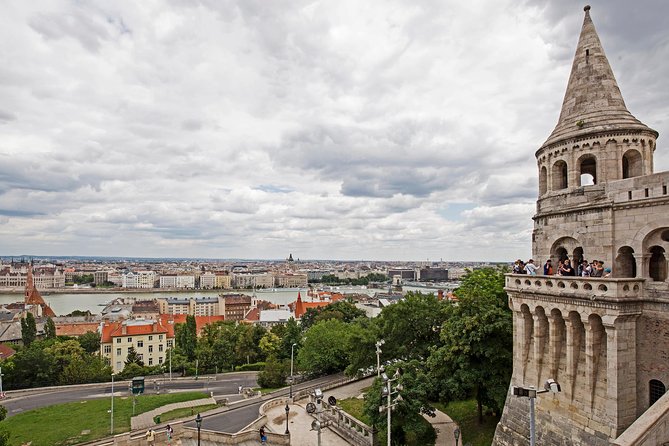
- Fisherman’s Bastion viewpoints aimed at the Danube, Parliament, and Margaret Island
- A guided history thread that ties Hungary’s big figures to what you see on the ground
- A small group size (max 10) that keeps the tour personal and manageable
- Castle District funicular stories (tickets not included, but useful context)
- Route tweaks possible in the Castle District due to diplomatic events
Why Castle Hill Starts at the Holy Trinity Column
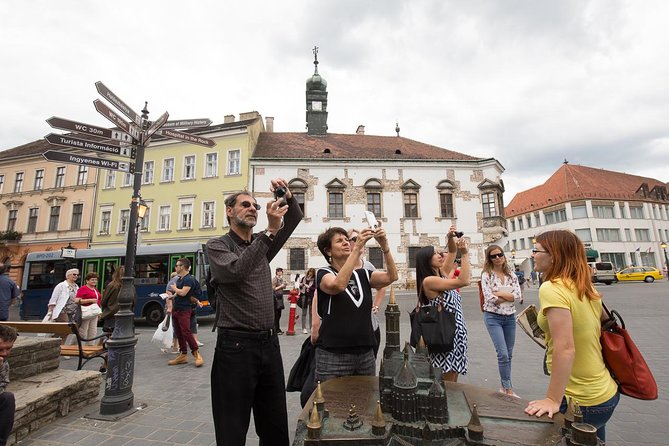
The tour begins near the Holy Trinity Statue in the Castle District’s orbit. From there, you’re set up for two things that make this area worth the effort: first, you get context for why the Castle side of Budapest looks the way it does, and second, you start moving while your guide can still set expectations.
The early part is a warm-up for the physical side of Castle Hill. You’ll climb, pass old squares and local landmarks, and get pointed toward places you’d likely miss if you were just following your phone map. It’s not a steep, nonstop grind, but it is very much a “let’s walk up and look around” kind of experience.
I also like that the start isn’t all about monuments. You’re guided through neighborhoods that feel lived-in, then the history and architecture start clicking into place.
You can also read our reviews of more walking tours in Budapest


Holy Trinity, Disz Square, and the feel of the real Castle District
As you move through the Castle District lanes, you’ll notice a shift from museum-area grandeur into street-level Budapest. That’s where this kind of walking tour earns its keep. You get to see medieval-style squares and churchy corners, not just the big-ticket sights.
Two practical benefits come from this. One: your guide can explain what you’re looking at before your eyes get overwhelmed. Two: you’re building a mental map. By the time you reach the church, the district stops feeling like a cluster of random buildings and starts feeling like one connected place.
Disz Square and nearby spots also work well for photos, especially in overcast light when stone details show up without harsh glare. The downside is weather. If it’s wet, those surfaces can get slick, so plan to wear grippy shoes.
Fisherman’s Bastion: the view that makes the climb worth it
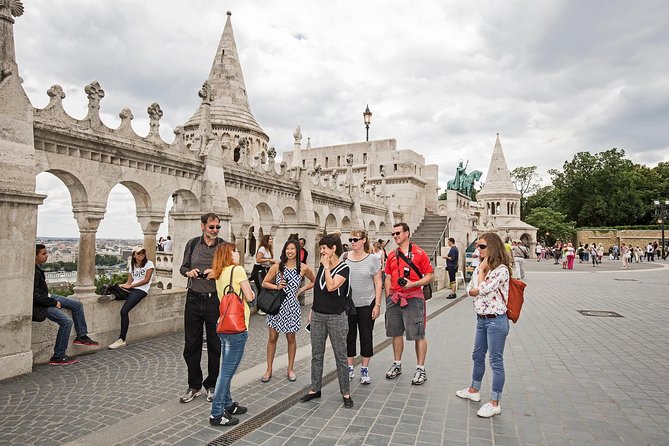
Soon after you’re warmed up, you reach Fisherman’s Bastion, the Castle Hill lookout that people plan their whole trip around. The best part here isn’t only the view. It’s how the tour sets up what you’re going to see.
From the top, you should be able to spot the Danube, Parliament, and Margaret Island. Your guide will help you orient yourself so the skyline looks like a place with structure, not just a blur of landmarks. There’s also a bit of theatrical payoff: you’re getting the view from a height where the city feels deliberately staged.
If you like photos, give yourself a full minute or two per angle. The light can change quickly—especially if clouds move through. The good news is you don’t feel rushed. This stop is long enough to get a couple of solid shots and still keep the tour moving.
St Stephen at the statue: the fast history that helps everything else
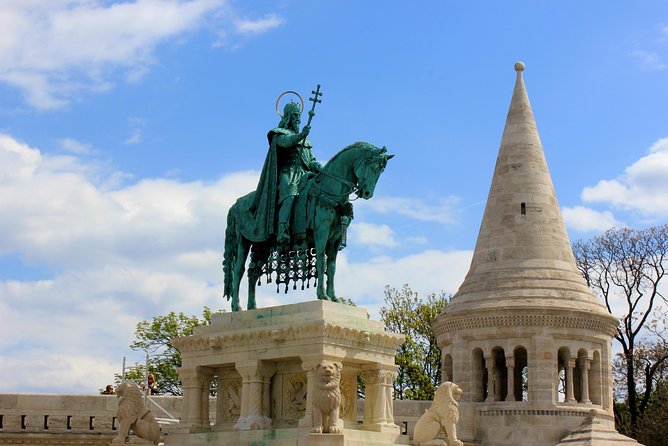
A short stop at the statue of St Stephen works like a storytelling hinge. You get a brief Hungary primer at a point when you’re already surrounded by Hungarian symbols. That timing matters. Instead of learning names in a vacuum, you learn them right beside what they connect to.
This is one of those small moments that makes the rest more rewarding. When you walk into Matthias Church later, you’re not starting from zero.
Matthias Church: priority entry and what to look for inside
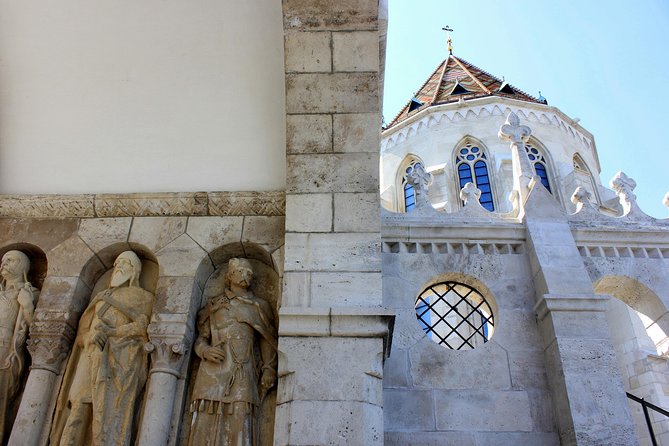
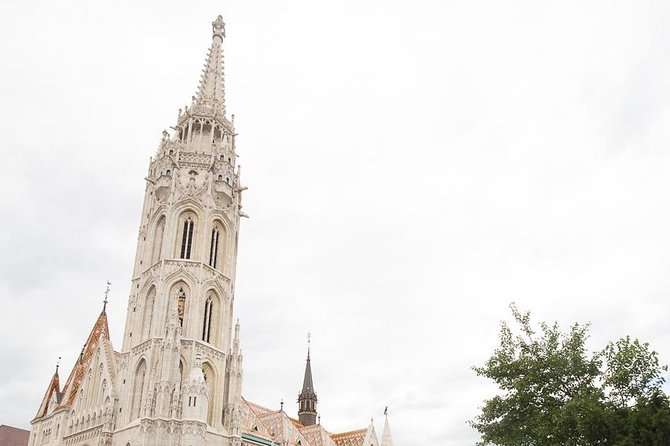
The centerpiece is Matthias Church (Matays-templom). You get priority admission and then a guided tour inside, with your guide pointing out what matters and explaining why.
The church is famously linked to King Matthias, and you’ll also hear the other association used for it in everyday speech: the Church of Mary. That matters because the building’s story isn’t only political. It’s also religious art and architecture layered through time.
What you should expect inside:
- A guided walkthrough that turns the details into meaning, not just sight-seeing
- Time to actually look, not only pass through
- A sense of how the church fits the Castle District as a whole
Practical tip: dress matters here. Shoulders and thighs need coverage, and for male visitors there’s a headwear rule. If you’re unsure you can comply, bring a light scarf or layer that can cover quickly.
One small caution based on the general reality of major churches: access can be affected by ongoing operations. This tour includes guided entry and touring time, but if you’re visiting during busy periods, keep some patience and plan your expectations around a living site.






Church of Saint Mary Magdalene and medieval street corners
After Matthias, you’ll move through the district with more of the “small stop, big payoff” feel. The Church of Saint Mary Magdalene is one of those spots where your guide’s commentary can change how you see a building. Even if you only spend about ten minutes there, you’ll come away with a clearer idea of its medieval story.
This portion also helps you understand the Castle District as more than a viewpoint. It’s a place with layers, including religious buildings that don’t always get the same attention as the headline sites.
Becsi Kapu Square and the gates that frame the palace quarter
You’ll also see Becsi Kapu Square, including one of the Castle area’s main gates. Gate architecture is never just decoration. In places like this, it’s about movement, control, and the flow between public space and the inner palace worlds.
This stop is short, but it adds structure to what you’re doing. You start to see how the district transitions from street to courtyard, from outside view to inner grounds.
Royal Palace courtyards and the reminder that this district is still active

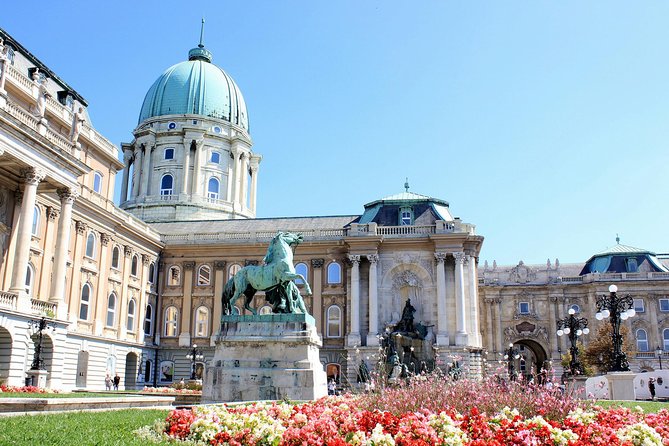
The tour moves through the palace area where the courtyards are open, and you can enter the inner courtyard spaces. Today, the complex houses several museums, but even if you don’t pop into exhibitions, the courtyards alone help you understand scale and layout.
Your guide also ends near the palace area, near the funicular. That last stretch is a good moment to slow down. You’ll likely notice that the Castle District has multiple “best angles,” depending on how you arrive and where the sun is.
Funicular stories: why they matter even if you don’t ride
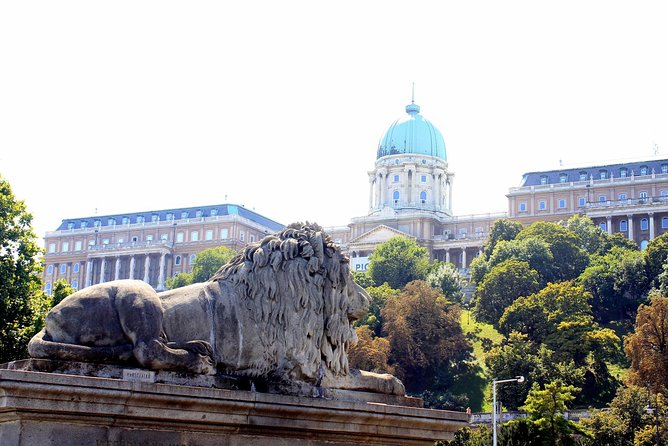
Two funicular references appear in the route: the Budapest Castle Hill Funicular and the Buda Hill Funicular. Importantly, tickets for rides are not included, but the guide explains the story behind them and the tunnel concept at Castle Hill.
Why care if you don’t ride? Because it changes how you picture the district’s topography. When you understand how locals and visitors have historically handled the hill, the walking feels less random. It feels like part of the district’s design.
If you do want to ride, you’ll need to pay separately. If you don’t, the walking is still manageable for most people, as long as you take it steady.
How the walk feels: 2 hours, about 4 km, and the reality of stairs
This tour runs for about two hours and covers roughly 4 km / 2.5 miles, including stairs and cobblestones. That’s a key detail because Castle District walking can feel longer than the distance suggests.
Here’s what you should expect:
- Step-heavy segments, especially as you work your way toward the viewpoints
- Cobblestones that can feel uneven
- Weather sensitivity, since the area is outdoors for most of the route
If you’re coming from flat downtown Budapest, pace yourself the first fifteen minutes. Once you reach the Bastion area, your legs will know they’ve made the right choice.
If you’re traveling with limited mobility or you’re dealing with foot pain, consider whether this is the right format. The guide can be accommodating in some cases, but the route is still a hill walk with rough surfaces.
Dress code and practical details for Matthias Church
Matthias Church has clear expectations: modest clothing is required, covering shoulders and thighs. Male visitors are requested to enter with a bare head. Plan for this before you step into the church corridor, not after.
Also pack for weather. The tour runs in all weather conditions, and Castle Hill doesn’t do gentle weather. If it’s raining, you’ll want shoes with grip and a lightweight layer for warmth.
A small bonus for planning: because the tour includes priority entry to Matthias Church, you’re less stuck in lines. That saves time and reduces the stress of getting inside before crowds or schedules shift.
Price and value: what you’re really paying for
The price is $73.80 per person for about two hours. At first glance, that can feel like a lot for walking. But here’s what’s actually included that makes it feel fair.
You’re paying for:
- A licensed English-speaking guide
- Skip-the-line entry for Matthias Church
- A guided tour inside Matthias Church
You’re also getting a structured route through multiple sites, including Fisherman’s Bastion viewpoints and nearby historic corners. Without a guide, you could DIY parts of this easily—but you’d likely miss the connections: why the sites relate, what to look for, and where to stand for better city orientation.
One more value angle: the group max is ten people. Smaller groups tend to stay on pace without turning into a slow shuffle.
Weather, route changes, and how to stay flexible in the Castle District
The Castle District can change with diplomatic events. That means the route can be altered at any time of year. It’s not something you can control, so treat it like a normal city variable.
If the weather turns, the walking will still happen. That’s why good footwear matters. If visibility is poor, your guide’s job becomes even more important: helping you place landmarks even when you can’t see them clearly from the Bastion.
And if the sky clears, you’ll benefit twice—once from the church interior (where stone details can look extra crisp), and again from the viewpoints.
Who this tour fits best
This is a strong fit if:
- You want the Castle District in a tidy two-hour format
- You care about learning what you see, especially at Matthias Church
- You want the Fisherman’s Bastion skyline orientation, not just the photo stop
- You prefer a small group (max ten) and a guided flow
It might be less ideal if:
- You hate uphill walking on uneven ground
- You need a fully flat route
- You’re looking for lots of museum time rather than a guided street-to-church story
If you’re short on time in Budapest, this tour is a smart way to get the best hits of Buda’s crown while still understanding the logic of the district.
Should you book the Buda Castle District Walk with Matthias Church?
Book it if you want a guided story that ends with a view, and you’re especially interested in getting into Matthias Church efficiently. The priority admission plus the inside tour is the main reason this feels worth it, because churches like this are often where time and lines can derail your day.
Skip it or switch formats if walking uphill on cobblestones is a no-go for you, or if you’d rather spend hours in museums without a timed route. For most people, though, the combination of history, landmarks, and that Danube panorama payoff is exactly the kind of Budapest experience that feels efficient and real at the same time.
FAQ
What’s the duration of the Buda Castle District Walk with entry to Matthias Church?
It runs for about 2 hours.
How much does the tour cost?
The price is $73.80 per person.
What language is the tour offered in?
The tour is offered in English, with a licensed English-speaking guide.
Does the tour include tickets for Matthias Church?
Yes. Matthias Church entry is included, with skip-the-line admission and a guided tour inside.
Is Fisherman’s Bastion included in the tour?
Yes. The route includes a stop at Fisherman’s Bastion for panoramic views.
What’s the meeting point and where does the tour end?
It starts at the Holy Trinity Statue on Szentháromság u., and ends at the Royal Palace area near the funicular at Szent György tér.
Is the tour mainly walking?
Yes. It involves about 4 km / 2.5 miles of walking with stairs and cobblestones.
What should I wear for Matthias Church?
You’ll need to dress modestly, covering shoulders and thighs. Male visitors are requested to enter with a bare head.
Are funicular tickets included?
No. The funicular stop information is included, but funicular admission tickets are not included.
Is there free cancellation?
Yes. You can cancel up to 24 hours in advance for a full refund.