REVIEW · BUDAPEST
Budapest: Guided Tour of the House of Music, Hungary
Book on GetYourGuide →Operated by Városliget Ingatlanfejlesztő Zártkörűen Működő Részvénytársaság · Bookable on GetYourGuide
That roof is hard to ignore. The House of Music tour in Budapest turns the building’s design into the main event, with the undulating, leaf-like metal canopy and the striking spiral staircase as your anchor moments, all set inside City Park. You start in a bright foyer, then move through glass-heavy spaces that make it feel like the outdoors is part of the interior. You’ll also get a clear, practical explanation of how the architecture supports sound, even when you are not there for a full performance.
One possible drawback: this is an architecture-focused tour, not a full ticket to everything in the building—you will not get access to the exhibitions, the Sound dome, or the Creative sound space.
In This Review
- Key Things to Watch For
- Entering the House: Foyer First, Then the Park Connection
- The Roof You Can’t Stop Looking At
- Inside the Glass Walls: Open Spaces, Warm Materials
- The Spiral Staircase: Sculpture With a Purpose
- Acoustics 101, Explained in Real Architectural Terms
- What You Actually See on the Tour
- Sustainability and Music Education, Without Needing Exhibition Access
- Views From City Park: Why the Setting Changes the Experience
- Price and Value for a 1-Hour Architecture Walk
- Who This Tour Is Best For (and Who Might Want Something Else)
- A Note on Guides: Dora’s Style and the Human Factor
- Should You Book This House of Music Guided Tour?
- FAQ
- How long is the Budapest House of Music guided tour?
- Where does the tour start and end?
- Is the tour in English?
- What is included in the tour?
- Are exhibitions included?
- Are the Sound dome and Creative sound space included?
- Is the tour wheelchair accessible?
- Is this tour suitable for children?
Key Things to Watch For
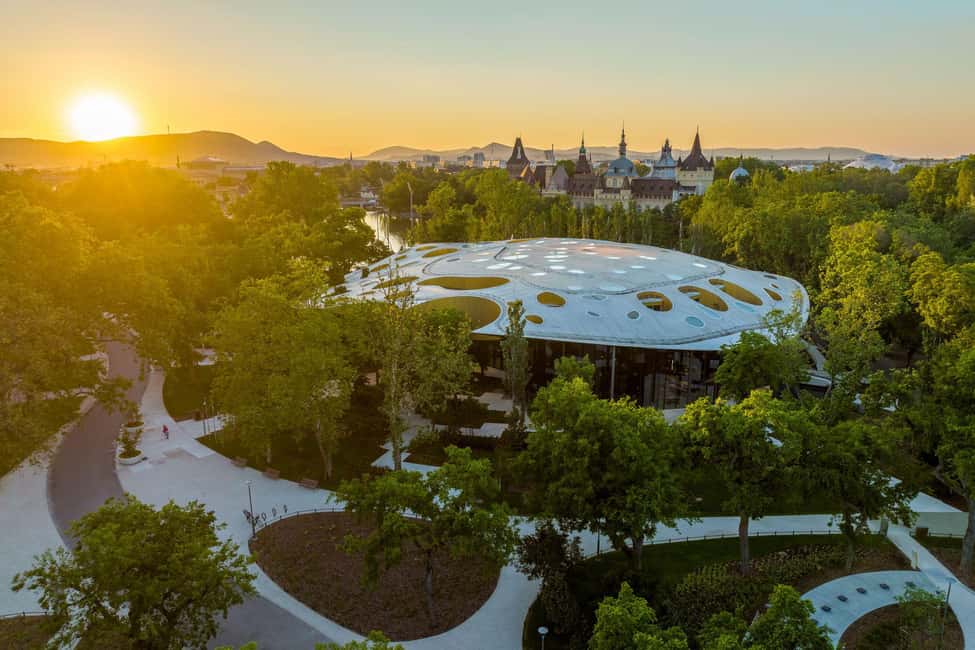
- Undulating roof with thousands of leaf-like metal elements that shape light and acoustics
- Sou Fujimoto organic design—a park-like continuation of inside and outside
- Spiral staircase that feels sculptural, not just functional
- Glass walls and open levels that keep the City Park scenery in play
- Acoustics explained through the building’s shape, materials, and roof structure
- Sustainability details like geothermal energy and rainwater harvesting
Entering the House: Foyer First, Then the Park Connection
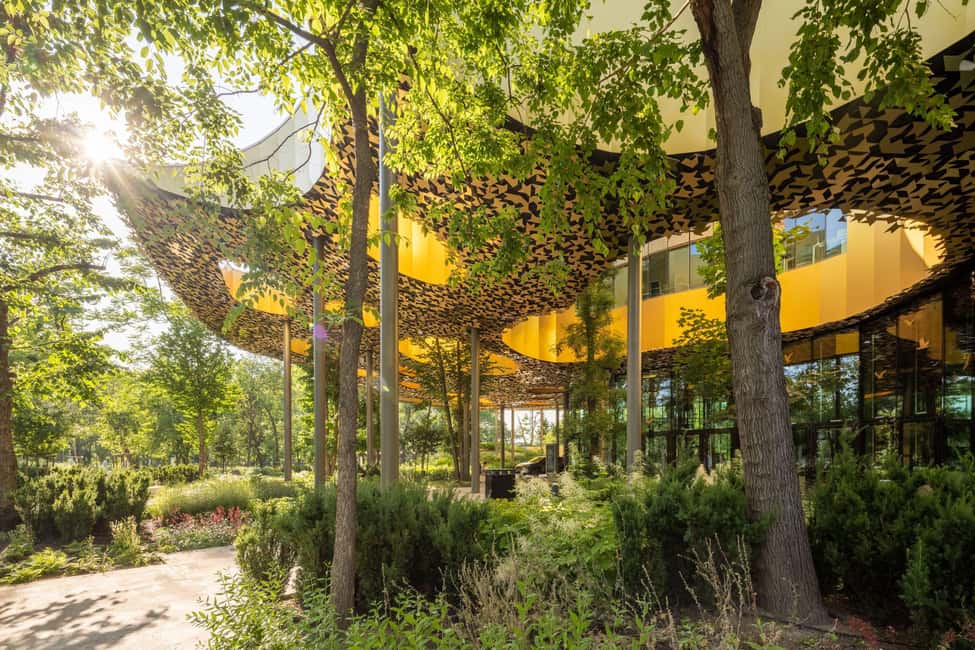
I like tours that give you a fast sense of place. This one starts inside the foyer, so you immediately get the scale: you are stepping into an open, welcoming interior before you ever hit the big outdoor views. It is also a smart setup for a one-hour visit because you are not stuck in lines outside guessing what you are about to see.
From there, the guide’s job is to connect the dots between architecture and experience. The House of Music is meant to feel like a continuation of City Park. You do not just visit a building sitting in a park; you move through spaces designed to keep that park relationship visible—especially through glass and open levels.
You can also read our reviews of more guided tours in Budapest



The Roof You Can’t Stop Looking At
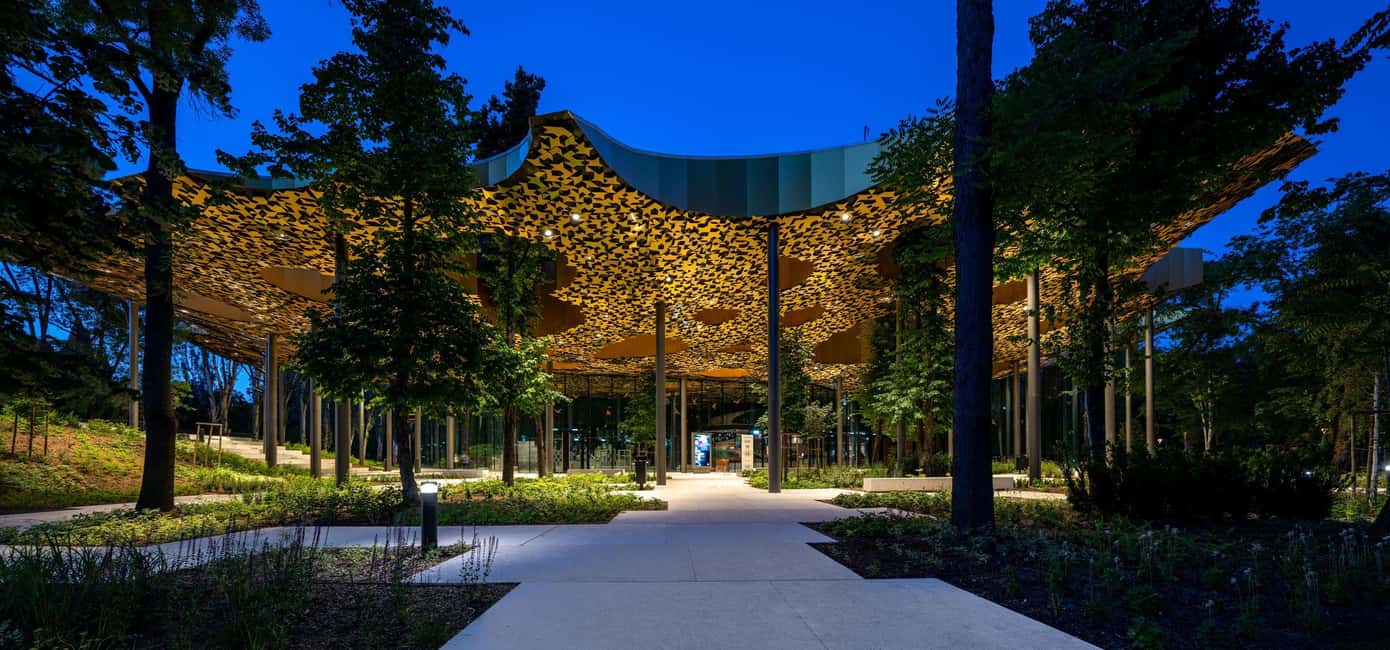
Outside is where the tour really grabs your attention. The House of Music is known for its undulating roof, and on this tour you learn why it is not just a pretty form. The canopy is described as being made from thousands of leaf-like metal elements. That matters for two reasons.
First, it creates the signature look—soft waves overhead rather than a hard, rectangular shell. Second, it plays a role in natural lighting and acoustics. Even if you never hear a performance here, you can feel how serious the building is about sound and atmosphere.
You will also hear about other structural design ideas, including circular openings. In plain terms: this building is built to bend light and sound the way a landscape bends wind and echoes. It is modern architecture, but it is not cold or sterile.
Inside the Glass Walls: Open Spaces, Warm Materials
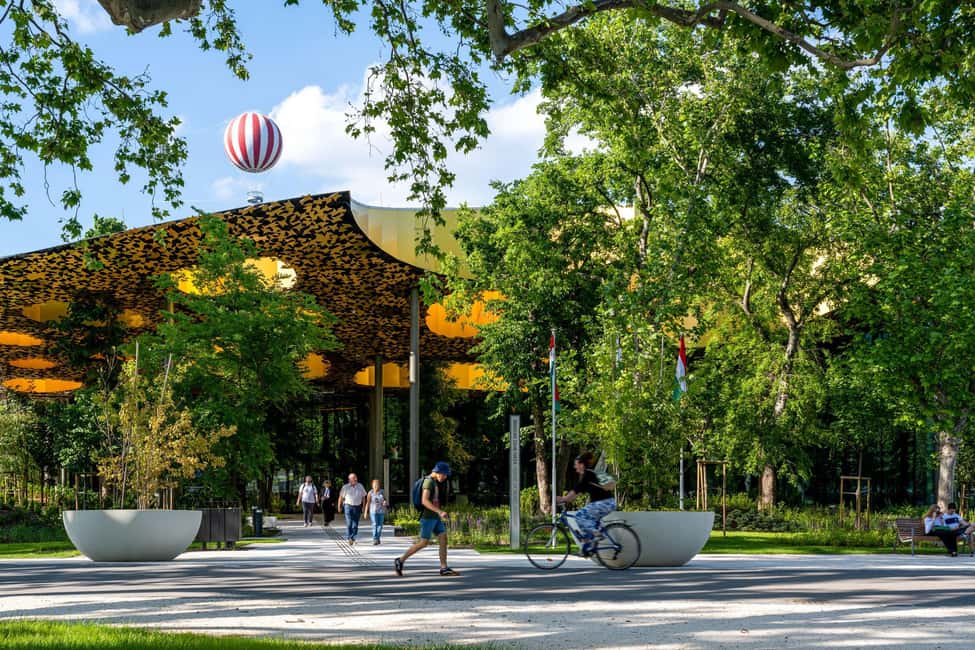
Once you are in, the tour shifts from dramatic exterior form to how the interior works. You will spend time in areas with extensive glass, so daylight becomes part of the design. Instead of a dark interior you need to adjust to, you get light right away—and the City Park setting keeps bleeding into your field of view.
The guide also points out the material mix. Expect exposed concrete surfaces paired with detailed wooden elements. That combination is part of the warm, inviting atmosphere people talk about, and it is a useful contrast to the futuristic roof outside. If you like architecture that mixes industrial lines with human-feeling textures, this place hits the sweet spot.
The Spiral Staircase: Sculpture With a Purpose
Every good architectural tour needs a moment that stops the group. Here, it is the spiral staircase. The tour treats it like more than a way to move between levels. It is described as impressive and a true work of art, and you can see why: it is hard to ignore the way it wraps and draws your eye.
What I like about this part is that it helps you understand the building’s approach. The staircase fits the theme of “music as space”—movement, rhythm, and structure. Even if you are not a design nerd, this is the kind of feature that makes the building feel crafted rather than just built.
Acoustics 101, Explained in Real Architectural Terms
You are not walking in to hear a concert on this tour. Still, acoustics is a big deal here, and the guide will explain it. The tour frames sound like something engineered into the building: shape, materials, and roof structure are presented as the key ingredients.
The logic is pretty intuitive once you hear it. Music spaces are not only about what performers do on stage; they are about how the room shapes sound. Here, the building’s form and materials are treated as part of the instrument. The roof is not just a visual signature; it is part of how the building handles sound and lighting.
So even without performances, you leave with a better understanding of why this building cares about music. It is also one of the best ways to learn if you like architecture more than museum facts. You get practical design thinking instead of just a list of features.






What You Actually See on the Tour
This tour includes key internal and external spaces, with the focus staying on architecture. Based on what is included, you can expect access to:
- The concert hall (as part of the visit, not as a ticketed event)
- The library and archives
- Outdoor spaces connected to the building’s park setting
- The foyer as your start point
- A gift shop stop near the end
The library and archives are an underrated part of many museum-style visits. Here, they reinforce the building’s identity as a music-and-learning place, not only a performance venue. The outdoor spaces also matter because City Park is not just a backdrop. The building is designed to share space with nature, so stepping outside during the tour helps you understand the concept.
One small caution: because exhibitions and specific sound experiences are not included, plan to treat this as a guided architecture walkthrough. If you are hoping for hands-on sound features or gallery time, you will want to choose another option in addition to this tour.
Sustainability and Music Education, Without Needing Exhibition Access
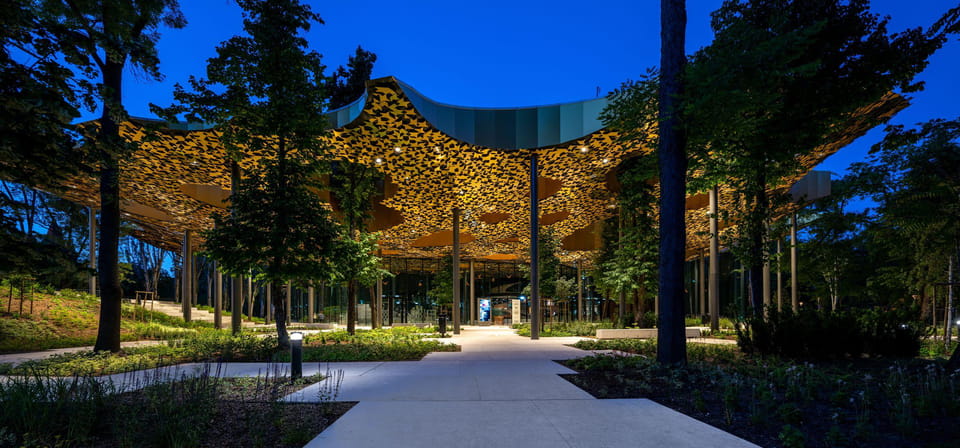
The guide also covers sustainability features, and I think that is a big part of the value. You will hear about geothermal energy and rainwater harvesting. These details matter because they show the building’s thinking is not only aesthetic; it is environmental.
You also learn that the design supports community engagement and music education through its layout—levels and open spaces meant to bring people together. The tour notes these functions even if you do not get exhibition access. That means you can still understand what kind of place this is trying to be.
For readers who love authentic cultural architecture, this is one of the best angles. You are not only seeing a landmark. You are seeing a building designed for how people learn and gather.
Views From City Park: Why the Setting Changes the Experience
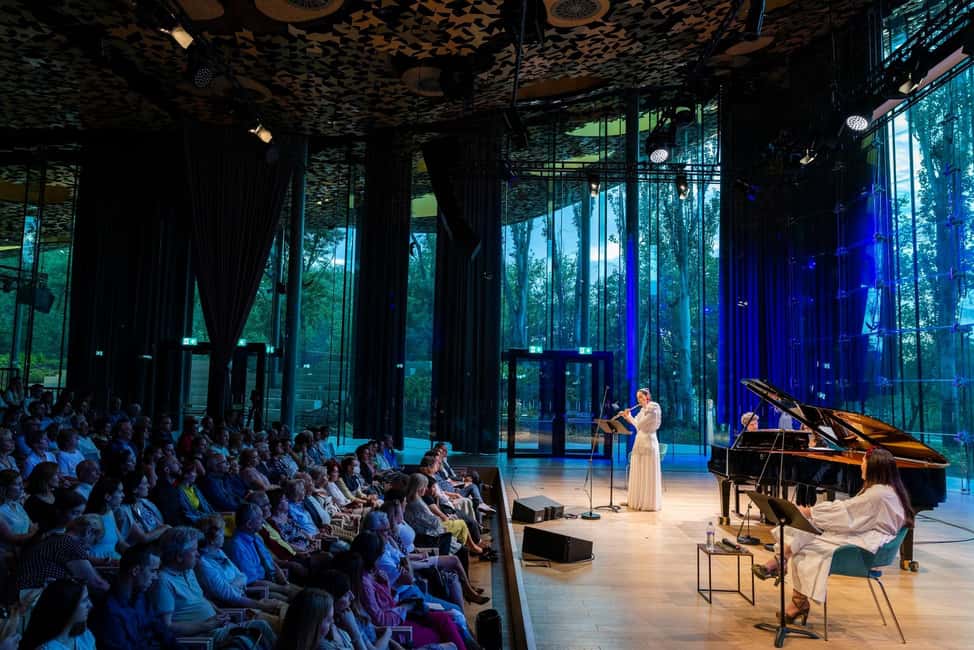
The House of Music sits in Budapest’s City Park, and the tour uses that setting as part of the story. The highlights mention panoramic views, and you should expect that the building’s glass and open spaces keep the park in view as you move.
This matters more than it sounds. A lot of buildings look good in photos. This one is built to let you keep seeing the surrounding landscape while you read the architecture. Even in a one-hour tour, the change in perspective—inside glass, then outside roof lines—helps the building click.
Price and Value for a 1-Hour Architecture Walk
At $13 per person, this feels like a good deal if your priority is design. You are paying for a guide-led explanation of the roof, interior spaces, and the logic behind acoustics. One hour is also a practical sweet spot. You get enough time to see the most important elements without burning half a day.
The value equation changes if your goal is exhibitions or sound installations. Since the tour does not include entry to the exhibitions, the Sound dome, or the Creative sound space, you may feel you are missing parts of the building if that is what you came for. For architecture lovers, though, it is a strong match: you get a guided interpretation of why the building looks and sounds the way it does.
Who This Tour Is Best For (and Who Might Want Something Else)
This is an excellent fit for:
- People who love modern architecture and want the “how” behind the “wow”
- Anyone interested in how a building can shape acoustics, even without a performance
- Visitors who want a focused one-hour plan that still feels meaningful
It is likely less ideal for:
- Families with children under 15 (this tour is not suitable for them)
- People who want exhibition-only time or hands-on sound spaces
- Anyone who is mainly interested in a concert experience rather than the building itself
A Note on Guides: Dora’s Style and the Human Factor
The experience stands out when the guide makes the architecture feel alive. Reviews highlight Dora specifically—described as very friendly, full of positive energy, and able to explain details in an engaging way. That kind of guide makes a big difference here, because you are not getting entertainment through performances. You are getting it through clear explanations and an upbeat pace.
Another review praises a guide with white hair and colorful highlights for being kind and professional. The common thread: the building is complex, so a strong guide helps you connect design elements into one story.
Should You Book This House of Music Guided Tour?
Book it if you want a smart, hour-long way to understand one of Budapest’s most distinctive modern structures. The roof, spiral staircase, glass-filled interior, and City Park setting give you plenty to look at, but the real reason to go is the guided interpretation—especially the acoustics explanation and the “inside/outside” park concept.
Skip or pair it with another ticket option if your goal is exhibitions or hands-on sound spaces like the Sound dome and Creative sound space. This tour is about architecture and how it supports music and community life.
If you’re deciding between rushing through the building on your own versus learning the design logic, I’d lean guided here. You get more meaning per minute.
FAQ
How long is the Budapest House of Music guided tour?
The tour lasts about 1 hour.
Where does the tour start and end?
It starts inside the foyer and ends back at the meeting point.
Is the tour in English?
Yes, the live tour guide offers English.
What is included in the tour?
Included access covers architectural features, the concert hall, the library and archives, beautiful outdoor spaces, and the gift shop.
Are exhibitions included?
No. Entry to the exhibitions is not included.
Are the Sound dome and Creative sound space included?
No. Entry to the Sound dome or the Creative sound space is not included.
Is the tour wheelchair accessible?
Yes, it is wheelchair accessible.
Is this tour suitable for children?
It is not suitable for children under 15 years.