REVIEW · BUDAPEST
Budapest Trabant Tour- Go Trabi Go
Book on Viator →Operated by Budapest Trabant Tour - Day Tours · Bookable on Viator
Drive a DDR relic through Budapest. A Go Trabi Go Trabant tour turns regular sightseeing into loud, mechanical, photo-ready fun, starting near the Hungarian Academy of Sciences and running on a simple 2-hour clock. You’ll be in an old-school car with the real feel of a 2-stroke era, whether you’re behind the wheel or taking the passenger seat.
I especially like two things: first, the hands-on manual, 3-pedal driving experience that makes you slow down, pay attention, and enjoy the road; second, the way the staff helps you get confident fast, so the novelty doesn’t turn into stress. If you’re the type who likes doing things yourself, the self-drive setup is a big part of the appeal.
One consideration before you book: this is not a modern, assisted car. You’ll be working the clutch, and there’s no power steering or power brakes, plus you must bring your ID and valid driver’s license and be ready for a deposit.
In This Review
- Key highlights you’ll actually care about
- Why a Trabant Tour Feels Like Time Travel in Budapest
- Starting at Széchenyi István tér: Meet, Check-in, and Get Setup
- The 2-Hour Self-Drive Window: How the City Time Actually Works
- Budapest Sights from a Classic Cabin: What You’ll See
- Behind the Wheel: Gears, Clutch Feel, and the No-Power Reality
- Comfort, Space, and Who Can Fit in One Trabi
- Pickup, Drivers, and the People Behind the Wheel
- Price and Value: Is $131 a Smart Spend?
- Practical Tips So Your Day Goes Smooth
- Who Should Book This Trabant Tour of Budapest
- Should you book Go Trabi Go in Budapest?
- FAQ
- How long is the Budapest Trabant tour?
- Where do I meet for Go Trabi Go?
- Is it guided or self-driving?
- Do I need a driver’s license to drive the Trabant?
- What kind of car is it to drive?
- Is there power steering or power brakes?
- How many people can ride in one Trabant?
- Is there a deposit?
- Can I cancel and get a refund?
Key highlights you’ll actually care about
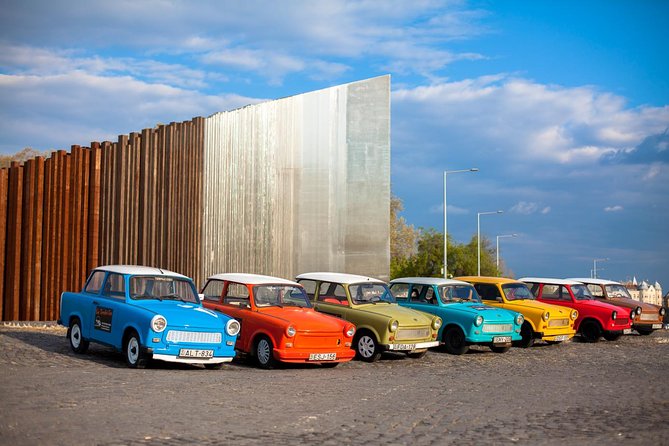
- Real Trabant driving (or chauffeur option): pick the vibe that fits you—solo self-drive or someone else handling the car.
- Manual, no power assist: 3 pedals, clutch work, and you feel what you’re doing.
- 2 hours of city cruising: enough time to see a lot without feeling like you’re stuck on a full-day tour.
- Small-group feel: max 3 adults per Trabi (4 adults means booking two cars).
- Photo magnet car: you should expect curious looks and plenty of goofy “where did you get that” moments.
- Flexible sightseeing approach: routes can include off-the-main stretches, and you can plan how you want to spend your time on the road.
Why a Trabant Tour Feels Like Time Travel in Budapest

A Trabant tour in Budapest is one of those rare travel activities that doesn’t need a speech to sell itself. The car is the whole experience. It’s vintage by design, with the kind of mechanical behavior you only notice when you’re actually steering it. Instead of hearing history in a museum, you feel it in how the car responds, how it sounds, and how the city looks through that older windshield view.
The best part is that the fun doesn’t require you to love cars. If you’re a car person, driving a 2-stroke Trabant is the headline. If you’re not, the ride still gives you something different: a slower, more human way to move through the city streets. You’re moving at the pace of steering wheels and gears, not touchscreen buttons.
This tour also fits nicely into a first trip to Budapest. One smart strategy: do it early. The city already looks different when you’ve spent time cruising with this DDR-style icon, and it can help you decide what to return to later on foot.
You can also read our reviews of more tours and experiences in Budapest.



Starting at Széchenyi István tér: Meet, Check-in, and Get Setup

You start at the Hungarian Academy of Sciences, at Széchenyi István tér 9. It’s a straightforward meeting point and is listed as being near public transportation, so you’re not forced into complicated transfers just to start the fun.
After you arrive, you’ll get the basic handoff that matters most for a first-time driver: how to manage the car’s manual setup and what to pay attention to once you’re rolling. The experience is designed so you don’t just drop people into the driver’s seat and hope for the best. In real life, the difference between an enjoyable drive and a stressful one is how quickly you learn the rhythm of the gears.
You’ll also want to plan for the time window. The car is for about 2 hours, so your best results come from treating that time like a mini adventure: get oriented, drive, take a few stops for photos, and then return without rushing at the end.
The 2-Hour Self-Drive Window: How the City Time Actually Works
This is built around a self-driving format when you choose that option. In plain terms, you’re not following a guided script with a set list of stops. Instead, you’re in charge of your route and your pace during the 2-hour rental block, with the Trabant doing what it does best: making everyday street driving feel like a movie scene.
That also means you should show up with a small plan. Before you go, pick a few areas you want to see from the road—big sights you already have in mind, plus a couple of “maybe” spots where you can jump out for quick photos. Some of the best rides happen when you use the flexibility well. The tour experience is described as including option for private guiding/info in some cases, but the self-drive program is set up for you to explore without a set route.
A key point for your expectations: because this is not a long, multi-stop day, you won’t feel like you’re doing every landmark in Budapest. You’re doing something more useful for many people: street-level sightseeing with a strong sense of place. You’ll come away with photos, memories, and a better sense of the city’s layout—especially if you’re returning to explore on foot later.
Budapest Sights from a Classic Cabin: What You’ll See

The car tour is timed so you can cover a meaningful slice of Budapest without turning it into a marathon. While the exact route isn’t spelled out in the details you’re given, the experience is presented as a way to explore the city highlights in a fun, funky, vintage way.
Here’s what you can count on:
- You’ll get a new perspective on the city streets because you’re in a small, older vehicle.
- You’ll see Budapest not as a postcard, but as a lived-in city as you move through different neighborhoods.
- You’ll get frequent photo moments because the Trabant draws attention.
A couple of real-world nuances come from the vibe of the car. Drivers report that once you get the hang of the gears, it becomes genuinely fun to cruise. And that attention factor matters: people will notice the car. That can turn a simple stop into a small event, especially if you’re taking pictures at places with foot traffic.
If you want more of the “beyond the main drag” feel, the tour is described as being able to include off-main routes in some private setups. If you’re hoping for a specific farther-out stop, your best move is to ask what’s realistic within your time window and current route plan.
Behind the Wheel: Gears, Clutch Feel, and the No-Power Reality

This is the part you can’t skip. The Trabant you drive is a manual car with three pedals, including the clutch. It also has no power steering and no power brake, which changes how it feels compared to modern rentals.
What that means for you:
- Plan to use your legs and arms more. You’ll feel the steering and braking effort.
- Expect to learn a rhythm for clutch control. First attempts can feel clunky, but this is exactly where the staff’s quick teaching helps.
- Drive like you’re in a car from another decade. Smooth inputs work better than sudden ones.
One practical tip: if you’re nervous, remember that you’re not the first person to sit in one of these. The experience is set up with instruction, and it’s designed to be doable for most participants. Still, if you’re someone who hates manual transmissions, or you know you won’t enjoy basic mechanical driving, then you may be happier choosing a ride/driver option rather than self-driving.
Also note that some cars can be Cabriolet style. In that case, you may gain a different open-air feeling, but you could also find seating is tight. One note from experience: the vehicle can be smaller than you expect, and back-seat leg room may be limited.
And yes, there’s the vintage reality: 2-stroke smell is part of the experience. One driver reports that it can be unpleasant at first, then you get used to it after a while. You can’t fully escape it, so don’t plan on smelling like fresh soap after.



Comfort, Space, and Who Can Fit in One Trabi

This tour is small-car focused, so capacity matters. The max is 3 adults per Trabi. If you have 4 adults, you’ll need to book 2 Trabant cars.
Children/youngsters up to age 17 are listed as free when they sit with their adult accompanying person in the same Trabi. That makes it potentially easier for families than some “big group bus” tours, but you still need to think about space and how long kids will enjoy riding in a vintage vehicle.
Comfort is also affected by the car type. The standard size can feel compact in a way that’s not for everyone, especially if you’re tall or you’re stuck in the back seat for long stretches. If comfort is your top priority, you might prefer the configuration that gives you the seat you want, and you may want to ask which style of Trabant is assigned for your booking window.
Pickup, Drivers, and the People Behind the Wheel
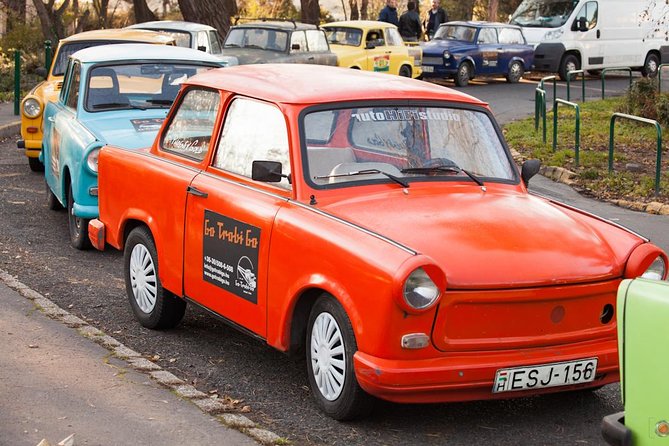
You have the option of pickup, and some bookings also include a chauffeur/driver experience. That’s a big deal because it lets you pick between two very different moods:
- You drive for the full mechanical experience.
- You ride for a more relaxed sightseeing flow, where you can focus on views and photos.
The human touch is a standout from the experience style. In one case, a guide named Balázs was praised for being personable and funny, with added personal context beyond facts. Another experience referenced a driver named Cindy, where the couple opted to be chauffered for the 2-hour block instead of handling the car themselves.
Even when you self-drive, the staff help with the transition into this very non-modern machine. It’s not just about handing over keys. It’s about making sure you can get going safely and enjoy it without turning the first five minutes into chaos.
If you’re the kind of traveler who likes to “get your bearings” on day one, this format can work well because you’re on the street right away, not stuck waiting around for a bigger group tour to assemble.
Price and Value: Is $131 a Smart Spend?
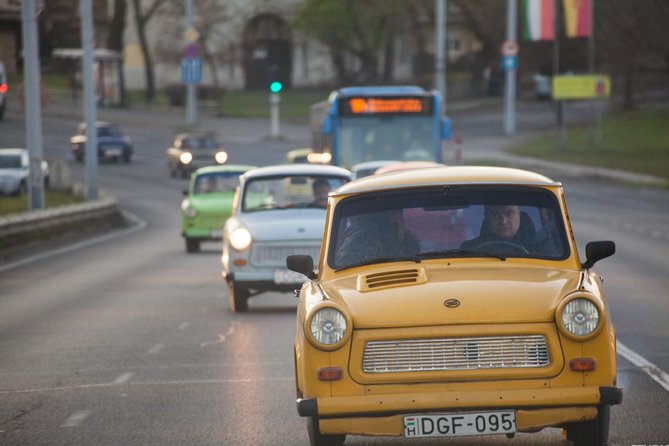
At $131 for about 2 hours, this is priced like an experience, not a bargain city sightseeing ride. The value comes from what you get that you can’t fake: the actual Trabant, the chance to drive it (if you choose that option), and the time-boxed freedom to cruise Budapest without a bus and without a strict route.
For many people, the cost feels reasonable because:
- You’re paying for a specialty vehicle that’s hard to arrange on your own.
- You get training and a real-world introduction to driving an older manual car.
- You’re paying for the novelty factor, which turns into real memories fast.
That said, it’s not a good match if you expect a traditional guided tour with long stops and museum-style commentary. If you want that, the un-guided self-drive style may feel too freeform. If you want the vintage driving experience but also want guidance, choose the private/driver option when available.
Also remember the deposit requirement. You’ll need 30,000 HUF or 100€ deposit, refunded when the car returns safely. That’s a cashflow consideration: you’re paying the deposit up front, even if it comes back. Factor that into what you’ll carry that day.
Practical Tips So Your Day Goes Smooth
A few small moves can make your ride better and reduce stress:
- Bring your ID and valid driver’s license. This is specifically required for driving the car.
- Plan your timing around the 8:00 AM to 3:00 PM daily opening hours listed for the operation window.
- If you’re worried about the manual driving effort, consider whether you’d rather be chauffered. The difference is huge in a car with no power steering or brakes.
- Expect the car to be compact. If you’re coordinating as a group, match seating comfort to who’s happiest with smaller vehicle space.
- Give yourself one clear photo plan. The car is a magnet; take advantage of short stops rather than trying to do everything at once.
One extra idea that some fans of the Trabant vibe bring up: watching the Go Trabi Go movie from 1991 can help you get the cultural tone before you start. It’s not required, but it can make the whole experience feel even more fun once you’re in the car.
Who Should Book This Trabant Tour of Budapest
I’d recommend a Trabant tour if you fit one of these profiles:
- You like hands-on activities and don’t mind manual cars when there’s a quick orientation.
- You want a different Budapest experience than typical walking routes.
- You’re traveling as a couple, small group, or even solo and like the idea of cruising rather than following a strict schedule.
- You want something fun to do early in your trip to help shape what you’ll explore later on foot.
I’d skip it if:
- You strongly dislike manual transmissions or you know you won’t enjoy no-power steering/brake driving.
- You need a highly comfortable ride with lots of modern convenience features.
- You’re expecting a full, scripted guided tour with set sightseeing stops and long explanations.
Should you book Go Trabi Go in Budapest?
If your idea of a great Budapest day includes a little silliness, a lot of character, and time on the street, then yes, this is a very solid booking. The price works best when you treat it as a specialty experience: you’re not just buying transportation, you’re buying the chance to drive an old DDR icon through real city streets.
Do it when:
- You can handle manual driving or you’re open to switching to a chauffeur option.
- You’re okay with compact vehicle comfort and the occasional vintage smell.
- You want quick orientation plus memorable photos, not a lecture-heavy day.
Make the call based on your driving comfort level. If you love mechanical stuff, go for self-drive. If you want sightseeing with less workload, choose a ride option. Either way, you’ll leave Budapest with a story that’s instantly different from the usual list of landmarks.
FAQ
How long is the Budapest Trabant tour?
It’s approximately 2 hours, with the activity ending back at the meeting point.
Where do I meet for Go Trabi Go?
You meet at the Hungarian Academy of Sciences, Budapest, Széchenyi István tér 9, 1051 Hungary.
Is it guided or self-driving?
The self-driving option is described as an un-guided ride. You pick up the car at the office and explore during the 2-hour period.
Do I need a driver’s license to drive the Trabant?
Yes. If you drive, you must bring your ID and a valid driver’s license.
What kind of car is it to drive?
It’s a manual gearbox Trabant with 3 pedals, including a clutch.
Is there power steering or power brakes?
No. The cars do not have power steering or power brake, so steering and braking effort is more physical than in modern cars.
How many people can ride in one Trabant?
For comfort, the limit is max 3 adults per Trabi. For 4 adults, you should book 2 Trabant cars.
Is there a deposit?
Yes. You need a deposit of 30,000 HUF or 100€ and it is refunded when the car returns in safe condition.
Can I cancel and get a refund?
Yes. Free cancellation is available if you cancel at least 24 hours in advance for a full refund. If you cancel within 24 hours, the amount you paid is not refunded.