REVIEW · BUDAPEST
BUSÓJÁRÁS Unesco Heritage Folklore Carnival in Mohács
Book on Viator →Operated by Explore Hungary · Bookable on Viator
Winter turns into noise and masks.
This Busójárás carnival is one of Hungary’s great seasonal rites, famous for its UNESCO Intangible Cultural Heritage status and its centuries-old legend of chasing winter—and the Turks—from Mohács. The part that makes it especially interesting for your day trip from Budapest is the private setup: you skip the hassle of public transport and head straight to the festival.
I especially like the door-to-door pickup and drop-off, which keeps your day from turning into a logistics puzzle. Another big plus is the flexible flow of the outing: with private transport, you’re not chained to a rigid schedule. The main drawback to plan around is practical: once you’re in the area, parking can be far out and food can run pricy, so bring a realistic budget and wear shoes you don’t mind walking in.
In This Review
- Key things to know before you go to Busójárás in Mohács
- A 300-Year Carnival That Turns Season Change Into Ritual
- Private Car to Mohács: Less Time Fighting Transit, More Time Watching
- No Fixed Schedule: How Flexible Timing Helps You Actually Enjoy It
- Mohácsi Busójárás: What You’ll Do and What You’ll See
- The Masks and the Turks Legend: Why the Story Matters on the Ground
- Woolly Cloaks, Rattlers, and the Sound of Spring Arriving
- Pálinka, Food Prices, and How to Budget Smartly
- Price and Logistics: What $250 Buys (and Why It Can Be Good Value)
- Who This Trip Suits Best (and Who Might Prefer Something Else)
- Should You Book Busójárás in Mohács from Budapest?
- FAQ
- How much does the Busójárás tour in Mohács cost?
- How long is the tour?
- Do you offer pickup and drop-off from my hotel?
- Is the tour in English?
- Is there admission included for the festival?
- Is this a private tour?
- What are the operating hours for pickup?
- Is cancellation free if I cancel ahead of time?
- Do I get a mobile ticket?
Key things to know before you go to Busójárás in Mohács
- UNESCO-listed tradition that marks the end of winter and start of spring through ritual disguises
- Private transportation in an air-conditioned vehicle to reduce transport stress
- Door-to-door hotel pickup plus drop-off, so you lose less time between Budapest and Mohács
- Flexible timing since there’s no fixed schedule while you’re at the festival
- Signature Busó gear: sheepskin cloaks, carved masks, and loud rattlers/clapper bells
- Legend-driven carnival tied to Mohács history and a story of scaring away the Turks
A 300-Year Carnival That Turns Season Change Into Ritual
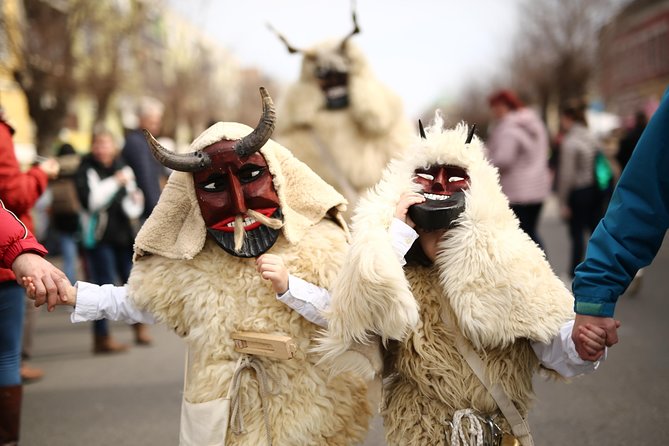
Busójárás in Mohács is the kind of festival that feels older than paperwork and more powerful than a calendar. It’s an end-of-winter celebration where people dress for a ritual purpose—protection, fertility, and the symbolic shooing of a rough season so spring can arrive. It’s also huge in Hungary, and that’s not just marketing talk: it’s one of the country’s biggest folklore events.
What I find compelling is how the tradition comes packaged with meaning. The festival belongs to a wider world of end-of-winter carnivals found across cultures. In Mohács, the local story adds a very Hungarian layer: the idea that the masked Busó help scare away invaders, tied to the legend of the Turks and the second battle of Mohács.
And yes, it has the UNESCO recognition: the UNESCO Representative List inclusion matters because it signals that you’re not just watching a staged show. You’re seeing a living tradition built from consistent elements—masks, cloaks, and ritual soundmaking—that have stayed recognizable over time.
You can also read our reviews of more historical tours in Budapest



Private Car to Mohács: Less Time Fighting Transit, More Time Watching
From Budapest, the main decision isn’t the festival—it’s how you get there. This experience is designed to avoid the friction of busy public transport by using a private vehicle and handling transfers for you. For many people, that alone is worth real money, because the time cost of transit can be the difference between enjoying the festival and arriving already tired.
You also get air-conditioned transportation, and it’s a door-to-door service. That means less wandering around town for the right stop, less juggling schedules, and fewer chances for small delays to snowball into a bad festival experience.
A practical bonus: the tour is built as a private group outing. Only your group participates, so it’s not a crowded free-for-all where you’re constantly recalculating where you are in relation to other people.
No Fixed Schedule: How Flexible Timing Helps You Actually Enjoy It
The tour runs about 10 hours total, but the point isn’t being on a strict clock. The transfer approach gives you flexibility because you’re not locked into a rigid itinerary that leaves you racing from one thing to the next.
That flexibility matters because festivals have a natural rhythm. People gather, groups move, and the big moments land when you’re there, not when a spreadsheet says they should. With private transfer, you can better match your pace to what’s happening, rather than forcing your body to keep up with a timeline.
One small reality check: once you reach the festival area, you may still face crowd logistics. Even with private transport, parking and access can be tricky. One useful detail to keep in mind is that parking has been reported as about 2 kilometers from the center, which turns into a walk you’ll need to factor in. Shoes and patience win here.
Mohácsi Busójárás: What You’ll Do and What You’ll See
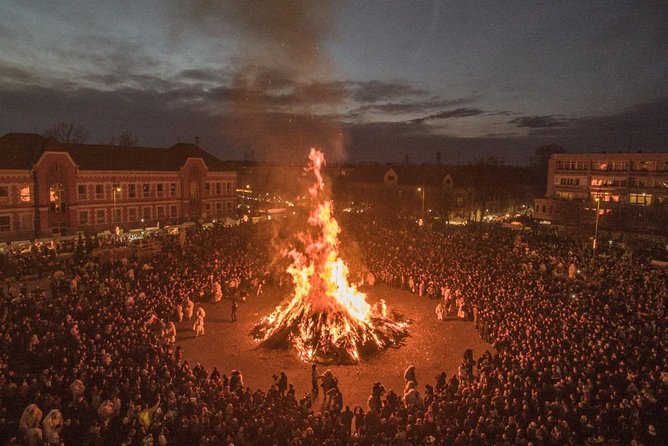
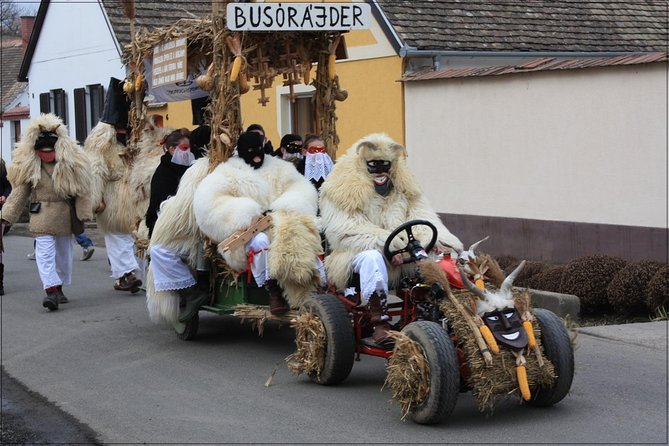
At the heart of the day is the Mohácsi Busójárás festival. This is where you’ll witness the traditional elements that make Busó identity so recognizable. The adults typically take part by dressing in woolly sheepskin cloaks and masks, using costume elements like trousers filled with hay and decorated stockings.
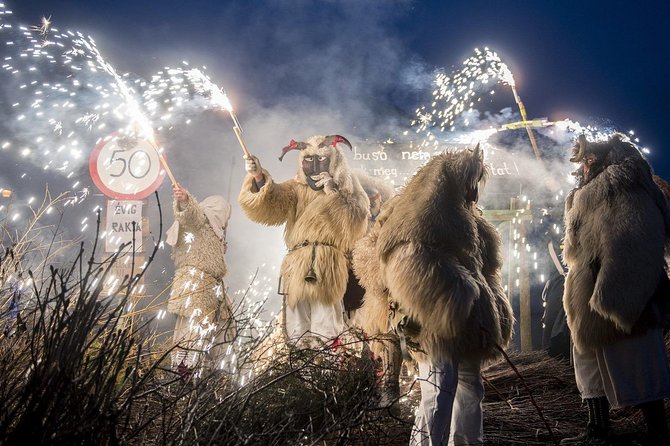
The festival isn’t quiet either. The ritual paraphernalia includes large, loud rattlers and clapper bells. The sound is part of the point—noise as a protective force, a way of pushing away what should not stay. If you like folklore that uses all the senses, not just your eyes, this hits hard.
You’ll also get the bigger cultural framing while you’re there: Busójárás isn’t described as random costuming. It’s tied to mythology and seasonal renewal. People are essentially acting out the moment winter ends—by going through the motions of disguise, threat, and transformation.
A nice part of the experience setup is that it’s designed around seeing the festival rather than turning it into a museum checklist. There’s one main stop, so your attention stays where it should: on the carnival itself.
The Masks and the Turks Legend: Why the Story Matters on the Ground
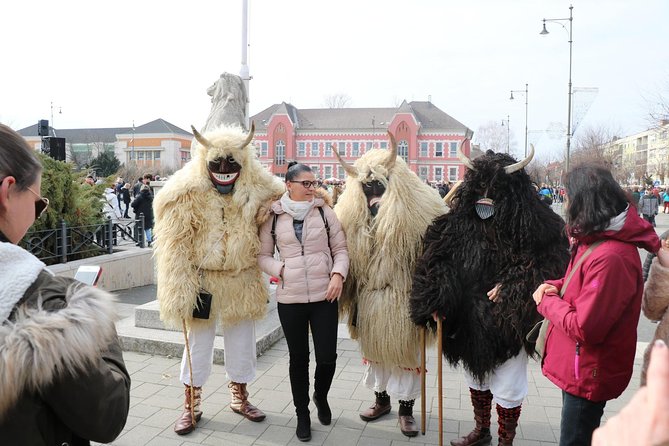
Busójárás has a legend you’ll hear tied directly to local history. The tradition is explained as beginning around the time of the second battle of Mohács. The story goes like this: people in hiding on the Mohács Island side of the Danube dressed in disguise and returned across the river, frightening the Turkish occupiers so they panicked and fled.
Whether you take the legend as literal history or symbolic storytelling, it changes the way you read the costumes while you’re standing there. Those masks aren’t just decoration. They’re a protective role, an identity shift, and a theatrical threat aimed at danger—in the story, at invaders; in the ritual, at the season you want to send away.
It also helps that the festival isn’t isolated in time or place. Busójárás shares vibes with other carnival traditions across cultures—something you’ll likely notice in the universal carnival language of disguise, collective participation, and dramatic sound.
And one detail that gives you extra context: the tradition has parallels described between Mohács and carnivals in places like Rio and Venice, plus comparisons to indigenous traditions in Africa. That doesn’t mean they’re the same event. It means humans keep inventing similar solutions—noise, costumes, and masks—to handle the turning of the year and the fear that comes with uncertainty.






Woolly Cloaks, Rattlers, and the Sound of Spring Arriving
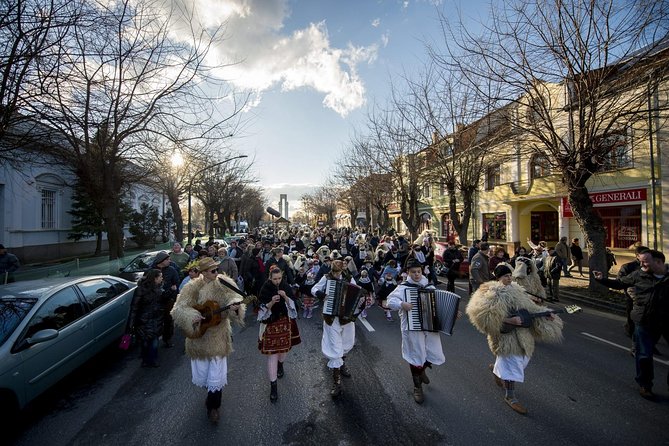
If you’re trying to decide whether this is a show you’ll enjoy, the simplest answer is to focus on the physical experience. Busó is a costume carnival where key elements don’t get reduced to a souvenir photo opportunity.
Expect to see:
- Sheepskin-style cloaks on participants
- Carved masks that change how you perceive faces and identity
- Rattlers and clapper bells, loud enough to feel like part of the festival’s engine
That last part is important. Festivals like this aren’t only visual. They’re rhythmic. The rattlers and bells create energy, and the crowd responds. If you’ve ever loved street performers, parades, or any event where sound is part of the choreography, you’ll understand why this matters.
This is also the type of event where you’ll want to be close enough to feel the atmosphere, but smart enough to protect your ears and your personal space. If you’re going with kids or you don’t love loud sound, you might want to position yourself slightly off the loudest cluster.
Pálinka, Food Prices, and How to Budget Smartly
Two themes show up clearly when people talk about the day: the welcome can feel warm, and the local drinking tradition—pálinka—is often part of the experience. So plan for at least the possibility that you’ll be offered something strong and local.
Then there’s the cost reality. Eateries can be pricy, especially when a big festival concentrates demand and the menu choices shrink to what’s available on-site. If you’re budget-minded, do a simple strategy before you head in: eat something earlier, and treat festival meals as a treat, not your whole meal plan.
Also, bring a little cash mindset even if you’re not asked to. Festival settings can be inconsistent. You can’t fix that with planning, but you can reduce stress by not relying on perfect conditions.
Price and Logistics: What $250 Buys (and Why It Can Be Good Value)
At $250 per person, this isn’t a bargain-basement trip. But it is a clear value proposition if you care about time and comfort.
Here’s what that price effectively buys you:
- Private transportation with an air-conditioned vehicle
- Door-to-door hotel pickup and drop-off
- A setup that avoids the hassle of busy public transit
- An English-speaking service
- A mobile ticket
- A private experience where only your group participates
- And importantly, admission is listed as free as part of the outing
When you compare that to the true cost of DIY—fuel, parking headaches, transit tickets, and the risk of arriving frazzled—this starts looking less like a splurge and more like a payment for reduced friction.
Group discounts are also mentioned, so if you’re traveling with friends, the per-person value gets better fast. The private structure can make it feel calmer, even when the festival itself is energetic.
Who This Trip Suits Best (and Who Might Prefer Something Else)
This is a strong fit if you want folklore without the travel stress. If you’re the type who likes festivals but dislikes chaotic transit planning, you’ll probably feel relieved by the private vehicle approach.
It also works well for people who want a cultural outing that stays focused. With one main stop, you get more time on the festival and less time on the road trying to assemble the perfect day.
It’s also designed for most travelers to participate. That said, festivals involve walking, crowds, and lots of costumes moving around. If you have mobility concerns, you may still want to consider where you’ll stand and how long you’ll want to stay in busy areas.
If you’re the kind of traveler who loves building a day from scratch and doesn’t mind public transport, you could go DIY. But if you’re trying to protect your energy for the actual carnival, this private approach makes a lot of sense.
Should You Book Busójárás in Mohács from Budapest?
Book it if you want a UNESCO-listed folklore carnival with a practical, low-stress setup. You’re paying for door-to-door convenience, private transport, and flexibility—so you can focus on what matters: the masks, the rattlers, the tradition, and the story behind the festival.
Skip it or rethink if your budget is tight, because festival meals may cost more than you’d like, and the festival environment can involve walking and crowds. Also, if you strongly dislike loud sound, you’ll want to plan your positioning.
If you’re excited by cultural rituals and you want your day trip to feel smooth from start to finish, this is a very reasonable way to see Busójárás without turning it into a logistics project.
FAQ
How much does the Busójárás tour in Mohács cost?
The tour price is $250.00 per person.
How long is the tour?
It lasts about 10 hours.
Do you offer pickup and drop-off from my hotel?
Yes. This is a door-to-door tour with pickup and drop-off at your hotel.
Is the tour in English?
Yes, the tour is offered in English.
Is there admission included for the festival?
Admission is listed as free for the experience.
Is this a private tour?
Yes. It’s a private tour/activity, and only your group will participate.
What are the operating hours for pickup?
Pickup hours are listed as 10:00 AM to 8:00 PM during the season from 02/28/2025 to 02/27/2026.
Is cancellation free if I cancel ahead of time?
Yes. You can cancel for a full refund up to 24 hours in advance of the experience start time.
Do I get a mobile ticket?
Yes. The experience includes a mobile ticket.