REVIEW · BUDAPEST
Born Under The Red Star – Communist tour with Coffee in a Retro Bar
Book on Viator →Operated by Budapest Urban Walks · Bookable on Viator
Budapest reads like a political thriller. This 3-hour walk connects Soviet rule, communist repression, and Hungarian resistance with street-level stops you’ll actually remember. Two things I like a lot: the guide’s commentary keeps the big ideas clear, and the retro bar soda gives you a human pause at the end of heavy subject matter.
You also get free-entry orientation moments at several key sites, then brief looks that help you decide what to explore on your own afterward. One possible drawback: some stops deal with torture and killings, so it’s not a light, breezy outing.
In This Review
- Key Takeaways Before You Go
- Walking the Red Star: What This 3-Hour Tour Really Gives You
- Where the Tour Starts at the Hungarian State Opera
- Stop 1: Soviet Heroic Memorial in a Park (The White Obelisk Lesson)
- Stop 2: House of Terror Museum (Andrássy út 60 and the Meaning of “Fear”)
- Stop 3: St. Stephen’s Basilica Quick Look (Plan for the Ticket)
- Gellért Hill: Liberty Statue (Freedom that Still Feels Current)
- Stop 4: Szabadság tér (Liberty Square’s Two Big Memorials)
- Stop 5: Memorial to the 1956 Revolution and War of Independence
- Stop 6: Hungarian Parliament Building (Országház) Outside Look
- The Retro Communist Bar Stop: Soda, Coffee/Tea, and a Mental Reset
- Price and Value: Is $90.31 Worth It?
- Small Group Dynamics (And Why It Matters)
- Practical Tips: How to Get the Most From the Walk
- Who This Tour Suits Best (And Who Should Skip It)
- Should You Book Born Under The Red Star?
- FAQ
- FAQ
- How long is the Born Under The Red Star tour?
- How much does it cost?
- What language is the tour offered in?
- Where does the tour start and end?
- What places does the tour visit?
- Are museum and monument tickets included?
- What is included in the price?
- Is food included?
- What is the group size?
- Is there any weather requirement?
Key Takeaways Before You Go
Guided history on foot: You’ll cover the political landscape fast, with context you won’t get from a phone screen.
House of Terror is the main emotional stop: It’s brief in time, but heavy in content.
Great “what next?” planning: You’ll leave with tips for places to revisit independently.
Retro bar break is included: A classic soda in a communist-themed bar helps you reset.
Small group feel: Maximum 15 people, and on some departures it can be very small.
Some sights cost extra: St. Stephen’s Basilica and the Parliament Building are not included.
Walking the Red Star: What This 3-Hour Tour Really Gives You
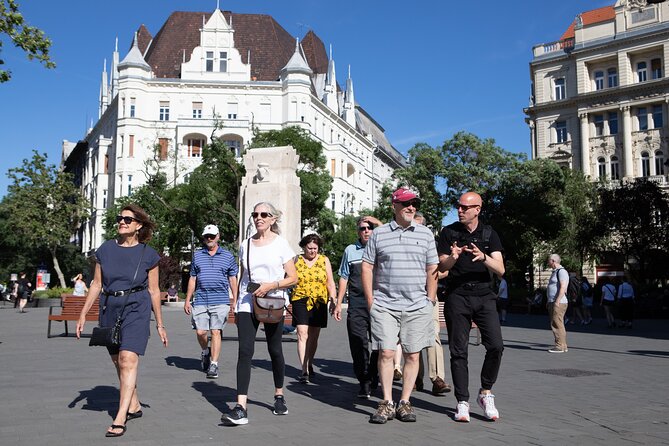
This tour is built for people who want context, not just photos. You’re walking through central Budapest with a guide who turns monuments into meaning—why they were built, who they were meant to serve, and how Hungary’s story shifts from occupation to rebellion. The structure is tight: short stops, quick explanations, and just enough time at each place to understand what you’re seeing.
At about 3 hours, the pace is brisk. That’s a plus if you’re short on time (and Budapest adds up fast), but you won’t linger for long reflections. Still, the walkthrough style is smart: you’ll get your bearings, learn what matters most, and then you can choose what to spend extra hours on later.
And yes, the included retro soda stop is real. It’s not just a quirky add-on—it’s a useful contrast. You move from propaganda and memorials to something ordinary, like sitting down with a classic soda in a communist-themed bar, then heading into your next day with clearer context.
You can also read our reviews of more drinking tours in Budapest



Where the Tour Starts at the Hungarian State Opera
You’ll meet at Hungarian State Opera, Andrássy út 22 (1061) and finish at Liberty Square (Szabadság tér). That’s a practical route: you start on Andrássy út, then work your way toward the Liberty Square area, which is a natural hub for connecting to other parts of the city.
The mobile ticket detail matters more than it sounds. Budapest tours run smoothly when you can pull up your ticket quickly, and you won’t be hunting for paper. Also, with public transportation nearby, you can easily adjust your schedule if you’re coming from another museum, a café break, or a hotel.
Stop 1: Soviet Heroic Memorial in a Park (The White Obelisk Lesson)
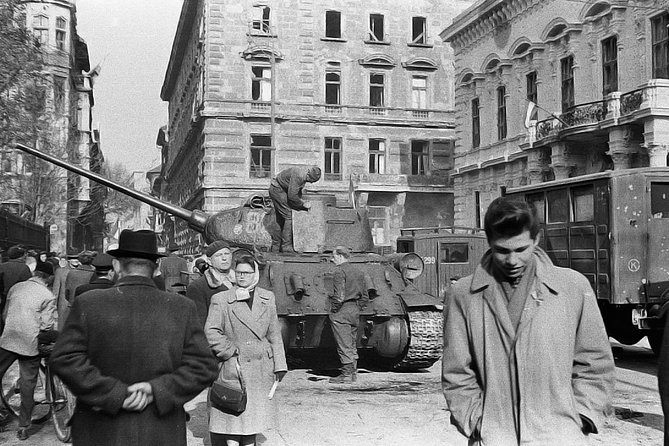
The first stop is the Soviet Heroic Memorial, a white obelisk in a landscaped park commemorating Russian military who served in WWII. In a short time, your guide’s job is to help you read it correctly—because monuments like this can feel simple if you only look at the shape.
What I like about starting here is the way it frames the rest of the walk. This obelisk represents one layer of power and memory: the story of liberation told from the Soviet angle. Even if you’ve heard broad terms like Soviet occupation, you’ll see how that history gets translated into stone, symmetry, and public space.
Good to know: admission here is listed as free, which means you can focus on the explanation rather than logistics.
Stop 2: House of Terror Museum (Andrássy út 60 and the Meaning of “Fear”)
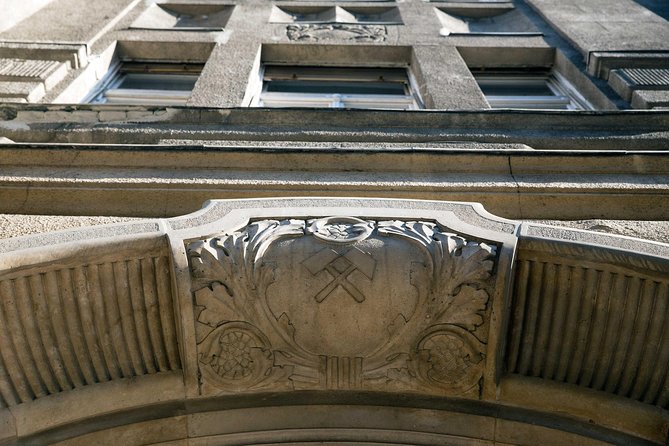
Next is House of Terror, located at Andrássy út 60. This is the stop where the tone shifts. The museum covers exhibits related to fascist and communist regimes in 20th-century Hungary, and it functions as a memorial to victims detained, interrogated, tortured, or killed in the building.
Even with a short 15-minute stop, the value is in direction. Without a guide, it’s easy to feel lost or overwhelmed in a museum like this. With a guide, you know what you’re looking for first, how the regimes fit together, and how the building itself ties into the story.
One important consideration: this is heavy material. If you’re sensitive to violence, interrogation, or human-rights horrors, you might want to mentally prepare before you arrive.
Admission is listed as free for this stop, so you’re not paying extra to access the briefing moment in the right place.
Stop 3: St. Stephen’s Basilica Quick Look (Plan for the Ticket)
Then you get a look at St. Stephen’s Basilica (Szent István Bazilika). It’s named for Stephen, the first king of Hungary, and the basilica is especially known because Stephen’s right hand is housed in a reliquary.
This stop is more about perspective than a full religious visit. The basilica is a major landmark, and seeing it within this political-walk context helps you notice something: power in Budapest doesn’t only show up as statues. It also shows up as faith, monarchy, and national identity.
Not included: basilica admission is not included, so if you want to go inside fully, treat this as your cue to plan extra time and tickets. In a short guided itinerary, it’s usually more realistic to get oriented first, decide later.
You can also read our reviews of more tours and experiences in Budapest




Gellért Hill: Liberty Statue (Freedom that Still Feels Current)
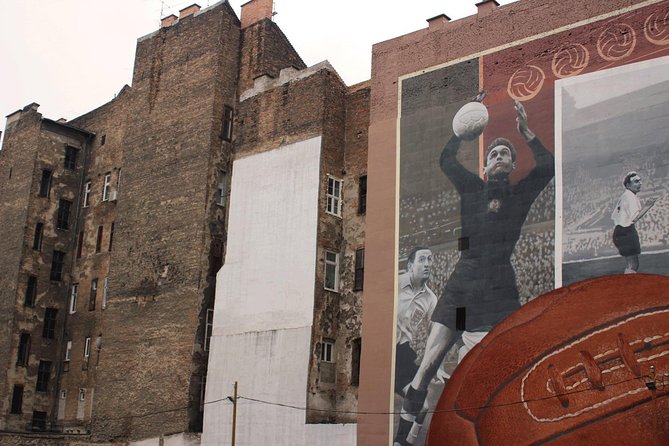
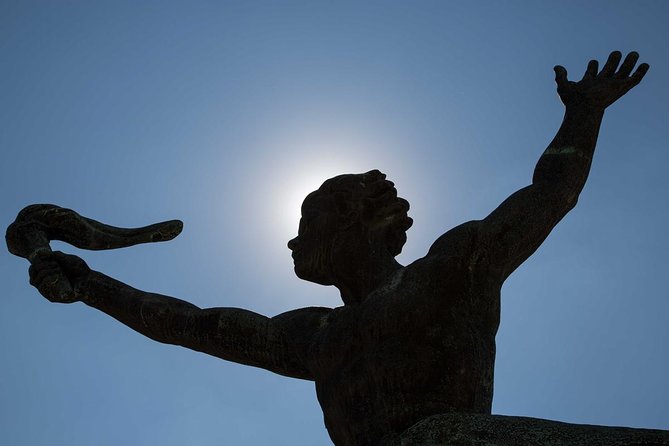
From there the walk moves toward the Liberty Statue (Szabadság-szobor) on Gellért Hill. This monument commemorates those who sacrificed their lives for Hungary’s independence, freedom, and prosperity.
This is a turning point in the story. You go from Soviet WWII commemoration to a monument about Hungarian freedom. Even if you don’t know the details, you can feel the contrast in theme: one is about military service under an outside power; the other is about national sacrifice for self-determination.
Also, Gellért Hill viewpoints are one of the best reasons to slow down for a second, even on a short tour. If the weather cooperates, the city layout helps you connect geography to history—where things happen, where power gathers, and where memorials choose visibility.
Stop 4: Szabadság tér (Liberty Square’s Two Big Memorials)
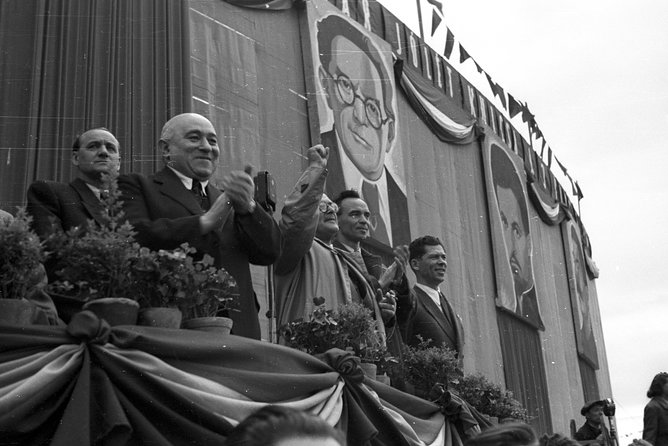
Next comes Szabadság tér, a public square in the Lipótváros neighborhood. It’s famous for two controversial memorials: one for Hungarian Jewish victims of the Holocaust and another for Soviet soldiers that liberated Budapest in 1945. Nearby you’ll also see landmarks like the United States Embassy in Hungary and the historicist-style headquarters of the Hungarian National Bank.
This is one of the most useful stops for first-time visitors, because it trains you to read a square as a layered argument, not a single postcard.
In a few minutes, your guide helps you understand how:
- different groups compete for memory in the same public space, and
- “liberation” can be both a fact and a political claim depending on who’s telling the story.
The practical part: once you learn the square’s key features here, you’ll recognize them immediately later on your own. That’s real value on a guided tour.
Admission is free for the square stop.
Stop 5: Memorial to the 1956 Revolution and War of Independence
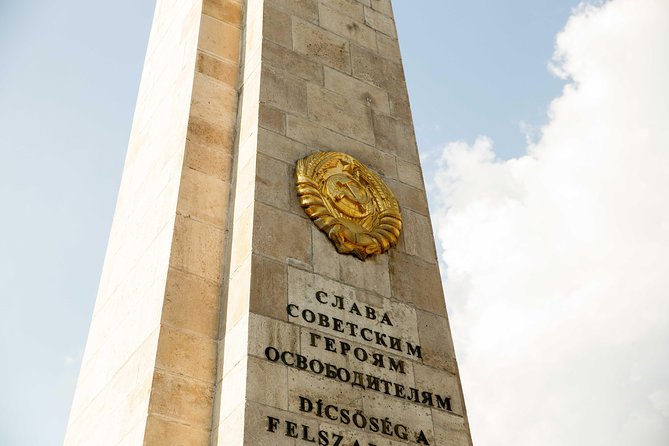
The walk continues to the Memorial to the 1956 Hungarian Revolution and War of Independence. This stop commemorates heroes of the 1956 uprising against the communist regime.
If you only learn one date from the communist-era story, make it 1956. It’s a turning point: Hungarian resistance becomes visible, organized, and then brutally suppressed, leaving a long shadow in how Hungarians remember the communist period and foreign control.
This is where your guide’s connecting lines matter most. The tour isn’t just about naming buildings. It’s about linking oppression to response, and response to the memorial language you see in the city today.
Admission is free for this memorial stop.
Stop 6: Hungarian Parliament Building (Országház) Outside Look
Finally, you finish at the area of the Hungarian Parliament Building (Országház). It’s described as the seat of Hungary’s National Assembly and one of Hungary’s most popular landmarks.
This is the part of the tour where you use what you’ve learned. Parliament, like basilicas and memorials, is a symbol of a country’s self-image. When you’ve just walked through Soviet commemoration, terror-museum context, Holocaust remembrance, and 1956 resistance, the Parliament Building starts to read differently. It feels less like a random photo stop and more like a conclusion: Hungary’s national story, presented through institutions.
Not included: admission for the Parliament Building is listed as not included, so plan accordingly if you want to tour inside.
The Retro Communist Bar Stop: Soda, Coffee/Tea, and a Mental Reset
One of the most memorable parts of this experience is the included retro soda in a communist-themed bar, plus coffee and/or tea. This isn’t just comfort food for the mind. It’s a smart pacing tool.
After you’ve stood near memorials and stepped through House of Terror’s subject matter, your brain needs a quick shift. Having a drink together (in a small-group setting) lets the guide’s explanations settle into something you can carry with you into the evening.
And because the bar is part of the theme, you get a small dose of cultural texture: how communist aesthetics can show up today in everyday entertainment. It’s a reminder that history doesn’t stay in museums. It leaks into design, nostalgia, and how people frame the past.
Price and Value: Is $90.31 Worth It?
At $90.31 per person for about 3 hours, you’re paying for guided context in a small group (up to 15), plus practical extras: maps and further recommendations, mobile ticket, and the included drinks (classic soda, plus coffee and/or tea).
Here’s how I judge the value:
- If you already know Budapest’s major sights but want the political backbone, this price makes sense. You’re buying interpretation, not just movement.
- If you only want a casual stroll, you may feel the time is too short for heavy stops like House of Terror.
- Because some big attractions (St. Stephen’s Basilica and the Parliament Building) have admission not included, you should budget extra if you want full access.
The strongest reason this works is the structure: it’s short enough to fit a weekend plan, but it still covers a set of sites that most visitors skip or misunderstand.
Small Group Dynamics (And Why It Matters)
The tour caps at 15 travelers. That’s not just a number. In practice, smaller groups usually mean you can ask questions at the stops rather than just listening while time disappears.
The review highlights also point to a smaller-than-expected group experience, and that can be a big quality boost. If you end up with a tiny group, the guide’s explanations can feel more like a conversation than a lecture.
Also, the provider is Budapest Urban Walks, and the language is English, which helps if you want a guide who can explain political nuance clearly rather than simplifying it too much.
Practical Tips: How to Get the Most From the Walk
Wear shoes that handle city walking and slightly uneven terrain. This is a memorial-and-landmark route with viewpoints, and you’ll spend time standing and absorbing.
Bring your “what next?” mindset. The experience includes maps and further recommendations, so don’t treat this as the end of your planning. Use it as your starting point for deciding what to revisit: basilica interior time, Parliament building options, or extra reading around 1956 and the Soviet era.
Also, plan around weather. The tour notes that it requires good weather, and if it’s canceled due to poor weather you’ll be offered a different date or a full refund.
Who This Tour Suits Best (And Who Should Skip It)
This works best if you:
- want history that’s tied to real city locations, not just museum walls
- like the idea of a guided route that helps you decide what to explore next
- enjoy political and social context, especially around the 20th century
You might want to skip or adjust if you:
- prefer light sightseeing only
- are strongly sensitive to accounts related to torture, interrogation, and killings, since House of Terror covers that material
For couples and weekend planners, the short duration is a win. You can add museums and viewpoints afterward without feeling like you lost an entire day.
Should You Book Born Under The Red Star?
I’d book it if you want your Budapest trip to make sense as a story, not a checklist. The included retro bar soda and coffee/tea are a pleasant break, but the real value is the guided connections: Soviet-era memorials, the terror museum, and the meanings layered into Liberty Square and the 1956 memorial.
If you’re the type who reads plaques and wants clarity before you go wandering, this tour is a strong foundation. If you’re only in Budapest for a short time and you want to skip the usual tourist route, it’s also a good fit.
FAQ
FAQ
How long is the Born Under The Red Star tour?
It runs for about 3 hours.
How much does it cost?
The price is $90.31 per person.
What language is the tour offered in?
The tour is offered in English.
Where does the tour start and end?
It starts at the Hungarian State Opera (Andrássy út 22) and ends at Liberty Square (Szabadság tér).
What places does the tour visit?
The tour includes the Soviet Heroic Memorial, House of Terror, St. Stephen’s Basilica (outside/brief look), the Liberty Statue, Szabadság tér, the memorial to the 1956 Hungarian Revolution, and the Hungarian Parliament Building (outside/brief look).
Are museum and monument tickets included?
Some are listed as free stops (Soviet Heroic Memorial, House of Terror, Szabadság tér, and the 1956 memorial). St. Stephen’s Basilica and the Hungarian Parliament Building are listed as not included.
What is included in the price?
It includes a classic soda at a communist-themed bar, coffee and/or tea, maps and further recommendations, and a mobile ticket.
Is food included?
Food and drinks are not included unless specified, beyond the included soda and coffee/tea.
What is the group size?
The tour has a maximum of 15 travelers.
Is there any weather requirement?
Yes. The experience requires good weather, and if it’s canceled due to poor weather, you’ll be offered a different date or a full refund.