REVIEW · BUDAPEST
Budapest Grand Walk
Book on Viator →Operated by Taste Hungary · Bookable on Viator
Budapest in four hours can feel like magic. This Grand Walk stitches together Pest’s big landmarks and sobering memorials, starting with Hungarian sparkling wine and capped with Danube views. One heads-up: it’s a lot of moving on foot, so you’ll want comfortable shoes and a steady pace.
I like how the guide shapes the day beyond picture-postcard stops. You’ll hear the why behind what you’re seeing, from buildings tied to the 1956 Revolution to the story marks at the river. And the tour ends near Chain Bridge, which is perfect timing if you want to keep exploring Buda Castle afterward.
In This Review
- Key things to know before you go
- Start With Hungarian Sparkling Wine in the Palace District
- Pest Palace to 1956 Revolution Stories (and why the buildings matter)
- Andrássy Avenue to St. Stephen’s Basilica: grandeur with a reason
- Heroes Square and Pest’s grand axis moments
- Jewish Quarter walking route: Grand Synagogue area and real street texture
- Oldest metro line ride plus a coffee break that feels local
- Parliament, Chain Bridge, and Danube promenade views
- Shoes on the Danube Holocaust Memorial: what you’ll actually notice
- Buda Castle area courtyards and the monuments on the hill
- Liberty Square, Academy of Sciences, and the parts people skip
- Price and group size: what $125 buys you (and what it doesn’t)
- Who should book the Budapest Grand Walk?
- Should you book this tour?
- FAQ
- How long is the Budapest Grand Walk?
- Where does the tour start and where does it end?
- Is this tour in English?
- What’s included during the tour?
- How big are the groups?
- Is there a lot of walking?
- Can I get a refund or change my booking?
Key things to know before you go
- Wine at the start in the Palace district before you even hit the street
- An easy rhythm of walking plus transit, including a ride on the continent’s oldest metro line
- Pest highlights with specific context, from St. Stephen’s Basilica to Andrássy Avenue landmarks
- The Jewish Quarter and the Grand Synagogue area plus the Danube memorial route
- Danube promenade views of Parliament, Chain Bridge, and Buda Castle
- Small groups (2 to 8), with options for larger groups or private tours
Start With Hungarian Sparkling Wine in the Palace District
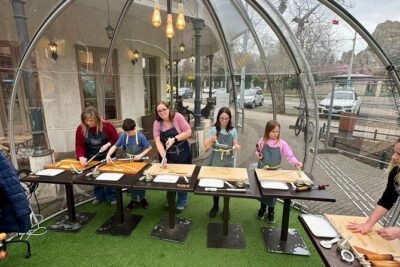
You begin at Tasting Table Budapest, right in the Palace district area (Bródy Sándor u. 22). The idea is simple: start mid-afternoon with a glass of Hungarian sparkling wine, loosen up, then get moving while your brain is still fresh.
This opening sets the tone. It’s not just a facts-on-a-loop walking tour. It’s timed like a real local day: meet, sip, walk, and talk. You’ll get plenty of chances for photos and questions as you go.
You can also read our reviews of more walking tours in Budapest



Pest Palace to 1956 Revolution Stories (and why the buildings matter)
Early on, you’ll pass and spot major civic buildings in Pest. One highlight is the Hungarian National Radio Building, tied to the 1956 Revolution. Even if you think you know the basics, a good guide can help you connect the dots between street-level architecture and what happened there.
You’ll also see the National Museum area and get a sense of how this part of the city holds memory in plain sight. It’s the kind of stop where you learn what to notice: entrances, symbols, and the way major institutions sit along the city’s movement routes.
As a bonus for people who love details, the pacing leaves room for back-and-forth. I especially like when a guide can explain official accounts and also point out the sorts of debates people raise. That approach makes the tour feel more like conversation than lecture.
Andrássy Avenue to St. Stephen’s Basilica: grandeur with a reason
From the Palace district you’ll work toward Andrássy Avenue. Here, you’ll pass the Hungarian State Opera House, a neo-Renaissance landmark designed by Miklós Ybl. The building is eye-catching, but the real value is how your guide frames why it fits into Budapest’s identity and ambitions.
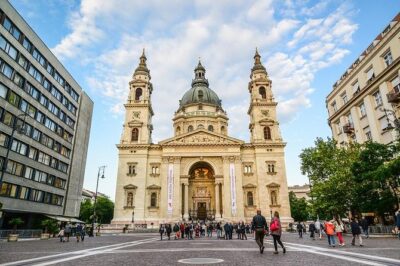
Then you’ll get to St. Stephen’s Basilica (Szent István Bazilika). This isn’t just a quick glance. The tour includes a stop long enough to take in the scale and understand the famous connection to Hungary’s first king. The basilica is named for Stephen, and the church houses a mummified right hand associated with him.
If you’re the type who cares about religious art and symbolism, this will land. If you just want the best viewpoints, you can still enjoy it, because the basilica’s role in the city’s story is the point—not an exhaustive interior tour.
Heroes Square and Pest’s grand axis moments
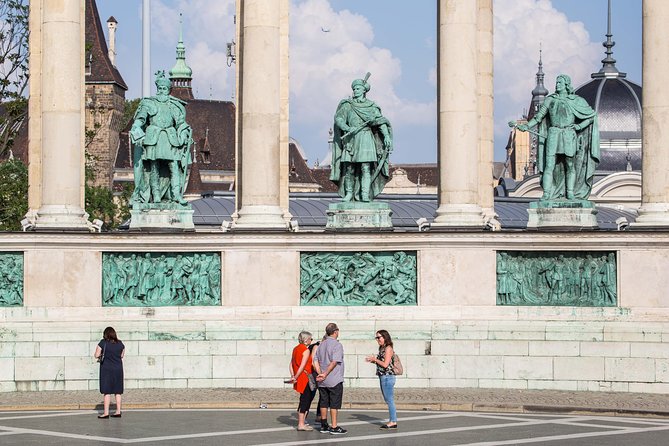
Later, you’ll reach the kind of street-and-square combinations that make Budapest feel theatrical. Heroes Square is one of those places where everything looks designed for a reason—monuments, symmetry, and a sense of national staging.
This is also where your guide’s approach really helps. Instead of treating Heroes Square like a photo stop, you’ll get the background that explains why the city chooses to remember itself in this way. It’s a powerful moment, especially if you’ve got any interest in politics, identity, or how public space gets used.
Jewish Quarter walking route: Grand Synagogue area and real street texture
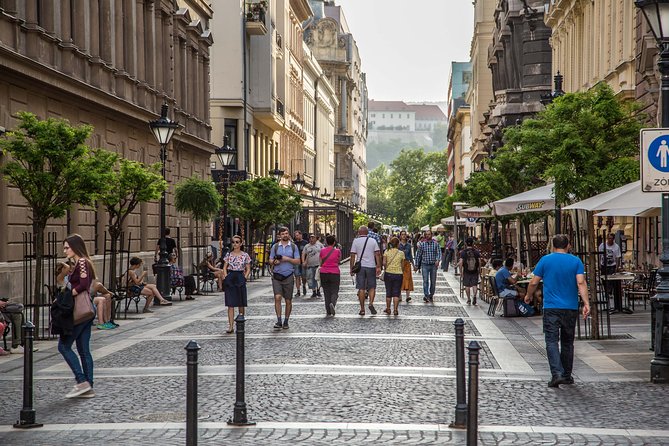
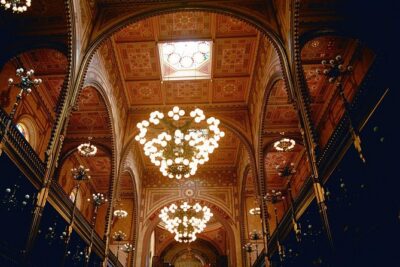
Next comes one of the most important parts of the day: the former Jewish Quarter. You’ll see the Grand Synagogue area, including the Grand Synagogue itself, often described as Europe’s largest. You’ll also pass spots like the Gozsdu udvar complex and spend time along Király utca.
What I like here is the balance. This isn’t handled as a generic “old neighborhood” stop. The guide ties the area to what it used to mean in the city’s center, then you move forward in time so it doesn’t feel frozen in postcard mode.
This part of the tour is also a good reminder that Budapest is layered. You’ll be looking at active streets, not museum-like emptiness. That’s one reason walking works so well: you feel how the city still breathes around these places.






Oldest metro line ride plus a coffee break that feels local
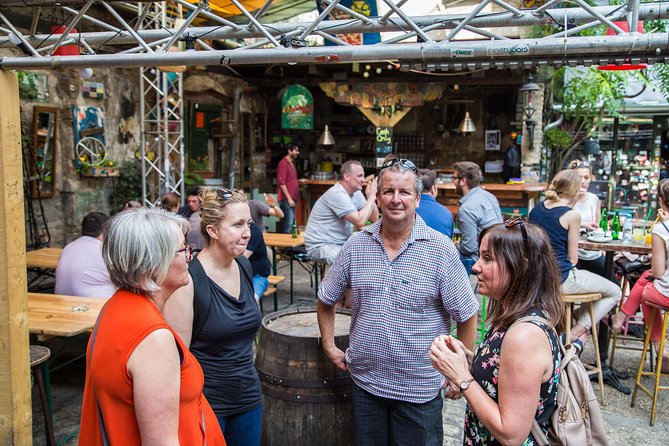
A big practical win: you get a few short trips on public transportation during the tour, including a ride on Europe’s oldest metro line. This is one of those Budapest details you can’t really replicate the same way on your own unless you plan carefully.
Then there’s a coffee break at a favorite local café. The tour includes coffee and/or tea, and the coffee break includes one drink. If you don’t drink coffee, you may still be able to choose a non-coffee option since the included break is described as one coffee or drink—still, it’s smart to mention preferences early.
After that metro moment, everything starts to click. You’ve walked the neighborhoods, then you’ve used the city’s own rhythm to move between eras and viewpoints. It makes the rest of the sightseeing feel less like a checklist and more like a route.
Parliament, Chain Bridge, and Danube promenade views
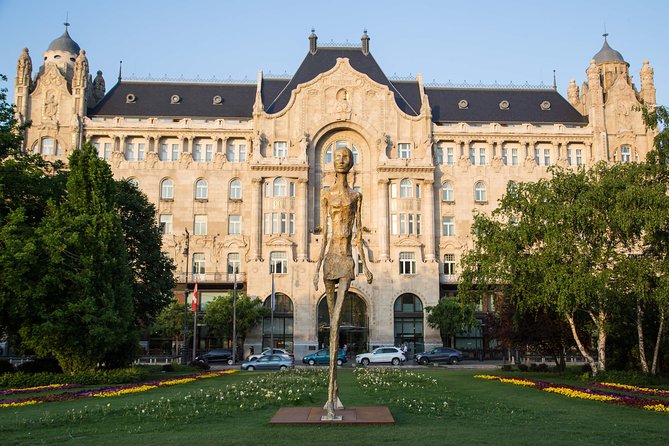
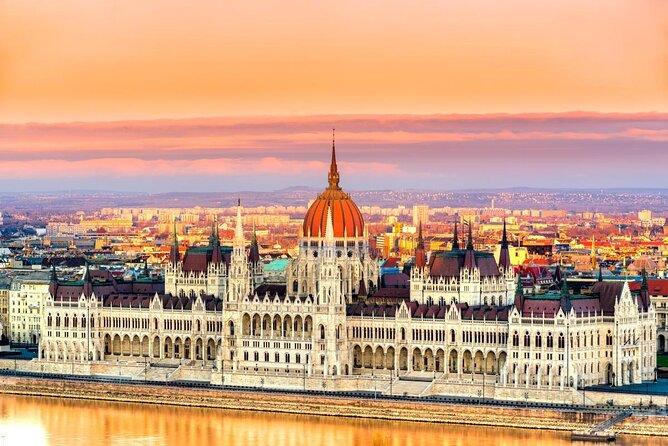
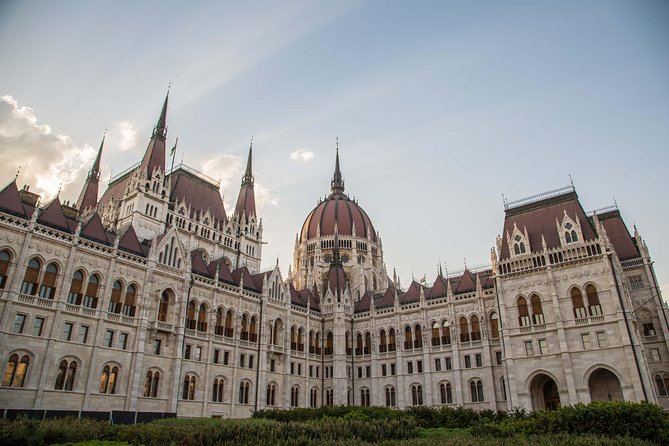
Now you shift to the Danube waterfront, where Budapest puts on its best show. You’ll admire the neo-Gothic Parliament building dominating the Danube bank, then see sweeping river views that include Chain Bridge and the Buda Castle area across the water.
This is exactly where a guided walking tour earns its keep. The viewpoint choices matter. From the promenade, you’re not just seeing landmarks—you’re learning how they line up and why the river shapes the city’s layout.
When the tour nears its end, you finish near Chain Bridge on the Pest side. The whole setup is practical: your guide departs there, and you can cross on your own for Buda Castle exploration. It’s a nice handoff because you choose what to do next instead of being herded into one last stop.
Shoes on the Danube Holocaust Memorial: what you’ll actually notice
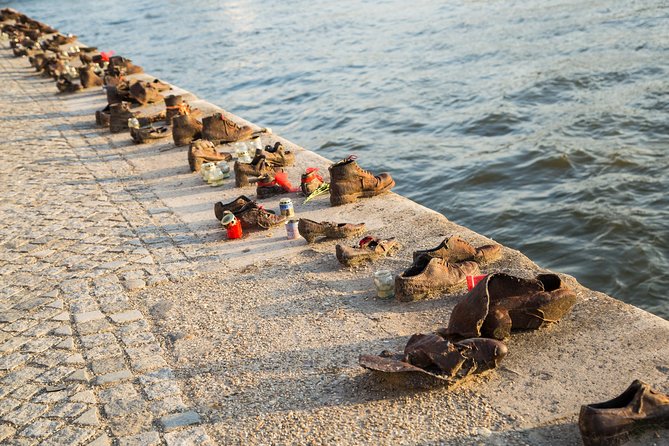
One of the most emotionally difficult stops is the Shoes on the Danube Holocaust Memorial. The concept is stark, and the location is what makes it land. You’ll see it from the Danube banks while your guide explains the memorial’s significance.
I’d recommend taking your time here, even if the group wants to move. Stand close enough to read what’s there, then step back and look at the river line. The contrast between everyday water and commemorated loss hits harder when you let it.
This is the kind of stop where your guide’s framing matters. If you ask a question, you’ll often get a direct answer that helps you connect the symbolism to the wider history of the city.
Buda Castle area courtyards and the monuments on the hill
After the Danube segments, you’ll move toward the Buda Castle complex area. You’ll pass through the complex of seven buildings with connected courtyards in the 7th district. One reason people love this zone is the courtyard life—shops and restaurants hang around the edges, so the castle area feels lived-in, not sealed off.
Your guide also points out key monuments, including the Soviet Monument. You’ll learn why there are memorials connected to figures like a US major and Ronald Reagan. Even if you don’t remember every detail, the broader lesson sticks: Budapest keeps rewriting its public memory as political realities change.
If you want a deeper history thread, this section is where it all connects. You’ve already heard about rebellion, institutions, and community life. Now you see how shifting power and international attention show up in stone and plaques.
Liberty Square, Academy of Sciences, and the parts people skip
Before you wrap, you’ll notice a few more civic landmarks that most casual visitors either miss or glance at without context. Liberty Square is one of them, with beautiful buildings flanking the area and the former stock exchange included in what you’ll see.
You’ll also pass the Hungarian Academy of Sciences in an elegant neoclassical palace built in 1865. Even without a museum ticket, these structures help you understand Budapest as a city that invests in knowledge and public institutions—not just monuments.
It’s a smart ending stretch. It ties the route together so you leave with a map in your mind, not just a list of stops.
Price and group size: what $125 buys you (and what it doesn’t)
At $125 per person for about four hours, you’re paying for three things at once: a local English-speaking guide, included drinks, and guided movement using public transport (including the oldest metro line). You’re also getting a route that hits major sights plus the Jewish Quarter and the Danube memorial area.
For value, the drinks and metro piece matter more than you’d think. Wine at the start and a coffee break reduce the odds you’ll spend time finding food and drink on your own mid-walk. And the transit segments make the pacing realistic, especially if you’re trying to do this on day one.
What the price does not buy is unlimited time. This is still a walking tour. If you want museum interiors, long sitting breaks, or you’d rather spend your afternoon in one single neighborhood, you may feel the time pressure.
Who should book the Budapest Grand Walk?
This is a strong pick if you want a first-day orientation to Budapest. The route covers the areas most people want—Pest sights like St. Stephen’s Basilica and Andrássy Avenue—and it balances that with places that demand reflection, like the Shoes on the Danube Memorial.
It’s also a good choice if you like history explained in a conversational way. Reviews highlight guides such as Aniko and Angela being especially strong at making connections and answering specific questions. If that’s your style, you’ll likely enjoy how the day flows.
If your plan is one afternoon and you want to cover a lot without feeling chaotic, this tour is designed for that. Just pace yourself. Take breaks when you need them, especially around the memorial stop.
Should you book this tour?
Book it if you want a structured but flexible way to see Budapest. You’ll get wine, coffee, a metro ride, big-city landmarks, and memory-heavy stops—all guided by someone who can explain what you’re looking at while you walk.
Skip it or consider a private option if you have zero interest in walking, or if you want long stays in a few locations instead of a broad route. Also, if you’re the type who gets uncomfortable with groups, remember this is capped at eight people on the shared option.
FAQ
How long is the Budapest Grand Walk?
It runs about 4 hours.
Where does the tour start and where does it end?
You meet at Tasting Table Budapest at Bródy Sándor u. 22, 1088 Hungary. The tour ends near Chain Bridge at Széchenyi Lánchíd, Budapest, Hungary.
Is this tour in English?
Yes, it is offered in English.
What’s included during the tour?
Included items include a glass of Hungarian sparkling wine at the start, an English-speaking local guide, a coffee break (one coffee or drink included), coffee and/or tea, alcoholic beverages, and a few short trips on public transportation including Europe’s oldest metro line.
How big are the groups?
The shared small-group tour is 2 to 8 guests, with a maximum of 8 travelers.
Is there a lot of walking?
There is a moderate amount of walking. Comfortable shoes are recommended.
Can I get a refund or change my booking?
This experience is non-refundable and cannot be changed for any reason. If the minimum traveler requirement isn’t met and the tour is canceled, you are offered an alternative date/experience or a full refund.