REVIEW · BUDAPEST
A Journey through Jewish Budapest – Private Walking Tour
Book on Viator →Operated by Insight Cities · Bookable on Viator
Budapest’s Jewish story is written in stone. This private 3-hour walking tour threads together synagogues, ghetto-era sites, and WWII remembrance with a historian guide. I like that it’s not a big-bus history lecture; it’s built for real streets, real landmarks, and questions along the way. You’ll also get hotel pickup if you want it.
Two standouts make this experience work. First, the main stop is the Dohány Street Synagogue complex, including the Temple of Heroes area and memorial park grounds. Second, you walk the neighborhoods and memorial sites that connect faith, daily life, and tragedy, ending at the Shoes on the Danube Bank.
One thing to consider: ticketed synagogue interiors are not included, and you’ll want to follow the shoulders-and-knees dress rule for the Dohány and Kazinczy stops. If you’re traveling with kids or someone who hates walking, plan around moderate walking for about three hours.
In This Review
- Key things to know before you go
- The case for a private Jewish Budapest walk with a historian
- Price and group size: when $396.52 is actually good value
- Meeting up and getting moving: pickup, transit, and the 10-minute buffer
- Stop 1: Dohány Street Synagogue (Nagy Zsinagoga) and the Hero memorial complex
- Stop 2: Kazinczy Street Synagogue, the Ghetto Wall Memorial, and the mikveh
- Stop 3: Rumbach Street Synagogue and the Status Quo Ante thread
- Stop 4: Shoes on the Danube Bank—why the ending hits so hard
- Timing, walking, and what to pack for a comfortable 3 hours
- Who this private Jewish Budapest tour is best for
- A realistic look at what is not included
- Should you book this A Journey through Jewish Budapest private walking tour?
- FAQ
- FAQ
- How long is the private walking tour?
- What is the meeting point if I don’t get pickup?
- Does the tour include hotel pickup?
- What language is the tour offered in?
- Are tickets to the synagogues included?
- Is the Shoes on the Danube Bank memorial ticketed?
- What should I wear for synagogue visits?
- When does the tour run?
- Is this tour private?
- Can I cancel for a full refund?
Key things to know before you go
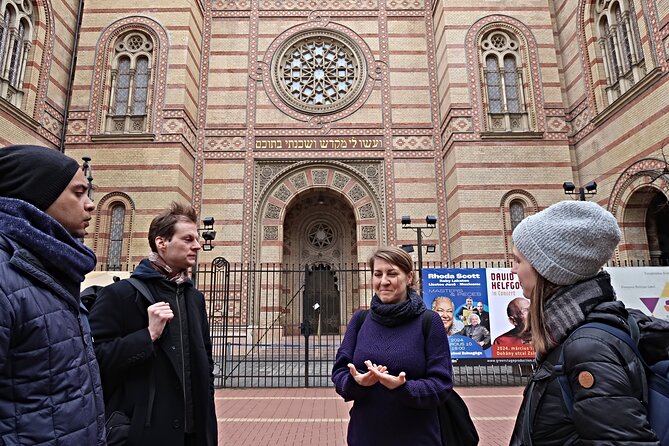
- Private historian guide: you get focused attention, plus flexibility for your interests.
- Dohány Street Synagogue complex: Moorish Revival style and the Temple of Heroes area are the headline.
- Ghetto-era landmarks on foot: you’ll see the Ghetto Wall Memorial and other neighborhood markers.
- Multiple synagogue exteriors and interiors: Kazinczy and Rumbach are included when open to the public.
- Shoes on the Danube Bank ends the tour: a free WWII memorial visit with time to reflect.
- Pickup + easy public transport: your guide can lead you by metro, tram, or foot depending on distance.
The case for a private Jewish Budapest walk with a historian
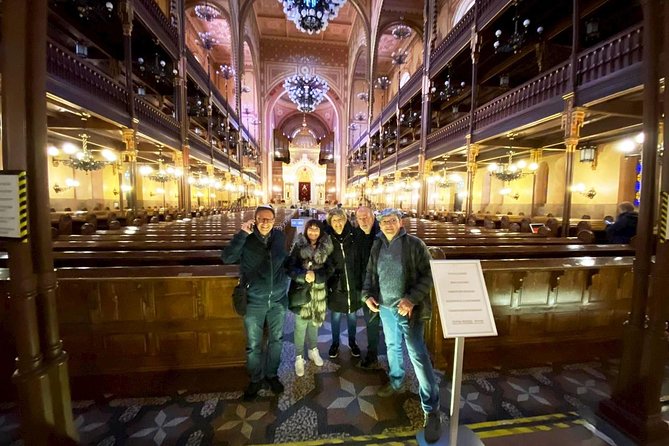
Budapest can feel like it has layers stacked on layers. That is exactly what you see on this route: religious life, community life, and the scars left by persecution and war.
What makes the private format especially valuable is pace. You’re not waiting for a headcount or watching everyone shuffle back to the guide. You can ask why a specific building matters, or what you’re looking at when façades mix styles and eras. And because this is guided by a historian, the stop-by-stop flow isn’t just sightseeing. It’s explanation tied to what you’re standing in front of.
If you’re on your first visit to Budapest and want a clean path through the Jewish sites, this tour is one of the most practical ways to do it. It also fits well if you already know some Jewish history and want help connecting the dots in the city.
You can also read our reviews of more walking tours in Budapest



Price and group size: when $396.52 is actually good value
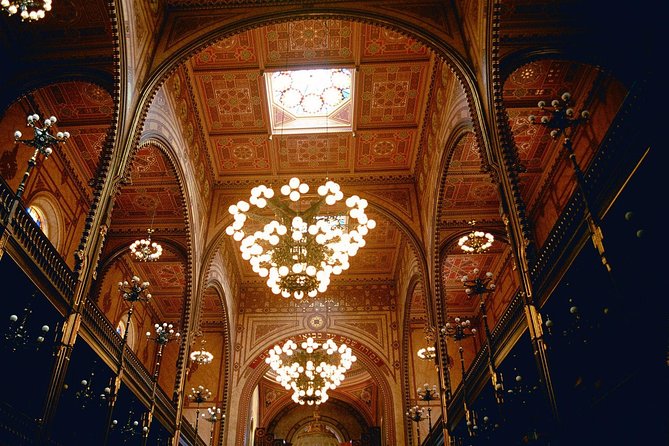
The tour price is $396.52 per group, up to 10 people. That matters because you’re paying for a private guide and a set route through specific landmarks.
Here’s how to think about value:
- If you fill the group closer to 10, the cost per person drops a lot and you’re basically buying a private walkthrough without the private-fee pain.
- If you’re only a couple of people, it costs more per person. In that case, it’s still worth it if you want (1) real guided context at synagogues and memorials and (2) flexibility to keep the pace comfortable.
Either way, the big value point is not just the walking tour label. It’s the guided access to multiple sites in about three hours, plus pickup options and a guide who can keep the story straight.
Meeting up and getting moving: pickup, transit, and the 10-minute buffer
This is set up to start smoothly. You can choose pickup at your central hotel or flat, and your guide can get you to the route by metro, tram, or foot when sites are close.
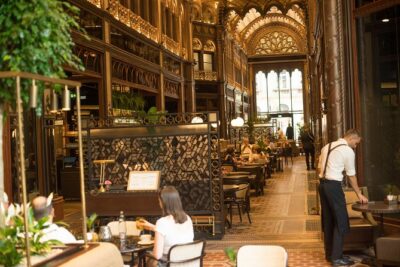
If you don’t want pickup—or if you haven’t sent an address in time—meet your guide 10 minutes before the start time at the default point: Cafe Synago Kavehaz (formerly Cafe Zenit), Dohany utca 1/A.
Timing-wise, departures are morning at 10am year round, with afternoon options in certain seasons. Plan your day around the three-hour block so you’re not rushed when you reach the more emotional stops.
Stop 1: Dohány Street Synagogue (Nagy Zsinagoga) and the Hero memorial complex
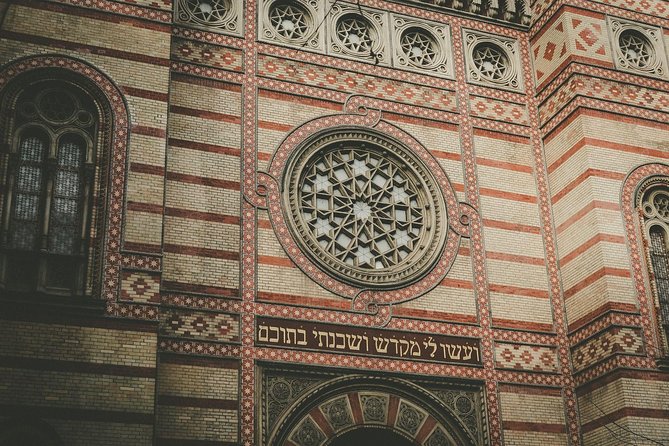
The tour’s first major anchor is Dohány Street Synagogue, often described as the largest temple in Europe and the second-largest in the world. Even from outside, you get the sense you’re at a flagship site, not a small neighborhood sanctuary.
Inside the complex, you’ll focus on a few key areas:
- The synagogue itself, with help from a Jewish Studies Scholar for your understanding.
- The Temple of Heroes area.
- The Jewish Museum and a Memorial Park within the grounds.
This is the part of the tour where you’ll most feel the blend of architecture and memory. The synagogue is Moorish Revival in style, so it stands out visually against typical European church-and-cathedral silhouettes. But the guide’s job is to keep you grounded: what you’re seeing isn’t just pretty building design. It’s a landmark built for a community’s identity.
Practical note: the Dohány Synagogue ticket is not included, and entry requires respect for the dress code. The tour info specifically asks for shoulders and knees covered.
Plan about 30 minutes for this stop. If you’re the type who likes reading plaques and slowing down for details, you may want to use your guide’s flexibility to spend a bit more time here while keeping the rest of the tour on track.
Stop 2: Kazinczy Street Synagogue, the Ghetto Wall Memorial, and the mikveh
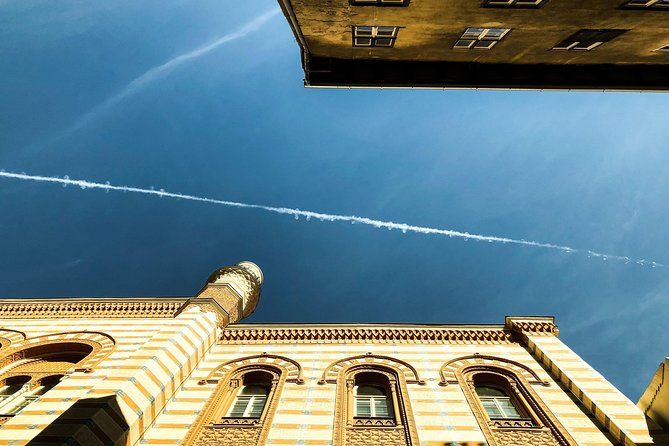
After the grand scale of Dohány, the tour moves into more intimate, street-level markers. Stop 2 includes the area around Kazinczy Street Synagogue and a sequence of meaningful sights.
Before you reach the synagogue itself, you pass the:
- Ghetto Wall Memorial, erected in 2014.
Then the route brings in a ritual-life element:
- A mikve (Jewish ritual bath) is part of what you see along the way.
From there you continue to the exteriors of the Art Nouveau orthodox synagogue on Kazinczy Street. If it’s open, you also visit the interior.
This is a smart stop for anyone who wants more than “big-name sites.” You’re seeing how community life and religious practice show up in the city’s physical layout. The mikveh detail helps ground the story in everyday observance, not only public memorial moments.
Practical note: Kazinczy’s synagogue ticket is not included. Also, dress code applies here too—shoulders and knees covered—so plan clothing that won’t force you to buy a last-minute cover-up.
Expect about 35 minutes at this stop, which includes walking between landmarks and time for your guide’s explanations.
You can also read our reviews of more private tours in Budapest






Stop 3: Rumbach Street Synagogue and the Status Quo Ante thread
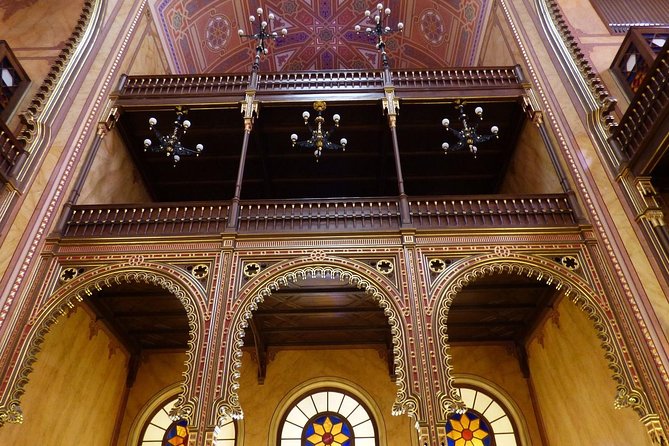
Stop 3 is Rumbach Street Synagogue, where the focus shifts again. The guide points out the history of the Status Quo Ante stream of Judaism while you look at the synagogue’s impressive exterior.
Then you head inside when the synagogue is open to the public. The tour includes interior access under those conditions, so your pacing here depends on opening hours.
This stop works well because it gives you a different lens on Jewish communal life. Instead of only major communal monuments, you also see how different religious traditions and decision-making shaped institutions in the city.
Practical note: Rumbach’s ticket is not included. Also, like the Kazinczy visit, interior access is dependent on public opening.
Expect around 25 minutes at this stop. It’s long enough for you to get the meaning, not so long that the day drifts into blur.
Stop 4: Shoes on the Danube Bank—why the ending hits so hard
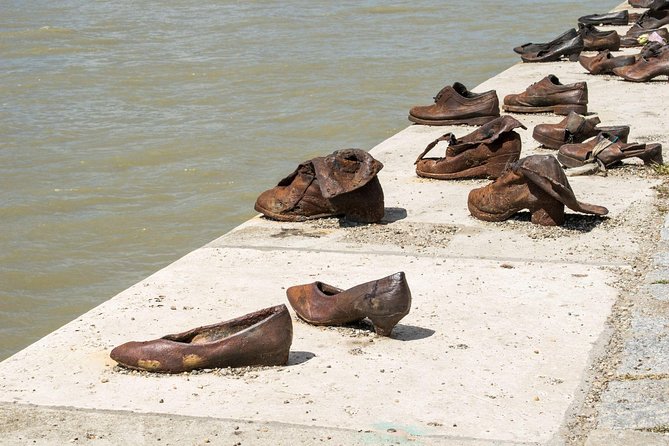
The tour closes at Shoes on the Danube Bank, a memorial erected on April 16, 2005. The concept is direct and unsettling: Jews were ordered to remove their shoes, shot near the water, and the bodies were carried away by the river. The memorial represents the shoes left behind on the bank.
This isn’t a sightseeing finish. It’s a reflection finish, and the guide’s framing matters. When you arrive, you’re already primed by the morning’s buildings and neighborhood markers, so the final stop lands with full weight.
You get about 20 minutes here, and entry is free.
If you want your tour to feel respectful and personal, slow down at this point. Take a moment before you start moving again, especially if you’re traveling with kids or you’re sensitive to WWII memorials.
Timing, walking, and what to pack for a comfortable 3 hours
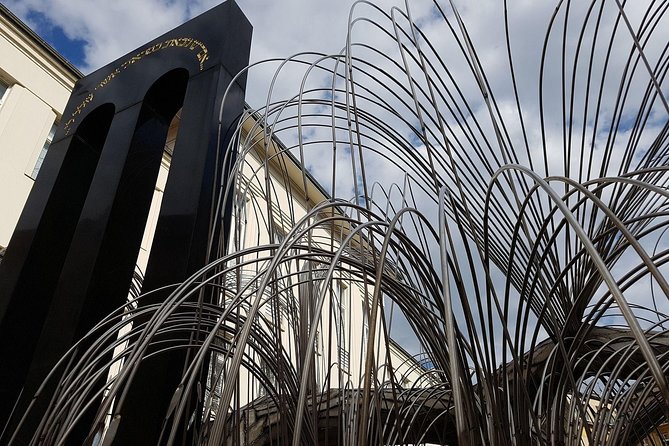
This is moderate walking. It’s not described as a strenuous hike, but you should still wear comfortable shoes. Synagogue days often mean waiting for openings, standing during explanations, and walking between stops that are close but not next-door.
A few practical tips:
- Wear clothing that meets the shoulders and knees covered request for the Dohány and Kazinczy synagogues.
- Bring a light layer if you run cold indoors; synagogues and museums can feel cooler than street temperature.
- Use good walking footwear because this tour is built to move on foot and by short transit hops.
If you’re visiting in winter or shoulder season, dress for cold sidewalks and expect the group to pause outside for photos and context.
Who this private Jewish Budapest tour is best for
This tour is especially strong if you want:
- A private guide who can tailor the pace.
- Jewish history tied directly to the neighborhoods and landmarks you can physically see.
- Synagogue architecture plus memorial context, not one without the other.
It also fits families with teens when the guide knows how to explain history in a way that keeps attention. In past tours with this experience, guides like Andrew have been noted for their passion and for keeping younger visitors engaged, even during a serious, meaningful route.
If you’re a first-timer who wants a coherent story in a short window, this works. If you’re a history buff who likes details, it works too, because the stops are varied: museum grounds, ghetto wall, ritual bath, orthodox synagogue exteriors and interiors, and then a WWII memorial at the river.
A realistic look at what is not included
The tour includes pickup and your historian guide. It does not include:
- Dohány Synagogue tickets
- Kazinczy Street Synagogue tickets
- Rumbach Street Synagogue tickets
- Food and drinks
That last point matters more than it sounds. You’ll likely want to plan your lunch after the tour, not in the middle of it. The route ends in the Pest Ghetto area, which is handy for continuing on your own.
Also, because synagogue interior access depends on openness to the public, you should keep expectations flexible. The exteriors and route context are still part of the experience, but your exact time inside may vary.
Should you book this A Journey through Jewish Budapest private walking tour?
Book it if you want a focused, private way to see the major Jewish landmarks in Budapest in about three hours, with a guide who can connect buildings to the human story behind them. The route is well planned: a major synagogue complex to start, ghetto-era neighborhood markers next, then another synagogue visit, and a memorial ending that feels intentional rather than rushed.
Skip it or reconsider if:
- You dislike walking and standing for explanations.
- You’re not ready for synagogue dress expectations.
- You’d rather do DIY sightseeing without paying for a guide and ticketed interiors.
If you’re looking for real value, this is easiest to justify when you can share the private cost with up to 10 people, or when you truly want the depth a historian guide brings to places like Dohány and the Danube memorial.
FAQ
FAQ
How long is the private walking tour?
It lasts about 3 hours.
What is the meeting point if I don’t get pickup?
Meet at Cafe Synago Kavehaz (previously known as Cafe Zenit), Dohany utca 1/A, about 10 minutes before the start time.
Does the tour include hotel pickup?
Yes. Hotel pickup is included, and your guide will meet you at your central hotel or flat.
What language is the tour offered in?
The tour is offered in English.
Are tickets to the synagogues included?
No. Dohány, Kazinczy, and Rumbach synagogue tickets are not included.
Is the Shoes on the Danube Bank memorial ticketed?
No. Shoes on the Danube Bank is free.
What should I wear for synagogue visits?
Visitors to the Dohány and Kazinczy synagogues are requested to have shoulders and knees covered.
When does the tour run?
Morning departures are at 10am year round. Afternoon departures are available in certain seasons.
Is this tour private?
Yes. It is a private tour, and only your group participates.
Can I cancel for a full refund?
Yes. You can cancel up to 24 hours in advance for a full refund.