REVIEW · BUDAPEST
Jewish Heritage in Hungary with a Historian
Book on Viator →Operated by Budapest Explorers · Bookable on Viator
Budapest’s Jewish story is right on the pavement. This 2.5-hour walk weaves Jewish heritage through key Pest-area stops with a historian guide, so you’re not just looking at buildings—you’re getting the why behind them. I especially like the small group size (max 10), which keeps the pace human and the questions from getting lost.
Food and context both matter here. You’ll stop for Flódni at Solinfo Café (included), a local Jewish cake many Hungarians know well and plenty of visitors end up loving. One consideration: the Kazinczy Street synagogue and the Great/Central Synagogue (Nagy Zsinagóga) are part of the route, but not all interior access is included, so if you want to go inside, plan on separate entry tickets.
In This Review
- Quick hits
- Jewish Heritage in Budapest: the point isn’t just monuments
- How the route tells a story: Erzsébet tér to Raoul Wallenberg
- Szimpla Kert and Gozsdu Udvar: where old neighborhoods became modern Budapest
- Kazinczy Street Synagogue: what you learn with (and without) entry
- The Great/Central Synagogue (Nagy Zsinagóga): impressive scale, plus a limitation
- Solinfo Café and Flódni: the included taste that makes history stick
- Price and what you really get for about $64.71
- Guide style: why the best part can be the storytelling
- Getting oriented in the Jewish Quarter (without losing time)
- Who should book this tour
- Should you book it?
- FAQ
- What is the duration of the tour?
- What time does the tour start?
- Where does the tour start?
- Where does the tour end?
- Is the tour offered in English?
- How big is the group?
- Is a mobile ticket provided?
- Is Flódni included, and where do you try it?
- Are synagogue admission tickets included?
- Can I bring a service animal?
- Is this tour cancellable for a refund?
Quick hits
- Small group feel (up to 10 guests) keeps the historian’s explanations easy to follow
- Flódni is included, so the tour connects history with a real local bite
- You pass major Jewish landmarks like Kazinczy Street and the Great/Central Synagogue area
- Szimpla Kert is on the itinerary, tying Jewish neighborhoods to Budapest’s modern hangout culture
- Raoul Wallenberg’s statue adds a focused, hopeful thread to the day’s story
- All in English with a mobile ticket for a smooth start
Jewish Heritage in Budapest: the point isn’t just monuments
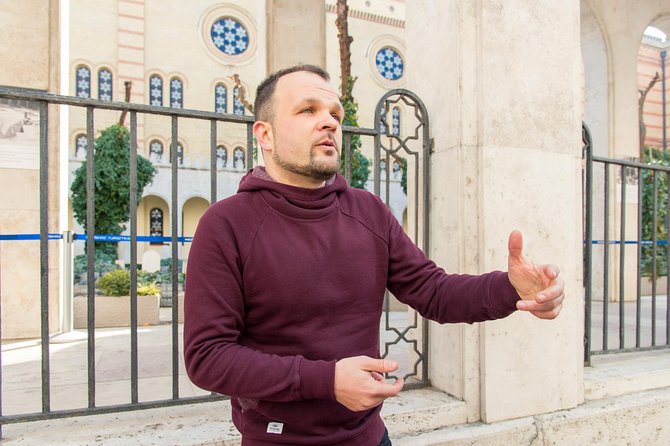
This tour works because it treats the Jewish Quarter like a living map. You’re walking between places that people still use today—streets, cafés, and even the ruin bar scene—then connecting them back to the long sweep of Jewish life in Hungary.
I like that the guide isn’t only repeating the famous tragedies. You get the bigger timeline: centuries of presence in Budapest, then the sharper, darker chapters of the 1940s. It makes the story feel less like a single event and more like a long human history with real turning points.
You can also read our reviews of more historical tours in Budapest



How the route tells a story: Erzsébet tér to Raoul Wallenberg
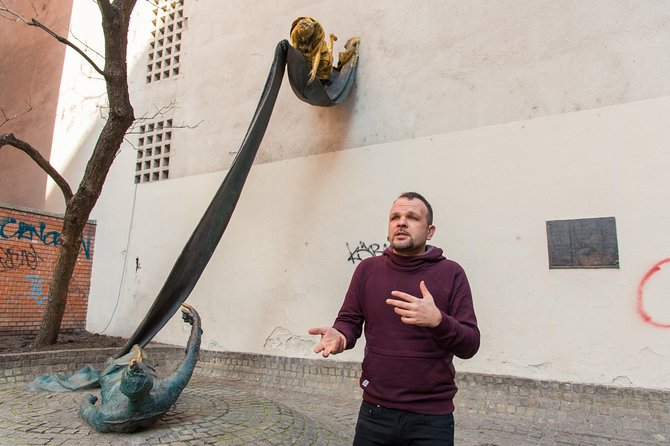
The walk starts at Erzsébet tér, a medieval market square that became one of Pest’s main squares. It’s a smart opener. Before you reach the religious landmarks, you’re grounded in the kind of public space where communities met, traded, and moved through daily life.
Next comes a quick stop for Raoul Wallenberg’s statue. It’s only about 10 minutes, but the impact is big because it anchors the theme of saving lives in a very specific, recognizable way. If you’re someone who wants history to include courage—not only sorrow—this stop does that job fast.
Szimpla Kert and Gozsdu Udvar: where old neighborhoods became modern Budapest
Then you hit Szimpla Kert, often called the first ruin bar in Budapest (and linked to the global trend). This stop is about more than cool photos. It’s a reminder that what looks like decay or leftover space can become community space again—new energy in older walls.
Right after that, you’ll pass through Gozsdu Udvar, known as one of Budapest’s more international streets. It gives you a change of pace: less solemn, more everyday. That contrast helps you understand how the Jewish Quarter has continued to evolve, not just freeze in time.
These two stops are also practical. They’re good breaks in the walk rhythm, especially if you’re visiting in warmer months or you’re pairing this with other sightseeing later the same day.
Kazinczy Street Synagogue: what you learn with (and without) entry
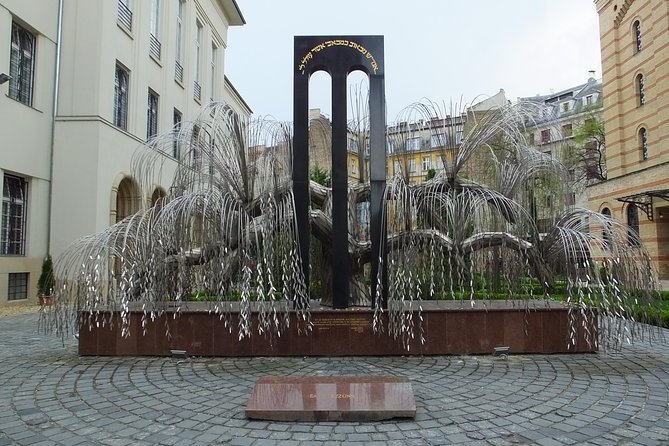
Kazinczy Street Synagogue is on the route with a focus on the Orthodox Jewish community. You’ll spend around 20 minutes here, but admission is not included, and the tour doesn’t promise interior access.
That matters because synagogue architecture and museum-style displays often take time. If you’re hoping to spend a long moment inside, you may need an extra ticket and extra time beyond the tour window. If you’re okay with learning from the outside and the surrounding context, this stop still works well.
Also, don’t treat this as only a religious stop. In this area, the visual cues connect to identity, community structure, and how Jewish life organized itself through time in Budapest.
The Great/Central Synagogue (Nagy Zsinagóga): impressive scale, plus a limitation
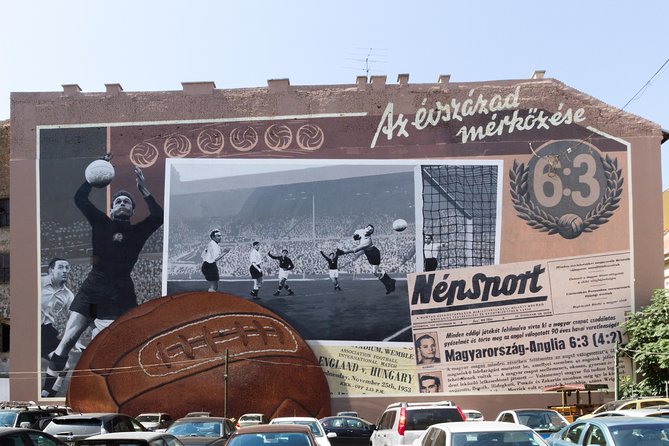
One of the big visual anchors on the walk is the Great/Central Synagogue, also known as Nagy Zsinagóga. The tour positions it as Europe’s largest synagogue with historical connotations tied to roughly the last 200 years.
You’ll get about 45 minutes at this stop, but the tour explicitly does not visit inside. That’s the key limitation to plan around. From a value standpoint, you’re buying orientation and context, not full synagogue interior time.
If you want the full inside experience—buildings, spaces, displays—this tour can still be a great first step. You’ll likely understand more when you return or add separate entry later. But if your top priority is going inside during this one outing, you’ll want to check what your separate plan would be before you book.






Solinfo Café and Flódni: the included taste that makes history stick
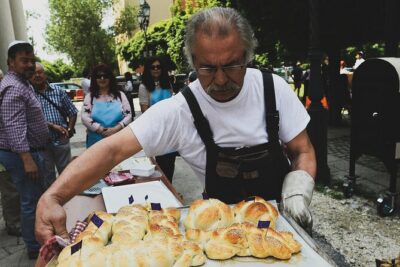
Here’s where the tour gets personal in a very tangible way. At Solinfo Café, the tour includes a Jewish cake called Flódni. The stop runs about 20 minutes, and it’s one of those food choices that travels with you after the visit.
Flódni is more than a snack stop. It’s a shortcut to culture. You’re not just hearing words like tradition or heritage—you’re eating something people actually recognize and share. Even if you’re not a sweets person, it’s worth trying because it’s local and tied to Jewish life in Hungary.
Also, this is a good point to slow down and regroup. By the time you reach Solinfo Café, you’ve already covered the big landmarks and the more emotional parts of the story. Food makes the final stretch easier.
Price and what you really get for about $64.71
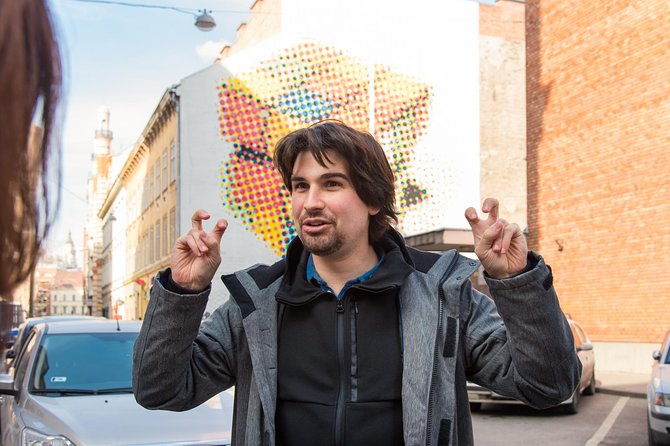
At $64.71 per person for roughly 2 hours 30 minutes, you’re paying for more than walking to sites. You’re paying for guided interpretation and a historian-style narrative that connects streets, synagogues, and community life into one timeline.
What makes the price feel reasonable is that the tour includes Flódni (rather than making you buy your own snack) and keeps the group to 10 people. Smaller groups can cost more, but here it shows up in pacing and the chance to ask questions without shouting.
You’ll also get a mobile ticket, and the tour is offered in English. If you’re trying to fit this into a day of Budapest sightseeing without adding extra “figure it out” stress, that’s part of the value.
One more practical note: this tour is often booked about 42 days in advance on average. That’s a hint to reserve earlier, especially if you’re traveling in peak season.
Guide style: why the best part can be the storytelling
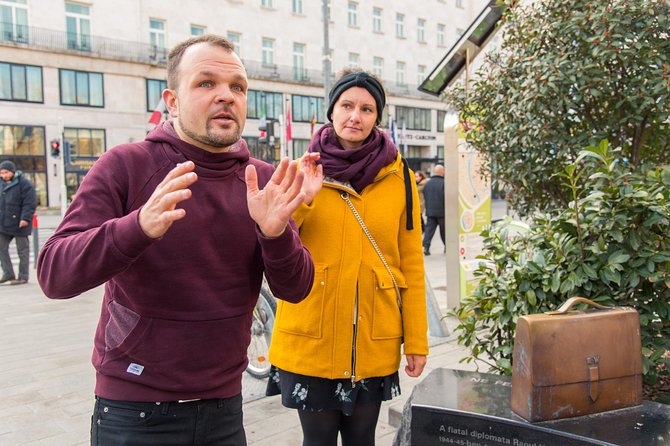
The tour is described as a historian-led experience, and the guide names show up repeatedly in strong feedback. I’ve seen Andrea lead tours with a friendly, question-friendly approach. I’ve also seen Gabor praised for giving both the good and the bad in Hungary’s history, not just the grim headlines.
Other guides mentioned include Barbi, Noémi, and András. The common thread across these names is careful pacing and sensitivity—especially when the conversation turns to the 1940s.
That guide style matters because Jewish heritage history can feel heavy fast. When the guide keeps the story organized, it helps you follow along and reduces that awkward feeling of catching only half the context.
Getting oriented in the Jewish Quarter (without losing time)
This tour helps you get bearings fast. You start at Kempinski Hotel Corvinus Budapest near Erzsébet tér, then you end outside Dohány Street Synagogue area. Since you’re walking through a focused corridor of sites, you come out with a mental map you can use the rest of your trip.
It’s also close to public transportation, so it’s easier to plug into your day than a tour that strands you in the middle of nowhere. And service animals are allowed, which is a real plus when you need that support.
Timing is straightforward: it starts at 10:00 am. With stops ranging from about 10 to 45 minutes, you get a structured rhythm rather than a wandering walk with no plan.
Who should book this tour
This is a great fit if you want:
- A historian-led explanation tied to real neighborhood locations
- A small-group experience where questions are welcomed
- Jewish heritage context that goes beyond only the Holocaust era
- A Budapest stop that connects history to modern life, via places like Szimpla Kert
It may not be ideal if your top priority is interior visits to synagogues during this single tour. The Kazinczy Street synagogue and Nagy Zsinagóga are part of the route, but the tour does not include everything you’d need for full interior access.
Should you book it?
Yes, I’d book it if you want a guided, story-driven route through Budapest’s Jewish heritage that also includes an actual cultural taste at the end. The combination of street-level context, Wallenberg’s memorial moment, and the included Flódni makes this more than a checklist tour.
I’d think twice if you’re specifically chasing synagogue interiors in one go. For that, you might pair this with separate entry plans before or after, so you don’t end up feeling short-changed at the door.
FAQ
What is the duration of the tour?
It lasts about 2 hours 30 minutes.
What time does the tour start?
The start time is 10:00 am.
Where does the tour start?
It starts at Kempinski Hotel Corvinus Budapest, Budapest, Erzsébet tér 7-8, 1051 Hungary.
Where does the tour end?
It ends outside Dohány Street Synagogue, at Budapest, Wesselényi utca 1, 1077 Hungary.
Is the tour offered in English?
Yes, it is offered in English.
How big is the group?
The tour has a maximum of 10 travelers.
Is a mobile ticket provided?
Yes, the tour includes a mobile ticket.
Is Flódni included, and where do you try it?
Yes. You try Flódni at Solinfo Café, and that admission is included.
Are synagogue admission tickets included?
Admission tickets are not included for Kazinczy Street Synagogue and the Great/Central Synagogue (Nagy Zsinagóga).
Can I bring a service animal?
Yes, service animals are allowed.
Is this tour cancellable for a refund?
Yes, there is free cancellation. You must cancel at least 24 hours before the experience start time for a full refund.