REVIEW · BUDAPEST
Communist Budapest Walking Tour
Book on Viator →Operated by Insight Cities · Bookable on Viator
Budapest gets political fast. This 3-hour walk connects 1956 street sites with Cold War landmarks, and I like two things most: the small-group pace and the way the guide explains what each monument was meant to do. One possible drawback: it’s history-heavy, and you’ll be walking for most of the tour.
I also like the flexibility: you can pick a morning or afternoon departure, and the meeting point is near public transport. You might even be led by guides such as András or Kata, both praised for deep, thoughtful conversation.
The walk ends outside the House of Terror Museum on Andrássy út, so you finish with a clear next step if you want the museum visit on your own.
In This Review
- Key highlights to know before you go
- First steps at Frankel Leó: what this tour really sets up
- Price, timing, and the value of a historian for 3 hours
- Parliament, Kossuth Square monuments, and the 1956-to–Cold War story
- House of Terror exterior stop: when the walk turns from debate to consequence
- Puskás Stadium area: socialist realist propaganda you can still read
- Reagan statue and Freedom Square details: US-Hungary symbolism explained
- Bem József Square and the 1960s coffee interior you can spot
- How the subway fits in: a route that uses transit instead of burning time
- Who should book this Communist Budapest walk
- Should you book the Communist Budapest Walking Tour?
- FAQ
- How long is the Communist Budapest Walking Tour?
- How many people are in the group?
- Is the House of Terror Museum ticket included?
- Are tram and metro tickets included?
- Where does the tour start and where does it end?
- What language is the tour offered in?
- What is the cancellation policy?
Key highlights to know before you go
- Small group (up to 8): easier questions, less crowd pressure, more back-and-forth.
- Historian-led: you’re not just seeing monuments; you’re learning the intent behind them.
- Soviet and US symbolism in one route: from Soviet memorials to a Ronald Reagan statue.
- 1956 uprising touchpoints: Bem József Square and Revolution-era landmarks get specific attention.
- Practical ending near House of Terror: the exterior stops you with context, then you can go inside if you want.
First steps at Frankel Leó: what this tour really sets up
You start at Frankel Leó út 2-4 (1027). From the beginning, the tone is clear: this isn’t a random “communism in Budapest” photo loop. It’s a route built to show how power showed up in public space—streets, squares, monuments, and even stadium art.
The pace stays manageable because the group stays small. Most days are capped at six people on the route, and the tour is promoted as maximum eight. That matters. In a topic this heavy, you’ll want time to ask what something means, not just listen to it once.
If you’re the type who gets lost without context, you’ll appreciate the order of the walk. You move through revolution-era memory first, then slide into Cold War framing, then end at the institutions and propaganda surfaces that made daily life feel controlled.
You can also read our reviews of more walking tours in Budapest
Price, timing, and the value of a historian for 3 hours
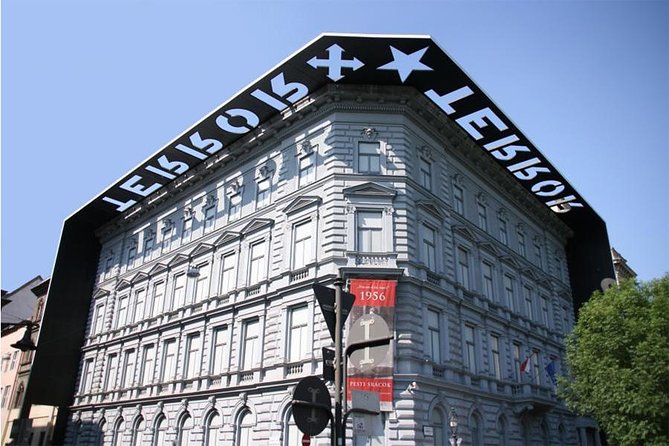
At $126.50 per person, this is not a budget “stroll and smile” tour. The value comes from two places: a guided walk with a historian and the fact that you’re covering multiple major sites in about three hours.
You’ll spend a lot less time figuring things out on your own. The guide can also help you buy Budapest Tram and Metro tickets if you don’t already have a visitor pass. That’s a small detail, but it removes a common headache when you’re moving across neighborhoods.
Timing also helps. There’s an afternoon or morning departure choice, and the tour runs for roughly three hours. You’ll get a full story arc in one sitting, which is useful if your time in Budapest is tight.
One more practical note: some stops are marked as free with no paid admission requirement, while one key museum is not included. The tour still positions you right where you can decide what you want to do next.
Parliament, Kossuth Square monuments, and the 1956-to–Cold War story
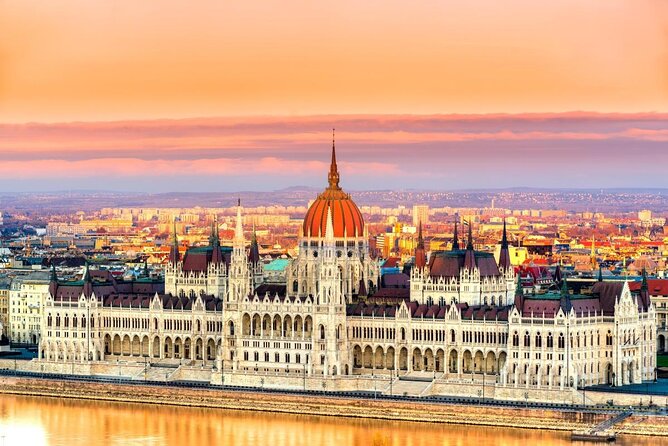
The tour kicks off around the Hungarian Parliament Building area, near Kossuth Square. The guide takes you past the kinds of monuments that can look “just historic” if you don’t know the symbolism. Here, they get connected to the 1956 revolution.
This part is about memory and messaging. Monuments aren’t only there to commemorate. They also signal which events a system wants you to remember, and which versions it wants you to accept.
Then you move toward Liberty Square for the Cold War layer. You’ll discuss aspects of the Cold War near key visual landmarks, including the US Embassy area. From there, the walk turns toward the Soviet Army monument and other references tied to the standoff atmosphere of the era.
A standout detail is the way the guide points out objects that feel oddly specific, like a monument and then a statue and then an atomic-shelter reference. Taken together, they show you how geopolitical tension was packaged into everyday sightlines.
Potential downside? If you prefer museums with indoor explanations, you might find this early section feels like a lot of “reading the street.” But if you’re willing to slow down, you’ll leave with a mental map that makes the city’s symbolism click.
House of Terror exterior stop: when the walk turns from debate to consequence
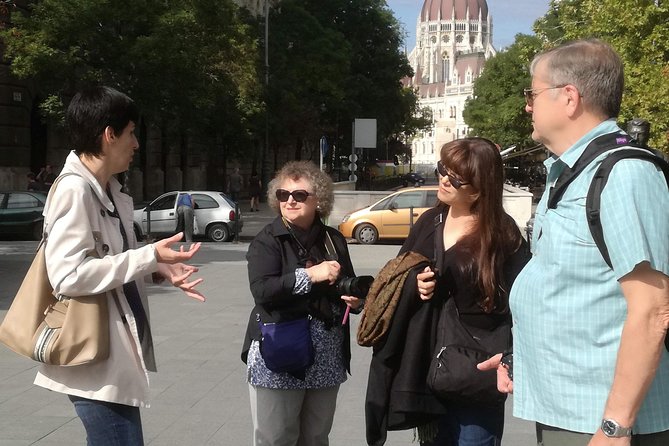
After the earlier landmarks, you conclude outside the House of Terror Museum at Andrássy út 60. You won’t have the museum ticket included on this walk, but you do get a purposeful exterior introduction.
Why that works: the building itself already communicates the theme. The museum sits in former headquarters connected to communist secret services, and you get the context that makes the address matter.
There’s also a striking visual cue outside: a slab associated with the Berlin Wall. Even without entering the exhibits, that exterior detail helps you understand the wider story linking Hungary’s experience to the wider East-West divide.
If you want more, this ending is a practical setup. You can stay nearby and buy your museum entry after the walk, when the concepts are fresh rather than a week later. If you don’t want to go inside, you still gain meaning from the exterior because the guide frames what you’re seeing.
If you do plan on entering, wear shoes that can handle standing time. The walk gets you close; your next step may add time on foot again.
Puskás Stadium area: socialist realist propaganda you can still read
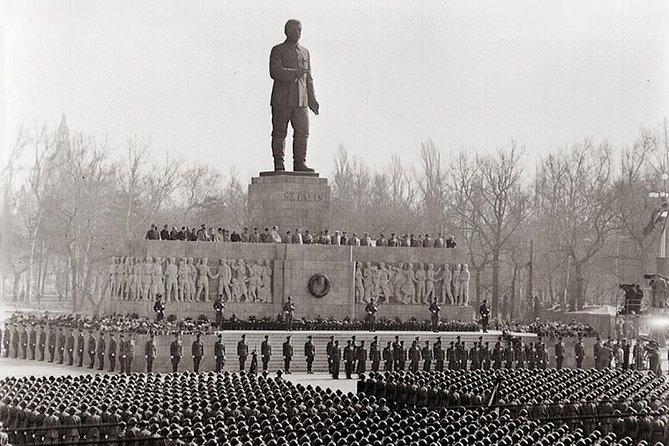
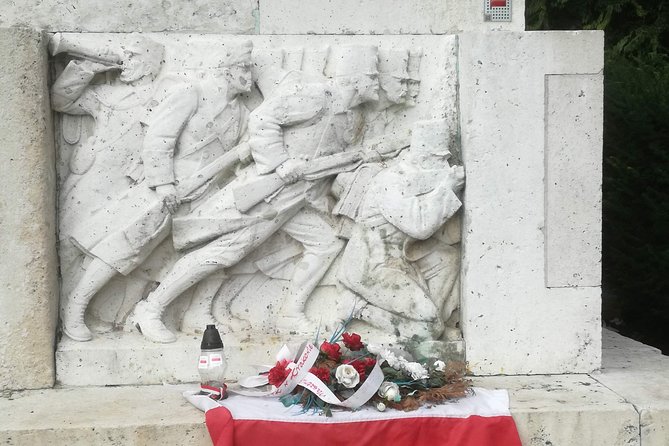
Next you swing by the former People’s Stadium, which is now Puskás Ferenc Stadium. The tour focuses on what remains from the socialist realist era—statues and visual messaging that were designed to project power.
This stop feels different from the squares and monuments earlier. It’s more about how ideology gets built into mass spaces. Stadium design isn’t random. It’s meant for crowds, and crowds are exactly where propaganda thrives.
You’ll also notice a style of sculpture that’s hard to ignore once it’s pointed out. The guide helps connect that heaviness to the regime’s preferred style: direct, instructive, and meant to dominate the space rather than gently suggest.
A possible drawback: if you’re not into public art or aren’t curious about visual style, this might feel more like “look at statues” than “learn the story.” But if you pay attention to the guide’s explanations, it becomes one of the clearest ways to see how the era tried to shape what people felt in public.






Reagan statue and Freedom Square details: US-Hungary symbolism explained
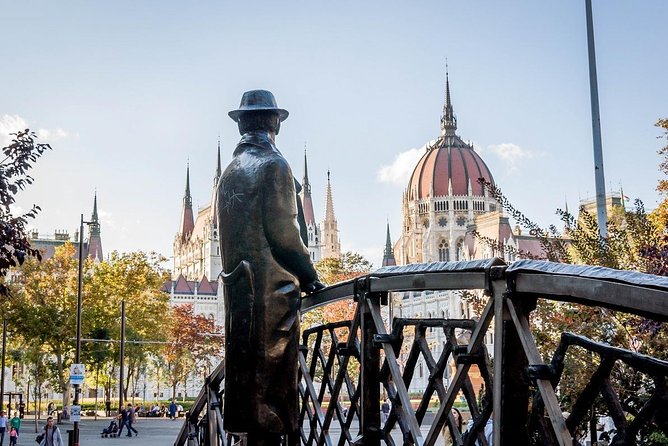
You’ll see a Ronald Reagan statue along the route, plus related Cold War references that frame why certain figures mattered in the Hungarian telling of the era. The tour doesn’t treat this like trivia. It’s presented as a cultural signal of obligation—how Hungary credits Reagan’s efforts with helping bring down the Iron Curtain.
That’s a useful perspective. In a lot of travel, you see statues and move on. Here, you get a sense of how statues can function like political shorthand, telling you what a community thinks was important and who did what.
There’s also another detail near Freedom Square: the Soviet War Memorial. Combined with the Reagan element, that creates an easy-to-follow contrast. You’re not just seeing “one side’s viewpoint.” You’re seeing how multiple sides are represented in the public landscape.
And yes, the guide also flags the atomic shelter reference in the same broader Cold War context. It’s the kind of detail that sounds almost too specific, until you realize it’s meant to communicate fear, readiness, and control.
This stop also helps you understand why Budapest can feel layered even when you’re standing still. One corner can hold different meanings depending on which era you’re “reading” it from.
Bem József Square and the 1960s coffee interior you can spot
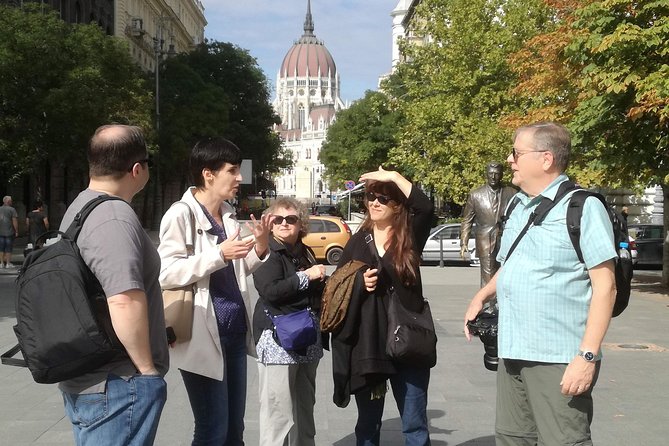
Toward the end, you get to Kossuth Lajos Square and Bem József Square, which the tour ties to the first big demonstration of the 1956 uprising. This is where the route becomes less about abstract geopolitics and more about people moving into the streets.
Bem József Square has that “the past is right there” quality. The guide helps you connect the location to the start of the uprising, so the square stops feeling like a generic urban space and becomes a milestone.
Then comes a very Budapest-feeling detour: there’s a coffeehouse on the square whose interior has kept its original design from the 1960s. That’s a smart, low-effort way to experience the era without needing a museum ticket.
Why it’s valuable: it shows how daily life and aesthetics keep evolving under pressure. Even when political systems change—or try to control everything—some styles and habits stick long enough to become part of the city’s identity.
If you’re short on time, you’ll be glad the tour doesn’t force a long sit-down. You get the context and the visual cue so you can decide on your own later whether to stop for coffee.
How the subway fits in: a route that uses transit instead of burning time
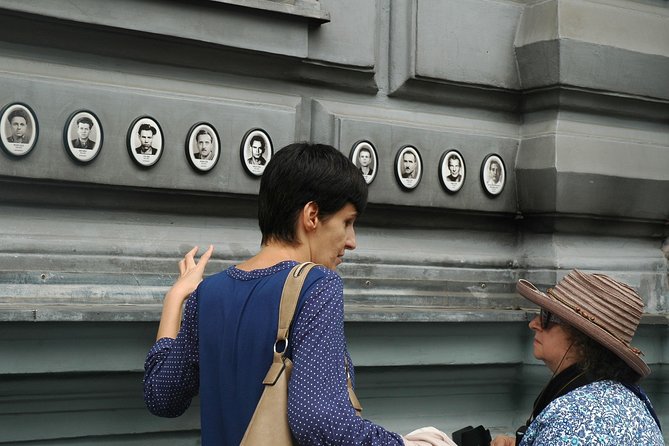
One reason this tour works for many visitors is that it uses public transit rather than walking nonstop. The first part includes traveling by subway to Kossuth Square in front of Parliament, and then you move through the central corridor by a mix of walking and quick repositioning.
That keeps the schedule realistic. In about three hours, you can cover multiple key spots without turning it into a leg-day exercise.
It also matters because some of the symbolic locations are separated. If you tried to do this on your own, you’d spend time choosing routes. Here, you get the route logic handled for you.
Just plan on having tram/metro tickets ready if you don’t already have a visitor pass. The guide can help, but it still pays to arrive prepared.
Who should book this Communist Budapest walk
This tour is a strong match if you want context behind the city’s most political-looking landmarks. You’ll like it if you enjoy a guided story that connects 1956 events, Cold War tensions, and the physical “language” of monuments and propaganda.
It’s also a good fit if you like conversation. The tour is run with enthusiastic local historian hosts, and guides like András and Kata have been praised for answering questions with real depth and for keeping discussion flowing around key moments in Hungarian history.
You might want something else if you’re in Budapest mostly for architecture snapshots and casual strolling. One review note hits the vibe well: if you want only sightseeing, this isn’t that style. It’s built for people who want meaning, not just views.
Should you book the Communist Budapest Walking Tour?
Book it if you want a clear, guided way to understand how Budapest remembers communism and the Cold War—and you want to end right near the House of Terror Museum with the option to go inside afterward. The small group size and historian-led approach make it feel personal, not like a scripted bus tour.
Pass or consider a different option if you get impatient with history framing and prefer more free time for wandering. Also think ahead about the walking time: you’re out for about three hours, mostly on your feet.
If you’re visiting for a short stay, this is one of the fastest ways to get a mental map of the city’s political symbols—so later, when you see a statue or a plaque, you’ll know what you’re looking at.
FAQ
How long is the Communist Budapest Walking Tour?
It runs for about 3 hours.
How many people are in the group?
The tour is described as small-group, limited to six people, with a stated maximum of 8 travelers.
Is the House of Terror Museum ticket included?
No. You’ll end outside the House of Terror Museum, and the museum exhibit itself is not included in the tour.
Are tram and metro tickets included?
Your guide can help you buy Budapest tram and metro tickets if you don’t already have a visitor pass, so they are not automatically included.
Where does the tour start and where does it end?
You start at Frankel Leó út 2-4, 1027 Hungary, and you end outside the House of Terror Museum at Andrássy út 60, 1062 Hungary.
What language is the tour offered in?
The tour is offered in English.
What is the cancellation policy?
Free cancellation is available up to 24 hours in advance for a full refund.