REVIEW · BUDAPEST
Budapest: Buda Castle District Walking Tour with a Historian
Book on GetYourGuide →Operated by Budapest Explorers · Bookable on GetYourGuide
Castle Hill turns fast into a storybook. This guided walk through Budapest’s Buda Castle District connects big political shifts and everyday life, from medieval Hungary to WWII, right where it happened. You’ll hit the Matthias Church area with expert commentary, then finish with classic city views from Fisherman’s Bastion.
I especially like that the tour doesn’t just point at famous buildings. It names what you’re seeing—things like the Royal Palace complex, Savoyai Terrace, and the Matthias Fountain—and then explains why the stones and street layout matter. One consideration: it’s mostly outside, so fog or rain can make the walk a bit slower, and the route may shift indoors during heavy weather.
In This Review
- Key things to know before you go
- Matthias Church plus Castle Hill views in 2.5 hours
- Where you meet and how you stay oriented
- Matthias Church: the stop that changes how you see the whole hill
- Fisherman’s Bastion panoramas over Pest and Parliament
- Royal Palace grounds and the story behind the walls
- Equestrian Hadik, Castle Hill Funicular, and the Matthias Fountain
- Savoyai Terrace: a photo spot with context, not just a view
- The coffee stop that makes the whole thing feel human
- Price and value: what $63 buys in real terms
- Who this tour is best for (and who might want something else)
- Practical tips for fog, crowds, and rainy days
- Should you book this Buda Castle District walking tour?
- FAQ
- How long is the Buda Castle District walking tour?
- Where is the meeting point?
- What language is the tour guide speaking?
- Is Matthias Church included, and do we skip the line?
- Does the tour include a coffee stop?
- What are the main sights on the tour?
- Is the tour mostly outdoors?
Key things to know before you go
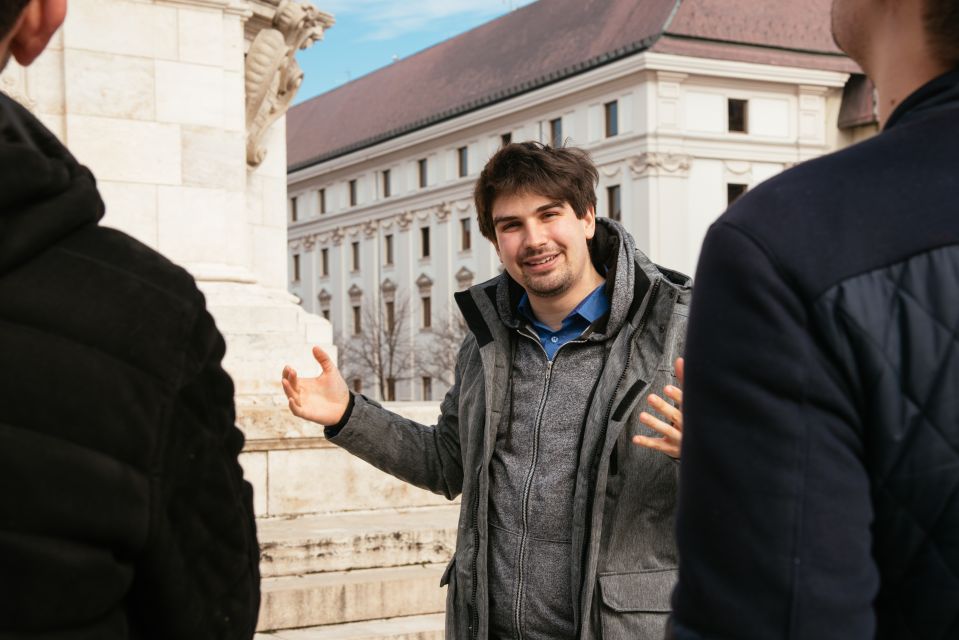
- Matthias Church ticket + live commentary are included, with a line-skip advantage
- Fisherman’s Bastion delivers big photo angles toward Parliament and the Pest side
- A historian guide adds context across centuries, not just a list of dates
- Stops are timed for pacing: about 45 minutes in Matthias Church plus short photo/sightseeing beats
- Coffee break included, with a chance to slow down and regroup mid-walk
Matthias Church plus Castle Hill views in 2.5 hours

This is a tight, efficient way to “get” Buda Castle Hill. In a little over two hours, you’ll move from street-level medieval streets into the ceremonial heart of the castle area, then pop out for broad panorama views over the Danube.
What makes this tour good value is the mix: Matthias Church isn’t treated like a quick glance, and the city-view stops aren’t treated like filler. A historian guide stitches the scenes together so the district stops feeling like a museum and starts feeling like a real neighborhood that kept getting rebuilt, renamed, and repurposed.
You can also read our reviews of more walking tours in Budapest
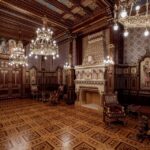


Where you meet and how you stay oriented
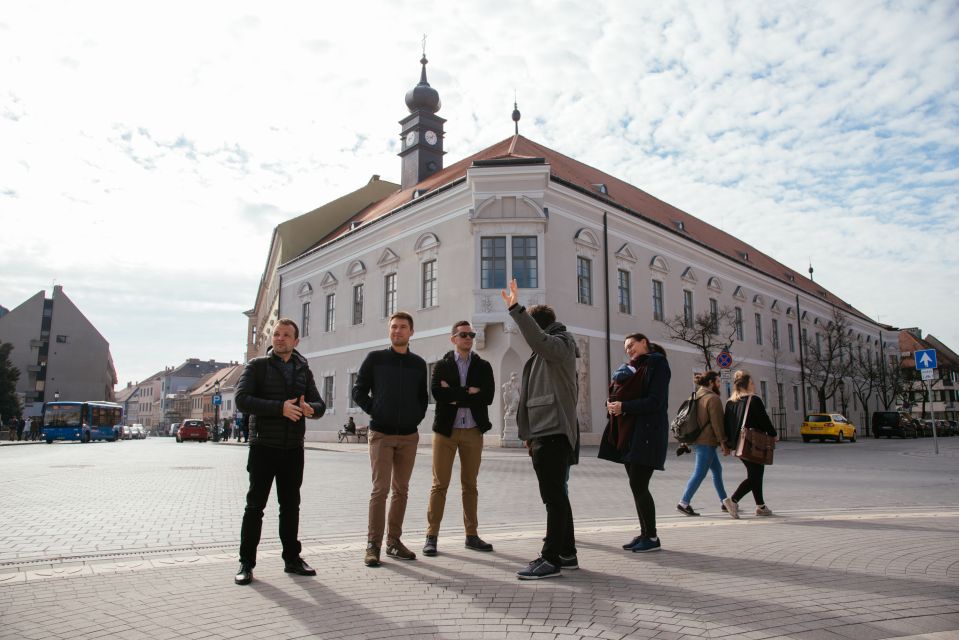
You start at Szentháromság tér, right in front of the Holy Trinity column. The meeting point is easy enough to reach by cab, or bus numbers 16, 116, or 216, and it’s also walkable if you’re already exploring central Buda.
This matters more than you might think. Castle Hill sites can scatter across different levels and streets, and having a clear starting spot helps you avoid “wander and hope” time—especially in fog. One helpful detail: the tour finishes back in the castle area (Budavári Palota), so you don’t end up stuck far away from the main sights.
Matthias Church: the stop that changes how you see the whole hill
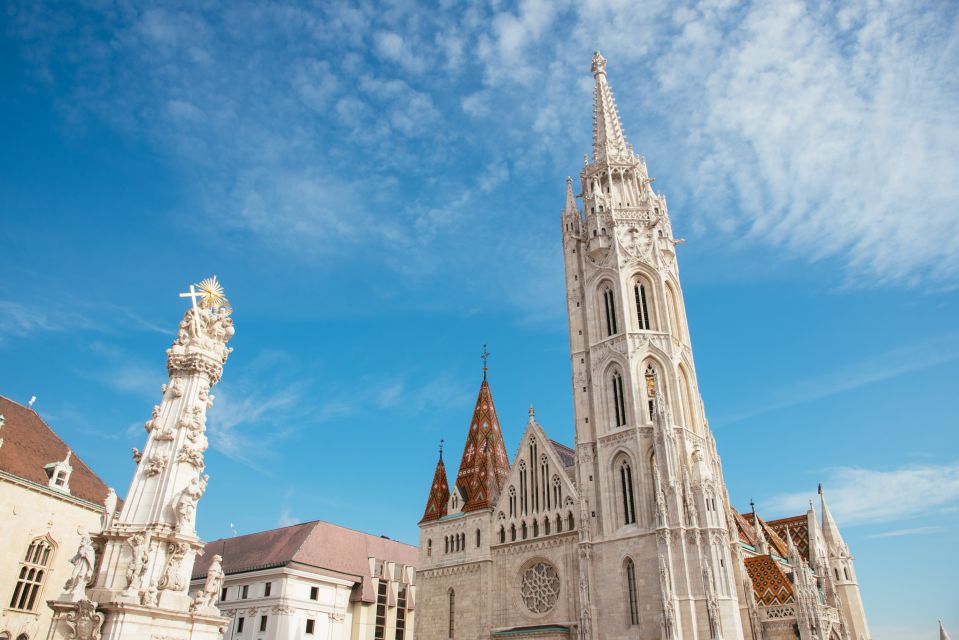
Matthias Church takes about 45 minutes on the tour, and that time is the heart of the experience. The big practical win is that entrance ticket and live commentary are included, and you get to skip the ticket line—so you spend more minutes inside and less time waiting.
This is also the moment where a great guide really earns their pay. I noticed in recent guides’ feedback (people like Petra, Monica, Gábor, Barika, and Judit) that they focus on details you’d otherwise miss: why the church looks the way it does, and how it fits into the castle’s larger story.
If you care about architecture and atmosphere, this is the building you’ll probably remember most. Even in the calmer “listening” moments, you’ll get the feeling of a place still used for life and culture, not just a postcard façade.
Fisherman’s Bastion panoramas over Pest and Parliament
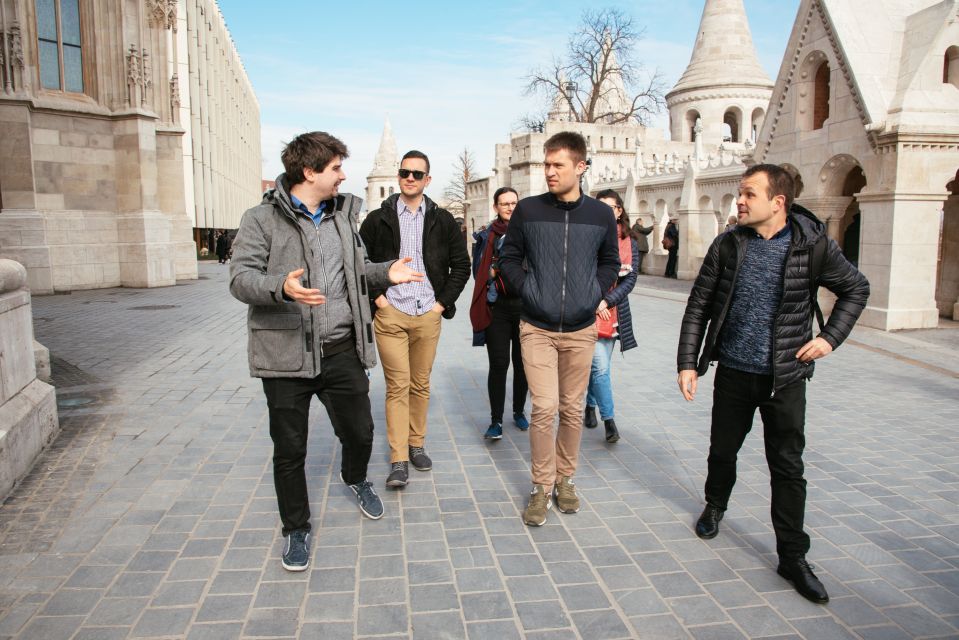
After the church area, you head toward Fisherman’s Bastion for photos and viewpoint time. Expect about 15 minutes here—short enough to keep the walk moving, long enough to actually frame shots and soak in the scale.
This is where Budapest does what it does best: it lines up your view across the river. From this angle you can see Parliament and the Pest side, which helps you connect the castle district to the rest of the city instead of treating it as an isolated hilltop.
One thing to keep in mind: views can be stunning even when the weather isn’t. Guides have led tours through fog and winter weather, and you’ll likely still get the point—you just might need patience for visibility to improve.
Royal Palace grounds and the story behind the walls
Once you’re inside the castle complex area, the tour shifts from landmark sightseeing to “why this place mattered.” You’ll spend about 30 minutes around the Buda Castle area, with stops that help you read the district like a timeline.
The most valuable part here isn’t memorizing dates. It’s learning how the district’s roles changed over centuries. You’ll get stories that connect the Middle Ages to later political eras and into WWII, so the castle feels less like a static monument and more like a living stage for shifting power.
Also, Castle Hill isn’t empty—thousands of people live there, even today. Guides tend to bring that fact into the explanation, which helps you picture the practical reality behind the grand buildings: balconies, courtyards, daily routes, and the “romantic stroll” side of Buda that locals and visitors both enjoy.






Equestrian Hadik, Castle Hill Funicular, and the Matthias Fountain
Between viewpoints and the larger castle area, you’ll pass a few key highlights that help you orient the hill.
You’ll see the Equestrian Statue of András Hadik and get short sightseeing time—enough for photos and context, not enough to stall the group. This kind of quick stop is ideal when you’re learning how streets and structures relate, because it keeps the momentum while your brain is still “mapping” the area.
You’ll also get a look at the Budapest Castle Hill Funicular area as part of the route. Even if you don’t ride it on this tour, it’s a useful reference point. It helps you understand how visitors (and goods) move up and down the hill, which makes the geography less confusing later.
Then comes the Fountain of King Matthias, with a short sightseeing moment. It’s one of those details that’s easy to walk past on your own, but better with explanation—because the guide helps you see what’s being honored and why it fits the surrounding space.
Savoyai Terrace: a photo spot with context, not just a view
Savoyai Terrace gets both sightseeing and a guided component, plus time for photos. This stop is popular for a reason: it gives you angles over the district and it also helps you read the layout of the castle grounds.
What makes it feel worth the time is the connection to people and place. Guides tend to point out how these terraces and levels were shaped by the hill’s topography, and how the castle district’s look changed with different eras. That helps you stop treating the area like a single uniform “old town block.”
You’ll also move around sections of the complex that include the Palace Gardens, plus notable buildings in the wider castle zone such as the Alexander Palace and the Hungarian Presidential Palace facades. You won’t need to be an architecture student to appreciate it; the guide’s job is to translate the big features into understandable meaning.
The coffee stop that makes the whole thing feel human
About mid-tour, there’s a coffee stop. This isn’t just a snack break—it’s a chance to reset and talk. Several recent guides have been praised for being friendly and for answering questions, and the coffee break fits that pattern: you can ask what you want next, not just rush onward.
You’ll also often get practical advice at the end. People mention guide recommendations for where to eat or what to do next, which is a quiet value-add. Even if your plan is already set, having a local-minded “what’s worth it” list can save you time.
Price and value: what $63 buys in real terms
At $63 per person for a 2.5-hour tour, the question is: what are you actually paying for?
You’re paying for three things that add up quickly:
- A professional guide with live commentary
- Matthias Church entry included, plus a skip-the-ticket-line advantage
- Guided pacing through several major castle-district stops, plus the coffee stop
If you’ve ever tried to piece this day together on your own, you know how fast time slips away: getting your bearings, lining up tickets, and then trying to connect the story afterward from random plaques. Here, the guide does that work in real time, and the itinerary is built to keep you moving without turning it into a sprint.
Who this tour is best for (and who might want something else)
You’ll probably love this tour if you:
- want a historian’s explanation of Budapest and Buda Castle’s role across centuries
- like your sightseeing with context, not just photos
- want big views without spending hours planning route logistics
It may feel less ideal if you:
- want a lot of free-roaming time inside each building
- prefer to read at your own pace without a guided structure
That said, the format is friendly to questions. Recent experiences mention interactive moments where guides answered lots of group questions, which is a strong sign you won’t be stuck listening with no chance to steer.
Practical tips for fog, crowds, and rainy days
This walk is mostly outside, so bring an umbrella or rain jacket if the forecast looks moody. In case of heavy rain, the itinerary may be modified to include more indoor locations, so the tour doesn’t get completely derailed.
If it’s foggy, don’t panic. You’ll still learn the “map” of the place, and visibility often improves with time. Also, Castle Hill can be busy in peak season; having short stops at photo points is a smart move when crowd density changes your timing.
Should you book this Buda Castle District walking tour?
Yes, if you want an efficient, story-driven introduction to Buda Castle Hill—especially with Matthias Church handled in the right way (included ticket, line-skip, and live commentary). The value is strong because you’re not just ticking off landmarks; you’re learning how the district’s pieces fit together over centuries.
One last nudge: if you’re the type who likes to understand what you’re looking at, this is exactly the sort of tour that turns Budapest from pretty to meaningful.
FAQ
How long is the Buda Castle District walking tour?
It lasts 2.5 hours.
Where is the meeting point?
You meet in front of the Holy Trinity column on Szentháromság tér.
What language is the tour guide speaking?
The tour is in English.
Is Matthias Church included, and do we skip the line?
Yes. The entrance ticket and live commentary in Matthias Church are included, and you skip the ticket line.
Does the tour include a coffee stop?
Yes, there’s a coffee stop included during the tour.
What are the main sights on the tour?
Highlights include Buda Castle District, Matthias Church, Fisherman’s Bastion (views toward Parliament and Pest), Savoyai Terrace, and the Fountain of King Matthias.
Is the tour mostly outdoors?
Mostly, yes. If it rains, bring an umbrella or rain jacket, and in heavy rain the itinerary may be modified to include more indoor locations.