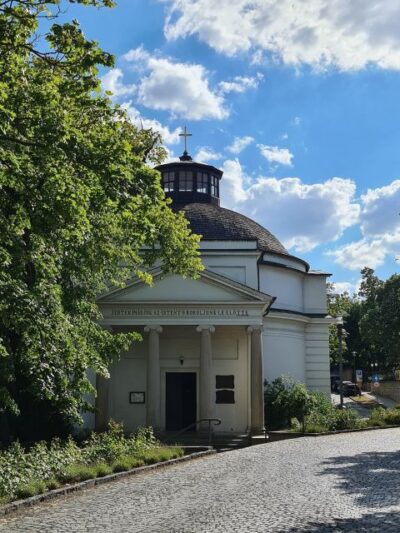
REVIEW · BUDAPEST
Hungary today: a no-taboo conversation
Book on Viator →Operated by Budapest Explorers · Bookable on Viator
Budapest gets real at Bambi Café. This 90-minute experience is built as a no-taboo conversation about Hungary’s recent past and present, from the shift out of communism toward today’s political arguments about democracy. You’ll start with an intro to the last 30 years through historical, economic, and political themes, then you steer the rest with questions you actually want answered.
Two things I really like: the small group size (maximum 6) that keeps the discussion human, and the host style that makes room for controversy without performing for the group. One possible drawback: it’s not a sightseeing sprint. This is one stop, mostly conversation, so if you want streets and monuments, you’ll need to pair it with other walking tours.
The vibe is also “depends on you,” which is a nice way of saying your curiosity drives how deep it goes. If you show up with only vague curiosity, you may get a stronger intro than a tailored Q&A. And topics can be political and uncomfortable, so bring an open mind and a willingness to listen.
In This Review
- Key things to know before you book
- Bambi Café: why the meeting point matters
- The no-taboo format: intro first, then your questions
- Communism to democracy, plus today’s illiberal debate
- Economy and politics: why this pairing works
- Budapest beyond the postcard: what you might hear
- Who’s running it, and why the discussion feels personal
- The one-stop schedule: 90 minutes, one place, no rushing
- Price and value: $40.52 for a tailored conversation
- How to make the most of your Q&A
- Is this tour for you? Best fit and best timing
- Practical details that affect your day
- Should you book this Hungary conversation?
- FAQ
- Where does the experience start?
- How long is the experience?
- What’s included, and is there an admission fee?
- How big is the group?
- How do I get the ticket?
- What is the cancellation window?
Key things to know before you book

- Bambi Café as the setting: a cult café that has changed close to none since the 1970s
- One-on-voice style: structured intro first, then an open Q&A you control
- Small group limit: maximum 6 people keeps the pace calm and questions focused
- Focused on the modern era: history, economy, and politics, especially the last 30 years
- You can ask anything: from controversial politics to uncertain future, plus personal opinions
Bambi Café: why the meeting point matters
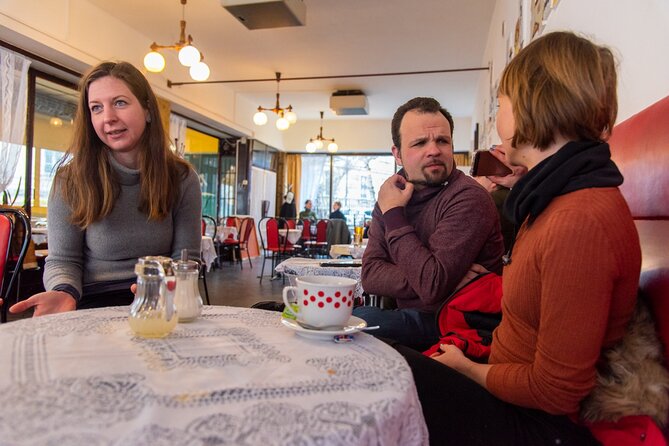
This tour starts at Bambi Café on Frankel Leó út 2-4, in Budapest’s district area 1027. That detail matters because the location does more than “act as a meeting spot.” The café is described as a cult place that’s barely changed since the 1970s, and that kind of continuity creates a good mental switch.
When the setting feels timeless, you’re more likely to talk like a person instead of like a tourist. You sit down, you slow down, and it becomes easier to hear the honest opinion side of history and current events. It also makes the whole experience feel less staged.
You can also read our reviews of more tours and experiences in Budapest.



The no-taboo format: intro first, then your questions
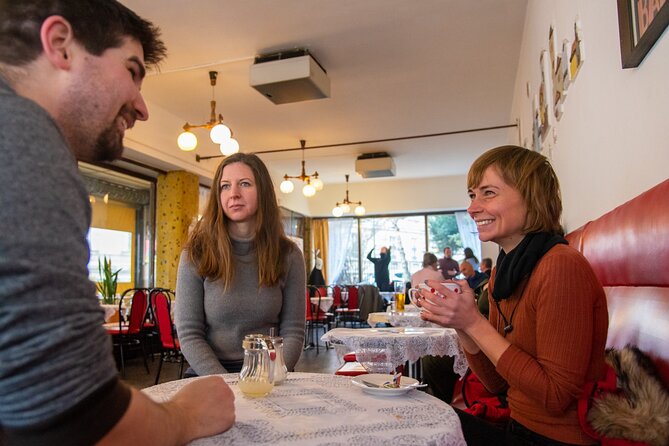
The structure is simple and practical. You get an introduction to Hungary’s modern era with historical, economic, and political context, covering roughly the last 30 years. Then the conversation opens up so you can ask anything you’ve ever wanted about Hungary—controversial politics, the turbulent past, or what feels uncertain right now.
I like this approach because it avoids the two common tour problems. First, it doesn’t dump dates on you like a lecture. Second, it doesn’t pretend every question is the same. If you’ve already visited Budapest before or you know the basic outline, you can skip the beginner stuff and ask sharper questions.
It’s also run as a back-and-forth. You’re not just listening to someone’s prepared script. That’s a big deal when the topic is sensitive. You’ll get more value if you come with at least a few specific questions, even if they’re messy or half-formed.
Communism to democracy, plus today’s illiberal debate
The conversation explicitly covers the shift from communism to democracy and how the concept of illiberal democracy has entered the picture in recent years. You’ll hear facts mixed with the host’s perspective, and the experience is built around honesty and answering questions.
The useful part for you isn’t memorizing one political take. It’s learning the language people use to describe change. In any country, the same events can be interpreted in totally different ways—especially when institutions, rights, and media freedoms are part of the discussion.
So I’d treat this like a listening exercise as much as a Q&A. Ask yourself what you believe, then ask how the other side explains it. That’s often where the real understanding comes from. You’ll likely leave with questions that feel more grounded in real life than in headlines.
Economy and politics: why this pairing works
It’s not just politics for politics’ sake. The intro includes economic aspects too, which is smart. People rarely disagree only about values. They often disagree about what policies actually mean in daily life: jobs, prices, opportunity, and the feeling of security.
When economy and politics sit together, you’ll understand why arguments get so intense. You’ll also be able to connect the dots between what you see in Budapest—day-to-day life, attitudes, and public mood—and what people are debating nationally.
If you’re the kind of traveler who usually skips politics tours because you think they’ll be one-note, this format may surprise you. It’s meant to be a conversation, not a sermon.
Budapest beyond the postcard: what you might hear
This experience isn’t limited to national history. The host is positioned to share their opinion about Budapest and beyond, with answers that stretch into the larger picture. One of the strongest themes from the feedback is that the discussion can go well beyond basic background.
In a packed week, that matters. Budapest can overload you with “see this, then that.” A conversation like this gives you a different kind of information: the kind that helps you interpret what you’re experiencing in real time.
I’d also expect that the host will connect Budapest to wider themes—why people feel the way they do, what they hope for, and what they fear. Some questions you might ask could be practical, like how young people think about the future. But the key is that it’s not limited to facts. You’re invited into opinion and reasoning, not just a timeline.



Who’s running it, and why the discussion feels personal
The experience provider is Budapest Explorers, and the tone from the team is warm and responsive. In one recent booking, the host named Daniel led the conversation, and the feedback highlighted how deep his knowledge was—not only about Hungary, but about the world as it relates to Hungary’s situation.
That combination is what you want. You want someone who can explain Hungary’s modern era, but also someone who can make the connections that help your brain organize the information. And since the group is capped at 6, you’re less likely to get the feeling of being processed.
If you’re worried about being talked at, this format is designed to reduce that. You control where the talk goes after the intro.
The one-stop schedule: 90 minutes, one place, no rushing
The whole experience is about 1 hour 30 minutes. There’s one stop: Bambi Café, and the café admission is described as free for this experience. That schedule keeps the tour grounded and low-stress.
This is a good option if you’re balancing other plans and want something that doesn’t eat your entire day. It’s also ideal if you’ve already walked around Budapest and want to process what you saw with context.
One caution: because there’s only one stop, the value depends on the conversation quality and on your questions. If you treat the event like a casual chat with no intent, you might finish still craving more specifics. If you treat it like a two-way interview, you’ll get more out of it than you expected.
Price and value: $40.52 for a tailored conversation
At $40.52 per person, this isn’t priced like a huge production with multiple stops and ticketed attractions. It’s priced like what it is: time with a host in a small group, focused on modern Hungary and built around your questions.
For me, the value comes from three things:
- Time for Q&A instead of passive listening
- Small group limit so you’re not competing for air
- Conversation format that adjusts to what you want to know
If you’re already comfortable with Hungarian history basics, you’ll likely feel like you’re paying for clarification and interpretation. If you’re newer to the topic, you’ll pay for a strong intro plus a chance to ask follow-ups without embarrassment.
Also, the ticket format is mobile, which makes the day smoother. You’re not scrambling for paper tickets at a busy location.
How to make the most of your Q&A
This is where you can turn a good experience into a great one. Since the conversation depends on you, come prepared with questions that have edges. You don’t need to memorize facts.
Try bringing questions in three buckets:
- One about Hungary’s political changes over the last decades
- One about how those changes affect daily life or attitudes
- One about the future—what people worry about, what they hope for
If you’re not sure what to ask, a safe approach is to ask for the host’s reasoning. For example: what they think drives public opinion, or what matters most in how Hungary is changing. You’ll get a richer answer than a yes/no question.
And because the group is small, don’t be afraid to ask something even if it’s controversial. The point is that you can ask it.
Is this tour for you? Best fit and best timing
You’ll probably love this experience if you:
- Want modern context, not only old monuments
- Enjoy conversations that include opinion and debate
- Have a few specific questions about politics, economy, or the direction of the country
- Prefer smaller group formats
You might skip it (or pair it differently) if you:
- Only want guided sightseeing
- Don’t like political or sensitive topics
- Expect a long walking route with lots of photo stops
It also helps if you’re staying in central Budapest. Since the meeting point is near public transportation, it’s easier to plan without stress.
Practical details that affect your day
The tour is scheduled to start at 2:00 pm, and it ends back at the meeting point at Bambi Café. Confirmation is sent at booking, so you’ll have your plan in place ahead of time.
You’ll use a mobile ticket, and the experience is set up for service animals too. The area is near public transportation, which is useful for keeping your schedule realistic.
Should you book this Hungary conversation?
Yes, if you want a smarter way to understand modern Hungary in a short time. This isn’t a “facts only” tour. It’s a real conversation built for questions, with a setting that stays the same long enough to make the discussion feel honest.
Book it especially if you like the idea of asking controversial questions in a calm, small-group setting. If your Budapest trip is packed and you want one experience that changes how you interpret everything else you see, this is a strong choice.
Skip it only if you want multiple sights and a walking route. This one is about talk, context, and perspective—served in a café that looks like it’s been waiting since the 1970s.
FAQ
Where does the experience start?
It starts at Bambi Café, Frankel Leó út 2-4, 1027 Hungary, and ends back at the same meeting point.
How long is the experience?
It lasts about 1 hour 30 minutes.
What’s included, and is there an admission fee?
Bambi Café admission is described as free for this experience.
How big is the group?
The experience has a maximum of 6 travelers.
How do I get the ticket?
The experience uses a mobile ticket.
What is the cancellation window?
You can cancel for a full refund up to 24 hours before the experience starts.